

News
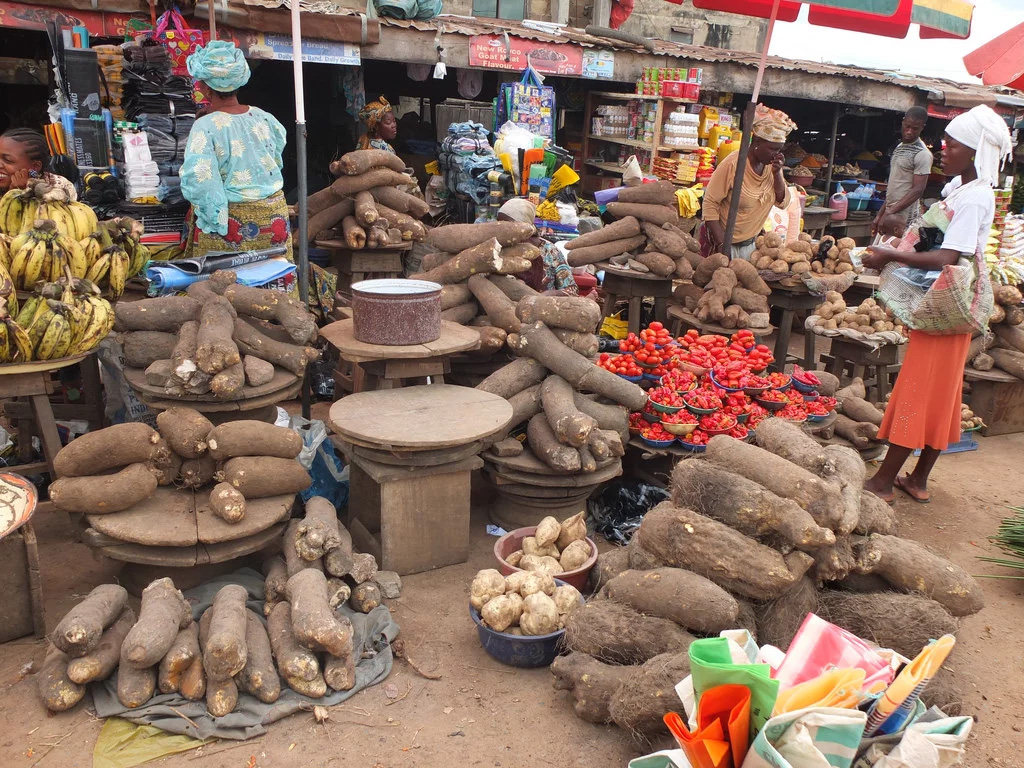
Residents groan over soaring prices of foodstuff in Kaduna, Kano, others
Residents groan over soaring prices of foodstuff in Kaduna, Kano, others
In tune with the extant global trends, Nigeria is experiencing an unprecedented increase in the cost of basic food items.
Findings by the News Agency of Nigeria Correspondents in Kaduna, Kano and Katsina States have shown that Nigeria was not an exception.
For instance, a check conducted by NAN in Kaduna revealed that the surge was particularly notable in the prices of rice, bread, sugar, garri, beef and eggs, amongst others, which are staples in most homes.
Also, the rising cost has had an impact in the living standard of the residents as the majority of the homes now find it formidably challenging to afford three square meals.
NAN also gathered from the Abubakar Gumi Central market and other markets within Kaduna city that the price of Mama Gold rice had risen to about N75,500 per bag, while a 50kg Stallion, Optimum brands now sell from N77,000 to N80,000.
Also, a loaf of bread was now being sold between N1,000 and N2,500 depending on the brand and quality.
A measure (mudu) of ‘white garri’ that used to sell for N400 was now sold for between N1200. while a measure of ‘yellow garri’ sold for N600 now goes for between N1300 and N1,500.
Similarly, a crate of egg that was selling for N3000 hitherto, now sells for between N4,000 and N4,500 depending on the size.
Also, a kilogram of meat (beef) formerly sold for N3,000 before was now being sold at N5,000.
Meanwhile, farmers in parts of the state have attributed the high costs of foodstuffs to the fuel subsidy removal.
Some of the farmers who spoke to NAN in separate interviews in Kafanchan blamed the hike in the prices of foodstuffs on the high cost of transportation, occasioned by the removal of fuel subsidy by the Federal Government.
Ishaya Chingali, a large-scale farmer, said inflation had also led to the high cost of farm inputs like fertilizers and herbicides.
“If they can take care of the cost of transportation, the high cost of food stuff will be addressed by 50 percent,” he stated.
On his part, Kure Kade, President, Organic Ginger Farmers Association, said the only way out was for the government to subsidize farm inputs.
He said Nigeria was capable of feeding itself without necessarily importing any food stuff.
READ ALSO:
- Student jailed 21 years for attempting to sexually assault minor
- Shehu Sani warns Tinubu not to repeat Buhari’s mistakes
- Kuwait flight hostages sue British Airways, UK govt
In a related development, the Kaduna State Government said it had distributed farm inputs, farm implements as well as agro-processing equipment to 40,000 smallholder farmers to boost food production.
Murtala Dabo, the Commissioner, Ministry for Agriculture, made this known in an interview with the News Agency of Nigeria (NAN) in Kaduna.
The items were distributed under the government’s ‘A Koma Gona’ (Back to Farm) initiative.
According to him, the programme targets beneficiaries in the 23 local government areas of the state.
He said the state was the largest producer of ginger, maize, as well as tomatoes in the country, lamenting that the farmers suffered post-harvest losses such as tomatoes and ginger.
Dabo assured that the state government would revisit the now stalled tomato processing plant in Ikara to address the losses suffered by tomato farmers in the area and other surrounding local governments.
He said, “Agriculture remains the backbone of the economy, providing employment and sustaining livelihoods.
The state is blessed with huge agricultural potential
“Smallholder farmers and small-scale agro-processors have been facing difficulties due to the current economic challenges in the country.
”This category of farmers is very critical in our quest to ensure food security.
“It is for this reason that the government has come up with the ‘Tallafin Noma – A Koma Noma’ as part of our Sustainable Livelihoods through Social Interventions and Economic Empowerment Initiative.
“Under this “A Koma Gona” (Get Back to Farm) component, the Ministry for Agriculture was mandated to target a minimum of 40,000 smallholder farmers and farmers’ cooperatives across the 23 LGAs.”
According to Dabo, the ‘Tallafin Noma programme’ includes the distribution of inputs for crop and livestock production, crop production, improved maize seeds, agrochemicals, NPK and Urea fertilizers.
“For livestock production (poultry), 30 day-old chicks with four bags of feed and drugs are distributed, while 50 jumbo juveniles (catfish) with two bags of feed and drugs are distributed for fisheries.
“To boost micro-mechanisation of the agriculture sector in the state, power tillers and accessories were distributed to farmer cooperative groups.
“This is a crucial step towards increasing production and productivity in our farms,”he added.
The commissioner added that ‘Knapsack’ sprayers with Personal Protection Equipment (PPE) were also given to the farmers for agrochemical and liquid fertilizer application on their farms.
“For the agro-processors, vegetable grinders are distributed to individuals, while hammer mills, haulers and threshers are distributed to cooperative groups as group assets.
“These processing machines would add value to our agricultural produce and improve the livelihoods of individuals and groups involved in agro-processing activities,”Dabo said.
To reduce herder-farmer conflicts in the state, he said the state government has commenced the Livestock Development Project (L-PRES).
He said bringing the project to the state had also helped to tackle the frequent clashes between farmers and herdsmen.
Dabo said that the project would focus on the component of conflict management aimed at finding a lasting solution to the problem.
Meanwhile, a farmer in Kaduna State has appealed to the government at all levels to enhance agricultural mechanization.
He also urged them to replace the animal-drawn plough system for land preparation and other agricultural production processes to boost food security and wealth generation.
READ ALSO:
- BREAKING: Pilot survives as NAF helicopter crashes in Kaduna
- UK cab driver confesses still getting paid in Nigeria as civil servant
- Police rescue 2 kidnapped victims in Abuja
Ahmed Abubakar, a member of the Albarka-Shika Farmers Cooperative Society, made the appeal in an interview with the News Agency of Nigeria (NAN) in Zaria.
He said, “Farming is a business; the government at sub-national levels should woo and entice youths by providing simple labour saving devices in farming to strengthen production.
“These tools and devices are not affordable to many youths and small-scale farmers; we are in the 21st century,so, it is high time to do away with cutlasses and hoes and embrace full-scale mechanized agriculture.
“Bandits and other criminal elements would not allow the small -scale farmers to keep cattle for traditional plough.
“If the farmers have these machines at their homes, it will not be easily stolen like cattle,’’ he said.
Mr Abubakar said the initial intervention by the Federal Government for wheat farmers under dry season farming had gladdened the hearts of the farmers across the state.
Mr Abubakar said no fewer than 10,000 farmers received improved wheat seed varieties, herbicides and fertilizer and other inputs for cultivation of a one hectare field at 50 per cent discount.
He, however, said that the gesture had greatly increased the production of wheat in Kaduna State during the last season.
The farmer added that the intervention, which assisted many peasant farmers in the state, had also rekindled their hope as the Federal Government was set to replicate the support to additional 40,000 maize and rice farmers.
He said the 40, 000 farmers who were registered by the Federal Government through the Kaduna State Agricultural Development Agency (KADA) for the dry season farming of rice and maize did not receive the inputs.
However, Abubakar said there were insinuations that the cohorts captured for dry season intervention would receive the inputs for wet season farming alongside other commodity growers; saying, ” this also has not been materialized.
“It is an established fact that the early distribution of inputs to farmers boosts production and increases wealth generation to farmers.
“The major problems are insecurity and high cost of inputs,’’ Abubakar said.
He lamented the delay in the distribution of the fertilizer donated by the Central Bank of Nigeria to the Federal Ministry of Agriculture and Food Security.
According to him, the delay in the distribution of the inputs by the government and high inflation rate in the country had increased the cost of fertilizer and other inputs, which have a “devastating effect on food security.”
While speaking on the policy of the Federal Government on the all-year round food production, Abubakar lamented, ” Beside the pronouncement, we are yet to see any tangible effort of the government on this.”
He added that dry season farming was done with water from the stream and dams.
Abubakar said, “But the available dams were not desilted, new ones were not created while modern equipment and other simple labour saving devices were also not put in place.”
Abubakar, therefore, urged the governments at sub-national level to increase efforts on providing improved quality seeds to the farmers, which is the bedrock of sustainable food production.
He said the Institute for Agricultural Research used to provide one of the cheapest high quality seeds to the farmers, decrying, ” Now the prices of such improved seeds have skyrocketed.
“ In private seed companies, the cost of improved maize seed per hectare ranges between N64, 000 to N120, 000; hence the need for government’s intervention on this and other inputs.
“Government should enhance the reintroduced GES and totally abolish the anchor borrowers’ scheme,’’ he said.
Corroborating, Nuhu Aminu, Chairman, All Farmers Association of Nigeria, AFAN, Kaduna State Chapter lamented that banditry and kidnapping were major impediments to food security in the state.
He said the recent abduction of Ashiru Sherehu, Village Head, Tunburku, Giwa LGA, Kaduna State at his farm on Saturday indicated the impact of worsening insecurity to agriculture and food security.
He said that sustainable agricultural growth and development can only be achieved in an environment that was secure and peaceful.
According to him, insecurity in northern parts of Kaduna has threatened food production in the state as most of the large-scale farmers have abandoned their farms in areas such as Birnin Gwari, Giwa, and Igabi LGAs.
“The few that sustain farming now scavenged on little small-scale farms around Soba, Kubau, Ikara , Makarfi and Kudan LGAs,”he added.
Aminu commended the Federal Government for subsidising inputs for dry season farming through the National Agricultural Growth Scheme and Agro Pocket (NAGS –AP) initiative.
He, however, urged the government to sustain and upscale the initiative to strengthen food security and job creation.
According to him, the NAGS-AP was one of the best government initiatives that target smallholder farmers, thereby improving food production.
Nuhu Aminu, Chairman, All Farmers Association of Nigeria (AFAN)Kaduna State chapter, attributed the high cost of food items in the state to inadequate and late supply of farm inputs.
Aminu made the assertion during an interview with the News Agency of Nigeria (NAN) in Kaduna.
He explained that the farmers were not able to start farming early even with the rains due to the high cost of fertilizer and the late distribution of seedlings and pesticides among others.
“This led to poor yields causing the peasant farmers to sell their surplus produce to middlemen who now determine the prices in markets.
“But, with the Federal Government’s initiative to distribute farm inputs to the farmers this year using their mobile phones, we are hopeful that there will be bountiful harvests, ” he said.
Mr Aminu said the Federal Government has commenced the distribution of farm inputs to the farmers in some local governments of the state, adding that more farmers would be captured in the programme.
Aminu explained that the items included fertilizer, pesticides and seedlings which would be given at subsidized prices to the farmers, with the Federal Government paying half the price of the items.
” This will help bring down the prices of food items, “he said.
In a bid to secure the farmers and the farms, the Police Command in Kaduna State Government has donated 100 motorcycles to it.
The command also said it has has p in place elaborate plans to secure farmlands for the farmers to farm without fearing any security threats.
The command’s Public Relations Officer, Mansir Hassan, told the News Agency of Nigeria (NAN), that the gesture by Gov. Uba Sani was aimed at further protecting farmers across the state.
According to Hassan, the motorcycles had since been distributed to the Divisional Police Officers in the affected areas where farmers are no longer apprehensive to go to the farms.
He said the essence was to make sure that the farmers were protected in their farmlands when farming in the insecurity-prone areas of the state.
Hassan said the plain-clothes security personnel and vigilance services were part of the plan.
He said that the initiative would boost the farmers’ morale to troop to the farms without harbouring any fear.
He said that the Commissioner of Police,Mr Ali Dabigi, has a lot of plans with the support of the state government, saying that they would yield positive results.
In Kano State, some agriculture experts have advised the Federal Government to engage in discussions with farm produce marketers and large-scale farmers to curb the soaring food prices in the country.
Some of the experts spoke with the News Agency of Nigeria(NAN) in Kano on measures to stem the tide of skyrocketing food prices and roof-top inflation.
Alhaji Nasiru Musa, the Managing Director of ANS farms limited, said that engaging legitimate farm-produce marketers and large-scale farmers was the simple and feasible solution to the soaring food prices.
According to him, it is very difficult to differentiate between foodstuff hoarders and large-scale farmers and legitimate farm-produce marketers who have large warehouses where they keep their commodities before distributing them to other parts of the country.
He advised the government at all levels to purchase the foodstuffs in large quantities directly from the large-scale farmers and resell them to the masses at affordable rates throughout all the local government areas.
“I appeal to the government also to discourage bulk purchases by individuals or groups, by doing this, the prices of food can be controlled to some extent and food will reach the poor,” he said.
Abubakar Sani, a retired director, state ministry of Agriculture, who also called on federal government to sit with large-scale farmers particularly in the North, said that farm products were being exported to neighbouring African countries due to the weak value of the Naira
He further urged federal and state governments to support farmers with solar-powered pumps, fertilisers, seeds, extension services, pesticides, among others.
Mahmud Garba, a lecturer, explained that rising cost of living and escalating food prices have been the main challenge that the majority of Nigerians were battling with at the moment.
According to him, the rise in the cost of staple food and other products has affected the purchasing power of many Nigerians, as it is now very difficult for the majority of households to afford daily meals.
Sanusi Bature, Director General Media to the Kano State Governor, said that the state governor had approved the procurement of fertiliser, valued at over N5bn, to show the state’s commitment to food sufficiency, through agricultural transformation.
He said that the move was in fulfillment of Yusuf’s campaign promise to support smallholder farmers, especially in rural areas, toward a high yield of crops in the 2024 rainy season.
“The fertiliser approved for purchase will complement those already produced by the state-owned Kano Agricultural Supply Company and would be made available to farmers at a subsidized price within the state.
“Gov. Yusuf had previously purchased grains, worth billions of naira and distributed them to the vulnerable people in the state, to cushion the economic hardship faced by a significant number of people in the state,” he said.
On economy,Abdulfatah Adewale, a financial expert also advised the Federal Government to explore the reduction of taxes and duties and support the consumption of locally produced goods and services to address the economic challenges facing Nigerians.
He urged the federal government to come up with fiscal policies like tax reduction to encourage companies to invest, expand and employ more workers.
Adewale also Advised the government to equally reduce the duties paid by importers on some goods, give incentives to consumers of locally produced products and pump in money into the system.
In Katsina, a cross section of the residents of Katsina metropolis expressed concern over the continued hike in the prices of foodstuffs and other goods in the state.
Speaking to the News Agency of Nigeria (NAN) in Katsina, the residents said the hike in prices of foodstuffs, coupled with other economic hardship has pushed many people into poverty and hunger.
Malam Ibrahim Isma’il, a civil servant, said before the current hardship, his salary can sustain him to another salary, but now it can not provide his family with food for two-weeks.
A trader, Bala Baba said, “To be honest with you, life is difficult for many of us, because business is no longer moving because of the economic hardship, and our businesses are collapsing.
During a visit to some of the markets in the city, NAN reports that the quantity of Maize (mudu) which was sold a few months ago at N1,200, is now N1,600.
The local rice sold at N3,600, is now N4,000, beans sold at N3,400 per measure, is now N4,800, while a measure of cereal sold at N1,600 is now N2,200.
Also at Chake market, a bag of maize is sold at N89,500, cereal at N86,000, millet N88,000, beans N165,000, Suyer beans N89,500, while a bag of local rice is N58,000.
Although some of the residents attributed the hardship to the current economic situation in the state, some said the insecurity also is contributing.
NAN recalls that recently, the Katsina State government in an effort to boost the agricultural sector, recruited 722 extension workers and provided them with motorcycles and other equipment.
During the event, Gov. Dikko Radda said, “Second way of fighting poverty is to improve productivity.
Agriculture is our major occupation, that’s why we created Katsina State Irrigation authority.
“The aim is to have all year-round irrigation farming in the state, that will reduce redundancy, and keep everybody busy.
He pointed out that to achieve or increase productivity , farmers have to be sensitised on farming as a business.
According to the governor, when he came to power, there were only 72 extension workers in the state.
“We gave each of them a motorcycle and other equipment to enable them move around to enlighten farmers on the way to improve their productivity.
“We also launched the sales of about 20,000 metric tons of fertilizer to farmers in the state at a very subsidised price.
“These are some of the things that we are putting in place to engage the farmers, the youths and the locals to be more productive, reduce the level of poverty and improve their livelihood.”
The governor also revealed that the state government, through the KT-CARES, has supported over 6,100 farmers in the state.
NAN also reports that recently, the state government in collaboration with an NGO, Mercy Corps embarked on herder-farmer conflict resolution, especially across some front-line areas.
The dialogue, organised through the Conflict Mitigation and Community Reconciliation in North-West Nigeria (CMCR-NW) project.
was aimed at promoting locally-driven peace initiatives through interest-based negotiation.
Speaking at the event, the state’s Commissioner for Agriculture and Livestock Development, Prof. Ahmed Bakori, said the dialogue was a necessary sequel to the prevalence of such conflicts during the rainy season.
“This situation poses a challenge to safe farming and grazing activities, and affects agricultural activities leading to minimal harvests and overall output.
“It then becomes imperative for stakeholders to brainstorm and design appropriate strategies to prevent and where possible mitigate tensions during the forthcoming farming season.
“With this development, farming activities across the front line areas will hold for this rainy season,” Bakori assured.
Residents groan over soaring prices of foodstuff in Kaduna, Kano, others
NAN










News
Adunni Ade Reveals Christian Fans Unfollowed Her After Publicly Identifying as Muslim

Adunni Ade Reveals Christian Fans Unfollowed Her After Publicly Identifying as Muslim
Nollywood actress Adunni Ade has opened up about the reaction she received after publicly identifying as a Muslim, revealing that some of her Christian fans unfollowed her because of her religious identity.
The actress said she initially found it difficult to openly discuss her faith because of what she described as the pressures associated with being a public figure in the Nollywood industry.
According to Ade, publicly identifying as a Muslim within the Nigerian film industry can be difficult, and she described the situation as “almost forbidden” based on her personal experience.
She explained that she eventually became tired of keeping her religious identity private and decided to be open about her faith.
Ade said the decision came with consequences, including losing some followers and receiving messages from people who questioned her choice.
“Some people unfollowed me. I got DMs from people trying to cast out spirits. Some people prayed for me,” she said while discussing her experience.
However, the actress added that she also received considerable support from Muslims, many of whom welcomed her more warmly after she publicly acknowledged her faith.
READ ALSO:
- Raphinha Runs Riot as Barcelona Thrash Racing Santander 7-2
- 2027: Sowore Rejects Utomi’s Coalition Talks, Says AAC Won’t Join Opposition Alliance
- Sani Abacha’s Son Emerges Kano PDP Governorship Candidate for 2027
Ade stressed that her decision to practise Islam should not be interpreted as an attack on Christianity or Christians.
She said she had experienced both Christian and Muslim religious environments and was not suggesting that Christianity was a bad religion. Rather, she explained that Islam was the faith that worked for her personally.
The actress’ comments have renewed attention on her long-standing and publicly discussed religious journey, which has included experiences with both Christianity and Islam.
Ade had previously spoken about her faith in 2020, explaining that she was born and raised Muslim but grew up in a family where different religious traditions were represented.
She said her father allowed his children to choose their preferred religion, while members of her extended family included both Christians and Muslims.
The actress also disclosed that she attended different Christian churches, including Mountain of Fire and Miracles Ministries (MFM), Redeemed Christian Church of God (RCCG), Christ Living Apostolic Ministry (CLAM) and Christ Apostolic Church (CAC).
Ade said she later returned to Islam on December 31, 2016, after reflecting on her religious identity and concerns about how people might react to her decision.
She said at the time that returning to Islam made her feel happier and more fulfilled.
Her religious identity also came under renewed public discussion in 2026 after she was seen attending an event at a Celestial Church of Christ in Lagos.
Following questions from social media users about whether she had returned to Christianity, Ade clarified that she remained a practising Muslim.
She explained that her presence at the church-related event was connected to her professional relationship with the celebrant and was not evidence of a change in her religion.
Ade’s latest comments therefore provide further context to a faith journey she has discussed publicly over several years.
While describing her experience as difficult at times, she maintained that her decision to openly identify as a Muslim was ultimately a personal one.
Her statement that being openly Muslim in Nollywood is “almost forbidden” reflects her personal experience and perception; it should not be taken as evidence of a formal industry-wide rule restricting actors from publicly identifying with a particular religion.
The actress’ disclosure has also highlighted the wider challenges public figures can face when personal beliefs become subjects of public discussion, particularly in an industry where celebrities often maintain diverse fan bases with different religious and cultural backgrounds.
Adunni Ade Reveals Christian Fans Unfollowed Her After Publicly Identifying as Muslim
News
FG Targets 95% NIN Coverage by December 2026

FG Targets 95% NIN Coverage by December 2026
The Federal Government is targeting 95 per cent National Identification Number (NIN) coverage nationwide by December 2026 as it expands Nigeria’s digital identity system.
President Bola Tinubu announced the target during the 2026 National Identity Day celebration in Abuja, where he was represented by Chief of Staff Femi Gbajabiamila.
The President said NIN enrolment had risen to about 142 million, up from more than 80 million recorded when his administration came into office.
To reach the new target, the government plans to expand registration through ward-level enrolment, mobile registration initiatives and licensed agents. Reports from the event said free enrolment is being extended to all 8,809 wards across the country.
Identity System for Digital Economy
Tinubu said the government wants to build an identity infrastructure that can support Nigeria’s growing digital economy.
He said a secure national identity could make it easier to access services while supporting areas such as digital banking, healthcare, transportation and government programmes.
The President also said the expansion must go hand in hand with safeguards for citizens’ privacy and dignity.
Beyond enrolment numbers, he said the government was working towards a more connected digital public system, including electronic health records, e-transport services and a more coordinated national data architecture.
The NIMC’s ongoing expansion therefore aims not only to register more Nigerians and legal residents, but also to make the identity system a key part of how people access digital and public services.
FG Targets 95% NIN Coverage by December 2026
News
OAU Investigates Death of Final-Year Student as Police Begin Probe

OAU Investigates Death of Final-Year Student as Police Begin Probe
Obafemi Awolowo University (OAU), Ile-Ife, Osun State, is investigating the death of a final-year student of the institution.
The student, Oluwole Oluwosegun, was studying Materials Science and Engineering at the university.
According to the university’s Public Relations Officer, Olarewaju Abiodun, the incident occurred on Tuesday afternoon at the student’s off-campus residence around the Damico area of Ooni Layout, Ile-Ife.
After receiving the report, the university’s Quick Response and Security (QRS) Team went to the location. The team also contacted the Nigeria Police, after which officers from the ‘A’ Division in Moore, Ile-Ife, joined them at the scene.
The university later took the student to its Health Centre, where a medical doctor confirmed his death.
READ ALSO:
- 57-Year-Old Man Arrested Over Sexual Abuse of Stepdaughter in Edo
- US-Based Nigerian Lawyers Disbarred: Full List of Fraud, Theft and Misconduct Cases
- Katsina Police Rescue Two Kidnapped Women, Arrest Suspected Kidnappers
Police Begin Investigation
Following the incident, university authorities handed relevant information and items recovered from the scene to the police to support their investigation.
The police have since begun inquiries into the circumstances surrounding the student’s death.
Meanwhile, the university said it had informed the appropriate student affairs authorities to provide necessary follow-up, particularly regarding the welfare and emotional support of students affected by the incident.
Vice-Chancellor Professor Simeon Bamire also expressed condolences to the student’s family, friends, classmates and colleagues.
The university further encouraged students facing severe emotional distress, relationship difficulties, financial pressure or other personal challenges to seek help from trusted people and available university support services.
Professor Bamire reaffirmed the institution’s commitment to the welfare of its students and staff, stressing that no student should feel they must face overwhelming difficulties alone.
OAU Investigates Death of Final-Year Student as Police Begin Probe
-

 Politics3 days ago
2027: Northern Lecturers Back Tinubu, ASUU Disowns Endorsement
-

 metro3 days ago
Police Arrest Mother Over Alleged Brutal Abuse of 7-Year-Old Girl in Anambra
-

 Sports2 days ago
‘I Was Never the Chosen One’ — Dembele Responds to Mbappe
-

 International1 day ago
Islamic Council Condemns Attempted Attack on Holy City of Mecca
-

 metro2 days ago
Lagos Power Outage: Ikeja Electric Blames TCN as Businesses, Homes Groan
-

 Education2 days ago
JAMB Moves 2027 UTME Time — Here’s What Candidates Need To Know
-

 News1 day ago
Keep Politics Out of My Office — Ogbomoso Grand Chief Imam Warns Politicians, Bloggers
-
 Politics2 days ago
2027: APC Governors Reject Wike’s Rainbow Coalition, Insist on Party Loyalty