
International
Russia, China want to put a nuclear power plant on the moon

Russia, China want to put a nuclear power plant on the moon
China and Russia want to install a nuclear power unit on the moon – despite no humans visiting it for more than five decades.
Yuri Borisov, the head of Russia’s space agency Roscosmos, said its stable power could help maintain lunar settlements because solar panels would not be enough.
In 2021, Beijing and Moscow announced plans to build a permanently manned research station on the moon’s south pole, with work to begin to establish a basic outpost in the next few years, known as the International Lunar Research Station (ILRS).
This is despite the last time a human was on the Moon was in 1972.
Completion of the outpost is predicted to be in the 2030s.
This is when Chinese and Russian space agencies are considering installing the power unit together.
‘Today we are seriously considering a project – somewhere at the turn of 2033-2035 – to deliver and install a power unit on the lunar surface together with our Chinese colleagues,’ Yury Borisov, the head of Roscosmos, told Russian state media TASS.
READ ALSO:
- Power Minister worries over erratic electricity supply, summons AEDC, IBEDC, TCN
- Court remands suspects over Ibadan explosion
- Trump rival Nikki Haley suspends presidential campaign, Biden woos her supporters
‘This is a very serious challenge…it should be done in automatic mode, without the presence of humans.’
Russia also plans to construct a nuclear-powered cargo spaceship.
‘We are indeed working on a space tugboat. This huge, cyclopean structure that would be able, thanks to a nuclear reactor and a high-power turbines…to transport large cargoes from one orbit to another, collect space debris and engage in many other applications,’ Dr Borisov said.
He said the technical questions about the project has been solved but they still need a solution on how to cool the nuclear reactor.
The ILRS is an now a wider international project, with Azerbaijan, Belarus, Pakistan, South Africa and Venezuela also signing up last year.
The aim is to get a fully operational station for lunar research by 2050, and for it to act as a launch pad for crewed missions to planets elsewhere in the solar system.
It’s seen to rival Nasa’s Artemis missions – which was contemplating using nuclear power to provide energy for its planned bases.
Although Russia was once leading the space race, recent years have seen a series of setbacks culminating in the failure of its Luna-25 spacecraft which spun out of control and crashed into the surface of the Moon.
However, Moscow has stated it will launch further lunar missions and then explore the possibility of a joint Russian-China crewed mission and even a lunar base.
– metro.uk
Russia, China want to put a nuclear power plant on the moon








International
Trump Sparks Global Outrage After Calling Pope Leo XIV “Weak, Terrible”
Trump Sparks Global Outrage After Calling Pope Leo XIV “Weak, Terrible”
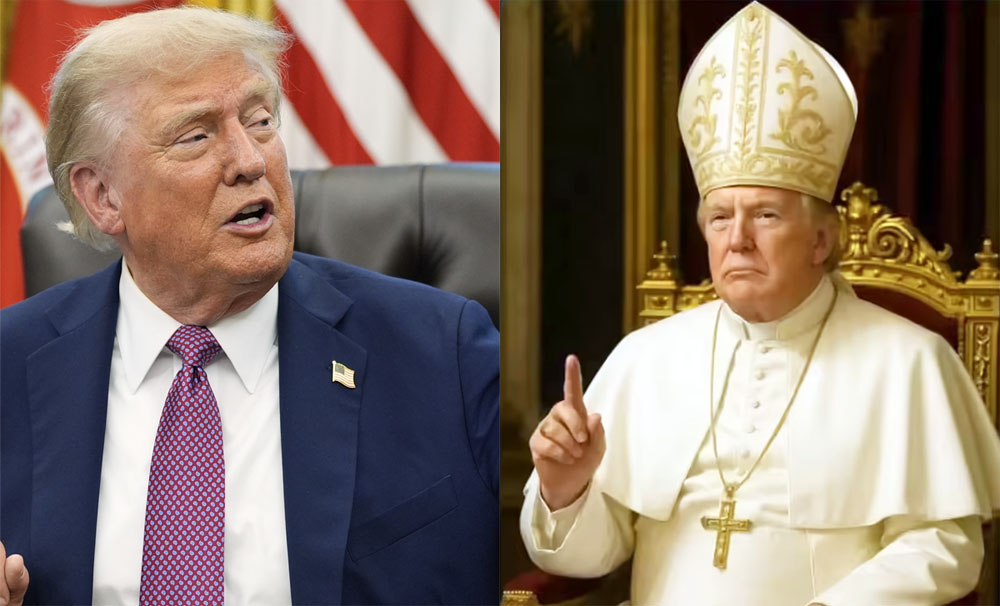
U.S. President Donald Trump has launched a fierce public attack on Pope Leo XIV, describing the pontiff as “weak on crime” and “terrible for foreign policy,” in a controversial Truth Social post that has intensified tensions between the White House and the Vatican.
The remarks come amid growing disagreements over global conflicts, particularly the Iran crisis, immigration policy, and broader U.S. foreign policy direction, where Pope Leo XIV has increasingly called for restraint and diplomatic engagement.
The Pope, who has become more vocal on international affairs, recently urged world leaders to prioritise peace, dialogue, and mediation over military escalation. Speaking at St. Peter’s Basilica, he warned against what he described as “deadly actions” and rising global militarisation.
Trump’s response followed a CBS “60 Minutes” segment featuring senior American Catholic cardinals, including Robert McElroy, Blase Cupich, and Joseph Tobin, who echoed the Pope’s criticisms of aspects of U.S. foreign policy.
Shortly after the broadcast, Trump posted a lengthy message on Truth Social, accusing Pope Leo XIV of politicising the Church and taking positions aligned with what he called the “radical left.”
READ ALSO:
- INEC Chairman Under Pressure Over Alleged Pro-Tinubu X Account Link
- 2027: Tinubu Knows Opposition Playbook, Always Ahead — Festus Keyamo
- Official, Black Market Rates Diverge as Naira Starts Week on Stable Note
In the post, Trump also questioned the Pope’s authority on global security matters, including nuclear threats and international conflicts, while defending his administration’s hardline approach to Iran and other geopolitical hotspots.
He further claimed—without evidence—that Pope Leo XIV’s selection as the first American-born pontiff was politically influenced, suggesting the Vatican may have expected him to soften criticism of the United States.
Trump also referenced the Pope’s family, saying he preferred his brother Louis Prevost, whom he described as “all MAGA,” further fuelling controversy around the remarks.
The White House has not issued an official clarification beyond Trump’s public comments, while the Vatican has so far remained silent on the escalating dispute.
Catholic leaders in the United States have continued to defend the Pope’s position, stating that his comments are rooted in humanitarian concerns, global peace advocacy, and moral leadership, rather than partisan politics.
Analysts say the confrontation represents an extraordinary moment in modern U.S. political history, marking a rare public clash between a sitting American president and the head of the Roman Catholic Church.
The dispute has also sparked debate among American Catholics, who are divided over the intersection of faith, politics, and foreign policy.
Pope Leo XIV is expected to proceed with his scheduled diplomatic trip to Africa in the coming days, even as the controversy continues to dominate international headlines.
Observers warn that the feud highlights deepening ideological divisions between nationalist political messaging and global religious diplomacy, particularly on issues of war, migration, and international cooperation.
Trump Sparks Global Outrage After Calling Pope Leo XIV “Weak, Terrible”
International
Putin Offers Iran Diplomatic Support After Collapse of US–Iran Talks

Putin Offers Iran Diplomatic Support After Collapse of US–Iran Talks
Russian President Vladimir Putin has offered diplomatic support to Iran following the collapse of high-level negotiations between Tehran and the United States, as tensions continue to escalate across the Middle East.
According to a Kremlin readout reported by AFP, Putin held a phone conversation on Sunday with Iranian President Masoud Pezeshkian, during which he expressed Russia’s readiness to help facilitate a political and diplomatic settlement to the crisis.
The Kremlin said Putin emphasized Moscow’s willingness to support efforts aimed at achieving what he described as a “just and lasting peace” in the region, including acting as a mediator if required.
The call came shortly after the breakdown of US–Iran talks, which had been aimed at resolving long-standing disputes over Iran’s nuclear programme and wider regional security issues but ended without agreement.
US–Iran Negotiations Collapse After Months of Tension
The negotiations reportedly involved senior US officials, including lead negotiators Steve Witkoff and Jared Kushner, but collapsed after prolonged discussions failed to produce meaningful progress.
READ ALSO:
- BREAKING: Military Intensifies Offensive, Destroys ISWAP Enclave in North-East
- NDLEA Smashes Drug Networks, Arrests Nonagenarian, Doctor in Nationwide Raids
- 17-Year-Old Student Allegedly Hacks Celebrity WhatsApp Accounts, Sells Explicit Content in School
A US official said the delegation withdrew following what it described as unproductive talks, while confirming that no immediate follow-up meeting had been scheduled.
Iranian Parliament Speaker Mohammad Bagher Ghalibaf blamed Washington for the breakdown, saying US negotiators failed to build trust during the discussions. He added that Iranian proposals were constructive but were not properly considered.
Diplomatic Breakdown Raises Regional Tensions
The collapse of the talks has further deepened uncertainty in the Middle East, where tensions have already been heightened by recent military and political disputes involving Iran, the United States, and Israel.
Analysts warn that continued failure to reach diplomatic compromise could worsen instability in the region and increase pressure on global energy markets, particularly oil and gas supply routes.
Russia Seeks Greater Role in Mediation Efforts
Putin’s engagement with Iran is being viewed as part of Russia’s broader effort to position itself as a key diplomatic actor in the crisis.
The Kremlin said Russia remains open to supporting dialogue between all sides, suggesting Moscow could play a more active role in future mediation efforts if both parties agree.
For now, no new date has been announced for the resumption of US–Iran negotiations, leaving diplomatic efforts at a standstill as international calls for restraint continue.
Putin Offers Iran Diplomatic Support After Collapse of US–Iran Talks
International
Trump Orders US Navy to Blockade Strait of Hormuz After Iran Talks Collapse

Trump Orders US Navy to Blockade Strait of Hormuz After Iran Talks Collapse
Donald Trump has ordered the United States Navy to begin an immediate blockade of the Strait of Hormuz, escalating tensions with Iran after the collapse of critical peace talks in Islamabad.
The directive, announced Sunday via Truth Social, signals a major shift from diplomacy to military pressure in one of the world’s most sensitive geopolitical flashpoints. Trump said U.S. naval forces would intercept all vessels attempting to enter or leave the Strait of Hormuz, particularly those suspected of paying transit tolls to Iran, which he described as “extortion.”
The move follows the breakdown of high-level negotiations between Washington and Tehran, widely seen as a rare attempt to de-escalate tensions. Although Trump acknowledged that discussions were partly productive, he insisted that the core issue—Iran’s nuclear programme—remained unresolved.
Sources familiar with the talks revealed that the مذاکرات collapsed over Iran’s refusal to give up its enriched uranium stockpile and its insistence on maintaining control over shipping activities in the strategic waterway. The Iranian delegation, led by Mohammad Baqer Ghalibaf, blamed the United States for failing to build trust during the negotiations.
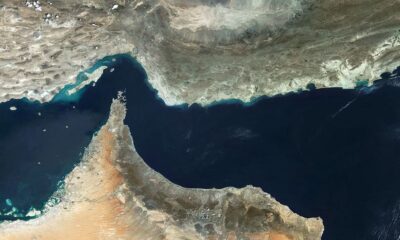
The Strait of Hormuz blockade carries enormous global implications. The narrow waterway handles roughly 20% of global oil and liquefied natural gas shipments, making it one of the most critical energy chokepoints in the world. Any disruption threatens to send shockwaves through global markets.
READ ALSO:
- Elon Musk Slams South Africa Over Starlink Ban, Calls Policy ‘Racist’
- Court Orders Forfeiture of Pastor Ebonyi’s Hotel, School, Factory Over Alleged N1.39bn Fraud
- Lagos 2027: APC Succession War Intensifies as Tinubu Reportedly Backs Hamzat
Indeed, oil prices have already surged amid the crisis, with Brent crude and WTI climbing above $115 per barrel at peak levels. Analysts warn that the blockade could push prices even higher, worsening inflation and straining economies heavily dependent on energy imports.
The escalation comes just a day after the U.S. military intensified operations in the region. The United States Central Command confirmed that American forces had begun mine-clearing operations in the Strait of Hormuz, amid allegations that Iran’s Islamic Revolutionary Guard Corps deployed naval mines to restrict shipping.
Two U.S. Navy destroyers, USS Frank E. Peterson and USS Michael Murphy, were spotted transiting the strait as part of efforts to secure maritime routes and ensure safe passage for commercial vessels.
Trump framed the blockade as a defence of global shipping freedom, warning that any Iranian attack on U.S. or allied vessels would be met with overwhelming force. However, the Pentagon has yet to release full operational details, leaving uncertainty around how the blockade will be enforced.
The situation is further complicated by developments involving Israel. Prime Minister Benjamin Netanyahu recently signalled that Israeli military operations against Iran are ongoing, despite ceasefire discussions. He stressed that Israel would act independently to protect its national interests.
Experts warn that the U.S.-Iran conflict escalation could rapidly spiral into direct military confrontation, with far-reaching consequences for global security. Shipping companies have already begun rerouting vessels, while insurers are raising premiums due to heightened risks in the Gulf.
As of now, Iranian authorities have not issued an official response to the blockade order. Meanwhile, global markets are bracing for volatility as trading resumes, with investors closely monitoring developments in the region.
The unfolding crisis highlights the fragile state of U.S.-Iran relations and underscores the strategic importance of the Strait of Hormuz to global energy supply and economic stability.
Trump Orders US Navy to Blockade Strait of Hormuz After Iran Talks Collapse

-
 metro2 days ago
JUST IN: FG Publishes List of 48 Individuals, Groups Linked to Terrorism Financing in Nigeria
-

 metro14 hours ago
BREAKING: Troops Arrest 15-Year-Old Linked to Killing of Gen Braimah in Borno
-

 metro2 days ago
42-Year-Old Married Woman Declared Missing Found in Hotel with Man
-
 Politics2 days ago
Did Faleke Just Reveal Lagos’ Next Governor? Party Moves Begin
-

 Education3 days ago
Germany Opens Fully Funded Scholarships for Nigerians, Africans
-

 Politics2 days ago
2027: Oyo APC Governorship Aspirant Saheed Oladele Resigns From Party
-
 metro2 days ago
ADC Threatens Civil Disobedience To Force INEC Chairman To Resign
-

 metro15 hours ago
Fayose Warns Makinde May Query Olubadan Over Absence at Ibadan Coronation Event