

International
Russian airstrike hits maternity hospital, as officials warn of fast-rising civilian toll+ Photos

MUKACHEVO, Ukraine — A Russian airstrike hit a Ukrainian maternity hospital in the besieged coastal city of Mariupol on Wednesday, injuring at least 17 staff members and patients as leaders warned of the fast-rising civilian toll of the two-week-old conflict, officials said.
The blast tore the front off one of the buildings in the hospital complex and damaged several others. One pregnant woman was evacuated on a stretcher; a long bleeding gash on her left hip was visible in images from the scene. Another pregnant woman, bleeding from her forehead, walked down a staircase, a faded rose-print blanket draped over her shoulders, her possessions in a purple plastic bag. A flaming car sat on a square that was punctuated with gnarled, burned trees.
“What kind of country is this, Russia, which is afraid of hospitals and maternity hospitals and destroys them?” Ukrainian President Volodymyr Zelensky said in a late-night video, appearing close to tears. “Were pregnant women going to fire at [the Russian city of] Rostov? Did someone in the maternity hospital abuse Russian-speakers? What was that? Was it the de-Nazification of the hospital?”
The bombing punctuated another devastating day in Ukraine, where leaders made increasingly desperate calls for more Western help, while U.S. officials warned that Russia seemed to be launching more indiscriminate attacks and making small but strategic gains on key cities. U.S. officials also warned that Russian rhetoric about chemical weapons could mean they were plotting a “false-flag” attack.
Officials feared that the coming days could be particularly grim for refugees and Ukrainians who have camped out in basements and subway stations to try to avoid Russian bombing. The United Nations said Wednesday it had recorded 516 civilian deaths, including 37 children, in the fighting so far, but it said in a statement that “the real figures are considerably higher.”

Evgeniy Maloletka/AP Ukrainian servicemen work inside of the damaged maternity hospital in Mariupol.
The governor of the region that includes Mariupol, Pavlo Kyrylenko, said in a video posted on Telegram that the 17 injured people in the Mariupol attack were mostly staff members and that no children were hurt. It was not immediately clear how full the hospital was when it was hit, with Mariupol encircled by Russian forces and city life largely having come to a halt. Patients appeared to have been using at least a portion of the aboveground maternity wards.
The attack drew immediate global condemnation, along with promises of more support for the embattled country.
“There are few things more depraved than targeting the vulnerable and defenceless,” British Prime Minister Boris Johnson wrote on Twitter.
The World Health Organization said earlier Wednesday it had so far verified 18 attacks on health facilities in Ukraine. The attacks inflicted 10 deaths and 16 injuries, the organization said.
READ ALSO:
- BREAKING: Bandits kill 13 soldiers, five policemen, vigilante in Kebbi
- Four policemen feared dead as Fashola, Ngige’s convoy crashes in Delta
- Bamise: Sanwo-Olu slams critics, BRT suspends operations, family demands justice
“These attacks deprive whole communities of health care,” said WHO Director General Tedros Adhanom Ghebreyesus.
The Russian military appears to be throwing inexperienced soldiers into combat, acknowledging Wednesday that at least some conscripted soldiers had been sent into battle despite Russian President Vladimir Putin’s orders to leave the fighting to professionals. Putin on Wednesday ordered military prosecutors to investigate who was responsible for disobeying the order, Kremlin spokesman Dmitry Peskov said.
Adding to worries about an escalation, White House press secretary Jen Psaki warned that Russia may be planning a “false-flag” chemical weapons attack, after Russian officials claimed to have evidence that the United States had supported a bioweapons program in Ukraine, and that “Ukrainian nationalists” were readying a chemical weapons “provocation” close to the Russian border near Kharkiv. U.S. officials dismissed the accusation.
“Now that Russia has made these false claims,” Psaki said on Twitter, “we should all be on the lookout for Russia to possibly use chemical or biological weapons in Ukraine, or to create a false flag operation using them.”
There were fears that the scale of the human suffering could grow even more if Ukraine’s nuclear facilities failed as a result of the fighting. Ukraine’s power grid operator, Ukrenergo, warned Wednesday that the closed Chernobyl nuclear power plant had been disconnected from the grid and that there were just 48 hours of fuel left for the diesel backup generators that keep the cooling and ventilation systems at the plant operational.
Ukrainian Foreign Minister Dmytro Kuleba demanded a cease-fire with Russia so repairs could be made, warning that after reserve diesel generators run out of fuel, “cooling systems of the storage facility for spent nuclear fuel will stop, making radiation leaks imminent.” The International Atomic Energy Agency was slightly less urgent, saying Wednesday on Twitter that the power loss “violates [a] key safety pillar on ensuring uninterrupted power supply” but adding that “in this case IAEA sees no critical impact on safety.”
Both Russia and Ukraine announced routes to allow people to leave hard-hit cities. But after accusing Putin’s forces of shelling the escape routes four days in a row, Ukrainian officials remained skeptical about the temporary cease-fire announcements.
Officials in Izyum, one of the cities set to be evacuated, alleged Wednesday that efforts to get civilians out were compromised by shelling from Russian forces. Other evacuations appeared to be proceeding. Local officials in the northeastern Sumy region, from which 5,000 people were able to evacuate a day earlier, said people were leaving in private cars and that they planned to load 22 buses, prioritizing pregnant women, women with children, older people and people with disabilities.

Evgeniy Maloletka/AP An injured pregnant woman walks downstairs in the damaged maternity hospital in Mariupol
By Friday morning, much of Ukraine could be hovering around 14 degrees Fahrenheit, with gusty winds from the east that make the air feel even more bitter. And parts of northeastern Ukraine could get up to four inches of snow through Friday. The bitter temperatures are expected to make the situation in the country more difficult — for soldiers and civilians alike.
A senior U.S. defense official, speaking on the condition of anonymity under rules set by the Pentagon, said Wednesday that Russia’s military campaign appears to be growing more indiscriminate as its troops make small but strategic gains on key cities.
There are “indications” the Russians are dropping “dumb munitions,” the official said, but added that it was “not totally clear whether that is by design” or because precision-guided munitions were somehow damaged.
“While we can’t prove a certain dumb bomb is hitting a certain target … what we see manifested is increasing damage to civilian infrastructure and civilian casualties,” the official said. Avoiding such casualties, the official added, “cannot be aided by the use of dumb bombs.”
The Biden administration has been adamant that it will not involve U.S. troops in the war and thus far has dismissed calls from Zelensky and others to impose a no-fly zone over Ukraine, saying enforcement could risk putting U.S. and NATO military personnel in direct conflict with Russian forces. But as the advance on major cities continues, the humanitarian situation is becoming more dire — particularly in places like Mariupol, which, according to the defense official, is now “isolated.”
Russia has launched more than 710 missiles, about half of which were fired from locations within Ukraine, according to the defense official. In the last 24 hours, Russian troops also made gains in their assault on Kharkiv, Ukraine’s second-largest population center, moving 20 kilometers closer to the center of the city in the country’s northeast. Russian forces also have moved about 15 kilometers to the north of Mykolaiv in southern Ukraine, according to a U.S. assessment, representing another territorial gain.
If the southern city falls, it could become a staging ground for a Russian assault on the large port city of Odessa, the defense official said.
The Pentagon believes Ukraine still has the bulk of its fixed-wing aircraft “available to them and operational,” the official said, but the Russians have surface-to-air missile systems that “virtually cover the whole country.”
“One has to assume they’re taking that into effect before they decide to fly manned aircraft,” the U.S. defense official said.

Evgeniy Maloletka/AP Ukrainian emergency personnel work at the side of the shell-damaged maternity hospital in Mariupol on March 9.
That posture appears to have been driving some skepticism in the United States about the logic of sending Ukraine more attack aircraft, as Poland has been pressing to do. On Tuesday night, the United States rejected a Polish proposal to move MiG-29 warplanes to a U.S. base in Germany so they could be deployed to aid Ukraine at the United States’ direction.
Psaki reiterated Wednesday that there “obvious concerns” with such a plan.
“It doesn’t require a military expert to understand why having planes fly from a U.S. air base into … a country where there is a war is not in our interests and not in NATO’s interests,” she said.
Psaki also cited problems with alternative suggestions for transporting those planes from Poland into Ukraine. “Carting them down the street,” she said, was not as easy as people might think.
“They have to be taken apart and put back together,” Psaki said. “You have to have people who are able to put those planes back together. You have to ensure that they can be safely moved through the course of a contested country.”
But U.S. officials also acknowledged that Ukrainian leaders may feel the need to press for whatever assistance they can get.
“If I were in President Zelensky’s position, I’m sure I would be asking for everything possible … to help the Ukrainian people,” Secretary of State Antony Blinken said at a news conference with visiting British Foreign Secretary Liz Truss.
Truss was more direct in her skepticism.
“The best way to defend” Ukraine, she said, is “with antitank weapons and anti-air weapons.”
Birnbaum, Demirjian and Firozi reported from Washington. Karly Domb Sadof, Elyse Samuels, Amy B Wang and Karen DeYoung in Washington and Karla Adam, Annabelle Timsit and Adela Suliman in London contributed to this report.
Washington Post











International
More Than 1,000 Migrants Rescued Off West Africa in One Week
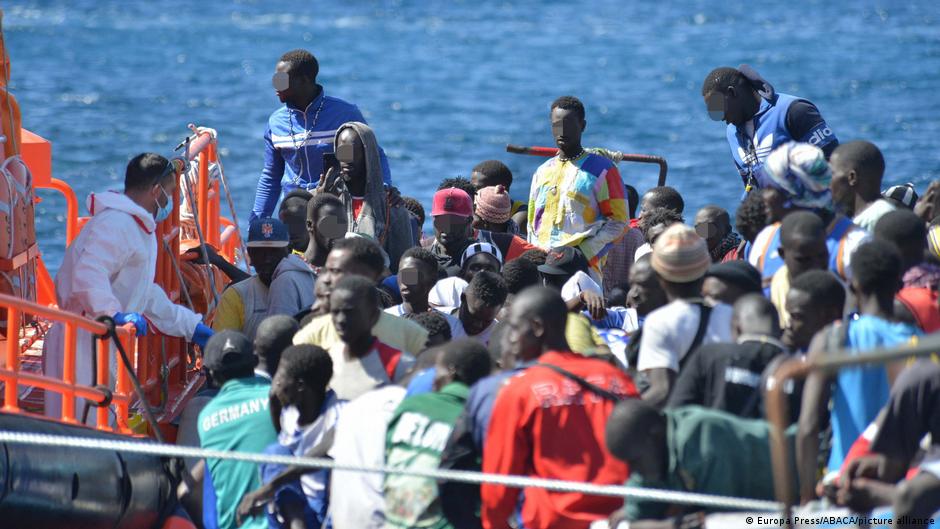
More than 1,000 migrants attempting to reach Spain’s Canary Islands have been rescued from the Atlantic Ocean after seven boats reportedly broke down during the dangerous journey from West Africa.
International
UN Adopts New World Map Showing Africa Bigger, US Smaller in Landmark 2026 Vote
UN Adopts New World Map Showing Africa Bigger, US Smaller in Landmark 2026 Vote
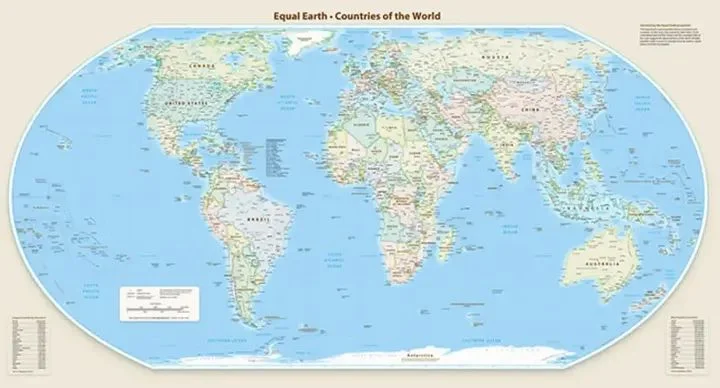
The United Nations General Assembly has approved a historic resolution encouraging countries to adopt a new world map that more accurately reflects the true size of continents — a move that makes Africa appear significantly larger while shrinking North America and Europe. The United States was the only nation to vote against it.
On September 4, 2026, the UN General Assembly passed the resolution with 164 votes in favour, 6 abstentions, and just one opposed — the United States. The six countries that abstained were Ukraine, Moldova, Georgia, Serbia, Lithuania, and Estonia. The resolution, spearheaded by the West African nation of Togo and backed by the African Union, encourages governments, schools, and technology companies to phase out the centuries-old Mercator projection in favour of the Equal Earth projection developed in 2018. Togo’s Foreign Minister Robert Dussey, who presented the resolution, declared: “A fair world begins with a fair map.”
The resolution seeks to correct a distortion that has shaped global perceptions for over 450 years. The Mercator projection was created in 1569 by Flemish cartographer Gerardus Mercator specifically for maritime navigation. While it preserves accurate angles and directions, it severely distorts land area proportions: regions near the poles appear much larger than they actually are, while equatorial regions appear smaller. The most glaring example of this distortion is the comparison between Africa and Greenland. On a standard Mercator map, the two landmasses appear roughly the same size. In reality, Africa is 14 times larger than Greenland — Africa covers about 30.3 million square kilometres, while Greenland covers just 2.1 million. Advocacy groups point out that Africa could contain the United States, China, India, Japan, Mexico, and most of Europe within its area and still have space left.
READ ALSO:
- Kneeling to Propose Is Why Western Marriages Fail — Pete Edochie Sparks Fresh Debate
- US Strikes Three Iranian Oil Tankers in Retaliation for Missile Attack on Navy Ships
- Ondo Tragedy: 3 Siblings, Including Twins, Found Dead Near River on Family Farm
The Equal Earth projection, developed by cartographers Bojan Savric, Bernhard Jenny, and Tom Patterson in 2018, preserves the relative surface areas of continents while maintaining recognisable shapes. Under this new projection, Africa appears in its true massive scale — dramatically larger than in the familiar Mercator map. North America and Europe, by contrast, appear noticeably smaller. “Equal Earth preserves the relative surface areas of continents and, as much as possible, shows their shapes as they appear on a globe,” cartographer Bojan Savric told AFP in 2025. “Correcting the map means restoring to continents in the minds of people the reality of the true dimensions,” said Togo’s Foreign Minister Robert Dussey. He stressed that the campaign is “not directed against any nation, region, or civilization” but serves a “universal goal: to promote knowledge based on scientific rigour, respect for truth, and the equal dignity of peoples.”
American representatives dismissed the resolution as a distraction from pressing global issues. Speaking before the vote, US representative Yaryna Ferencevych argued that “such resolutions and the ideological agenda they promote hinder the work of this institution and lead to a decline in its credibility.” She urged member states to reject the text and focus instead on “genuine issues of international peace, prosperity, or good relations between nations.” Despite the US objection, the resolution passed overwhelmingly. It carries no legal force and does not mandate the replacement of existing maps — rather, it encourages institutions to educate the public on the limitations of flat maps and to adopt more accurate representations. The resolution “in no way challenges the use of the Mercator projection for maritime and aerial navigation, for which it remains fully suited,” the Togolese ministry said in a statement.
African leaders hailed the vote as a significant victory for continental representation. The African Union Mission to the UN welcomed the resolution as a “significant step towards ensuring that the map of the world reflects Africa’s true scale and place in the world.” Togo’s Dussey announced that Togo would become the first country to replace its geography textbooks with the new maps by the end of 2026, and the nation plans to engage with African Union members and other supporters to promote adoption globally. France, a co-sponsor of the resolution, expressed strong support. Foreign Minister Jean-Noël Barrot said in a speech at the Sorbonne: “Changing the map obviously won’t change the world… but correcting a distorted representation is itself an act of truth.” The advocacy group “Unfiltered Africa,” which promotes the Equal Earth map, welcomed the UN decision, stating: “We hope to see accurate maps in schools, textbooks, newsrooms, businesses, and the digital platforms used by billions of people every day.”
UN Adopts New World Map Showing Africa Bigger, US Smaller in Landmark 2026 Vote
International
US Strikes Three Iranian Oil Tankers in Retaliation for Missile Attack on Navy Ships
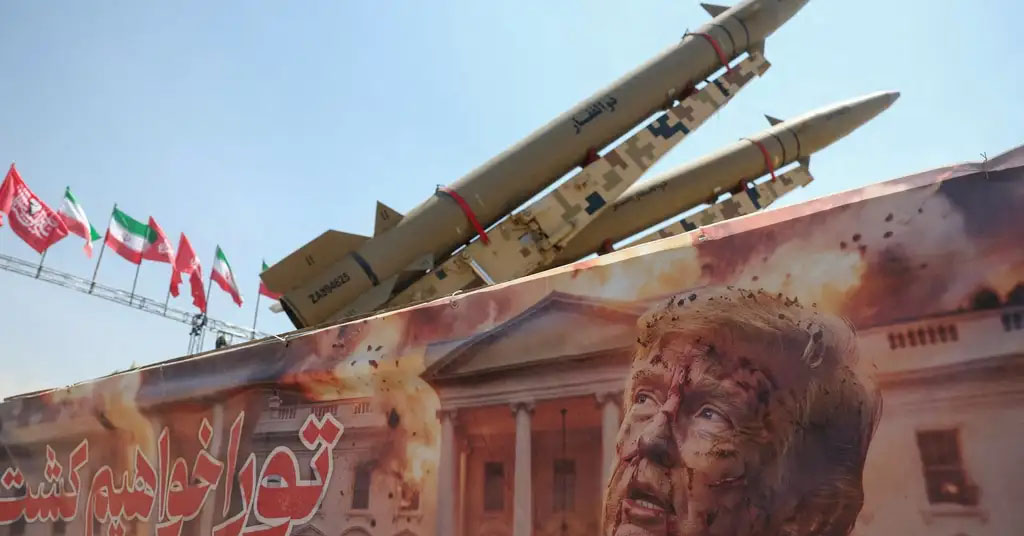
US Strikes Three Iranian Oil Tankers in Retaliation for Missile Attack on Navy Ships
Tensions in the Gulf of Oman escalated dramatically on September 5, 2026, as the United States military struck and disabled three Iranian crude oil carriers, following missile and drone attacks by Iran’s Islamic Revolutionary Guard Corps (IRGC) on U.S. Navy warships patrolling regional waters.
The confrontation began when the Islamic Revolutionary Guard Corps (IRGC) launched ballistic missiles toward two U.S. Navy warships operating in the region. According to U.S. Central Command (CENTCOM), an American aircraft carrier and a guided-missile destroyer successfully evaded multiple Iranian attacks, with no American personnel harmed. The IRGC claimed, however, that its missiles struck and damaged both vessels, forcing them to withdraw from the area.
In response to what it described as “unprovoked” Iranian attacks, CENTCOM forces permanently disabled two Iranian crude oil carriers—the M/T Downy off the coast of Kharg Island and the M/T Stark 1 near Jask. American forces also completely destroyed the unladen crude oil carrier M/T Kylo, also known as the “Noxen,” in the Gulf of Oman, striking it at multiple critical locations after the crew was directed to abandon ship. The U.S. military later released video footage showing the vessel sinking into the Gulf of Oman.
READ ALSO:
- Ondo Tragedy: 3 Siblings, Including Twins, Found Dead Near River on Family Farm
- Three killed, 20 injured in Ife-Ilesa Expressway crash
- Kano Political Earthquake: Kwankwaso Loyalists Dump NDC, Defect to APC in Major 2027 Blow
According to CENTCOM, the three tankers were part of a multibillion-dollar Iranian “shadow network” allegedly used to finance the IRGC and its regional proxy groups. The command noted that Iran has no means to defend these vessels. CENTCOM Commander Adm. Brad Cooper issued a stark warning to the IRGC, stating: “Let the message to the IRGC be clear: If you shoot at two of our ships, we will impose an even higher economic cost —taking out three of yours. We will not hesitate to defend American forces, and if necessary, destroy Iran’s limited and exposed oil fleet.”
U.S. Secretary of War Pete Hegseth also issued a direct warning to Tehran via social media: “It’s simple: if Iran shoots at US ships, we will destroy (and sink) their oil tankers. All they have to do is not shoot at @USNavy. Iran’s oil tanker fleet is defenceless — Iran has no navy or air force. Our planes, ships & subs can strike them all.” The strikes marked the first reported U.S. attacks on Iranian oil tankers in the Persian Gulf since the beginning of the conflict, adding a new dimension to the confrontation and raising concerns over the security of Iran’s maritime energy infrastructure.
Iran’s Foreign Ministry strongly condemned the U.S. attacks, describing them as “illegal and irresponsible” and a continuation of U.S. military aggression, naval blockade, and economic warfare against Iran. The ministry stated that the actions constituted a violation of Article 2(4) of the United Nations Charter, a war crime, and a threat to international peace and security, adding that the consequences would rest with the United States and its allies. A senior Iranian military official, Brigadier General Habibollah Sayyari, said Iran had withstood attacks despite facing an adversary with extensive technological and military capabilities, describing the conflict as a test of will and endurance. The IRGC warned that continued U.S. military action would draw “heavier” responses from Iran’s armed forces.
Following the attacks, the U.S. Embassy in Bahrain issued a security alert urging American citizens in Bahrain and across the region to exercise heightened vigilance and prepare for possible flight cancellations, airspace closures, and other travel disruptions amid heightened regional tensions.
The latest clashes have cast new doubt on the already fragile ceasefire between the U.S. and Iran, which had been announced on April 8, 2026, through Pakistani mediation. The U.S. has maintained its naval blockade of Iranian ports since April 13, with CENTCOM stating that more than 70 oil tankers are currently being prevented from entering or leaving Iranian ports, with the capacity to transport over 166 million barrels of Iranian oil worth an estimated $13 billion. As both sides accuse each other of violations and vow further retaliation, the risk of a wider military escalation remains high.
US Strikes Three Iranian Oil Tankers in Retaliation for Missile Attack on Navy Ships
-

 metro3 days ago
APC rally: Suspected thugs attack journalists, smash Radio Nigeria vehicle in Kano
-

 Education2 days ago
FG Opens N2.5bn Grant Window For 50 Student Innovators Under “Next Moonshot Initiative”
-

 Politics2 days ago
Peter Obi, Others Challenging Tinubu Cannot Transform Nigeria — Datti Baba-Ahmed
-

 Politics3 days ago
Kano Political Earthquake: Kwankwaso Loyalists Dump NDC, Defect to APC in Major 2027 Blow
-

 Entertainment3 days ago
Wizkid Mocks Davido’s Family Wealth: “Rich and Empty” — Afrobeats Feud Escalates
-

 Auto2 days ago
Kaduna to Lead Govt Patronage of Local Vehicles as Sani Unveils Peugeot 5008
-

 metro2 days ago
Socialite Igho ‘Tiny’ Ubiribo Dies After Penis Enlargement Surgery
-

 Politics2 days ago
Demystifying the Political Monolith: Wike’s ‘See Finish’ Doctrine and Nigeria’s New Political Calculus