

Business
Senate cautions CBN over cash withdrawal limits

The Senate on Wednesday asked the Central Bank of Nigeria (CBN) to exercise restraint on its latest policy on cash withdrawals.









Auto
NAJA 19th Auto Awards: Industry’s best to battle for honours December 3

NAJA 19th Auto Awards: Industry’s best to battle for honours December 3
The battle for recognition among Nigeria’s automobile brands, executives and industry players will reach its climax on December 3, 2026, as the Nigeria Auto Journalists Association (NAJA) stages the grand finale of its 19th annual automotive awards.
The prestigious ceremony, scheduled for the Civic Centre, Victoria Island, Lagos, is expected to bring together leading automobile manufacturers, distributors, dealers, financial institutions, policymakers, motoring enthusiasts and other major stakeholders in the automotive industry.
The organisers said the 19th edition is being designed to surpass previous editions in scale, organisation and glamour, without compromising the credibility and professional standards for which the awards have become known.
Chairman of the 2026 NAJA Awards Planning Committee, Frank Kintum, said the committee was determined to deliver a ceremony that would reflect the growing importance of the automotive industry to Nigeria’s economy.
According to him, the awards have evolved beyond a mere celebration of popular brands to become a platform for identifying and rewarding individuals, companies and products that have made measurable contributions to the development of the sector.
READ ALSO:
- 15 northern states may collapse if fuel subsidy returns, OAU professor warns Atiku
- Kano Hisbah arrests 22 suspected crossdressers over alleged hook-up, drug abuse
- Two Weeks of Silence: Families of 600 Abducted Muslim Worshippers in Niger Demand Govt Action
Kintum said the 19th edition would be “bigger and more glamorous” than previous editions, adding that the committee was working to ensure that every aspect of the ceremony reflects the quality, innovation and achievements of the industry.
He said products, brands and personalities would be assessed across relevant segments of the automotive sector, with winners emerging through the approved NAJA awards modalities.
Also speaking on the awards, NAJA Chairman, Theodore Opara, said the association was focused on rewarding genuine excellence rather than simply celebrating the biggest players in the market.
Opara said the objective was to recognise individuals and organisations that had demonstrated measurable excellence and made meaningful contributions to the growth and transformation of Nigeria’s automotive industry.
He noted that the awards had continued to gain relevance among industry stakeholders because of the credibility attached to the judging and evaluation process.
The 2026 edition comes at a critical period for Nigeria’s automotive industry, which is undergoing significant transformation driven by emerging technologies, electric mobility, local vehicle production, changing consumer preferences and evolving government policies.
Against this backdrop, NAJA said the awards would provide an opportunity to celebrate companies and individuals at the forefront of these changes and those contributing to the future direction of the industry.
The association urged automobile manufacturers, distributors, dealers and other stakeholders to participate actively in the awards process as preparations gather momentum for the December 3 grand finale.
NAJA 19th Auto Awards: Industry’s best to battle for honours December 3
Auto
Jetour Takes Rely R8 Premium Pickup to Abuja in Major FCT Debut
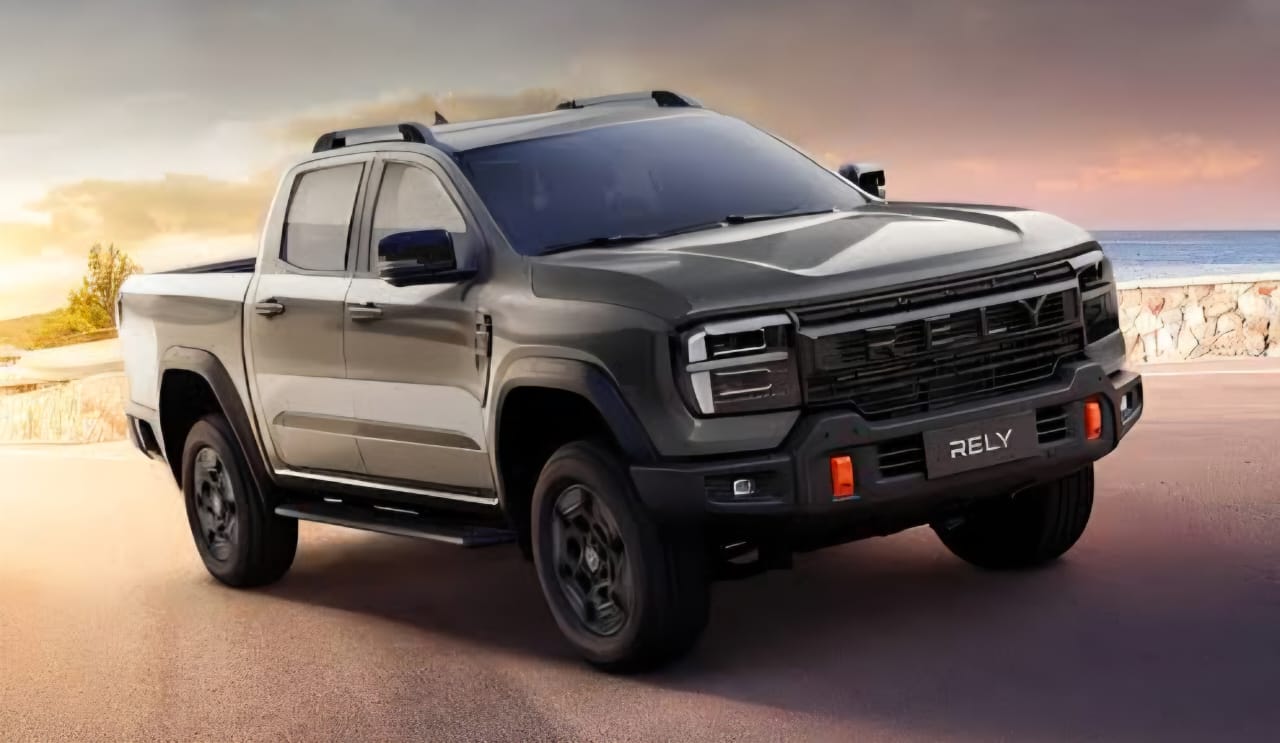
Jetour Takes Rely R8 Premium Pickup to Abuja in Major FCT Debut
Jetour Nigeria is taking the battle for Nigeria’s premium pickup market to Abuja with the debut of the all-new RELY R8, a heavy-duty pickup that combines rugged off-road capability with the comfort, technology and refinement of an executive SUV.
The premium pickup will headline the Jetour Experience in the Federal Capital Territory from September 22 to 24, 2026, following the strong reception recorded during the showcase in Lagos.
The Abuja edition is expected to attract government officials, corporate executives, fleet operators, business owners, automobile enthusiasts and members of the media, with prospective customers given an opportunity to experience the R8 first-hand.
The RELY R8 is positioned as a versatile workhorse designed to serve demanding sectors including agriculture, construction, logistics and security, while offering the level of comfort and sophistication increasingly demanded by premium pickup buyers.
Unlike conventional work-oriented pickups, the R8 seeks to bridge the gap between utility and executive motoring, combining heavy-duty capability with a refined cabin and advanced technology.
READ ALSO:
- Trump’s Peace Envoys Arrive in Moscow as Russia Bombs Ukraine Airports Overnight
- NAJA 19th Auto Awards: Industry’s best to battle for honours December 3
- 15 northern states may collapse if fuel subsidy returns, OAU professor warns Atiku
Its off-road credentials are underpinned by high ground clearance, a reinforced chassis and an All-Terrain Management System featuring dedicated driving modes for mud, sand and asphalt.
The configuration is designed to give the pickup the versatility to move from challenging work environments to recreational adventures without compromising its rugged character.
Inside, Jetour has given the R8 a spacious five-seat cabin with SUV-inspired ergonomics, targeting drivers and passengers who spend long hours on the road.
The smart cockpit is powered by a high-performance processor and supports Level 2+ intelligent driving assistance. It also comes with a 12.3-inch HD touchscreen, Apple CarPlay, Android Auto and remote engine-start functionality.
For Jetour Nigeria, however, the R8’s appeal goes beyond performance and technology, with the company putting considerable emphasis on ownership support.
The automaker currently operates through seven accredited dealerships across the country, including Elizade Nigeria Limited, New Era AutoVehicle Services, Kojo Motors, Germaine Auto Centre, Tab Autos, R.T. Briscoe Motors and Mandilas Motors.
The network is expected to provide customers with access to authorised service facilities, genuine spare parts and manufacturer-backed warranty protection.
The company is also leveraging its growing presence in the Nigerian market, following industry recognition from the Nigeria Auto Journalists Association.
Jetour was recently named Fastest Growing Auto Brand of the Year by NAJA, while the Jetour Dashing won the Car of the Year award at the NAJA International Auto Awards.
The latest Abuja showcase is therefore expected to provide Jetour with another opportunity to strengthen its footprint in the premium and commercial vehicle segments, particularly among fleet operators and corporate users.
Jetour Nigeria is inviting prospective customers, automotive stakeholders and enthusiasts to register for test drives and obtain updates on the Abuja experience through its website, social media platforms or email.
With its combination of heavy-duty capability, off-road technology, premium cabin appointments and intelligent driving features, the RELY R8 is expected to be one of the major attractions of the Abuja automotive calendar this month.
Jetour Takes Rely R8 Premium Pickup to Abuja in Major FCT Debut
Business
BREAKING: OPay Warns Customers Against Viral Shutdown Message, Threatens Legal Action
BREAKING: OPay Warns Customers Against Viral Shutdown Message, Threatens Legal Action
OPay, one of Nigeria’s leading digital financial services platforms, has dismissed reports circulating on social media claiming that the company is shutting down its operations or proceeding on an indefinite leave.
The company, in an official statement, described the messages as false and misleading, urging its customers and members of the public to disregard the reports and refrain from sharing unverified information.
The clarification comes amid messages being circulated across social media platforms allegedly advising OPay customers to withdraw their funds because the fintech company was purportedly preparing to shut down.
However, OPay said there was no basis for the claims, stressing that its operations remained fully functional and that customers could continue to use their accounts as usual.
“OPay remains fully operational, and your money is safe and secure,” the company stated, adding that its services were continuing to run normally.
The digital banking platform assured customers that they could continue using their OPay accounts “with confidence,” apparently seeking to calm concerns that may have arisen from the viral messages.
OPay further pointed to its regulatory status in Nigeria, stating that it is duly licensed by the Central Bank of Nigeria (CBN) and its deposits are insured by the Nigeria Deposit Insurance Corporation (NDIC).
The company said its regulatory and insurance status underscored its commitment to providing safe, reliable and convenient financial services to Nigerians.
READ ALSO:
- Ghana Launches Marrify App to Let Users Verify Partner’s Marital Status Before Marriage
- Viral TikTok Live Catches Regina Daniels at Ned Nwoko’s House: Is There a Reconciliation?
- From University of Lagos to Canadian Dean: Nigerian Scholar Appointed Law Dean at USask
The fintech firm also revealed that the authorities had taken the circulation of the alleged false information seriously.
According to OPay, the Central Bank of Nigeria, in conjunction with security and law-enforcement agencies, is investigating the individuals responsible for creating and spreading the messages.
The company warned that those found culpable would face legal consequences.
“We take this matter seriously,” OPay said, adding that violators would be prosecuted “to the full extent of the law.”
The company also appealed to its customers to exercise caution when receiving information about its operations, particularly messages circulated through social media and other unofficial channels.
OPay urged users not to believe or share unverified claims, advising them to rely on the company’s official communication channels for accurate information concerning its services.
Reaffirming its commitment to the Nigerian market, the company said: “OPay is committed to Nigeria and Nigerians. We are here, and we are not going anywhere.”
The statement ended with an appreciation to customers for their continued confidence in the digital banking platform.
The development comes against the backdrop of the growing influence of digital financial platforms in Nigeria, where millions of customers use fintech applications for money transfers, payments, savings and other financial transactions. Consequently, unverified reports concerning the stability of a major digital banking platform can generate considerable anxiety among users.
OPay’s clarification therefore appears aimed at preventing panic withdrawals and reassuring customers that its services remain available.
BREAKING: OPay Warns Customers Against Viral Shutdown Message, Threatens Legal Action
-

 metro3 days ago
20-year-old arrested over alleged gang-rape of 19-year-old woman in Ogun
-

 metro3 days ago
Presidency breaks silence on Tinubu’s US FOIA case, denies criminal trial
-

 metro3 days ago
Oyo kidnap rescue: Five security personnel, four civilians killed — DSS DG
-

 News3 days ago
NAF recruitment 2026: Step-by-step guide to applying for BMTC 47/2026
-
 Business2 days ago
BREAKING: OPay Warns Customers Against Viral Shutdown Message, Threatens Legal Action
-

 metro3 days ago
NBA controversy: VDM apologises to security agencies over ‘unknown gunmen’ remarks
-

 Politics3 days ago
Amaechi: Atiku will restore electricity subsidy if elected in 2027
-

 Education3 days ago
LASU: Mother allegedly assaults daughter’s roommate, student rushed to LASUTH with eye injury