

Africa
South Africa’s President Ramaphosa re-elected as ANC party leader

South Africa’s President Cyril Ramaphosa has been re-elected as the leader of the ruling party, the African National Congress (ANC) on Monday.
Ramaphosa survived a parliamentary vote last week coming from the corruption scandal of his farm Phala Phala dubbed “Farmgate.”
A few ANC party members of parliament (MPs) rebelled via the ballot but Ramaphosa had been widely tipped to secure re-election for a second five-year term.
However, his campaign was dogged by the Farmgate scandal that broke in June, involving large sums of foreign currency found hidden at his private game farm.
READ ALSO:
- Why Elon Musk may soon step down as Twitter CEO
- Olaiya Igwe to face filmmakers’ disciplinary committee for stripping naked to pray for Tinubu’s victory
- Cash limits: PoS operators give CBN ultimatum
The country’s leader denied wrongdoing and has not been charged with any crimes over the scandal, but it has raised questions about how he acquired the money and whether he declared it.
Ramaphosa’s main opponent for the leadership was Zweli Mkhize, who was the health minister during the height of the Covid-19 pandemic, until Ramaphosa put him on special leave last year.
He placed Mkhize on special leave after allegations that his department had irregularly awarded contracts to a communications company controlled by his former associates










Africa
Midnight Horror : Woman Slaughters Husband, Two Children, Escapes Murder Conviction
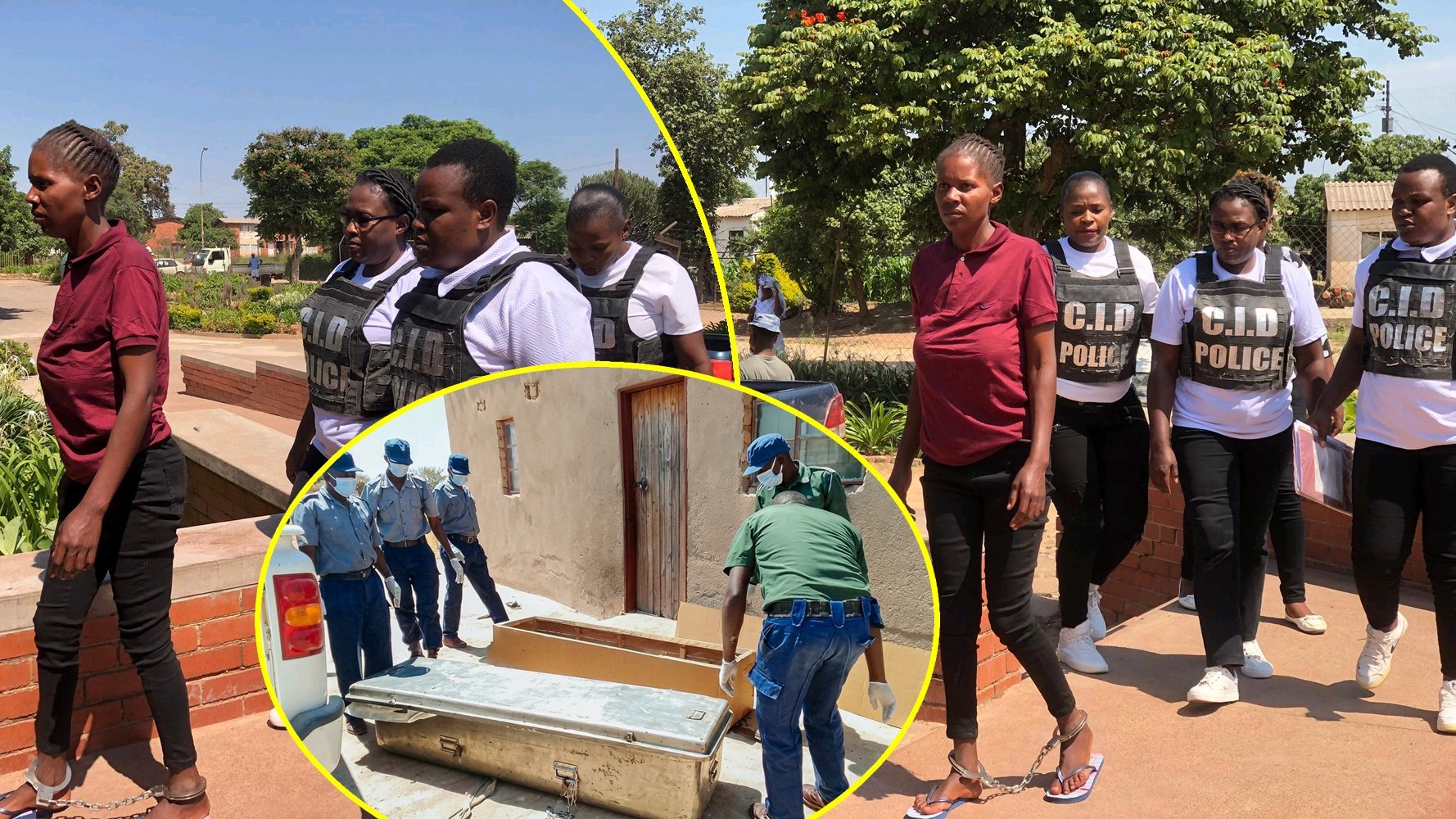
Midnight Horror : Woman Slaughters Husband, Two Children, Escapes Murder Conviction
A Zimbabwean woman who killed her husband and two young children after reportedly struggling with severe financial hardship has been acquitted of three murder charges by the High Court in Bulawayo following psychiatric findings that she was suffering from a mental disorder when the killings occurred.
The woman, identified as 34-year-old Happiness Chimbangu, appeared before Justice Donald Ndirowei over the deaths of her husband, Edwin Chimbangu, 35, their four-year-old son, Promise, and their seven-month-old daughter, Prudence.
However, the court ruled that she could not be held criminally responsible for the killings because of her mental condition at the time of the incident.
According to details presented before the court, the tragic incident occurred in the early hours of January 30, 2025, at the family’s residence in Cowdray Park, a suburb of Bulawayo, Zimbabwe.
The court heard that Chimbangu had expressed suicidal thoughts the previous day, January 29, when she visited her mother’s residence at about 3pm and asked her to take care of her two children, saying she intended to end her life.
Her mother reportedly counselled her before she returned to her matrimonial home.
Concerned about her condition, her husband later contacted his mother-in-law at about 10pm, asking her to come to their residence because his wife was again displaying suicidal tendencies.
The woman’s mother subsequently arrived with a relative, while two church members, identified as Jethro Sibanda and Shepherd Ndlovu, also joined the family to counsel her.
The group reportedly spent several hours speaking with Chimbangu in an attempt to calm her down.
They eventually left shortly after midnight after believing that she had recovered and was no longer a danger to herself.
However, the situation reportedly took a devastating turn barely 10 minutes after they departed.
The court heard that at about 12.10am on January 30, Chimbangu realised that her husband and children had fallen asleep before picking up a metal digging tool, commonly described as a metal digger, inside the house.
She allegedly attacked her husband, striking him on the head and killing him instantly.
She subsequently attacked their four-year-old son, inflicting fatal injuries to his back, face and head, before turning on the seven-month-old baby girl and striking her on the face and head.
All three victims died in the attack.
The court further heard that at about 2am, Chimbangu went to her uncle and confessed that she had killed her husband and children.
Her uncle, identified as Moyo, reportedly took her to a police station and reported the incident, leading to her arrest.
Police officers who visited the residence recovered the bloodstained metal tool allegedly used in the attack.
Following her arrest, Chimbangu was referred for psychiatric evaluation at Mlondolozi High Security Prison in Bulawayo.
Medical examinations conducted by a doctor identified as Dr Chinova in February 2025, May 22, 2025, and September 30, 2025, reportedly established that she was suffering from a mental disorder.
Further court proceedings established that she had been suffering from schizoaffective disorder when she committed the offences and was mentally incapacitated to the extent that she could not be held criminally responsible for her actions.
Both the prosecution and defence reportedly agreed that she should receive a special verdict under Section 29 of Zimbabwe’s Mental Health Act.
Justice Ndirowei consequently found her not guilty of the three murder charges on account of her mental condition.
However, the ruling did not mean that she was immediately released from custody.
The judge ordered that Chimbangu remain at Mlondolozi for psychiatric treatment and continued management until she is certified mentally fit by a medical doctor.
The case has renewed attention on the importance of recognising and responding appropriately to severe mental health crises, particularly when individuals exhibit suicidal tendencies or other warning signs that could place themselves and members of their families at risk.
Midnight Horror : Woman Slaughters Husband, Two Children, Escapes Murder Conviction
Africa
21 Dead, 40 Injured as Drone Hits Market in Sudan’s Darfur Region

21 Dead, 40 Injured as Drone Hits Market in Sudan’s Darfur Region
At least 21 people have been killed and more than 40 injured in a drone strike on a market in Nyala, a city in Sudan’s western Darfur region, as fighting between the Sudanese military and the paramilitary Rapid Support Forces (RSF) continues.
The attack occurred at about 8 p.m. on Monday, October 26, 2026, in a market in northern Nyala, according to witnesses and a medical source at Nyala Hospital. The city serves as the de facto capital of the RSF-controlled areas in western Sudan.
A medic at Nyala Hospital confirmed the death toll and said more than 40 people had been wounded. However, the medic could not determine how many of those killed or injured were RSF fighters and how many were civilians.
A resident said the market was frequented by young men, including members of the paramilitary group. The identities of the victims and the intended target of the strike had not been independently established.
READ ALSO:
- Ansaru Claims Killing of Katsina Cleric Masussuka as Police Launch Manhunt
- MURIC Accuses Police Contractor of Refusing to Rebuild Mosque at Lagos Barracks, Demands Equal Treatment
- Nigerian Navy Recruitment 2026: October 31 Deadline, Full Requirements and How to Apply
The Sudanese military has regularly carried out airstrikes on Nyala, where the RSF has established a rival administration. However, responsibility for the latest market strike had not been independently confirmed.
The attack comes amid an intensification of drone warfare in Sudan, with unmanned aircraft increasingly being used in the conflict. Reports citing United Nations figures said drone attacks killed more than 300 people and injured hundreds more during the first three weeks of October.
The conflict between Sudan’s armed forces and the RSF began in April 2023 and has triggered widespread destruction, mass displacement and severe food shortages. Millions of people have been forced from their homes, while access to healthcare and other essential services has deteriorated in many parts of the country.
The latest strike adds to concerns over the safety of civilians in areas affected by the fighting, particularly markets and other public places where armed personnel and ordinary residents may be present.
Further information about the victims, the intended target and responsibility for the Nyala attack was not immediately available.
21 Dead, 40 Injured as Drone Hits Market in Sudan’s Darfur Region
Africa
Nairobi Mother Says Husband Abandoned Her During Childbirth, Paid Dowry for Another Woman

A Kenyan mother has recounted the emotional and financial hardship she allegedly endured after her husband left her struggling to pay hospital bills following childbirth, only for her to later discover signs that he was preparing to marry another woman.
Salome Wambui, a mother of two from Njoro in Nakuru County, Kenya, said she moved to Nairobi in 2024 to build a home with her husband after dating him for about a year. However, she told Kenyan news outlet TUKO.co.ke that their relationship deteriorated during her pregnancy, leaving her increasingly isolated and struggling to meet basic needs.
According to Salome, her husband began spending less time at home after taking up work driving public service vehicles along the Kitengela route. She said he eventually visited only about once a week and declined her suggestion that they relocate closer to his workplace.
The situation became more difficult when Salome was five months pregnant and lost her grandmother, who had raised her following her mother’s death. She said her husband did not attend the burial and later told her he intended to move out.
Having left her job in Nakuru when she relocated to Nairobi, Salome said she had no steady income to support herself as her pregnancy progressed. Her sister became an important source of assistance, helping her with food and other basic needs.
Salome said she began experiencing frequent bleeding when she was pregnant, raising concerns about her health and that of her unborn child. She eventually gave birth about a month before her expected delivery date after doctors induced labour.
READ ALSO:
- Akpabio Under Fire as Senators Move to Secure His Return as Senate President in 2027
- Lamine Yamal Shines as Barcelona Thrash Real Betis 5-2
- Tinubu Scraps Recruitment Waiver Requirement for Federal Universities
The most distressing experience, according to her account, came when she needed money to pay the hospital admission deposit. She said she contacted her husband, but he claimed he had been arrested in Athi River and did not provide the money she needed.
With the hospital bill still outstanding, Salome said she approached a woman who operated an M-Pesa shop in the building and borrowed money to pay the deposit. She gave birth that night.
Her husband reportedly visited the following day, saw the newborn and left without providing money for the immediate expenses.
Salome said she subsequently had to borrow more money to settle the discharge bill and meet basic needs for herself and the baby. She also discovered that some household belongings, including a television, gas cylinder and cooker, were missing from their home.
According to her account, her husband returned when the baby was about six weeks old and brought back the television. They lived together for approximately another month before he left again, later taking the television away.
As the debts accumulated, Salome said she eventually sold her refrigerator to repay people who had assisted her during her hospital stay. She recalled that her husband questioned her decision to sell the appliance without consulting him, despite the financial difficulties she said she had faced.
Her suspicions about another woman reportedly grew after she noticed that her husband was protective of his phone. Salome said she later saw messages between him and another woman’s mother that appeared to indicate money was being sent following requests.
She contrasted the alleged financial support with what she received during her pregnancy, saying her husband gave her about KSh150 a day and did not buy supplies for the expected baby.
Salome said she sometimes skipped meals to save money for baby clothes, relying on her sister and other people for assistance.
The situation took another turn about a month after her husband left for good. Salome said she came across a photograph he had posted showing him dressed in matching outfits with another woman. She suspected that a dowry ceremony had taken place, although the details of the reported ceremony were not independently established in her account.
She also said she later learnt that her husband had converted to Islam and changed his name.
Salome, who had worked in different jobs in Nakuru before moving to Nairobi, said she had expected marriage to offer stability and an opportunity to raise a family. Instead, she said, she was left to care for her children while depending heavily on her sister’s support.
Despite the experience, Salome said she did not want to resume the relationship, explaining that the future she had hoped to build with her husband had not materialised.
Her account highlights the financial pressure, emotional distress and practical challenges she says she experienced during pregnancy, childbirth and the breakdown of her marriage. She is now focused on raising her children and rebuilding her life.
‘Nairobi Mother Says Husband Abandoned Her During Childbirth, Paid Dowry for Another Woman
-

 metro3 days ago
Nigerian Navy Recruitment 2026: October 31 Deadline, Full Requirements and How to Apply
-

 metro2 days ago
₦110.4bn Fraud Trial: EFCC Witness Traces Company Inflows To Kogi LG Accounts
-

 metro2 days ago
₦2.7bn Fraud: Court Jails Ex-Banker 39 Years
-

 Auto3 days ago
On the Highway Marks 30 Years, Sets Agenda for Safer Roads, Sustainable Mobility
-

 Sports3 days ago
Outrage as Police Respond to Dispute Involving 3-Year-Old Soccer Prodigy Accused of Outshining Older Players
-

 Auto3 days ago
China’s Auto Price War Hits German Giants as Nigeria’s Market Offers Fresh Hope
-

 metro21 hours ago
Ajaero Fires Back at TUC Over Rejection of FG’s ₦70,000 Allowance
-

 International21 hours ago
Hackers Leak Details of 41,000 US Homeland Security Personnel in Major Data Breach