

International
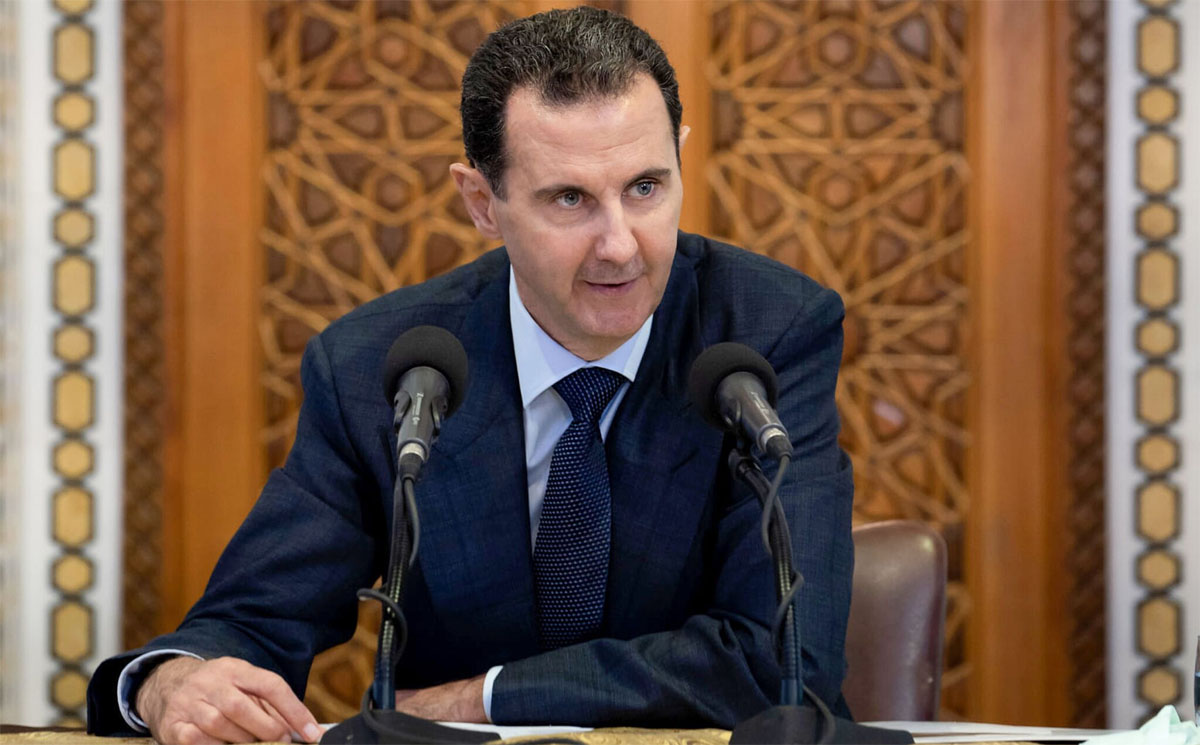
Syria President Bashar Assad flees after 50-year family reign
Syria President Bashar Assad flees after 50-year family reign
AMMAN/BEIRUT: Syrian President Bashar Assad flew out of Damascus for an unknown destination on Sunday, two senior army officers said, as militants announced they had entered the capital with no sign of army deployments.
Thousands in cars and on foot congregated at a main square in Damascus waving and chanting “Freedom,” witnesses said.
“We celebrate with the Syrian people the news of freeing our prisoners and releasing their chains and announcing the end of the era of injustice in Sednaya prison,” said the militants.
Sednaya is a large military prison on the outskirts Damascus where the Syrian government detained thousands.
A Syrian Air plane took off from Damascus airport around the time the capital was reported to have been taken by militants, according to data from the Flightradar website.
The aircraft initially flew toward Syria’s coastal region, a stronghold of Assad’s Alawite sect, but then made an abrupt U-turn and flew in the opposite direction for a few minutes before disappearing off the map.
Reuters could not immediately ascertain who was on board.
Syrian PM calls for free elections, confirms contact with opposition commander
Syrian Prime Minister Mohammed Jalali said on Sunday that Syria should hold free elections to allow its people to decide their leadership.
READ ALSO:
- Police commission dismisses 19 senior officers, demotes 19
- Kano govt criticizes FG over sealing of Emir’s palace
- World Cup qualifiers: Siasia kicks against foreign coach for Super Eagles
In an interview with Al-Arabiya, Jalali also said he had been in contact with opposition commander Abu Mohammed Golani to discuss managing the current transitional period, marking a notable development in efforts to shape Syria’s political future.
Statement read over state TV
Syrian state television earlier aired a video statement by a group of men saying that President Bashar Assad has been overthrown and all detainees in jails have been set free.
The man who read the statement said the Operations Room to Conquer Damascus, an opposition group, is calling on all opposition fighters and citizens to preserve state institutions of “the free Syrian state.”
“Long live the free Syrian state that is to all Syrians in all” their sects and ethnic groups, the men said.
Official institutions in Damascus to remain under the prime minister
The leader of Syrian militant group Hayat Tahrir Al-Sham, Abu Mohammed Al-Jolani, ordered forces Sunday not to approach official institutions in Damascus, saying they would remain under the prime minister until they are “officially” handed over.
“To all military forces in the city of Damascus, it is strictly forbidden to approach public institutions, which will remain under the supervision of the former prime minister until they are officially handed over,” Jolani said in a statement on Telegram, using his real name Ahmed Al-Sharaa instead of his nom de guerre, and adding: “It is forbidden to shoot into the air.
Syrian Prime Minister Mohammed Al-Jalali said Sunday he was ready to “cooperate” with any leadership chosen by the people.
In a speech broadcast on his Facebook account, premier Jalali said “this country can be a normal country that builds good relations with its neighbors and the world.”
“But this issue is up to any leadership chosen by the Syrian people. We are ready to cooperate with it (that leadership) and offer all possible facilities,” he added.
Jalali said he was “ready for any handover procedures.”
Just hours earlier, militants announced they had gained full control of the key city of Homs after only a day of fighting, leaving Assad’s 24-year rule dangling by a thread.
Intense sounds of shooting were heard in the center of the Damascus, two residents said on Sunday, although it was not immediately clear what the source of the shooting was.
In rural areas southwest of the capital, local youths and former militants took advantage of the loss of authority to come to the streets in acts of defiance against the Assad family’s authoritarian rule.
Thousands of Homs residents poured onto the streets after the army withdrew from the central city, dancing and chanting “Assad is gone, Homs is free” and “Long live Syria and down with Bashar Assad.”
Militants fired into the air in celebration, and youths tore down posters of the Syrian president, whose territorial control has collapsed in a dizzying week-long retreat by the military.
The fall of Homs gives the insurgents control over Syria’s strategic heartland and a key highway crossroads, severing Damascus from the coastal region that is the stronghold of Assad’s Alawite sect and where his Russian allies have a naval base and air base.
Homs’ capture is also a powerful symbol of the militant movement’s dramatic comeback in the 13-year-old conflict. Swathes of Homs were destroyed by gruelling siege warfare between the militants and the army years ago. The fighting ground down the insurgents, who were forced out.
Hayat Tahrir Al-Sham commander Abu Mohammed Al-Golani, the main militant leader, called the capture of Homs a historic moment and urged fighters not to harm “those who drop their arms.”
Militants freed thousands of detainees from the city prison. Security forces left in haste after burning their documents.
Syrian militant commander Hassan Abdul Ghani said in a statement early Sunday that operations were ongoing to “completely liberate” the countryside around Damascus and militant forces were looking toward the capital.
Existential threat to region
The pace of events has stunned Arab capitals and raised fears of a new wave of regional instability.
Qatar, Saudi Arabia, Jordan, Egypt, Iraq, Iran, Turkiye and Russia issued a joint statement saying the crisis was a dangerous development and calling for a political solution.
But there was no indication they agreed on any concrete steps, with the situation inside Syria changing by the hour.
Syria’s civil war, which erupted in 2011 as an uprising against Assad’s rule, dragged in big outside powers, created space for jihadist militants to plot attacks around the world and sent millions of refugees into neighboring states.
Hayat Tahrir Al-Sham, the strongest militant group, is the former Al-Qaeda affiliate in Syria regarded by the US and others as a terrorist organization, and many Syrians remain fearful it will impose draconian Islamist rule.
Golani has tried to reassure minorities that he will not interfere with them and the international community that he opposes Islamist attacks abroad. In Aleppo, which the militants captured a week ago, there have not been reports of reprisals.
When asked on Saturday whether he believed Golani, Russian Foreign Minister Sergei Lavrov replied, “The proof of the pudding is in the eating.”
Lebanon’s Iran-backed Hezbollah group withdrew from the Syrian city of Qusayr on the border with Lebanon before militant forces seized it, Syrian army sources said on Sunday.
At least 150 armored vehicles carrying hundreds of Hezbollah fighters left the city, long a point on the route for arms transfers and fighters moving in and out of Syria, the sources said. Israel hit one of the convoys as it was departing, one source said.
Allies’ role in supporting Assad
Assad long relied on allies to subdue the militants. Russian warplanes conducted bombing while Iran sent allied forces including Hezbollah and Iraqi militia to reinforce the Syrian military and storm insurgent strongholds.
But Russia has been focused on the war in Ukraine since 2022 and Hezbollah has suffered big losses in its own gruelling war with Israel, significantly limiting its ability or that of Iran to bolster Assad.
US President-elect Donald Trump has said the US should not be involved in the conflict and should “let it play out.”
Syria President Bashar Assad flees after 50-year family reign


International
Hamas Accepts US-Backed Disarmament Plan as Trump Unveils Gaza Peace Roadmap
Hamas Accepts US-Backed Disarmament Plan as Trump Unveils Gaza Peace Roadmap
- A landmark agreement could reshape the future of Gaza, but Israel’s official response remains pending as key details hang in the balance.
In a significant diplomatic breakthrough, the Palestinian group Hamas has formally accepted a United States-backed proposal aimed at ending the 10-month-long war in the Gaza Strip. The agreement, unveiled by U.S. President Donald Trump, outlines a phased roadmap that includes the group’s complete disarmament and a gradual withdrawal of Israeli troops from the territory. The announcement, made on Friday, marks one of the most substantial developments since the October ceasefire. However, the deal remains conditional, and Israel has not yet issued an official response, leaving the international community in a state of cautious optimism.
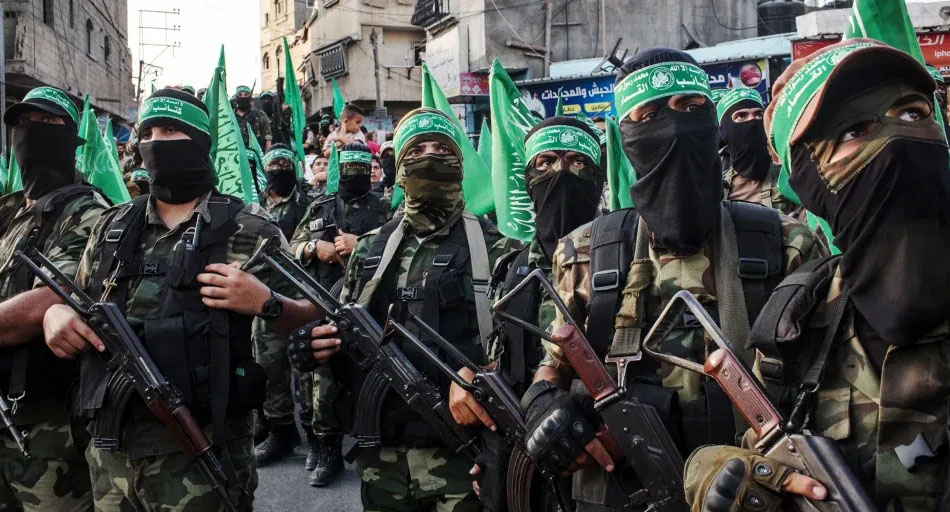
Under the proposed framework, Hamas has agreed to surrender its weapons to the National Committee for the Administration of Gaza (NCAG) , a Palestinian governing body established under the Trump-administration-led Board of Peace initiative. The disarmament process is designed to be phased and verifiable, beginning with an initial phase where Hamas police forces are expected to hand over light weapons to the NCAG within the first two weeks. This would be followed by a second, more extensive phase lasting between 200 and 350 days, during which the full decommissioning of heavy weapons, tunnels, depots, and weapons production facilities would take place under strict international oversight. The roadmap follows a “zero trust” model, meaning each phase of disarmament must be independently verified before the next step of Israeli military withdrawal can proceed. Echoing this cautious approach, Nickolay Mladenov, the Board of Peace’s High Representative for Gaza, emphasized that “withdrawal must move in lockstep with decommissioning,” underscoring the need for synchronized and carefully monitored implementation.
For Hamas, the decision represents a difficult but necessary concession aimed at alleviating the suffering of Palestinian civilians. Ghazi Hamad, a member of the group’s negotiating team, described the move as a sacrifice made for the sake of the people in Gaza, to save them from continued killing and displacement. He further clarified that Israel will not intervene in the disarmament process, which will be solely managed by the NCAG. However, a senior Hamas official stressed that full implementation of the agreement depends on Israel fulfilling its prior commitments under the initial ceasefire, which include ending all military attacks, withdrawing forces to October 2025 positions, and significantly increasing humanitarian aid deliveries into the besieged territory.
READ ALSO:
- FG to phase out electricity subsidy from 2027 as power sector debts rise
- At least 43 migrants die as 49,000 cross into Spain’s Ceuta enclave
- Segun Aina assumes office as JAMB registrar, vows to protect examination integrity
As of this report, Israel’s government has not formally responded to the proposal, and its position remains a critical unknown. An Israeli political source indicated that the current framework does not “satisfactorily” address Israel’s core demand for the complete demilitarisation of the Gaza Strip. The source also reiterated that Prime Minister Benjamin Netanyahu’s recent meeting with President Trump in Washington did not include discussions on the Gaza conflict, casting doubt on the level of Israeli engagement with the plan. Another major sticking point is the so-called “Yellow Line” buffer zone, with an Israeli official insisting there would be no withdrawal from this area before Hamas is fully disarmed. Despite these reservations, the U.S. has expressed confidence that Israel will ultimately adhere to the 20-point plan, with one official noting that President Trump would be “very, very disappointed” if it did not.
The agreement was brokered by a coalition of international mediators, including Egypt, Qatar, and Turkey, who have been engaged in months of difficult negotiations. Egypt’s state-linked Al-Qahera News reported that Cairo is expected to host another meeting to advance discussions on the second phase of the truce, signaling continued diplomatic momentum. A diplomatic source familiar with the negotiations emphasized the roadmap’s commitment to unity and order, stating that “there will be no exceptions for certain weapons or certain people,” and that the goal is to establish “one authority, one law, one weapon.” The roadmap also includes a verification mechanism designed to monitor compliance by both parties, ensuring accountability and transparency throughout the entire process.
Despite the diplomatic progress, hostilities have persisted on the ground, underscoring the fragility of the current situation. Gaza’s health authorities reported that Israeli airstrikes on Thursday killed at least four people, including two children, even as negotiations advanced. The humanitarian situation in Gaza remains dire, with widespread displacement, acute food insecurity, and a collapsing healthcare system that has left thousands without access to basic medical care. The success of the agreement hinges not only on political will from all parties but also on tangible, on-the-ground improvements in the daily lives of Palestinian civilians, many of whom have been displaced multiple times since the conflict began.
The focus now shifts from negotiation to implementation, with the Board of Peace confirming in a post on X (formerly Twitter) that the NCAG will “soon begin a phased transition toward full authority.” Key milestones to watch include Israel’s official response to the proposal, which could shape the entire trajectory of the deal; the actual start of the weapons handover process; the deployment of an International Stabilization Force to work alongside a new Palestinian police force; and meaningful progress on humanitarian aid and reconstruction efforts that could help stabilize the region. Each of these steps carries significant weight and will be closely monitored by the international community.
This agreement represents a rare moment of compromise in a conflict marked by decades of violence and deep-seated mistrust. However, the path forward is fraught with challenges, and the “zero trust” approach reflects the profound suspicions that persist on both sides. Any misstep, whether a delay in weapons handover or a disagreement over troop withdrawal, could unravel the entire framework and plunge the region back into conflict. For now, the world watches and waits, with hopes pinned on a process that remains as fragile as it is historic. As Mladenov aptly put it, “What happens next matters even more. Implementation and verification have to be real.”
Hamas Accepts US-Backed Disarmament Plan as Trump Unveils Gaza Peace Roadmap
International
At least 43 migrants die as 49,000 cross into Spain’s Ceuta enclave
At least 43 migrants die as 49,000 cross into Spain’s Ceuta enclave
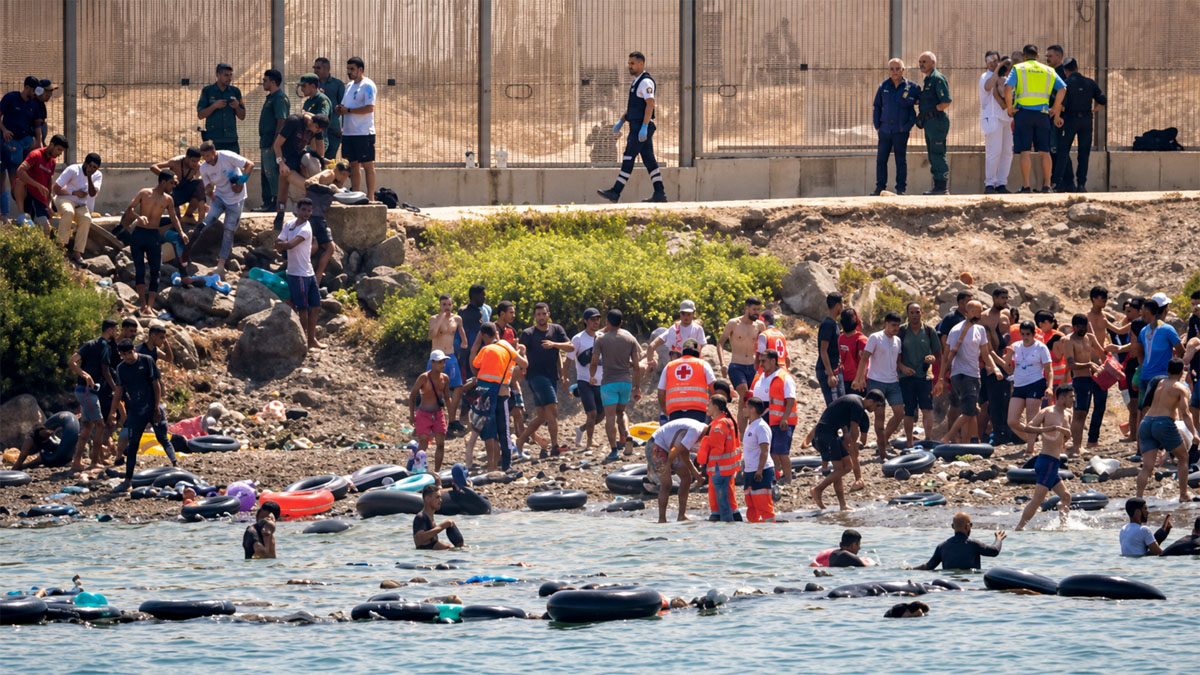
At least 43 migrants have died during a massive and chaotic attempt to enter Spain’s North African enclave of Ceuta from neighbouring Morocco, as tens of thousands of people crossed the border by land and sea.
Spanish authorities estimated that about 49,000 migrants entered Ceuta within 24 hours, creating an unprecedented pressure on the enclave’s security agencies, emergency services and reception facilities. The scale of the influx was significant for a territory with a population of about 80,000 people. (reuters.com)
Many of those attempting to reach Ceuta reportedly entered through coastal routes, with some swimming around border barriers from the Moroccan side. Others moved towards land crossings and border fences separating the Spanish territory from Morocco.
The large movement included men, women, children and families, according to reports from the area.
Authorities said several people died during the dangerous crossings, while emergency teams carried out rescue and recovery operations along the coastline.
The reported death toll has increased from the initial figure of 18 as authorities continued to assess the situation and recover bodies. The number may be subject to further updates as rescue and identification operations continue. (The Guardian)
READ ALSO:
- Segun Aina assumes office as JAMB registrar, vows to protect examination integrity
- Rivers police arrest 50-year-old man over alleged defilement of two minors
- Tyla drops Lagos from A*POP World Tour amid boycott calls, concert threats
Spanish and Moroccan authorities moved to contain the situation by reinforcing security around the border and coordinating efforts to prevent additional large-scale crossings.
Spain deployed additional security personnel to support the Civil Guard, while military units and armoured vehicles were positioned in areas around the border.
The Spanish government said it had regained control of the situation, with many of those who crossed into Ceuta returning to Morocco as authorities worked to restore normal movement around the enclave. (reuters.com)
Spanish Prime Minister Pedro Sánchez described the mass crossing as a serious challenge and called for coordinated action to protect the border while addressing the humanitarian consequences of the crisis.
The development has also drawn attention from European leaders, with concerns raised over border security, migration management and the safety of people attempting dangerous crossings. (The Guardian)
The cause of the sudden surge remains unclear.
Authorities are expected to examine whether misinformation, organised migration networks, economic pressures or other factors contributed to the unusually large movement towards Ceuta.
The crisis comes after Ceuta experienced increased migration pressure in the weeks leading up to the mass crossing. Spanish authorities had earlier reported a rise in the number of people attempting to enter the enclave by swimming from Morocco. (El País)
Ceuta and the nearby Spanish enclave of Melilla are located on the northern coast of Africa and share land borders with Morocco.
The two territories are among the main routes used by migrants seeking to enter Spain and, by extension, the European Union.
Migration attempts through the area have frequently resulted in deaths and injuries because of strong currents, difficult sea conditions, border barriers and overcrowding during large movements.
The latest incident has renewed calls for stronger cooperation between Spain and Morocco, improved border management and safer measures to protect people undertaking dangerous migration journeys.
Humanitarian groups have also stressed the need to ensure that people in vulnerable situations, including children and families, receive emergency assistance and access to appropriate protection.
Authorities are expected to provide further updates on the number of deaths, injuries, missing persons and people who remain in Ceuta as emergency and border-control operations continue.
At least 43 migrants die as 49,000 cross into Spain’s Ceuta enclave
International
Houthis Launch Missile at Saudi Arabia as Regional Tensions Escalate Amid US-Iran Strikes
-

 Aviation2 days ago
Obi Must Apologise, Pay ₦25,000 or Face FAAN Action — Keyamo Issues Ultimatum
-

 News3 days ago
Police detain Osun SSG, five others as ₦4.8m, voter cards are recovered
-

 Politics2 days ago
Where Will Peter Obi’s Votes Come From? I Can’t See It – Keyamo Predicts Tinubu’s Landslide Victory
-

 metro2 days ago
‘We’ll Marry Beautiful Ones, Kill the Rest’ – Terrorists Reject N155m Ransom for 176 Kwara Captives
-

 metro2 days ago
Grand Chief Imam warns Bennylee against religious provocation, urges respect for judicial process
-

 metro2 days ago
IGP Redeploys Osun CP to Force Headquarters Ahead of August 15 Governorship Election
-

 metro3 days ago
Suspect admits hitting UNIJOS student with plank over missing phone
-

 metro2 days ago
42 Cows Die Mysteriously in FCT Community, Herder Collapses in Shock