
International
Targeted killings: US Senators push for Nigeria’s return to religious freedom watchlist
Targeted killings: US Senators push for Nigeria’s return to religious freedom watchlist
A group of Republican senators in the United States has called on Secretary of State Marco Rubio to place Nigeria back on the list of “Countries of Particular Concern” (CPC), citing what they described as a surge in violent attacks on Christians and other religious minorities.
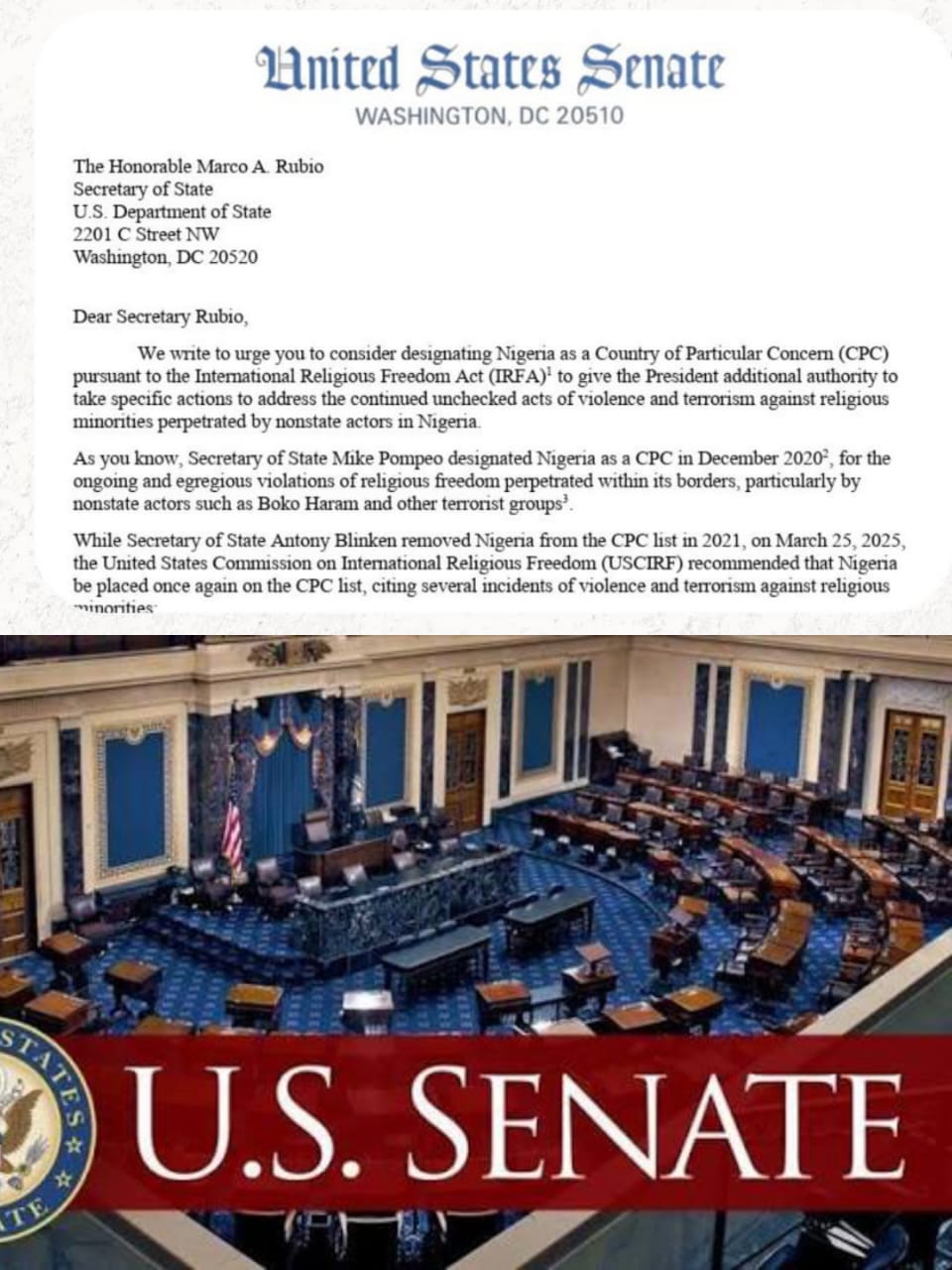 The appeal was made in a letter signed by Senators Ted Budd, Josh Hawley, Pete Ricketts, Ted Cruz, and James Lankford. The lawmakers argued that Nigeria continues to witness “unchecked acts of violence and terrorism against religious minorities.”
In their message to Rubio, the Senators wrote: “We write to urge you to consider designating Nigeria as a Country of Particular Concern (CPC) pursuant to the International Religious Freedom Act (IRFA) to give the President additional authority to take specific actions to address the continued unchecked acts of violence and terrorism against religious minorities perpetrated by nonstate actors in Nigeria.”
READ ALSO:
- 2027: NASS considers single-day general election
- Protests worldwide condemn Israeli interception of Gaza flotilla
- Naira rallies to N1,455/$; reserves hit $43bn
They recalled that Nigeria had first been categorized as a CPC in 2020 under then-Secretary of State Mike Pompeo, primarily due to atrocities committed by Boko Haram and other extremist groups. However, the designation was lifted by Antony Blinken in 2021.
The lawmakers pointed out that the U.S. Commission on International Religious Freedom (USCIRF) recommended in March this year that Nigeria be returned to the list, following repeated incidents of mass killings, kidnappings, and attacks on Christian communities.
Among the examples cited was the abduction of 160 children by Ansaru militants in Niger State in 2024, and the killing of 70 Christians in Benue State last year. The Senators also referenced more recent bloodshed: “Most recently, in late June 2025, reports suggest that at least 200 Christians in Nigeria were brutally killed by terrorists in Benue state.”
They further highlighted a report suggesting Nigeria accounted for the highest number of Christian killings worldwide during the reporting period.
The Senators also praised former President Donald Trump’s policies on religious liberty, referencing his May 2025 executive order establishing the Religious Liberty Commission and his 2019 address to the United Nations urging global action against religious persecution.
Concluding their letter, they told Rubio: “We are grateful for President Trump and your work to champion our founding freedoms at home, as well as to condemn religious persecution around the world. We hope you will carefully consider designating Nigeria as a Country of Particular Concern (CPC) pursuant to the International Religious Freedom Act (IRFA). We look forward to hearing from you.”
The renewed call comes amid growing concern in Washington about escalating violence in Nigeria. The U.S. State Department recently reiterated that it had raised the issue of repeated attacks against Christians and other vulnerable groups “at the highest levels” with the Nigerian government.
International advocacy group Open Doors ranks Nigeria as the seventh most dangerous country for Christians, noting that more believers are killed there than in the rest of the world combined.
Abuja, however, has rejected claims of systematic persecution, dismissing allegations of a targeted genocide against Christians as “false, baseless, despicable, and divisive.”
Targeted killings: US Senators push for Nigeria’s return to religious freedom watchlist










International
Iran Fires Missiles at Israel After Trump Threatens Weeks of ‘Extremely Hard’ Strikes
Iran Fires Missiles at Israel After Trump Threatens Weeks of ‘Extremely Hard’ Strikes
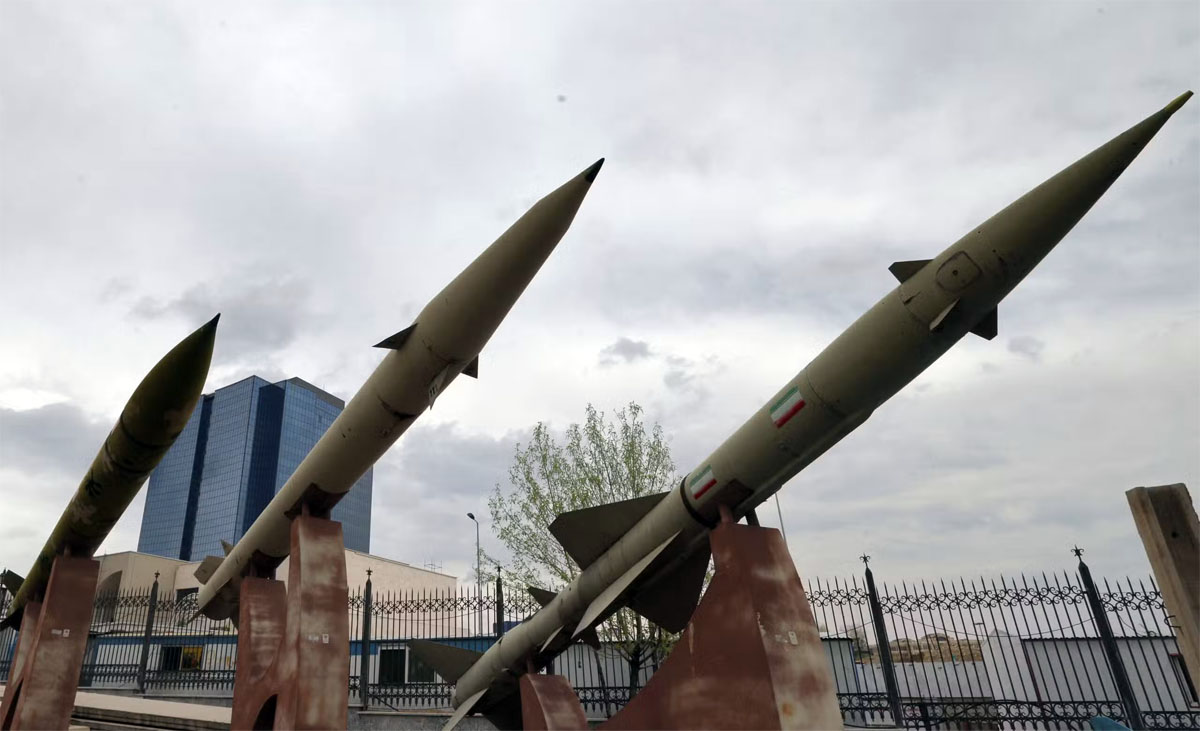
Israel came under missile fire from Iran on Thursday following a stern warning from US President Donald Trump, who said Washington could bomb Iran into the “Stone Ages” with heavy strikes over the next two to three weeks.
Speaking from the White House, Trump sought to reassure Americans that the military campaign launched on February 28, 2026, was nearing completion. He said, “Thanks to the progress we’ve made, we are on track to complete all of America’s military objectives shortly, very shortly.” He added that, over the coming weeks, U.S. forces would target key Iranian sites, including electric generating plants and critical infrastructure, unless Tehran agreed to his conditions.
Trump also indicated that negotiations might be possible with Iran’s new leadership, describing them as “less radical and much more reasonable” than their predecessor. Despite this, Iran rejected U.S. ceasefire overtures, calling the demands “maximalist and irrational,” with foreign ministry spokesman Esmaeil Baqaei confirming that no direct talks were taking place.
READ ALSO:
- NNPC Boosts Crude Supply to Dangote Refinery to Address Rising Fuel Prices
- Couple Jailed 15 Years for Selling Infant, Toddler in Calabar
- IGP Orders Massive Security Deployment in Plateau After Deadly Jos Killings
Following Trump’s address, the Israeli military reported four missile barrages within six hours, with air raid sirens sounding across northern and central Israel, including Tel Aviv and Haifa. Israeli defenses actively intercepted incoming missiles, while the Revolutionary Guards confirmed targeting an oil tanker in the Gulf, allegedly Israeli-owned, which sustained damage but caused no casualties.
The escalation also involved Iran-backed groups in the region. Hezbollah launched rockets and drones into northern Israel, while Israel struck back in Lebanon, killing several militants, including a top commander. Authorities say over 1,300 people have died in Lebanon since the war between Israel and Iran-backed forces erupted on March 2, 2026.
Meanwhile, energy markets reacted sharply, with Brent crude rising more than 4% to over $105 per barrel and West Texas Intermediate reaching around $103 per barrel, due to the de facto closure of the Strait of Hormuz, through which one-fifth of global oil normally passes. Britain hosted a virtual meeting of 35 countries to explore reopening the strait, with Prime Minister Keir Starmer emphasizing freedom of navigation.
In Tehran, Iranians expressed defiance amid the funeral of a Revolutionary Guards naval commander killed in Israeli strikes. Pro-government citizens vowed continued resistance. “This war has lasted a month. However long it takes, we will continue,” said Moussa Nowruzi, a 57-year-old pensioner.
Trump reassured regional allies — including Israel, Saudi Arabia, the UAE, Qatar, Kuwait, and Bahrain — that the U.S. would protect them from Iranian retaliatory fire. The conflict remains highly volatile, with analysts warning that further missile exchanges and regional flare-ups are likely if diplomatic solutions are not achieved soon.
Iran Fires Missiles at Israel After Trump Threatens Weeks of ‘Extremely Hard’ Strikes
International
Israeli Fire Kills Three UN Peacekeepers in Southern Lebanon
Israeli Fire Kills Three UN Peacekeepers in Southern Lebanon
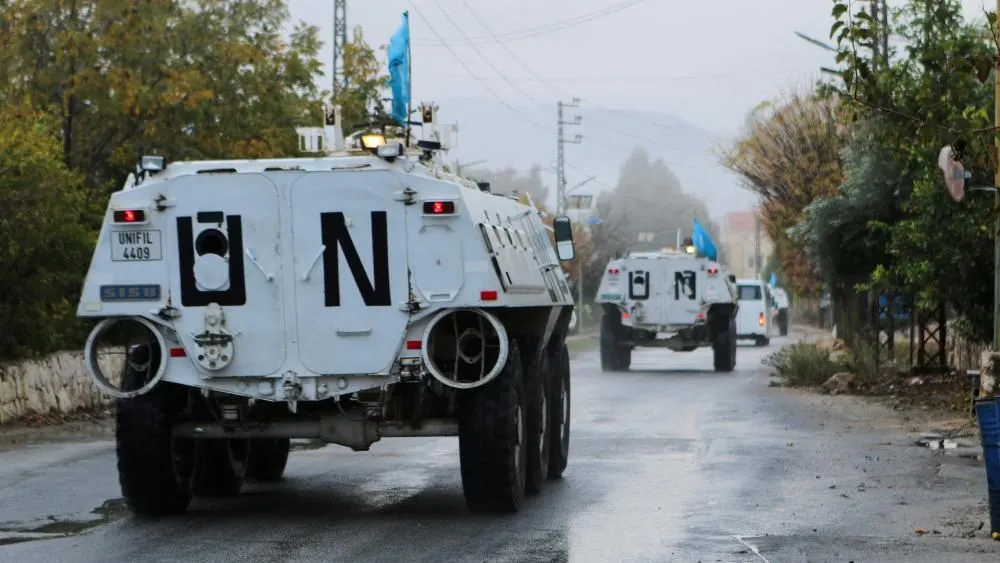
Three United Nations peacekeepers have been killed in southern Lebanon, with others seriously injured, as clashes between Israeli forces and Hezbollah militants intensify. The fatalities, all members of Indonesia’s UNIFIL contingent, mark one of the deadliest attacks on peacekeepers in recent years.
The first incident occurred on Sunday, March 29, when a projectile exploded near a UNIFIL position in Adchit al-Qusayr, killing one peacekeeper and seriously injuring another. Evidence suggests the projectile may have been fired from an Israeli tank, though investigations are ongoing. The following day, two more Indonesian peacekeepers were killed when a logistics convoy vehicle was destroyed by an explosion of unknown origin near Bani Hayyan, leaving additional personnel injured.
UN Secretary-General António Guterres condemned the killings, calling them “grave violations of international humanitarian law” and emphasizing that “no one should ever have to die while serving the cause of peace.” He extended condolences to the families of the deceased and wished a speedy recovery to the injured.
READ ALSO:
- Iyabo Ojo Quits Mediation Between Funke Akindele, Toyin Abraham
- 2027: Badagry elders rally Tinubu to back zone’s first Lagos governor
- Nigerian Man Gets 15-Year US Prison Term for $1.5M Romance Scam
The incidents have prompted the UN Security Council to convene an emergency session to address the attacks. Several European countries, including France, the United Kingdom, and Belgium, issued a joint statement urging all parties to ensure the safety of UNIFIL personnel in accordance with international law. South Korea and other nations also condemned the attacks, highlighting the critical need to protect peacekeepers in conflict zones.
The deaths come amid escalating hostilities between Israel and Hezbollah, which have involved airstrikes, rocket fire, and ground operations along the Israel-Lebanon border. Civilians in southern Lebanon have been severely affected, with thousands displaced and casualties mounting on both sides.
The Indonesian government has called for a transparent investigation into the deaths of its personnel and stressed the importance of accountability. Meanwhile, UNIFIL continues to operate along the Blue Line, though the recent attacks underscore the growing risks faced by peacekeepers in volatile regions.
Israeli Fire Kills Three UN Peacekeepers in Southern Lebanon
International
Nigerian Man Gets 15-Year US Prison Term for $1.5M Romance Scam
Nigerian Man Gets 15-Year US Prison Term for $1.5M Romance Scam
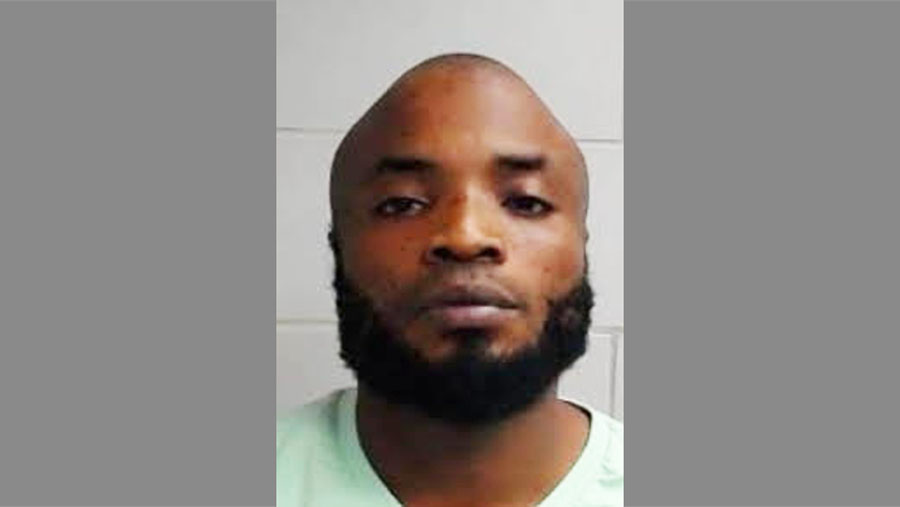
A U.S. federal court has sentenced Nigerian national Saheed Sunday Owolabi to 15 years in prison for orchestrating an international wire fraud and money laundering scheme that defrauded victims of over $1.5 million. The sentence follows his conviction for conspiracy to commit wire fraud and conspiracy to commit money laundering, highlighting the U.S. government’s crackdown on cross-border cybercrime.
According to the U.S. Department of Justice, Owolabi was a key figure in a sophisticated online scam in which he posed as a woman to build fake romantic relationships with U.S. victims—a tactic commonly known as a romance scam. Once trust was gained, the victims were persuaded to wire money into accounts controlled by Owolabi, who then laundered the funds to Nigeria.
READ ALSO:
- Céline Dion Announces Stage Comeback After Four-Year Health Battle
- Senate Passes ₦68.32trn 2026 Budget, Increases Tinubu’s Proposal
- FG Raises Gas Price to $2.18/MMBtu, Signals Fresh Economic Pressure for Nigerians
Investigations by the Federal Bureau of Investigation (FBI) revealed that Owolabi and his co-conspirators also used victim-provided accounts to launder money from other fraudulent operations. In one case, a single victim in the Eastern District of North Carolina lost more than $120,000, with many other victims nationwide affected by the scheme.
U.S. Attorney Ellis Boyle described Owolabi as a “cheat” and said the sentence underscores the FBI’s commitment to identifying, disrupting, and dismantling international fraud and money-laundering networks targeting American citizens.
The court proceedings, led by Assistant U.S. Attorney Brad DeVoe, highlighted Owolabi’s role as an organiser in the fraud, using complex money-laundering methods to conceal illicit proceeds. The case is part of broader U.S. enforcement efforts against online fraud, cybercrime, and cross-border financial crimes, particularly schemes leveraging digital platforms to exploit victims.
Authorities say the sentence serves as a strong deterrent to others involved in international scams and demonstrates that sophisticated internet fraud operations will be pursued rigorously, regardless of the perpetrators’ location.
Nigerian Man Gets 15-Year US Prison Term for $1.5M Romance Scam

-

 Entertainment3 days ago
Funke Akindele, Toyin Abraham Spark Reactions Over Alleged Snub at Iyabo Ojo’s Premiere
-

 Education2 days ago
WAEC Releases 2026 WASSCE Timetable for School Candidates
-

 Auto2 days ago
Lagos NURTW Chairman Sego Distributes Exotic Cars, Luxury Items to Cabinet Members (Video)
-

 metro2 days ago
Cars Torched as South Africans Protest Alleged Nigerian ‘Igbo King’ Coronation
-
 News3 days ago
UK Raises Visa Costs, Tightens Immigration Rules From April 8
-

 Railway1 day ago
Easter train: NRC increases Lagos-Ibadan trips, offers free Osun holiday transit
-

 Education2 days ago
JAMB Releases 2026 UTME Mock Results, Delists Over 20 CBT Centres
-

 Sports2 days ago
Osimhen Among Highest-Paid African Footballers in 2026 — See Full List