
Opinion
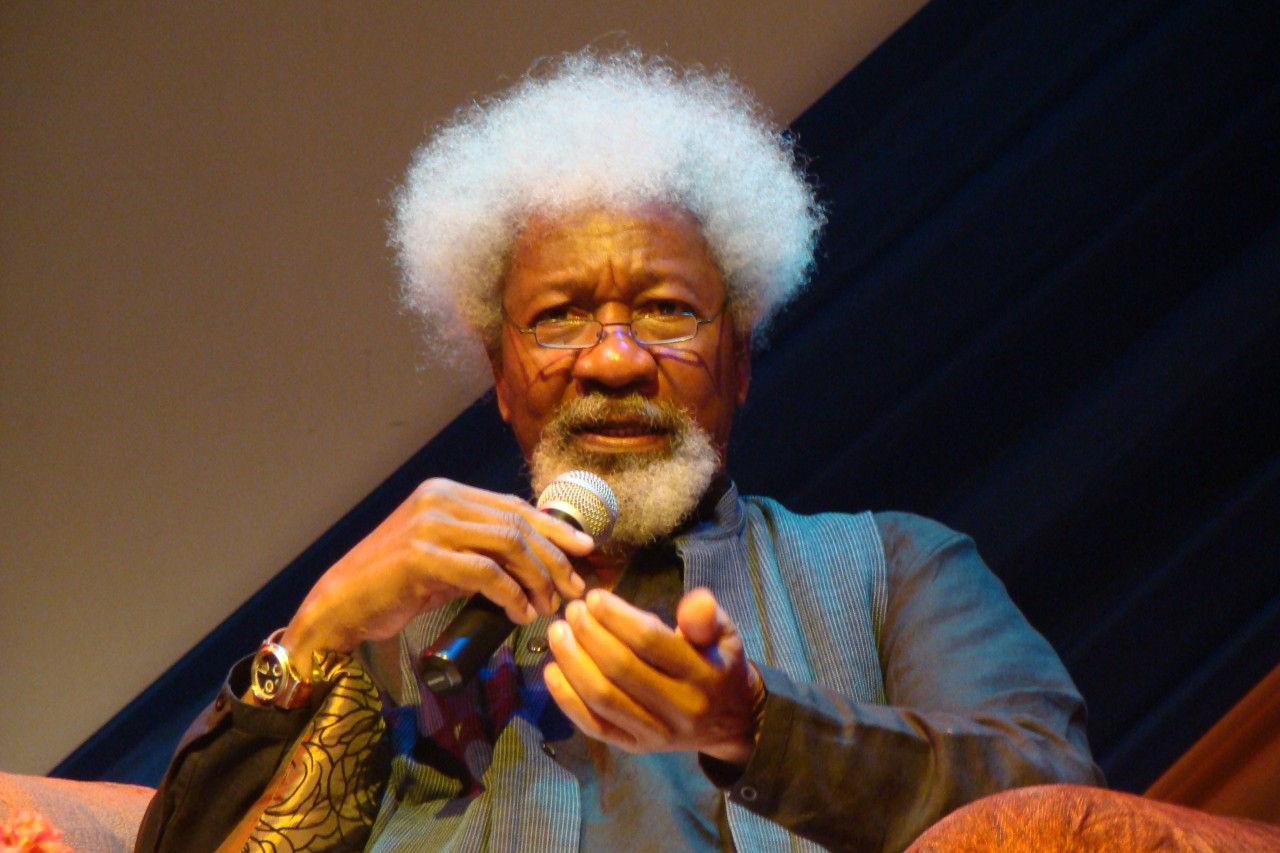
The lies of Wole Soyinka by Casmir Igbokwe
The lies of Wole Soyinka by Casmir Igbokwe
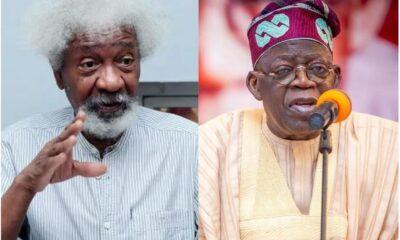
PROFESSOR Wole Soyinka is Nigeria’s elder statesman of international repute. As the first and only Nobel laureate in literature from Nigeria, his comments or actions draw global attention. Hence, he is supposed to weigh what he says and does at every point in time. Unfortunately, his recent comments, especially with regard to the February 25, 2023 presidential election, present him in the mould of an elder who stays in an open place to defecate, thereby leaving his private part as a thing of ridicule for children to point at.
Speaking last Wednesday in South Africa at an event titled, “The Lives of Wole Soyinka – A Dialogue”, the 1986 Nobel laureate said Labour Party (LP) knew its presidential candidate, Peter Obi, did not win the presidential election but was trying to force a lie on Nigerians that Obi won. As he put it, “I can say categorically that Peter Obi’s party came third not even second and the leadership knew it but they want to do what we call in Yoruba ‘gbajue’, that is force of lies.”
Soyinka further accused the LP of taking over the organised labour movement and turning it into a regional party and all such nonsense. He claimed the LP attempted to send young people into the streets to protest against the outcome of the election on the banner of lies and deceit.
This is not the first time Soyinka would challenge supporters of the LP and its presidential candidate, Mr Obi, to a wrestling match. Last March, he berated the party’s vice-presidential candidate, Yusuf Datti-Ahmed, for saying that Nigeria had no President-elect and that Tinubu should not be sworn in because he did not meet the requirements of the law. He also attacked Obi’s supporters popularly known as the Obidients, describing them as fascists. The Obidient movement fired their own missiles. Obi later visited the elder statesman and called for a ceasefire.
So, why did Soyinka decide to resurrect this quarrel? What has Obi or the LP done to him? How could he have accused the LP of attempting to mobilise young people to protest when it is obvious that most Nigerian youths are angry at the turn of events in the country and defer to nobody, not even Peter Obi?
READ ALSO:
- Nations League: Spain invite 15 World Cup winners, ignore Hermoso
-
UNGA 78: Tinubu set to address General Assembly
-
Wike demolishes popular ‘Kilishi’ market in Abuja
-
PEPC verdict: Atiku vows to seek justice beyond Supreme Court
Of course, LP couldn’t have kept quiet about the allegations against it. Soyinka, it said, exhibited dual character of someone who might be blinded by some chauvinistic tendencies. In a statement by its National Publicity Secretary, Obiora Ifoh, the party said Soyinka might have said what he said based on information made available to him by those who shared the ‘Emilokan sentiment’. “It is most befuddling as well as disconcerting that a detribalized and activist Soyinka would succumb to the groupthink syndrome that subscribes to State Capture by those belonging to the criminal fringe by any means, based on primordial considerations,” the LP said.
In any case, it is fallacious for Soyinka to categorically say that LP did not win the election. To the best of my knowledge, the Nobel laureate does not work in the Independent National Electoral Commission (INEC). He was not a returning officer anywhere during the election. He is a mere spectator like many of us who rely on the information dished out in the public domain to make our comments.
Besides, how did Soyinka in his wisdom come to the conclusion that LP turned the labour movement into a regional party? Party of which region, if one may ask? Did it become a regional party because its presidential candidate, Obi, is Igbo? Or, because the majority of the South-East people voted for it? South-East has been voting en masse for the Peoples Democratic Party (PDP) before now. Why didn’t Soyinka call the PDP a regional party then? And why didn’t he call the All Progressives Congress (APC) which has overwhelming support from the South-West a regional party?
One thing is clear: No matter whatever anybody does or says, the truth, like the moon, can never be covered by any human hand. No matter what the Presidential Election Petitions Tribunal (PEPT) says, the truth remains that the so-called victory of President Bola Tinubu in the last presidential election is highly contentious. The PEPT simply affirmed his victory with a stamp of technicalities. It failed to dispense justice which it had sworn to deliver. There wouldn’t have been any problem if Tinubu won the election fair and square. Some of us would have congratulated him and prayed for his success in piloting the affairs of Nigeria.
READ ALSO:
-
Why we killed Senator Yayi’s aide – paraded suspects
-
Acclaimed Mrs. Obasanjo is an impostor – Obj media aide
-
Police inaugurate special investigation team over MohBad’s death
But, he first sent some danger signals by urging his supporters to snatch power, grab it and run with it. His supporters did exactly as instructed. I don’t need to recount what happened in some parts of the country, especially in Lagos and Rivers States, in the name of election. The margin with which Tinubu purportedly won the election is even marginal. If the election was not rigged, it is possible that Obi would have won. Though he won in Lagos, he was denied substantial number of votes his supporters gave him. His supporters were intimidated, harassed, attacked and some of them even killed simply for coming out to exercise their franchise. Also, some markets populated mainly by the Igbo in Lagos were vandalized because the traders purportedly voted against the ruling party in the presidential election.
INEC worsened the problem with its partisanship. It transmitted election results electronically for the National Assembly election held same day, but could not do so for the presidential election. It came up with all manner of cock and bull stories, culminating in the surreptitious announcement of the result in the wee hours of March 1, 2023.
A credible observer like the European Union Election Observation Mission (EU-EOM) said it all when it issued its report on the election. According to the group, “The election exposed enduring systemic weaknesses and therefore signal a need for further legal and operational reforms to enhance transparency, inclusiveness and accountability.” Some ruling party agents attacked the report. But it is the gospel truth. The EU-EOM has no reason to lie about the election. If it was after money like some local observers, it would have supported the APC because that is the party with humongous war chest.
In all we do, let us remember that our democracy suffers when we continue to live a life of lies, intimidation and alienation of a substantial part of our populace. We may think that nothing will happen. We may continue to gloat and make merry that we have snatched power and will rule for as long as we wish. But man can only plan for today. Tomorrow is pregnant. What it will bear wears a hat.
I have simple advice for our Nobel laureate: As a man on top of a palm tree, he should stop polluting the air and putting flies in great confusion. A beautiful face does not deserve to be pinched. He is Nigeria’s beautiful bride. He should refrain from actions that will taint his name and paint him as a regional or tribal champion. – Newsprobeng.com
The lies of Wole Soyinka by Casmir Igbokwe







Opinion
AFCON 2025: Flipping Content Creation From Coverage to Strategy

AFCON 2025: Flipping Content Creation From Coverage to Strategy
By Toluwalope Shodunke
The beautiful and enchanting butterfly called the Africa Cup of Nations (AFCON) emerged from its chrysalis in Khartoum, Sudan, under the presidency of Abdelaziz Abdallah Salem, an Egyptian, with three countries—Egypt, Sudan, and Ethiopia—participating, and Egypt emerging as the eventual winner.
The reason for this limited participation is not far-fetched. At the time, only nine African countries were independent. The remaining 45 countries that now make up CAF’s 54 member nations were either pushing Queen Elizabeth’s dogsled made unique with the Union Jack, making supplications at the Eiffel Tower, or knocking at the doors of the Palácio de Belém, the Quirinal Palace, and the Royal Palace of Brussels—seeking the mercies of their colonial masters who, without regard for cultures, sub-cultures, or primordial affinities, divided Africa among the colonial gods.
From then until now, CAF has had seven presidents, including Patrice Motsepe, who was elected as the seventh president in 2021. With more countries gaining independence and under various CAF leaderships, AFCON has undergone several reforms—transforming from a “backyard event” involving only three nations into competitions featuring 8, 16, and now 24 teams. It has evolved into a global spectacle consumed by millions worldwide.
Looking back, I can trace my personal connection to AFCON to table soccer, which I played alone on concrete in our balcony at Olafimihan Street—between Mushin and Ilasamaja—adjacent to Alafia Oluwa Primary School, close to Alfa Nda and Akanro Street, all in Lagos State.
Zygmunt Bauman, the Polish-British sociologist who developed the concept of “liquid modernity,” argues that the world is in constant flux rather than static, among other themes in his revelatory works.
For the benefit of Millennials (Generation Y) and Generation Z—who are accustomed to high-tech pads, iPhones, AI technologies, and chat boxes—table soccer is a replica of football played with bottle corks (often from carbonated drinks or beer) as players, cassette hubs as the ball, and “Bic” biro covers for engagement. The game can be played by two people, each controlling eleven players.
I, however, enjoyed playing alone in a secluded area, running my own commentary like the great Ernest Okonkwo, Yinka Craig, and Fabio Lanipekun, who are all late. At the time, I knew next to nothing about the Africa Cup of Nations. Yet, I named my cork players after Nigerian legends such as Segun Odegbami, Godwin Odiye, Aloysius Atuegbu, Tunji Banjo, Muda Lawal, Felix Owolabi, and Adokiye Amiesimaka, among others, as I must have taken to heart their names from commentary and utterances of my uncles resulting from sporadic and wild celebrations of Nigeria winning the Cup of Nations on home soil for the first time.
While my connection to AFCON remained somewhat ephemeral until Libya 1982, my AFCON anecdotes became deeply rooted in Abidjan 1984, where Cameroon defeated Nigeria 3–1. The name Théophile Abéga was etched into my youthful memory.
Even as I write this, I remember the silence that enveloped our compound after the final whistle.
It felt similar to how Ukrainians experienced the Battle of Mariupol against Russia—where resolute resistance eventually succumbed to overwhelming force.
The Indomitable Lions were better and superior in every aspect. The lion not only caged the Eagles, they cooked pepper soup with the Green Eagles.
In Maroc ’88, I again tasted defeat with the Green Eagles (now Super Eagles), coached by the German Manfred Höner. Players like Henry Nwosu, Stephen Keshi, Sunday Eboigbe, Bright Omolara, Rashidi Yekini, Austin Eguavoen, Peter Rufai, Folorunsho Okenla, Ademola Adeshina, Yisa Sofoluwe, and others featured prominently. A beautiful goal by Henry Nwosu—then a diminutive ACB Lagos player—was controversially disallowed.
This sparked outrage among Nigerians, many of whom believed the referee acted under the influence of Issa Hayatou, the Cameroonian who served as CAF president from 1988 to 2017.
This stroll down memory lane illustrates that controversy and allegations of biased officiating have long been part of AFCON’s history.
The 2025 Africa Cup of Nations in Morocco, held from December 21, 2025, to January 18, 2026, will be discussed for a long time by football historians, raconteurs, and aficionados—for both positive and negative reasons.
These include Morocco’s world-class facilities, the ravenous hunger of ball boys and players (superstars included) for the towels of opposing goalkeepers—popularly dubbed TowelGate—allegations of biased officiating, strained relations among Arab African nations (Egypt, Algeria, Tunisia, and Morocco), CAF President Patrice Motsepe’s curt “keep quiet” response to veteran journalist Osasu Obayiuwana regarding the proposed four-year AFCON cycle post-2028, and the “Oga Patapata” incident, where Senegalese players walked off the pitch after a legitimate goal was chalked off and a penalty awarded against them by DR Congo referee Jean-Jacques Ndala.
While these narratives dominated global discourse, another critical issue—less prominent but equally important—emerged within Nigeria’s media and content-creation landscape.
Following Nigeria’s qualification from the group stage, the Super Eagles were scheduled to face Mozambique in the Round of 16. Between January 1 and January 3, Coach Eric Chelle instituted closed-door training sessions, denying journalists and content creators access, with media interaction limited to pre-match press conferences.
According to Chelle, the knockout stage demanded “maximum concentration,” and privacy was necessary to protect players from distractions.
This decision sparked mixed reactions on social media.
Twitter user @QualityQuadry wrote:
“What Eric Chelle is doing to journalists is bad.
Journalists were subjected to a media parley under cold weather in an open field for the first time in Super Eagles history.
Journalists were beaten by rain because Chelle doesn’t want journalists around the camp.
Locking down training sessions for three days is unprofessional.
I wish him well against Mozambique.”
Another user, @PoojaMedia, stated:
“Again, Eric Chelle has closed the Super Eagles’ training today.
That means journalists in Morocco won’t have access to the team for three straight days ahead of the Round of 16.
This is serious and sad for journalists who spent millions to get content around the team.
We move.”
Conversely, @sportsdokitor wrote:
“I’m not Eric Chelle’s biggest supporter, but on this issue, I support him 110%.
There’s a time to speak and a time to train.
Let the boys focus on why they’re in Morocco—they’re not here for your content creation.”
From these three tweets, one can see accessibility being clothed in beautiful garments. Two of the tweets suggest that there is only one way to get to the zenith of Mount Kilimanjaro, when indeed there are many routes—if we think within the box, not outside the box as we’ve not exhausted the content inside the box.
In the past, when the economy was buoyant, media organisations sponsored reporters to cover the World Cup, Olympics, Commonwealth Games, and other international competitions.
Today, with financial pressures mounting, many journalists and content creators seek collaborations and sponsorships from corporations and tech startups to cover sporting events, who in turn get awareness, brand visibility, and other intangibles.
As Gary Vaynerchuk famously said, “Every company is a media company.” Yet most creators covering AFCON 2025 followed the same playbook.
At AFCON 2025, most Nigerian journalists and content creators pitched similar offerings: on-the-ground coverage, press conferences, team updates, behind-the-scenes footage, analysis, cuisine, fan interactions, and Moroccan cultural experiences.
If they were not interviewing Victor Osimhen, they were showcasing the stand-up comedy talents of Samuel Chukwueze and other forms of entertainment.
What was missing was differentiation. No clear Unique Selling Proposition (USP). The result was generic, repetitive content with little strategic distinction. Everyone appeared to be deploying the same “Jab, Jab, Jab, Hook” formula—throwing multiple jabs of access-driven content in the hope that one hook would land.
The lesson is simple: when everyone is jabbing the same way, the hook becomes predictable and loses its power.
As J. P. Clark wrote in the poem “The Casualties”, “We are all casualties,” casualties of sameness—content without differentiation. The audience consumes shallow content, sponsors lose return on investment, and creators return home bearing the “weight of paper” from disappointed benefactors.
On November 23, 1963, a shining light was dimmed in America when President John F. Kennedy was assassinated.
As with AFCON today, media organisations sent their best hands to cover the funeral, as the who’s who of the planet—and if possible, the stratosphere—would attend. Unconfirmed reports suggested that over 220 VVIPs were expected.
While every newspaper, radio, and television station covered the spectacle and grandeur of the event, one man, Jimmy Breslin, swam against the tide. He chose instead to interview Clifton Pollard, the foreman of gravediggers at Arlington National Cemetery—the man who dug John F. Kennedy’s grave.
This act of upended thinking differentiated Jimmy Breslin from the odds and sods, and he went on to win the Pulitzer Prize in 1986.
Until journalists and content creators stop following the motley and begin swimming against the tide, access will continue to be treated as king—when in reality, differentiation, aided by strategy, is king.
When every journalist and content creator is using Gary Vaynerchuk’s “Jab, Jab, Jab, Hook” template while covering major sporting events, thinkers among them must learn to replace one jab with a counterpunch—and a bit of head movement—to stay ahead of the herd.
Toluwalope Shodunke can be reached via tolushodunke@yahoo.com
Opinion
“Christian Genocidization” of the Kaiama massacre, By Farooq Kperogi

“Christian Genocidization” of the Kaiama massacre, By Farooq Kperogi
“Christian Genocidization” of the Kaiama massacre, By Farooq Kperogi
Kperogi is a renowned Nigerian columnist and United States-based professor of Journalism
Opinion
Descending from Fela’s Afrobeat to Wizkid’s Afrobeats

Descending from Fela’s Afrobeat to Wizkid’s Afrobeats
Tunde Odesola
(Published in The PUNCH, on Friday, January 30, 2026)
Three occupants of a black Mercedes-Benz were heading to work on a good Friday morning. One was the driver, another was the aide, and their oga patapata. They came to crawling traffic on George Street in Ikoyi, Lagos, en route to Obalende, their office. The Federal Secretariat was at a touching distance.
Suddenly, a hail of gunshots rained on the black Benz like a hundred stones from the devil’s sling. Then the tyres screeched away. Then silence. Rivulets of hot blood trickled from the heads and torsos of the driver, the aide and General Murtala Ramat Mohammed. This was February 13, 1976, the first bad Friday I knew.
The second bad Friday was on February 18 of the following year. I had bounced off to St Paul’s Anglican Primary School, Idi-Oro, Lagos, in the morning, having celebrated a quiet birthday a day before. Except for the khaki-wearing planners of sorrows, tears and blood, no one else had a foreboding of what lay ahead in the day.
My class was in full session on the middle floor of the school’s two-storey wing when the news broke and shattered peace and learning. “Soldiers are attacking Fela’s house! Lagos is on fire!”
Yeepa! Fela’s house was a stone’s throw from my school. Before the teacher finished passing the information to the class, she had grabbed her bag, just as the school bell sounded, summoning everyone to the assembly ground. Exhibiting no emotion, a fair-complexioned, slim and fatherly teacher, Mr Mayungbe, disclosed the reason why the school was closing abruptly, strictly warning pupils to head straight home.
He said pupils whose homes were around Fela’s house in the Moshalashi area should wait behind for their parents and guardians to come and pick them up. Subsequently, our class teachers brought out the registers containing pupils’ addresses, calling those whose houses were not around Fela’s house to head home. My name was called. I jumped out, my bag slung across my back and headed towards the gate.
READ ALSO:
- Garba Shehu Explains Why Buhari Approved Hadiza Bala Usman’s Removal from NPA
- Police Commission Appoints New DIG, Promotes 2 AIGs, 26,119 Inspectors Nationwide
- Petrol Prices Poised to Rise Again as Global Crude Oil Market Surges
At the school gate, I thought it was a betrayal to go home and not witness the injustice soldiers were inflicting on the beautiful white house of my hero; the house located by a bend, the house whose architecture I beheld and ogled at during incessant truancy trips. So, I headed to Fela’s house located on No 14 Agege Motor Road, Idi-Oro, where thousands of soldiers were deployed to destroy a harmless civilian, his family and livelihood. Yes, livelihood, because the house had a recording facility. It also had a free health clinic. This was during the military regime headed by General Olusegun Obasanjo, an Egba man like Fela. The barbaric soldiers threw Fela’s 78-year-old mother through the window of the storey building. And she died.
To weigh in on the supremacy fire raging between Fela’s son, Seun, and Afrobeats star, Ayodeji Balogun, popularly known as Wizkid, the aforementioned background from the eyes of a little boy sheds light on the indomitable spirit of the Abami Eda, and why his legacy as the founder and father of Afrobeat is forever encased in gold.
Without ever meeting Wizkid, I wrote a two-part article titled “The god that cut soap for Wizkid” in THE PUNCH more than two years ago. The articles, published in the month of September 2023, extol the humility of Wizkid’s mother, Mrs Morayo Balogun, and the grace upon the life of her superstar son, Ayodeji.
On Friday, May 19, 2023, in a public show of shame, Seun slapped a police officer on the Third Mainland Bridge. I penned “Seun Kuti’s double-edged slap” to criticise Seun’s arrogance and stupidity. Seun’s action on that day exposes the impunity men and women of power and influence inflict when relating with people they consider lower on the social rungs. Fela, despite his avowed stance on human rights advocacy, reportedly fell short on that account on a number of occasions. Neither is Wizkid a saint in this regard. Nigeria’s big men, more often than not, exploit the weakness in law enforcement to get away with any crime. A power monger called Wasiu Ayinde disrupted a flight and attempted to stop a plane from taking off; instead of a time in jail, he was given an award. Because he was close to President Bola Tinubu.
Let’s be clear from the outset, please. This article is not a magisterial judgment on who is right or wrong in the Seun-Wizkid fight. Mark my words – Seun-Wizkid fight, not Fela-Wizkid fight. To place Fela on the same pedestal as Wizkid is to compare the storm in a teacup with the roar of the Atlantic. Igi imu jinna si ori, the distance between the nose and forehead is far. It is arduous for the fingerless fellow to thread the thread through the eye of the needle. Fela is the creator, Wizkid is the creation.
A product of the University of Ibadan and the Imperial College, London, where he specialised in Sound Processing, octogenarian music producer, the legendary Odion Iruoje, is renowned as the producer of Nigeria’s first true pop music with his collaboration with the teenage sensation band, Ofege. Iruoje, who produced a series of Fela’s first hits, including ‘Jeun Kooku’, ‘Beautiful Dancer’, ‘Alijonjokijo’, and ‘Ojuelegba’, gave an insight into how Fela created Afrobeat.
READ ALSO:
- Emefiele Allegedly Withdrew $6.23 Million Using Forged Documents — Witness Testifies
- APC Opens Dialogue With Wike to End Fubara Crisis in Rivers
- Lassa Fever Kills 17 Nigerians Across Eight States in Three Weeks — NCDC
In an interview on popular online media, Agbaletu TV, Iruoje, who read Industrial Electronics and Control Systems, said Fela came to one of the foremost recording companies in the country, E.M.I, upon returning from England, where he recorded an unsuccessful album, ‘Won Fe Gba Aya Wa’, with E.M.I. in London. The sound guru described Fela as a troublemaker whom E.M.I London didn’t want to deal with.
“When he came to me, he said, ‘Mr Iruoje, I have a new sound now, and it is called Afrobeat’. I told him what sound do you have that I have never heard before? I didn’t understand what he was saying. I told him there’s no sound you are going to play outside Highlife. So, I went to audition (him). Goodness! I couldn’t believe it when he started the horns. I have never heard such a horn arrangement in my life. No one ever did that – plenty of horns – the arrangement, ha! I couldn’t believe what I was hearing. I have never heard such a sound before. I said we have to go to the studio.
“In fact, the MD (a white man) came to my audition, he was listening to it, he said, ‘Mr Iruoje, please, can you get this man into the studio before he changes his mind?’ I said no, I have not finished with the rehearsal, he (the MD) said no, no, please, Mr Iruoje, you know he is very unstable, he could change his mind. I told the MD that Fela would not change his mind on me.
“The MD and I did not believe him when he first came to announce that he had a new sound. But he said, ‘Odion, come to the Shrine and listen to it, and see what few changes you want to do to it, and I went, we did a few changes. His rhythm guitar was (new), and first-time of his time, then he added tenor guitar and lead guitar. So, Fela had more guitars than the regular Highlife band. The regular Highlife band had only one guitar and bass, but Fela had all four. Fela influenced Juju bands because they started introducing tenor, rhythm and other guitars.”
On Fela’s flip side, Iruoje described the political activist, culture advocate and social crusader as a troublemaker, whom recording companies did not want to touch with a long pole. Because he gave E.M.I. London troubles over royalties, Iruoje was told by the authorities of the E.M.I branch in Nigeria not record Fela.
“If he signs a contract which states that his royalty would be so much (amount), that is what he signed before going to the studio, once he goes into the studio and the song starts selling and becomes a hit, he would say, “That song is no more N80 o, he wants to get N100 or N200. At times, he would snatch the master tape,” Iruoje said.
If told he signed a contract, Iruoje said, “Fela would say, what is contract? Contract is ordinary paper. That music is more than what is in the contract. He would snatch the master tape now, (and say) he was not going to release it. He (would say) we had to change that. Maybe, at times, I may not be in when he’s making the trouble, when I come back, they would say, “See what your man is doing o. He has taken (the master tape). Then I would send somebody to call him. He would come to my office because he respects me.”
To be continued.
Email: tundeodes2003@yahoo.com
Facebook: @Tunde Odesola
X: @Tunde_Odesola
Descending from Fela’s Afrobeat to Wizkid’s Afrobeats

-
 News2 days ago
BREAKING: Tinubu Holds Reconciliation Meeting With Wike, Fubara, Rivers Leaders at Aso Rock
-

 Business3 days ago
BoI Gets CBN Approval to Launch Non‑Interest Banking Window in Nigeria
-

 metro2 days ago
Leadership Crisis at NAHCON as Chairman Abdullahi Saleh Usman Resigns
-
 News2 days ago
US Judge Orders FBI, DEA to Release Tinubu’s Criminal Records, Faults Delays
-

 News1 day ago
Oyo Muslims Reaffirm Loyalty to Sultan on Islamic Matters — Grand Chief Imam
-

 News2 days ago
OWN Calls for Immediate Resignation of INEC Chairman
-

 International2 days ago
US to Deport 18 More Nigerians on ‘Worst-of-the-Worst’ Criminal List (Full Names)
-
 Business2 days ago
Naira Posts Strong Comeback, Breaking Two‑Year High Against Dollar