

Opinion
Thought subsidy was bad. Why is Tinubu bringing it back? – Farooq Kperogi
Thought subsidy was bad. Why is Tinubu bringing it back? – Farooq Kperogi
A September 21, 2023, enterprise news report (i.e., a news report that’s not from a news release or a press conference) from the Daily Trust found that “Despite the numerous assurances by President Bola Ahmed Tinubu that… subsidy is gone… the federal government paid N169.4 billion as subsidy in August to keep the pump price at N620 per litre.”
What happened? I thought petrol subsidies were evil, harmful, no-good drains on the economy that should be avoided at all costs. I thought the government had no responsibility to tame the savagery of market forces and to protect citizens from the full fury of the vagaries of international oil prices.
I thought the “invisible hand” was supposed to regulate prices unaided by any governmental intervention (which has been thoroughly disproved by the fact that petrol marketers arbitrarily increased their pump prices after Tinubu precipitously announced that subsidies were gone even though they were selling the old stock of petrol that had been subsidized by taxpayers.)
I thought it didn’t matter that unaffordable and extortionate petrol prices are causing hundreds of thousands of Nigerians to starve and die, small- and large-scale industries to collapse, unemployment to skyrocket, the economy to shrink, quality of life of the average citizen to plummet, and Nigeria as a whole to regress to the Stone Age.
READ ALSO:
- BBN-All-Stars: CeeC wins brand new Innoson car
-
FG, states, LGs get N1.1tn as August allocation
-
NLC, TUC shun meeting with Federal government
-
BREAKING: “I gave Mohbad N2million to perform at my mother’s burial, he never turned up” – Sam Larry
With the naira on an unprecedently free fall against the dollar and global petrol prices on the rise, it’s inevitable that a liter of petrol would have been at least 1,000 naira a liter by now if the “invisible hand” that conservative economists have invested so much faith in were left to determine the pump price of petrol. It’s conceivable it could climb to 2,000 naira per liter in the coming months if the government doesn’t interfere with the vagaries of the market.
Why is Tinubu committing “economic blasphemy” by misdoubting the power of the omniscient and omnicompetent Invisible Hand to take care of everything? Why is he intervening to stop the pump price of petrol from getting to its appropriate rate? Does he want our petrol to be so affordable that our neighbors will smuggle it?
Does he no longer want to save money to build and renew infrastructure and fund education? (Never mind that we haven’t seen where the money saved from the withdrawal of subsidies since May has been put to productive use. Or that only the living and the healthy can use infrastructure and go to school.)
Well, I guess Tinubu and his ideological cheerleaders in and out of government are beginning to see what some of us have been saying for years: that subsidizing an essential commodity like petrol in Nigeria whose price affects every facet of life is not an option; it is an abiding moral imperative.
The government’s primary reason for existing is to protect lives. As is by now evident, withdrawing fuel subsidies in an oil-producing country that is the poverty capital of the world, that has one of the world’s lowest minimum wages, and that has no public transportation system is a trigger for mass suffering and mass deaths.
There is something else that must have informed Tinubu’s decision to stealthily halt the impending rise in the pump price of petrol: insurance against mass anomie and revolt.
Although Nigerians can be some of the most incredibly docile and self-hypnotic people on earth, it’s stupid to assume that they will always be so. As someone once remarked, “The day when large numbers of men have to choose between feeding their children and providing a roof over their heads—is the day when nothing will stop the torches and pitchforks.”
In other words, there is a limit to human endurance of pain and deprivation. Most people won’t listlessly just roll over and perish because of persistent adversity. People with an overpowering will to live who can’t survive government-engineered suffocation of their lives (which withdrawal of subsidies amid endemic poverty represents) will turn to crime out of desperation. That’s why the crime statistics in Nigeria have quadrupled since May.
READ ALSO:
- Emefiele to regain freedom after alleged N50bn plea bargain deal with Tinubu’s govt
-
The humiliating troika of Obasanjo, Shettima and Bakare (1)
-
Resign now, save Nigeria from further embarrassment – NADECO tells Tinubu
But it’s going to get worse. For now, the victims of crimes are the poor and the disappearing middle class. The rich and the powerful are next if the current subsidy-removal-activated excruciation doesn’t abate. After the poor, the lower middle class and the middle class are dispossessed, the rich will become the next meal of the desperately poor.
“Eat the rich” is an enduring, often metaphoric, revolutionary catchphrase usually mouthed by conscientious, socially sensitive middle-class intellectuals to denote redistributive economic justice, but it could become literal in Nigeria once it gets to the point when only the rich—politicians and their underlings, wealthy businesspeople, and other government-subsidized fat cats—have all the food. That’s why so-called bread riots are historically the most common triggers of momentous mass insurrections.
Cynical conservatives in the West like to say subsidies for the poor are basically protection money to stop the poor from stealing and revolting. The rich in the West don’t want to be awake because the poor can’t sleep. The late Professor Sam Aluko captured it brilliantly in 1999 when he memorably said, “The poor cannot sleep because they are hungry, and the rich cannot sleep, because the poor are awake and hungry.”
That is why the welfare state was brought forth in the West. The International Encyclopedia of the Social & Behavioral Sciences defines a welfare state as “a state that is committed to providing basic economic security for its citizens by protecting them from market risks associated with old age, unemployment, accidents, and sickness.”
Ironically, it is the same welfarist West whose institutions (such as the IMF and the World Bank) encourage, in many cases compel, developing countries like Nigeria to strip the poor of basic economic security through the removal of subsidies.
Of course, our rapacious, self-loving leaders who want exclusive control of the state’s resources for themselves and their families welcome the freedom from being responsible to struggling citizens that removal of subsidies represents. And slavish, unthinking ideologues of the “Washington Consensus” cheer on.
READ ALSO:
-
Troops parade 8 suspected criminals over burning of Catholic Church, others in Jos
-
RTEAN renews fight against thuggery at motor parks
-
Court rejects Trump’s bid to delay trial in wake of fraud ruling
There is not an example of a single country on earth that has made progress on the basis of the cruel policies that the World Bank and the IMF impose on countries. As Professors David Held and Anthony McGrew persuasively showed in their book, Globalization/Anti-Globalization: Beyond the Great Divide, “Developing countries that have benefited most from globalization are those that have not played by the rules of the standard [neo]liberal market approach, including China, India and Vietnam” (p. 226).
In fact, even America, the patron saint of capitalism, doesn’t practice the sort of cruel, extreme capitalism that Tinubu is practicing and that even his opponents promised they would practice if they got a chance to be elected president.
As I pointed out in my December 10, 2016, column titled “Dangerous Fine Print in Emir Sanusi’s Prescriptions for Buhari,” when it comes to welfare of its citizens, America doesn’t practice on its soil what its institutions preach to developing countries.
I wrote: “But when the United States went into a recession between 2007 and 2009, it didn’t follow any of these neoliberal prescriptions. The dollar wasn’t devalued. Subsidies weren’t removed. The state wasn’t rolled back. The government didn’t retrench workers. Taxes weren’t raised.
“On the contrary, the government increased expenditure. The financial burden on the populace was eased with lower taxes. Government, in fact, sent lots of money, called tax rebate checks, to lower- and middle-income families so they could have money to spend, since recession is essentially the consequence of people not having enough money to spend. I was a beneficiary of the tax rebate, so I know what I am talking about. Financially distraught private companies (particularly car manufacturers and banks) were bailed out by the government.”
I don’t know if Tinubu and his team are finally realizing that the problem with fuel subsidy was the monstrous corruption in it and not the subsidy itself. Most of what passed as fuel subsidy was fraud. Any government worth the name should be able to tackle corruption and administer subsidies for the collective benefit of Nigerians.
But Tinubu was swept over by the idiotic anti-subsidy mass hypnosis that has engulfed Nigeria in the last few years.
This has ensured that Tinubu has had by far the shortest honeymoon in power. Why won’t he? He promised to hit the ground running but instead hit the ground ruining— with his infamous “Subsidy is gone for good” declaration on inauguration day. He promised renewed hope but is giving renewed hell. He promised the dawn of a new era, but people are seeing the dawn of a new error after Buhari.
Thought subsidy was bad. Why is Tinubu bringing it back? – Farooq Kperogi








Opinion
2027: Competence, Not Zoning, Should Decide Nigeria’s Next President — Imasuagbon
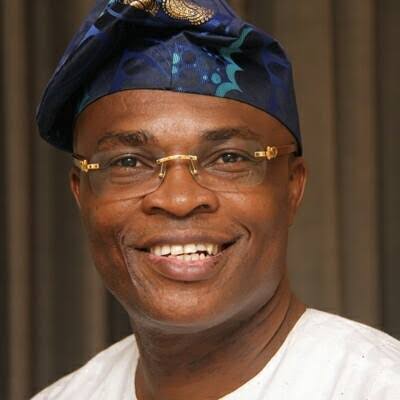
Nigerians should look beyond ethnicity, region and the longstanding debate over rotational presidency when choosing the country’s next leader, according to a chieftain of the African Democratic Congress (ADC), Kenneth Imasuagbon.
The former Edo State governorship aspirant said the priority ahead of the 2027 election should be finding a president with the ability to confront Nigeria’s economic, security and infrastructure challenges.
Speaking to journalists in Benin, Imasuagbon argued that presidential rotation is not a requirement of the Nigerian Constitution and should therefore not outweigh the question of competence.
He said voters should be more concerned about replacing poor schools with better ones, improving healthcare and addressing hardship than debating where the next president comes from.
Imasuagbon specifically appealed to voters in the South to support former Vice President Atiku Abubakar, who is contesting the 2027 presidency on the ADC platform.
According to him, Atiku has demonstrated the experience and determination needed to improve the country, describing the former vice president as someone capable of promoting national unity and fairness.
He also accused the Bola Tinubu administration of worsening economic pressure through policies including the removal of fuel subsidy, while expressing concern about the condition of roads, electricity and other infrastructure.
Imasuagbon argued that the next administration must focus on practical improvements in areas such as power, transportation, employment, security and public services.
The ADC chieftain also dismissed the idea that the ruling All Progressives Congress (APC) would automatically benefit from its incumbency advantage in 2027.
He maintained that the electorate ultimately determines the outcome of an election, arguing that voters could change the political direction of the country if they were determined to do so.
Imasuagbon further criticised what he described as regional and ethnic considerations in the distribution of political appointments and opportunities, insisting that the next president should give Nigerians across different parts of the country a sense of belonging.
His comments come as political parties and their candidates intensify preparations for the 2027 presidential election.
Opinion
Lesson from Dotun Oladipo’s Brave Daughters, by Bamidele Johnson
Lesson from Dotun Oladipo’s Brave Daughters, by Bamidele Johnson
I hope to grow old. I want to see my kids become real adults, find their own feet, make mistakes, recover from them, and perhaps one day complain that their own children are giving them grey hairs. I want that plainly stated before anything else, as everything that follows might read as a man agreeing to an early exit rather than a man simply being honest about the odds.
I want the decades. I want to become the grandfather who repeats the same stories until nobody bothers correcting him anymore. But wanting a thing and being granted are different things. The last year has made that difference harder to ignore than I would like. I have lost many friends recently to keep thinking that optimism is my natural resting state. Some of these men had better blood pressure than mine, better habits, better everything that is supposed to count. It did not save them.
There is no formula I know that reliably separates the men who make it to 70 from those who do not. Anyone who says he knows one is selling something. So, I do not assume that old age is an already booked destination. Even if I once did, which I doubt, the last three years have cured me of such an illusion. As such, I treat it as a hope rather than an expectation, and I have found that a more honest way to live.
It is exactly why I want something placed on record now, while I am still able to place things on record, rather than leave it for people to guess what my wishes were in the fog of a funeral week. If I do not make old bones, my children are not to be asked to read tributes at my funeral. Not one line, however short, however lovingly written.
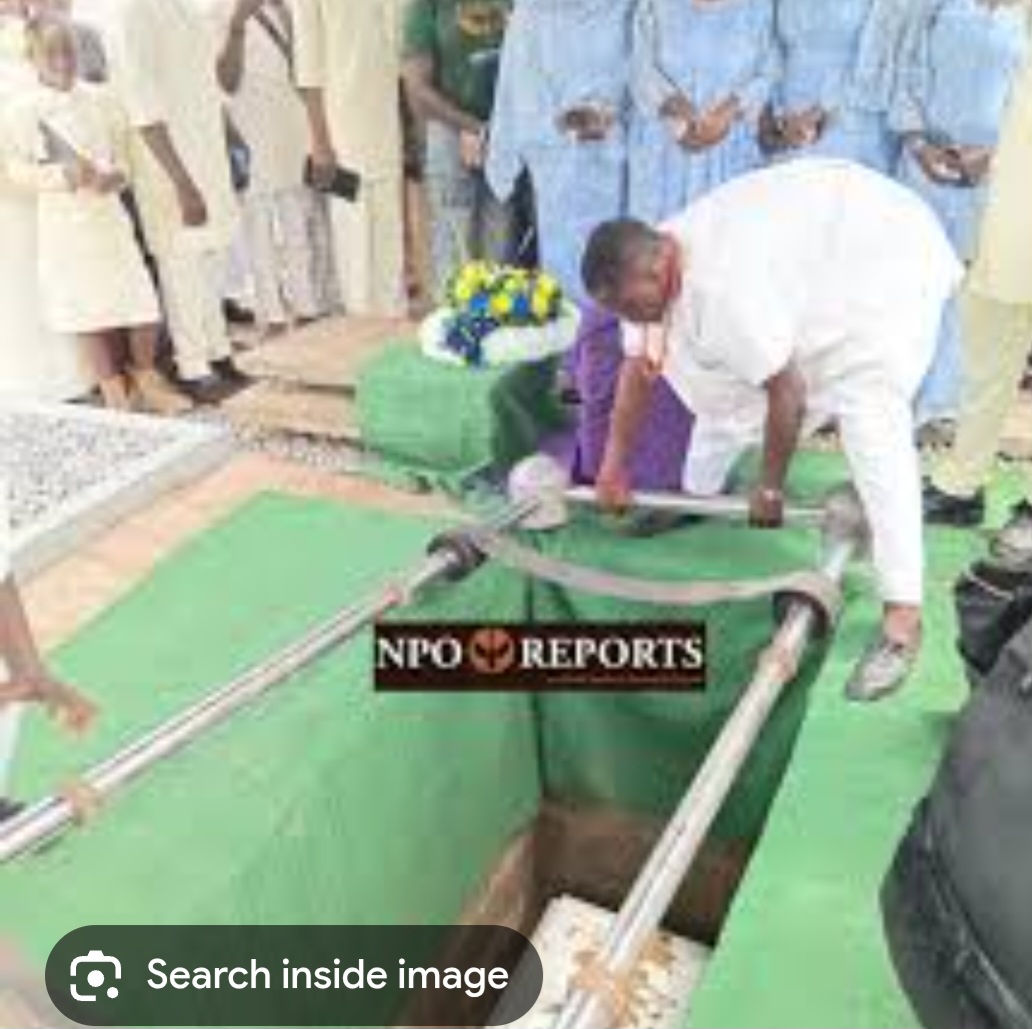
This, for me, was settled today rather than re-opened. At Dotun Oladipo’s funeral service, his three daughters took turns to read their tributes to their dad, and I found myself watching them with awe. There was a kind of strength in them that I do not possess. It is the strength needed to stand in front of a hall brimming with grieving adults and speak about a man they have just lost. Forever. Strength, however, is not the same as ease. I could see plainly what that strength was costing them as they read. Their voices caught. Their composure held and then did not hold and then held again through sheer will.
In front of them, in the pews, men and women considerably older than them came undone in ways the girls themselves were somehow managing to resist. I went mightily close. Some of the sobbing was quiet, the type people try to fold into a handkerchief. Some of it was not quiet at all, the kind that announces itself whether or not you want it.
Those young women honoured their father with a grace that is beyond me. What they did was astonishing. So, what I am attempting is an observation of a custom I have now watched wound people. This was not the first time I had watched this particular ritual extract more than it should from people already running on fumes. I saw an earlier and harder version of it at a friend’s wake back in 2015.
The first son was called forward to read his father’s tribute, and he could not do it. He tried, but the words would not come, and he stood there in front of a crowd of mourners, with his grief simply refusing to organise itself into sentences. The officiating minister, rather than releasing him from the task, urged him to continue. I sat fizzing with sorrow and ire. He could not go on and, eventually, the minister accepted, but not before insisting a while longer than it should have reasonably taken. His younger brother was called up next, presumably on the theory that if one grieving son could not manage it, maybe another one could. He flunked it in the same way. Grief does not distribute itself more conveniently among siblings just because a programme has been printed and needs to be followed.
I have turned that memory over many times since, trying to work out why this part of the rites is treated as mandatory in the first place. I have not found a satisfying answer. Maybe it comes from a belief that a child’s words carry more weight than anyone else’s, which may even be true, but weight is exactly the problem when those carrying it are struggling to hold themselves together with nothing but adrenaline and the fear of dissolving in public.
Maybe it is simply inertia, the reason we still do a hundred things at funerals that nobody can explain the original purpose of. Either way, I have stopped looking for the justification. I no longer think one exists that is good enough to weigh against what I watched happen to that boy in 2015.
So, let this stand as my instruction rather than my preference, the kind of thing I would rather state plainly now than leave for my children to infer later from how uncertain I sound when the subject comes up in passing. If I do not get the old age I am hoping for, my children will not be asked to read a single word over my body. Someone else can speak for me. A friend, a stranger with a steadier voice and a smaller stake in the loss, anyone whose grief will not be quite so total that standing upright becomes almost impossible.
My children, of course, will sit in front and fall apart if that is what the day requires of them, but without the microphone. That, at least, is one small mercy I intend to arrange for them while I am still here to arrange it.
Dotun deserved every bit of the send-off his daughters gave him today, and I suspect he would have been the first to tell them to sit down and let someone else carry the weight for a while. He did not get a say in that, as none of us ever do once we are the ones being spoken of rather than the ones speaking. Rest well, Dotun. You raised three young women whose strength I will not soon forget. That alone says everything worth saying about the man you were.
Opinion
‘Tinubu Will Win Again in 2027’ — Charismatic Bishops’ Secretary
‘Tinubu Will Win Again in 2027’ — Charismatic Bishops’ Secretary
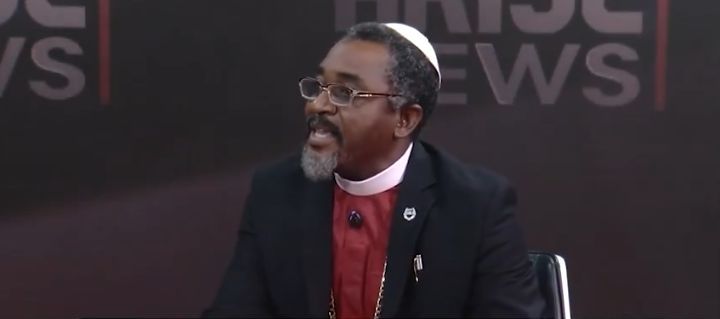
A senior Nigerian cleric, Archbishop Chivir Chianson, has declared that President Bola Tinubu will retain the presidency after the 2027 general election, attributing the prediction to a message he said came from God.
Chianson, who serves as Secretary General of the Charismatic Bishops’ Conference of Nigeria, made the statement while appearing on Arise Television on Saturday.
Rather than basing his prediction on political calculations, the archbishop said his confidence came from what he described as the prophetic role of bishops.
He maintained that the conference had previously spoken about Tinubu’s political future based on what he said was divine revelation and that the President would return for another term.
Chianson also predicted that Tinubu’s performance would improve if he wins the 2027 election.
READ ALSO:
- DSS warns Osun churches, mosques, markets over alleged terrorist attack plot ahead of 2027
- ‘Tinubu Will Win Again in 2027’ — Charismatic Bishops’ Secretary
- Fake miracles, bogus grants: How clerics allegedly fleece Nigerians of millions
Addressing the political opposition, the cleric said the bishops could not be blamed if rival parties failed to unite or organise themselves effectively ahead of the election.
He also sought to clarify the position of the bishops when dealing with government, saying their role in speaking truth to power did not mean they should approach political leaders with hostility or disrespect.
According to him, the Constitution, alongside their religious convictions, should guide how they engage the President and the country.
Chianson said he was sufficiently confident in his prediction to promise that he would return to the Arise TV studio after the 2027 election, when he expects the result to demonstrate that the bishops’ prophecy was correct.
His comments add a religious dimension to the increasingly active political conversation surrounding the 2027 presidential race.
‘Tinubu Will Win Again in 2027’ — Charismatic Bishops’ Secretary
-
 metro3 days ago
Niger Mosque Abductions: Terrorists Execute 30 of 500 Captive Muslim Worshippers
-

 Business2 days ago
Fuel Prices Climb to ₦1,500 per Litre Across Nigeria, Sparking Calls for Urgent Action
-

 News2 days ago
OAU Investigates Death of Final-Year Student as Police Begin Probe
-

 News1 day ago
ECOWAS Biometric Card Expands as Seven Countries Begin Rollout
-
 metro3 days ago
US-Based Nigerian Lawyers Disbarred: Full List of Fraud, Theft and Misconduct Cases
-
 Interview2 days ago
He Does Not Lose Elections”: Abdulmumin Jibrin Predicts 65% Landslide for Tinubu in 2027
-
 Politics2 days ago
Aisha Buhari Visits Atiku Amid Opposition Coalition Activities
-

 Business2 days ago
NCAA Moves Against Airlines Over Rising Flight Delays