Tinubu, next INEC boss, and Liman controversy, By Farooq Kperogi - Newstrends
Connect with us

Opinion

Tinubu, next INEC boss, and Liman controversy, By Farooq Kperogi

Published

on

Kperogi is a renowned columnist and United States-based Professor of Journalism 
Farooq Kperogi

Tinubu, next INEC boss, and Liman controversy, By Farooq Kperogi
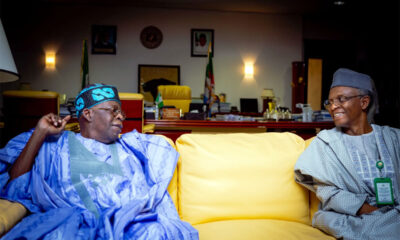
An older friend of mine, a denizen of the circles of power, told me a few days ago that President Bola Ahmed Tinubu was considering a retired judge from Nasarawa State to succeed Professor Mahmood Yakubu as chairman of the Independent National Electoral Commission (INEC). He named him as Justice Abdullahi Mohammed Liman, whom, I am embarrassed to admit, I had never heard of.

Apparently, Liman has been a loadstone for controversies and has had robust mentions in the news media, as I’ll show shortly. I probably never paid attention to his name because my background as a former reporter and editor predisposed me to pay more attention to judgments than to judges unless the judges stand out for any number of reasons.

Judicial reporting is one of the few exceptions in journalism where active constructions are discouraged in headlines and leads. For instance, we write, “a man has been sentenced to prison,” not “a judge has sentenced a man to prison” in news leads. The judgment is considered more important than the judge.

After admitting my ignorance of Liman, my friend shared possible motivations for his rumored choice. I can’t reveal them publicly, but I wasn’t persuaded.

Given the unabashed Yorubacentricity in several of Tinubu’s consequential appointments, I questioned why he believed the buzz that Tinubu would consider a northerner, however pliable or susceptible to manipulation he may be, for so momentous a position as INEC chairman.

After all, this is the man who will midwife the 2027 election in which most of the opposition to Tinubu’s second-term ambition will come from the North.

In April this year, a fabricated story claimed that Tinubu had appointed one Professor Bashiru Olamilekan as Yakubu’s successor. The presidency disclaimed it, and a Reuters fact-check on April 15 confirmed that “Professor Bashiru Olamilekan,” described as an “Ogun-born professor and media guru,” simply doesn’t exist.

The photos used to identify him were actually those of Senator Ajibola Basiru, who told Reuters he is a “full born Osogbo Oroki man” who is “neither a media guru nor born in Ogun!”

Still, a few days after my conversation about Liman, I saw a list circulating on social media showing the geographic distribution of past electoral commission chairmen since 1964. Amplified by Tinubu supporters, the list highlighted that the South-South has dominated in the last 61 years and that no one from the Southwest has ever been appointed.

READ ALSO:

Observers have suggested that the list was intentionally compiled and pushed online to prepare public consciousness for a possible Southwest appointment. This ensures that Tinubu can’t credibly be accused of ethnic favoritism if he picks from his geo-cultural backyard.

I shared the list with my friend, implying that Tinubu was unlikely to appoint someone outside his ethnic comfort zone, especially given his desperation for a second term and his disregard for criticism about the national spread and fairness of his appointments, what I once called his Lagos-centric Yorubization.

Yet I also noticed that the North-Central, where Liman hails from, has never produced an INEC chairman. And no president, prime minister, or military ruler has ever appointed someone from his own region to lead the electoral body. That leaves open the possibility that Liman could indeed be in contention, assuming there’s any credibility to the rumor.

I had filed this discussion away until I watched Buba Galadima’s September 16 interview with Arise TV, where he made oblique references to Liman’s impending announcement as the next INEC chair.

“Come November, there are rumors all over the place that this government is nominating a just retired court of appeals judge who is known for notoriety to be the chairman of INEC,” Galadima said. “I wish it is not true. Because if that man becomes the chairman of INEC, be rest assured that this government is inviting a civil war in this country.”

Civil war? That’s obviously political hyperbole. But could he be referring to Justice Liman? Every detail fits. Liman just retired from the Court of Appeal. He is a magnet for judicial controversies. And, days earlier, someone had told me Tinubu was considering Liman for the position of INEC chairman.

Curiously, Liman chose early retirement despite the judicial retirement age being raised to 70. Was this in preparation for the rumored INEC post?

Why, then, did Galadima warn that if Liman is appointed, Nigerians should “forget about elections… [b]ecause there would be no elections in this country, and it will create chaos”? There was also a sense of alarm in the voice of my friend who told me Liman might be the next INEC chairman.

READ ALSO:

I looked up Liman and found a May 26, 2024, Daily Trust analysis titled “Kano emirate: 7 controversies trailing Justice Liman.” In it, John Chuks Azu, Daily Trust’s legal editor, chronicled how Liman (allegedly) halted Governor Abba Yusuf’s move to reinstate Sanusi Lamido Sanusi as Kano emir, which sparked a palace standoff that hasn’t abated and ignited jurisdictional debates.

The report also noted that the National Judicial Council had dismissed a misconduct petition against him, which paved the way for his promotion to the Court of Appeal.

In Edo, the Daily Trust report pointed out, NCP governorship candidate Peters Omoragbon accused Liman of “misconduct and dereliction of duty” for delays in ruling on an INEC case.

Liman’s Port Harcourt home (he is said to be close to Nyesom Wike) was among those raided by the DSS in 2016, when agents claimed they recovered $2 million, an allegation he denied. He quipped that he would have resigned his job as a judge if he had that much money stashed at home.

And in 2015, his sentencing in the N25bn corruption trial of Michael Igbinedion stirred outrage when the principal defendant walked away with fines while his co-defendant got 20 years.

Clearly, Galadima’s beef with Liman is more about partisan politics than about patriotic fervor.

Galadima, meanwhile, is aligned with Kwankwaso. Liman’s appointment may indeed spark a “civil war” of sorts in Kano politics, but nationally? I doubt it. If past brazen electoral manipulations didn’t lead to civil war, this wouldn’t, either.

That said, if Tinubu is seriously considering Liman, he risks imperiling the credibility of the 2027 election two years before it takes place. An electoral umpire must not carry the baggage of unconcealed partisanship.

None of the past INEC chiefs, including those that later turned out to be total partisan disasters, came to the job with overtly partisan affiliations. Tinubu shouldn’t start now. If he cares at all about his post-tenure reputation, that is.

Farooq Kperogi is a renowned columnist and United States-based Professor of Journalism.

Note: Views expressed in this opinion piece are strictly personal and do not in any way reflect the the thoughts and beliefs of newstrends or its owners.

Tinubu, next INEC boss, and Liman controversy, By Farooq Kperogi

Opinion

Oshiomhole: Behold the 13th disciple of Christ
Published

on

Tunde Odesola
Oshiomhole: Behold the 13th disciple of Christ

Tunde Odesola
(Published in The PUNCH, on Friday, February 13, 2026)
Friday, February, 13, 1976: A libidinous soldier, Lieutenant-Colonel Buka Suka Dimka, waited in ambush for a black Mercedes-Benz, counting down to the zero hour, caressing his gun, ready for the whistle from death. Dimka was not alone. He was in company with fellow coupists and treasonable felons.
Today, Friday, February 13, 2026, marks exactly 50 years since assassin bullets pierced the unarmoured body of the black Benz to pierce the body of the Nigerian Head of State, General Murtala Ramat Muhammed, seated at the back of his official car, snaking its way through Lagos traffic. That was a period when Nigerian Heads of State commuted in just one official car; no convoy, no siren, no madness.
It was a death most gruesome for the 37-year-old General, bubbling with life by 8a.m, stone-dead by nine. His aide-de-camp, Lieutenant Akintunde Akinsehinwa, and driver, Sergeant Adamu Michika, were killed in the Dimka-led ambush on George Road, Ikoyi, Lagos, en route to their Dodan Barracks place of work.
The gunshots pumped into Murtala were still echoing when the coup bit the dust. His body had not gone cold when federal forces rose to quench the coup. Dimka’s comrades-in-harms, Minister of Defence, Major-General I.D. Bisalla; the first military Governor of defunct Benue-Plateau State, police commissioner Joseph Gomwalk; Major Ibrahim Rabo, Captain M. Parvwang, Lieutenant William Seri, and 32 others were rounded up, tried, tied to the stakes and shot. An eye for an eye. A bullet for a bullet.
But Dimka fled Lagos, the scene of his crime, and headed to the East, his newfound refuge, to live in subterfuge. To book hotel accommodation, Dimka shed his lieutenant-colonel khaki and wore the garb of a faceless Mr C Godwin. If Dimka could kill Murtala on the eve of Valentine’s Day, only God knows what he did on Lovers’ Day, as he was caught on May 5, 1976, with a prostitute in Afikpo at a police checkpoint when fleeing to Cameroon.
Before escaping through the toilet window when he suspected police presence, Dimka holed up at Friendship Hotel, smoking, drinking and cooling his hot blood off in the bosom and thighs of luscious daughters of Eve. Cold blood needs warm blood.
READ ALSO:
What kind of man would kill on the eve of Valentine’s Day and cuddle Eves on Valentine’s Day? Ha! Dimka got balls. Some men do. What must have been going through Dimka’s mind, watching and listening to reports of his coup and his manhunt, while he sipped beer and kissed and caressed? Daylight coldbloodedness.
On February 3, 2026, as the alleged dalliance of the representative of Edo-North senatorial district in the National Assembly, Senator Adams Aliyu Oshiomhole, shook the internet, I hissed at the ignorance of Nigerians who rose in anger, calling for his head.
I hissed because a lot of those stomping on social media streets against Osho Baba are hypocrites ready to trade places with the husband of Lara Fuentes, the Cape Verdean model he married in 2015 after the death of his beautiful wife, Clara, who led him to Christ, and purportedly adopted a Christian name, Eric, upon conversion. Sadly, Clara lost a battle with breast cancer in 2010, aged 54.
Oshiomhole is a man of moral rhymes. From Clara in 2010 to Lara in 2015, there was a period of five long years. So, the born-again Eric waited five long years before looking another woman in the eye. That was honour. That was respect. That was fidelity. How many Nigerian men can wait that long? How many Nigerian septuagenarians are as hot as the ex-defender of the masses? How many possess his handsome looks? How many possess his fit and proper body? When you see Oshiomhole in the gym, you will know he is on a mission.
Dimka dimmed the light of Nigeria’s governance in 1976, throwing the nation into darkness. Despite all of the manhunt and national uproar against his action, however, he remained ensconced in carnal cares, nourishing his whims and the stiffness of his phallus. Some other leaders wouldn’t make it out of Lagos, let alone go as far as Afikpo. But Dimka did with aplomb. That was the hallmark of grit and greatness, something missing in today’s Nigerian leadership.
Although Osho Baba has come out to rebut the viral video displaying his image massaging the foot of a South African goddess, ‘adult content creator’ and ‘professional sugar baby’, Lashaan Dagama, I would have advised against such a move because I know some nosy Nigerians would run veracity checks on the controversial 30-second video.
READ ALSO:
Here’s the finding of an online newspaper, The Whistler, which deployed multiple deepfake detection tools to determine the authenticity of the love-in-the-air video shot aboard a luxury aircraft thousands of feet above a grounded country, whose citizens grope in darkness on empty stomachs amid worsening insecurity. The tools deployed by The Whistler included Deepware Scanner, Zhuque AI Detection Assistant, AU Video Detector, Sight Engine, and Hive AI Deepfake Detection.
The Whistler did a story on its multiple checks. Please, read: “These tools analysed for visual artefacts (such as hand/finger inconsistencies, lip-sync mismatch, unnatural facial blending, or lighting errors), audio patterns, metadata inconsistencies, and provenance signals.
“The scans showed no detectable hallmarks of generative AI manipulation, with high confidence scores indicating the video is authentic footage rather than synthetically created or significantly altered by current AI video generation methods.”
The report returned with a verdict which dismissed Oshiomhole’s AI claim as false, stressing that “the claim that the video is AI-generated lacks supporting evidence and is contradicted by the woman’s public response implying the event occurred, the absence of detectable AI artefacts in the clip, and results from deepfake detection tools confirmed no signs of AI generation or manipulation.”
Do not compare Dimka with Oshiomhole, please; one is a soldier, the other is a democrat. One is a killer, the other is a caresser. One gripped the trigger; the other groped a foot. One exfoliated life; the other moisturised it. Please, do not compare apples with oranges.
But the coping mechanism and survival strategy of Dimka is a lesson in military adaptability, just as Oshiomhole’s transfiguration should be a topic of interest to students of Nigerian politics. Adams transmutation from a poor background in Iyamho, near Auchi, working as a textile hand, joining textile politics before emerging as the President, Nigeria Labour Congress, demanded great coping capacity, courage and consistency.
In February 1999, Oshiomhole rose to labour peak at the dawn of Nigeria’s Fourth Republic, leading the NLC to national greatness and acceptability, organising government-shaking rallies to protest lack of electricity, fuel price hike, rising food costs, and harsh economic policies – all on behalf of an applauding masses. By the time he completed two terms in 2007, Oshiomhole had done more than enough to engrave himself in the hearts of Nigerians who spread palm fronds on the ground for the donkey-riding Messiah on his way to the Edo State Government House.
READ ALSO:
Even while he was Governor of Osun State between 1999 and 2003, the Baba Isale of the All Progressives Congress, Chief Bisi Akande, had called Oshiomhole names when labour idealism looked politics in the eye. Since crossing over to politics, however, Oshiomhole seems to have acquired 3D glasses which beautify ugly spectacles. He now dines at the same table with Akande, on whose face sits a plastered smile.
If I were in the inner caucus of Osho Baba, I would have told him to damn the naysayers and encouraged him to strut on the runway, exhibiting his 73-year-old masculinity, locking his hands up in a flex, like Mr Universe. I would have sincerely told him that the lovey-dovey Dagama video was a big opportunity to set Nigerian eyes ogling and tongues wagging, distracting the masses from the existential issues of poverty, insecurity, electricity, homelessness, waterlessness, healthlessness and schoollessness. I would have urged the Comrade to treat the foot massage issue like Sage Bola Tinubu described power, saying, “Osho Baba, a model as beautiful as Lashaan Dagama is not served a la carte, you should own her, fight for her, grab her, snatch her and run with her.”
Lady Dagama lives her life on online street. She knows the potential damage her silence on Oshiomhole’s disclaimer could do to her brand, hence her annoyance over the rebuttal was understandable. For an adult content creation business driven by flesh and personage, Osho Baba was a large fish caught by Dagama’s hook, so the attempt to wriggle off the hook made her burst out in frustration, “Your senator is the problem; go, be mad at him, not me.” She went a mile further to proclaim her truth, saying, “The video wasn’t AI, but okay, believe your senator,” when the former APC national chairman maintained the video was AI-generated.
For the multitude ignorantly calling for the head of Oshiomhole because he dedicated precious time and energy to Dagama’s beautiful foot, here are the Yoruba and the Jewish worldviews on foot. In their wisdom, the Yoruba say the head and the feet are interconnected. They affirm the interconnectivity in this proverb, “Ori wo ibo rere gbe mi ya, ese wo ibi rere gbe re.” Thus, it is the belief of the Yoruba that the head and the legs are capable of taking an individual to a fortunate or unfortunate place.
The Yoruba, they are never done; they also say, “Adiye kii ti ibi ese ku,” meaning: the chicken never dies from an injury to its feet.” This is why you never see a chicken walking on a prosthesis. No matter the severity of its leg injury, you will see the chicken hobbling on, at least, one foot, but certainly not with crutches. Oshiomhole understands Yoruba. He knows the curative powers of long, sexy legs. He knows. He knows. He knows.
READ ALSO:
The spartan-looking comrade emerged general secretary of the National Union of Textile Garment and Tailoring Workers of Nigeria in 1982, a time when over 450,000 textile workers ran the 180 mills across the country. Today, the mills have thinned down to about 20. I’m sure Oshiomhole cannot be happy with this shameful decline because he was at the helm of labour affairs when Nigeria was good, and he is at the corridor of power now that Nigeria is bad.
For a born-again Christian about to climb the 74th year on life’s almanac, Osho Baba reads his Bible diligently, fully aware this world is not his home, he’s just a pilgrim. Despite eyeing heaven, Oshiomhole is also as wise as the serpent and as gentle as a dove – two biblical injunctions necessary to dominate and conquer the earth. Oshiomhole is the serpent; he is also the dove. But he is only following biblical commandments.
Osho Baba worships God in deed and in truth. He believes in Jesus Christ as his personal lord and Saviour. The way he placed Dagama’s foot gently on his lap and anointed it with alabaster oil shows that he has read and missed nothing in the story of Jesus washing the feet of his disciples.
In ancient Jewish tradition, foot washing symbolises respect, honour, hospitality, service, purification and humiliation. Servants or juniors are expected to wash the feet of their masters or superiors. But Jesus changed the social order when he, the Master, washed the feet of his disciples, including the treacherous Judas Iscariot, to teach unconditional love. So, the former labour lion is punctual in church. He knows the feet-washing story, and he wants to go to heaven. So, what is wrong with him washing the feet of Dagama to fulfil all righteousness and earn a place in paradise?
Still talking Jewish tradition. A woman described as a sinner washed the feet of Jesus during a banquet. Some Bible scholars have come to identify her as Mary Magdalene, while some call her Mary of Bethany. The act is recorded in the Books of Luke 7:36-50 and John 12: 1-8. Here is St John’s version: “Then Mary took about a pint of pure nard, an expensive oil; she poured it on Jesus’ feet and wiped his feet with her hair. And the house was filled with the fragrance of the oil.” Mary washed Jesus’ feet with her tears, wiped them with her hair, kissed them, and anointed them with alabaster oil. Now, Nigerians who want to see Oshiomhole in paradise must tell him to produce the full, unedited, un-AI-ed version of his encounter with Dagama. They must ask if he washed, shed tears, kissed and anointed Dagama’s foot. Oshiomhole is bald; otherwise, I would have urged his teeming supporters to ask if he wiped Dagama’s foot with his hair.
And I did not see Dagama’s shoes on the floor. I wonder where she flung them. I had thought ‘bata’ was a Yoruba word for shoes. This was until I discovered that a Czechoslovakian footwear company, Bata Shoe Company, set foot in Nigeria in 1932. So, I looked up the history of Bata in the Czech Republic. Google dumped pages of history on my lap. It says, “In the Czech Republic, Bata is a renowned, historic brand of shoes and apparel founded in Zlín in 1894 by siblings Tomas, Antonín, and Anna Bata. Bata is considered a household name in the Czech Republic, synonymous with shoes.”
With its factory in Ojota, Lagos, Bata Shoe Factory was to later open retail outlets across the country. Where are Dagama’s shoes, Senator Oshiomhole? As you ponder providing an answer to this question, Your Excellency, permit me I ask another: as Chairman, Senate Committee on Interior, and a former general secretary of the National Union of Textile, Garment and Tailoring Workers of Nigeria, why is it difficult to establish a shoe-manufacturing company in the country?
I love you, Comrade-Senator. I love you with the love of God. I know you know the love of God is also called agape love. Being from humble beginnings like our Lord Jesus Christ, however, I wish to sing you a song by ghetto boy, Daddy Showkey. I’m sure you will remember the song, and you will love it.
“If you see Adamso, Hosanna
Tell am say o, Hosanna
I dey Igbajo, Hosanna
I no get problem, Hosanna
E get one women, Hosanna
Her name na Lashaan, Hosanna
Oh, Lashaan baby, Hosanna
Lashaan fine well, well, Hosanna
I say she fine well, well, Hosanna
Oh Lashaan baby, Hosanna
Adamso carry Lashaan, Hosanna
E put am for jet, Hosanna
E rub im leg o, Hosanna
E sweet am well-well, Hosanna
Naija pipu come vex, Hosanna
Dem vex for Adamu, Hosanna
Dem vex for Dagama, Hosanna
Dem vex for dem, Hosanna
Naija pipu ask Adamu, Hosanna
Why im kari woman, Hosanna
When Naija no smile, Hosanna
Adamu deny, Hosanna
Dagama come vex, Hosanna…
Facebook: @Tunde Odesola
X: @Tunde_Odesola

Oshiomhole: Behold the 13th disciple of Christ

Continue Reading

Opinion

AFCON 2025: Flipping Content Creation From Coverage to Strategy 

Published

on

AFCON 2025: Flipping Content Creation From Coverage to Strategy 

By Toluwalope Shodunke

The beautiful and enchanting butterfly called the Africa Cup of Nations (AFCON) emerged from its chrysalis in Khartoum, Sudan, under the presidency of Abdelaziz Abdallah Salem, an Egyptian, with three countries—Egypt, Sudan, and Ethiopia—participating, and Egypt emerging as the eventual winner.

The reason for this limited participation is not far-fetched. At the time, only nine African countries were independent. The remaining 45 countries that now make up CAF’s 54 member nations were either pushing Queen Elizabeth’s dogsled made unique with the Union Jack, making supplications at the Eiffel Tower, or knocking at the doors of the Palácio de Belém, the Quirinal Palace, and the Royal Palace of Brussels—seeking the mercies of their colonial masters who, without regard for cultures, sub-cultures, or primordial affinities, divided Africa among the colonial gods.

From then until now, CAF has had seven presidents, including Patrice Motsepe, who was elected as the seventh president in 2021. With more countries gaining independence and under various CAF leaderships, AFCON has undergone several reforms—transforming from a “backyard event” involving only three nations into competitions featuring 8, 16, and now 24 teams. It has evolved into a global spectacle consumed by millions worldwide.

Looking back, I can trace my personal connection to AFCON to table soccer, which I played alone on concrete in our balcony at Olafimihan Street—between Mushin and Ilasamaja—adjacent to Alafia Oluwa Primary School, close to Alfa Nda and Akanro Street, all in Lagos State.

Zygmunt Bauman, the Polish-British sociologist who developed the concept of “liquid modernity,” argues that the world is in constant flux rather than static, among other themes in his revelatory works.

For the benefit of Millennials (Generation Y) and Generation Z—who are accustomed to high-tech pads, iPhones, AI technologies, and chat boxes—table soccer is a replica of football played with bottle corks (often from carbonated drinks or beer) as players, cassette hubs as the ball, and “Bic” biro covers for engagement. The game can be played by two people, each controlling eleven players.

I, however, enjoyed playing alone in a secluded area, running my own commentary like the great Ernest Okonkwo, Yinka Craig, and Fabio Lanipekun, who are all late. At the time, I knew next to nothing about the Africa Cup of Nations. Yet, I named my cork players after Nigerian legends such as Segun Odegbami, Godwin Odiye, Aloysius Atuegbu, Tunji Banjo, Muda Lawal, Felix Owolabi, and Adokiye Amiesimaka, among others, as I must have taken to heart their names from commentary and utterances of my uncles resulting from sporadic and wild celebrations of Nigeria winning the Cup of Nations on home soil for the first time.

While my connection to AFCON remained somewhat ephemeral until Libya 1982, my AFCON anecdotes became deeply rooted in Abidjan 1984, where Cameroon defeated Nigeria 3–1. The name Théophile Abéga was etched into my youthful memory.

Even as I write this, I remember the silence that enveloped our compound after the final whistle.

It felt similar to how Ukrainians experienced the Battle of Mariupol against Russia—where resolute resistance eventually succumbed to overwhelming force.

The Indomitable Lions were better and superior in every aspect. The lion not only caged the Eagles, they cooked pepper soup with the Green Eagles.

In Maroc ’88, I again tasted defeat with the Green Eagles (now Super Eagles), coached by the German Manfred Höner. Players like Henry Nwosu, Stephen Keshi, Sunday Eboigbe, Bright Omolara, Rashidi Yekini, Austin Eguavoen, Peter Rufai, Folorunsho Okenla, Ademola Adeshina, Yisa Sofoluwe, and others featured prominently. A beautiful goal by Henry Nwosu—then a diminutive ACB Lagos player—was controversially disallowed.

This sparked outrage among Nigerians, many of whom believed the referee acted under the influence of Issa Hayatou, the Cameroonian who served as CAF president from 1988 to 2017.

This stroll down memory lane illustrates that controversy and allegations of biased officiating have long been part of AFCON’s history.

The 2025 Africa Cup of Nations in Morocco, held from December 21, 2025, to January 18, 2026, will be discussed for a long time by football historians, raconteurs, and aficionados—for both positive and negative reasons.

These include Morocco’s world-class facilities, the ravenous hunger of ball boys and players (superstars included) for the towels of opposing goalkeepers—popularly dubbed TowelGate—allegations of biased officiating, strained relations among Arab African nations (Egypt, Algeria, Tunisia, and Morocco), CAF President Patrice Motsepe’s curt “keep quiet” response to veteran journalist Osasu Obayiuwana regarding the proposed four-year AFCON cycle post-2028, and the “Oga Patapata” incident, where Senegalese players walked off the pitch after a legitimate goal was chalked off and a penalty awarded against them by DR Congo referee Jean-Jacques Ndala.

While these narratives dominated global discourse, another critical issue—less prominent but equally important—emerged within Nigeria’s media and content-creation landscape.

Following Nigeria’s qualification from the group stage, the Super Eagles were scheduled to face Mozambique in the Round of 16. Between January 1 and January 3, Coach Eric Chelle instituted closed-door training sessions, denying journalists and content creators access, with media interaction limited to pre-match press conferences.

According to Chelle, the knockout stage demanded “maximum concentration,” and privacy was necessary to protect players from distractions.

This decision sparked mixed reactions on social media.

Twitter user @QualityQuadry wrote:

“What Eric Chelle is doing to journalists is bad.

Journalists were subjected to a media parley under cold weather in an open field for the first time in Super Eagles history.

Journalists were beaten by rain because Chelle doesn’t want journalists around the camp.

Locking down training sessions for three days is unprofessional.

I wish him well against Mozambique.”

Another user, @PoojaMedia, stated:

“Again, Eric Chelle has closed the Super Eagles’ training today.

That means journalists in Morocco won’t have access to the team for three straight days ahead of the Round of 16.

This is serious and sad for journalists who spent millions to get content around the team.

We move.”

Conversely, @sportsdokitor wrote:

“I’m not Eric Chelle’s biggest supporter, but on this issue, I support him 110%.

There’s a time to speak and a time to train.

Let the boys focus on why they’re in Morocco—they’re not here for your content creation.”

From these three tweets, one can see accessibility being clothed in beautiful garments. Two of the tweets suggest that there is only one way to get to the zenith of Mount Kilimanjaro, when indeed there are many routes—if we think within the box, not outside the box as we’ve not exhausted the content inside the box.

In the past, when the economy was buoyant, media organisations sponsored reporters to cover the World Cup, Olympics, Commonwealth Games, and other international competitions.

Today, with financial pressures mounting, many journalists and content creators seek collaborations and sponsorships from corporations and tech startups to cover sporting events, who in turn get awareness, brand visibility, and other intangibles.

As Gary Vaynerchuk famously said, “Every company is a media company.” Yet most creators covering AFCON 2025 followed the same playbook.

At AFCON 2025, most Nigerian journalists and content creators pitched similar offerings: on-the-ground coverage, press conferences, team updates, behind-the-scenes footage, analysis, cuisine, fan interactions, and Moroccan cultural experiences.

If they were not interviewing Victor Osimhen, they were showcasing the stand-up comedy talents of Samuel Chukwueze and other forms of entertainment.

What was missing was differentiation. No clear Unique Selling Proposition (USP). The result was generic, repetitive content with little strategic distinction. Everyone appeared to be deploying the same “Jab, Jab, Jab, Hook” formula—throwing multiple jabs of access-driven content in the hope that one hook would land.

The lesson is simple: when everyone is jabbing the same way, the hook becomes predictable and loses its power.

As J. P. Clark wrote in the poem “The Casualties”, “We are all casualties,” casualties of sameness—content without differentiation. The audience consumes shallow content, sponsors lose return on investment, and creators return home bearing the “weight of paper” from disappointed benefactors.

On November 23, 1963, a shining light was dimmed in America when President John F. Kennedy was assassinated.

As with AFCON today, media organisations sent their best hands to cover the funeral, as the who’s who of the planet—and if possible, the stratosphere—would attend. Unconfirmed reports suggested that over 220 VVIPs were expected.

While every newspaper, radio, and television station covered the spectacle and grandeur of the event, one man, Jimmy Breslin, swam against the tide. He chose instead to interview Clifton Pollard, the foreman of gravediggers at Arlington National Cemetery—the man who dug John F. Kennedy’s grave.

This act of upended thinking differentiated Jimmy Breslin from the odds and sods, and he went on to win the Pulitzer Prize in 1986.

Until journalists and content creators stop following the motley and begin swimming against the tide, access will continue to be treated as king—when in reality, differentiation, aided by strategy, is king.

When every journalist and content creator is using Gary Vaynerchuk’s “Jab, Jab, Jab, Hook” template while covering major sporting events, thinkers among them must learn to replace one jab with a counterpunch—and a bit of head movement—to stay ahead of the herd.

Toluwalope Shodunke can be reached via tolushodunke@yahoo.com

Continue Reading

Opinion

“Christian Genocidization” of the Kaiama massacre, By Farooq Kperogi

Published

on

Kperogi is a renowned columnist and United States-based Professor of Journalism 
Farooq Kperogi

“Christian Genocidization” of the Kaiama massacre, By Farooq Kperogi

When I ended my update on the heartrending mass murder and abductions of the people of Woro in Kaiama LGA by calling attention to the Muslim identity of the victims, just so some screwdriver salesman won’t use “Google” to “verify” that they are Christians in the service of advancing a tendentious “Christian genocide” narrative, I came across to some people as being needlessly overdramatic. But I knew what I was doing.

Now, look at this headline from BarristerNG, a well-regarded, law-focused Nigerian news site: “Kwara Tragedy: Terrorists Kill Villagers for Refusing to Change Their Faith, 78 Buried in Mass Graves.”

It is based on Gov. Abdulrazaq Abdulrahman’s disclosure that the people, whom the governor was careful to identify as Muslims, were murdered because they resisted the extremist version of Islam the terrorists preach.

The headline is a devious, sinister, underhanded but nonetheless visible rhetorical maneuver to give the impression that even in a communal mass slaughter where both the villains and the victims are Muslims, it was a “Christian genocide.”

When you pair “terrorists,” which invariably evokes the imagery of Muslim extremists, with murder as punishment for refusal to “change their faith,” you can’t help but conclude that the victims are Christians.

Faith is a synonym for religion. Since there are two major faiths in Nigeria, and since there has been a tyrannical, well-oiled, carefully choreographed, even if factually impoverished, amplification of a “Christian genocide” narrative that suggests that only Christians are being murdered in Nigeria, that Muslims are not only spared from this but are, in fact, complicit in this “genocide,” the headline basically implies that the mass murders in Woro were just another evidence of “Christian genocide.”

If the screwdriver salesman or his ilk come across this sort of story in a Google search, they will present it as yet another “evidence” of “Christian genocide.”

READ ALSO:

BarristerNG’s headline is similar in many respects to the December 24, 2025, headlines of many Christian-owned Nigerian news media organizations, which captured the mass murder of Muslims in a Maiduguri mosque with headlines that gave the impression that Christians were the victims.

Channels TV’s headline was: “BREAKING: Many Feared Dead as Bomb Blast Rocks Maiduguri on Christmas Eve.” Other Lagos newspapers had headlines like, “Christmas Eve Bombing Leaves 5 Dead, 35 Injured in Borno.” There was no mention of “mosque” or “Muslim worshipers” in the headlines.

Since most people only read headlines, you can imagine the impression these headlines created in the minds of people who reason like the screwdriver salesman, who fishes for and sees “Christian genocide” anywhere and everywhere.

There is an endemic mass murder of innocents in most parts of Nigeria, which I won’t hierarchize by religious affiliation because I think that’s cruel and inhuman.

And I actually don’t have a problem with Christian communities that interpret their own experience of the nationwide sanguinary fury of bloodthirsty terrorists as religiously based genocide, since the villains self-identify as Muslims.

But I do have a problem with the dangerously divisive dimension this is now taking.

It increasingly seems that the basic humanity that binds us is becoming immaterial. There is now a growing, unreasoning, bigoted, pigheaded, and obnoxiously monomaniacal obsession with advancing the narrative of a Christian genocide that suggests that only Christians are being murdered, that Muslims are exempt from murder because they share a similar faith with the murderers (as if faith is all that matters in a person), that Muslim deaths don’t matter, and that every shocking death must be “Christianized” to make it worthy of sympathy and empathy–and, of course, a part of the rhetorical armory to prosecute the narrative of a “Christian genocide.”

If the facts don’t fit, force them. If you can’t force them, manufacture them. It’s distressing.

Every death diminishes and distresses me. We are, first of all, human before we’re anything else. Our ethnicity, faith, language, etc. are incidental to our humanity.

“Christian Genocidization” of the Kaiama massacre, By Farooq Kperogi


Kperogi is a renowned Nigerian columnist and United States-based professor of Journalism

Continue Reading
HostArmada Affordable Cloud SSD Shared Hosting
HostArmada - Affordable Cloud SSD Web Hosting

Trending