Why Tinubu is afraid of Jonathan’s 2027 comeback bid, By Farooq Kperogi – Newstrends
Connect with us

Opinion

Why Tinubu is afraid of Jonathan’s 2027 comeback bid, By Farooq Kperogi

Published

on

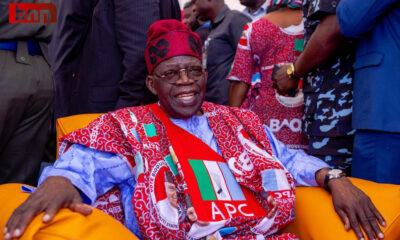
President Bola Ahmed Tinubu and Former President Goodluck Jonathan

Why Tinubu is afraid of Jonathan’s 2027 comeback bid, By Farooq Kperogi
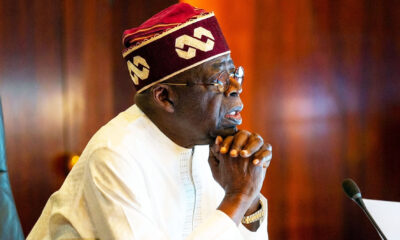
Although former President Goodluck Jonathan hasn’t formally declared his intention to run for president, President Bola Ahmed Tinubu appears to be already worked into a frenzy by the mere prospect of it, at least judging from the sensation of fright that drips from the statements of his spokespeople and close supporters.

Bayo Onanuga, Tinubu’s official spokesperson, described the proposal to draft Jonathan into the 2027 race as “delusional.” As if he somehow embodies the Nigerian electorate, Onanuga warned that the Jonathan administration’s record on the economy and governance would constitute an insurmountable obstacle on his path to the presidency.

He also raised questions about Jonathan’s eligibility for a third term and cautioned that those promoting his run may abandon him midstream.

The Lagos State branch of the APC, perhaps the most strategic APC branch in Nigeria at the moment given that Lagos is Tinubu’s home base, has also mocked the idea of Jonathan’s comeback, arguing that he would need “an overdose of good luck” to be competitive. It framed the push for his return as rooted more in nostalgia than in competence and questioned internal democratic practices within the opposition.

I told a reporter who interviewed me a few days ago that the apparent panic in the Tinubu power circles over Jonathan’s rumored entry into the presidential race is puzzling to me for at least two reasons.

One, at the moment, Jonathan has no political base. The PDP on whose platform he is likely to run (should he decide to run) is vastly enervated and riven by what seems like irresolvable dissension. The Southeast, which used to be a solid, reliable support base for him, is now seduced by the charm and promise of its own son, Peter Obi.

Without a strong grassroots structure, a solid party platform, or the support of governors, a Jonathan comeback bid would be a damp squib. If anything, the presidency’s statement inflates his relevance more than his actual political strength warrants.

Second, if I were in Tinubu’s inner circles, I would actually encourage, even slyly sponsor, Jonathan’s participation in the 2027 election since he appeals to the same demographic slice as former Vice President Atiku Abubakar and Peter Obi. His participation in the 2027 election, along with Atiku and Obi, would ensure that the opposition self-cannibalizes, just as it did in 2023.

READ ALSO:

If Jonathan isn’t a real threat, if Jonathan would, in fact, be a boon to Tinubu, why does Tinubu seem terrified at the prospect of a Jonathan comeback bid? Here’s what I think.

When Onanuga pointed to Jonathan’s abysmal record on the economy and governance as a reason the electorate would not want him back in the saddle, he unintentionally gave vent to deep-seated but unacknowledged anxieties about Tinubu’s own record. Despite different contexts, Jonathan and Tinubu converge on their style of governance and economic policies.

Tinubu is pursuing the exact same economic policies that Jonathan attempted, which he was compelled to roll back after Tinubu and several people who later constituted the APC joined forces with ordinary Nigerians to fight back.

As most people can recall, Jonathan’s New Year “gift” to Nigerians in 2012 was an attempted full petrol-subsidy removal. After mass protests, he was forced to implement a partial price rollback, but he paired the watered-down version of the subsidy-removal policy with SURE-P to cushion its effect on “vulnerable” households and to fund social/infrastructure projects.

On Inauguration Day on May 29, 2023, Tinubu also announced the end of petrol subsidy. But thanks to the success Muhammadu Buhari had achieved in taming any consequential, sustained opposition to unpopular government policies (and, of course, the integration of several careerist protesters into the government), Tinubu’s announcement didn’t attract any mass protests. Nigerians have learned to accept their piecemeal incineration with equanimity.

But like Jonathan’s SURE-P claimed it did, Tinubu restarted cash transfers to millions of “vulnerable” households as “palliatives,” although most Nigerians I have read and spoken with haven’t had the luck to benefit from these palliatives.

The very economic policies Onanuga invokes as a major reason why Nigerians will resist Jonathan’s return to the presidency are the policies the Tinubu regime not only defends but celebrates as an unprecedented, all-time high achievement which, though biting and bitter, they insist will birth an El Dorado at an indefinite future.

And this is where Lagos APC’s reference to nostalgia for Jonathan is important. At the core of their consciousness, Tinubu’s honchos know that Tinubu and Jonathan are basically indistinguishable in their policies and philosophy of governance, with Tinubu only being luckier than Jonathan in the quality and virility of the opposition that confronts him.

This kind of rhetorical inversion draws on a well-documented psychological mechanism known as projection. In projection, individuals or groups unconsciously attribute their own flaws, motives, or behaviors to others as a way of deflecting scrutiny and avoiding accountability.

When accused of what they are themselves guilty of, they attempt to confuse the moral ledger by shifting attention outward, creating a smokescreen that redirects blame. Politically, this tactic is especially potent: it muddies the waters, preempts criticism, and rallies supporters around a narrative that appears to expose an opponent’s failings, when in reality it is a mirror image of their own.

In this case, APC operatives attack Jonathan’s economic record not only to tarnish him but also to mask the uncomfortable resemblance between his policies and those Tinubu now implements.

READ ALSO:

And nostalgia can be a powerful winning tool in elections. Donald Trump benefited from it. The American electorate remembered that prices of eggs were lower when he was president, not minding that the lower prices had nothing to do with him. In fact, the prices have tripled since his return.

In Malawi, 85-year-old former President Peter Mutharika defeated incumbent Lazarus Chakwera in the 2025 presidential election partly because of nostalgic feelings about his time in office and hopes that he can recreate that time in place of the hell Malawians are going through now, although as Boniface Dulani, an associate professor of political science at the University of Malawi, told the Guardian, “If there was an election that one would want to lose, then maybe this was one election to lose for Chakwera, because I don’t really think they are going to be able to turn things around.”

In my August 16, 2025, column titled, “Jonathan’s Entry Would Radically Shake the 2027 Election,” I conceded that “there are some genuinely praiseworthy things Jonathan did when he was in power, which many of his critics, including me, acknowledge only with the benefit of hindsight. For instance, his willingness to back down from unpopular policies after sustained outcries and protests, which we took for granted but which none of his successors has replicated, has stood him out.”

That is precisely why Tinubu’s people may be deeply unsettled by the prospect of Jonathan’s return. In the midst of the economic torment Nigerians are enduring, the memory of Jonathan’s era, however imperfect, can take on a golden hue.

The danger for Tinubu is not that Jonathan has a magic formula to solve Nigeria’s crises, but that Nigerians, weary of hardship, may cling to the relative stability, tolerance for dissent, and responsive governance they now retrospectively associate with Jonathan’s presidency.

Even if Jonathan cannot turn things around, nostalgia doesn’t need to be rational to be politically potent; it only needs to resonate emotionally with a suffering electorate. This latent power of memory is, perhaps, what keeps Tinubu’s camp on edge, particularly in the unlikely event that Atiku Abubakar and Peter Obi decide to forgo their ambitions and unite behind him.

Tinubu’s fear of Jonathan says less about Jonathan’s actual political strength and more about the fragile legitimacy of Tinubu’s own policies. When a government mirrors the past it once condemned, it risks empowering nostalgia as a political force. And in a country battered by hardship, memory can be as decisive at the ballot box as manifestos.


Why Tinubu is afraid of Jonathan’s 2027 comeback bid, By Farooq Kperogi

Farooq Kperogi is a renowned columnist and United States-based Professor of Journalism.

Opinion

The ‘fool’ who stopped Wike

Published

on

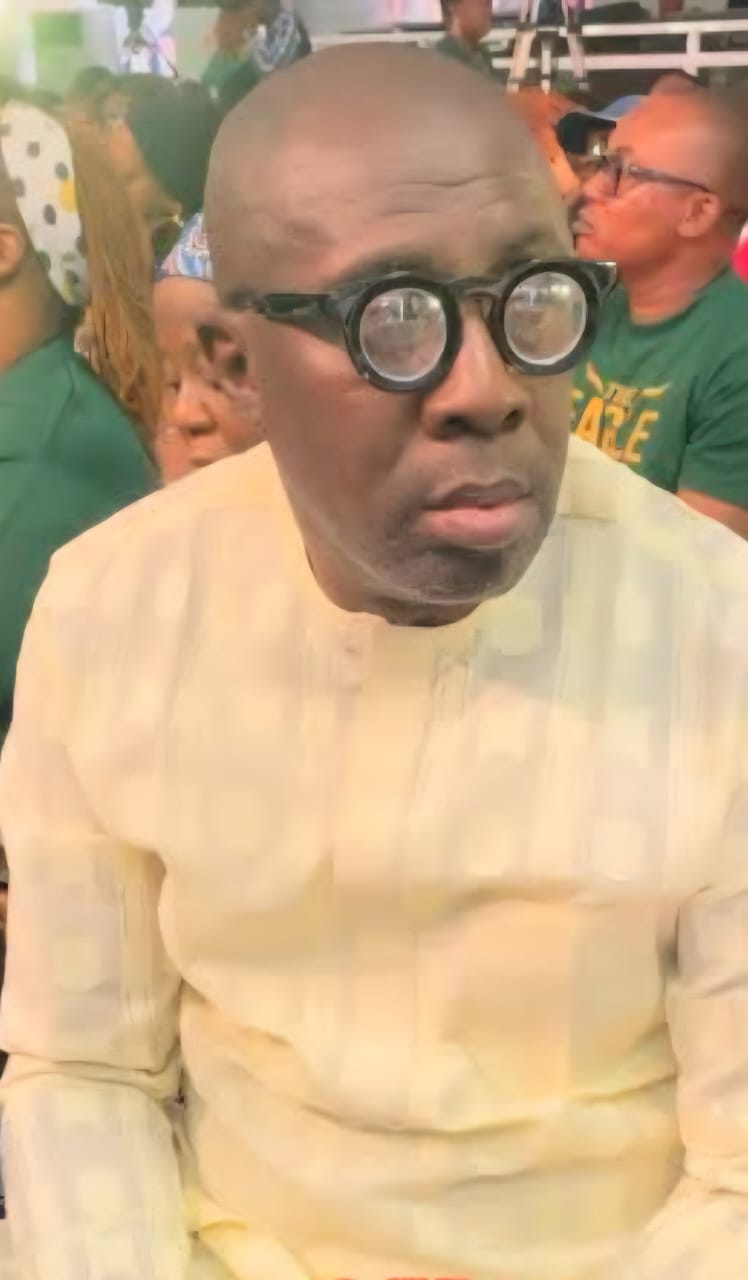
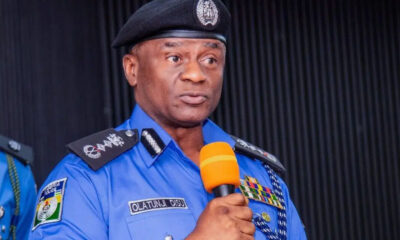
Lt A.M Yerima
Lt A.M Yerima

The ‘fool’ who stopped Wike

Tunde Odesola

(Published in The PUNCH, on Friday, November 14, 2025)

The bully in me met its match in my primary school classmate, Lukman Oluwuyi, on our way back home one afternoon. In the eyes of a schoolkid, St Paul Anglican School, Idi-Oro, Lagos, was a couple of giant two-storey buildings on an expansive compound which served as an assembly ground in the morning and a football field during break. That was in the 70s when any elder on the street could fetch a cane, flog a wayward child, and march the culprit home to the applause of the entire neighbourhood. In those days, an erring child preferred a quick, anonymous beating to the humiliation of being beaten and escorted home by a Good Samaritan stranger.

Caramel-complexioned and restless, Lukman was a wiry boy with wavy, matted hair that glistened. Were he white, he’d have passed for a brunette; I, in my childish rascality, thought him an Arab. Lukman was ‘my boy’ until one day when a tiff broke out between us. Time has blunted the exact cause of our disagreement, but I remember it was on Ojowere Street, near Alli Lane, Mushin – two streets I learnt have been swallowed by the Lagos railway projects of the Babajide Sanwo-Olu administration.

On the fateful day, Ojowere Street was a long stretch of clay, having just been graded, as my friend and I plodded along in the simmering heat. Clad in a green khaki shirt and shorts, I was heading home to Lawanson Crescent, while Lukman was going to their house off Kayode Street, before the Deity at Crossroads, Èsù Láàlú Onile Orita, decided to meddle in our affairs.

I was democratic in my bullying. “I’ll beat you, Lukman,” I warned. Lukman did not retort; he merely struck a Kung-fu pose, evidence of the Indian and Chinese films he had been watching lately. I was livid, “Is this not Lukman, my bo-i? Lukman!! Lukman, who I’m bigger and stronger than? Lukman, whom I would tell to shut up, and dared not say a word, now turning against me?” I lunged at him, throwing the combinations I had learnt watching the Great Muhammed Alli on TV. But Luku, clever and resilient, found a way below my blows, scooped me halfway up, and slammed the pot of my rump (ikokodi) hard on the new road.

That act of gross rebellion got me madder. I sprang up, chased and quickly caught up with him. Probably out of fear, or not wanting to rub salt in injury, Lukman seemed unwilling to fight, but I was determined to avenge the insult. I knew I was the tiger. Lukman was the lamb. So, still on Ojowere Street, I engaged him in another round of fighting. I was bigger and stronger, but in no time, I found myself under Lukman the second time. Each time he slammed me, he quickly got up, like someone afraid, picked hup is bag, and walked away as if nothing had happened.

In our time, to cement your victory over a vanquished, the victor fed his victim with soil. In my opinion, Lukman’s failure to do that meant he wasn’t victorious yet; ìjà sèsè bèrè ni’.

READ ALSO:

“Mi o ni gba, Lukman won’t get away with this sacrilege,” I sprang up and went after him. He struck his Kung-fu pose while I squared up in my boxer’s pose. Gbangan! I found myself on the ground again. I got up, chased and caught up with him for the fourth time, warning, “Lukman, ma na e, I will beat you.” That was the moment an old trader, who sold keys, padlocks, nails and hoes, etc, along the road, shouted, “Ma na e, ma na e, o ti la o mole ni emeta, o je kori sile, yio kan na o pa. Ole!” (You keep shouting ‘I’ll beat you’, yet he has floored you thrice; you’d better head home before he kills you, lazy boy!)

Quietly, I picked up my bag and headed homeward, seething and determined that Lukman would get his comeuppance before we departed that day. But, somehow, we didn’t get to fight again that day as Èsù Òdàrà had left Ojowere for another assignment. I can’t remember if we ever fought again in primary school, though we fought once in secondary school, when I thought he was caressing my sword with his bare palm. Honestly, I didn’t know how I came to think so highly of myself. Could it be the Mushin spirit at work?

After secondary school, we lost touch. Decades passed before I saw him again on October 1, 2016, during the reunion of the Old Students Association of Archbishop Aggey Memorial Secondary School, Mushin. I recounted his victory in primary school and the rematch in secondary school; he had forgotten both, but he laughed like a drunken sweepstake winner. Lukman travelled out to France in search of greener pastures in 2008 and came back to Nigeria for the first time in 2016, attending the reunion during the visit.

A few days after returning to France, Lukman died in a hospital. Shhhhhh! It’s not the wicked people of Aye Akamara that killed Luku. It was mosquitoes. My dear Elukumede died of malaria fever, which he took from Nigeria to France. Malaria is strange to France.

Faction is a literary style that combines fact and fiction. The Lukman story you just read is a fact. What you’re about to read next is an invented myth, a fiction.

Here it goes. Once upon a time, there lived in Eripa, Osun State, a farmer named Arije, whose compound was next to that of Abanikanda, a fisherman. One night, Abanikanda fell asleep while cooking his fish for the next day’s market. Soon, the cooking fire became a ball of billowy red throat of fury.

It was Abanikanda’s daughter who saw the inferno. She screamed, “Fire, fire, neighbours, fire, help!” Arije heard the shout and turned in his bed, curling up behind his wife, saying, “It’s their fire, let them quench it. I’m unavailable. Dem no dey see me.”

The fire raged and crackled. Arije snuggled. “Abanikanda cooks too much fish every day; he brought fire upon himself,” he said.

Leaping in tongues, the fire consumed the grass and roots used in making Abanikanda’s thatched roof, releasing into the air flares, which jumped on Arije’s roof, burning ferociously. Farmer Arije woke up to sorrow and tears, learning an eternal lesson.

READ ALSO:

The Lukman and Arije stories illustrate, on the surface, the shameful clash between the Minister of the Federal Capital Territory, Abuja, Nyesom Wike, and one misoriented lieutenant in the Nigerian Navy, A. M. Yerima, a Kaduna indigene, who led a group of misguided, gun-clutching soldiers to secure a parcel of land for a retired Chief of Naval Staff, Vice Admiral Awwal Zubairu Gambo, who left service at the age of 57, and plunged into a life of luxury, which afforded him a multi-billion naira block of several buildings in Abuja.

On a deeper level, the clash highlights the crushing power game in the shithole we call Nigeria, our own dear native land, where though tribes and tongues may differ, in gangsterism we stand. It exposes to the ridicule of the international community, an inefficient, ill-equipped, ragtag and oppressive military which always places self-interest and clan above the Constitution and national interest. It shows a country of power-drunk, corrupt and immoral leadership being hailed by an ignorant public, who, having eaten the Stockholm Syndrome apple, grew to love their oppressors both in the ruling party and the opposition.

For his antecedents, if you called Wike talkative, belligerent, a spoiler, mischievous and arrogant, you are 100% right. But in his clash against the colluding military leadership, Wike was dead right, 200%. The backlash against Wike, however, arose from the poetic justice that saw him steaming in the stew of the victimisation and impunity, which the government he represents serves to the citizenry daily. Wike thus represents the spider caught in its own web. I do not pity him.

At all levels, Nigeria’s problem is systemic failure, a medical term for heart failure, needing urgent surgery, and as such, there’s a need to analyse the Wike-Military saga in proper perspective. We must shear the meat of this matter from the bones, abattoir-fashion.

Before this saga, I had never written a word, sentence or paragraph in favour of Wike. However, beyond the God-don-catch-Wike cacophony renting the press, airwaves and social media, I urge reasonable Nigerians to run a fine-tooth comb through the issue and dismount from the APC-Opposition fence.

To aid deconstruction and discernment, I hereby present two sequences to the story, illustrating reportage from traditional media and online posts.

Sequence 1
From a land-selling outfit, Gambo bought a sprawling swath of land in Abuja. He embarked on erecting many buildings on the land. Officials of the Federal Capital Territory Administration visited the site and alleged that there was no government approval for the land. The visiting officials told the builders to provide proof of ownership, government approval for the land and building approval plan. Thus, they told the owner to stop building.

Sequence 2
Gambo continued to build and refused to present any proof to FCTA. Instead, gun-wielding soldiers were drafted to the site. Officials of the FCTA who visited the site again were turned back, and they went to their office to report their findings. On the 11th day of the 11th month of 2025, at probably the 11th hour, Wike called the Chief of Defence Staff, General Christopher Musa, and the Chief of Naval Staff, Vice Admiral Idi Abass, before embarking on a visit to the site, telling them the situation at hand.

READ ALSO:

Before we get to what happened on the site when Wike visited, I’ll ask some questions. What stopped Gambo from presenting the papers of the land and building approval plan to FCTA when asked to do so? Is Gambo not answerable to the constituted authorities’ inquiry because he was a soldier? Is he above the law because he retired as a CNS? Who ordered the drafting of soldiers to the site, because as a retired officer, who no longer has even a troop under his command, Gambo cannot legally order armed soldiers to guard his private estate when Nigeria is suffering from a manpower shortage in the ongoing battle with terrorists and bandits. Why did Musa and Abass not order the Yerima-led soldiers on maiguard duty to allow Wike and FCTA officials to do their inspection job and leave in peace? Why has the band of retired generals come after Wike while they are silent on the infractions of Gambo? Did Gambo get the money to buy such an expanse of land from his meagre military earnings? The answers to most of the questions are impunity and official corruption.

I daresay that aside from the ceaseless arrogance and oppression of the Nigerian military against the masses, I saw in the Abuja saga the fangs of the oppressive Fulani hegemony in the military and politics of Nigeria unbare. I dare to say that no Yoruba or Igbo officer would dare do what Kano-born Gambo and his gambolling soldiers did in Abuja.

As they say, you can’t build something on nothing. Singling Wike’s action out for condemnation without seeing through the tribal guile of a cabal in the Nigerian military, whose mantra had long been ‘born to rule’, is to fall cheaply to their ancient deception of divide and rule.

As for Wike’s multitude of antagonists sitting on the opposition fence, I’ll urge caution and wish they ponder on the lessons behind the action of Farmer Arije from Eripa. I hope this multitude know that in countries with serious military, like the US, China, Germany, France Britain, etc, where soldiers know their responsibilities, officers and men are under the laws of the land, not above it – unlike Nigerian soldiers – burning down Fela’s house, throwing his mother through an upstairs window, killing hundreds of innocent civilians in Odi, harassing MKO Abiola and his wife in the 80s, killing Dele Giwa, Ken Saro-Wiwa, the list is endless. Our monstrous military must be tamed and made to bow to the Constitution.

A ‘repentant’ Boko Haram or secondary school dropout who joins the military today as a recruit believes only his military superiors are those he can obey, not any constituted authority. This was why one low-ranking idiot in army uniform, some years ago, while driving against traffic in Lagos, dared to confront Governor Sanwo-Olu, saying he was a soldier. In 2012, Governor Babatunde Fashola arrested a colonel and a staff sergeant for driving on the restricted BRT Lane in separate vehicles. If not a governor, in some cases, or the President, no law-enforcement official in Nigeria can stop an erring soldier, not the police, not the DSS. Nigerian soldiers fear no law; they only fear the military, Boko Haram, terrorists, IPOB and Trump. Nigeria must stop their impunity for us to have a country.

READ ALSO:

I think everyone is talking tongue-in-cheek on this matter, as it now appears, because of the fear of a military coup. In that case, it is not wrong to draw a conclusion that President Bola Tinubu truly needs the prayers of Nigerians.

Each time soldiers’ ‘asemáse’ impunity rears its head in Nigeria, I always remember former police spokesperson, Alozie Ogugbuaja, who, while in service, described the Nigerian military as a bunch of ‘peppersouping’ and ‘beering’ generals who only excel at coup planning and execution. God bless Ogugbuaja.

The excesses of the Nigerian military predate Ogugbuaja’s outburst. It goes even beyond independence and the post-Civil War era when Nigerians, showing courtesy, allowed soldiers to board public transport for free. Soon, soldiers began to deboard passengers from the front seats of public transportation buses, even as they wouldn’t pay a dime to vehicle conductors.

The Lukman Oluwuyi metaphor speaks to the Goliath which the Nigerian military represents, while insurgency, banditry, etc, have become David defeating Goliath. Yerima’s disrespect came before Wike’s because, by arrogantly being in the place he was not supposed to be, he disrespected the Constitution and the Oath he had sworn. Yerima condescendingly expressed shock that a policeman was talking to him, saying, “Look at a policeman talking to me”, as if he, Yerima, gave God the clay with which Adam and Eve were created.

LDRSHIP is the acronym for the seven core values of the U.S. Army. L means Loyalty to the Constitution. D stands for Duty of Fulfilling obligations by completing tasks and accomplishing assigned missions as part of a team. R means treating people with dignity and respect, recognising the value of every individual. S means Put the welfare of the nation, the Army, and your subordinates before your own personal interests. H means Live up to and embody all the Army values in every action. I means Integrity: Do what is right, both legally and morally, ensuring honesty and trustworthiness. P stands for Personal Courage: Face fear, danger, and adversity, whether physical or moral. How many Nigerian soldiers can tick all the boxes of the acronym? I don’t know. But I know how many who are good at peppersouping and beering.

In the US, civilians can walk into stores to buy military camouflage, which they proudly wear in support and solidarity with their soldiers. In Nigeria, soldiers will beat you to a pulp and lock you up if you wear any dress they consider ‘army green’ in colour. They will seize your car if its colour is too green. What an upside-down country!

I’ll leave you with the words of some three wise men. I’ll start with Dwight D. Eisenhower, the 34th President of the United States. He says, “Force can protect in emergency, but only justice, fairness, consideration, and cooperation can finally lead men to peace.” Are Nigerian big-for-number soldiers listening?

Albert Einstein is my second wise man. He says, “Force always attracts men of low morality.” I’ll expatiate by adding ‘unnecessary’ to Einstein’s force.

My third and final wise man is Rumi, a 13th-century Persian poet and Islamic scholar. He bequeaths these eternal words to humanity: “Raise your words, not your voice. It is rain that grows flowers, not thunder.” This advice is for Wike, who needs to improve his public attitude. He should have been gracious at the scene. But the attitude of Yerima was so nauseating, to say the least. I am a commissioned officer, my foot!

Email: [email protected]

Facebook: @Tunde Odesola

X: @Tunde_Odesola

The ‘fool’ who stopped Wike

Continue Reading

Opinion

Why a Customer-Centric After-Sales Offer Matters More Than Ever

Published

on

Why a Customer-Centric After-Sales Offer Matters More Than Ever

The recently concluded VerveLife 8.0 Grand Finale at the Eko Convention Centre, Victoria Island, Lagos, was a vibrant celebration of fitness, lifestyle, and entertainment.
The two-part event drew over 10,000 participants for an unforgettable day of workouts, masterclasses, and experiences that reflected Nigeria’s growing wellness culture.
However, one of the evening’s most memorable moments came when Chidera Nkem was announced as the winner of the grand prize—a brand-new Chery Tiggo 2, courtesy of Verve and Carloha-Chery.
The cheers that followed were quickly met with a practical question whispered among the crowd: “How will she maintain the car?” It was an insightful question—one that echoes the frustrations of many Nigerian vehicle owners.
High maintenance costs, a scarcity of trained technicians, and the proliferation of counterfeit spare parts have made car ownership an expensive and sometimes exasperating experience.
Another, perhaps unspoken, reason for the question was social perception. In many quarters, young people—especially young women—are often presumed incapable of maintaining modern, tech-driven vehicles without significant financial or professional standing.But this perception, and indeed the broader experience of vehicle ownership, is beginning to change. Forward-thinking automobile brands are reimagining what it means to own and maintain a vehicle, moving from a transactional relationship to a customer-centric, service-driven partnership.
In Chidera’s case, Carloha has ensured that she can drive her new Chery Tiggo 2 Pro with complete peace of mind. Thanks to Carloha Care 6-6-7, the company’s comprehensive after-sales package, her car is covered for six years—at no extra cost.
Here’s what that means: 6-Year Warranty: Every new Chery SUV or sedan purchased from Carloha comes with a six-year or 200,000km warranty, ensuring that any manufacturer-related defect is fixed at no cost to the owner.
Six-Year Free Service: Carloha also covers both parts and labour for routine servicing over the same six-year period, removing one of the biggest pain points in car ownership.
Seven-Day Repair Guarantee: If a repair takes longer than seven days, Carloha provides a courtesy car for the customer to use until the work is completed. This structured, customer-first approach goes beyond marketing—it represents a shift in how value is delivered.
Carloha’s after-sales model transforms car ownership from a burden into a long-term relationship built on trust and reliability.Imagine if every automobile brand in Nigeria embraced a similar philosophy.
The market would not only see more satisfied customers but also deeper brand loyalty and stronger consumer confidence. In today’s competitive environment, after-sales service is no longer an optional extra—it’s a strategic imperative.
As consumers become more discerning and value-driven, brands that place the customer experience at the heart of their operations will lead the way. Customer-centric after-sales care isn’t just good business—it’s the future of mobility.

Felix Mahan
General Manager Marketing
Carloha Nigeria

Continue Reading

Opinion

What President Bola Tinubu must urgently do to avoid American trouble – Prophet Genesis

Published

on

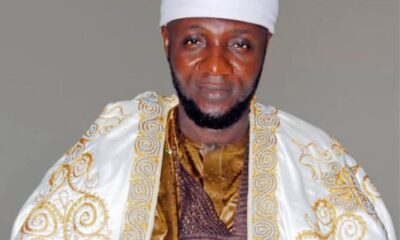
Prophet Israel Oladele Ogundipe

What President Bola Tinubu must urgently do to avoid American trouble – Prophet Genesis 

A popular religious leader, Prophet Genesis, most commonly known as Prophet Israel Oladele Ogundipe, the founder of the Genesis Global Church,  recently addressed the concerns of the Nigerian public regarding the escalating tensions between the United States and Nigeria.

These tensions arose from claims made by the US government that Nigeria was not doing enough to combat the killings of Christians within its borders. Consequently, the Trump administration designated Nigeria as a “Country of Particular Concern” (CPC) due to severe violations of religious freedom.

President Donald Trump, along with several American lawmakers, including Senator Ted Cruz, has argued that Nigeria is facing an “existential threat” or “Christian genocide,” alleging that the Nigerian government is “allowing” these atrocities to occur. In response, the man of God has urged the Nigerian government to act quickly and decisively.

In his second message, he warned the Nigerian government about the actions it must take and pleaded with all Nigerians to behave as responsible citizens.

He stated, “We all want Nigeria to succeed. We are all patriotic to this call. Some of us may not believe in the narrative presented by the U.S., China, and others. Nigeria is a leader in Africa. We have a strong military capable of defeating any insurgents. We have assisted other countries in their fights and achieved results. So, the question remains: why can’t we combat this insurgency?”

Recently, a group of bandits invaded the Nissi community in the Chikun Local Government Area of Kaduna State, kidnapping an Anglican priest and his wife. According to sources, the bandits abducted the priest, Edwin Achi, and his wife, Sarah Achi, from their residence in Nissi village.

READ ALSO:

He further noted that the government must put an end to the killings, as he receives messages almost every day about people being kidnapped and murdered. He urged the government to demonstrate that it can stop these killings quickly, as this would prevent any potential intervention from the U.S. and Donald Trump. He emphasised that Trump means what he says, and he does not want the government to take it lightly.

In recent days, the government has shown that some hostages are being released and some bandits are being captured. However, we must consider how many people have lost their lives due to this insurgency. It seems that the government is not ready to confront this harsh reality.

To those who are exploiting sympathy and using religious divides to further their agenda, I urge you to understand that this is not a conflict between Muslims and Christians. We must unite against the insurgents and bandits who threaten our unity. We must not allow them to distract us again.

This conflict is not one between the South and the North or the West. Currently, many Igbo people want Donald Trump to invade Nigeria, while a significant number in the North oppose American intervention. This division is concerning. We need to recognise the implications of a U.S. invasion; it would be akin to returning to another era of slavery. Nigeria has much at stake, including its resources that could be exploited, a decrease in foreign investment, and the diversion of its oil.

I urge the government to end the killings once and for all. Let us stop pointing fingers and cease pitting Christians against Muslims. The reality is that Nigerians are being killed. We must awaken and take the necessary actions,” he concluded.

Prophet Israel Oladele Ogundipe is the founder and spiritual leader of Genesis Global Ministry, headquartered in Lagos with branches in several countries. After a challenging childhood marked by poverty, Prophet Ogundipe found refuge and support in the Celestial Church of Christ, where he became a member, instrumentalist, and minister. He eventually left to establish his own ministry, Genesis Global Outreach.

What President Bola Tinubu must urgently do to avoid American trouble

Continue Reading
HostArmada Affordable Cloud SSD Shared Hosting
HostArmada - Affordable Cloud SSD Web Hosting

Trending