
International
UK dad finally meets daughter 15 months after DNA result was falsified
UK dad finally meets daughter 15 months after DNA result was falsified
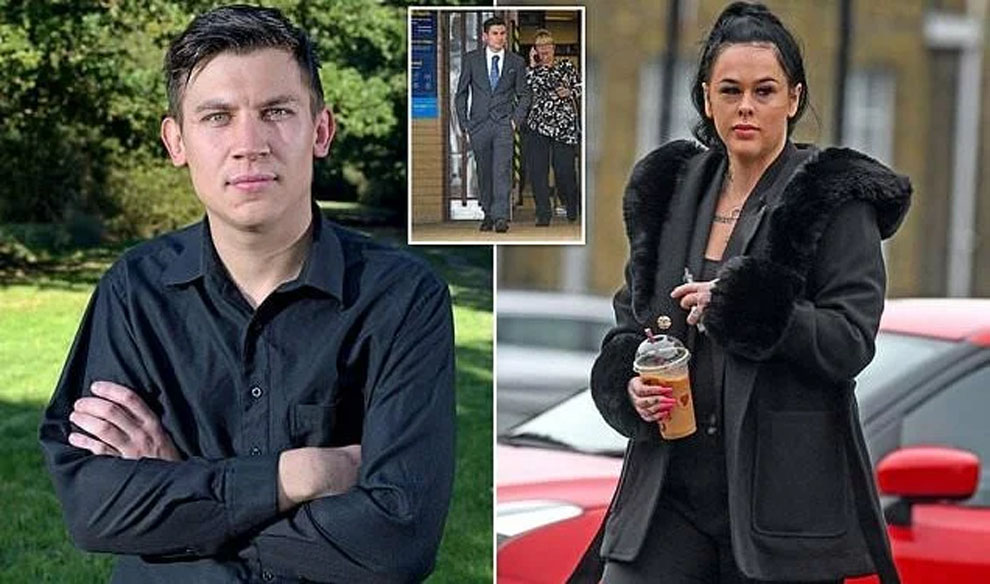
A father from the United Kingdom, has spoken out about the emotional toll of waiting 15 months to finally meet his daughter after his ex-girlfriend tampered with a DNA test, falsely claiming that the child wasn’t his.
Georgina Saville, 25, manipulated a DNA test result and fraudulently listed her new boyfriend, Danny Mellows, as the father on the baby’s birth certificate instead of her ex-partner, Kyle Fitton.
This deception was intended to prevent Mr. Fitton, 26, from pursuing legal action to gain access to his children.
Saville has denied this allegation, claiming that she falsified the documents to avoid being bombarded by emails from Mr. Fitton’s solicitor.
In his first public statement since the harrowing experience, Mr. Fitton described how his ex’s deceit left him devastated.
He said, “It’s taken so long to get to this stage and to actually get to the truth. It’s just a massive sense of relief. I have been quite upset, stressed all the time. It’s one of the hardest weeks that I have had to deal with.”
Saville first made the false claim in March 2022, shortly after the birth of their second child, when she presented a fake DNA test and inaccurately filled out the birth certificate, listing Mr. Mellows as the father.
This deception led to a lengthy legal battle that culminated in Saville’s trial at Southampton Crown Court, where she was convicted of perverting the course of public justice and willfully making a false declaration regarding the birth.
Following the legal proceedings, guardianship of Mr. Fitton’s two children was awarded to his mother, which now allows him to see them every day.
READ ALSO:
- Hoodlums raze ex-senator’s residence, varsity study centre in Imo
- FRSC recovers N8.6m from accident scene in Kaduna
- Emirates flight lands in Lagos for first time in 2 years
The mechanic described his joy at coming home from work to the sound of his children calling him “daddy,” calling it “the best part of my day.”
Reflecting on how the relationship with Saville has impacted him, Mr. Fitton revealed that it took a significant toll on his personal life.
“When I split from Georgina, it was very difficult for me to get into any relationship. It has made me overthink things, I’d shut myself off from everyone. I was dealing with it on my own,” he admitted.
He explained how the mental strain from the ordeal affected his health. “I started doubting myself, it really affected me, my mental health. I couldn’t sleep. It was constant and it was her way or the highway,” he said, revealing that he initially followed Saville’s demands for the sake of their eldest daughter. “I unfortunately followed her rules but I followed them for [their eldest daughter] at that time — to be a dad and to make sure she was happy.”
Despite their turbulent relationship, Mr. Fitton said he was “very happy” when he learned of Saville’s pregnancy in early 2021, although ongoing arguments made it impossible for the pair to stay together.
“The reason I kept going back to her was because of [our eldest child],” he explained. “I wanted to be a family, I wanted to try my hardest and have that family, as one unit.”
However, things worsened after the breakup, as Saville made life increasingly difficult for him. “It was really hard, no matter what I did I was in the wrong,” he said. “If I went to see her, she wouldn’t answer the door, and if I didn’t text her back in five minutes, she would call me a deadbeat dad.” He recounted how Saville’s behavior became more aggressive, with numerous missed calls and demands, making it impossible for him to maintain peace.
READ ALSO:
- Eight Boko Haram suspects, two female informants arrested in Taraba
- Terrorist leader Turji gives conditions for peace in Zamfara
- Ooni of Ife: People mocked me when my marriage broke down
He credited his mother, Jayne Fitton, for acting as an intermediary, passing along any information he needed about his children.
Throughout the turmoil, Fitton never doubted his daughter’s paternity, despite Saville’s claims. “There was never any question. I knew she was not Danny’s from day one. It was quite frustrating — she was almost doing that to get at me.”
Fitton was determined to prove the truth, enduring a long and emotionally draining legal battle. “I had constant allegations against me. I just got to the point where I thought, ‘what is going to happen next?’ I had to keep fighting for the truth, and I stuck by it.”
He also revealed that Saville had threatened to take the children away and ensure he never saw them again, which terrified him. “It scared me because we believed she was actually going to leave the country at one point. It absolutely scared me. I thought I was going to have my girls taken from me and nothing could be done.”
After a painful wait of 15 months, Mr. Fitton finally met his baby daughter. “The bond between them now is ecstatic,” he said of the growing relationship between his two daughters. “It took some time to bond, but now it’s amazing. We were finally united before her second birthday.”
He added that Saville’s restrictions made it difficult for him to establish a connection with his child earlier. “[Saville] said I was never allowed to meet [the baby], but mum was. Even if I asked my mum to say something to her, it would be a no. That’s when I had enough of it. I said I need to do something, and that’s when I started court proceedings.”
Now, as Mr. Fitton looks ahead, he finds comfort in the stable routine of seeing his daughters daily. “I’m around mum’s every night, I’m there at the weekend — it’s every day,” he said, describing his joy in simple moments like taking his eldest daughter to her first day of school. “It’s just a sense of relief they are there, they are happy, and they are safe.”
UK dad finally meets daughter 15 months after DNA result was falsified











International
Brazilian President Lula Calls UN Security Council ‘Lords of War’, Slams Trump Over Global Conflicts
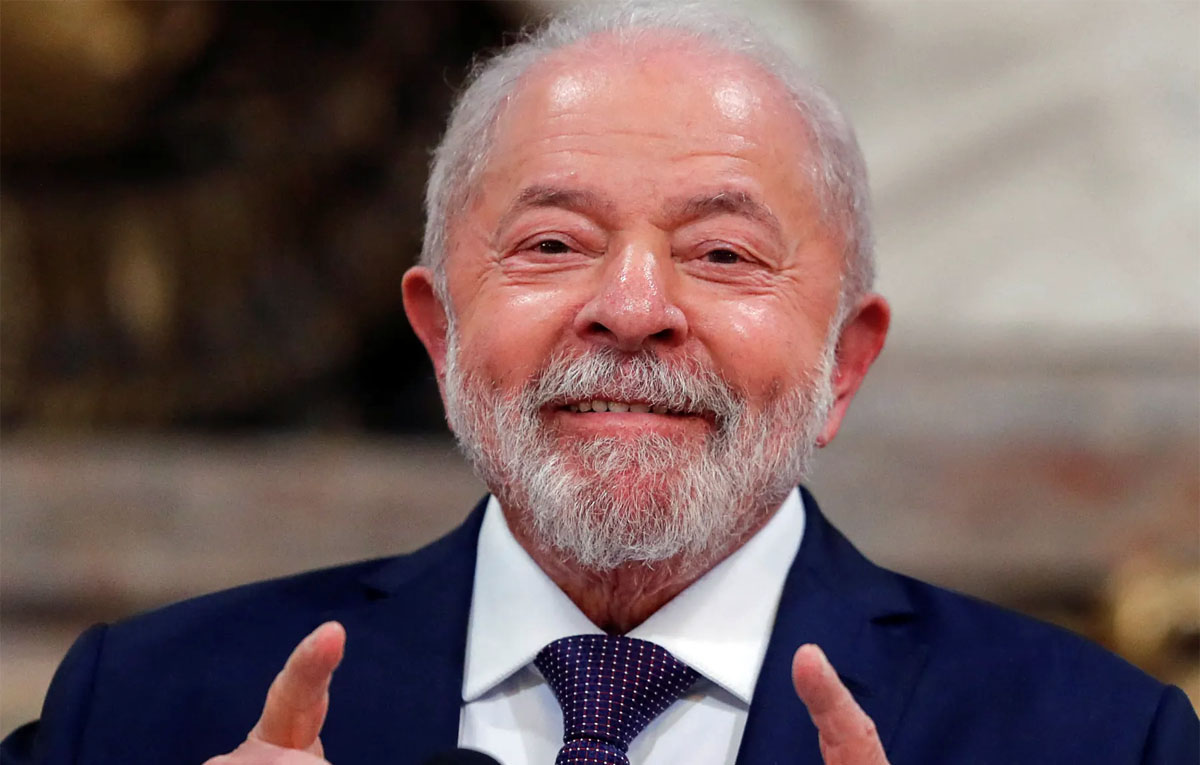
Brazilian President Lula Calls UN Security Council ‘Lords of War’, Slams Trump Over Global Conflicts
Brazilian President Luiz Inácio Lula da Silva has sharply criticised the United Nations Security Council and major world powers, accusing them of fuelling global instability instead of promoting peace.
Speaking on Saturday at an international summit of progressive leaders in Barcelona, Lula called on the five permanent members of the United Nations Security Council—China, France, Russia, the United Kingdom, and the United States—to “change their behaviour” amid rising global tensions.
He described the permanent members as having shifted from their post-World War II mandate of maintaining peace to becoming what he termed “lords of war.”
“The five members of the Security Council… were supposed to ensure world peace after the Second World War, but have become the lords of war,” Lula said.
The Brazilian leader accused these countries of taking major global decisions without adequate consultation with the United Nations system, saying smaller and poorer nations often bear the consequences of such actions.
Although he did not directly name any leader, Lula appeared to criticise former U.S. President Donald Trump over social media posts and statements he said contributed to escalating tensions, particularly regarding Iran.
READ ALSO:
- Bandits Kidnap Kwara Monarch, Wife, Aide in Overnight Palace Attack
- Former NFF President Ibrahim Galadima Dies at 74
- Police Nab Inspector Over Robbery, Killing of Fuel Attendant
He referenced Trump’s past comments on his Truth Social platform, including warnings tied to the Strait of Hormuz, which he described as inflammatory and dangerous to global peace.
“We cannot wake up every morning and go to bed every night with the president of a republic tweeting, threatening the world and declaring wars,” Lula said.
He stressed that no single world leader, regardless of power, should impose unilateral rules on other nations, adding that global governance must be based on cooperation and respect.
Lula also accused the United Nations of remaining passive in the face of escalating conflicts, saying the institution is failing to fulfil the purpose for which it was created after World War II.
“Today, the United Nations no longer represents the purpose for which it was created,” he said.
The remarks come amid continued global tensions involving Iran, the United States, and Israel, with ongoing diplomatic disputes over nuclear development and regional security.
However, some of the conflict details cited in circulating reports remain disputed by official international records and are not independently verified by major global institutions.
Lula used the platform to call for urgent reform of global institutions, insisting that the UN Security Council must be restructured to ensure fairness, transparency, and collective decision-making.
The comments have added to growing international debate over the effectiveness of the UN Security Council, particularly its veto system and its role in resolving modern geopolitical conflicts.
Brazilian President Lula Calls UN Security Council ‘Lords of War’, Slams Trump Over Global Conflicts
International
Starmer Faces Parliamentary ‘Judgment Day’ Over Security Clearance Scandal

Starmer Faces Parliamentary ‘Judgment Day’ Over Security Clearance Scandal
Downing Street has moved to firmly back UK Prime Minister Keir Starmer as he prepares for a decisive parliamentary showdown described by officials as his “judgment day,” amid growing political pressure over the controversial appointment and vetting of former diplomat Peter Mandelson.
The crisis centres on revelations that serious concerns were raised during security clearance checks linked to Mandelson’s appointment as Britain’s ambassador to the United States—concerns that were allegedly not fully addressed before the decision was finalised. The unfolding row has triggered questions about accountability at the highest levels of government and whether critical information was withheld or overlooked within No. 10.
According to multiple UK media reports, including ITV News and The Standard, Downing Street has now closed ranks around Starmer, insisting he was not made aware of the full details of the failed vetting process at the time key decisions were taken. The Prime Minister has described the situation as “unforgivable,” adding that he only learned the extent of the issues recently.
However, the controversy has intensified after suggestions that senior civil servants, including figures close to the decision-making process, may have been aware of the vetting complications earlier than previously acknowledged. This has deepened scrutiny of how information was handled inside government and raised questions about whether proper escalation procedures were followed.
At the centre of the political storm is Olly Robbins, a senior civil servant who is expected to appear before Members of Parliament in an upcoming parliamentary hearing. His testimony is anticipated to be critical in establishing a timeline of events—specifically who knew what, and when. The hearing is expected to form part of what opposition figures are calling a “full accountability test” for the Prime Minister’s administration.
Inside government, officials have sought to contain the fallout. Downing Street has defended Starmer’s leadership, arguing that swift corrective action was taken once concerns became clear, including personnel changes and internal reviews of vetting procedures. Aides have also emphasised that the Prime Minister acted decisively once new information came to light, framing the issue as a systemic failure rather than personal negligence.
Despite this defence, political pressure is mounting. Opposition parties have demanded greater transparency and accountability, with some lawmakers questioning whether the Prime Minister should have been informed earlier. Critics argue that the scandal reflects broader weaknesses in government oversight and communication between civil service structures and political leadership.
Within the ruling Labour Party, unease has also begun to surface, although most senior figures have publicly maintained support for Starmer. Privately, however, there is concern about the potential political damage if the issue continues to escalate, particularly with key electoral cycles approaching.
The controversy has also revived wider debate about vetting procedures for senior diplomatic and governmental appointments. Security experts and former officials have warned that any breakdown in clearance processes can have serious implications for national security and international trust.
Starmer is expected to address Parliament directly in the coming days, where he will face detailed questioning over what was known inside Downing Street and how the situation was handled once concerns emerged. The session is expected to be one of the most politically sensitive moments of his premiership so far.
For now, Downing Street’s strategy appears focused on containment—reinforcing support for the Prime Minister while shifting attention toward procedural failings rather than leadership accountability. Whether that approach holds will likely depend on the outcome of parliamentary testimony and the political reaction that follows.
As one senior political source put it, the coming days will determine whether the government successfully stabilises the crisis or whether it deepens into a broader test of Starmer’s authority.
Starmer Faces Parliamentary ‘Judgment Day’ Over Security Clearance Scandal
International
Iran Detains 127 Over Alleged Espionage, Sabotage After Ceasefire
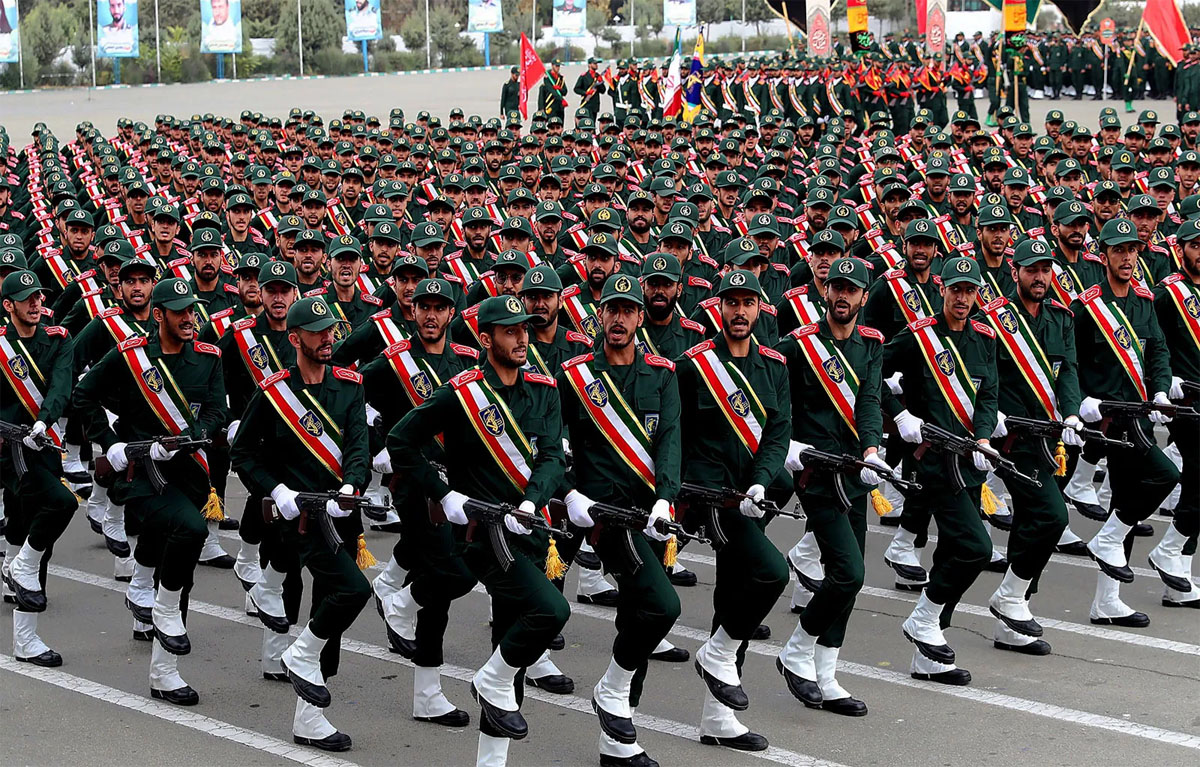
Iran Detains 127 Over Alleged Espionage, Sabotage After Ceasefire
Iran’s arrest of 127 individuals on security-related allegations highlights a broader pattern of heightened internal vigilance following periods of external conflict and fragile ceasefires.
The operation, led by the Islamic Revolutionary Guard Corps (IRGC) intelligence unit, reflects Tehran’s long-standing strategy of tightening domestic security whenever it perceives increased foreign threats. By targeting individuals accused of espionage, sabotage planning, and links to foreign intelligence agencies, authorities appear to be sending a strong signal about deterrence and control.
The geographic spread of the arrests—across East Azerbaijan, Mazandaran, and Kerman provinces—suggests that Iranian security agencies are concerned about potential nationwide infiltration rather than isolated incidents. These regions are strategically significant: Mazandaran lies along the Caspian Sea with economic and logistical importance, while Kerman has historically been sensitive due to its size and location.
Accusations of collaboration with foreign actors such as the United States, the United Kingdom, and Israel fit into Iran’s broader narrative of external interference. Such claims are frequently used by officials to justify intensified surveillance and enforcement measures, particularly after military escalations.
The timing is also critical. Coming shortly after a ceasefire linked to regional hostilities, the arrests indicate that Iran is not easing its defensive posture. Instead, the government appears to be consolidating control internally to prevent any perceived exploitation of the pause in conflict.
Additionally, recent legal adjustments increasing penalties for espionage-related offenses point to a more hardline approach. These measures may serve both as a deterrent and as a tool for reinforcing state authority during uncertain geopolitical conditions.
However, such crackdowns often draw scrutiny from international observers and human rights organizations, which question the transparency of such arrests and the potential for political motivations behind security charges.
Overall, the development underscores a key dynamic in Iran’s governance: external tensions are frequently mirrored by internal security actions, with authorities prioritizing stability and control during periods of geopolitical uncertainty.
Iran Detains 127 Over Alleged Espionage, Sabotage After Ceasefire

-

 Education1 day ago
JAMB Releases First Batch of 2026 UTME Results for 632,788 Candidates
-

 metro2 days ago
Power Supply Drops in Lagos as Transmission Faults Trigger Load Shedding
-

 Education2 days ago
FG Ends Physical Certificate Verification as Process Goes Fully Digital
-

 International2 days ago
Iran Declares Strait of Hormuz Fully Open
-
Education23 hours ago
Muslim Girls in Hijab Allegedly Harassed at JAMB Centres Amid UTME 2026 Exams
-

 Education8 hours ago
VIDEO: JAMB Registrar Meets CBT Owner Over Hijab Removal Allegation
-

 News3 days ago
Atiku, Obi, Kwankwaso Camps Clash as ADC Grapples with Leadership Dispute
-
 International2 days ago
Trump Says Iran Agrees to Hand Over Enriched Uranium in Nuclear Deal Talks