

News
Ukraine Crisis: 12,000 Students, Other Nigerians Trapped

About 12,000 students are reportedly among the many Nigerians currently stranded in the wake of the conflict between Ukraine and Russia, Daily Trust findings show.
Following the attack by Russian forces on major Ukrainian cities on Thursday morning, many Nigerian students and some parents, businessmen and professionals in Ukraine have expressed worry over the fate of citizens living in the troubled country.
The Nigerian government said it has arranged a special evacuation flight for Nigerians in Ukraine but could not say the exact number of its citizens living in the Eastern European country.
However, a statement issued on Thursday by the Country Representative of Ukrainian universities in Nigeria, Dr Cliff Ogbeide, said over 12,000 Nigerians are currently studying in Ukrainian universities.
This was corroborated by Jibrin Chinade, a former Nigerian Ambassador to Ukraine during an interview with Trust TV.
“It is instructive to know that Ukraine, having robust diplomatic relations with Nigeria, is offering affordable university admission to Nigerian students with an estimated number hovering above 12,000 currently,” Ogbeide reportedly said.
Daily Trust reports that the Nigerian government had earlier issued an advisory to its citizens in Ukraine, saying they are “responsible for their personal security and safety.”
READ ALSO:
- 1 Killed, Houses Burnt As Benue Communities Resume Clash
- Rivers woman sells son N400,000 for Dubai travel, jailed 12 years
- Otedola bribe: Appeal Court dismisses two counts, jails Farouk Lawan five years
A statement shared on Twitter by the Nigerians in Diaspora Commission (NIDCOM) said: “The embassy urges Nigerian nationals resident in Ukraine to remain calm but be very vigilant and be responsible for their personal security and safety.”
The statement also asked students seeking temporary relocation to seek proper clearance and guarantee from their respective institutions, authorities/ agents.
“In case of students seeking such temporary relocation, they are enjoined to seek proper clearance and guarantee from their respective institutions, authorities/agents on the way forward in respect to their studies during this period and/or thereafter,” the embassy reportedly told students.
‘We are living in fear’
While some Nigerian students in Ukraine said they felt abandoned by their country amidst the escalating war between Russia and Ukraine, others said they were living in fear.
Firdausi Muhammad Usman, a medical student in Kharkiv, the second-largest city in Ukraine told the BBC Hausa Service that everyone, especially students were living in fear and anxiety since early Thursday and that they were at a loss as to the exact situation on the ground.
She said: “Around 5am local time, we could hear huge explosions which got us up. I was together with my younger sister at the time; we were terrified and did not know what to do.
“All of a sudden, I could see the Ukrainians we live alongside in the building trooping out with their children and portmanteaus. We remained in the building until around 1pm when we heard another explosion, and then we were told that we should seek refuge at a shelter that is safer.
“While in the shelter, we found out that curfew had been imposed; therefore we should go back to our residence. Streetlights have been put off but water supply and electricity were still accessible, but in the morning internet services were cut off; we are now relying on ‘data plan’ to connect to the world through which we are able to communicate with our families in Nigeria.
“Our families are in a panic. The embassy did not yet speak to us or issue any statement, but they only issued us some forms in which we filled our basic information and the addresses of our kins in Nigeria,” she said. A Nigerian parent whose daughter is studying in Ukraine said there was tension among parents on the situation.
“We are facing the consequences because before now when I talked with my daughter she told me that there is a crisis going on in eastern Ukraine, that means that the separatists are fighting the Ukrainian authorities for sovereignty,” he said.
Asked if he was thinking of evacuating his daughter, the parent said: “Of course, that’s the most strategic thing to do but the issue is that it depends on when and if one’s daughter is safe.
“For you to even get to the airport you need to travel on a train for seven hours, so it is not really an easy thing. The best thing is evacuation but what we are calling is a diplomatic approach so that the issue can be settled. We are calling for dialogue.”
The National Association of Nigerian Students (NANS) has also written to President Muhammadu Buhari appealing for the immediate evacuation of students in Ukraine.
A letter signed by Eunice Eleaka, NANS executive reads: “We plead with you His Excellency President Muhammadu Buhari to please send for the immediate evacuation of the Nigerian students currently in Ukraine.
“We can only trust and wait on our great nation (giant of Africa) in this perilous time.”
The House of Representatives has also called for the evacuation of Nigerians especially students living in Ukraine.
It has mandated the leader of the House, Alhassan Ado Doguwa (APC, Kano), the Chairman, House Committee on Foreign Affairs, Buba Yakub (APC, Adamawa) to liaise with the Ministry of Foreign Affairs on the issue.
This was sequel to the adoption of a motion moved by Ahmed Munir (APC, Kaduna) at plenary on Thursday.
Presenting the motion, the lawmaker said, there was a need for Nigeria to evacuate its citizens from the country as tension grew and war commenced.
Munir noted that the lives of Nigerians are at risk as the war may escalate in the coming days putting them in a more precarious situation.
However, some Nigerians currently trapped in Ukraine have ruled out the option of returning to the country.
Speaking with Daily Trust via telephone, they expressed cynicism about the federal government’s promise to evacuate willing Nigerians from the war-torn country following Russia’s invasion.
Edidiong Cyprian, a Nigerian who has lived in Kiev, Ukraine’s capital, for many years, described the promise as unrealistic due to past unfulfilled promises of evacuation. “I was here in 2013 during a similar crisis when they promised to evacuate Nigerians and they never did,” he said.
Treasure Chinenye Bellgam, a medical student in Kyiv, said the government’s gesture was good but, “I am a believer in Christ Jesus and I have to ask God for direction whether to return to Nigeria or not,” she said.
We’ve arranged special flight – FG
The federal government said yesterday that it has arranged a special flight operation to evacuate Nigerians from Ukraine.
The Minister of Foreign Affairs, Geoffrey Onyeama, in an interview with the Nigerian Television Authority (NTA) said the Nigerian Embassy in Kyiv had been contacted to finalise the arrangements for those willing to return to the country.
He said, “The Federal Government of Nigeria has arranged for a special flight operation to evacuate our citizens from Ukraine in view of the escalating tension between that country and Russia.
“The Nigerian Embassy in Kyiv has been contacted to arrange those wishing to return home from other areas including Donetsk and Luhansk.
“Nigerians are assured that the ministry is following the event in the country. We would do everything for the safety of Nigerians in Ukraine, particularly students,” it said.
Daily Trust










News
Shell Exits Nigeria’s Gas Distribution Business, Sells Stake to Vaaris Energy
Shell Exits Nigeria’s Gas Distribution Business, Sells Stake to Vaaris Energy
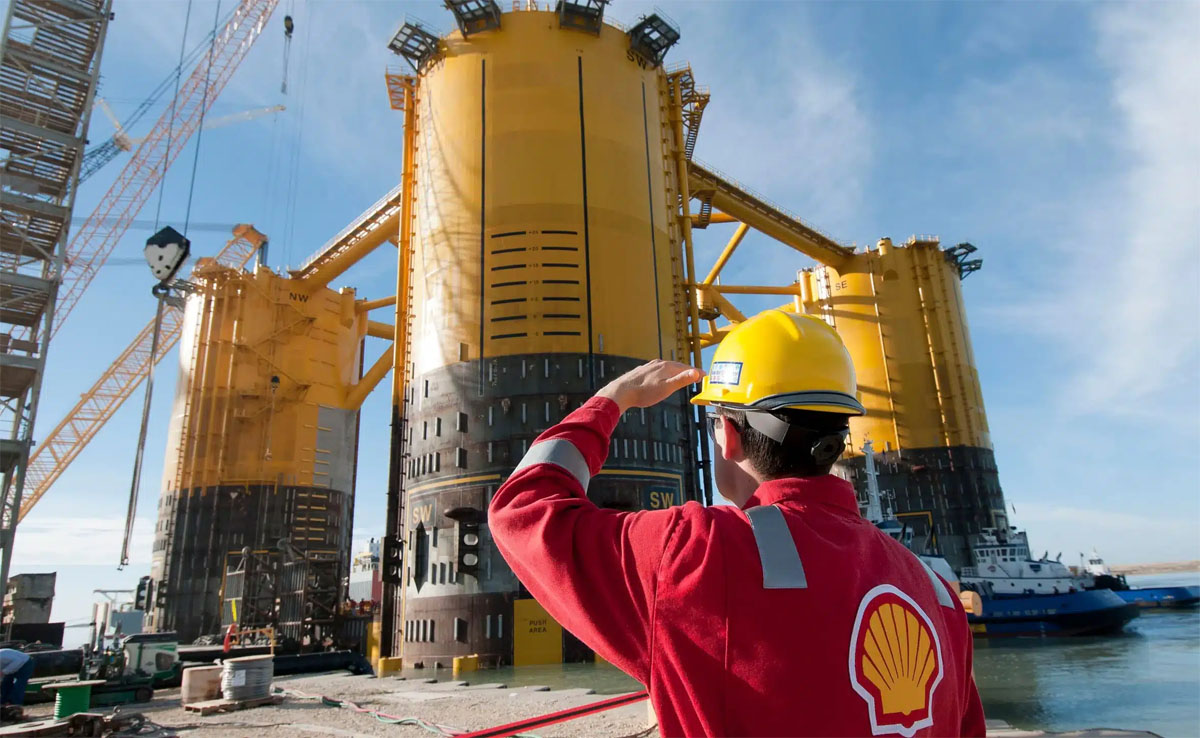
Shell Petroleum B.V. has agreed to sell its entire interest in the Shell Nigeria Gas Group to indigenous energy company Vaaris Energy Limited, marking another major shift in the international oil giant’s business portfolio in Nigeria.
The agreement, announced on Tuesday, October 13, 2026, covers Shell’s domestic gas distribution business in the country. The financial terms of the transaction were not disclosed in the announcement.
The proposed sale will transfer Shell’s interest in the gas distribution group to Vaaris Energy, a Nigerian-owned company seeking to expand its presence in the country’s oil and gas industry.
The transaction represents another adjustment to Shell’s Nigerian operations as the company focuses on selected oil, gas and integrated energy projects.
Shell’s latest move follows its earlier exit from onshore oil production through the sale of its interest in the Shell Petroleum Development Company of Nigeria Limited (SPDC) to the Renaissance consortium. That transaction was completed in March 2025 after receiving the necessary regulatory approvals.
However, the two transactions involve different parts of Shell’s Nigerian business. The earlier deal covered its onshore oil-producing subsidiary, while the latest agreement concerns its domestic gas distribution operations.
READ ALSO:
- Delta Tragedy: Man Allegedly Kills Wife, Dies by Suicide After Land Dispute
- VIDEO: Outrage as Indian National Assaults Nigerian Truck Drivers in Lagos
- Forgery Probe: Police Arrest Ex-Imo Governor Rochas Okorocha in Abuja
Following the SPDC sale, Shell retained other interests in Nigeria, including its deepwater oil and gas operations and its participation in Nigeria LNG Limited. The company also continued operating its domestic gas distribution business, which is now expected to come under Vaaris Energy’s ownership once the latest transaction is completed.
Shell said the proposed divestment aligns with its strategy of simplifying its global portfolio and concentrating investment on projects expected to deliver stronger returns.
Elohor Aiboni, Shell’s country chair in Nigeria, said the company would continue to focus on its strategic deepwater and integrated gas positions in the country.
For Vaaris Energy, the proposed acquisition offers an opportunity to strengthen its position in Nigeria’s natural gas market and expand its participation in the domestic energy value chain.
The company is a privately held Nigerian energy business with interests across the oil and gas sector. However, details of its plans for the acquired business, including any operational changes or investment commitments, were not disclosed in the announcement.
The financial value of the transaction and the precise timeline for completion were also not made public in the information available at the time of reporting.
The deal comes as Nigeria seeks to increase domestic gas utilisation, improve energy supply and attract investment into its gas infrastructure. Gas distribution plays an important role in connecting producers with industrial users and other customers that rely on natural gas for their operations.
The implications of the acquisition for Nigeria’s domestic gas market will depend on the completion of the transaction and how Vaaris Energy manages and develops the business under its ownership.
Shell’s agreement with Vaaris therefore marks another change in the ownership of a significant energy asset in Nigeria, while allowing the international company to maintain its focus on other strategic oil and gas interests in the country.
Shell Exits Nigeria’s Gas Distribution Business, Sells Stake to Vaaris Energy
News
Delta Tragedy: Man Allegedly Kills Wife, Dies by Suicide After Land Dispute

A domestic dispute allegedly involving the sale of landed property and accusations of infidelity has left a couple dead in Agbarho community, Ughelli North Local Government Area of Delta State, leaving their four children without either parent.
The incident reportedly occurred on Owiri Street in Agbarho, where the man allegedly attacked and killed his wife before later dying by suicide after ingesting a poisonous substance.
According to a report published by Vanguard on Tuesday, October 13, 2026, the tragedy followed a disagreement between the couple over landed property and alleged infidelity. However, the full circumstances surrounding the confrontation have not been independently established.
A source quoted in the report said the man was reportedly angered by allegations concerning his wife’s fidelity and the sale of his landed property. The precise sequence of events leading to the couple’s deaths remains unclear.
A neighbour reportedly said the couple had experienced repeated physical confrontations before the incident, suggesting that tensions within the household may have persisted for some time. However, details of the earlier clashes and whether the authorities had previously been alerted have not been confirmed.
READ ALSO:
- VIDEO: Outrage as Indian National Assaults Nigerian Truck Drivers in Lagos
- Forgery Probe: Police Arrest Ex-Imo Governor Rochas Okorocha in Abuja
- INEC Demands Formal Complaints as Missing Candidates Rock 2027 Election List
The deceased man’s elder brother also reportedly expressed shock over the deaths, saying he was not fully aware of what had triggered the fatal confrontation. He confirmed that the couple had four children, with the eldest said to be about 21 years old, but declined to disclose their identities.
A senior police officer at the Agbarho Division reportedly confirmed the incident, saying officers evacuated the bodies to a morgue as investigations began. The officer also indicated that no formal complaint had been lodged by the families as of the time of the report.
Attempts to obtain further comments from the Delta State Police Command’s spokesperson, SP Bright Edafe, were reportedly unsuccessful before the report was published.
The deaths have left the couple’s four children facing the loss of both parents, adding to the devastating consequences of the incident. The circumstances surrounding the reported property dispute, the allegations of infidelity and the events immediately preceding the deaths remain subject to investigation.
The tragedy highlights the potentially devastating consequences of unresolved domestic conflict. Disagreements involving marital relationships, property ownership and land sales should be addressed through peaceful dialogue, appropriate support and lawful channels. Violence is never an acceptable way to resolve such disputes.
Delta Tragedy: Man Allegedly Kills Wife, Dies by Suicide After Land Dispute
News
Obasanjo Backs Higher Oil Derivation, Says 13% Is Only the Beginning
Obasanjo Backs Higher Oil Derivation, Says 13% Is Only the Beginning
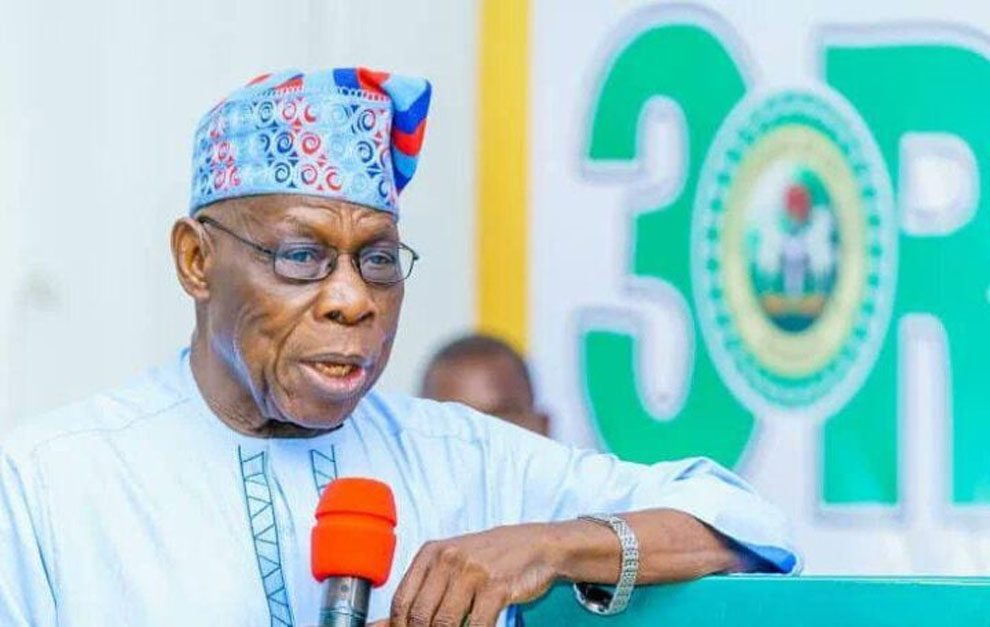
Former President Olusegun Obasanjo has backed calls for an increase in the 13 per cent oil derivation fund allocated to oil-producing states, saying the existing arrangement should be regarded as a starting point rather than a final settlement.
Obasanjo made the position known on Monday during the inauguration of the Crude Distillation Unit (CDU) of the $1 billion Azikel Refinery at Obunagha in Yenagoa Local Government Area of Bayelsa State.
Addressing Bayelsa State Governor Douye Diri, the former president acknowledged that oil-producing states and communities had yet to receive what he considered a fair share of the benefits from the exploitation of their natural resources.
“You are right that the states and oil-producing communities have not got a fair deal so far. Thirteen per cent is the beginning. You can continue to talk,” Obasanjo said.
His remarks reinforced renewed demands for a review of Nigeria’s revenue-sharing arrangement, particularly from the Niger Delta, where crude oil production has remained central to the national economy.
Under the existing constitutional framework, oil-producing states receive at least 13 per cent of revenue accruing to the Federation Account directly from natural resources, in line with the principle of derivation.
However, the allocation has remained a source of debate, with stakeholders in the oil-producing region arguing that the revenue does not adequately address the environmental damage, infrastructure challenges and economic difficulties associated with petroleum exploration.
Diri also criticised the existing arrangement, insisting that communities where crude oil is extracted should have a greater say in how the resources are managed and how the resulting wealth is distributed.
READ ALSO:
- How Bandits Demand ₦300m Ransom for Abducted Kaduna Couple, Baby in Viral Video
- 2027 Elections: Atiku Demands Names of INEC Ballot Printers, Questions Secret Contracts
- ₦8.7bn Erosion-Control Budget Gap Raises Questions as Anambra Gullies Expand
The governor argued that the region had endured years of agitation over what residents perceive as an imbalance between the resources extracted from their communities and the benefits they receive.
He also faulted the Land Use Act, arguing that the distinction between state control of surface resources and Federal Government control of resources beneath the ground places oil-producing communities at a disadvantage.
Diri maintained that the Niger Delta was not demanding exclusive ownership of the proceeds from petroleum production but wanted to become a more active participant in decisions affecting the industry.
“We do not want to take all to ourselves. We just want to be co-players in determining how it is done. Thirteen per cent is not enough for the states,” he said.
The governor urged young people in Bayelsa to acquire relevant technical and professional skills to benefit from industrial investments, including the refinery project.
He warned that the presence of major oil and gas facilities would have limited benefits for local communities if residents lacked the expertise needed to secure employment and participate in their operations.
The refinery project, owned by Azikel Petroleum under the Azikel Group, is expected by its promoters to produce about 2.5 million litres of petrol and two million litres of diesel daily, alongside other petroleum products, when completed.
The installation of the crude distillation unit marks a significant stage in the development of the facility, whose foundation was laid by Obasanjo about eight years ago.
The former president commended Azikel Group President, Azibapu Eruani, for sustaining the project and urged him to complete the refinery within the next 12 months.
Obasanjo also acknowledged the contributions of the African Finance Corporation and the African Export-Import Bank (Afreximbank), calling for continued support to bring the investment to completion.
He praised Diri for supporting the project and commended the Bayelsa government for what he described as the productive use of the state’s available revenue.
Eruani said the refinery was conceived to position Bayelsa and the wider Niger Delta as active participants in the petroleum industry rather than merely suppliers of crude oil.
He expressed confidence that the project would support industrialisation, create economic opportunities and strengthen local participation in the oil and gas value chain.
The refinery initiative comes amid continuing debates over resource control, revenue allocation and development in the Niger Delta, with calls for oil-producing communities to receive greater economic benefits from the natural resources extracted from their territories.
Obasanjo Backs Higher Oil Derivation, Says 13% Is Only the Beginning
-

 metro2 days ago
Tension in Kano as Phone Traders Confront Chinese Sellers Over Cheaper Phones
-

 Entertainment2 days ago
‘My Wife Fed Actresses I Was Dating Despite Knowing About Our Affairs’ – Yinka Quadri
-
 metro2 days ago
₦8.7bn Erosion-Control Budget Gap Raises Questions as Anambra Gullies Expand
-
 Politics1 day ago
Obi Positioning for SGF Role Under Atiku’s ADC Ticket – Sowore
-

 International2 days ago
US Names 24 More Nigerians in Fresh Fraud, Money Laundering Crackdown
-

 metro1 day ago
Child Soldiers, Baby Factories: US Raises Alarm Over Official Complicity in Nigeria
-
 Africa2 days ago
Djibouti Boat Disaster: 139 Migrants Dead, Dozens Missing
-

 Politics1 day ago
Okonkwo Alleges Return of Subsidy, Accuses NNPC of Plotting Trillions in ‘Lost Profit’