
International
UN chief calls for enforcement of Gaza ceasefire
UN chief calls for enforcement of Gaza ceasefire
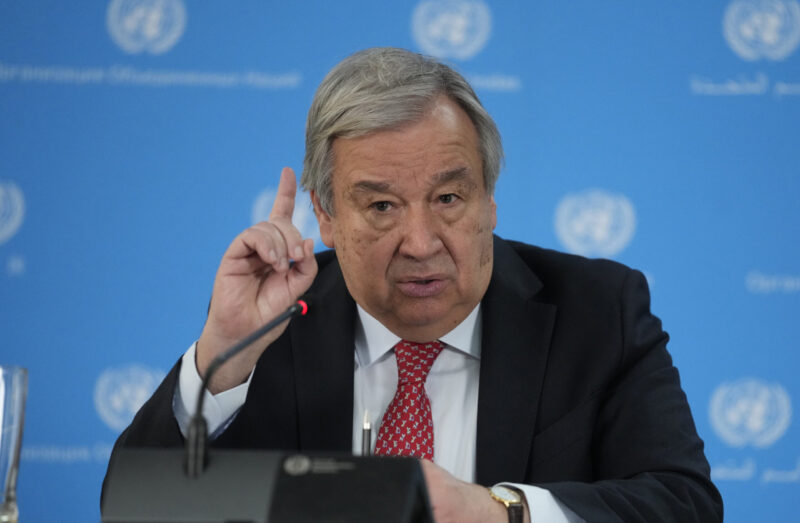
NEW YORK CITY: UN Secretary-General Antonio Guterres on Friday called for an immediate ceasefire in Gaza. Warning that the humanitarian crisis Israel created in the territory had reached “horrific proportions,” he demanded full, safe and sustained access for deliveries of aid.
Speaking ahead of his departure to attend the Fourth International Conference on Financing for Development, co-hosted by the UN and Spain in Seville from June 30-July 3, Guterres said the situation in Gaza has now grown more dire than at any previous point in the long-running conflict.
“Bombs are falling — on tents, on families, on those with nowhere left to run,” he added. “People are being killed simply trying to feed themselves and their families. The search for food must never be a death sentence.”
He said the Israeli military operations launched in response to the Hamas attacks of Oct. 7, 2023, attacks he “unequivocally condemned,” have displaced families repeatedly, confining the population of Gaza to less than one-fifth of its total area. Even these shrinking safe zones remain under threat, he noted.
Guterres acknowledged the recent ceasefire agreement between Israel and Iran as a sign of hope but insisted that political courage is now needed to secure a similar ceasefire in Gaza.
READ ALSO:
- 2 dead, 15 injured in Nabatieh following intense Israeli airstrikes
- BREAKING: Renowned Kano business mogul, Aminu Dantata, is dead
- US Supreme Court allows parents to opt out of lessons with LGBT books
Referencing the limited amount of humanitarian aid that has been allowed to enter the enclave, he said: “What’s needed now is a surge; the trickle must become an ocean.”
A small shipment of medical supplies from the UN crossed the border into Gaza this week. However, it was the first in months and Guterres stressed it was far from sufficient.
“Doctors are forced to choose who gets the last vial of medicine, or the last ventilator,” he said. “Aid workers themselves are starving. This cannot be normalized.”
Israel, as the occupying power, is obligated under the rules of international law to allow and facilitate humanitarian assistance, he added.
Guterres also dismissed alternative delivery plans for aid as “dangerous schemes,” arguing that the UN already has a detailed, functional plan built on neutrality, impartiality and the trust of affected communities and donors.
“It worked during the last ceasefire, it must be allowed to work again,” he said.
In a direct appeal to governments and other international actors, Guterres urged those in positions of power to fulfill their legal responsibilities, and those with influence that could help to use it.
He called on all UN member states to uphold the UN Charter, which was reaffirmed only a day earlier during the organization’s 80th anniversary commemorations.
“The solution to this problem is ultimately political,” he said. “The only sustainable path to re-establishing hope is by paving the way to the two-state solution. Diplomacy and human dignity for all must prevail.”
UN chief calls for enforcement of Gaza ceasefire







International
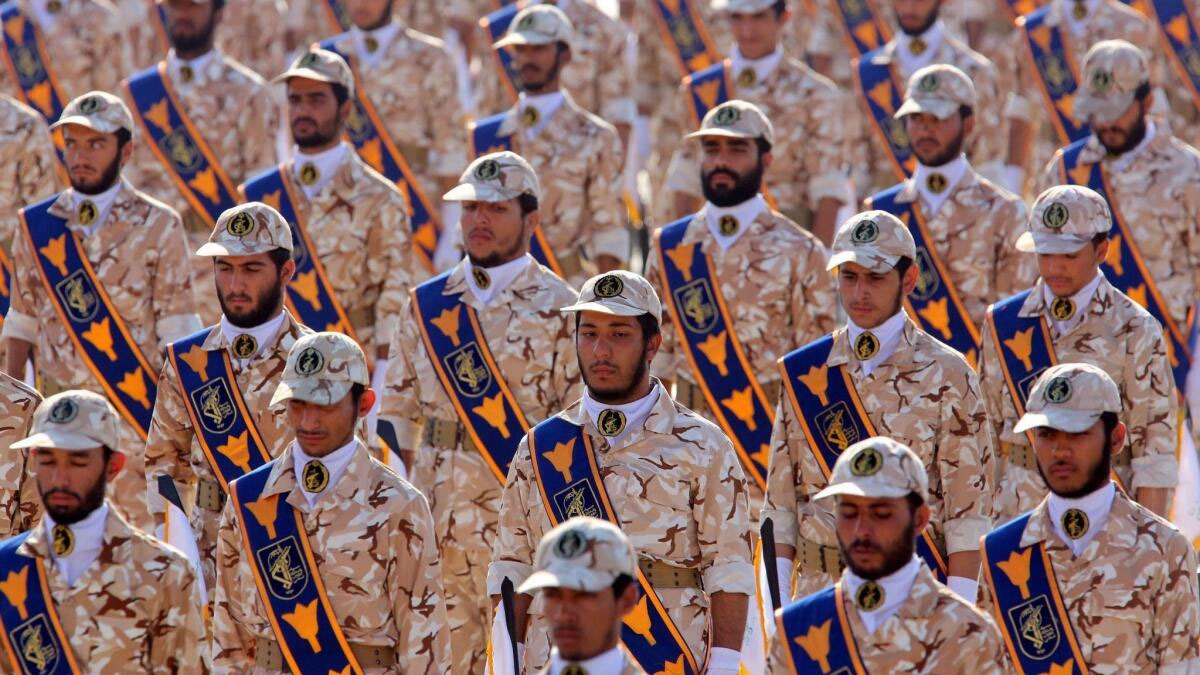
Iran Threatens US-Linked Universities in Middle East Amid Escalating Tensions
Iran Threatens US-Linked Universities in Middle East Amid Escalating Tensions
March 29, 2026
Iran has issued a stark warning that American-affiliated universities operating in the Middle East could become potential targets, as tensions between Iran and the United States continue to rise.
The threat, attributed to Iran’s powerful Islamic Revolutionary Guard Corps (IRGC), follows allegations that Iranian universities were damaged in recent strikes linked to the ongoing conflict. Iranian officials have not publicly provided detailed evidence of the alleged attacks but have condemned what they describe as violations of sovereignty and international norms.
In statements carried by international media, the IRGC warned that institutions with ties to the United States in the region could be considered “legitimate targets” if hostilities persist. Authorities also advised civilians to avoid such facilities, raising concerns about the safety of students, faculty, and staff across several countries in the Middle East.
While the rhetoric signals a dangerous expansion of potential targets beyond military installations, there has been no widely verified confirmation from major global outlets of a specific ultimatum or deadline tied to the warning. Analysts say the language used reflects an escalation in tone but stops short of confirming imminent attacks.
The development comes amid an increasingly volatile regional environment, with both nations exchanging accusations over recent incidents tied to the broader conflict. Diplomatic efforts to de-escalate tensions have so far yielded little progress, as global powers call for restraint.
Security experts warn that any attack on educational institutions would mark a significant shift in the conflict, potentially drawing widespread international condemnation and increasing the risk of further escalation.
Governments in the region are said to be reviewing security arrangements around foreign-linked institutions, while universities are reportedly monitoring the situation closely.
As of press time, officials from the United States had not issued a formal response specifically addressing the threat to universities, though Washington has repeatedly condemned attacks on civilian infrastructure and reiterated its commitment to protecting American interests abroad.
Iran Threatens US-Linked Universities in Middle East Amid Escalating Tensions
International
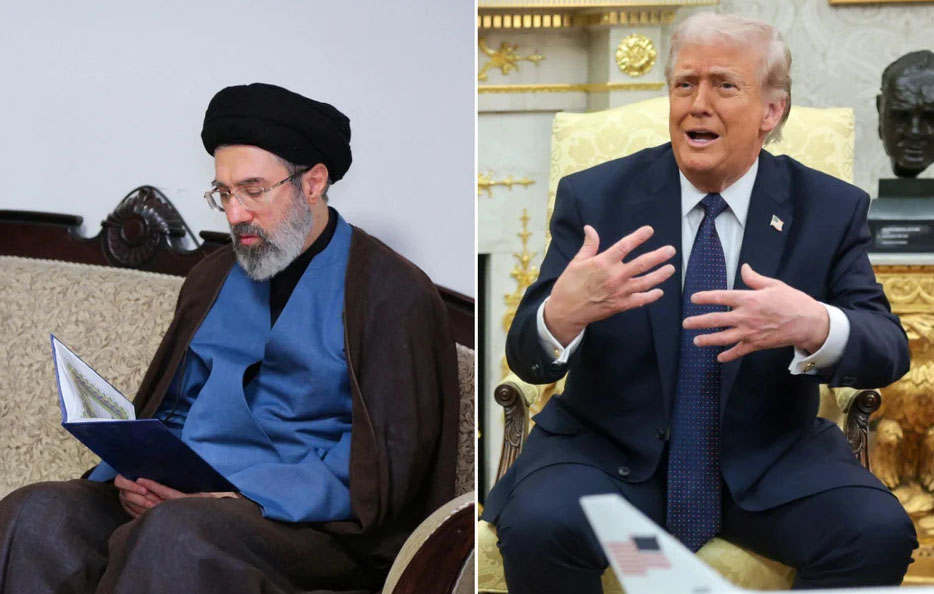
Trump Claims Iran Sent Oil Shipments Amid Backchannel Talks
Trump Claims Iran Sent Oil Shipments Amid Backchannel Talks
U.S. President Donald Trump has claimed that Iran dispatched ten oil tankers to the United States as part of indirect negotiations aimed at easing ongoing tensions between the two nations.
According to a report by Sky News on Friday, March 27, 2026, Trump made the assertion while speaking at the Future Investment Initiative in Miami. He suggested that the shipments were a gesture of goodwill, possibly intended as an acknowledgment of ongoing diplomatic engagements.
“It turned out I was right,” Trump said, referring to earlier claims that talks were underway between Washington and Tehran—claims initially denied by Iranian authorities. “They were negotiating, which they admitted two days later.”
Providing further details, Trump stated that Iran had first proposed sending eight oil ships before increasing the number to ten. “They said, ‘we’re going to send you eight ships of oil.’ They actually said, ‘we’re going to add an extra two,’ and they added an extra two,” he said. “So we had ten ships, and then people realized we were actually negotiating.”
Trump also struck a confident tone regarding developments in the Middle East, declaring that the region was “closer than ever” to being free from what he described as Iranian “terror, aggression and nuclear blackmail.”
However, Iranian officials have firmly rejected the claims of formal negotiations. Authorities in Iran insist that no direct talks are taking place with the United States, maintaining that any communication occurs strictly through third-party intermediaries, including Pakistan.
Tehran’s continued denial underscores the sensitive nature of any potential engagement with Washington, particularly amid domestic political pressures and broader regional dynamics.
The contrasting narratives highlight the uncertainty surrounding U.S.-Iran relations, with both sides presenting differing accounts of ongoing diplomatic efforts.
Trump Claims Iran Sent Oil Shipments Amid Backchannel Talks
International
Iranian Strike on Saudi Base Damages US Spy Plane, Injures 12 Troops
Iranian Strike on Saudi Base Damages US Spy Plane, Injures 12 Troops
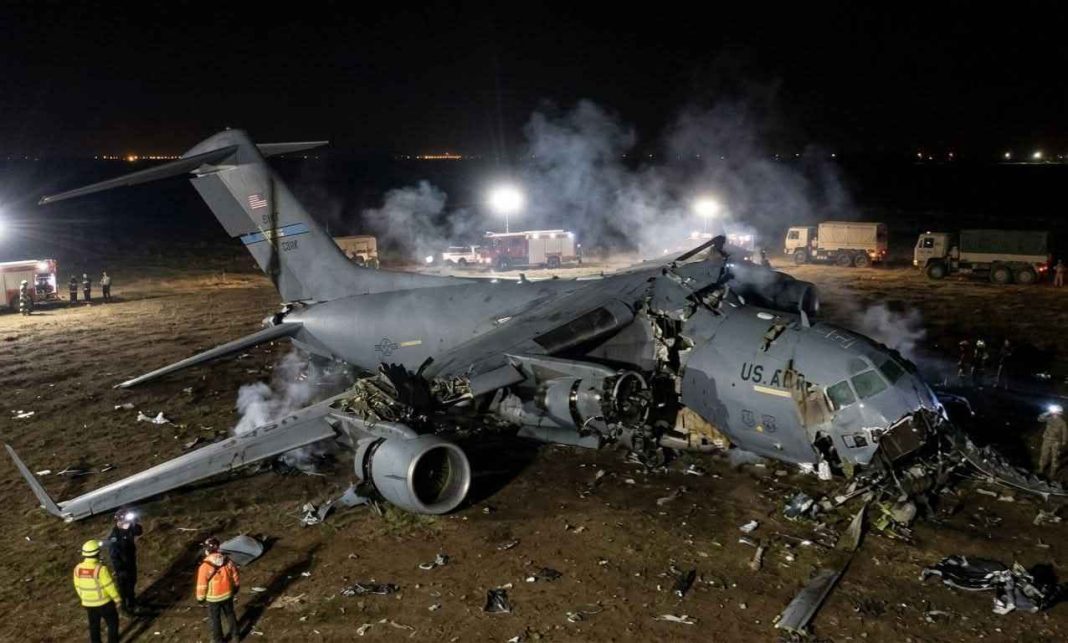
Tensions in the Middle East have intensified following a major strike by Iranian forces on a United States military installation in Saudi Arabia, leaving several American personnel injured and damaging high-value military assets.
Iran reportedly launched a coordinated attack involving ballistic missiles and drones on the Prince Sultan Air Base on Saturday, targeting U.S. Air Force equipment stationed at the facility.
Initial reports from outlets including Daily Post Nigeria and Fox News indicated that a U.S. E-3 Airborne Warning and Control System (AWACS) aircraft—estimated to be worth about $700 million—was destroyed in the strike. The aircraft serves as a critical airborne radar and command center, capable of detecting threats and coordinating air operations over vast distances.
However, more recent and verified accounts suggest that the aircraft, identified as the Boeing E-3 Sentry, was damaged but not confirmed destroyed, raising questions about the accuracy of early claims surrounding the extent of the losses.
In addition to the AWACS aircraft, at least one KC-135 Stratotanker was reportedly struck during the ആക്രമation and caught fire, further compounding the scale of the incident.
U.S. officials confirmed that 12 American service members were injured in the attack. According to Fox News, two of the wounded personnel were listed in serious condition, while the remaining casualties sustained lighter injuries.
Military analysts note that the strike demonstrates Iran’s growing capability to conduct coordinated long-range attacks using a combination of drones and precision-guided missiles, posing a significant threat to U.S. assets in the region.
The latest escalation comes amid an ongoing conflict between the United States and Iran, which has persisted for approximately one month. The war has already led to significant casualties and heightened geopolitical tensions across the Middle East, particularly following reports of high-profile killings involving senior Iranian figures.
As of press time, there has been no official confirmation from the U.S. Department of Defense regarding the total extent of damage to the aircraft or whether any assets were completely destroyed.
Security experts warn that the attack could trigger further retaliation, raising fears of a broader regional confrontation involving key global powers and strategic allies in the Gulf.
Iranian Strike on Saudi Base Damages US Spy Plane, Injures 12 Troops

-

 metro3 days ago
“We Pay Men to Sleep With Us in Germany” — Nigerian Woman Laments Loneliness Abroad
-

 metro1 day ago
Tragedy in Aramoko: Trailer Rams Residential Building, Kills 300‑Level Student
-

 Entertainment3 days ago
Tragedy in Music Industry as ‘Show Your Style’ Singer Sabinus Dies
-

 News2 days ago
Final Notice: FG Orders Civil Servants to Complete PASGA Verification by March 31
-

 metro2 days ago
El-Rufai’s Mother, Hajiya Umma, Dies Amid Son’s Legal Battle
-

 Entertainment2 days ago
Nollywood Actress Declares Love for Ibrahim Chatta, Offers to Pay Her Own Dowry
-

 Business3 days ago
Relief in Sight as Dangote Refinery Lowers Petrol Price
-

 Entertainment3 days ago
Gospel Singer Onos Brisibi Dies at 55 After Prolonged Illness