
Auto
UNILAG, Nord sign agreement to establish on-campus auto assembly plant, others


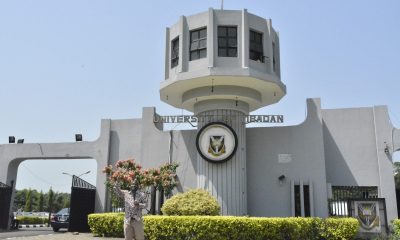
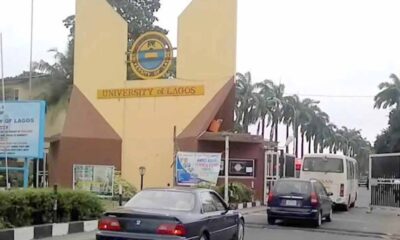
The University of Lagos has signed a historic a Memoradum of Agreement with an indigenous auto firm, Nord Motors, for the establishment of an automobile assembly plant on the campus.
The project also involves the Nord team setting up a car showroom to display the locally assembled vehicles and provide a platform for practical training of willing and qualified students of the school in the areas of auto assembling, repairs, service and maintenance of vehicles.
Speaking at the agreement signing ceremony ob Thursday, UNILAG Vice-Chancellor, Prof. Oluwatoyin Ogundipe, said it was the first time such collaboration between the university and any automobile company in Nigeria would be sealed.
He described it as an evolutionary Triple Helix Model of bringing the government, the industry and university together for the benefit of the country.
“What we are doing today is evolutionary Triple Helix Model in which we are bringing the industry to the campus. This is the first time this type of thing will be happening in any university in Africa.
“What this means to us therefore is that they will start assembling the car in this university of Lagos, putting into consideration, the economic situation of this country.
“Our students will be able to gain firsthand experience; not only students of engineering, but architecture, finance, marketing, as well as those in creative arts.
“Some good ones could also be employed here and that will expose them at the international level, in the area of automobile engineering. This will be a great opportunity for our students in different departments to contribute to the development of automobile in Nigeria.”
READ ALSO:
- Abuja-Kaduna Train Passenger Survives Shot by a Child Playing With Gun in Kidnappers’ Den
- Why ECOWAS Court declared Twitter ban by Nigerian govt illegal
- Wilder wants to fight winner of Joshua –Usyk rematch
According to him, education has gone beyond dishing out theory to the students, adding that there is an absolute need for the practical application of the studies.
He said, “With what we have therefore witnessed today, it may now lead to the evolvement of the Department of Automobile Engineering. This may happen in no distant time, hopefully in 2023.
“It is subsumed now in the Department of Mechanical Engineering. But very soon, we will be having the automobile engineering stand as a department of its own. It will also serve like their laboratory.”
Prof Ogundipe stated that the university had in abundance experts in relevant departments to support the project in the area of research and cognitive development.
He commended the Nord team for the initiative and congratulated the university’s council, members of staff and students as well as all the stakeholders associated with UNILAG for the feat.
The Chief Executive of Nord Motors, Mr Oluwatobi Ajayi, said the initiative could be the beginning of industrial revolution in Nigeria, where students would not only see how vehicles are made but be part of the production process.
“By this time in two months, you will be seeing a beautiful showroom and a working assembly plant on the UNILAG campus.”
He also said, “It is time we must come together to return Nigeria to a producing nation and not a consumer nation. And one of the things we need to do in this regard is to start from our school, catching them young and equipping them.”
“People around the continent will come to Nigeria to shop for vehicles and their components. And with this, Nigeria will take its place among industrial giants in the near future,” he said.
The Deputy Vice-Chancellor, (Development Services), Prof. Ayodele Atsenuwa, had earlier given the background of the project.
She recalled having the CEO of Nord Motors, Mr Ajayi, as one of the judges at an innovative engineering event with potential investors at the UNILAG last year, where he expressed interest in the quality of presentations that the students who pitched put forward.
She said, “From there, we started to talk. We said we would like our students studying mechanical engineering to come as interns to Nord Motors to have hands-on experience.
“Nord in its reply said if we do not mind they could put up a work station on our campus to enable the students to learn practically the business of automobile.
“We have put together a Memorandum of Agreement with details of how we will partner Nord Motors to the benefit of the faculty and the students.
“Under the agreement, we have the following objects: to facilitate and develop a platform for willing and qualified students of UNILAG in the act of manufacturing and assembling of cars in conjunction with Nord Motors; create a skill development drive of resolving unemployment crisis among youths that are employable to develop a career way with Nord Motors; to create a situation where UNILAG can play in the value chain in the car manufacturing business in Nigeria; to create an opportunity to train at least 15 students annually in the University of Lagos to study and acquire automobile skills at no cost; to provide automobile services, maintenance at the UNILAG for the staff and students at discounted prices, among other things.”
According to her, the project will be a major step towards achieving university-industry collaboration for the benefit of the country.






Auto
MOMAN, ALCMAN Partner BKG to Drive Nigeria’s Shift from Auto Imports to Industrial Production
MOMAN, ALCMAN Partner BKG to Drive Nigeria’s Shift from Auto Imports to Industrial Production
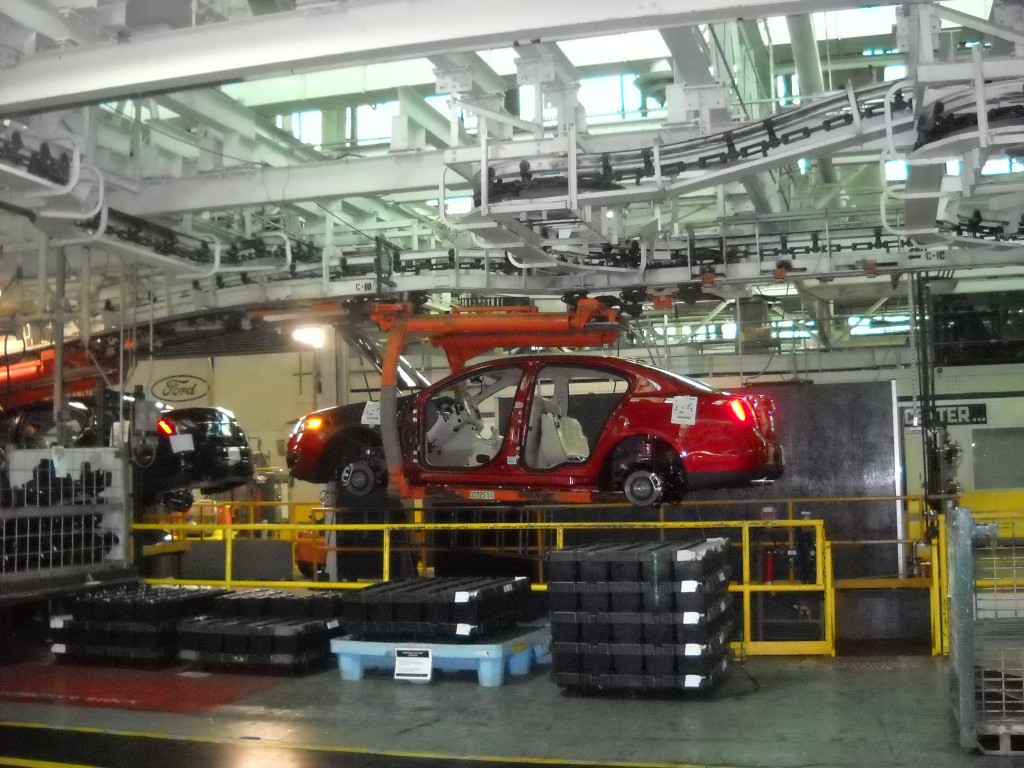
In what industry stakeholders view as a decisive move toward industrial rebirth, BKG Exhibitions Limited has entered into a strategic partnership with the Motorcycle Manufacturers Association of Nigeria (MOMAN) and the Automotive Local Content Manufacturers Association of Nigeria (ALCMAN) to accelerate local automotive manufacturing and reduce the country’s heavy reliance on imports.
The alliance, formalised in Lagos, signals a coordinated private-sector effort to reposition Nigeria’s automotive ecosystem from an import-dependent market to a production-driven industrial base capable of delivering value addition, technology transfer, and large-scale employment.
For decades, Nigeria’s automotive sector has been dominated by the importation of fully built vehicles and, more recently, the assembly of semi-knocked-down (SKD) and completely knocked-down (CKD) kits.
While these models generated commercial activity, stakeholders argue they failed to build deep industrial capacity or strengthen indigenous engineering expertise.
The new partnership seeks to change that narrative by transforming trade exhibitions into structured industrial platforms that connect manufacturers with policymakers, institutional buyers, investors, and international technical partners.
A senior executive at BKG Exhibitions said the collaboration represents a deliberate shift in strategy.
“Exhibitions must go beyond passive marketplaces. They must become engines of economic transformation where Nigerian manufacturers secure contracts, attract capital, and demonstrate production competence,” he said, noting that Nigeria already possesses strong demand but lacks a coordinated ecosystem to convert that demand into domestic output.
“Nigeria remains one of Africa’s largest mobility markets, driven by rapid urbanisation, a growing youth population, and expanding last-mile logistics services.
“Motorcycles and tricycles play a critical role in urban transport, agriculture distribution, and the fast-growing delivery economy.
“However, a substantial portion of these vehicles and their components are imported, placing pressure on foreign exchange and limiting domestic industrial growth.”
MOMAN President Rev. Lambert Ekewuba emphasized that strengthening local production would go beyond import substitution.
“When we manufacture locally, we create jobs, retain capital, and build the technical foundation for advanced automotive engineering,” he said.
ALCMAN Chairman, Chief Anselm Ilekuba, stressed the importance of developing a resilient components ecosystem, describing it as the backbone of any successful automotive industry.
“No country becomes an automotive powerhouse without first nurturing strong supplier networks. Nigeria must empower small and medium-scale enterprises producing metal parts, plastics, electrical systems, and other inputs,” he said.
Under the alliance, future exhibitions will feature dedicated pavilions showcasing Nigerian-made components and vehicles, offering manufacturers direct access to government agencies, transport operators, and regional distributors.
Analysts believe such curated exposure could gradually shift procurement patterns toward locally produced alternatives.
Beyond the domestic market, the partnership aims to position Nigeria as a manufacturing hub serving West and Central Africa, leveraging opportunities under the African Continental Free Trade Area (AfCFTA).
Industry leaders say expanding export capacity will depend on strengthening standards, financing mechanisms, and technical capability.
The alliance also plans coordinated advocacy for policies that support localisation, including improved access to financing, reduced duties on industrial machinery, technical training aligned with modern production systems, and procurement frameworks favouring locally manufactured goods.
Economists argue that a revitalised automotive manufacturing base could stimulate growth across steel, petrochemicals, logistics, warehousing, and tooling industries, reinforcing the sector’s role as a catalyst for broader industrialisation.
Coming at a time when Nigeria is intensifying efforts to diversify its economy away from oil dependence, stakeholders say the success of this alliance could mark a turning point — shifting the country from being one of Africa’s largest automotive consumption markets to an emerging centre of production, innovation, and regional trade.
Auto
Appeal Court Ruling on VIO Limited to Abuja, Not Lagos — LASG

Appeal Court Ruling on VIO Limited to Abuja, Not Lagos — LASG
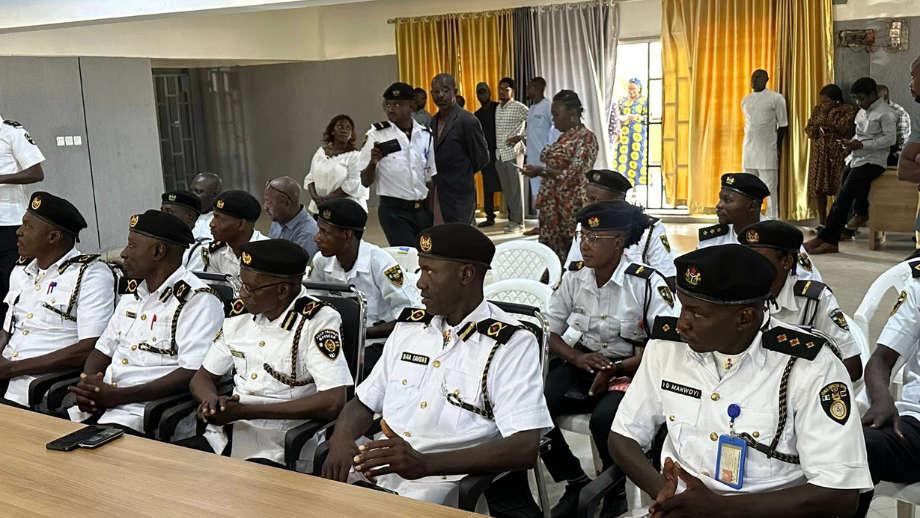
The Lagos State Government has dismissed widespread claims that a recent Court of Appeal judgment has stripped Vehicle Inspection Officers (VIOs) of their powers across Nigeria, insisting that the ruling applies strictly to the Federal Capital Territory (FCT).
The clarification follows public reactions to a decision of the Court of Appeal, Abuja Division, which upheld an earlier ruling of the Federal High Court restraining Vehicle Inspection Officers and the Directorate of Road Traffic Services in the FCT from stopping motorists, impounding vehicles, or imposing fines.
The judgment triggered viral interpretations suggesting that VIO operations had been outlawed nationwide.
However, Lagos State Attorney-General and Commissioner for Justice, Lawal Pedro, SAN, described such interpretations as legally inaccurate and misleading.
Basis of the Court Decision
According to Pedro, both the Federal High Court and the Court of Appeal premised their decisions on the absence of statutory authority empowering VIO officials in the FCT to stop, impound, confiscate vehicles, or impose fines on motorists.
READ ALSO:
- Terror in Lagos Traffic: Cutlass Gang Unleashes Mayhem on Mile 12–Ketu Road
- FG Drags El-Rufai to Court Over Alleged NSA Phone Interception
- Mystery in Lekki: Police Probe Death of Two Nollywood Crew Found Lifeless in Parked Car
“It is important to understand that the Honourable Judge of the Federal High Court and Justices of the Court of Appeal premised their decision on absence of statutory power conferred on the Respondents to stop, impound or confiscate vehicles and/or impose fines on motorists on roads in FCT Abuja,” he stated.
He noted that the courts did not declare vehicle inspection enforcement unconstitutional in Nigeria, but rather ruled specifically on the legal framework governing the FCT authorities involved in the suit.
Why Lagos Is Different
The Lagos government stressed that Nigeria’s federal structure allows states to legislate on residual matters such as road traffic management and vehicle inspection.
Pedro explained that Lagos operates under the Lagos State Transport Sector Reform Law, which expressly establishes and empowers the Vehicle Inspection Service (VIS).
Section 12(1) of the law authorises the VIS to:
Inspect and regulate the roadworthiness of vehicles
Conduct pre-registration inspections
Issue Road Worthiness Certificates
Collaborate with other relevant agencies to enforce traffic laws
In addition, Section 23(1) provides for penalties against offenders, subject to adjudication before mobile or magistrate courts, ensuring judicial oversight.
Not of Nationwide Effect
While acknowledging that the appellate decision is binding within the FCT, the Lagos government emphasised that it does not have automatic nationwide application.
“The judgment, though binding, is not of general application or of nationwide effect in Nigeria,” the ministry stated.
The state government stressed that VIS officers in Lagos remain legally empowered to carry out enforcement duties under extant state laws.
Wider Implications
The controversy underscores ongoing debates over traffic enforcement powers in Nigeria, particularly the constitutional boundaries between federal and state authorities.
Legal analysts note that unless the Supreme Court delivers a broader pronouncement on the issue, enforcement powers will continue to depend largely on the specific statutory framework establishing such agencies in each jurisdiction.
For now, Lagos authorities insist that vehicle inspection and traffic enforcement operations in the state remain valid and legally grounded.
Appeal Court Ruling on VIO Limited to Abuja, Not Lagos — LASG
Auto
Chanrai Storms Nigeria’s Gas Market, Unveils High-Capacity CNG, LNG Solutions to Power Energy Shift
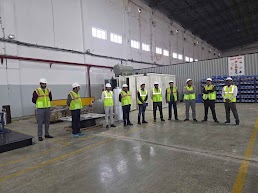
Chanrai Storms Nigeria’s Gas Market, Unveils High-Capacity CNG, LNG Solutions to Power Energy Shift
By Rasheed Bisiriyu
Nigeria’s drive towards cleaner and more affordable transport fuel gathered fresh momentum on Friday as Chanrai Nigeria Limited formally entered the country’s gas distribution space, unveiling high-capacity CNG and LNG compression technologies in Lagos.
The company, a member of the globally diversified Kewalram Chanrai Group, announced a strategic partnership with India’s Tulip Compression to roll out advanced compressor packages and integrated “single window” CNG solutions aimed at accelerating the Federal Government’s Presidential CNG Initiative.
Chief Operating Officer of Chanrai Nigeria Limited, Anil Sahgal, described the Tulip CNG Compressor Packages as a “game-changer” for Nigeria’s evolving energy landscape.
“With our commitment to safety, efficiency and OEM-grade partnership, we’re empowering the nation to achieve its CNG ambitions while driving economic growth and environmental sustainability,” Sahgal said.
The move marks Chanrai’s expansion beyond its traditional business interests — which span automobiles, agro-products, healthcare and fast-moving consumer goods — into the fast-growing gas infrastructure segment, as fleet operators and industrial users increasingly seek alternatives to petrol and diesel.
Under the partnership, Chanrai Nigeria and Tulip Compression will deliver Compression Station on Single Window (CssW) solutions — integrating compressors, dispensers, storage and stainless-steel tubing under one brand — to simplify deployment and reduce installation timelines.
The compressor packages come in a wide capacity range, from 250 to 4,500 standard cubic metres per hour, making them suitable for small refuelling stations as well as large gas hubs.
A 1,400 SCMH gas engine-driven booster compressor is designed to refuel heavy-duty CNG trucks in about 20 minutes by drawing gas from tube trailers.
The systems are available in both electric motor-driven and gas engine-driven configurations, eliminating the need for large gas generators while ensuring energy efficiency and lower life-cycle costs.
According to the company, the equipment features dual-chamber leak-proof safety systems, advanced sealing technology to eliminate gas loss and global certifications including ATEX, CE, BIS and SGS standards.
The unveiling underscores the growing private sector response to government reforms encouraging gas adoption as a cost-effective and environmentally friendly alternative fuel.
With the compressor packages now available for immediate orders, Chanrai Nigeria said it would provide 24/7 after-sales support, operations and maintenance services, as well as remote asset monitoring solutions.
The development signals intensifying investment in CNG infrastructure as Nigeria seeks to deepen local gas utilisation, reduce fuel import dependence and cushion consumers from volatile petrol prices.

-

 News2 days ago
Saudi Arabia Confirms Sighting of Ramadan Crescent, Fasting Begins Wednesday
-

 metro2 days ago
Lagos Woman Shares Ordeal After Alleged Rape, Sparks Nationwide Outcry
-

 News2 days ago
Ramadan Begins in Nigeria as Sultan Confirms Crescent Sighting
-

 metro2 days ago
Seven Killed in Horrific Crash at Ota Toll Gate
-

 International8 hours ago
Canada Opens New Express Entry Draw for Nigerian Workers, Others
-
 metro3 days ago
Deadlock at National Assembly as House Snubs Electoral Act Bill Meeting on E-Transmission Clause
-

 News1 day ago
Korope Drivers Shut Down Lekki–Epe Expressway Over Lagos Ban (Video)
-

 Health1 day ago
Ramadan Health Tips: Six Ways to Stay Hydrated While Fasting