

Education
UNILORIN rusticates/expels six final year students, 13 others (see full list
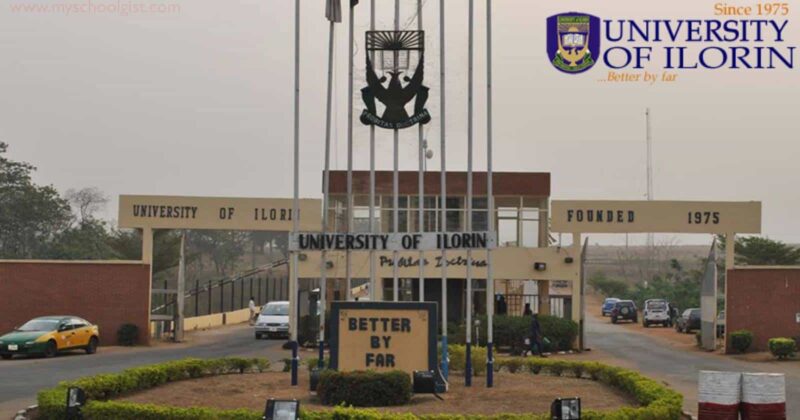
UNILORIN rusticates/expels six final year students, 13 others (see full list)
The University of Ilorin in Kwara State has slammed expulsion or rustication penalty on 19 students, including six final year students of the institution, over offences ranging from assault to examination malpractices.
A press statement by the Director Corporate Affairs of the university, Kunle Akogun, made available to journalists in Ilorin on Monday said the expulsion/rustication of the affected students was approved by the Vice Chancellor, Prof. Wahab Egbewole (SAN).
This, the statement added, was sequel to the recommendations of the Students’ Disciplinary Committee.
The university listed the offences committed by the penalised students as misconduct, theft, examination malpractice, hostel bed-space racketeering and extortion, beating a fellow student, admission racketeering, extortion and assault.
It further said that penalties for the offences included rustication for either one semester or one academic session, including expulsion.
The affected students were in various academic levels such as 100, 200, 300 and 400 Levels.
The affected students are Adebayo Adeleke, Arts/ Performing Arts; Hassan Hanan Adebola, Arts/History and International Studies; Amatokwu Evans, Education/Art Education; Ayodele Samuel Koseunti of Arts/History and International Studies; Toki Opeyemi Ayomide, Arts/History and International Studies and Makinde Usman Ayomide, Arts/Linguistic and Nigeria Languages.
Others are Nwachukwu Chinedu Joshua: Fac./Dept: Life Sciences/Biochemistry, Onibiyo Eniola Gideon: Fac./Dept.: Arts/History and International Studies, Oshinboluro Temitope Joshua:Fac./Dept.: Physical Sciences/Mathematics and Sulaimon Mayowa Fac./Dept.: Life Sciences/Biochemistry.
Other affected students are Badmus Rasheedat Ajoke Fac./Dept. Physical Sciences/Chemistry, Afolayan Damilola Fac./Dept: Mathematics/ Physical Sciences, Ajibola Oluwaseyi Temiloluwa Fac. /Dept:Water Resources & Environmental Engineering /Engineering & Technology, Akorede Isiaka Nifemi Fac./Dept: Mathematics/ Physical Sciences, Bolanta Taiye Zainab Fac. /Dept:Industrial Relations and Personnel Management/Engineering & Technology,. Elegede Favour Emmauel Fac. /Dept:Physiology /Basic Medical Science Ojelabi Ibukunoluwa Micheal Fac. /Dept:Anatomy /Basic Medical Science Okeke Ruth Chinecherem Fac./Dept: Performing Arts/ Arts and Okanle Oluwatimileyin Samuel of Fac. /Dept: Physiotherapy/Basic Clinical Science.







Education
NANS Threatens ‘Mother of All Protests’ Over Ondo Varsity Strike

The National Association of Nigerian Students has approved fresh protests across states affected by the ongoing Academic Staff Union of Universities strike, warning that students can no longer continue to bear the consequences of prolonged industrial disputes.
NANS National President, Akinteye Babatunde Afeez, said the association had authorised its Joint Campus Committees in Ondo, Niger, Nasarawa and other affected states to begin mobilisation for what he described as a “mother of all protests.”
The announcement comes amid continued disruption of academic activities in several Ondo State-owned universities.
Institutions affected include Adekunle Ajasin University, Akungba-Akoko, the University of Medical Sciences, Ondo, and Olusegun Agagu University of Science and Technology, Okitipupa.
Recent reports confirm that the industrial action has been linked to disputes over implementation of the 2025 Federal Government-ASUU agreement and outstanding salary-related obligations.
Afeez described the prolonged shutdown as unacceptable, saying students were being forced to suffer for disagreements between governments, university authorities and academic unions.
He said NANS would relocate its national leadership to university campuses from next week as part of efforts to intensify pressure for a resolution.
“We demand urgent action. We demand a lasting solution. We demand that students’ time and future be respected” Afeez said.
The NANS president had previously praised the Ondo JCC for engaging the state government over the strike, noting that the government had announced increased subvention to state-owned institutions and pledged to implement the 2025 agreement.
However, with the dispute still unresolved, the students’ body has now signalled a tougher approach, warning that prolonged academic disruption cannot continue indefinitely.
NANS said its planned mobilisation would extend to other states where students are similarly affected by ongoing ASUU strikes.
Education
NEMA Awards Three Essay Winners ₦500,000 Each

NEMA Awards Three Essay Winners ₦500,000 Each
Three participants have emerged as the overall winners of the 2026 National Essay Competition organised by the National Emergency Management Agency (NEMA), taking home ₦500,000 each.
The winners were drawn from three categories covering secondary school students, tertiary institution students and members of the NYSC Emergency Management Vanguards.
At the award ceremony held at NEMA’s headquarters in Abuja on September 10, the agency also rewarded contestants who finished second and third with ₦300,000 and ₦200,000 respectively. Those who made the top 10 in each category received certificates of recognition.
In the senior secondary school category, Orire Fareedah Omolola of Murphy-Tonia Schools, Lagos, emerged victorious with her essay, “My Role in Disaster Risk Reduction.” Onminyi Olive of Faith Academy, Goshen, Abuja, came second, while Isah Zainab Ize of Government Secondary School, Gwarinpa, Abuja, placed third.

Secondary School Winners of the NEMA Essay Competition
Adelanwa Emmanuel Oluwatosin of the University of Ibadan won the tertiary category with an essay examining “Climate Change and Disaster Management in Nigeria.” Memunat Olawore Omobolanle of the Nigerian Law School, Lagos Campus, was runner-up, while Aminu Ibrahim Bello of Umaru Musa Yar’adua University, Katsina, took third place.
READ ALSO:
- Yari: God Chose Me to Lead Tinubu’s 2027 Campaign
- Iran’s President Seeks End to War as US Tightens Economic Pressure
- Woman disguises as Muslim woman in Niqab to steal in Ado-Ekiti market, video sparks outrage
The NYSC category was won by Dabagal Marylyn Mialmoen, whose entry explored the opportunities and challenges of technology in disaster response. Abiola Olamide Zion, serving in Adamawa State, finished second, while Stanley Sunday Iserhienrhien came third.
NEMA Director-General Zubaida Umar said the competition was created to get young Nigerians thinking more deeply about disaster prevention, preparedness and community resilience.
Umar, who was represented at the event by the agency’s Director of Internal Audit, Aliyu Waziri, said the number of entries received meant that the judging process had to be extended to ensure the final results met the required standards of fairness and transparency.
She said disaster management should become part of everyday life instead of being treated as something to consider only after an emergency has occurred.
Umar also praised the quality of the submissions, saying they demonstrated growing awareness among young Nigerians about disaster risks and ways of responding to them.
A media consultant to NEMA on the competition, Hakeem Bello, encouraged the participants to take the lessons from the contest back to their schools, institutions and communities.
He said the initiative was not simply about giving prizes to the best writers but about developing young people who understand that preventing disasters and preparing for them can save lives.
NEMA said finalists living outside Abuja would receive their prizes and certificates through the agency’s zonal directorates closest to them.
The competition is part of NEMA’s broader public awareness programme aimed at building a stronger culture of disaster prevention, preparedness and resilience across Nigeria.
NEMA Awards Three Essay Winners ₦500,000 Each
Education
ASUU Threatens Nationwide Strike Over Unpaid Salaries, Unimplemented Agreement

ASUU Threatens Nationwide Strike Over Unpaid Salaries, Unimplemented Agreement
The Academic Staff Union of Universities (ASUU) has threatened to reactivate its suspended nationwide strike if the Federal Government and state governments fail to urgently resolve outstanding issues affecting university lecturers.
The union warned that it could withdraw its members’ services “without any further notice”, citing the incomplete implementation of the December 2025 ASUU-Federal Government agreement, payment of the remaining 3.5 months of withheld salaries and the non-remittance of billions of naira deducted from lecturers’ salaries.
The warning followed an emergency meeting of ASUU’s National Executive Council (NEC) held at the University of Abuja.
In a statement issued in the early hours of Friday, ASUU President, Professor Christopher Piwuna, said the union could no longer guarantee industrial peace in the nation’s public universities unless urgent steps were taken to address the outstanding issues.
ASUU said the December 2025 agreement was reached after more than eight years of negotiations and struggles over the welfare of university lecturers and the broader condition of Nigeria’s public university system.
According to the union, however, the agreement has not been fully implemented by the Federal Government and several state governments.
“Unless immediate and concrete steps are taken to FULLY and COMPREHENSIVELY address issues bordering the welfare and well-being of Nigerian academics, ASUU-NEC will not accept any blame for calling out its members on a nationwide strike action within the shortest time possible,” the union warned.
The latest development raises the possibility of another disruption to academic activities in Nigeria’s public universities if the Federal Government and affected state governments fail to reach an understanding with the union.
ASUU has been pushing for full implementation of the agreement across federal and state-owned universities, arguing that inconsistent implementation has created disparities in the treatment of lecturers.
READ ALSO:
- FG to Give Students 100MB Free Data Daily From October 1
- Two Arrested in London Over Suspected Links to Iran Intelligence
- Lagos Woman Jailed for Dumping Refuse in Drain During Rainfall
The union commended Abia State Governor Alex Otti and the governments of Bauchi, Ekiti, Ogun, Benue, Yobe, Adamawa, Kebbi, Katsina and Borno for beginning implementation of the agreement.
It also disclosed that Kano, Edo, Plateau, Taraba, Gombe and Bayelsa states had pledged to commence implementation in September or October.
ASUU, however, warned other state governments to take action before their universities were plunged into what it described as an “industrial crisis of monumental proportions.”
The latest position follows earlier warnings by ASUU branches in several universities over the slow or incomplete implementation of the agreement and the payment of outstanding entitlements.
The union had previously directed branches in a number of universities to begin processes that could lead to industrial action, with some branches issuing ultimatums to their respective university authorities and state governments.
One of the major issues in the latest ASUU warning is the payment of withheld salaries arising from the union’s prolonged strike under the previous administration.
ASUU said the Tinubu administration had paid four of the 7.5 months of salaries withheld from its members during the dispute but insisted that the remaining 3.5 months must be released.
The union acknowledged President Bola Ahmed Tinubu for paying part of the withheld salaries but said withholding the balance meant the matter remained unresolved.
“We have consistently acknowledged President Bola Ahmed Tinubu for paying four (4) out of the withheld salaries. However, leaving out the unpaid balance does not give his government the full credit of a labour-friendly administration,” ASUU said.
The issue of withheld salaries has remained a major source of disagreement between the government and university lecturers since the prolonged 2022 ASUU strike.
The union has maintained that its members should not be left to bear the financial consequences of the dispute after returning to work.
READ ALSO:
- Peter Obi’s Benue Convoy Blockade Raises Questions Ahead of 2027
- Honda shakes up Nigeria operations, dissolves HAWA, retains HMN
- Fire Scare at Abuja Train Station as Electrical Fault Sparks Blaze, NRC Assures Passengers
ASUU also raised concerns over the alleged non-remittance of several deductions made from lecturers’ salaries.
The union said pension contributions, cooperative deductions and union check-off dues running into billions of naira had remained unremitted for several months.
It warned that failure to remit the deductions was placing additional financial pressure on university employees and undermining confidence in the existing industrial relations framework.
According to ASUU, the combination of unpaid salaries, unremitted deductions and incomplete implementation of the 2025 agreement could worsen tensions across the university system.
“In no mistaken terms, ASUU posits that the non- or haphazard implementation of the 2025 FGN-ASUU Agreement by federal and state governments is a recipe for industrial crisis in Nigeria’s public universities,” the union stated.
The latest nationwide warning is coming against the backdrop of separate disputes between ASUU branches and university authorities over salaries and other entitlements.
At Nnamdi Azikiwe University, Awka, the university’s ASUU branch recently commenced an indefinite strike over the non-payment of the full August 2026 salary to its members.
The branch said the action was based on ASUU-NEC’s standing position that branches could withdraw their services when salaries were not paid within the required period.
At Sule Lamido University, Kafin Hausa, the ASUU branch also threatened industrial action over outstanding salary-related demands and issues connected with the implementation of the agreement.
The developments have heightened concerns among students, parents and university authorities over the possibility of disruptions to lectures, examinations and other academic activities.
ASUU has, however, continued to indicate that it prefers dialogue and negotiation to industrial action, provided governments demonstrate a willingness to resolve the outstanding matters.
The union said it had given the Federal Government and state governments sufficient opportunities to address the outstanding issues but warned that continued delays could force it to take further action.
ASUU said its decision to suspend its previous nationwide strike was based on commitments made by the government and the expectation that the outstanding issues would be resolved.
It now wants the government to demonstrate concrete progress on the 2025 agreement, the payment of the remaining 3.5 months of withheld salaries and the remittance of deductions from lecturers’ salaries.
“ASUU-NEC resolved to notify all concerned that the Union may activate its suspended strike action without any further notice if the critical issues raised in this release are not speedily addressed,” the union said.
The warning means the Federal Government and state governments now face renewed pressure to resolve the dispute before it escalates into another nationwide university strike.
For students and other stakeholders in the education sector, the outcome of the ongoing engagement between ASUU and the government could determine whether Nigeria’s public universities maintain uninterrupted academic activities or face another round of industrial action.
The union has therefore urged the authorities to act quickly, stressing that it would not accept responsibility for the consequences if unresolved salary, welfare and agreement-implementation issues eventually lead to the reactivation of its suspended strike.
ASUU Threatens Nationwide Strike Over Unpaid Salaries, Unimplemented Agreement
-

 metro1 day ago
Woman disguises as Muslim woman in Niqab to steal in Ado-Ekiti market, video sparks outrage
-

 metro2 days ago
Police Arrest Woman Over Fake OPay Shutdown Notice
-

 Politics3 days ago
Amaechi will be caged politically, Wike shouldn’t bother about Ikwerre votes — Wihioka
-

 metro3 days ago
Residents Cry Out Over Poorly Constructed Entrance of Ademola Abiola Street, Demand Urgent Intervention
-
 Politics2 days ago
Remi Tinubu Appeals To South-East Voters, Says She Wants To ‘Enjoy Nigeria’ In Old Age
-

 Politics2 days ago
Breaking the Cycle of Collective Guilt: When a Ruling Party Voice Backs Peter Obi
-
 Business13 hours ago
Dangote: ₦525 Refinery Shares Could Rise to ₦10,000
-

 News1 day ago
AI on the Roads: LASTMA Turns to China to Fix Lagos Traffic