
Education
Varsities workers threaten fresh industrial action over withheld salaries

Varsities workers threaten fresh industrial action over withheld salaries
Two key unions within Nigeria’s tertiary education sector have issued a stern warning to the federal government, demanding the payment of their four months’ withheld salaries within the next two weeks to avoid potential strike.
The Non-Academic Staff Union of Educational and Associated Institutions (NASU) and the Senior Staff Association of Nigerian Universities (SSANU) conveyed their grievances in a letter addressed to the Minister of Education, Prof. Tahir Mamman, on Thursday in Abuja.
In their letter, titled “Re-Four Months Withheld Salaries: Demand for Immediate Payment,” NASU General Secretary Peters Adeyemi and SSANU President Mohammed Ibrahim expressed their frustration over the unpaid wages. They reminded the Minister of the unions’ previous one-week warning strike, which occurred from March 18 to March 24, as a protest against the withholding of salaries from May to August 2022.
READ ALSO:
- JUST IN: Court quashes dethronement of Emir Bayero, others
- BREAKING: Court scraps Ondo LCDAs
- 1 killed, 2 policemen injured as hoodlums unleash mayhem in Kano
The unions highlighted the series of correspondences and assurances they had received regarding the payment, noting their disappointment that the issue remains unresolved. They accused the government of insincerity and neglect toward the welfare of their members.
“The government has ignored the principles of collective bargaining and fostered an environment of distrust,” the unions stated. They emphasized that the ongoing silence and non-payment of salaries are causing significant unrest among their members across universities and inter-university centers.
The unions warned that the continued delay in payment is jeopardizing industrial peace and harmony on campuses. “We can no longer ensure industrial peace and harmony in university campuses,” they declared, demanding immediate payment of the withheld salaries within two weeks. Failure to meet this demand, they cautioned, would compel them to initiate a complete shutdown of universities and inter-university centres.
Varsities workers threaten fresh industrial action over withheld salaries










Education
Germany Opens Fully Funded Scholarships for Nigerians, Africans

Germany Opens Fully Funded Scholarships for Nigerians, Africans
The government of Germany has announced the commencement of applications for the DAAD scholarship 2026 for Nigerians and Sub-Saharan Africans, offering fully funded opportunities for postgraduate study and research.
The programme, administered by the German Academic Exchange Service, is open to qualified graduates and postgraduates seeking to further their education in Germany’s top universities.
In an official announcement, authorities confirmed that the application deadline is April 29, 2026, urging interested candidates to submit their entries early due to the competitive nature of the scheme.
Opportunities for Nigerians and Africans
The Germany DAAD scholarship covers a wide range of disciplines, including engineering, public health, environmental sciences, economics, governance, and social sciences.
Germany remains a top destination for international students due to its tuition-free or low-cost education system, strong research infrastructure, and globally recognised academic standards.
READ ALSO:
- Kwara Governor Mourns 5 Forest Guards Killed in Nuku Bandit Attack
- Amnesty International Condemns Killing of 24 in Kebbi Bandit Attack
- Trump Slams Iran Over Strait of Hormuz as Middle East Ceasefire Talks Stall
Scholarship Benefits
Successful applicants will receive a comprehensive funding package, including:
- Monthly stipends (approximately €900–€1,200 depending on level)
- Travel allowance
- Health insurance
- Accommodation support
- Pre-study German language training (where applicable)
The funding typically lasts 12–24 months for Master’s programmes and up to three years or more for PhD studies.
Eligibility Criteria
To qualify for the DAAD scholarship for Nigerians, applicants must:
- Possess a relevant Bachelor’s or Master’s degree
- Demonstrate strong academic performance
- Provide proof of English or German language proficiency (IELTS, TOEFL, or equivalent)
- Have relevant professional experience (for many courses)
Candidates must also submit a compelling motivation letter explaining how their studies will contribute to development in their home countries.
Application Process and Deadline
Prospective applicants are advised to carefully review the official DAAD guidelines and ensure that all required documents—including academic transcripts, CV, and recommendation letters—are submitted correctly.
Authorities stressed that late applications will not be accepted, urging candidates to apply well ahead of the April 29, 2026 deadline.
Rising Demand for German Scholarships
The DAAD scholarship 2026 is highly competitive, attracting thousands of applicants across Sub-Saharan Africa each year.
The initiative forms part of Germany’s broader commitment to strengthening global academic partnerships, supporting education, and developing future leaders across Africa.
With applications now open, qualified Nigerians are encouraged to take advantage of the opportunity to study in Germany and enhance their academic and professional careers.
Germany Opens Fully Funded Scholarships for Nigerians, Africans
Education
JAMB Urges Candidates, Parents to Protest Admission Bias as CAPS Ensures Transparency
JAMB Urges Candidates, Parents to Protest Admission Bias as CAPS Ensures Transparency
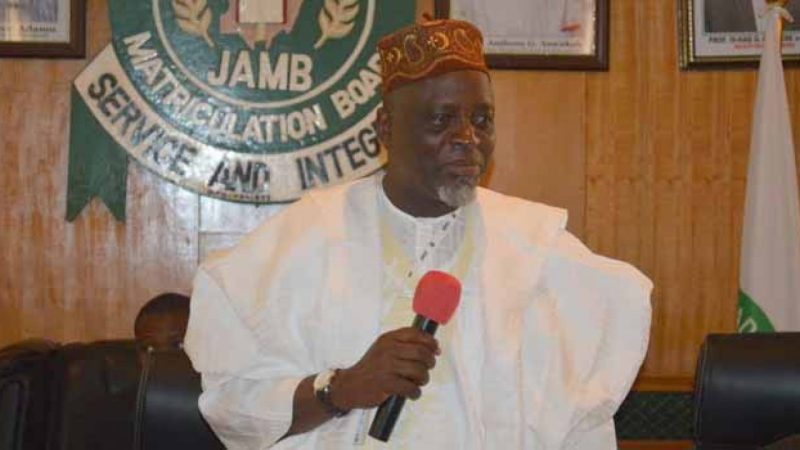
The Joint Admissions and Matriculation Board (JAMB) has urged candidates and parents to speak up against admission bias if they are confident in their UTME scores but are denied admission into their preferred institutions.
JAMB Registrar, Ishaq Oloyede, made this known during an interview on Good Morning Nigeria, a programme aired by the Nigerian Television Authority (NTA).
He stressed that the current admission system, powered by the Central Admission Processing System (CAPS), is designed to ensure transparency, fairness, and accountability across Nigeria’s tertiary institutions.
According to Oloyede, many parents still resort to illegal means because they believe admission cannot be secured without influence. He described this mindset as having “climbed the ladder to illegality,” warning that such actions are no longer necessary under the present system.
He explained that candidates who meet the required cut-off marks and admission criteria but are unfairly denied admission should formally protest through JAMB, as CAPS allows full visibility into the admission process.
READ ALSO:
- EFCC Arrests Maiduguri Woman for Cleaning Nose With N500 Note
- Court Stops ADC Congress, Orders Status Quo in Leadership Row
- US Evacuates Embassy Staff in Nigeria, Lists 23 States as ‘Do Not Travel’
The registrar highlighted that CAPS enables candidates to track their admission status in real time, accept or reject offers, and ensures institutions follow approved guidelines. He added that the platform prevents schools from secretly manipulating admission lists or replacing qualified candidates.
Oloyede further revealed that since the introduction of CAPS in 2017, cases of admission irregularities have significantly declined, with no major systemic failure recorded.
Addressing concerns about Direct Entry admissions, he noted that JAMB has strengthened its verification process to curb fraud. This includes stricter checks on qualifications such as JUPEB and IJMB certificates, making it increasingly difficult to forge results.
He disclosed that the board now verifies academic credentials directly with awarding institutions, including foreign universities. According to him, recent checks uncovered several fake degrees, with some foreign institutions confirming that such certificates were not issued by them.
The registrar added that JAMB has intensified collaboration with universities and other regulatory bodies to ensure proper screening of A-level results and early detection of fraudulent applications.
He emphasized that with improved digital tracking and verification systems, any attempt to bypass the admission process will be detected, urging candidates to rely on merit rather than shortcuts.
Ultimately, JAMB reiterated that qualified candidates must defend their rights through official channels, as the system now supports fairness and equal opportunity for all.
JAMB Urges Candidates, Parents to Protest Admission Bias as CAPS Ensures Transparency
Education
Jigawa Arrests Seven Teachers for Cheating During Competency Test

Jigawa Arrests Seven Teachers for Cheating During Competency Test
The Jigawa State Government has arrested seven teachers for allegedly engaging in examination malpractice during a large-scale teacher competency assessment involving over 8,400 educators. The arrests are part of the state’s ongoing efforts to improve accountability, professionalism, and learning outcomes in public schools.
The assessment, conducted by the Jigawa State Universal Basic Education Board (SUBEB), is described as a Teacher Training Needs Assessment, aimed at identifying gaps in teachers’ knowledge and skills to inform targeted training programs.
Chairman of SUBEB, Haruna Musa, confirmed that the affected teachers have been handed over to the police for investigation, emphasizing that the exercise is more than a routine test. “This assessment is not just about testing knowledge; it is about restoring integrity and professionalism in our schools,” he said.
READ ALSO:
- US-Iran Conflict: MAN Outlines Urgent Steps to Shield Nigerian Manufacturers
- Bandits Kill Two Abducted Women in Kaduna After Ransom Payment
- 2027: Atiku Signs $1.2m US Lobbying Deal to Engage Trump
Musa noted that examination malpractice, whether by teachers or students, undermines the credibility of the education sector and would not be tolerated. He also warned against absenteeism and involvement in partisan politics during school hours.
According to officials, the arrests are intended to serve as a deterrent to others and reinforce the government’s commitment to enforcing discipline and ethical conduct in schools. The arrested teachers are currently in police custody, and investigations are ongoing to determine whether additional personnel were involved.
Education experts have described the crackdown as a critical step toward safeguarding learning standards, emphasizing that teacher integrity directly impacts student achievement and the overall quality of education.
The Jigawa competency test reflects the state government’s determination to ensure that only qualified and competent personnel remain in the public education system, highlighting broader efforts to improve educational outcomes and accountability across Nigeria.
Jigawa Arrests Seven Teachers for Cheating During Competency Test

-
 metro1 day ago
JUST IN: FG Publishes List of 48 Individuals, Groups Linked to Terrorism Financing in Nigeria
-

 metro1 day ago
42-Year-Old Married Woman Declared Missing Found in Hotel with Man
-
 Politics2 days ago
Did Faleke Just Reveal Lagos’ Next Governor? Party Moves Begin
-

 Education2 days ago
Germany Opens Fully Funded Scholarships for Nigerians, Africans
-

 Politics1 day ago
2027: Oyo APC Governorship Aspirant Saheed Oladele Resigns From Party
-

 metro3 hours ago
BREAKING: Troops Arrest 15-Year-Old Linked to Killing of Gen Braimah in Borno
-
 metro1 day ago
ADC Threatens Civil Disobedience To Force INEC Chairman To Resign
-
 Business3 days ago
Nigeria May Face ₦2,000 Petrol Price Without Intervention, TUC Warns FG