

metro
“We Can’t Produce Him” — IGP Explains Adeyemi’s Absence at PFIPC Hearing
“We Can’t Produce Him” — IGP Explains Adeyemi’s Absence at PFIPC Hearing
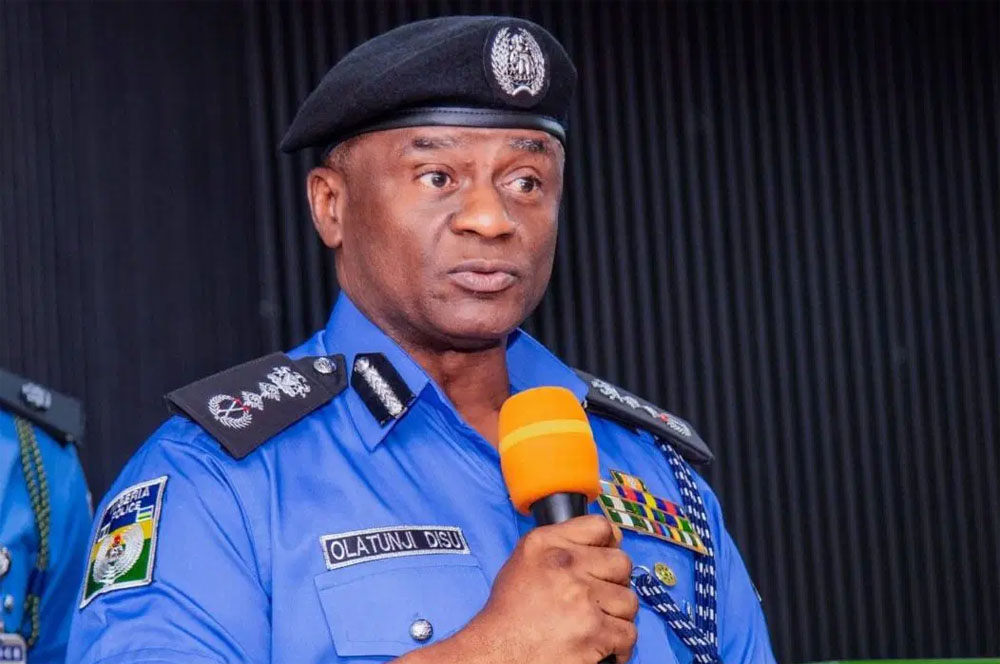
- The Inspector-General of Police, Olatunji Disu, has told the House of Representatives that the self-acclaimed Director-General of the controversial Presidential Foreign Investment Promotion Council (PFIPC), Adeyemi Adeniyi, could not be produced before lawmakers because he is being held in custody pursuant to a valid court order.
The Inspector-General of Police, Olatunji Disu, has explained why the Nigeria Police Force failed to produce Adeyemi Adeniyi, the self-styled Director-General of the controversial Presidential Foreign Investment Promotion Council (PFIPC) , before the House of Representatives Ad-Hoc Committee investigating the activities of the purported agency. The committee, chaired by Honourable Yusuf Gagdi, had on Monday directed the IGP to produce Adeyemi before the panel by noon on Wednesday to answer questions arising from testimonies presented by several government institutions. The directive followed submissions from the Office of the Head of the Civil Service of the Federation, the Office of the Accountant-General of the Federation, the Central Bank of Nigeria, the Budget Office of the Federation, the Nigeria Police Force and other agencies, all of which distanced themselves from the purported council.
At the resumed investigative hearing on Wednesday, the IGP was represented by Deputy Commissioner of Police Olufemi Akinola, who appeared alongside Assistant Commissioner of Police Bashir Abdullahi. Addressing the committee, Akinola explained that Adeyemi could not be produced because he was being held pursuant to a valid order of the Federal High Court. “We are here to convey the confidence of the Inspector-General of Police. The Nigeria Police Force may not be able to produce the suspect as requested in view of the subsisting warrant,” Akinola said. He stated that the police would require a production warrant or other appropriate order from the court before complying with the committee’s request. Reading the police correspondence, Committee Chairman Yusuf Gagdi informed lawmakers that the IGP had explained that Adeyemi remained in custody in connection with an ongoing criminal investigation into alleged conspiracy and forgery. “We have a standing rule. We are mindful of it. The first leg of the investigation is conspiracy and forgery, which is what has taken the man into custody. We are a respecter of the principle of the separation of powers,” Gagdi said. The chairman noted that he made the letter public to prevent the impression that Adeyemi had deliberately ignored the committee’s summons. “I decided to read the letter so that members of the press would not say the man failed to show up. We have proceedings and procedures,” he stated.
READ ALSO:
- Oyo APC Governorship Crisis Deepens as G6 Aspirants Reject Alli’s Candidacy Claim
- ADC Youth Wing Demands Probe into Primaries Irregularities, Insists Implicated Leaders Must Resign
- US Shuts Down Routine Visa Processing at Abuja Embassy, 24 Other African Missions
The police had earlier confirmed that the Nigeria Police Force investigated part of the case late last year and filed eight-count charges against Adeyemi before the Federal High Court. The investigation was initiated following a petition dated October 17, 2025, from the Office of the Chief of Staff to the President, alleging that Adeyemi falsely presented himself as Director-General of both the Presidential Economic Advisory Council and the PFIPC. According to the police, further petitions alleged that the suspect used the purported office to secure accommodation at the Phase III Federal Secretariat in Abuja, sought approval to recruit about 300 personnel, attempted to obtain a N1.32 billion allocation for the council in the 2026 Appropriation Act, and planned to organise a World Investment Summit under the council’s platform. The police representative had earlier cautioned lawmakers against demanding disclosures that could prejudice the ongoing criminal investigation and court proceedings. “We don’t want to say things that are under investigation. It is definitely going to prejudice the ongoing investigation and make people have opinions that may prejudge the outcome of an investigation or judicial decision,” Abdullahi had told the committee.
In response to the police explanation, the committee chairman, Yusuf Gagdi, accepted the explanation and assured the police that the committee would take the necessary legal steps to obtain the required court order. He also pledged that the committee would communicate with the Office of the Inspector-General of Police as soon as the order is secured. Gagdi emphasised that the committee would respect the powers of the judiciary and would not interfere with the criminal investigation being conducted by security agencies. “We cannot tamper with the ongoing investigation. We respect the good jobs the Inspector-General of Police, the Police, DSS, ICPC, EFCC and the National Security Adviser are doing, and we would not undermine the whole process,” Gagdi said.
During the investigation, the committee had uncovered about 29 documents suspected of being forged in connection with the operations of the purported agency. The documents included purported approvals from the State House, the Office of the Head of the Civil Service of the Federation, the Office of the Secretary to the Government of the Federation, the Federal Ministry of Finance and several other government institutions. One of the highlights of the hearing was the committee’s examination of signatures on documents allegedly issued from the Office of the Chief of Staff to the President. When lawmakers asked whether the signatures matched authentic official correspondence, the police witness replied: “They are not the same.” Reacting, Gagdi said the findings had reinforced suspicions that several official government documents were forged. “So, it is not only a letter that was suspected to be forged? We are dealing with documents that include what is said to be a forged Act of the National Assembly in an attempt to establish a fake agency,” he said.
The PFIPC has been in the news recently after the Presidency disowned the agency amid revelations that it received a N1.32 billion appropriation in the 2026 budget and opened accounts with the Central Bank of Nigeria. President Bola Tinubu ordered the Independent Corrupt Practices and Other Related Offences Commission (ICPC) to investigate and submit a comprehensive report within 30 days. The House of Representatives constituted the ad hoc committee to investigate the activities of the purported council following allegations that it operated without legal backing while presenting itself as a Federal Government agency. The committee’s ongoing investigation is expected to establish the circumstances surrounding the creation and operations of the body, identify those responsible, and recommend appropriate legislative and legal actions. Gagdi disclosed that the committee would continue to correspond with the police and other relevant agencies to obtain further information and resolve outstanding issues, with the aim of laying its report by next week.
“We Can’t Produce Him” — IGP Explains Adeyemi’s Absence at PFIPC Hearing






metro
Panic as Gunmen Storm Kaduna Estate at Midnight, Abduct Residents

Panic as Gunmen Storm Kaduna Estate at Midnight, Abduct Residents
KADUNA, Nigeria — Residents of Nuru Suraj Estate in the Millennium City area of Kaduna State have been thrown into panic after suspected kidnappers invaded the residential community in the early hours of Tuesday and reportedly abducted about six people.
The attack, which occurred between midnight and 1:00 a.m. on October 27, 2026, has renewed concerns over the safety of residents in the area, which has witnessed repeated kidnapping incidents in recent years.
According to reports, the attackers gained access to the estate through its second gate before carrying out the abductions, leaving residents frightened as the gunmen reportedly moved into the neighbourhood.
A resident identified as Maman Hamid, whose house is close to those of the victims, reportedly said the incident triggered panic among residents.
Hamid disclosed that military personnel pursued the suspected kidnappers following the attack, leading to the rescue of some of the victims. However, the assailants reportedly escaped.
The exact number of people rescued and the whereabouts of those who remained missing were not immediately established as of the time of filing this report.
The Kaduna State Police Command had yet to issue an official statement on the latest incident as of the time the reports were published.
The reported attack has raised fresh questions about security arrangements in residential estates around Millennium City, particularly the effectiveness of access controls, surveillance systems and security patrols.
Residents in communities on the outskirts of Kaduna metropolis have repeatedly expressed concerns over the activities of suspected kidnappers, whose attacks have heightened fears among families living in the area.
The latest incident also comes barely three weeks after another abduction involving a family at Alrahus Estate, also in Millennium City.
On the night of October 6, suspected kidnappers reportedly abducted Ahmed Abubakar Zakka, his wife, Nafisah, and their six-month-old daughter, Fatima, alongside a pregnant woman in a separate incident reported in the area.
The family was subsequently rescued, with their ordeal attracting public attention and renewing calls for stronger security measures in the affected communities.
In another development, police authorities reportedly announced on October 12 the arrest of eight suspected kidnappers and four alleged informants during security operations around Millennium City and Maraban Rido. Weapons, including AK-47 rifles, were also reportedly recovered during the operations.
The arrests were seen as part of efforts to disrupt kidnapping networks and identify individuals suspected of providing information to criminal groups.
However, Tuesday’s reported attack has again highlighted the security challenges confronting residents, despite previous operations against suspected kidnapping gangs in the area.
The incident has reinforced calls for improved surveillance, tighter monitoring of estate entrances and exits, sustained security patrols and faster responses to distress calls.
For the affected families, the immediate concern remains the safety of those reportedly abducted and the efforts required to secure their release.
As of the time of filing this report, the identities of all the victims, the precise number still in captivity and the circumstances surrounding their possible rescue had not been fully established.
Residents are expected to look to security agencies for further information and decisive action to prevent further attacks on homes and residential communities in Kaduna State.
Panic as Gunmen Storm Kaduna Estate at Midnight, Abduct Residents
metro
Ansaru Claims Killing of Katsina Cleric Masussuka as Police Launch Manhunt
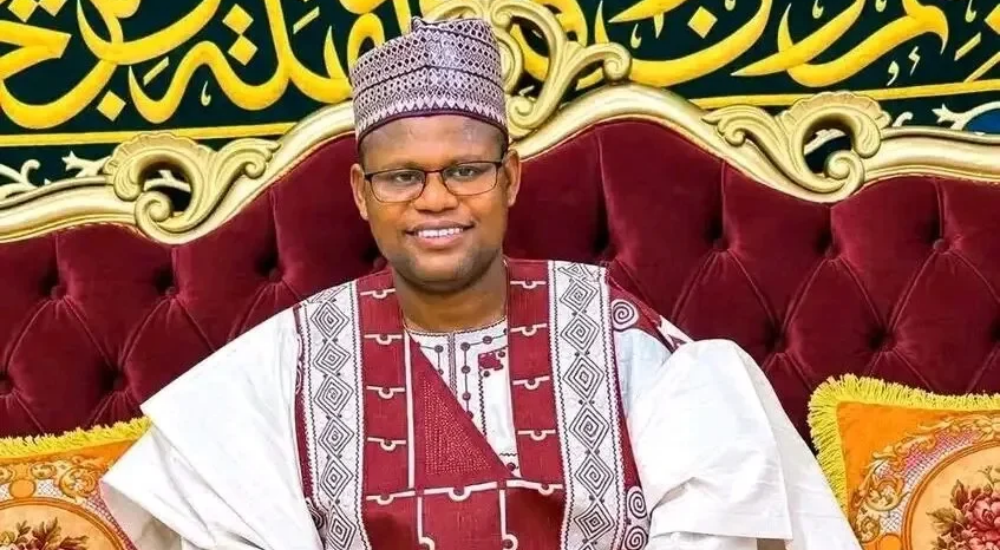
The reported claim of responsibility by Ansaru for the killing of Islamic cleric Sheikh Yahaya Ibrahim Masussuka has added a new dimension to the investigation into the deadly attack in Dutsin-Ma, Katsina State, where the preacher and his associate, Adamu Abubakar, were shot dead.
The Katsina State Police Command said the attack occurred at about 7:30 p.m. on Monday, October 26, 2026, when two armed men riding on a motorcycle opened fire on the victims outside the cleric’s residence. Both men were rushed to a hospital but were pronounced dead.
The police have deployed tactical and operational teams to the area and commenced investigations to identify and arrest the attackers. The command said efforts were being intensified to bring those responsible to justice.
READ ALSO:
- MURIC Accuses Police Contractor of Refusing to Rebuild Mosque at Lagos Barracks, Demands Equal Treatment
- Nigerian Navy Recruitment 2026: October 31 Deadline, Full Requirements and How to Apply
-
Outrage as Police Respond to Dispute Involving 3-Year-Old Soccer Prodigy Accused of Outshining Older Players
Reports of the alleged Ansaru claim have circulated, but the group’s responsibility has not been independently established. The police have not publicly confirmed the claim, while the identities of the attackers and their motive remain unclear.
Masussuka was known for his Qur’an-centred teachings, which attracted both support and criticism among religious audiences. In 2025, the Katsina State Government reportedly intervened following complaints and threats linked to disputes over his teachings. However, no established evidence has connected those earlier disagreements to the killing.
President Bola Ahmed Tinubu condemned the killings and directed the police and other security agencies to intensify efforts to track down, arrest and prosecute those responsible. Katsina State Governor Dikko Umaru Radda also condemned the attack and called for a thorough investigation.
The investigation is ongoing, and the reported claim of responsibility should not be treated as confirmation of who carried out the attack until it is verified by investigators.
Ansaru Claims Killing of Katsina Cleric Masussuka as Police Launch Manhunt
metro
MURIC Accuses Police Contractor of Refusing to Rebuild Mosque at Lagos Barracks, Demands Equal Treatment
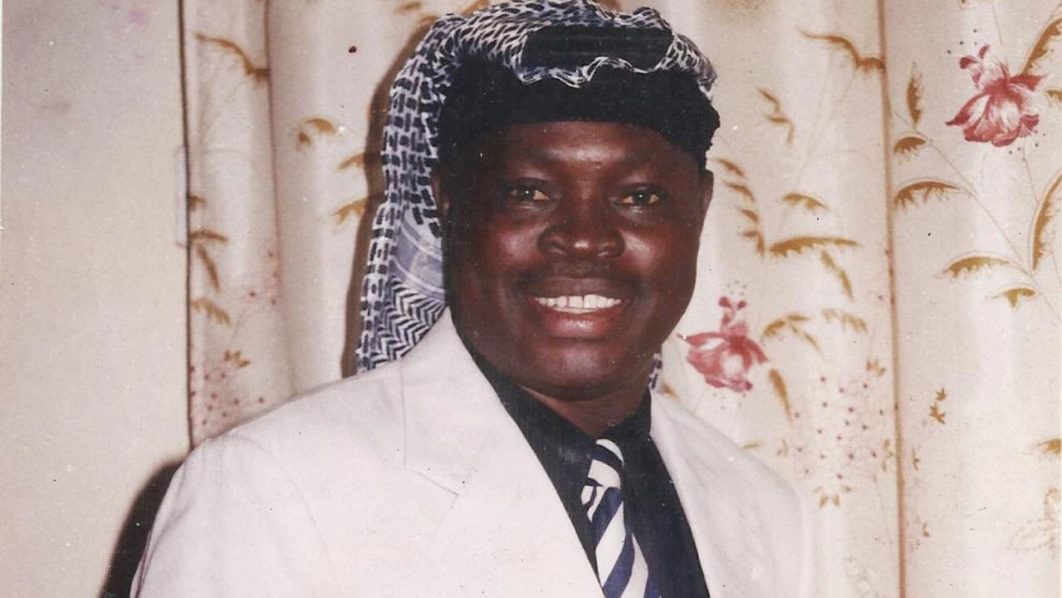
The Muslim Rights Concern (MURIC) has urged the Nigerian Police authorities to ensure that a contractor rebuilding religious worship centres at Ijeh Police Barracks in Obalende, Lagos, reconstructs both the mosque and the church, following allegations that the contractor intends to abandon the mosque because of his religious affiliation.
MURIC alleged that the contractor, who has reportedly commenced work on the church, refused to rebuild the mosque because he is a Catholic. The organisation called on the police authorities to investigate the allegation and ensure that both projects are completed in accordance with the terms of the contract.
In a press statement issued on Tuesday, October 27, 2026, the group’s Founder and Executive Director, Professor Ishaq Akintola, said rebuilding one worship centre while leaving the other unattended would raise concerns about religious fairness, accountability and the use of public funds.
The organisation said the church and mosque were demolished between August 31 and September 1, 2026, and that the reconstruction project should provide for both Christian and Muslim worshippers living in the barracks.
Ijeh Police Barracks, located along St. Gregory’s College Road in Ikoyi, accommodates police personnel and their families, including Muslims and Christians. MURIC argued that providing worship facilities for both religious communities was important to maintaining fairness and peaceful coexistence.
READ ALSO:
- Nigerian Navy Recruitment 2026: October 31 Deadline, Full Requirements and How to Apply
- Outrage as Police Respond to Dispute Involving 3-Year-Old Soccer Prodigy Accused of Outshining Older Players
- Osimhen Brace Sinks Fenerbahce as Galatasaray Win Istanbul Derby
The group said the alleged refusal to rebuild the mosque, if established, would violate the terms of the contract and undermine confidence in the process.
MURIC urged the police authorities to call the contractor to order and ensure that work on both buildings progressed simultaneously. It also suggested that the contractor should be replaced if personal religious convictions prevented him from carrying out the full assignment.
The organisation further raised concerns about the reported allocation of land for the two worship centres, alleging that the church had been allocated 108 feet while the mosque was allocated 68 feet.
It called on the police authorities to explain the basis for the difference, arguing that the allocation should be guided by transparent and fair criteria.
MURIC also questioned the use of public funds for a project that, according to its account, was intended to cover both buildings. It maintained that taxpayers from different religious backgrounds contributed to public revenue and should receive equal consideration in the provision of public facilities.
The organisation cited reports concerning the provision of prayer space for Muslim visitors at the Vatican as an example of religious accommodation. It also raised broader concerns about alleged restrictions on Muslim workers and students seeking to observe Friday congregational prayers, known as Jumu’ah.
The group called on the police authorities to address both the alleged refusal to rebuild the mosque and the reported difference in land allocation, stressing that the issues required clarification to prevent further religious tension.
As of the time of the statement, MURIC’s allegations against the contractor and its claims concerning the land allocation had not been independently verified. There was also no response from the police authorities or the contractor included in the organisation’s press release.
The police authorities’ response, alongside clarification of the contract terms and land allocation, would help establish the circumstances surrounding the reconstruction project.
MURIC Accuses Police Contractor of Refusing to Rebuild Mosque at Lagos Barracks, Demands Equal Treatment
-
 Politics3 days ago
2027: APGA Chairman Says South-East Must Back Tinubu to Secure Igbo Presidency
-
 metro18 hours ago
Cancelled Wedding: Man Sues Ex-Fiancée’s Father Over Unpaid ₦70,000 Dowry
-
 International3 days ago
France Deploys 70,000 Police as Cost-of-Living Protests Intensify
-

 metro3 days ago
Borno: Troops Kill 15 Terrorists in Midnight Air Strike
-

 Entertainment3 days ago
Tope Alabi Threatens Pastor With Lawsuit Over Toluwanisings’ Death Claims
-

 Politics3 days ago
Atiku Condemns Attack on Edo Comedian Over Refusal to Support Tinubu
-

 Auto18 hours ago
Car of the Year, other top honours up for grabs as NAJA Awards race begins
-
 News3 days ago
Bill Clinton condemns anti-Muslim prejudice, cites Qur’an’s message of coexistence