

metro
PFIPC scandal: How Accountant-General exposed Adeniyi Adeyemi’s fake presidential agency
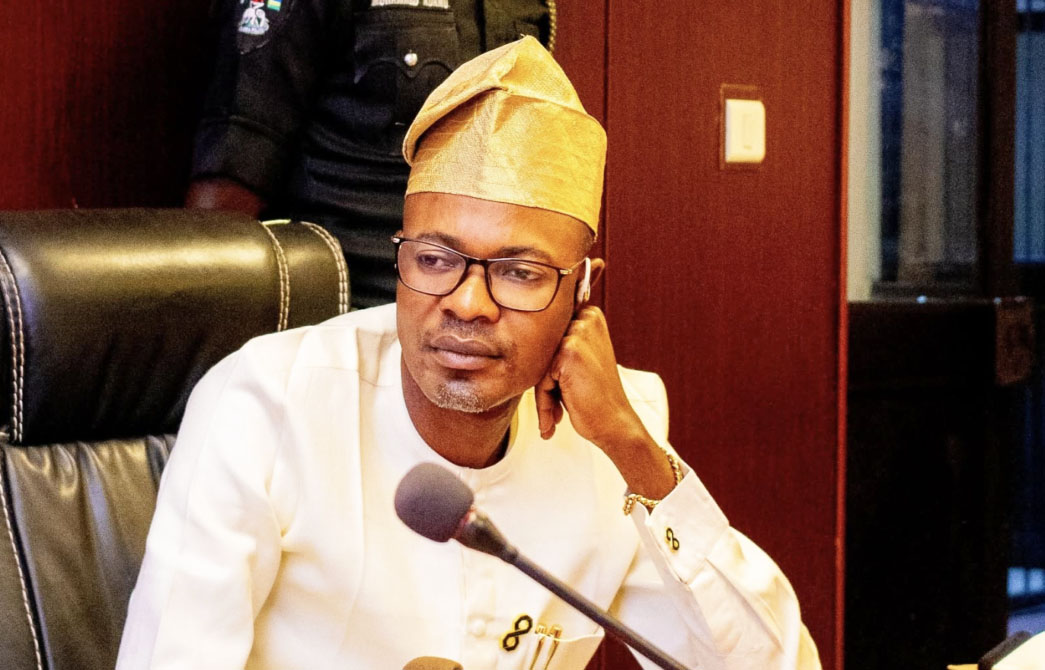
PFIPC scandal: How Accountant-General exposed Adeniyi Adeyemi’s fake presidential agency
The Accountant-General of the Federation, Shamseldeen Ogunjimi, has told a House of Representatives committee that a forged State House letter was used to secure official recognition for the controversial Presidential Foreign Intervention Promotion Council (PFIPC), with the document allegedly intercepted by the agency’s director-general, Adeniyi Adeyemi Matthew, to prevent early detection of the fraud.
Testifying before the House Ad Hoc Committee investigating the PFIPC controversy and the ₦1.3 billion allocated to the council in the 2026 Appropriation Act, Ogunjimi revealed that his office processed what appeared to be a legitimate State House correspondence in November 2024, only for investigations to later confirm the letter never originated from the Presidency.
The Accountant-General explained that his office received a letter dated November 7, 2024, bearing a State House reference number and requesting the creation of an administrative code for the Presidential Economic Advisory Council to enable budgeting, accounting, and financial reporting. Believing the request to be genuine because it appeared on official State House letterhead, the Treasury processed the application and sent its response to the State House on November 29, 2024, while copying the Budget Office of the Federation. However, Ogunjimi told lawmakers that the response never reached its intended destination because it was allegedly intercepted by Adeniyi Adeyemi. He was quoted as saying, “The letter that was written to the treasury for us to give an administrative code was responded to. Unfortunately, as events unfolded, it was discovered that that letter did not get to the State House. It was hijacked, precisely by the same man who claimed to be the director-general.” According to Ogunjimi, if the State House had received the response, officials would have immediately noticed that the original request for the administrative code was never issued by the Presidency, exposing the forgery much earlier.
READ ALSO:
- Police Bust Phone Theft Syndicate, Recover Nine Android Devices in Asaba
- Tinubu Agrees to Meet South African Envoy After Ramaphosa’s Intervention
- “We Can’t Run a Country on Vibes” – Rufai Oseni Knocks Peter Obi Over Lack of Clear Policy Details
In a startling disclosure, the Accountant-General told the committee that every document submitted by the council’s promoters was fabricated, including a purported Act of the National Assembly creating the council and a fake letter of appointment allegedly signed by the Chief of Staff to the President. He declared that everything presented to the Treasury leadership was fake. Investigators have since confirmed that the appointment letter claiming President Bola Tinubu had appointed Adeyemi as Director-General carried the forged signature of Femi Gbajabiamila, the President’s Chief of Staff.
Ogunjimi also clarified how government staff became attached to the fake agency, revealing that two officers from the Office of the Accountant-General had originally been deployed to the Office of the Chief Economic Adviser to the President in 2010 and 2013. He stated, “We never knew. We believed, based on the records available to the Treasury, that those officers were still with the Office of the Chief Economic Adviser to the President. It was when all this matter came to light that we got to know that two of our staff were actually working or had been absorbed by the fake agency.” The Treasury was never formally informed that the officers had been attached to another entity. According to Ogunjimi, as far as he was concerned, they were dealing with a new agency, not the Office of the Chief Economic Adviser. When the council later requested the deployment of five additional personnel, only three were approved because officials considered the organisation too small for the number requested.
Despite processing some administrative requests, Ogunjimi stressed that no government funds were ever released to the PFIPC. The council had requested an establishment grant of ₦27.4 billion, but this was rejected because there was no budgetary provision. He added that while two domiciliary accounts in US dollars and British pounds were opened by the Central Bank of Nigeria for inflow purposes, they never became operational because the council failed to meet regulatory conditions.
Adeyemi was arrested by operatives of the Police Intelligence Response Team in Osun State on July 14 and is currently being held at the Nigeria Police Force National Cybercrime Centre in Abuja. He faces charges including forgery, impersonation, and related offences, with a maximum prison sentence of 21 years without the option of a fine on each charge. The Independent Corrupt Practices and Other Related Offences Commission has also interrogated him while in detention. Meanwhile, the Chief of Staff to the President, Femi Gbajabiamila, voluntarily appeared before investigators on July 20, 2026, to provide a statement.
President Bola Tinubu has directed the ICPC to conduct a thorough investigation and submit a comprehensive report within 30 days. The investigation will examine forged appointment letters and official government documents, the opening of multiple bank accounts using forged documents, the role of any public officer who may have facilitated the scheme, and the institutional weaknesses that were exploited.
PFIPC scandal: How Accountant-General exposed Adeniyi Adeyemi’s fake presidential agency





metro
Kano Woman Arrested for Severing Boyfriend’s Manhood Over Plan to Marry Another

Kano Woman Arrested for Severing Boyfriend’s Manhood Over Plan to Marry Another
The Kano State Police Command has arrested a 25-year-old woman, Maimunatu Idris, for allegedly attacking her boyfriend with a knife and severing his genitals at Durbar Hotel in the Badawa area of Kano. The suspect, who hails from Maigatari Local Government Area in Jigawa State, reportedly carried out the attack after discovering her boyfriend’s plan to marry another woman.

Maimunatu Idris
The incident occurred on Monday, July 27, 2026, at about 12:50 p.m., when hotel management alerted the police to the violent attack. Police Public Relations Officer, CSP Abdullahi Haruna Kiyawa, confirmed the incident in a statement, saying the Divisional Police Officer of Badawa Division promptly led a team of detectives to the scene, where the suspect was arrested and the knife allegedly used in the attack was recovered as an exhibit.
The police spokesperson stated that preliminary investigations indicate the suspect attacked her boyfriend with a sharp knife after learning of his intention to marry another woman. “Upon receipt of the report, the Divisional Police Officer led a team of detectives to the scene. The suspect was arrested and the weapon recovered as exhibit. The victim was rushed to Abubakar Imam Urology Hospital where he is currently receiving medical care. Investigation is ongoing,” Kiyawa said.
READ ALSO:
- PFIPC scandal: How Accountant-General exposed Adeniyi Adeyemi’s fake presidential agency
- Senate Defends Bus Preaching Bill Amid Public Outcry
- Police Bust Phone Theft Syndicate, Recover Nine Android Devices in Asaba
Commissioner of Police, CP Ibrahim Adamu Bakori, strongly condemned the attack, describing violence as an unacceptable response to personal disagreements. He warned members of the public against taking the law into their own hands under any guise, assuring residents that the Command would conduct a diligent, transparent and thorough investigation, and that anyone found culpable would be arraigned in court in accordance with the law. “The Nigeria Police Force is constitutionally empowered to investigate, arrest and prosecute offenders through due process. Members of the public should desist from taking the law into their own hands under any guise,” the police commissioner said.
An eyewitness who works as a security personnel near the hotel told Daily Trust that the suspect lured her boyfriend to lodge at the hotel after learning of his plan to end the relationship. “She asked him to lodge at the hotel so they could stay together. It was there she used the opportunity to cut his manhood,” the eyewitness said. He added that the suspect was immediately apprehended and handed over to the police, while the victim was rushed to the hospital for treatment.
The victim’s identity has not been disclosed by the police, and he is currently receiving medical care at Abubakar Imam Urology Hospital. Police said the suspect is in custody as investigations continue to determine the full circumstances surrounding the incident. The Kano incident is among two separate violent cases recorded in the state, with the police also arresting three suspects over the alleged mob killing of a 30-year-old man, Abubakar Auwal, in the Sheka area of Kano following accusations that he had been involved in a relationship with a married woman.
Kano Woman Arrested for Severing Boyfriend’s Manhood Over Plan to Marry Another
metro
Senate Defends Bus Preaching Bill Amid Public Outcry

Senate Defends Bus Preaching Bill Amid Public Outcry
The Senate has moved to calm public anger over the proposed N50,000 fine for preaching, hawking and trading inside commercial vehicles, clarifying that the provision is not a new ban on religious activities but a long-standing regulation that has been part of Nigerian law since 2007.
The clarification comes amid widespread outrage following the passage of the Federal Road Safety Corps (Amendment) Bill, 2026, which proposes stiffer penalties for various traffic offences. The legislation sparked criticism from Christian bodies, opposition parties, civil society groups and members of the public, many of whom argued that criminalising bus preaching and hawking was insensitive amid rising unemployment and worsening economic hardship.
In a statement issued on Monday, Senate Leader Opeyemi Bamidele clarified that the contentious provision had been widely misrepresented, insisting that the amendment neither introduced a fresh offence nor sought to prohibit preaching in public places. He explained that pursuant to Section 10(4) of the Federal Road Safety Commission (Establishment) Act, 2007 and Regulation 220 of the National Road Traffic Regulations (NRTR) 2012, preaching and hawking in a commercial vehicle are already offences that have been part of the Act before the current amendment. “The Senate has duly noticed public concerns on the purported proscription of preaching and hawking in a commercial vehicle under the ongoing amendment to the Federal Road Safety Commission (Establishment) Act, No. 22, 2007,” Bamidele said. “Entrenched as Item 36 in the Second Schedule of the Act, preaching and hawking in a commercial vehicle are not new provisions in our legal system. The provisions have been part of the Act as far back as 2007. However, it is now listed as Item 49, Second Schedule of the Act.”
The Senate stressed that the legislation was strictly targeted at promoting road safety and protecting commuters from distractions that could endanger lives. “The bill, therefore, does not outlaw preaching on the streets as some interests have claimed in different fora. It is about the safety of commuters and other road users and not intended to undermine any religious activity in the public space,” Bamidele added. The upper chamber maintained that the provision has existed since the FRSC Establishment Act was enacted in 2007 and was not newly introduced by the current National Assembly. The Senate noted that the objective of the legislation is to prevent distractions capable of endangering passengers, drivers and other road users, and has nothing to do with restricting constitutionally guaranteed freedom of worship or freedom of expression.
READ ALSO:
- Police Bust Phone Theft Syndicate, Recover Nine Android Devices in Asaba
- Tinubu Agrees to Meet South African Envoy After Ramaphosa’s Intervention
- “We Can’t Run a Country on Vibes” – Rufai Oseni Knocks Peter Obi Over Lack of Clear Policy Details
The Senate also dismissed reports linking the amendment to Bamidele, saying the legislation originated from the House of Representatives and was transmitted to the Senate for concurrence in line with constitutional requirements. “The bill is not an initiative of the Leader of the Senate, Senator Opeyemi Bamidele. Rather, it is a concurrence bill first amended by the House of Representatives,” the statement read. The Senate noted that the amendment process is still ongoing and encouraged stakeholders with concerns to engage the appropriate legislative channels before the process is finalised. “In the spirit of democracy, stakeholders can channel their concerns to the appropriate institutions before the completion of the process,” Bamidele stated.
The clarification comes days after the Senate passed the Federal Road Safety Corps (Amendment) Bill, 2026, which seeks to strengthen road safety enforcement through stiffer penalties for traffic-related offences. The revised schedule of offences contains 52 traffic violations and their corresponding penalties, with lawmakers saying the amendments are intended to improve compliance with traffic regulations, strengthen the FRSC’s enforcement powers and enhance road safety nationwide. Apart from prescribing a N50,000 fine for anyone convicted of hawking, trading or preaching inside commercial vehicles, the bill proposes a N50,000 fine, six months’ imprisonment or both for motorists who refuse to cooperate with FRSC officials conducting roadside breath tests based on reasonable suspicion. It also raises the penalty for driving under the influence of alcohol or intoxicating drugs from N5,000 to N100,000, with offenders facing up to two years’ imprisonment or both. Similarly, the proposed legislation increases the penalty for disobeying traffic lights, road signs, pavement markings and other traffic control devices to N100,000, while speed limit violations and reckless driving would also attract stiffer sanctions, including fines of N100,000 and, in some cases, custodial sentences.
READ ALSO:
- Three-Storey Student Hostel Collapses Near Oko Polytechnic, Many Trapped
- Lawyers Begin Indefinite Strike Over Unpaid Allowances, Salary Harmonisation
- Nigeria’s Renewable Energy Milestone: 15 Universities Now Fully Connected to Solar Farms
The Christian Association of Nigeria (CAN), South-West region, has rejected the proposed ban on preaching inside commercial vehicles, warning that the provision could restrict citizens’ constitutional rights. In a statement issued by the South-West Chairman of CAN, Bishop Barnabas Akinsanya, the Christian body said the proposed legislation required careful review to ensure it did not infringe on citizens’ fundamental freedoms. “We acknowledged the Federal Government’s commitment to improving road safety and reducing avoidable road crashes across Nigeria. We support every genuine effort aimed at protecting lives and promoting responsible road use,” the statement read. “However, we respectfully express serious concerns regarding aspects of the proposed Federal Road Safety Corps (FRSC) Act (Amendment) Bill, 2026, particularly the provision prescribing sanctions for preaching in commercial buses and the outright prohibition of hawking in such vehicles.” CAN said prohibiting religious preaching without evidence that it poses a direct threat to public safety could create the impression of an unnecessary restriction on religious freedom and lead to avoidable public tension. The body also argued that many Nigerians depend on legitimate informal trading for their daily survival, and rather than adopting measures that may further worsen economic hardship, government should prioritise policies that create employment opportunities, reduce poverty, improve public transportation, strengthen security, and enhance the welfare of citizens. “We therefore respectfully appeal to the President of the Federal Republic of Nigeria to withhold assent to the Bill in its present form and encourage further consultation with relevant stakeholders, including religious bodies, civil society organisations, legal experts, transport unions, and road safety professionals,” CAN stated.
In a contrasting position, the Muslim Rights Concern (MURIC) has defended the bill, identifying CAN as the sponsor of those who preach inside commercial buses. The Islamic human rights organization said CAN’s rejection of the bill is an admission of guilt and urged the Senate to forge ahead with the legislation. MURIC argued that one person’s rights should not rank over and above the rights of all other passengers, including the driver who must be allowed to concentrate. “We support the FRSC bill for two main reasons. Bus preaching distracts drivers thereby leading to accidents with the attendant deaths and injuries. Secondly, bus preaching constitutes conduct likely to cause breach of public peace,” MURIC Executive Director Professor Ishaq Akintola said. “Our lawmakers need to urgently attend to the FRSC bill in view of the high proliferation of road crashes in the country.”
Before Monday’s clarification, opposition parties had condemned the proposed penalties, arguing that criminalising hawking and preaching inside commercial vehicles was misplaced at a time many Nigerians were grappling with soaring inflation, unemployment and declining purchasing power. Party officials described the proposal as insensitive, urging the National Assembly to prioritise legislation that addresses the country’s economic challenges rather than imposing harsher penalties on struggling citizens. The bill is currently awaiting presidential assent, and the Senate has encouraged stakeholders with concerns to engage the appropriate legislative channels before the process is finalised.
Senate Defends Bus Preaching Bill Amid Public Outcry
metro
Police Bust Phone Theft Syndicate, Recover Nine Android Devices in Asaba

Police Bust Phone Theft Syndicate, Recover Nine Android Devices in Asaba
Operatives of the Delta State Police Command have arrested four suspected members of a phone theft syndicate and recovered nine brand-new Android devices in Asaba, the state capital. The suspects were apprehended on July 25, 2026, at their hideout along St. Brigid’s Road, Asaba, following a series of reported phone thefts from shops in the city and its environs. The police acted on credible intelligence and technical analysis to track down the syndicate.
The police identified the arrested suspects as Johna Omarocha, Kelvin Onogho, Nkechi Nnaji, and Ufuoma Joshua. A search of their hideout led to the recovery of nine brand-new Android phones, all still sealed in their original cartons. According to the police spokesperson, SP Bright Edafe, preliminary investigations revealed that the suspects employed a coordinated method to evade detection. The syndicate members would disguise themselves as genuine customers visiting shops and supermarkets. While pretending to shop, they used newspapers to conceal mobile phones displayed in the stores before secretly walking away with them.
READ ALSO:
- Tinubu Agrees to Meet South African Envoy After Ramaphosa’s Intervention
- “We Can’t Run a Country on Vibes” – Rufai Oseni Knocks Peter Obi Over Lack of Clear Policy Details
- Three-Storey Student Hostel Collapses Near Oko Polytechnic, Many Trapped
Investigators further disclosed that the female suspect, Nkechi Nnaji, allegedly played a strategic role in the operation. She reportedly waybilled the stolen phones to Lagos, where the International Mobile Equipment Identity (IMEI) numbers of the devices were altered before the phones were resold—making it difficult to trace them to their rightful owners. The suspects have reportedly confessed to their involvement in the criminal enterprise. The police stated that efforts are ongoing to arrest other fleeing members of the syndicate and identify the legitimate owners of the recovered phones. The four suspects remain in police custody and are expected to be charged to court upon the conclusion of investigations.
Reacting to the development, the Commissioner of Police, Delta State Command, CP Yemi Oyeniyi, reaffirmed the command’s commitment to tackling robbery and other property-related crimes across the state. He urged members of the public, particularly shop owners and business operators, to remain vigilant, strengthen security measures around their business premises, and promptly report suspicious persons or activities to the police.
Police Bust Phone Theft Syndicate, Recover Nine Android Devices in Asaba
-

 metro3 days ago
PFICP scandal: How ₦1.3bn ‘fake agency’ traced to Buhari’s government entered 2026 budget
-

 Politics2 days ago
2027 election: Atiku accuses Obasanjo of reviving false allegations to favour preferred candidate
-

 metro1 day ago
NDLEA intercepts ₦10bn worth of cocaine, Loud, opioids in Lagos
-

 Sports2 days ago
Anthony Joshua stuns Kristian Prenga with dramatic knockout to revive career
-

 Sports1 day ago
Super Falcons recover stolen cash after hotel theft suspect confesses
-
 metro2 days ago
Al-Mustapha Fires Back: Ex-DSS Officer’s Account of Abacha’s Death Is a Lie, I Have CCTV Evidence
-

 metro2 days ago
ISWAP finance chief surrenders to Nigerian troops with two children in Borno
-

 metro3 days ago
Bandits Abduct Zamfara LG Chairman, Kill Four Security Operatives