

metro
‘We’re beggars in Ibadan because bandits, terrorists killed our husbands in the North’
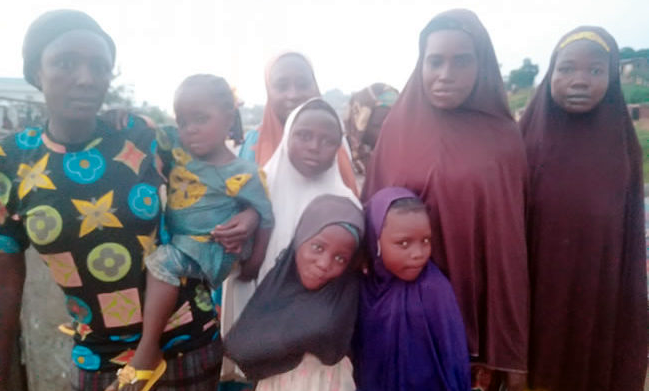
AISHA Ibrahim is a young woman but she appears to have the weight of the world sitting on her shoulders. She had great plans for her life but fate had something else in store for her.
She is one of several women from the Northern part of the country who are taking an exhausting walk through life in Ibadan, the Oyo State capital. They had been forced to embark on unexpected journeys southwards after being dealt cruel fates by Boko Haram terrorists back in their home states. This writer caught up with some of these women. Some of them shared their pathetic stories.
For Aisha, the nightmare which has now become her life started on a dark night in Makasara in Kachia Local Government Area of Kaduna State, a place she, her husband, father and siblings had thought would provide a safe haven for them. They had relocated to Kaduna State to escape the ceaseless strife which was making life difficult for them in Katsina State.
One day, marauders came, brandishing weapons and shooting into the air. They were unprepared for the midnight invasion of their village. The invaders left in their trail, blood and sorrow.
READ ALSO:
- Osun govt to conduct integrity tests on ‘model schools’ built by Aregbesola
- BREAKING: Man confesses to killing Vanguard reporter, Tordue Salem
- Nigeria, others to get malaria vaccine by first quarter of 2022 –AHM
- FG: Fuel Subsidy to Go in Second Half of 2022
Houses were set ablaze, farmlands were destroyed, cattle were rustled and many villagers were killed. Among the dead were Aisha’s father and husband, Ibrahim. The village became desolate; life became difficult for the survivors, having been stripped of their livelihoods. The invaders had rustled their cattle and laid waste their farmlands. At 35, Aisha, the first of the five children of her parents, had to find a means of survival and thus began her journey to Ibadan, the Oyo State capital.
In pursuit of a better life, Aisha had left her once-peaceful home alongside several other women. She boarded a truck to a destination unknown.
“It was just God that brought me here. When I left, I had no idea where I was going to. I met other women like me at the park and I joined them and here I am today,” she said.
Prior to her journey to the South West, Aisha was happily married. “I was living with my husband in Makasara in Kaduna State when bandits killed him. God had not blessed us with a child. I had to leave. I came in company with other women. I don’t have an idea how my siblings are doing. I don’t know whether they have found a way around life or if they are dead,” she told Saturday Tribune.
For Rukkaya Bello, her once peaceful nomadic life was cut short in Borno State when Boko Haram fighters invaded their settlement in Doron Baga in Baga Local Government Area of the state about three years ago. The havoc done by the terrorists had left her widowed and homeless. “I came here about a year ago. It was a year last month since I came to Ibadan,” she said.
Rukkaya narrated her ordeal and how she found her way to Ibadan. “I don’t have any children anymore. Boko Haram killed all my seven children and my husband. They rustled our cattle and abducted my daughters-in-law. I have no one left; it is just me and God. I didn’t have female children; my kids were all boys but Boko haram shot and killed them all. I was all alone and lonely, so I came here. God brought me here. After they killed our husbands and male children, they left a lot of women in the bush. We couldn’t stay in the bush without our cattle so we had to move to town.
“We were moving around with our cattle when the gunmen followed us into the bush. They killed all the men and the boys. The Boko Haram men offered them bombs and guns to attack people in another town but they refused. The Boko Haram then killed them because they would not join their cause.
“If they had accepted to be part of them, they could have been alive today but I would rather my sons are dead than living as Boko Haram terrorists. After killing our husbands and children, they said we, the mothers, could go. We headed in different directions but God brought me here. We take all that has happened as the will of God,” Rukkaya said.
Aisha and Rukkaya are among several women with similar stories begging on a bridge in the Ojoo area of Ibadan under harsh and unhealthy conditions. These women, together with their children, survive mainly on alms and food given to them by people of goodwill. “God usually sends Yoruba people to give us food, money and clothes,” Aisha said.
As a way of preserving some of the cooked food they get, these women spread the leftovers on the bridge to allow them dry after they have had enough to eat. They told Saturday Tribune that they re-cook the dry foods at home. “We understand the value of food, so in order to avoid any waste, we dry the foods here then we wash and re-cook them when we get home.”
The question of menstrual hygiene is far from routine for these women. According to Aisha, they use rags for sanitary towel. They lack other essentials to maintain a good hygiene.
“We don’t find joy in sitting by the roadside but we don’t know what else to do. If we stay at home, who will provide for us? We could not even have chosen to stay back in the North because the gunmen continued to lay siege to our homes both during the day and at night,” Indatu Abdullahi another of them said.
These women come out to beg under the sun and in the rain to ensure survival for themselves and their children. For some of them, they still shoulder the responsibilities of their children and relatives back home.
For Zainab Aliyu, she still caters for her mother and her 11 children after her husband was killed by bandits five years ago in Funtua, Katsina State.
“Two of the children are taking care of my mother who has been bedridden as a result of the injury she sustained during the attack in which my husband was murdered. Three are with my in-laws and I have the remaining six with me. So, the little money we get from begging, I send it home for them to feed as well,” Zainab said.
As harrowing as their stories are, the women expressed the hope that one day, things would get better; the government would be more responsive and they would return home and be reunited with their families.
Tribune








metro
Bauchi Woman Arrested After Co-Wife Dies in Alleged Pestle Attack
Bauchi Woman Arrested After Co-Wife Dies in Alleged Pestle Attack
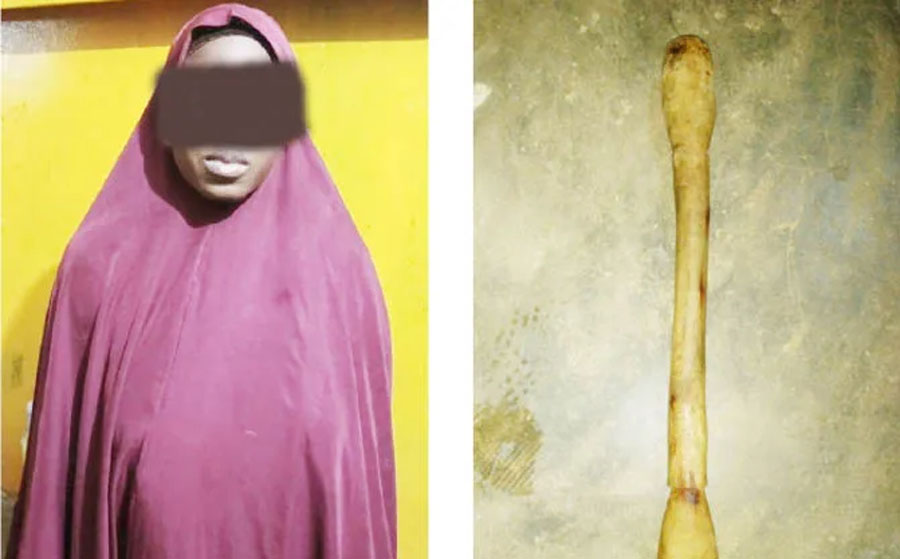
A 33-year-old woman, Hauwa’u Haruna, has been arrested by the police in Bauchi State after her co-wife, identified as 43-year-old Jamila Adamu, died following an alleged attack with a pestle.
The incident occurred at about 4:05pm on Sunday, September 27, 2026, at Tafawa Balewa Housing Estate in Bauchi metropolis, where the two women reportedly lived in the same household with their husband.
According to the Bauchi State Police Command, Haruna allegedly picked up a pestle during a confrontation and struck Adamu on the forehead.
The victim reportedly lost consciousness after the alleged assault.
Police said officers from C-Division, Bauchi, were alerted to the incident and responded to the residence. Adamu was subsequently taken to Specialist Hospital, Bauchi, where a medical doctor reportedly confirmed her death.
Her remains were deposited at the hospital mortuary pending an autopsy, while the police commenced investigation into the circumstances surrounding her death.
The police said the alleged pestle used in the attack was recovered and retained as an exhibit. Haruna was also arrested and taken into custody for questioning.
READ ALSO:
- Lagos Driver Arrested After Police Sergeant Dies During Stop-and-Search
- FG Releases 2026–2028 Approved Textbooks, Introduces QR Codes for Tracking
- 24 Hours in Darkness: Iju Ishaga Residents, Businesses Count Losses as Ikeja Electric Fails to Restore Power
The police spokesperson, SP Nafiu Habib, said preliminary findings indicated that the suspect was allegedly acting under what the command described as hallucinations when the incident occurred.
However, the police description does not by itself establish a medical diagnosis or explain the cause of the alleged behaviour. Further investigation, including the circumstances surrounding the incident and any relevant medical assessment, would be required to establish the facts.
The Bauchi State Commissioner of Police, Sani-Omolori Aliyu, directed that the case be transferred to the State Criminal Investigation Department (SCID) for discreet investigation and prosecution.
The commissioner also expressed condolences to the family of the deceased and urged members of the public to seek timely medical and psychosocial assistance for people experiencing serious behavioural or psychological difficulties.
Police have not disclosed a specific motive for the alleged attack or provided details of what triggered the confrontation between the two women.
The incident has consequently remained under investigation as authorities work to establish the circumstances that preceded the alleged assault and the events that led to Adamu’s death.
The case is expected to be subjected to further investigation before any criminal liability is determined through the appropriate legal process.
Bauchi Woman Arrested After Co-Wife Dies in Alleged Pestle Attack
metro
Lagos Driver Arrested After Police Sergeant Dies During Stop-and-Search
Lagos Driver Arrested After Police Sergeant Dies During Stop-and-Search
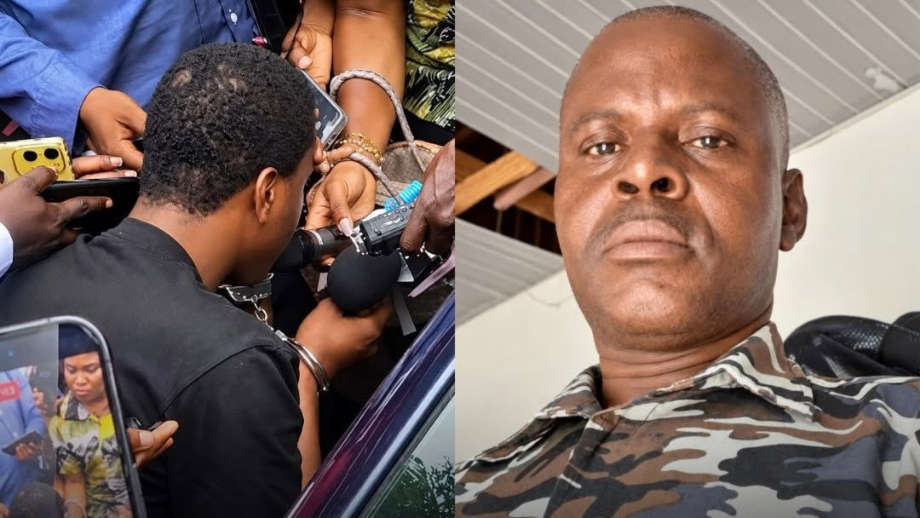
A 21-year-old Lagos driver has been arrested after a police sergeant was fatally injured during a stop-and-search operation in the Egbeda area of Lagos State.
The deceased officer, identified as Sergeant Johnson Okediji, was reportedly knocked down and dragged beneath a Lexus ES 350 during the incident, which occurred at about 2:20pm on Saturday, September 26, 2026, along Olugbede Street, Egbeda.
The driver, identified by the police as Olumide Olusola, was arrested after officers pursued him following the incident. The Lexus, with registration number FKJ 223 KX, was also recovered and taken into police custody.
According to the Lagos State Police Command, officers were conducting a stop-and-search operation when they flagged down the vehicle.
The command said the driver initially stopped but allegedly accelerated as Sergeant Okediji approached the driver’s side of the vehicle.
The officer was reportedly knocked down and dragged underneath the moving vehicle for several metres despite efforts by other police officers and passers-by to stop the driver.
Okediji sustained multiple fractures and serious head injuries in the incident.
He was rushed to a nearby hospital before being referred to the Lagos State University Teaching Hospital (LASUTH), where he was pronounced dead on arrival.
His remains were subsequently deposited at the Mainland Hospital Mortuary, while an autopsy was ordered to assist with determining the circumstances surrounding his death.
The police later arrested Olusola and recovered the vehicle involved in the incident.
However, the suspect has disputed the police account of what happened.
READ ALSO:
- FG Releases 2026–2028 Approved Textbooks, Introduces QR Codes for Tracking
- 24 Hours in Darkness: Iju Ishaga Residents, Businesses Count Losses as Ikeja Electric Fails to Restore Power
- TCAN Honours Dangote Cement Transport for Safety, Logistics Excellence
While being paraded by the command, Olusola reportedly denied deliberately hitting the officer, claiming instead that the vehicle suffered a brake failure as he approached the police officers.
He said he had taken the vehicle to a mechanic the previous day to replace its brake pads and was informed that the work had been completed.
According to his account, he later noticed that the brake was still slipping after he bought fuel on the day of the incident. He said he intended to return the vehicle to the mechanic when the incident occurred.
The competing accounts have not been resolved, and the police investigation is expected to establish how the collision occurred and whether the driver’s actions amounted to a deliberate attempt to evade the officers.
The incident has drawn attention to the risks faced by police officers during stop-and-search operations, as well as the need for motorists to comply with lawful police checks.
Lagos State Commissioner of Police Fatai Tijani said the command would continue to enforce the law while ensuring that officers performing their duties operate within established rules.
The incident was disclosed during the command’s September operational briefing, where the commissioner also gave an account of other arrests and recoveries recorded during the month.
The police said 32 suspects were arrested during the period, while officers recovered 43 vehicles, five pump-action firearms, five locally made pistols, 20 live rounds or cartridges, 15 expended ammunition and about ₦2.5 million in cash, among other exhibits.
The command said investigations into the death of Sergeant Okediji were continuing.
The case is expected to determine the circumstances surrounding the officer’s death, including the suspect’s claim of brake failure and the police allegation that he accelerated after initially stopping for the search.
Lagos Driver Arrested After Police Sergeant Dies During Stop-and-Search
metro
Rivers Approves State Police Bill as Kano Assembly Starts Consideration
Rivers Approves State Police Bill as Kano Assembly Starts Consideration
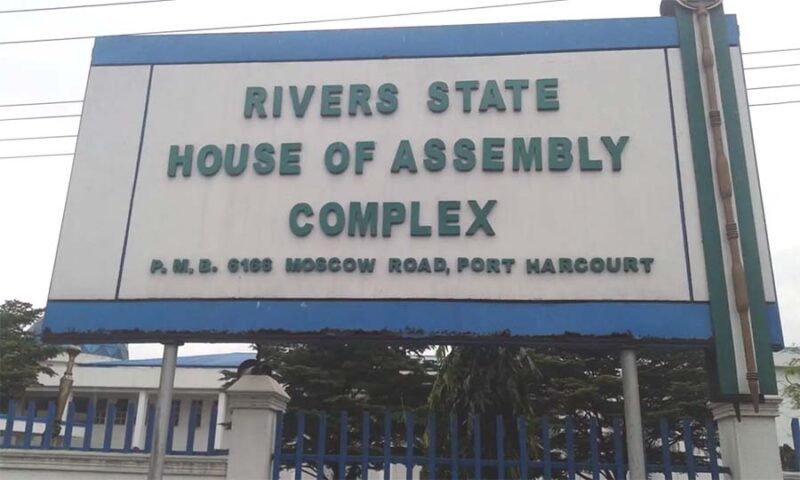
The Rivers State House of Assembly has unanimously endorsed the constitutional amendment seeking to establish State Police Services in Nigeria, while the Kano State House of Assembly has begun considering the proposal as the nationwide legislative process gathers pace.
All 25 members of the Rivers Assembly voted in favour of the State Police Bill during plenary on Monday, September 28, following consideration of the Constitution of the Federal Republic of Nigeria, 1999 (Sixth Alteration) Bill, 2026.
The bill was transmitted to the 36 state Houses of Assembly by the National Assembly on September 16 for consideration and concurrence.
Rivers Assembly Speaker Martin Amaewhule said the lawmakers had consulted their constituents before taking a position on the proposed constitutional amendment.
He said the proposal would create a constitutional pathway for states to establish their own police services while allowing the National Assembly to prescribe minimum standards for policing nationwide.
The Rivers Assembly’s resolution is expected to be formally communicated to the National Assembly as part of the constitutional amendment process.
Meanwhile, the Kano State House of Assembly has commenced consideration of the bill after lawmakers resumed plenary on September 28.
The Kano Assembly had earlier indicated that it would examine the proposal when it reconvened, with lawmakers expected to scrutinise its provisions before taking a formal position.
The Kano development is part of a wider process involving the 36 state legislatures. The National Assembly has clarified that the State Police Services Bill is the only constitutional alteration proposal so far transmitted to the state assemblies for consideration.
READ ALSO:
- FG Releases 2026–2028 Approved Textbooks, Introduces QR Codes for Tracking
- 24 Hours in Darkness: Iju Ishaga Residents, Businesses Count Losses as Ikeja Electric Fails to Restore Power
- TCAN Honours Dangote Cement Transport for Safety, Logistics Excellence
Under Section 9 of the 1999 Constitution, a constitutional amendment passed by the National Assembly requires the approval of at least two-thirds of the state Houses of Assembly before it can proceed to the next stage.
This means at least 24 of the 36 state assemblies must approve the proposed amendment.
The National Assembly has given the state legislatures a 30-day administrative timeframe to consider and communicate their resolutions, although the Constitution itself does not prescribe that period as a statutory deadline.
The state-level consideration follows the passage of the executive-sponsored State Police constitutional amendment bill by the Senate and House of Representatives earlier in 2026.
The proposed amendment seeks to provide constitutional backing for a decentralised policing structure in which State Police Services would operate alongside the existing Federal Police Service.
The proposal also contains provisions intended to establish national minimum standards and safeguards for state policing.
According to the proposed framework, the Federal Police Service would continue to operate across Nigeria, while individual states that establish state police would have their own police services subject to the constitutional and legislative requirements.
The proposal comes amid longstanding discussions about restructuring Nigeria’s policing system and bringing law enforcement closer to communities.
President Bola Ahmed Tinubu has previously backed the establishment of state police, saying a decentralised policing structure could complement the existing federal security architecture and strengthen grassroots policing.
The Presidency has also said that any new state policing framework would require provisions covering recruitment, training, funding, oversight, discipline, firearms control, complaints mechanisms and other safeguards before state police services begin operations.
The legislative process has already produced different responses from state assemblies. Osun and Edo have also backed the proposed amendment, while other assemblies, including Oyo, Nasarawa and Gombe, have begun or scheduled consideration of the bill.
The proposal, however, has not yet created State Police Services in Nigeria. It must first secure the constitutionally required support from at least 24 state assemblies and complete the remaining stages of the constitutional amendment process.
With Rivers having endorsed the proposal and Kano now considering it, attention is shifting to the decisions of the other state Houses of Assembly as the State Police Bill moves through the next phase of the constitutional review process.
Rivers Approves State Police Bill as Kano Assembly Starts Consideration
-

 metro3 days ago
$155m Left Behind, $750m Liabilities: Anambra Govt Opens Fresh Obi Files
-

 News2 days ago
Fake Agency Scandal: Gbajabiamila Says He Never Betrayed Tinubu’s Trust
-

 metro2 days ago
Woman Busted With Alleged Alcohol Hidden in Water Pack at Ogun Prison
-

 International2 days ago
Iran Claims Capture of Second US Underwater Drone in Strait of Hormuz
-
News2 days ago
Anambra Govt Demands Unreserved Apology From Peter Obi Over Debt Claims
-

 metro19 hours ago
24 Hours in Darkness: Iju Ishaga Residents, Businesses Count Losses as Ikeja Electric Fails to Restore Power
-

 Sports3 days ago
Man City Chairman Breaks Silence After Club Found Guilty Of 114 Charges
-

 Politics3 days ago
2027: Lawal Challenges Wike To Clarify Allegiance Over Rainbow Coalition