

International
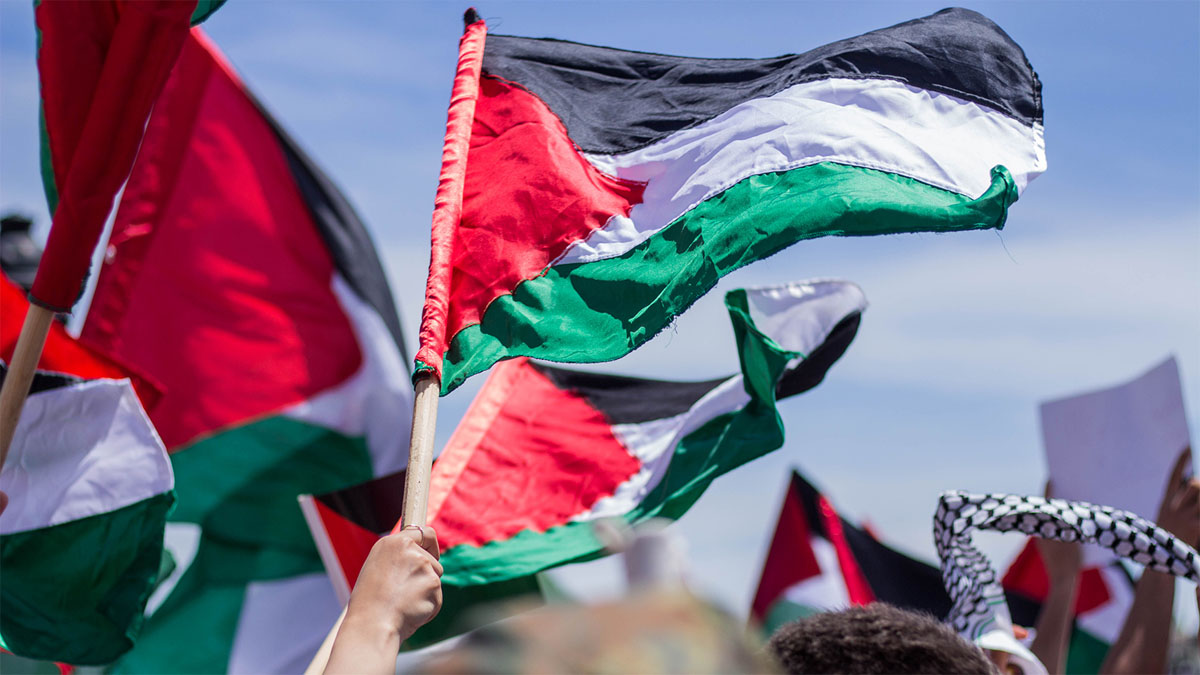
What recognising a Palestinian state actually means
What recognising a Palestinian state actually means
Sir Keir Starmer has announced that the UK will recognise Palestine ahead of the United Nations General Assembly. Here’s what the decision means.
The announcement came ahead of the United Nations (UN) General Assembly in New York.
While Sir Keir Starmer signalled the move in July, it was not made official before Donald Trump’s state visit to the UK, reportedly due to fears it could have dominated the meeting with the US president.
Here is what you need to know about the significance of recognising a Palestinian state.
What’s changed?
The UK has recognised Palestine as a state, acknowledging all the legal rights and obligations of statehood.
Deputy Prime Minister David Lammy said it will have little immediate impact but will sustain hopes of an eventual two-state solution with a Palestinian state existing alongside Israel.
The UK government now calls the West Bank and Gaza “Palestine” instead of the “Occupied Palestinian Territories”, and has made the changes across its website.
The Foreign Office has also updated its travel advice map of the region to use “Palestine”.
Diplomatic rights
The move means Palestine will have full diplomatic rights and missions so far as the UK is concerned.
The Foreign Office said Foreign Secretary Yvette Cooper will write to her Palestinian counterpart in “due course to lay out the process for establishing full diplomatic relations”.
Currently, the Palestinian Authority (PA) delegation to the UK is not at embassy level and operates as a “diplomatic mission” based in Hammersmith, west London.
Embassy status would give the delegations protection and privileges under the Vienna Convention on Consular Relations and the Vienna Convention on Diplomatic Relations.
What is the current international status of Palestinian statehood?
The PA, led by President Mahmoud Abbas, is internationally recognised as representing the Palestinian people.
The governing body exercises limited self-rule in parts of the Israeli-occupied West Bank under agreements with Israel. It issues Palestinian passports and runs the Palestinian health and education systems.
READ ALSO:
- Tinubu, Atiku clash over Buhari’s northern support base
- We don’t monitor such records: GWR rejects Mandy Kiss’ ‘100 men in 24 hours’ attempt
- Senator Natasha remains defiant, says she won’t apologize
However, some trade, investment, educational and cultural exchanges are restricted by Israel, and there are currently no Palestinian airports.
The landlocked West Bank can only be reached through Israel or through the Israeli-controlled border with Jordan. Israel also controls all access to the Gaza Strip.
Much of what would form a potential Palestinian state has been under Israeli military occupation for more than half a century.
Under the Montevideo Convention of 1933, there are several criteria before Palestine can be recognised as a sovereign state under international law.
The process requires the state to have:
• A permanent population;
• A defined territory;
• An effective government and international relations;
• Formal diplomatic processes including embassies, ambassadors and treaties.
The UK did not sign the 1933 convention, but in July, some of Britain’s top lawyers wrote a letter to the government’s top legal adviser warning that recognising a Palestinian state could breach the convention, which they said has become part of “customary law”.
But others, including Philippe Sands KC, a professor of law at University College London, argued against this. He told The Guardian the UN’s top court, the International Court of Justice (ICJ), has recognised that Palestinians have a right to “self-determination” – meaning a country determines its own statehood and forms its own government.
Is the move just symbolic?
China, India, Russia and many Arab states have recognised Palestinian independence for decades, but largely see it as a symbolic gesture, which has little influence on what happens on the ground.
However, in the UK’s case, recognising a Palestinian state could put the two on “equal footing” according to the Palestinian ambassador to the United Kingdom, Husam Zomlot.
This could result in strategic partnerships or lead to steps such as banning products that come from Israeli settlements in occupied Palestinian territories, Vincent Fean, a former British consul general to Jerusalem, told Reuters.
READ ALSO:
- BREAKING: Kogi Lawmaker Natasha Akpoti-Uduaghan resumes at Senate [VIDEO]
- BBNAIJA S10: Why I had an abortion at 13 – Imisi
- Natasha in court for trial over alleged defamation of Akpabio, Bello
French President Emmanuel Macron, who was the first leader of a G7 country to endorse recognition, said the recognition would also come with a commitment that the PA would enact reforms, which, he says, would put it in a better position to govern a post-war Gaza.
Why is the UK acting now?
Sir Keir Starmer said in July that the time to recognise Palestine is now, as it would have the highest impact given the hope of a two-state solution – a “secure” Israel alongside a “viable” Palestinian state – was at risk.
He said it was part of an “eight-part plan” agreed with France and Germany, but denied it represented a U-turn after pressure from Labour MPs, saying instead it was always part of the plan to recognise Palestine.
Pressure has also been mounting on Sir Keir after Israel began a major ground offensive to take Gaza City on 16 September.
Despite widespread condemnation, Israeli tanks and troops have continued to push deeper into the city in a bid to destroy Hamas and force the release of the remaining Israeli hostages.
Foreign Secretary Yvette Cooper called the operation “utterly reckless and appalling”.
The UK’s official declaration comes days before the annual gathering of world leaders at the UN General Assembly, where Gaza will be a major topic of discussion.
Israeli Prime Minister Benjamin Netanyahu is expected to talk at the assembly, but Mr Abbas has not been granted a US visa. It is likely he will instead appear via video.
What countries do (and do not) recognise Palestine?
As of 23 September, an estimated 157 out of 193 United Nations member states recognise Palestine. This includes more than a dozen in Europe, including Spain, Ireland and Norway.
Click, zoom in or search for a country to see their stance on recognising a Palestinian state:
Recognition from countries vs the United Nations
Without a full seat at the UN, the PA only has limited ability to conduct bilateral relations. This means a delegation officially representing the State of Palestine has permanent observer status but no voting rights.
No matter how many individual countries recognise Palestinian independence, full UN membership requires the approval of the Security Council.
Approval requires at least nine votes in favour and no vetoes by the permanent ‘big five’ member states: UK, US, France, Russia and China.
If the Council approves the request, it goes to the General Assembly for approval, where a two-thirds majority is needed.
A state cannot join the UN without the backing of both the Security Council and the General Assembly.
In 2011, the Security Council looked at an application for Palestine to become a permanent member for several weeks but it was unable to reach a unanimous position, so a formal vote never took place.
READ ALSO:
- Senate unseals Natasha’s office after months of suspension
- Trump to address UN General Assembly after France recognises Palestinian state
- Natasha challenges defamation charges, slams FG for double standards
Most recently, on 18 September, the US vetoed a Security Council resolution that had demanded an immediate and permanent ceasefire in Gaza and the release of all hostages, saying the effort did not go far enough in condemning Hamas.
How have Palestinians and the Israelis responded?
When the UK, France and Canada announced in July they were planning to recognise Palestine as a state, the PA’s leader Mr Abbas expressed “thanks and appreciation” to all three countries.
Mr Netanyahu condemned the move, saying recognising a Palestinian state would be a “launch pad to annihilate Israel – not to live in peace beside it”.
He says Israel will never give up ultimate security control of Gaza or the West Bank, and the decision to recognise Palestine as a state “constitutes a reward for Hamas and harms efforts to achieve a ceasefire in Gaza and a framework for the release of hostages”.
What about America?
The US, Israel’s closest ally, also remains opposed to official recognition of a Palestinian state.
During a press conference with Sir Keir in the UK on 18 September, Mr Trump told reporters he has a “disagreement” with his British counterpart over it.
In reaction to European allies recognising Palestinian independence, the US has imposed sanctions on Palestinian officials.
Within the US Senate, however, a group of Democratic senators have introduced a resolution to try and urge recognition of a Palestinian state – showing some divide in America’s two main political parties.
However, the resolution is unlikely to pass the chamber, where Republicans have a 53-47 majority.
How does this all link to a two-state solution?
Simply put, a two-state solution is widely regarded as the most viable framework for enabling Palestinian independence.
It would see an independent Palestinian state established alongside the existing state of Israel – giving both peoples their own territory.
Earlier in September, the UN General Assembly voted overwhelmingly – 142 votes in favour – to endorse a declaration outlining the “tangible, time bound, and irreversible steps” towards a two-state solution.
The declaration condemns the October 7 attacks by Hamas and the retaliatory action by Israel against civilians and infrastructure in Gaza. Israel and the US were among 10 member states that voted against the resolution.
The Palestinians seek an independent state in the occupied West Bank, annexed East Jerusalem and Gaza, territories that have been occupied by Israel since the 1967 Six-Day War.
Mr Netanyahu and most of Israel’s political class have long been opposed to Palestinian statehood, and argue that it would reward militants after October 7.
One of the biggest obstacles to a two-state solution would be deciding what the borders of a potential Palestinian state would be.
Many believe they should be the same ones that existed before 1967, but since then, increasing numbers of Israeli settlements have been established inside the West Bank, with around 600,000 Israelis now living there and in occupied East Jerusalem.
What recognising a Palestinian state actually means
Skynews






International
Trump Tells Supporters to ‘Cheat Like Hell’ Ahead of US Election
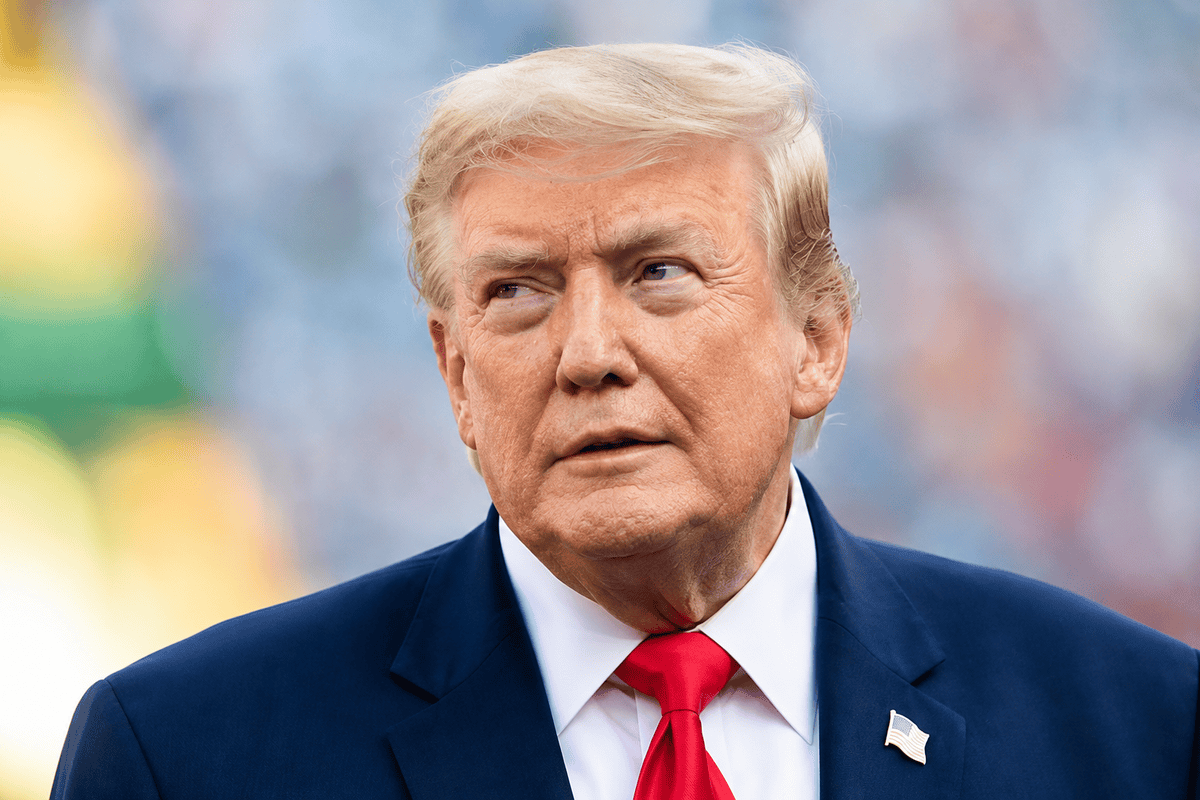
Trump Tells Supporters to ‘Cheat Like Hell’ Ahead of US Election
US President Donald Trump has made an unusual appeal to his supporters ahead of the November 3 election, telling them to turn out with their families and friends while declaring that he would “cheat like hell.”
Trump made the comments during a Republican gathering in Dallas, Texas, where he led attendees through a mock pledge intended to encourage them to support him and participate in the election.
After asking the crowd to raise their right hands and repeat after him, Trump urged his supporters to help bring their relatives and friends to the polls.
READ ALSO:
- MURIC fires back at Peter Obi: Forget Sallah ceremony, free Nigerian Muslims
- Fani-Kayode Condemns Fresh Killing of Two Nigerians in South Africa
- FG Targets 2 Million Creative Jobs by 2030
He then made the controversial remark while discussing voter registration, saying he was unconcerned about whether he was registered and accusing his political opponents of being bigger “cheaters.”
Trump went on to encourage supporters to vote either on November 3 or before election day, ending the pledge with an appeal to God.
The president also joked that supporters who failed to vote could face divine punishment, telling the crowd they would “go to hell” if they did not turn out.
The remarks came as Trump sought to energise Republican voters ahead of the election, in which control of Congress is also at stake.
His comments are likely to attract attention because of the language he used during an event aimed at mobilising voters, particularly his reference to cheating and his claims about the conduct of his opponents.
Trump Tells Supporters to ‘Cheat Like Hell’ Ahead of US Election
International
France Train Derailment Injures 44, 18-Year-Old Woman in Critical Condition

France Train Derailment Injures 44, 18-Year-Old Woman in Critical Condition
At least 44 people were injured after a passenger train carrying 186 people derailed in northwestern France on Friday evening, with an 18-year-old woman among those injured and reported to be in critical condition.
The Rouen-Caen regional train derailed at about 7:45 p.m. local time near Cléon, in the Seine-Maritime department of Normandy, while travelling between the cities of Rouen and Caen.
The incident triggered a major emergency response, with authorities deploying about 130 firefighters, five medical teams and 80 emergency vehicles to the scene.
A mass-casualty emergency plan was activated to coordinate the rescue operation and treatment of those injured.
According to Rouen prosecutor Sébastien Gallois, 44 passengers were injured in the France train derailment, including the 18-year-old woman who was airlifted to Rouen University Hospital in critical condition.
The other 43 injured passengers were treated for less serious injuries.
The initial estimate of the number of injured passengers was lower, but the figure was revised to 44 after emergency teams completed their assessment of passengers at the scene.
Transport Minister Philippe Tabarot said the train was travelling between Rouen and Caen when the accident occurred.
A passenger identified as 24-year-old Louis described the moments before the train accident in France as frightening.
He said the train first experienced several jolts before the movement became increasingly violent.
“Suddenly there were a few jolts, and then after about three seconds it got stronger and stronger,” he told ICI Normandie radio.
READ ALSO:
- Ondo Herbal Drink Tragedy: Survivor Vows Never to Drink Again as Death Toll Tops 30
- Sokoto Cleric Stabbed Twice in Neck After Juma’at Prayer, Attacker Killed
- Woman disguises as Muslim woman in Niqab to steal in Ado-Ekiti market, video sparks outrage
“I couldn’t stay in my seat any more. The windows partially shattered; the stones from the track came into the carriage. It was really shocking. I’m still shaking,” he said.
A police source said the train may have struck an unidentified object shortly before it derailed. However, authorities have not established whether the object was responsible for the accident.
The cause of the Cléon train derailment therefore remains under investigation.
The Rouen prosecutor said drug and alcohol tests conducted on the train driver were negative.
Police and railway investigators have begun examining the train, the railway infrastructure and the circumstances surrounding the derailment to determine what caused the accident.
The railway operator, SNCF Réseau, suspended traffic on the affected line and switched off electricity to the tracks to allow emergency workers to operate safely.
“The priority is to care for the passengers and then to restore safe operating conditions,” SNCF Réseau said.
The disruption affected rail services along the Rouen-Caen route, while other services connecting Caen with Le Havre were also affected.
Rail authorities worked to arrange alternative transport for passengers whose journeys were disrupted while emergency and investigative operations continued at the accident scene.
Passengers who were not seriously injured were moved away from the crash site as emergency teams attended to those requiring medical attention.
The prefecture urged members of the public to stay away from the affected area to allow rescue workers and investigators to carry out their duties.
The accident caused significant disruption to rail services across the region, with authorities prioritising the safety of passengers and the restoration of the affected railway line.
The investigation is expected to establish whether the train’s contact with the unidentified object, a problem with the railway infrastructure or another factor contributed to the derailment.
As of the latest reports, there were no fatalities recorded in the accident, while the 18-year-old woman remained in critical condition and the other injured passengers were receiving medical attention.
Authorities said investigations into the France train accident were continuing.
France Train Derailment Injures 44, 18-Year-Old Woman in Critical Condition
International
Five Dead After Coach Carrying Dutch Tourists Overturns in Switzerland

Five Dead After Coach Carrying Dutch Tourists Overturns in Switzerland
A holiday trip in Switzerland has ended in tragedy after a coach carrying 45 Dutch adults overturned in the eastern part of the country, killing five people and injuring the remaining passengers.
The crash occurred on Thursday afternoon on the road linking Susch and Zernez in the Graubünden region. Police said the vehicle went off the roadway while passing through an area where construction work was taking place before overturning.

Three of those injured are in serious condition, while another 37 people sustained less severe injuries. The driver, who is also Dutch, survived the crash but was among those taken for medical treatment.
READ ALSO:
- Yari: God Chose Me to Lead Tinubu’s 2027 Campaign
- Iran’s President Seeks End to War as US Tightens Economic Pressure
- Woman disguises as Muslim woman in Niqab to steal in Ado-Ekiti market, video sparks outrage
Authorities have begun investigating the incident and are working to establish what caused the coach to leave the road.
Tour operator Oad said the company was devastated by the deaths and described the incident as a deeply shocking tragedy.
The crash took place close to Zernez, a popular gateway to Switzerland’s National Park, a large Alpine nature reserve in the Engadine valley.
Five Dead After Coach Carrying Dutch Tourists Overturns in Switzerland
-

 metro1 day ago
Woman disguises as Muslim woman in Niqab to steal in Ado-Ekiti market, video sparks outrage
-

 metro3 days ago
Police Arrest Woman Over Fake OPay Shutdown Notice
-

 Politics3 days ago
Amaechi will be caged politically, Wike shouldn’t bother about Ikwerre votes — Wihioka
-

 metro3 days ago
Residents Cry Out Over Poorly Constructed Entrance of Ademola Abiola Street, Demand Urgent Intervention
-
 Politics3 days ago
Remi Tinubu Appeals To South-East Voters, Says She Wants To ‘Enjoy Nigeria’ In Old Age
-
 Politics3 days ago
Breaking the Cycle of Collective Guilt: When a Ruling Party Voice Backs Peter Obi
-
 Business18 hours ago
Dangote: ₦525 Refinery Shares Could Rise to ₦10,000
-

 News1 day ago
AI on the Roads: LASTMA Turns to China to Fix Lagos Traffic