

Sports
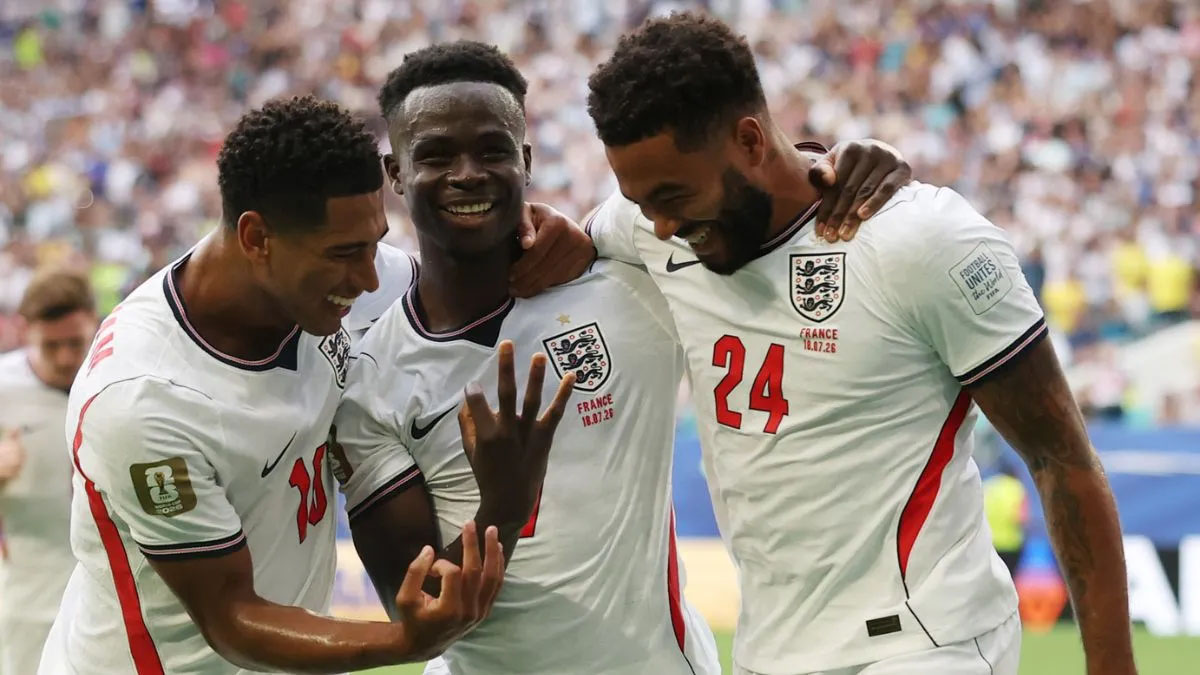
England Thrash France 6-4 in Record-Breaking World Cup Bronze Medal Thriller
England Thrash France 6-4 in Record-Breaking World Cup Bronze Medal Thriller
- Bukayo Saka hat-trick and Jude Bellingham’s record seventh goal secure England’s best finish since 1966 as Didier Deschamps’ 14-year France reign ends in Miami goal-fest
England produced a breathtaking attacking masterclass to defeat France 6-4 in the 2026 World Cup third-place playoff, securing the bronze medal in the highest-scoring consolation match in tournament history. The ten-goal thriller at Miami’s Hard Rock Stadium saw Bukayo Saka become only the fourth Englishman to score a World Cup hat-trick, while Jude Bellingham set a new England single-tournament scoring record with his seventh goal of the competition. The victory gives Thomas Tuchel’s side their best FIFA World Cup finish since lifting the trophy on home soil in 1966, erasing the bitter memories of previous third-place playoff defeats to Italy in 1990 and Belgium in 2018. For France, the match marked the emotional end of Didier Deschamps’ 14-year tenure as manager, with the 1998 World Cup-winning captain bowing out after a record 26 matches in charge of Les Bleus at football’s greatest tournament.
England could not have dreamed of a better start to the contest. Just three minutes into the contest, captain Declan Rice unleashed a thunderous long-range strike that flew past French goalkeeper Mike Maignan, sending the England supporters into raptures. The Arsenal midfielder, who has been a pillar of England’s midfield throughout the tournament, celebrated his second goal of the competition. Rice turned provider in the 18th minute, delivering a perfectly weighted corner that found defender Ezri Konsa unmarked at the far post. The Aston Villa centre-back powered his header home to double England’s advantage, leaving France shell-shocked and chasing shadows. Bukayo Saka then produced a moment of individual brilliance in the 37th minute, picking up possession on the right flank, cutting inside past two defenders, and firing an unstoppable left-footed shot into the far corner – a goal that showcased the 23-year-old’s growing maturity on the biggest stage. Saka wasn’t finished. In first-half stoppage time, he capitalised on a defensive error from Dayot Upamecano, intercepting a loose pass before rounding Maignan and slotting into an empty net. England went into the break with a scarcely believable 4-0 lead – the first time France had ever conceded four goals in a single half of a World Cup match.
READ ALSO:
- US launches fresh airstrikes on Iran after deadly attack kills American troops in Jordan
- Iran war fuels child malnutrition crisis in Nigeria as poverty worsens
- ABC Transport Launches Major Fleet Renewal, Takes Delivery of 2026 Luxury Coaches
Didier Deschamps, knowing his 14-year reign was drawing to a close, made a quadruple substitution at half-time. The introduction of Bradley Barcola, Ousmane Dembélé, Eduardo Camavinga, and Kingsley Coman injected fresh energy into a French side that had been unrecognisable in the opening 45 minutes. The gamble worked immediately. Within three minutes of the restart, Kylian Mbappé pulled a goal back, expertly controlling Michael Olise’s through ball before firing low past Jordan Pickford. The Paris Saint-Germain superstar was just getting started. In the 54th minute, Barcola made an instant impact, latching onto a loose ball inside the penalty area and drilling home to make it 4-2. The French bench erupted as the comeback suddenly felt real. Mbappé struck again in the 66th minute, again from an Olise assist, cutting inside from the left and curling a magnificent effort into the top corner. The scoreboard read 4-3, and with more than 20 minutes still to play, France sensed an extraordinary turnaround for the ages. The French captain’s brace took his career World Cup goal tally to 22, moving him past Lionel Messi to become the all-time top scorer in World Cup history. At just 27 years old, Mbappé has cemented his legacy as one of the greatest players ever to grace the tournament, with his tournament tally now standing at 10 goals in the 2026 edition.
With the match hanging in the balance, England won a crucial penalty in the 87th minute. Substitute Djed Spence, who had been a constant threat down the right flank, was clumsily brought down by Malo Gusto inside the box, and referee Darío Herrera pointed to the spot without hesitation. Bukayo Saka stepped up with ice in his veins. The Arsenal star sent Maignan the wrong way, calmly slotting into the bottom left corner to complete his hat-trick and restore England’s two-goal cushion at 5-3. It was Saka’s fifth goal of the tournament and his first international treble at senior level. Saka now joins Geoff Hurst, Gary Lineker, and Harry Kane as the only England players to score a World Cup hat-trick – elite company for a player who has become the heartbeat of England’s attack. France refused to accept defeat, and in the sixth minute of stoppage time, Ousmane Dembélé found space inside the box after a sweeping move, controlling a deflected cross and firing past Pickford to make it 5-4. The Miami crowd was on its feet as France poured forward in search of an equaliser that would have been the most remarkable comeback in World Cup playoff history. Just when it seemed France might snatch a draw, Jude Bellingham produced a moment of individual brilliance that will be replayed for generations. The Real Madrid midfielder picked up possession on the halfway line in the 98th minute, drove forward past two challenges, and slotted a composed finish past Maignan to make it 6-4. The goal was Bellingham’s seventh of the tournament, setting a new England record for most goals in a single World Cup. The 22-year-old surpassed Harry Kane’s six-goal haul from 2018 and proved why he is widely regarded as one of the finest young talents in world football. Bellingham also became the first English player to score in five different matches at a single World Cup finals.
READ ALSO:
- NRC, Police Intensify Crackdown on Railway Vandals as Opeifa Pushes for Tougher Asset Protection
- MURIC backs FRSC bill to ban preaching, hawking in commercial buses
- China unveils 5,000 AI training opportunities for developing countries at WAIC 2026
The 6-4 scoreline set multiple World Cup records. It was the highest-scoring third-place playoff with 10 goals, surpassing the previous record of six goals set in 1958, and marked the first World Cup match with 10 or more goals since 1982 – a 44-year gap. France’s four-goal half-time concession was unprecedented, while Mbappé’s 22 career World Cup goals made him the all-time leading scorer in tournament history, surpassing Lionel Messi. Saka joined the elite England hat-trick club alongside Hurst, Lineker, and Kane, while Bellingham’s seven goals set a new English single-tournament benchmark. Additionally, Michael Olise finished the tournament with seven assists, the most recorded in a single World Cup in the last six decades, and Didier Deschamps extended his record for most World Cup matches managed to 26.
Kylian Mbappé now leads the 2026 World Cup Golden Boot race with 10 goals, two clear of Lionel Messi heading into Sunday’s final. The Argentine captain, who has eight goals for the tournament, can still overtake Mbappé if he produces a hat-trick or better in the final against Spain. Michael Olise, despite France’s defeat, finished the tournament with a staggering seven assists – the most recorded in a single World Cup tournament in the last six decades. The Crystal Palace midfielder was a constant creative force throughout Les Bleus’ campaign and his creative output will be one of the few positives for French fans to take from this campaign.
For Didier Deschamps, the defeat brought the curtain down on a remarkable 14-year tenure as France manager. The 57-year-old, who won the World Cup as captain in 1998 and as manager in 2018, was visibly emotional after the final whistle. Speaking to reporters, Deschamps reflected on his journey with the national team, acknowledging that the first half was unacceptable at their level but expressing pride in everything the squad had achieved together over the past 14 years. He leaves with a legacy that includes a World Cup win, a European Championship final appearance, and a Nations League title, and holds the record for most World Cup matches managed with 26. His successor will be announced in the coming weeks, with Zinedine Zidane widely tipped as the favourite to take over.
The bronze medal victory represents a significant step forward for Thomas Tuchel’s England. Having reached the semi-finals of the 2022 World Cup and the final of Euro 2024, the Three Lions have now secured their best World Cup finish since 1966. Tuchel praised his side’s resilience after the match, highlighting the incredible character shown to withstand France’s comeback and still find a way to win. He described the bronze medal as a building block for the future, expressing belief that this squad can go all the way in 2030. The victory also exorcised the demons of England’s previous third-place playoff defeats – 2-1 to Italy in 1990 and 2-0 to Belgium in 2018. For a squad packed with young talent including Saka, Bellingham, and Spence, the future looks exceptionally bright.
The 2026 World Cup bronze medal match will be remembered as one of the most entertaining games in tournament history. From England’s blistering first-half display to France’s courageous fightback, and from Saka’s hat-trick to Bellingham’s record-breaking finish, the match had everything. For England, it is a moment of redemption and a sign that the golden generation is finally delivering on its immense potential. For France, it is the end of an era – but with Mbappé at his peak and young talents emerging, Les Bleus will remain a force for years to come. The final between Argentina and Spain on Sunday now carries even greater significance, with Messi chasing Mbappé’s Golden Boot lead and both nations aiming to lift football’s greatest prize.
England Thrash France 6-4 in Record-Breaking World Cup Bronze Medal Thriller











Sports
Lamine Yamal Shines as Barcelona Thrash Real Betis 5-2
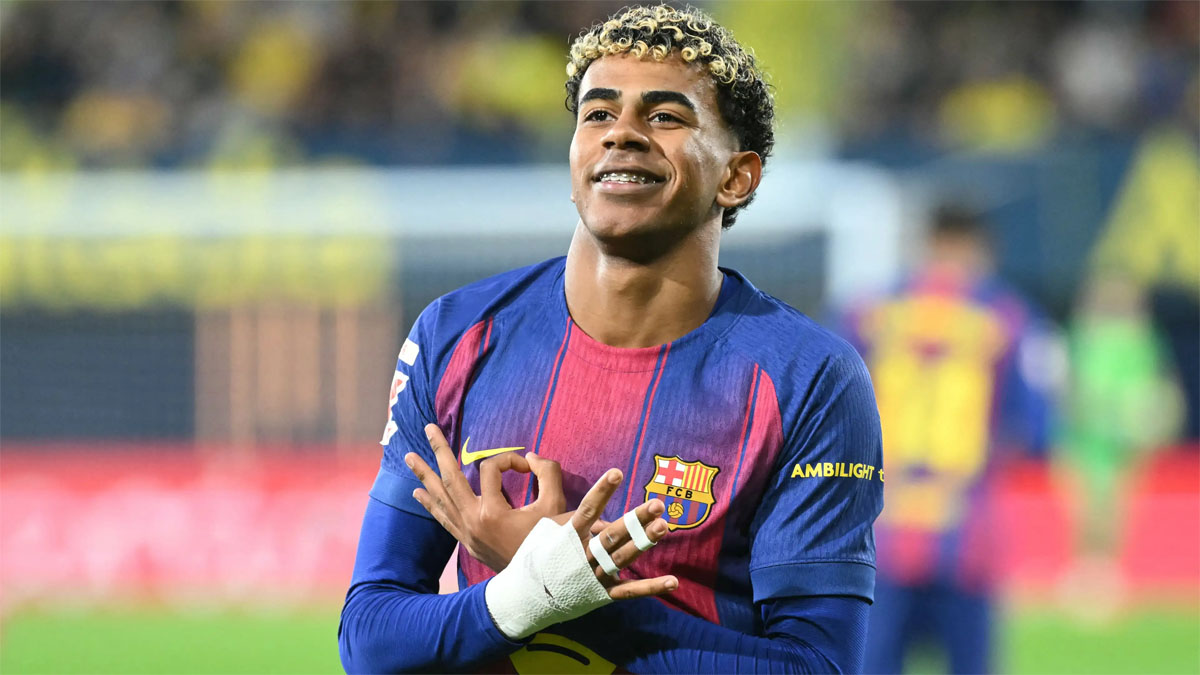
Lamine Yamal delivered a dazzling performance as Barcelona defeated Real Betis 5-2 away from home on Saturday, October 17, 2026, extending their perfect start to the Spanish LaLiga season with a ninth consecutive league victory.
The 19-year-old winger opened the scoring with a superb finish and later provided an assist as Barcelona overcame a spirited Betis challenge at the Estadio La Cartuja in Seville.
Rodri, Gabriel Jesus, Eric Garcia and substitute Dani Olmo also scored for Barcelona, while Valentín Gómez and Ez Abde found the net for the hosts.
The victory took Barcelona to 27 points from nine matches, keeping them five points clear at the top of the LaLiga standings. Real Betis remained third with 19 points following the defeat.
Yamal set the tone in the 10th minute with a moment of individual brilliance. Cutting in from the right, the young forward created space before curling a left-footed effort from outside the penalty area into the top corner, leaving the Betis goalkeeper with little chance.
Real Betis responded in the 27th minute when Pablo Fornals delivered a cross into the box and Valentín Gómez rose above the Barcelona defence to head home the equaliser.
Barcelona regained the lead four minutes before half-time. Rodri powered a header into the net from Fermín López’s corner in the 41st minute, restoring the visitors’ advantage.
READ ALSO:
- Tinubu Scraps Recruitment Waiver Requirement for Federal Universities
- FG Begins Rollout of 3,700 Telecom Towers to Connect 20m Nigerians
- 37 Miners’ Deaths in Custody: Suspended NSCDC Commandant Admits Tragedy Was Avoidable, Apologises to Families
Betis appeared to have drawn level again shortly afterwards when Giovani Lo Celso scored with a spectacular volley. However, the goal was disallowed following a video assistant referee (VAR) review that identified a handball by Cucho Hernández earlier in the move.
Barcelona increased their advantage shortly after the restart. In the 51st minute, Yamal drove down the right flank before squaring the ball for Gabriel Jesus, who finished neatly inside the penalty area to make it 3-1.
Betis responded almost immediately, with Ez Abde finishing a counterattack in the 53rd minute to reduce the deficit to 3-2 and revive hopes of a comeback.
However, the contest changed dramatically a minute later when Betis midfielder Facundo Bernal was sent off following an altercation with Yamal. Bernal was dismissed for violent conduct after headbutting the Barcelona winger, while Yamal received a yellow card for his involvement in the incident.
With Betis reduced to 10 players, Barcelona took greater control of the match and exploited the numerical advantage.
Eric Garcia extended the lead in the 62nd minute after Pau Cubarsí helped direct the ball across goal from a set-piece situation, allowing Garcia to finish from close range.
Substitute Dani Olmo completed the scoring in the 81st minute, curling a right-footed effort into the top corner to seal an emphatic 5-2 victory for the visitors.
The result strengthened Barcelona’s position at the summit of LaLiga, with the Catalan side recording nine wins from nine league matches and scoring 39 goals during that run.
Barcelona have also maintained an impressive start across all competitions, having won their first 11 competitive matches of the campaign.
The victory comes ahead of a demanding week for Hansi Flick’s side, with a Champions League meeting against Paris Saint-Germain and the much-anticipated El Clásico against Real Madrid on the horizon.
For Yamal, the performance further underlined his importance to Barcelona’s attack. His opening goal and assist for Gabriel Jesus proved decisive in a match that remained competitive until Bernal’s dismissal.
Real Betis, meanwhile, will look to regroup after a defeat in which their attacking moments offered promise but defensive difficulties and the red card ultimately worked against them.
Lamine Yamal Shines as Barcelona Thrash Real Betis 5-2
Sports
Ex-Super Eagles Coach Westerhof Battles Colon Cancer in Critical Condition, Wife Seeks Help
Ex-Super Eagles Coach Westerhof Battles Colon Cancer in Critical Condition, Wife Seeks Help
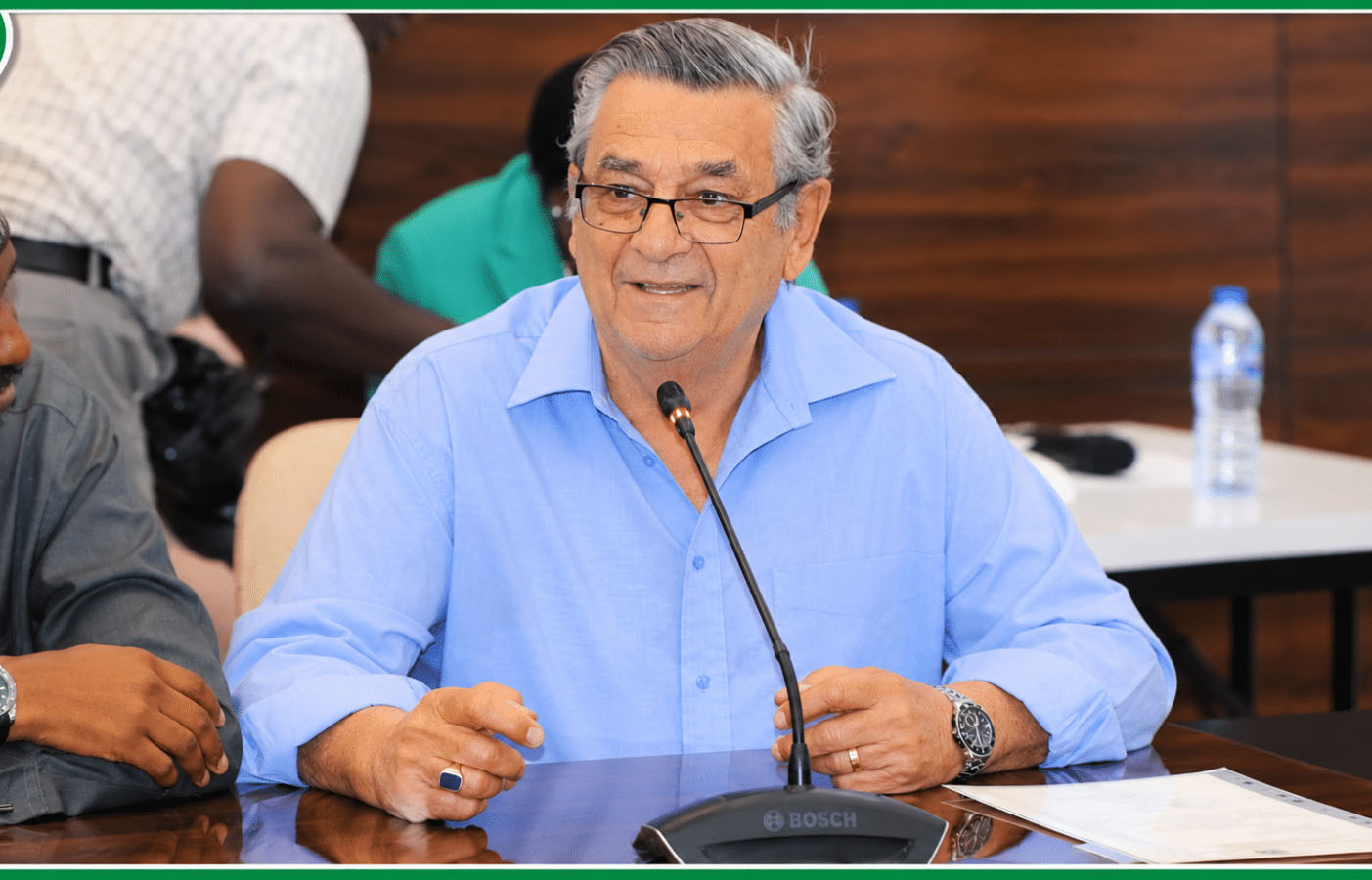
Former Super Eagles coach Clemens Westerhof has been diagnosed with colon cancer and is reportedly in critical condition at a hospital in the Netherlands, prompting his wife to appeal for prayers and assistance.
Westerhof, 86, is receiving treatment at Rijnstate Hospital in Arnhem, his hometown, according to his wife, Lilian, who disclosed the development in an interview with Vanguard’s Saturday Editor, Onochie Anibeze.
Lilian said doctors informed the family of the cancer diagnosis after Westerhof was taken to the hospital on Wednesday. She described the news as devastating and expressed concern about his condition.
“The doctor just told us he has colon cancer and we are all devastated. He is in a critical condition and emotional, talking about our two daughters. He wants to live. We need help. We need prayers,” she said.
The diagnosis comes as the former Nigerian national team coach continues to face other health challenges. According to his wife, Westerhof had previously been battling Alzheimer’s disease.
Lilian also expressed concern about the care her husband was receiving at the Arnhem hospital, saying she hoped to transfer him to a better-equipped medical facility in Amsterdam or Germany.
“They appear to have given up. I don’t understand,” she said, describing her concerns about his treatment.
READ ALSO:
- NRC Denies Ticket Racketeering, Says Abuja-Kaduna Rail Demand Exceeds Seats by 10-Fold
- FG Draws Red Line on Fuel Subsidy, Warns of Naira Crisis if Reforms Are Reversed
- NRC Denies Ticket Racketeering, Says Abuja-Kaduna Rail Demand Exceeds Seats by 10-Fold
Westerhof remains one of the most influential coaches in the history of Nigerian football, having led the Super Eagles through a celebrated period in the early 1990s.
The Dutch tactician took charge of Nigeria’s national team in 1989 and helped build a squad that became one of Africa’s most prominent sides. Under his leadership, Nigeria finished second at the 1990 Africa Cup of Nations (AFCON) in Algeria and won bronze at the 1992 tournament in Senegal.
His greatest achievement with the team came in 1994, when Nigeria won the Africa Cup of Nations in Tunisia. That same year, he guided the Super Eagles to qualify for their first-ever FIFA World Cup, held in the United States.
Nigeria reached the round of 16 at the World Cup before being eliminated by Italy after extra time. The team’s performances during Westerhof’s tenure also helped it rise to fifth in the FIFA world rankings, a landmark achievement for Nigerian and African football.
His contribution to the development of the Super Eagles earned him a lasting place in the country’s football history, with many fans remembering the team’s attacking style and the emergence of several players who became household names.
News of Westerhof’s diagnosis is likely to concern Nigerian football supporters who remember his role in the national team’s successes during the 1990s.
As the former coach receives treatment in the Netherlands, his family is seeking support and prayers while expressing hope that he can access the care they believe he needs.
Ex-Super Eagles Coach Westerhof Battles Colon Cancer in Critical Condition, Wife Seeks Help
Sports
Real Madrid Demand Tebas’ Exit After Explosive Nazi Propaganda Row
Real Madrid Demand Tebas’ Exit After Explosive Nazi Propaganda Row
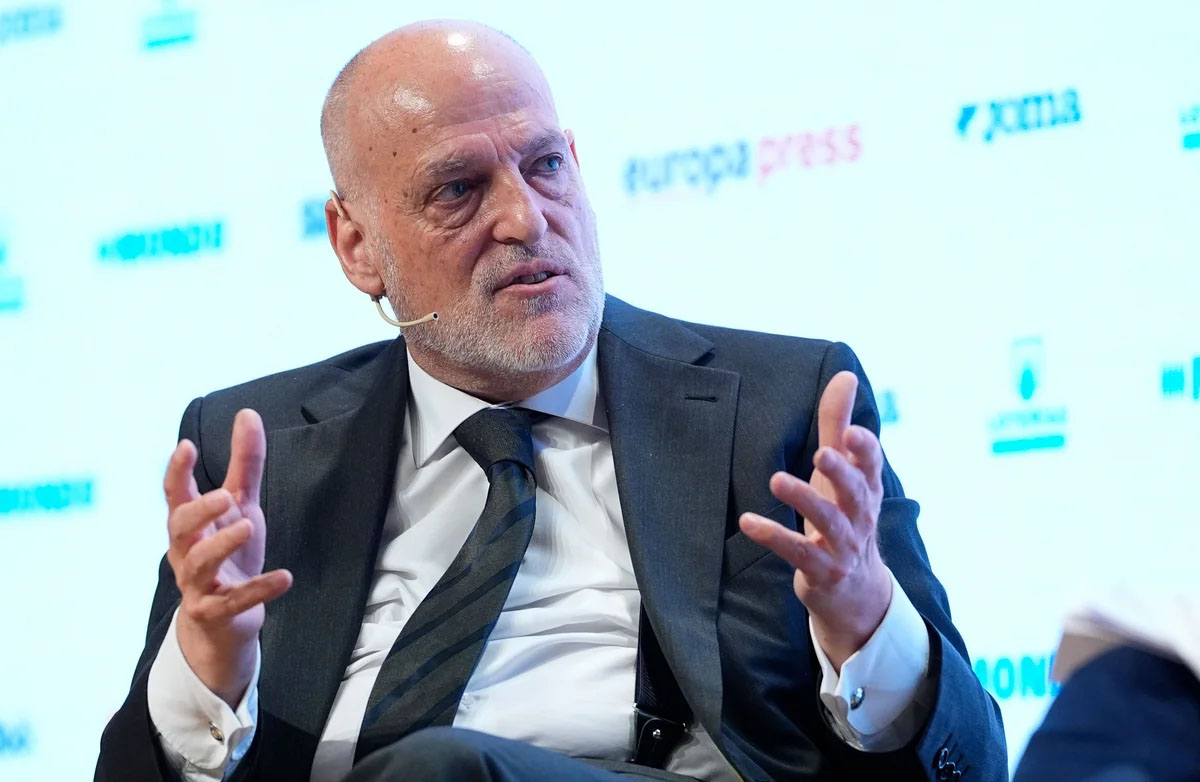
Real Madrid have demanded the immediate resignation of Javier Tebas as president of LaLiga and vice-president of the Royal Spanish Football Federation (RFEF), escalating their dispute with the Spanish football chief over comments comparing the club’s communication methods to Nazi-era propaganda techniques.
The Spanish giants issued a strongly worded statement on Friday, October 16, describing Tebas’ remarks as offensive, unacceptable and incompatible with the responsibilities of his positions in Spanish football.
The latest confrontation followed comments by Tebas in which he compared the methods employed by Real Madrid’s management and its television channel, Real Madrid TV, to propaganda techniques associated with Joseph Goebbels, the propaganda minister under Nazi Germany.
Tebas argued that he was comparing communication methods rather than endorsing or referring to Nazi ideology. However, Real Madrid rejected the explanation, insisting that the comparison remained deeply offensive and inappropriate for someone occupying senior positions in the sport.
The club accused Tebas of repeatedly attacking its leadership, president Florentino Pérez and its media outlets, arguing that his public statements demonstrated a lack of neutrality, respect and impartiality.
Real Madrid also objected to what it described as attempts to attribute the actions and opinions of third parties to the club, insisting that it should not be held responsible for statements made by journalists or other individuals.
READ ALSO:
- Terrorists Abduct Catholic Priest in Benue as Police Launch Rescue Operation
- 2027: Kwankwaso Signals Fuel Subsidy Comeback as NDC Vows to Crash Petrol Prices
- NAF Deploys Pumps in Desperate Push to Recover Submerged Aircraft After Crash Killed 25
The dispute has also drawn attention to the long-running controversy surrounding the Negreira case, which concerns payments made by FC Barcelona to companies linked to José María Enríquez Negreira, a former vice-president of Spain’s Technical Committee of Referees.
Real Madrid said it had approached UEFA to seek clarification over the payments and called for measures to protect the integrity of football competitions. The payments have been the subject of legal scrutiny, but allegations of improper influence over refereeing must be distinguished from any conduct established by a court.
The club further called for a comprehensive overhaul of Spain’s refereeing system and football governance structures, including changes involving officials who held positions of responsibility during the period under scrutiny.
In its statement, Real Madrid argued that Tebas should focus on promoting transparency and addressing concerns about football governance rather than directing criticism at the club.
The club maintained that his repeated public attacks had undermined confidence in his ability to lead LaLiga impartially and serve the interests of all its member clubs.
The demand marks another escalation in the strained relationship between Real Madrid and Tebas, who has led LaLiga since 2013. The two sides have repeatedly clashed over refereeing, the league’s administration, broadcasting rights and the future direction of Spanish football.
Real Madrid had also called for Tebas to leave his position in September after he criticised the club’s complaints about refereeing following its 2-1 defeat to Atlético Madrid in the city derby.
On that occasion, Tebas dismissed claims of systematic refereeing bias against Real Madrid, while the club accused him of using his institutional position to discredit its concerns.
The latest dispute has broadened the disagreement beyond match officiating to include the conduct expected of football administrators and the standards of public communication in the sport.
Real Madrid said Tebas’ statements and conduct disqualified him from continuing in his current positions and formally demanded his immediate resignation as both LaLiga president and RFEF vice-president.
The demand does not automatically remove Tebas from either role, and no resignation was announced in the club’s statement.
The confrontation leaves relations between the Spanish football authorities and one of the country’s most prominent clubs under renewed strain, with the debate over neutrality, refereeing transparency and institutional accountability likely to continue.
Real Madrid Demand Tebas’ Exit After Explosive Nazi Propaganda Row
-

 metro2 days ago
₦130m Toyota Tundra Wrecked: Lagos Dealer Questions Police Over Suspect’s Release
-

 News2 days ago
₦200m Fake Alcohol Packaging Uncovered as NAFDAC Raids Aba Market
-

 metro1 day ago
Suspended Archbishop Ibezim Drags Anglican Primate to Court, Challenges Six-Month Leave
-

 Sports2 days ago
Real Madrid Demand Tebas’ Exit After Explosive Nazi Propaganda Row
-

 Entertainment2 days ago
ToluwaniSings’ Final Hours: Aide Reveals Desperate Search Across 8 Hospitals
-

 metro1 day ago
Imodi-Ijebu Muslim Community Bets on 20 Chiefs to Drive Education, Economic Growth
-
 Politics2 days ago
2027: Kwankwaso Signals Fuel Subsidy Comeback as NDC Vows to Crash Petrol Prices
-

 metro1 day ago
NAPTIP Raises Alarm as Parents Allegedly Trade Children for Sex, Arrests Woman in Abuja