When Profit Is Placed Above Lives: A Firm Stand Against Opposition to the Sachet Alcohol Ban - Newstrends
Connect with us

Opinion

When Profit Is Placed Above Lives: A Firm Stand Against Opposition to the Sachet Alcohol Ban
Published

on

Mallam Ibrahim Agunbiade
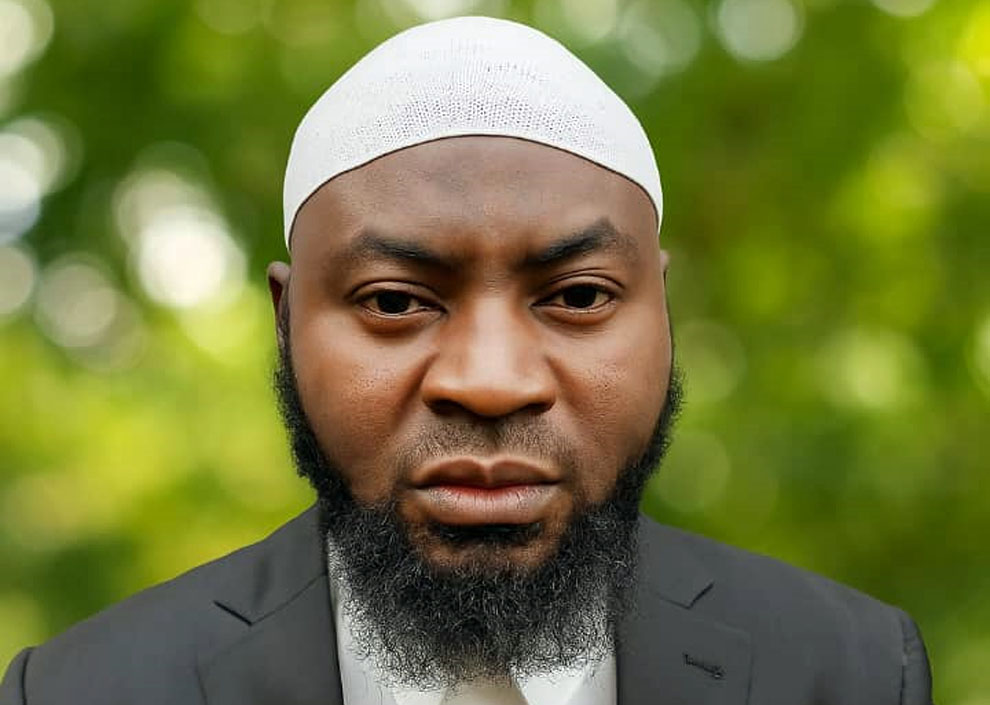
Amb. Mallam Ibrahim Agunbiade
When Profit Is Placed Above Lives: A Firm Stand Against Opposition to the Sachet Alcohol Ban

The recent protest by the Distillers and Blenders Association of Nigeria (DIBAN), reportedly backed by the Nigeria Labour Congress (NLC) and other labour unions, against the ban on sachet and small-sized alcoholic beverages raises serious concerns about national priorities. The demonstration at the Lagos office of the National Agency for Food and Drug Administration and Control (NAFDAC) reflects a troubling attempt to place commercial profit above public health, social stability, and moral responsibility.
At the heart of the controversy is a policy that is both timely and necessary. The ban on sachet alcohol is not an arbitrary decision, nor is it an attack on livelihoods, as some protesters suggest. Rather, it is a public health intervention aimed at curbing the widespread abuse of alcohol—particularly among youths and economically vulnerable populations—made possible by the cheap, portable, and highly accessible nature of sachet-sized intoxicants.
READ ALSO:
While job losses and economic implications are often raised as justifications for opposition, such arguments fail to confront the enormous social cost of alcohol abuse in Nigeria. These costs include rising incidents of violence, road accidents, domestic abuse, health complications, and the gradual erosion of moral and social values. Any serious national conversation must weigh these consequences against commercial interests.
From an Islamic moral standpoint, the issue is unequivocal. Islam provides clear and unambiguous guidance on intoxicants. Allah Almighty declares:
 “O you who believe! Intoxicants, gambling, sacrificing to stones, and divination by arrows are an abomination of Satan’s handiwork. So avoid it that you may be successful.” (Qur’an, Surah Al-Ma’idah 5:90)
The Qur’an further explains the social harm inherent in alcohol consumption:
 “Satan only wants to cause between you animosity and hatred through intoxicants and gambling, and to avert you from the remembrance of Allah and from prayer. So will you not desist?”
By Amb. Mallam Ibrahim Agunbiade
Taalib Jami’ei, Islamic Propagation, Rabwa – Saudi Arabia
Date: 24 January 2026

When Profit Is Placed Above Lives: A Firm Stand Against Opposition to the Sachet Alcohol Ban

Opinion

“Christian Genocidization” of the Kaiama massacre, By Farooq Kperogi

Published

on

Kperogi is a renowned columnist and United States-based Professor of Journalism 
Farooq Kperogi

“Christian Genocidization” of the Kaiama massacre, By Farooq Kperogi

When I ended my update on the heartrending mass murder and abductions of the people of Woro in Kaiama LGA by calling attention to the Muslim identity of the victims, just so some screwdriver salesman won’t use “Google” to “verify” that they are Christians in the service of advancing a tendentious “Christian genocide” narrative, I came across to some people as being needlessly overdramatic. But I knew what I was doing.

Now, look at this headline from BarristerNG, a well-regarded, law-focused Nigerian news site: “Kwara Tragedy: Terrorists Kill Villagers for Refusing to Change Their Faith, 78 Buried in Mass Graves.”

It is based on Gov. Abdulrazaq Abdulrahman’s disclosure that the people, whom the governor was careful to identify as Muslims, were murdered because they resisted the extremist version of Islam the terrorists preach.

The headline is a devious, sinister, underhanded but nonetheless visible rhetorical maneuver to give the impression that even in a communal mass slaughter where both the villains and the victims are Muslims, it was a “Christian genocide.”

When you pair “terrorists,” which invariably evokes the imagery of Muslim extremists, with murder as punishment for refusal to “change their faith,” you can’t help but conclude that the victims are Christians.

Faith is a synonym for religion. Since there are two major faiths in Nigeria, and since there has been a tyrannical, well-oiled, carefully choreographed, even if factually impoverished, amplification of a “Christian genocide” narrative that suggests that only Christians are being murdered in Nigeria, that Muslims are not only spared from this but are, in fact, complicit in this “genocide,” the headline basically implies that the mass murders in Woro were just another evidence of “Christian genocide.”

If the screwdriver salesman or his ilk come across this sort of story in a Google search, they will present it as yet another “evidence” of “Christian genocide.”

READ ALSO:

BarristerNG’s headline is similar in many respects to the December 24, 2025, headlines of many Christian-owned Nigerian news media organizations, which captured the mass murder of Muslims in a Maiduguri mosque with headlines that gave the impression that Christians were the victims.

Channels TV’s headline was: “BREAKING: Many Feared Dead as Bomb Blast Rocks Maiduguri on Christmas Eve.” Other Lagos newspapers had headlines like, “Christmas Eve Bombing Leaves 5 Dead, 35 Injured in Borno.” There was no mention of “mosque” or “Muslim worshipers” in the headlines.

Since most people only read headlines, you can imagine the impression these headlines created in the minds of people who reason like the screwdriver salesman, who fishes for and sees “Christian genocide” anywhere and everywhere.

There is an endemic mass murder of innocents in most parts of Nigeria, which I won’t hierarchize by religious affiliation because I think that’s cruel and inhuman.

And I actually don’t have a problem with Christian communities that interpret their own experience of the nationwide sanguinary fury of bloodthirsty terrorists as religiously based genocide, since the villains self-identify as Muslims.

But I do have a problem with the dangerously divisive dimension this is now taking.

It increasingly seems that the basic humanity that binds us is becoming immaterial. There is now a growing, unreasoning, bigoted, pigheaded, and obnoxiously monomaniacal obsession with advancing the narrative of a Christian genocide that suggests that only Christians are being murdered, that Muslims are exempt from murder because they share a similar faith with the murderers (as if faith is all that matters in a person), that Muslim deaths don’t matter, and that every shocking death must be “Christianized” to make it worthy of sympathy and empathy–and, of course, a part of the rhetorical armory to prosecute the narrative of a “Christian genocide.”

If the facts don’t fit, force them. If you can’t force them, manufacture them. It’s distressing.

Every death diminishes and distresses me. We are, first of all, human before we’re anything else. Our ethnicity, faith, language, etc. are incidental to our humanity.

“Christian Genocidization” of the Kaiama massacre, By Farooq Kperogi


Kperogi is a renowned Nigerian columnist and United States-based professor of Journalism

Continue Reading

Opinion

Descending from Fela’s Afrobeat to Wizkid’s Afrobeats

Published

on

Ayodeji Balogun popularly known as Wizkid and Fela Anikulapo-Kuti

Descending from Fela’s Afrobeat to Wizkid’s Afrobeats

Tunde Odesola

(Published in The PUNCH, on Friday, January 30, 2026)

Three occupants of a black Mercedes-Benz were heading to work on a good Friday morning. One was the driver, another was the aide, and their oga patapata. They came to crawling traffic on George Street in Ikoyi, Lagos, en route to Obalende, their office. The Federal Secretariat was at a touching distance.

Suddenly, a hail of gunshots rained on the black Benz like a hundred stones from the devil’s sling. Then the tyres screeched away. Then silence. Rivulets of hot blood trickled from the heads and torsos of the driver, the aide and General Murtala Ramat Mohammed. This was February 13, 1976, the first bad Friday I knew.

The second bad Friday was on February 18 of the following year. I had bounced off to St Paul’s Anglican Primary School, Idi-Oro, Lagos, in the morning, having celebrated a quiet birthday a day before. Except for the khaki-wearing planners of sorrows, tears and blood, no one else had a foreboding of what lay ahead in the day.

My class was in full session on the middle floor of the school’s two-storey wing when the news broke and shattered peace and learning. “Soldiers are attacking Fela’s house! Lagos is on fire!”

Yeepa! Fela’s house was a stone’s throw from my school. Before the teacher finished passing the information to the class, she had grabbed her bag, just as the school bell sounded, summoning everyone to the assembly ground. Exhibiting no emotion, a fair-complexioned, slim and fatherly teacher, Mr Mayungbe, disclosed the reason why the school was closing abruptly, strictly warning pupils to head straight home.

He said pupils whose homes were around Fela’s house in the Moshalashi area should wait behind for their parents and guardians to come and pick them up. Subsequently, our class teachers brought out the registers containing pupils’ addresses, calling those whose houses were not around Fela’s house to head home. My name was called. I jumped out, my bag slung across my back and headed towards the gate.

READ ALSO:

At the school gate, I thought it was a betrayal to go home and not witness the injustice soldiers were inflicting on the beautiful white house of my hero; the house located by a bend, the house whose architecture I beheld and ogled at during incessant truancy trips. So, I headed to Fela’s house located on No 14 Agege Motor Road, Idi-Oro, where thousands of soldiers were deployed to destroy a harmless civilian, his family and livelihood. Yes, livelihood, because the house had a recording facility. It also had a free health clinic. This was during the military regime headed by General Olusegun Obasanjo, an Egba man like Fela. The barbaric soldiers threw Fela’s 78-year-old mother through the window of the storey building. And she died.

To weigh in on the supremacy fire raging between Fela’s son, Seun, and Afrobeats star, Ayodeji Balogun, popularly known as Wizkid, the aforementioned background from the eyes of a little boy sheds light on the indomitable spirit of the Abami Eda, and why his legacy as the founder and father of Afrobeat is forever encased in gold.

Without ever meeting Wizkid, I wrote a two-part article titled “The god that cut soap for Wizkid” in THE PUNCH more than two years ago. The articles, published in the month of September 2023, extol the humility of Wizkid’s mother, Mrs Morayo Balogun, and the grace upon the life of her superstar son, Ayodeji.

On Friday, May 19, 2023, in a public show of shame, Seun slapped a police officer on the Third Mainland Bridge. I penned “Seun Kuti’s double-edged slap” to criticise Seun’s arrogance and stupidity. Seun’s action on that day exposes the impunity men and women of power and influence inflict when relating with people they consider lower on the social rungs. Fela, despite his avowed stance on human rights advocacy, reportedly fell short on that account on a number of occasions. Neither is Wizkid a saint in this regard. Nigeria’s big men, more often than not, exploit the weakness in law enforcement to get away with any crime. A power monger called Wasiu Ayinde disrupted a flight and attempted to stop a plane from taking off; instead of a time in jail, he was given an award. Because he was close to President Bola Tinubu.

Let’s be clear from the outset, please. This article is not a magisterial judgment on who is right or wrong in the Seun-Wizkid fight. Mark my words – Seun-Wizkid fight, not Fela-Wizkid fight. To place Fela on the same pedestal as Wizkid is to compare the storm in a teacup with the roar of the Atlantic. Igi imu jinna si ori, the distance between the nose and forehead is far. It is arduous for the fingerless fellow to thread the thread through the eye of the needle. Fela is the creator, Wizkid is the creation.

A product of the University of Ibadan and the Imperial College, London, where he specialised in Sound Processing, octogenarian music producer, the legendary Odion Iruoje, is renowned as the producer of Nigeria’s first true pop music with his collaboration with the teenage sensation band, Ofege. Iruoje, who produced a series of Fela’s first hits, including ‘Jeun Kooku’, ‘Beautiful Dancer’, ‘Alijonjokijo’, and ‘Ojuelegba’, gave an insight into how Fela created Afrobeat.

READ ALSO:

In an interview on popular online media, Agbaletu TV, Iruoje, who read Industrial Electronics and Control Systems, said Fela came to one of the foremost recording companies in the country, E.M.I, upon returning from England, where he recorded an unsuccessful album, ‘Won Fe Gba Aya Wa’, with E.M.I. in London. The sound guru described Fela as a troublemaker whom E.M.I London didn’t want to deal with.

“When he came to me, he said, ‘Mr Iruoje, I have a new sound now, and it is called Afrobeat’. I told him what sound do you have that I have never heard before? I didn’t understand what he was saying. I told him there’s no sound you are going to play outside Highlife. So, I went to audition (him). Goodness! I couldn’t believe it when he started the horns. I have never heard such a horn arrangement in my life. No one ever did that – plenty of horns – the arrangement, ha! I couldn’t believe what I was hearing. I have never heard such a sound before. I said we have to go to the studio.

“In fact, the MD (a white man) came to my audition, he was listening to it, he said, ‘Mr Iruoje, please, can you get this man into the studio before he changes his mind?’ I said no, I have not finished with the rehearsal, he (the MD) said no, no, please, Mr Iruoje, you know he is very unstable, he could change his mind. I told the MD that Fela would not change his mind on me.

“The MD and I did not believe him when he first came to announce that he had a new sound. But he said, ‘Odion, come to the Shrine and listen to it, and see what few changes you want to do to it, and I went, we did a few changes. His rhythm guitar was (new), and first-time of his time, then he added tenor guitar and lead guitar. So, Fela had more guitars than the regular Highlife band. The regular Highlife band had only one guitar and bass, but Fela had all four. Fela influenced Juju bands because they started introducing tenor, rhythm and other guitars.”

On Fela’s flip side, Iruoje described the political activist, culture advocate and social crusader as a troublemaker, whom recording companies did not want to touch with a long pole. Because he gave E.M.I. London troubles over royalties, Iruoje was told by the authorities of the E.M.I branch in Nigeria not record Fela.

“If he signs a contract which states that his royalty would be so much (amount), that is what he signed before going to the studio, once he goes into the studio and the song starts selling and becomes a hit, he would say, “That song is no more N80 o, he wants to get N100 or N200. At times, he would snatch the master tape,” Iruoje said.

If told he signed a contract, Iruoje said, “Fela would say, what is contract? Contract is ordinary paper. That music is more than what is in the contract. He would snatch the master tape now, (and say) he was not going to release it. He (would say) we had to change that. Maybe, at times, I may not be in when he’s making the trouble, when I come back, they would say, “See what your man is doing o. He has taken (the master tape). Then I would send somebody to call him. He would come to my office because he respects me.”

To be continued.

Email: tundeodes2003@yahoo.com

Facebook: @Tunde Odesola

X: @Tunde_Odesola

Descending from Fela’s Afrobeat to Wizkid’s Afrobeats

Continue Reading

Opinion

New York Times and Onitsha screwdriver sellers’ data, By Farooq Kperogi

Published

on

Kperogi is a renowned columnist and United States-based Professor of Journalism 
Farooq Kperogi

New York Times and Onitsha screwdriver sellers’ data, By Farooq Kperogi

The New York Times of January 18, 2026 published an explosive story showing how unverified and methodologically questionable data produced by a little-known Onitsha screwdriver seller who moonlights as an NGO activist, Emeka Umeagbalasi of Intersociety, traveled upward into US Republican politics and helped shape a narrative of “Christian genocide” in Nigeria, culminating in Trump-ordered airstrikes in Sokoto State.

Umeagbalasi, who runs Intersociety from his home and relies largely on secondary sources, assumptions, presumptions and Google searches, admitted that he rarely verifies deaths, often imputes victims’ religious identities based on his understanding of what I like to call Nigeria’s emotional geography, and inflates figures that conflict researchers and even church leaders dispute.

Despite these flaws, his claims were cited by Fox News, Senator Ted Cruz, Rep. Riley Moore and other Republicans, and echoed by the White House. It illustrates how fraudulent data, ideological advocacy and US culture-war politics converged to misframe Nigeria’s complex violence as a one-sided religious slaughter rather than a crisis of state failure affecting Christians, Muslims, traditional religious worshipers and nonreligious people.

But a certain class of Nigerians have chosen to either not read the New York Times story (instantiating my recent Facebook post about Nigerians’ fixation with forming opinions based only on headlines) or to read it but allow their preconceived biases to befog their comprehension.

Some low-information, high-ignorance Nigerians even claim that the New York Times report was bought with the reported $9 million the Bola Tinubu government paid to a conservative lobbying firm in Washington, DC. I will return to this point shortly.

Interestingly, a December 26, 2025 investigation by the BBC’s Global Disinformation Unit reached strikingly similar conclusions to those of the New York Times. The BBC investigation, which surprisingly did not gain traction in Nigeria when it was first published, also showed that the figures underpinning the “Christian genocide” narrative are unverifiable, internally inconsistent and sharply at odds with independent conflict-monitoring data.

It noted that groups such as ACLED document widespread killings across Nigeria but find no credible evidence of a coordinated campaign targeting Christians alone. Violence in Nigeria, the BBC observed, is better explained by state weakness, banditry, insurgency and impunity, dynamics that endanger Muslims and Christians alike.

READ ALSO:

Crucially, the BBC report situates the persistence of the genocide framing within southeastern Nigeria’s political history. It highlights how some of the loudest voices amplifying the narrative are rooted in Igbo political grievances and are entangled with pro-Biafra networks that have long sought international sympathy by portraying the Nigerian state as genocidal.

Recasting Nigeria’s complex security crisis as a religious extermination campaign provides a morally powerful export narrative, particularly when targeted at US evangelical and conservative audiences.

The report quoted a Biafran separatist group as admitting to playing a major role in promoting the “Christian genocide” narrative in the US Congress. “The Biafra Republic Government in Exile, BRGIE, described it as a ‘highly orchestrated effort,’ saying it had hired lobbying firms and met US officials, including Cruz.”

That framing found fertile ground in Washington. Lobbying firms and advocacy networks tailored the message for American culture-war politics, where persecution of Christians abroad resonates strongly. Republican lawmakers, often unfamiliar with Nigeria’s internal dynamics, repeated the claims with little scrutiny.

In that sense, the genocide story was less the product of rigorous evidence than of ideological alignment, diaspora activism and a lobbying ecosystem eager for simple moral binaries.

This does not, by any stretch of the imagination, suggest that Christians are not being killed in large numbers in northern Nigeria or that victims are unjustified in framing their suffering in religious terms simply because many of the perpetrators identify as Muslims. My first column on this issue acknowledged this fact.

But the pushback is warranted because the narrative is built on false data and amplified to US lobby groups by people whose agenda is not primarily about Christian genocide. It is also warranted because Muslims are being murdered in large numbers by the same actors who are killing Christians.

On the surface, it may seem defensible to argue that since the people killing Muslims are also Muslims, only the killings of Christians matter. But that position is both morally and sociologically problematic.

First, every unjustified death should concern us. Second, human beings inhabit a multiplicity of identities. Being Muslim is not the sum total of the lives of people murdered by bandits and terrorists.

To suggest that the murder of Hausa and sedentary Fulani by bandits and terrorists does not matter as much as the murder of Christians simply because the villains and victims share the same faith betrays a lack of humanity.

READ ALSO:

In my part of Nigeria, broadly speaking Borgu, which stretches across parts of Kebbi, Niger and Kwara States, scores of our people are murdered regularly. To imply that those deaths do not matter because most people there are Muslims cuts deeply. And that is where the “Christian genocide” narrative has led.

The internationalization of this narrative in the service of separatist advocacy makes it particularly jarring. That is why independent international media have been drawn to interrogate it, and why the story is now crumbling under sustained scrutiny.

Now, back to the conspiracy theory that the New York Times story was spurred by the Nigerian government.

There is no relationship between the Nigerian government’s reported payment to a conservative lobbying firm in Washington and the New York Times investigation that dismantled the Christian genocide narrative. None. The two events merely occurred in the same news cycle, and coincidence is being mistaken for causation.

To begin with the basics, there is no credible historical record of the New York Times ever accepting monetary inducement to write or slant a story. Not from governments, not from corporations, not from foreign lobbies.

In more than a century of operation, the paper has been sued, criticized, corrected, embarrassed and sometimes wrong, but it has never been shown to have sold its news judgment for cash.

The Times is not a fragile outfit scrambling for influence money. It is a multibillion-dollar publicly traded company whose value runs into the low tens of billions of dollars, whose brand is widely regarded as America’s newspaper of record and whose reporters earn, on average, six-figure salaries.

Its institutional power flows from credibility, not access fees. Destroying that credibility for a $9 million foreign lobbying contract, money that would not even pass through its books, would be commercial and reputational suicide.

Just as importantly, the lobbying payment itself is being misunderstood. Lobbyists in Washington influence government policy, not news coverage. They target lawmakers, executive agencies and regulatory processes.

They do not buy front-page investigations at elite newspapers, especially not papers that routinely antagonize conservative politicians and administrations. The idea that a conservative lobby would bribe a liberal newspaper to undermine a conservative narrative is internally incoherent.

The contrast with Nigerian media practices is uncomfortable but unavoidable. In the United States, mainstream news organizations do not accept bribes to write stories. Paying journalists to publish or suppress coverage is a career-ending offense. Newsrooms are legally exposed, aggressively scrutinized and professionally policed in ways that make such conduct extraordinarily risky.

That does not mean American journalism is perfect or bias-free. It means its failures are not transactional in the crude cash-for-coverage sense that some Nigerians assume or know.

So why does the bribery explanation feel plausible to some Nigerians? The answer lies not in evidence but in cognition and experience.

People rely on the availability heuristic, drawing on what they know best. If influence at home is often bought with money, money becomes the default explanation everywhere else. This is reinforced by analogical overreach, that is, the assumption that foreign institutions must function like local ones despite radically different incentive structures and accountability systems.

There is also institutional opacity. When people lack procedural knowledge of how elite Western media operate, they substitute a simpler question for a harder one. Instead of asking how a newspaper verifies sources or decides newsworthiness, they ask who paid whom. Add correlation-as-causation bias, the temptation to connect two adjacent events, and a narrative writes itself.

Layered onto this is monocausal populism, the belief that complex outcomes must have a single villain, usually money, and epistemic provincialism, the assumption that local moral failures are universal features of power.

In low-trust environments like Nigeria, conspiracy rationality becomes an ordinary mode of explanation rather than a fringe pathology. It supplies coherence where institutional trust is absent.

Finally, there is what in media studies we call narrative closure bias. The bribery story feels complete. Institutional independence feels abstract and unsatisfying. Closure beats accuracy.

Put plainly, the claim that a conservative lobby bribed a liberal American newspaper to publish an investigation that undercut conservative politicians tells us far more about how Nigerians make sense of distant power than about how American journalism actually works.

The New York Times story stands or falls on its evidence and methods. So far, critics have attacked neither. They have simply imagined a transaction that never happened.

Kperogi is a renowned Nigerian columnist and United States-based professor of Journalism.

Views expressed on this opinion are personal and do not reflect the thoughts and beliefs of newstrends.ng or its owners.

New York Times and Onitsha screwdriver sellers’ data, By Farooq Kperogi

Continue Reading
HostArmada Affordable Cloud SSD Shared Hosting
HostArmada - Affordable Cloud SSD Web Hosting

Trending