
Business
Why Customs revenue target dropped by N478bn in 2023 – CG Adeniyi

Why Customs revenue target dropped by N478bn in 2023 – CG Adeniyi
The Nigeria Customs Service (NCS) earned N3.68 trillion as revenue in 2023, amounting to 87 per cent of its target.
Its Comptroller-General, Adewale Adeniyi, disclosed this and announced that the shortfall of N478 billion was due to a challenging operational environment.
He however said the agency recorded a total revenue collection of N3.21 trillion, marking a substantial 21.4 per cent increase from the previous year’s N2.64 trillion.
The shortfall
Adeniyi acknowledged that operational challenges played a pivotal role in the initial N532 billion revenue shortfalls recorded in the first half of 2023.
These challenges included lower transaction volumes, compliance issues, inadequate infrastructure, capacity gaps, delays in policy implementation, and socio-political factors.
He said operational challenges such as lower transaction volumes, compliance issues, inadequate infrastructure, and capacity gaps were compounded by delay in policy implementation and socio-political factors.
Adeniyi gave the factors as the anxiety associated with a major election year; the prolonged cash crunch linked to the introduction of higher denominations of the new Naira bills; and temporarily impacted purchasing power and overall economic activities.
He said, “The transition of power to the President Tinubu-led Administration brought about new policy direction, including the removal of fuel subsidy, the floating of the exchange rate, and the closure of Nigeria’s Northern borders with Niger Republic, adding another layer of complexity.
“These challenges led to a revenue shortfall of N532 billion in the first half of the year, falling short of the projected revenue target of N1.84 trillion.”
Further, he noted that the latter part of 2023 witnessed a positive transformation following his appointment as comptroller-general in July.
Fight against smuggling, illicit trade
The NCS noted that its campaign against smuggling and illicit trade in 2023 resulted in 3,806 seizures with a Duty Paid value totalling N16.05 billion.
These confiscations included arms and ammunition, artifacts, illicit drugs, expired food produce, and endangered species of flora and fauna.
Also, the NCS achieved 52 convictions, with 11 specifically linked to illicit trade in animal/wildlife.
N5.08 trillion target for 2024
The NCS comptroller-general also said that the NCS is determined to meet the newly set revenue target of N5.08 trillion for the fiscal year 2024.
He outlined several strategic initiatives to boost the NCS’s performance positively, including the introduction of the advanced ruling system and aligning operations with global best practices.
He also said that the NCS was set to inaugurate an electronic auction (e-auction) platform, enhancing transparency in the auction process.
Adeniyi stressed that the government’s confidence in the NCS’s capabilities underscored its significant role in contributing to the nation’s fiscal well-being.








Business
Ban on Sachet Alcohol Will Trigger Job Losses, Smuggling — NECA Warns
Ban on Sachet Alcohol Will Trigger Job Losses, Smuggling — NECA Warns
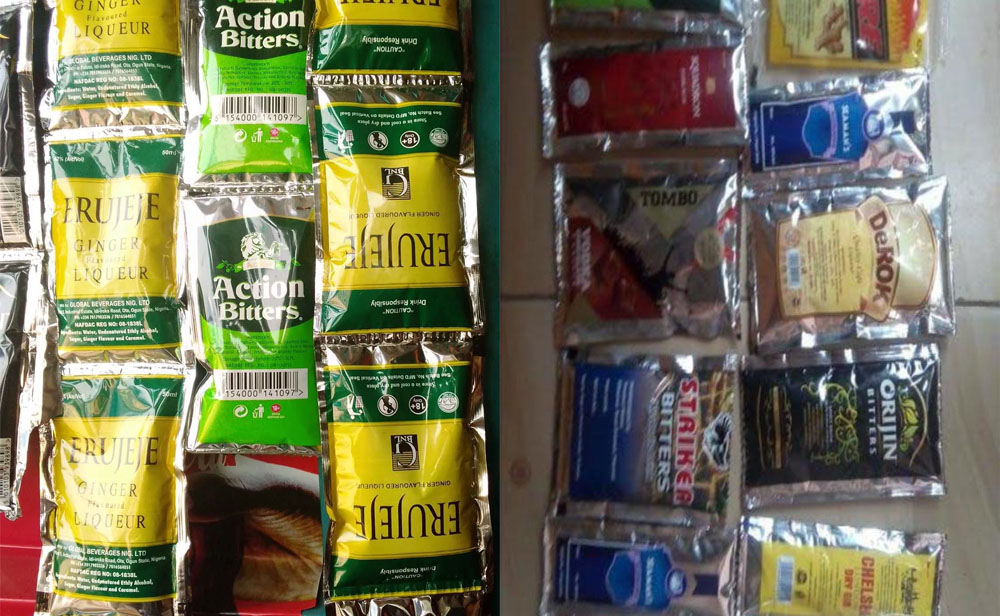
The Nigeria Employers’ Consultative Association (NECA) has cautioned that a blanket ban on sachet alcoholic beverages would amount to economic suicide, warning that such a policy could worsen unemployment, encourage smuggling, and overstretch already burdened security and regulatory agencies.
Speaking with journalists on the ongoing debate over alcohol regulation in Nigeria, NECA’s Director-General, Mr. Smatt-Adewale Oyerinde, said prohibiting the production or sale of sachet alcohol would fail to address the root causes of alcohol abuse, particularly among young people, while inflicting serious economic and security consequences.
Oyerinde questioned the effectiveness of prohibition in a country with porous borders and limited enforcement capacity.
“If children under 18 are consuming alcohol, whose fault is it? Is it the parents, the schools, or the producers? Alcohol is not evil; abuse is the problem. Banning one product while others remain legal will not solve it,” he said.
He disclosed that more than ₦800 billion has been invested in the alcohol and allied industries, which employ thousands of Nigerians directly and indirectly. According to him, a sudden ban would lead to massive job losses, business closures, and loan defaults, further aggravating Nigeria’s unemployment crisis.
READ ALSO:
- One Feared Dead, Five Trapped as Rice Mill Collapses in Kebbi Capital
- Peter Obi Defects to ADC, Unveils Opposition Coalition Ahead of 2027 Elections
- UNN Students Reject 100% Fee Hike, Insist on Maximum 25% Increase
“We seem unconcerned about rising unemployment and the message such policies send to investors. If someone invests a billion dollars today, what assurance do they have that a policy will not abruptly shut down their business in a few years?” Oyerinde asked.
The NECA Director-General warned that scarcity created by a ban would only drive up prices and fuel illegal trade.
“When you ban a product you cannot effectively police, you simply create a thriving market for smugglers,” he noted, adding that unregulated foreign alcohol products had already flooded the market during the recent festive season.
He also argued that banning alcohol consumption in public places would merely shift consumption elsewhere.
“If people cannot drink on the streets, they will drink at home. If not at home, then in their cars. So what exactly have we solved?” he queried.
Oyerinde stressed that agencies such as the Nigeria Police, Customs, and other regulatory bodies would be overwhelmed by the additional burden of enforcing a ban, insisting that policy decisions must consider the broader economic impact.
Rather than imposing a blanket ban, NECA called for targeted and coordinated solutions, including stronger institutions, improved regulation, and innovative enforcement strategies such as random checks and sobriety testing, as practiced in other countries.
“A blanket ban is a lazy approach. What Nigeria needs is thoughtful and dynamic policymaking that tackles abuse, protects young people, and preserves jobs without damaging the wider economy,” he said.
He added that NECA was willing to collaborate with government agencies, including NAFDAC, to develop practical and sustainable solutions to alcohol abuse in Nigeria.
Ban on Sachet Alcohol Will Trigger Job Losses, Smuggling — NECA Warns
Aviation
VAT on Aircraft, Spare Parts Threatens Survival of Nigerian Airlines, says Allen Onyema

VAT on Aircraft, Spare Parts Threatens Survival of Nigerian Airlines, says Allen Onyema
The Air Peace CEO, Allen Onyema, has warned that Nigeria’s new tax laws threaten the survival of local airlines, arguing that the legislation reinstates taxes removed under the 2020 reforms. The taxes include customs duties on imported aircraft, aircraft parts, engines, and Value Added Tax (VAT) on tickets, which Onyema says will impose unsustainable financial burdens on airlines.
Speaking in an interview with Arise News on Sunday, Onyema stressed the high cost implications for airline operators.
“There is VAT on the importation of aircraft. For an aircraft worth $80 million, you are supposed to pay 7.5 percent. With bank loan interest rates at 30–35 percent, plus VAT on spare parts, it is unsustainable,” Onyema said. “If we implement that tax reform, Nigerian airlines will go down in three months.”
The Air Peace CEO also announced that the airline industry will no longer tolerate unruly passengers starting January 1, 2026. Onyema cited instances of disruptive behaviour by passengers on flights, including smuggling alcohol into the cabin, forcing upgrades to business class without payment, and threatening fellow travellers.
READ ALSO:
- Train Derailment in Southern Mexico Kills 13, Injures Nearly 100 in Oaxaca
- Tragedy in Lekki as Lexus SUV Crashes Into Children, One Feared Dead, Four Injured
- Presidency Intervenes in Akume, Alia Political Dispute in Benue
He referenced a recent incident on a flight diverted to Manchester, UK, due to bad weather, where passengers staged a viral video accusing Air Peace of misconduct, despite British authorities confirming that over 200 flights were diverted that day.
Onyema emphasised that airlines will now enforce stricter measures, including blacklisting unruly passengers, asserting that the behaviour is currently being “supported by the system unnecessarily.”
The statement comes amid growing concerns over rising domestic airfares. On December 10, the Senate summoned the Aviation Minister, Festus Keyamo, and industry stakeholders over soaring ticket prices. Subsequently, on December 11, the House of Representatives called on the federal government to reduce aviation taxes by 50 percent to ease costs for travellers.
Onyema’s comments highlight both the financial pressures on Nigerian airlines due to aviation taxes and the sector’s new stance on passenger discipline to safeguard safety and service standards.
VAT on Aircraft, Spare Parts Threatens Survival of Nigerian Airlines, says Allen Onyema
Auto
Changan CS55, Kia Seltos take top SUV honours at 2025 NAJA Auto Awards

Changan CS55, Kia Seltos take top SUV honours at 2025 NAJA Auto Awards
Changan CS55 and Kia Seltos have clinched top honours at the 2025 Nigeria Auto Journalists Association (NAJA) International Auto Awards, winning Midsize SUV of the Year and Compact SUV of the Year, respectively.
The awards were announced at a recent well-attended ceremony held at the Oriental Hotel, Victoria Island, Lagos, which brought together key stakeholders across Nigeria’s automotive value chain to celebrate excellence, resilience and innovation in the industry.
Changan CS55’s latest recognition comes after its impressive performance at last year’s 17th edition of the awards, where it was crowned Nigeria’s New Car of the Year.
At the 2025 ceremony, the compact crossover SUV edged out strong contenders such as the Kia Sonet and Chery Tiggo to secure the coveted Midsize SUV title.
Changan vehicles are marketed and assembled in Nigeria by Mikano Motors, reinforcing the growing impact of local assembly in the country’s automotive sector.
In the Compact SUV category, the Kia Seltos emerged winner, beating notable competitors such as the Toyota Prado, Changan CS55 and Chery Tiggo.
READ ALSO:
- Ojuelegba Bridge Gridlock as Container Truck Overturns in Surulere, Lagos
- Troops Foil Kidnapping on Otukpo–Enugu Expressway, Rescue Passengers in Benue
- Davido Joins Accord Party, Aligns With Uncle, Osun Governor Ademola Adeleke
Industry analysts have described the Seltos as a compelling blend of practicality and style, praising its bold design, versatility and appeal to modern drivers.
Other corporate winners at the event are the Mikano Group, which was named Auto Company of the Year; Iron Products Industries (IPI) Limited, honoured as Truck Assembler/Body Builder of the Year; Lanre Shittu Motors (JAC), awarded Truck Plant of the Year; and Innoson Vehicle Manufacturing (IVM), which won Passenger Car Assembly Plant of the Year.
These recognitions highlighted the depth and growing strength of indigenous participation in Nigeria’s automotive industry.
Speaking at the ceremony, the Director-General of the National Automotive Design and Development Council (NADDC), Otunba Joseph Osanipin, commended NAJA for sustaining a credible platform promoting excellence and accountability within the sector.
In his welcome address, NAJA Chairman Mr Theodore Opara described the awards as a benchmark for performance in Nigeria’s evolving automotive ecosystem, noting that the industry continues to adapt amid policy reforms, technological advancements and changing consumer expectations.
The 2025 NAJA International Auto Awards once again underscored the critical role of leading brands in strengthening Nigeria’s transportation and industrial backbone, while celebrating outstanding achievements across the nation’s automotive landscape.
Changan CS55, Kia Seltos take top SUV honours at 2025 NAJA Auto Awards

-

 metro3 days ago
Niger Delta Crackdown: Army Seizes ₦150m Stolen Oil, Arrests 19 Suspects
-

 Sports3 days ago
Cristiano Ronaldo Wins Best Middle East Player at 2025 Globe Soccer Awards in Dubai
-

 Sports3 days ago
Anthony Joshua injured as two die in fatal Lagos-Ibadan Expressway crash (plus photos)
-
 metro2 days ago
Mrs. Regina Akume Urges SGF George Akume to Return to Christianity Amid New Marriage
-

 metro2 days ago
Ogun Man Arrested After ₦4,000 Debt Dispute Claims Stepbrother’s Life
-

 metro2 days ago
Two Close Aides of Anthony Joshua Identified as Victims of Fatal Crash
-
 metro2 days ago
Malami, Son, Wife Remanded Over ₦Billions Money Laundering Charges
-

 metro2 days ago
Tinubu Condoles Anthony Joshua After Ogun Crash That Killed Two Associates