
Politics
‘Yes Daddy’: Obi finally agrees to phone conversation with Bishop Oyedepo

‘Yes Daddy’: Obi finally agrees to phone conversation with Bishop Oyedepo
Peter Obi, presidential candidate for Labour Party (LP) in the last general election has admitted having a private telephone conversation with founder of Living Faith Church Worldwide, David Oyedepo.
Obi, who disclosed this while speaking on Arise Television as a featured guest on Monday night, however, debunked describing the presidential poll as a ‘religious war’.
Recall that a leaked conversation allegedly between Peter Obi and Bishop Oyedepo, where the former was heard pleading with the cleric to help sway support and votes of Christians in southwestern states and Kogi.
In the leaked audio conversation which was said to have taken place before February 25 presidential election, Peter Obi was heard describing the poll as a ‘religious war that must be won’, and why the release of the audio gathered a series of backlashes and criticisms for the former Anambra state governor.
But speaking with Arise TV on Monday night, Obi, responding to a question on whether the phone call christened ‘Yes Daddy’ actually took place, admitted having a private conversation with the Bishop to beg him for support, stating however, that he never described the poll as ‘religious war’.
READ ALSO:
- Sudan Crisis: Heavy fighting in Khartoum continues unabated, 16 days after
- For going to U17-AFCON, Nantes sack Algerian star, Ben Ali
- Abducted ex-NBA president finally regains freedom after two weeks in captivity
He said, “Call it whatever you want to call it. Whatever anyone wants to make of it. I am not a religious bigot. Do you think I can just pick a phone and say ‘religious war’? No, I was even begging the bishop to help me ask his people to vote, which was what I was doing for six months – begging. I wasn’t saying ‘catch him’, ‘kill him’, ‘force it’. I was even begging. That shows that I continued to look for votes by begging. There were so many things we tried to do but they were not okay.”
Speaking further, the LP standard-bearer stressed that he was never a religious bigot, adding that no non-muslim governor has ever sent more people to Mecca than he did as a governor.
“Let me tell you. Those who have been trying to manipulate Nigerians have been doing it. But it is coming to an end. The people they have been manipulating are dying of hunger. They will soon know who is the religious or tribal bigot. I am not one. I have just given you an example of how I built mosques. Till today, no non-Muslim governor has sent more people to Mecca than me.
“I can never say it (poll) is a religious war. Because it is not. There was a conversation. But I never said it was a religious war. What for? I am surrounded by people. If there was ever an instance where the presidential candidate and his deputy work as brothers, it is me and Datti. And I know and we never stop talking about it.
“For the first time in the history of Nigeria, we have a presidential candidate, running mate and party chairman who were born after Nigeria’s Independence. We must save this country and he (Datti) knows my commitment to it. I can’t do all these with the background of religious war,” he added.
Tribune







Politics
Lai Mohammed: Peter Obi Couldn’t Have Won 2023 Election Even With 10 Million Extra Votes
Lai Mohammed: Peter Obi Couldn’t Have Won 2023 Election Even With 10 Million Extra Votes
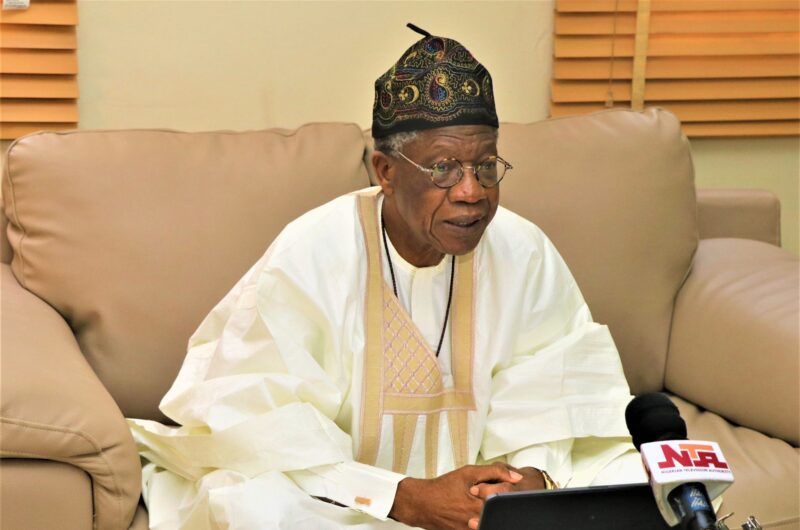
Former Minister of Information and National Orientation, Lai Mohammed, has stated that former Peter Obi, the Labour Party (LP) presidential candidate, would not have emerged president of Nigeria in the 2023 election, even if he had secured an additional 10 million votes. Speaking on Edmund Obilo’s “State Affairs” podcast, Mohammed dismissed claims that Obi was “rigged out” of the election, emphasising that Obi neither won the election nor was the main challenger to eventual winner Bola Ahmed Tinubu of the All Progressives Congress (APC). “The 2023 presidential election was conducted in accordance with the Nigerian Constitution. Peter Obi did not meet the requirements to win, even with an additional 10 million votes,” Mohammed said.
Mohammed explained that under Nigeria’s Constitution, a presidential candidate must not only receive the highest number of votes nationwide, but also secure at least 25 per cent of votes in two-thirds of Nigeria’s states. In the 2023 election, Obi reportedly achieved 25 per cent of votes in only 15 states, finishing third behind Atiku Abubakar of the People’s Democratic Party (PDP), who met the threshold in 21 states. Tinubu, the declared winner, secured the majority of votes and the constitutional 25 per cent spread in 29 states. “Even if Obi had gained 10 million more votes, he still would not have satisfied the constitutional criteria for presidency,” Mohammed added.
READ ALSO:
- FG Allocates ₦5.6bn for New Carter Bridge as Old Structure Fails Safety Test
- Iran Launches Missiles at Israel as Middle East War Enters Sixth Day
- US Submarine Sinks Iranian Warship in Indian Ocean as Conflict Escalates
He noted that many supporters of Obi questioned the credibility of the 2023 election on social media. To counter misinformation, his team engaged international think tanks and media outlets in the US and UK to explain why Obi could not have legally won. Mohammed emphasised that public perception or social media narratives cannot override constitutional requirements.
The former minister also suggested that Obi was not the primary challenger in the election. He argued that had Obi remained aligned with Atiku Abubakar and the PDP, the opposition might have had a better chance to win, highlighting that the fragmentation of votes weakened the opposition’s prospects.
Despite these clarifications, critics of the 2023 polls continue to raise concerns over electoral transparency, logistics failures, and voter inclusivity. Supporters of Obi maintain calls for electoral reforms, stressing the need to strengthen Nigeria’s democratic processes for future elections. Mohammed’s comments reinforce the government’s position that Nigeria’s constitutional rules are the definitive measure of election outcomes.
Lai Mohammed: Peter Obi Couldn’t Have Won 2023 Election Even With 10 Million Extra Votes
Politics
‘Probe is political’ — El-Rufai Refuses To Answer ICPC, insists on court trial
‘Probe Is Political’ — El-Rufai Refuses To Answer ICPC, Insists On Court Trial
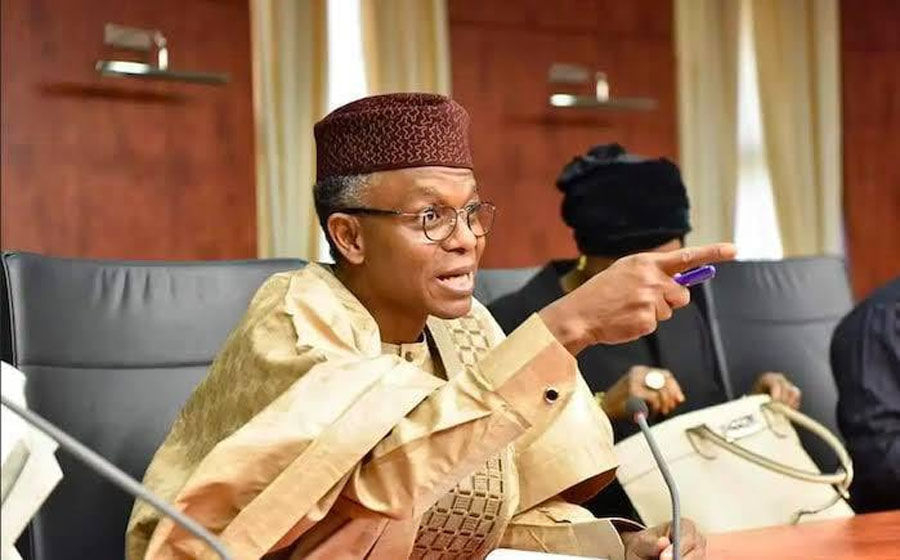
Former Kaduna State Governor, Nasir Ahmad El-Rufai, has explained why he declined to respond to questions from the Independent Corrupt Practices Commission, describing the investigation against him as politically motivated.
In handwritten statements made under caution on February 19 and 20, 2026, while in ICPC custody and in the presence of his lawyer, Ubong E. Akpan, the former governor said his decision to remain silent was deliberate and in exercise of his constitutional rights.
El-Rufai maintained that he would only respond to any allegations before a court of law.
“I have, on the advice of counsel, decided to exercise my right to silence. I will make no further statement or respond to any question,” he wrote in his first statement dated February 19.
He added that after what he described as nearly two years of investigation, the anti-graft agency should present its findings before a judicial tribunal.
“I believe that after nearly two years of intensive investigation, the ICPC should present its findings to a judicial tribunal and not to me. I will respond to any allegations in a court of law only,” he stated.
The former governor further alleged that the probe was driven by politics, claiming his affiliation with the African Democratic Congress was the “real reason” behind the investigation.
“I am a leading member of the African Democratic Congress, the only surviving opposition party in Nigeria, which is the real reason you are investigating me,” he wrote.
Providing personal background in the statement, El-Rufai said he was born in Dandawa, Katsina State, in 1960, attended school in Kaduna and obtained his first degree in Quantity Surveying from Ahmadu Bello University. He also listed academic stints at Harvard University and the University of London.
He outlined his public service career, including serving as Director-General of the Bureau of Public Enterprises between 1999 and 2003, Minister of the Federal Capital Territory from 2003 to 2007, and two-term governor of Kaduna State from 2015 to 2023.
In a follow-up statement dated February 20, 2026, El-Rufai reiterated his stance.
“Upon presentation of further documents and questions, I reserve my constitutional right to silence to all the documents and further questions… I will respond to these documents and questions only when presented in a Court of Law,” he wrote.
El-Rufai may regain his freedom on Thursday if the ICPC fails to file charges before the expiration of a 14-day remand order granted by a Chief Magistrate Court in Bwari. The detention warrant is due to lapse on March 5, 2026.
The ICPC has yet to publicly respond to the former governor’s claims that the investigation is politically motivated.
Politics
Atiku’s Son Resigns as Adamawa Commissioner Following Fintiri’s APC Defection
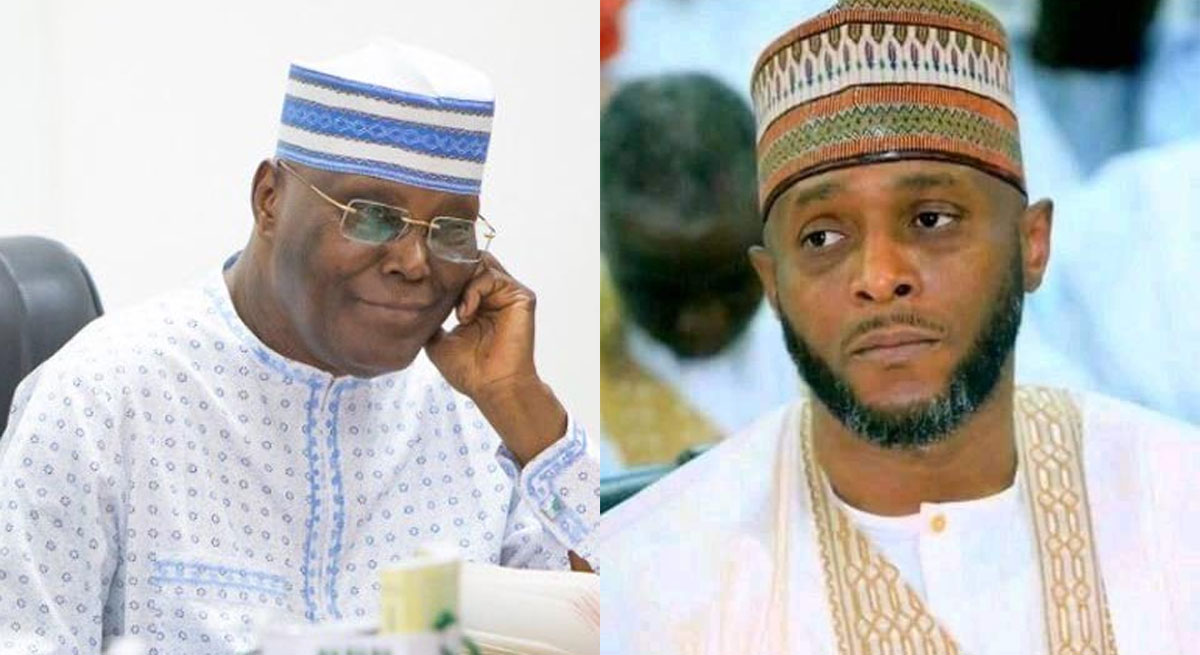
Atiku’s Son Resigns as Adamawa Commissioner Following Fintiri’s APC Defection
Yola, Adamawa State — Adamu Atiku Abubakar, son of former Vice President Atiku Abubakar, has formally resigned from his role as Commissioner for Works and Energy Development in Adamawa State. The resignation comes in the wake of recent political shifts in the state, including the defection of Governor Ahmadu Umaru Fintiri and several cabinet members from the Peoples Democratic Party (PDP) to the All Progressives Congress (APC).
In a resignation letter dated March 2, 2026, addressed to Governor Fintiri, Adamu cited “deep personal reflection and careful consideration” as the reason for stepping down. He described his tenure as an honour and expressed gratitude for the opportunity to serve, highlighting the privilege of contributing to the state’s infrastructural development.
READ ALSO:
- The world dislikes the weak, by Hakeem Baba-Ahmed
- Pastor, Wife Arrested in Bayelsa Over Alleged Rape of 13-Year-Old Girl
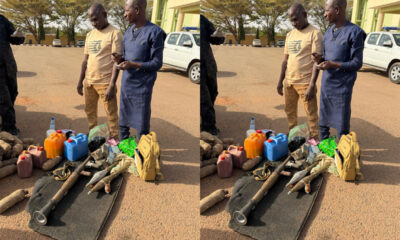
- DSS Busts Alleged Arms Trafficking Network in Gombe, Seizes RPGs
Adamu also thanked the people of Adamawa State for their support throughout his time in office and acknowledged the trust placed in him by the governor, stating that the enabling environment allowed him to discharge his duties with commitment and diligence. He concluded the letter with prayers for the governor, asking Allah to grant him continued strength and guidance in serving the state.
Observers note that Adamu’s resignation is particularly significant because he chose not to follow Governor Fintiri and other commissioners in defecting to the APC on February 27, 2026. His absence from the group of 22 commissioners who announced the defection highlighted a deliberate decision to chart his own course in the current political landscape.
Political analysts suggest that Adamu’s move may reflect personal conviction or a strategic step towards future political ambitions. During his tenure, he oversaw key initiatives in infrastructure and energy development, although his departure leaves questions about continuity and the future leadership of the ministry.
Governor Fintiri has yet to announce a replacement for Adamu, though insiders indicate that a shortlist of potential successors is being considered. Analysts believe the resignation adds a new layer to Adamawa State politics, particularly as the state navigates party realignments and positions itself ahead of the next electoral cycle.
Atiku’s Son Resigns as Adamawa Commissioner Following Fintiri’s APC Defection

-

 International3 days ago
Several U.S. Warplanes Crash in Kuwait Amid Ongoing Iranian Strikes
-
 Politics3 days ago
Wike Blasts Kingibe Over FCT Council Election Remarks
-
 International3 days ago
Israeli Airstrikes Kill 31 in Lebanon as Hezbollah Loses Senior Figures
-

 Health3 days ago
Nigeria to Receive Breakthrough HIV Prevention Drug This Month – NACA
-
 metro1 day ago
How Ikwechegh’s ₦1.15tr Interrogation Led to Tinubu’s Cabinet Shake-Up
-
 metro2 days ago
DSS Busts Alleged Arms Trafficking Network in Gombe, Seizes RPGs
-
 News2 days ago
Relief Radiant Hearts Foundation Launched in Iwo, Promises Hope for the Vulnerable
-
 Politics2 days ago
Atiku’s Son Resigns as Adamawa Commissioner Following Fintiri’s APC Defection