
metro
26 dead, 59 missing as Israel hits Gaza, Lebanon in deadly strikes
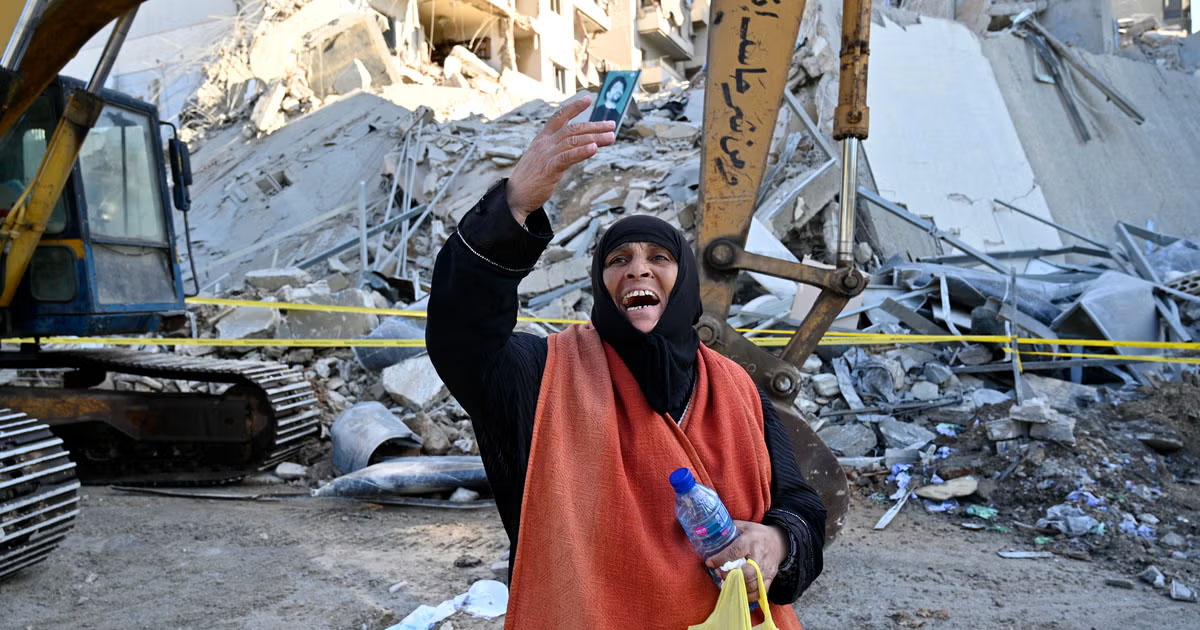
26 dead, 59 missing as Israel hits Gaza, Lebanon in deadly strikes
Strikes by the Israel military killed dozens in Gaza on Sunday, the civil defence said, while also hitting a Hezbollah stronghold near Beirut’s international airport.
Israel has been fighting on two fronts since September, intensifying attacks on Lebanon’s Iran-backed Hezbollah after nearly a year of cross-border clashes alongside its war on Hamas in the Gaza Strip.
A year after the Gaza war was triggered by Hamas’s October 7 attacks on its south, Israel vowed to stop the Islamist militants from regrouping in the north of the Palestinian territory, launching a major assault there.
In the latest violence in the besieged Palestinian territory, the civil defence agency said Israeli air raids killed at least 46 people.
The deadliest strike, in the middle of the night in Beit Lahia in the north, killed 26 people, including women and children, and left at least 59 others buried under the rubble, said civil defence spokesman Mahmud Bassal.
Another strike killed 10 people in the Bureij refugee camp in central Gaza, where a separate strike on a house claimed the life of a woman, he said.
An Israeli drone strike killed five people in the southern city of Rafah, Bassal said, adding another strike killed three women and a child in the Nuseirat camp.
Hamas-run Gaza’s health ministry on Sunday said the overall death toll in more than 13 months of war had reached 43,846.
The majority of the dead are civilians, according to ministry figures, which the United Nations considers reliable.
READ ALSO:
- Court stops NBC from imposing fines on broadcast stations
- Agbede urges Baruwa to congratulate MC Oluomo, in spirit of sportsmanship
- Tinubu confers GCON on Indian PM, Modi
Hamas’s October 7, 2023 attack that sparked the war resulted in the deaths of 1,206 people, mostly civilians, according to an AFP tally of Israeli official figures.
– Lebanon rescuers mourned –
On Israel’s second front in the north, AFPTV footage showed several strikes hit Hezbollah’s south Beirut stronghold, shortly after the Israeli military warned people to evacuate.
Columns of smoke were seen rising over the capital’s southern suburbs, where Lebanon’s only international airport is located.
Further south, overnight Israeli air strikes and shelling hit the flashpoint town of Khiam, the Lebanese state-run National News Agency reported.
Following the bombardment, the Israeli army said about 20 projectiles were seen crossing from Lebanon into Israel, and that some of them were intercepted. Emergency services did not immediately report any casualties.
Israel has escalated its bombing of Lebanon since September 23 and has since sent in ground troops, following almost a year of limited, cross-border exchanges of fire begun by Hezbollah militants in support of Iran-backed Hamas in Gaza.
Its military on Saturday said Hezbollah had already “paid a big price”, but vowed to keep fighting until tens of thousands of Israelis displaced from the north can return home.
Israeli forces also shelled the southern area of Lebanon along the Litani River, the NNA said on Sunday.
The news agency had earlier reported strikes on the southern city of Tyre, including in a neighbourhood near UNESCO-listed ancient ruins. Israel’s military said late Saturday it had hit Hezbollah sites in the area.
In Lebanon’s east, the health ministry said an Israeli strike in the Bekaa Valley killed six people including three children.
Hezbollah said it fired a guided missile that set an Israeli tank ablaze in the southwestern Lebanese village of Chamaa.
READ ALSO:
- [UPDATED] [Breaking] APC’s Lucky Aiyedatiwa wins Ondo governorship election
- UK introduces new visa for senior, specialist workers in multinational companies
- Ondo election: Again, INEC shifts collation of results to noon
In eastern Lebanon, funerals were held for 14 civil defence staff killed in an Israeli strike on Thursday.
“They weren’t involved with any (armed) party… they were just waiting to answer calls for help,” said Ali al-Zein, a relative of one of the dead.
– Gaza famine alert –
Lebanese authorities say more than 3,452 people have been killed since October last year, with most casualties recorded since September.
Israel announced the death of a soldier in southern Lebanon, bringing to 48 the number killed fighting Hezbollah.
A UN-backed assessment on November 9 warned famine was imminent in northern Gaza, amid the increased hostilities and a near-halt in food aid.
Israel has pushed back against a Human Rights Watch report this week alleging that its mass displacement of Gazans amounts to a “crime against humanity”, as well as findings from a UN Special Committee pointing to warfare practices “consistent with the characteristics of genocide”.
A foreign ministry spokesman dismissed the HRW report as “completely false”, while the United States — Israel’s main military supplier — said accusations of genocide “are certainly unfounded”.
In Israel, police said they arrested three suspects after flares shot near the home of Prime Minister Benjamin Netanyahu in the central city of Caesarea, south of Haifa, while he was away.
Demonstrators in Tel Aviv on Saturday reiterated demands that the government reach a deal to free dozens of hostages still held in Gaza.
The protest came a week after mediator Qatar suspended its role until Hamas and Israel show “seriousness” in truce and hostage-release talks.
26 dead, 59 missing as Israel hits Gaza, Lebanon in deadly strikes









metro
Fresh Boko Haram Attack Leaves Colonel, Six Soldiers Dead in Borno
Fresh Boko Haram Attack Leaves Colonel, Six Soldiers Dead in Borno
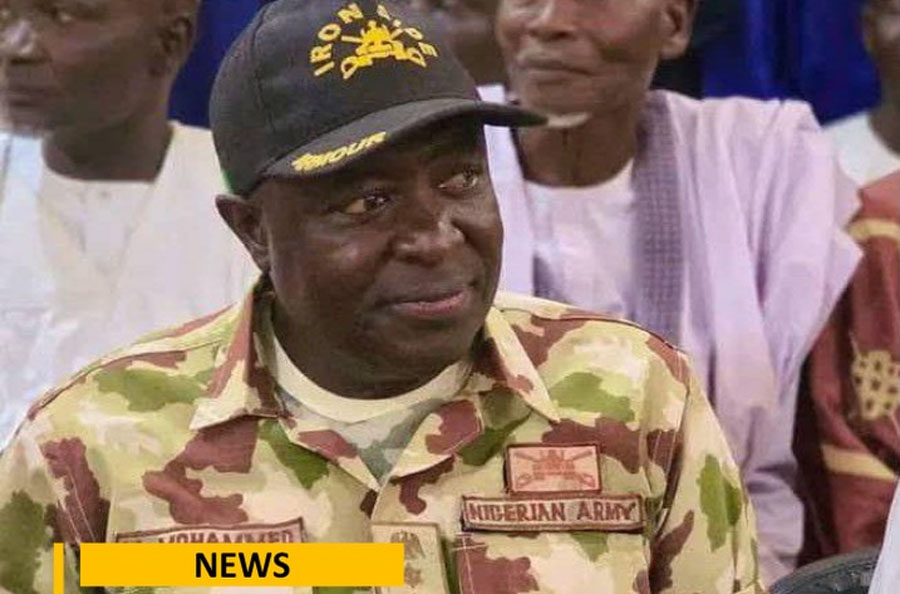
Less than a week after the death of Brigadier General Oseni Braimah, the Nigerian military has confirmed the killing of another senior commanding officer alongside six soldiers in a fresh terrorist ambush in Monguno, Borno State.
The incident occurred during an operation under Operation Hadin Kai, the ongoing counter-terrorism campaign in the North-East.
According to a statement by the Media Information Officer, Headquarters Joint Task Force (North-East), Lieutenant Colonel Sani Uba, troops of Sector 3 came under attack in the late hours of April 12, 2026, during what was described as an isolated terrorist encounter.
The Army said the commanding officer was killed after his vehicle struck an Improvised Explosive Device (IED) while he was moving to assess frontline troops following initial contact with insurgents.
Six soldiers also lost their lives in the attack, while several others reportedly sustained injuries. The military confirmed that the insurgents were eventually repelled and the location secured after intense exchange of fire.
“The terrorists were put to flight, with troops maintaining control of the location,” the statement said, adding that the fallen officer displayed “exceptional courage and selfless service” while responding to the battlefield situation.
Although the Army did not officially release his identity, earlier reports identified the slain officer as Colonel I.A. Muhammad.
READ ALSO:
- Trump Claims 158 Iranian Ships Destroyed as US Enforces Naval Blockade in Gulf Region
- Wike Denies ADC Was Blocked From Using Eagle Square for Convention
- Judge Dismisses Trump’s $10bn Defamation Suit Against WSJ Over Epstein Report
The latest killings have triggered nationwide outrage, with Nigerians expressing concern over the rising toll on security personnel engaged in the fight against insurgency in the North-East.
Security analysts say the attack highlights the continued use of IEDs and ambush tactics by Boko Haram and ISWAP fighters, who remain active in remote parts of Borno despite sustained military operations.
The incident also comes amid renewed international attention on Nigeria’s security situation. The United States Department of State recently issued a travel advisory allowing voluntary departure of non-essential personnel from its embassy in Abuja and warning against travel to several Nigerian states due to insecurity.
The advisory cited threats including insurgency in the North-East, banditry in the North-West and North-Central, and communal violence in other regions. However, the Nigerian government has downplayed the warning, insisting that most parts of the country remain stable and that security challenges are being contained.
In a related development, concerns over civilian casualties have also grown following recent military operations in Borno State, including airstrikes targeting suspected insurgent positions in the Jilli axis. The Nigerian Air Force maintained that such operations are aimed at terrorist targets, though investigations into reported civilian casualties are ongoing.
The Presidency has defended ongoing military actions, arguing that some targeted locations have been used as operational hubs by insurgents, while insisting that efforts are being made to minimise civilian harm.
Meanwhile, calls are increasing for a review of Nigeria’s counter-insurgency strategy, with experts urging greater investment in intelligence, surveillance technology, and troop welfare to reduce battlefield casualties and improve operational success.
The latest attack underscores the persistent security challenges in the North-East, where military personnel continue to face deadly encounters despite years of counter-terrorism operations.
Fresh Boko Haram Attack Leaves Colonel, Six Soldiers Dead in Borno
metro
2027: MURIC Demands Muslim Governorship Candidates in South-West
2027: MURIC Demands Muslim Governorship Candidates in South-West
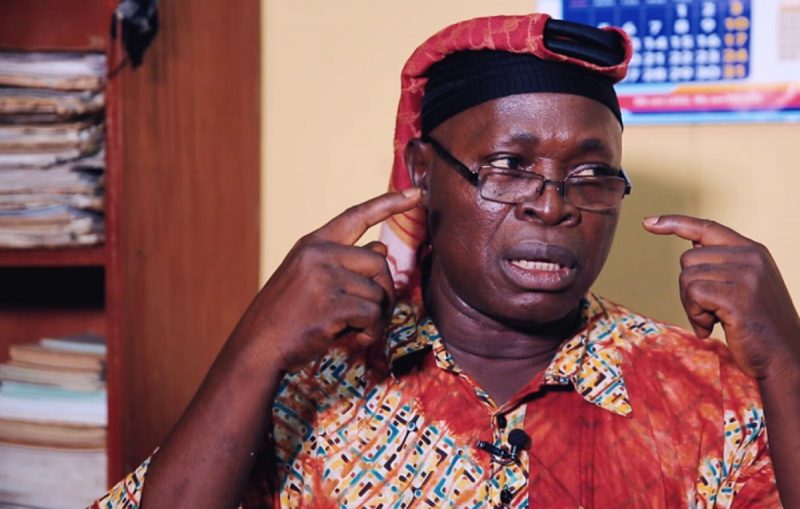
The Muslim Rights Concern (MURIC) has called on major political parties in Nigeria to ensure the emergence of Muslim governorship candidates in South-West states ahead of the 2027 general elections, warning that parties that ignore the demand may lose support from Muslim voters.
The organisation made the call in a statement signed by its Executive Director, Professor Ishaq Akintola, where it directly addressed leading political parties including the All Progressives Congress (APC), Peoples Democratic Party (PDP), African Democratic Congress (ADC), Social Democratic Party (SDP) and other registered parties.
MURIC specifically urged political parties to consider Muslim candidates in Oyo, Lagos, Ogun, Ekiti, and Ondo States, insisting that Muslims should not be excluded from the race for governorship positions in the South-West geopolitical zone.
The group argued that Muslims constitute a significant population in the South-West and deserve fair representation in elective offices, particularly at the governorship level. It maintained that there are qualified Muslim politicians capable of leading the affected states and contributing to good governance.
READ ALSO:
- Trump Claims 158 Iranian Ships Destroyed as US Enforces Naval Blockade in Gulf Region
- Wike Denies ADC Was Blocked From Using Eagle Square for Convention
- Judge Dismisses Trump’s $10bn Defamation Suit Against WSJ Over Epstein Report
MURIC also alleged that the current political arrangement in the South-West reflects what it described as religious imbalance, noting that governors in Lagos, Ogun, Oyo, and Osun States are currently Christians. According to the group, this situation highlights what it considers limited political inclusion of Muslims in top leadership positions in the region.
The organisation claimed that since the 2023 general elections, Muslims in the South-West have been largely excluded from governorship positions. In its statement, MURIC said, “Although Muslims constitute the majority in Yorubaland, the political leadership space of the region has been hijacked by Yoruba Christians since 2023.” It added that Muslims have been reduced to political spectators in key electoral outcomes, stressing the need for what it described as equitable political participation and inclusion.
MURIC further stated that none of the 17 Southern states in Nigeria currently has a Muslim governor, describing the development as politically significant. The group argued that this reality contradicts claims of religious domination narratives in Nigeria’s political space. It also dismissed allegations of Islamisation of the country, describing such claims as “false and baseless propaganda.”
The statement has added to ongoing political conversations ahead of the 2027 general elections, especially around issues of zoning arrangements, religious balance, and power-sharing agreements. Political analysts say such debates often intensify during election cycles, particularly in diverse regions like the South-West where both Islam and Christianity influence voter behaviour and party strategies. Political parties are expected to consider factors such as electoral strength, internal zoning arrangements, and demographic realities as they prepare for candidate selection.
2027: MURIC Demands Muslim Governorship Candidates in South-West
metro
Jilli Strike: Anyone Doing Business With Terrorists Is a Target — Presidency Aide
Jilli Strike: Anyone Doing Business With Terrorists Is a Target — Presidency Aide
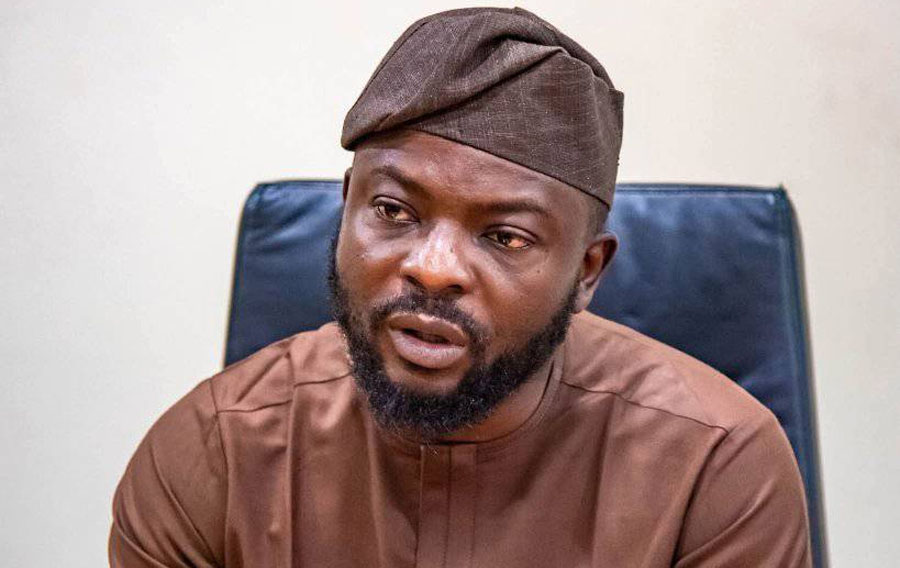
The Special Assistant to the President on Social Media, Dada Olusegun, has defended the Nigerian military following public outrage over the recent airstrike on Jilli village market near the Borno–Yobe border, insisting that individuals engaging in transactions with terrorists may be treated as legitimate military targets.
Olusegun made the remarks in a post on X (formerly Twitter) on Monday while responding to comments questioning whether images circulating online actually showed a functioning market. He wrote: “Anyone who is doing business with terrorists are legitimate military targets for our nation’s armed forces and not civilians.”
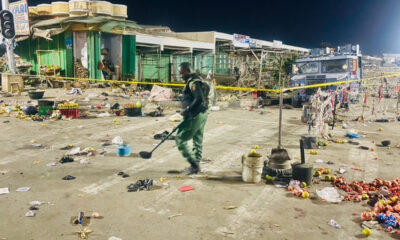
The statement comes amid growing controversy surrounding the air operation conducted under Operation Hadin Kai, led by the Nigerian Air Force, which targeted Jilli village in Gubio in Borno State on Saturday.
According to military authorities, the strike was carried out based on intelligence indicating that the location served as a terrorist logistics hub linked to fighters of the Islamic State West Africa Province (ISWAP). The Defence Headquarters said surveillance data showed movement of motorcycles and armed vehicles believed to be converging for operational purposes.
Military spokespersons under Operation Hadin Kai maintained that the strike followed “rigorous targeting procedures” and was informed by sustained intelligence, surveillance, and reconnaissance operations in the area. They added that preliminary post-strike assessments suggested that several insurgents were neutralised and logistics assets destroyed.
READ ALSO:
- Trump Claims 158 Iranian Ships Destroyed as US Enforces Naval Blockade in Gulf Region
- Wike Denies ADC Was Blocked From Using Eagle Square for Convention
- Judge Dismisses Trump’s $10bn Defamation Suit Against WSJ Over Epstein Report
However, the operation has sparked conflicting accounts from local authorities and emergency responders. The Yobe State Emergency Management Agency confirmed that civilians were among those affected, describing the incident as an accidental strike with unintended casualties.
Preliminary local reports suggested that more than 40 people may have been killed, though official figures remain unverified due to ongoing assessments and conflicting field data.
The Defence Headquarters has defended the operation, stating that Jilli and surrounding areas had long been identified as insurgent logistics corridors frequently used for movement, supply, and regrouping by armed groups. Officials also referenced past attacks on Nigerian troops in the region, including a deadly incident earlier in 2026 that reportedly killed soldiers during insurgent assaults.
The spokesperson for Operation Hadin Kai, Sani Uba, said the strike was conducted after careful intelligence validation and aerial monitoring, insisting that the target area had been under surveillance due to repeated militant activity.
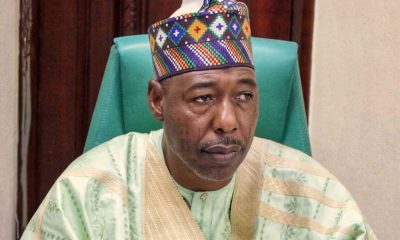
Despite the military’s justification, the Babagana Zulum has previously acknowledged that Jilli and surrounding locations are areas with known insurgent activity but has urged caution in military operations to avoid civilian harm and ensure proper identification of targets.
The controversy has intensified debate over civilian protection during counter-insurgency operations in Nigeria, with human rights observers and local stakeholders calling for clearer rules of engagement and improved intelligence accuracy to reduce the risk of civilian casualties.
As of the time of filing this report, the military maintains that the operation targeted terrorist infrastructure, while emergency agencies continue to assess the humanitarian impact of the strike.
Jilli Strike: Anyone Doing Business With Terrorists Is a Target — Presidency Aide

-
 metro3 days ago
JUST IN: FG Publishes List of 48 Individuals, Groups Linked to Terrorism Financing in Nigeria
-

 metro2 days ago
BREAKING: Troops Arrest 15-Year-Old Linked to Killing of Gen Braimah in Borno
-

 metro3 days ago
42-Year-Old Married Woman Declared Missing Found in Hotel with Man
-

 Politics3 days ago
2027: Oyo APC Governorship Aspirant Saheed Oladele Resigns From Party
-
 metro3 days ago
ADC Threatens Civil Disobedience To Force INEC Chairman To Resign
-

 metro2 days ago
Fayose Warns Makinde May Query Olubadan Over Absence at Ibadan Coronation Event
-
 metro2 days ago
Zulum Defends NAF Airstrike, Says Jilli Market Closed Five Years Ago
-
 metro2 days ago
BREAKING: 56 Killed in Accidental Bombing at Borno–Yobe Border Market