

News
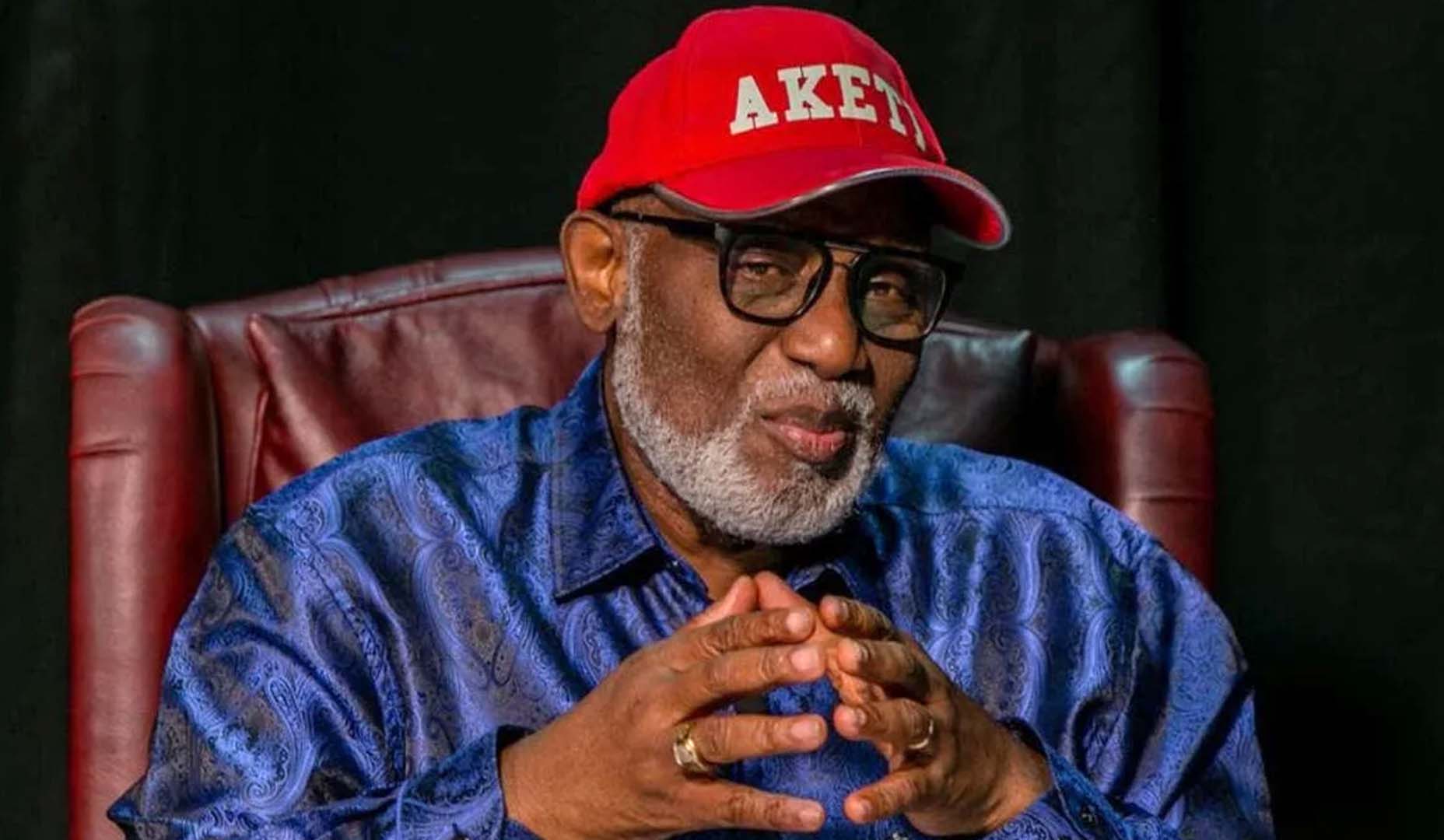
27 important facts to know about late Ondo Gov, Akeredolu
27 important facts to know about late Ondo Gov, Akeredolu
Oluwarotimi Akeredolu, the governor of Ondo state, died on December 27 in Lagos at the age of 67.
According to reports, State House doctors cared after him till his death because they couldn’t fly him abroad.
One of Ondo state commissioners who requested anonymity verified Akeredolu’s death to our newspaper.
A reliable source said: “Akeredolu is dead; he died in Lagos. They were looking for dialysis machines to be sent to his secret location in Lagos last week.”
Akeredolu had returned to Nigeria in September following a three-month medical leave in Germany.
On December 13, he went on another medical leave after being directed by President Bola Tinubu to hand over power to his deputy, Lucky Aiyedatiwa.
The medical leave was a follow-up to a previous medical treatment.
Here are 27 important facts to know about late Ondo Governor Akeredolu
1. Oluwarotimi Odunayo Akeredolu CON SAN was born on July 21, 1956, in Owo to Reverend J. Ola Akeredolu of the Akeredolu family and Lady Evangelist Grace B. Akeredolu of Aderoyiju family of Igbotu, Ese Odo, in Ondo State.
2. Akeredolu started his primary education at a government school in Owo. He proceeded to Aquinas College, Akure, Loyola College, Ibadan, and a comprehensive high school, Ayetoro, for his secondary school education and Higher School Certificate, respectively.
READ ALSO:
- Updated: Ondo Governor Akeredolu dies after battle with leukemia
- Visa Scam: Nigerian man arrested in India for duping woman of N18m
- Abductors of retired ECWA pastor demand N1m ransom
3. His middle name Odunayo means “Year of happiness” in Yoruba.
4. He went on to the University of Ife (now Obafemi Awolowo University) to study law and graduated in 1977.
5. He was a Nigerian lawyer and politician.
6. He assumed office as Ondo governor on February 24, 2017.
7. He reportedly died of leukemia.
8. His adopted prefix is “Arakunrin”, while his nickname is “Aketi”.
9. He is a Senior Advocate of Nigeria (SAN) who became president of the Nigerian Bar Association in 2008.
10. Akeredolu was also a Managing Partner at the law firm of Olujinmi & Akeredolu, which he co-founded with Chief Akin Olujinmi, a former Attorney General and Minister for Justice of Nigeria.
11. He was the chairman of Southwest Governors.
12. He was referred to as the Nigerian Bar 1978.
13. Akeredolu was appointed Attorney General of Ondo State from 1997 to 1999.
14. In 1998, he became a Senior Advocate of Nigeria. He was Chairman of the Legal Aid Council (2005–2006).
15. In November 2009, he faced allegations of corruption when the Bar Association’s third Vice-President, Welfare Secretary, and Assistant Financial Secretary circulated a petition entitled “Complaints against your fraudulent manifestations, violation of the NBA”.
16. Subsequently, the allegations against him were reviewed and dropped by the National Executive Council of the Nigerian Bar Association.
17. In November 2011, Akeredolu was among a crowd of aspirants to be the Action Congress of Nigeria (ACN) candidate for governor of Ondo State in the 2012 elections.
18. On 28 July 2012, Akeredolu was selected as the Action Congress of Nigeria (ACN) candidate for governor of Ondo State during the ACN congress in Akure.
19. His selection pitched him in a head-to-head battle with the incumbent, Olusegun Mimiko, and Olusola Oke of the Peoples Democratic Party (PDP).
20. Akeredolu promised to create 30,000 jobs in his first 100 days in office.
READ ALSO:
- Bandits shoot three, abduct six in Abuja
- Your funds are safe in banks, CBN assures depositors
- JUST IN: Ex-Speaker Ghali Na’Abba dies in Abuja
21. His promise nonetheless resulted in the submission of over 10,000 CVs to his campaign office.
22. Akeredolu was awarded the ticket to represent the All Progressives Congress (APC) in the 2016 elections for governor. On Sunday, 27 November 2016, he won the keenly contested 2016 Ondo State gubernatorial election.
23. On Sunday, 27 November 2016, Akeredolu was announced by the Independent National Electoral Commission as the winner of the Ondo State governorship election.
24. He amassed 244,842 votes in the election to defeat Eyitayo Jegede with 150,380 votes and Olusola Oke with 126,889 votes. According to Professor Ganiyu Ambali, INEC Returning Officer, Akeredolu defeated two major opponents, Eyitayo Jegede of the Peoples Democratic Party (PDP) and Olusola Oke of the Alliance for Democracy (AD), to clinch victory. He was sworn in as the governor of Ondo State on 24 February 2017 in Akure, the Ondo State Capital.
25. On 21 July 2020, he was declared the Ondo governorship candidate after the primary elections under the platform of the APC, for a second term.
26. The 2020 Ondo State gubernatorial election was held on 10 October 2020.
27. Akeredolu won re-election for a second term, defeating PDP Eyitayo Jegede, ZLP Agboola Ajayi, and several minor party candidates.
27 important facts to know about late Ondo Gov, Akeredolu







News
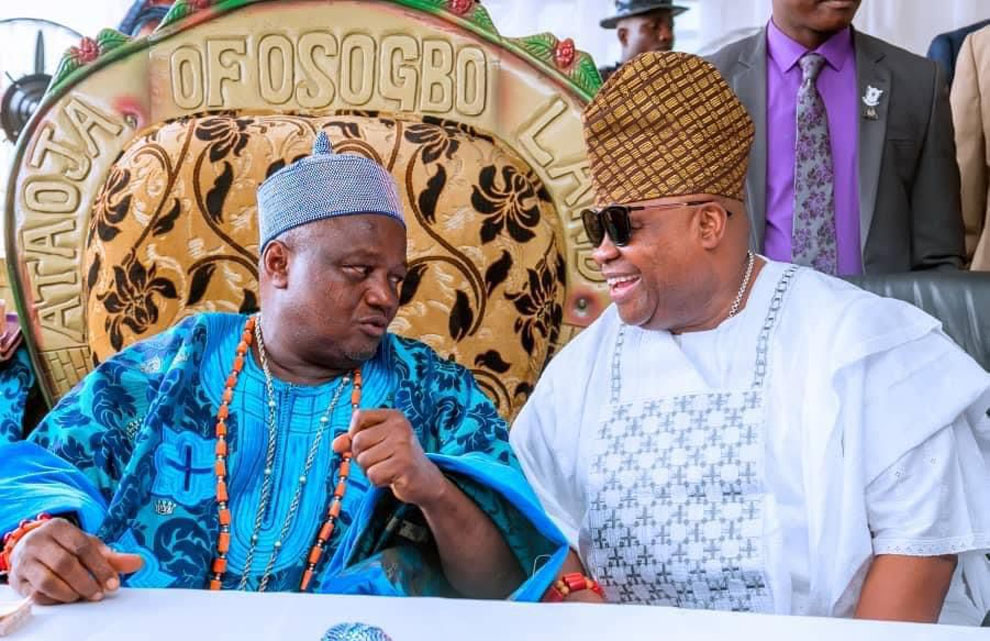
Adeleke Rejects Ataoja Palace Appointment, Reaffirms Oyebode as Osun Iyaloja-General
Adeleke Rejects Ataoja Palace Appointment, Reaffirms Oyebode as Osun Iyaloja-General
OSOGBO — Osun State Governor, Senator Ademola Adeleke, has reaffirmed Mrs Oyebode Mary as the Iyaloja-General of the state, declaring that any purported appointment of another person to the position is invalid.
The governor’s position followed an announcement reportedly emanating from the palace of the Ataoja of Osogbo concerning the appointment of a new Iyaloja-General.
In a statement issued on Friday by his spokesperson, Mallam Olawale Rasheed, Adeleke maintained that the authority to appoint the Iyaloja-General of Osun State rests with the state government.
The governor specifically warned market associations, traders and women across the state against recognising or acting on any announcement of a new Iyaloja-General from any quarter other than the state government.
READ ALSO:
- Flydubai Co-Pilot Attacked Captain With Axe in Attempted Terrorist Act, UAE Says
- Nigerian-Born Ex-Professor Jailed 78 Months Over $1.3m US Student Aid Fraud
- Police Arrest Man Caught Sexually Assaulting 12-Year-Old Girl in Car
According to him, “any announcement from any other quarter including the Osogbo Royal Palace is null and void.”
Adeleke further declared that Mrs Oyebode remains the legally recognised Iyaloja-General of Osun State and continues to enjoy the full backing and recognition of his administration.
The governor urged market leaders and womenfolk across the state to disregard any purported appointment of another person to the position, stressing that Mrs Oyebode remains the duly appointed Iyaloja-General under the authority of the state government.
He also appealed to traditional institutions, organisations and individuals to respect the law and remain within the boundaries of their respective mandates.
Adeleke cautioned against actions capable of creating tension or disturbing the peace of the state, urging all parties involved in the development to exercise restraint.
The governor’s statement could further deepen attention around the authority and processes governing the leadership of market associations in Osun State, particularly amid the conflicting positions attributed to the state government and the Osogbo traditional institution.
Adeleke Rejects Ataoja Palace Appointment, Reaffirms Oyebode as Osun Iyaloja-General
News
Atiku Challenges Tinubu’s Prosperity Claim, Says Nigerians Can Barely Afford to Live
Atiku Challenges Tinubu’s Prosperity Claim, Says Nigerians Can Barely Afford to Live
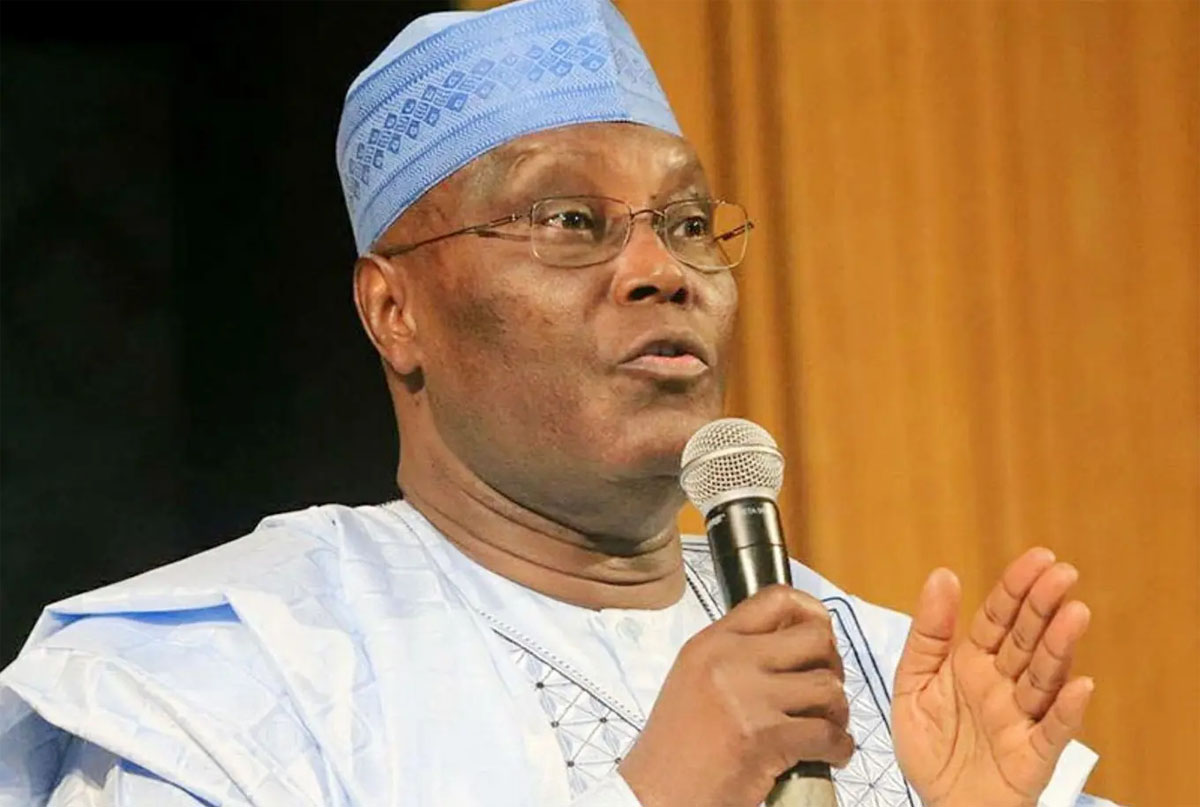
Former Vice President and African Democratic Congress (ADC) presidential candidate, Atiku Abubakar, has criticised President Bola Ahmed Tinubu’s claim that Nigeria has entered an era of prosperity, saying millions of Nigerians are still struggling to afford basic necessities.
Atiku made the remarks in his Independence Day address on Thursday as Nigeria marked its 66th anniversary, arguing that the economic gains highlighted by the government have yet to translate into improved living conditions for many households.
Tinubu, in his own Independence Day address, said Nigeria had moved from a period of difficult economic reforms into what he described as an era of shared and widespread prosperity. He said the government’s focus was now on lowering the cost of living, creating jobs, expanding production and improving opportunities for Nigerians.
Atiku, however, disputed that assessment, saying the reality confronting ordinary Nigerians was different from the picture presented by the government.
He argued that a reduction in the rate of inflation does not automatically restore the purchasing power lost by households after years of rising prices.
According to Atiku, the current N70,000 minimum wage can purchase about 50 litres of petrol, compared with about 118 litres that the former N30,000 minimum wage could buy in April 2023.
He also cited the rising prices of basic food items, including bread and eggs, as evidence of the pressure facing families.
READ ALSO:
- Edo Police Arrest 37-Year-Old Man Over Alleged Rape of 70-Year-Old Woman
- Why Ronaldo Left Portugal Camp Ahead of Denmark Clash
- 2027: Amaechi Vows to Resign If Nigeria Fails to Change Within One Year
The ADC candidate said his approach to reducing petrol prices would include a capped and budgeted production subsidy restricted to petrol refined in Nigeria. Under his proposal, imported petrol would not qualify for the subsidy.
He said the arrangement would have a spending limit, with the cost made public and payments independently audited. He argued that such a policy could reduce pump prices while supporting domestic refining and creating jobs.
Atiku also questioned the Federal Government’s reported cash transfers to vulnerable Nigerians, asking how more than 10 million beneficiaries were identified and paid.
He said the government should provide details of the beneficiaries and explain how the funds were disbursed.
The former vice president also raised concerns over Nigeria’s public debt, citing a debt stock of about N166.79 trillion as of the end of June 2026. He criticised the extension of the 2025 budget into 2026 and questioned the management of public resources.
On insecurity, Atiku said Nigerians continued to face threats from armed groups, while farmers in some communities remained unable to access their farms safely.
He also called for greater adherence to the rule of law, raising questions about the continued detention of certain individuals, including Sheikh Sani Khalifa Zaria and former Kaduna State governor Nasir El-Rufai.
On the case of Nnamdi Kanu, Atiku said the legal process should respect his right to appeal and that the grievances surrounding the case should be addressed through lawful means.
He also criticised the reported arrest of Nigerians over the wearing of T-shirts bearing the slogan “Tinubu Must Go”, arguing that political expression should not by itself be treated as a criminal offence.
Atiku further challenged the administration over its handling of the economy, saying Nigerians had endured substantial hardship following the removal of the petrol subsidy and other economic reforms.
He maintained that the benefits promised from the reforms had not yet been sufficiently felt by ordinary citizens.
The ADC candidate urged Nigerians to remain engaged in the political process ahead of the 2027 general election, calling on voters to protect their votes and participate actively in determining the country’s leadership.
Atiku said the central issue was whether government policies were improving the daily lives of Nigerians, particularly in the areas of food prices, transportation, employment, healthcare, security and household income.
His address came shortly after Tinubu told Nigerians that the government had completed the most difficult phase of its economic reforms and was now focused on translating those reforms into broader prosperity.
The contrasting Independence Day messages highlighted the competing assessments of Nigeria’s economic situation ahead of the 2027 elections, with Tinubu defending the direction of his reforms and Atiku arguing that the hardship experienced by many households remains unresolved.
Atiku Challenges Tinubu’s Prosperity Claim, Says Nigerians Can Barely Afford to Live
News
Nigeria at 66: Tinubu Unveils Fresh Push for Lower Costs, Jobs, Prosperity (Full Text)
Nigeria at 66: Tinubu Unveils Fresh Push for Lower Costs, Jobs, Prosperity (Full Text)
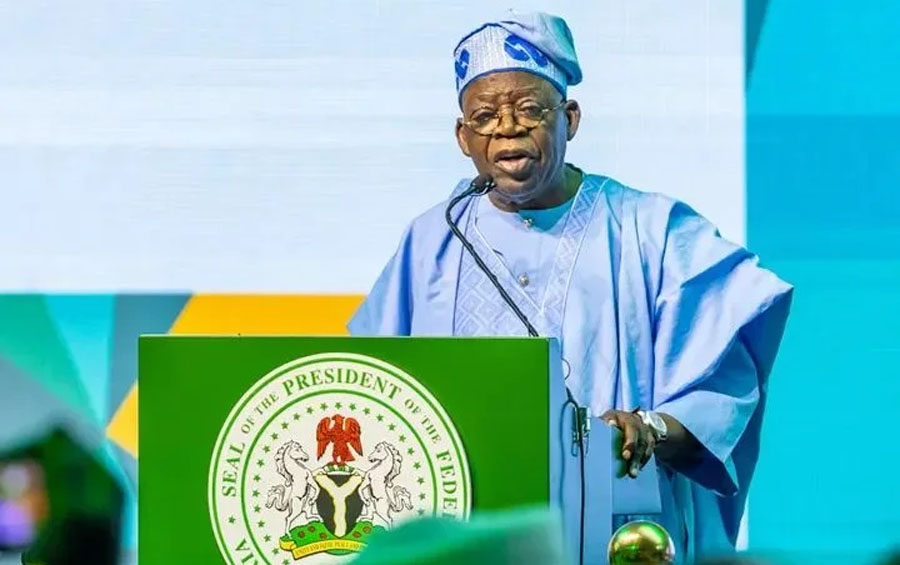
President Bola Ahmed Tinubu has declared that Nigeria is entering what he described as an “age of prosperity”, saying the focus of his administration will now shift from economic reforms to lower living costs, job creation, industrial growth and improved living standards.
Tinubu made the declaration in his 66th Independence Day address to Nigerians on Thursday, October 1, 2026, saying his administration had spent the past three years addressing what it regarded as longstanding economic distortions and was now moving towards what he called “shared and widespread prosperity.” (State House)
“The emergency treatment is over. The foundation has been repaired,” the President said, arguing that the country had reached a turning point after a difficult period of economic adjustment.
Tinubu said the next phase would concentrate on translating economic improvements into tangible benefits for Nigerians, particularly by reducing the cost of producing and transporting goods, expanding agricultural production and creating millions of productive opportunities.
According to the President, the government will pursue expanded mechanised irrigation and dry-season farming, improved access to seeds and fertiliser, greater agricultural mechanisation, storage facilities and better transportation infrastructure.
He said investments in roads, railways and ports would also help connect farms and factories to markets and reduce the cost of moving goods across the country.
READ ALSO:
- Israeli Actor, Flight Instructor Among Two Killed In California Plane Crash
- Flood Cuts Off Part of Agbarho-Ughelli Road, Strands Commuters in Delta
- Dangote Draws Battle Lines as Fuel Import Fight Heads Back to Court
Tinubu said the administration’s approach was based on lowering production costs so that savings could eventually be reflected in the prices paid by consumers.
He also placed job creation and industrialisation at the centre of the next phase of his economic programme, saying Nigeria’s large youth population could become an engine of production if provided with the right opportunities, skills, infrastructure and access to finance.
The President said government would use the country’s natural gas resources to support new industries and help businesses revive factories, while expanding digital connectivity and skills development.
“I want to see more Nigerians making things,” Tinubu said, outlining a vision in which Nigerian farms supply cities and factories, local businesses expand their exports and young Nigerians build technology companies and other enterprises.
On social protection, Tinubu acknowledged that millions of Nigerians still face difficulties paying for food, education, healthcare and transportation.
He said government would strengthen support for vulnerable households through the National Social Register, while continuing programmes such as the Nigerian Education Loan Fund (NELFUND) and CREDICORP.
The President also said the Federal Government would continue working with state and local governments to strengthen primary healthcare, basic education and other essential public services.
Tinubu said these interventions were intended to support vulnerable Nigerians while the broader economy expands, rather than serve as a permanent substitute for economic opportunity.
He also defended the administration’s economic reforms, arguing that the measures did not create Nigeria’s longstanding economic weaknesses but were intended to address them.
The President said the Nigerian economy had grown by more than four per cent in 2026, while inflation had fallen from its peak, foreign reserves had been rebuilt and the foreign exchange market had stabilised. He also said oil theft had declined and that Nigeria generated more than $6 billion in non-oil export revenue in 2025, which he described as a record. These figures were presented as part of the administration’s assessment of its economic performance. (State House)
Tinubu acknowledged the hardship associated with the reforms but argued that the government could not reverse in four years problems that had accumulated over several decades.
“We cannot erase in four years what accumulated over generations,” he said, while promising to change the country’s economic direction and steadily reduce poverty.
The President said the administration’s ultimate objective was not merely to manage poverty but to create conditions that would allow more Nigerians to move out of poverty through sustained economic growth and productive employment.
“The age of reform has done its work. Now begins the age of prosperity,” Tinubu declared.
He urged Nigerians to look ahead and support efforts to build what he described as a country of greater abundance and opportunity.
Tinubu concluded his Independence Day speech by calling for national unity and renewed confidence in Nigeria’s future, saying the country had corrected its economic direction and should now move forward without looking back. (State House)
Full Tinubu Independence Day speech
The complete 66th Independence Day address by President Bola Ahmed Tinubu, titled “From Reform to Prosperity,” is available in full on the official State House website. (State House)
Read Tinubu’s full 66th Independence Day address
Nigeria at 66: Tinubu Unveils Fresh Push for Lower Costs, Jobs, Prosperity (Full Text)
-

 Entertainment3 days ago
Phyna Knocks Out Nkechi Blessing in Fourth Round, Wins ₦50m, New Car
-
 metro3 days ago
2027 Hajj: Nigeria Secures 10,000 Extra Slots, Allocation Hits 60,000
-

 metro1 day ago
NYSC Kidnap: Abductors Demand N950m for 19 Prospective Corps Members in Imo
-

 Entertainment2 days ago
Olu Jacobs Laid to Rest in Lagos as Dignitaries, Nollywood Stars Honour Screen Icon
-

 Politics2 days ago
2027: Oshiomhole Dares Opposition Over ₦500 Petrol Promise, Says APC Will Take Argument to Nigerians
-
 metro1 day ago
Amaechi: Tinubu’s Policies Made My Mother’s Drugs Unaffordable
-

 International3 days ago
Trump Threatens Iran With ‘Very Hard’ Response Over Flydubai Attack
-
 metro3 days ago
Nigeria Launches 11-Character Digital Postcode System for Every Addressable Building