
metro
6 Days To Anambra Poll, Residents Flee Over Rising Insecurity

A mass exodus of residents has hit Anambra State following the increasing level of violence ahead of the governorship election coming up in the state on Saturday.
Meanwhile, the popular Eke-Awka market in Awka, the state capital, was thrown into serious pandemonium yesterday following a clash between rival cult groups during which two of their members were killed and many others sustained bullet wounds and machete cuts.
LEADERSHIP gathered that traders and their customers fled as gunfire rented the air in the market. Two youths were shot dead at the Gbalingba area of the market, with some of the cult members pursuing one another with guns, axes and machetes.
LEADERSHIP gathered that parts of the state mostly hit by the mass exit of people are the major town, including Awka, Onitsha, Nnewi, Ekwulobia and Ihiala.
It was learnt that most of the hotels in parts of Enugu State, especially, Enugu, the state capital, and Nsukka, the university town, are fully taken up by people running away from Anambra State ahead of the governorship election.
Some people are also relocating to nearby Asaba in Delta State to take up temporary refuge.
LEADERSHIP learnt that many non-natives of Anambra are relocating to their village to return after the election.
“Many people leaving with us here in Awada, they have travelled. Since yesterday (Saturday) people have been travelling because many people have been killed. On Friday they killed P and T; he is the owner of P and T Block Industry. We are also planning to travel to the village, to stay there until after the election”, a resident of Awada, an Onitsha suburb town of Obosi, Idemili South local government told LEADERSHIP.
As a result of insecurity, between 7:30pm and 8pm most of the streets in major cities, especially in Awka, would be empty of activities as most residents retire to their homes to stay out of harm’s way.
READ ALSO:
- Aerial, land bombardments kill over 37 Boko Haram terrorists, destroy gunboats in Northeast
- Troops foil kidnap of Bishop of Orlu Catholic Diocese
- FG Increases Surveillance at Airports, Allays Fears of Incursion by Bandits, Others
Gates have been mounted on entry and exit points of virtually all the streets in Awka, and they are usually locked from 10pm.
When contacted, spokesman of the Anambra State Police Command, DSP Ikenga Toochukwu, urged those leaving the state out of fear to come back as he assured them that the command was prepared to provide adequate security before, during, and after the governorship election.
“Those who are leaving the state are actually acting based on speculation. I can assure you that we are on top of the situation. People should stop panicking; they should rather give information to the police concerning criminal elements, and acts of criminality.
“As for the killings you said that happened at Eke Awka market, I am yet to get the details”, the state police imagemaker told LEADERSHIP on phone.
From Abuja, Nigeria Police Force assured the people of Anambra State that the police were prepared to safeguard the citizens of the state before, during and after the elections.
Speaking to LEADERSHIP on phone last night, Force spokesman, CP Frank Mba, told Anambra people to be assured that the police will protect them as they had done.
He also said the police had foiled several attacks by unknown gunmen and there was no need for the voters to fear.
And worried by the escalating security crisis in the South East, traditional and religious leaders from the zone have urged the federal government and other stakeholders to explore dialogue and negotiation to speed up de-escalation of insecurity and dislocation of the region.
The leaders also urged government to take immediate steps to de-proscribe the Indigenous People of Biafra (IPOB) and release its leader, Nnamdi Kanu and all IPOB members being held in various detention facilities in Nigeria.
In a joint statement by the leaders in the region, they assured Igbo youths that they are concerned about their cries of marginalisation, injustice and longsuffering, just as they urged them to de-escalate the tension and remain law-abiding to enable them engage the federal government in finding a lasting solution to the crisis.
They further urged IPOB not to do anything that would hinder the smooth conduct of the forthcoming governorship election in Anambra State just as they asked them to cancel all scheduled sit-at-home orders, saying they had caused untold hardship to the people.
The statement was jointly signed by chairman, South East Council of Traditional Rulers, H.M. Igwe Charles Mkpuma who also doubles as chairman, Ebonyi State Traditional Rulers Council; and his counterparts in Abia, H.M. Eze Joseph N. Nwabeke; Anambra, H.M. Obi Nnaemeka Achebe; Enugu, H.M. Igwe L.O.C. Agubuzu; and Imo, H.M. Eze Dr E.C. Okeke;
Others are Most Rev. Dr. Anthony J. V. Obinna, Catholic Archbishop of Owerri; Most Rev. Dr Emmanuel O. Chukwuma, Anglican Archbishop of Enugu; Most Rev. Dr. Chibuzo R. Opoko, Methodist Archbishop of Umuahia; Most Rev. Dr. Valerian M. Okeke, Catholic Archbishop of Onitsha.
Others are Most Rev. Dr Uma A. Onwunta, Past Principal Clerk, Presbyterian Church Nigeria; Bishop Obi Onubogu, Pentecostal Fellowship of Nigeria; and Rev. Dr. Abraham Nwali, chairman, Christian Association of Nigeria (CAN), South East Zone.
The leaders, who noted that the security crisis has deepened the hardships being faced by the citizens and rendered prostrate the socio-political and economic lives of the people, requested audience with President Muhammadu Buhari to discuss possible political solutions to secure the release of IPOB leader Kanu and other security issues in the region.
The statement reads in part: “We, the South East Council of Traditional Rulers and the Representatives of Igbo Archbishops and Bishops, note with deep concern the high level of insecurity and socio-economic disruption in the South East Zone of Nigeria. This has deepened the hardships being faced by the citizens and rendered prostrate the socio-political and economic lives of our people.
“Flowing from similar initiatives taken to bring peace to other troubled parts of the country, we urge the federal government and other stakeholders to explore dialogue and negotiation in resolving critical issues that threaten national unity, cohesion and development.
“Accordingly, we refer to our earlier request for the release of Mazi Nnamdi Kanu to the South East Council of Traditional Rulers and the Representatives of Igbo Archbishops and Bishops, and restate this call even more strongly.
“We are of the firm belief that this act of courage and statesmanship is not only imperative but will speedily de-escalate the heightened state of insecurity and dislocation in the South East Zone.
“We also urge President Muhammadu Buhari and the federal government to take immediate steps to de-proscribe the Indigenous People of Biafra (IPOB) and release all IPOB members being held in various detention facilities in Nigeria.
“We call on the federal government to take urgent steps to demilitarize the South East Zone, more so as it has become apparent that a continued military siege on the region can only lead to heightened tension, skirmishes and endless bloodletting between the security agencies and our youths. It has become urgent, imperative and compelling to de-emphasize the military option and move towards finding a political solution that will lead to sustainable peace.”
The South East traditional and religious leaders noted that heightened inequality and marginalization remain at the core of youth restiveness in the region.
They went on: “We urge our apex national leadership to note that until it takes deliberate steps to run government on the basis of fairness, equity, justice and non-discrimination, this restiveness is likely to continue.”
They assured the region’s youths that their cries of marginalization, injustice and longsuffering had been heard, but that they should de-escalate the tension and remain law-abiding to enable the leaders engage especially the federal government towards finding a lasting solution to the crisis.
This is just as they called on the candidates in the forthcoming Anambra State governorship election to eschew violence and commit to free, fair and credible election.
Yiaga Africa Urges INEC To Distribute PVCs To New Voters
Meanwhile, an independent election observer group, Yiaga Africa, has urged the Independent National Electoral Commission (INEC) to commence the distribution of Permanent Voter Cards (PVCs) to new registrants ahead of the governorship election in Anambra.
Director of programmes, Yiaga Africa, Cynthia Mbamalu, made the call in the fourth Watching the Vote (WTV) pre-election report in Awka yesterday.
Mbamalu said: “Yiaga commends INEC for its efforts to distribute the PVCs from previous registrations.
“However, we are worried that, with less than few days to the election, the commission has yet to commence distribution of the PVCs to the 76,104 newly eligible voters.
“These are voters who recently got registered during the Continuous Voters Registration (CVR) in the state. This, if not addressed, could potentially disenfranchise eligible voters.”
Mbamalu noted that insecurity had continued to remain a major threat to the election.
According to her, the current situation of insecurity in the state had hindered political party campaigns, voter education and mobilisation as stakeholders continue to deploy more caution.
She urged election stakeholders to continue to show determination to ensure credible and peaceful conduct of the election.
“Security agencies should partner civil society organisations to promote activities and initiatives that would increase citizens’ confidence and encourage participation in the election.
“Political party candidates and supporters should ensure they promote a peaceful election and encourage citizens to collect their PVCs to vote.
“And the citizens should understand that voting in elections is the legitimate means of making citizens’ voices heard as well as voting in desirable leaders,” she said.
Leadership







metro
Police Arrest 13 as Armed Robbers Engage Officers in Fierce Gun Battle in Abuja
Police Arrest 13 as Armed Robbers Engage Officers in Fierce Gun Battle in Abuja
Operatives of the Nigeria Police Force have arrested 13 suspected members of a criminal syndicate responsible for a wave of violent armed robberies across Federal Capital Territory, following intense gun battles in multiple locations within the nation’s capital.
The suspects were linked to coordinated robberies in Gwagwalada, Apo, Waru, Jahi, Wuse, and other parts of Abuja, with investigations revealing that the same gang had earlier carried out attacks in Asokoro, Mabuchi, and Utako, targeting hotels, residential apartments, and unsuspecting residents.
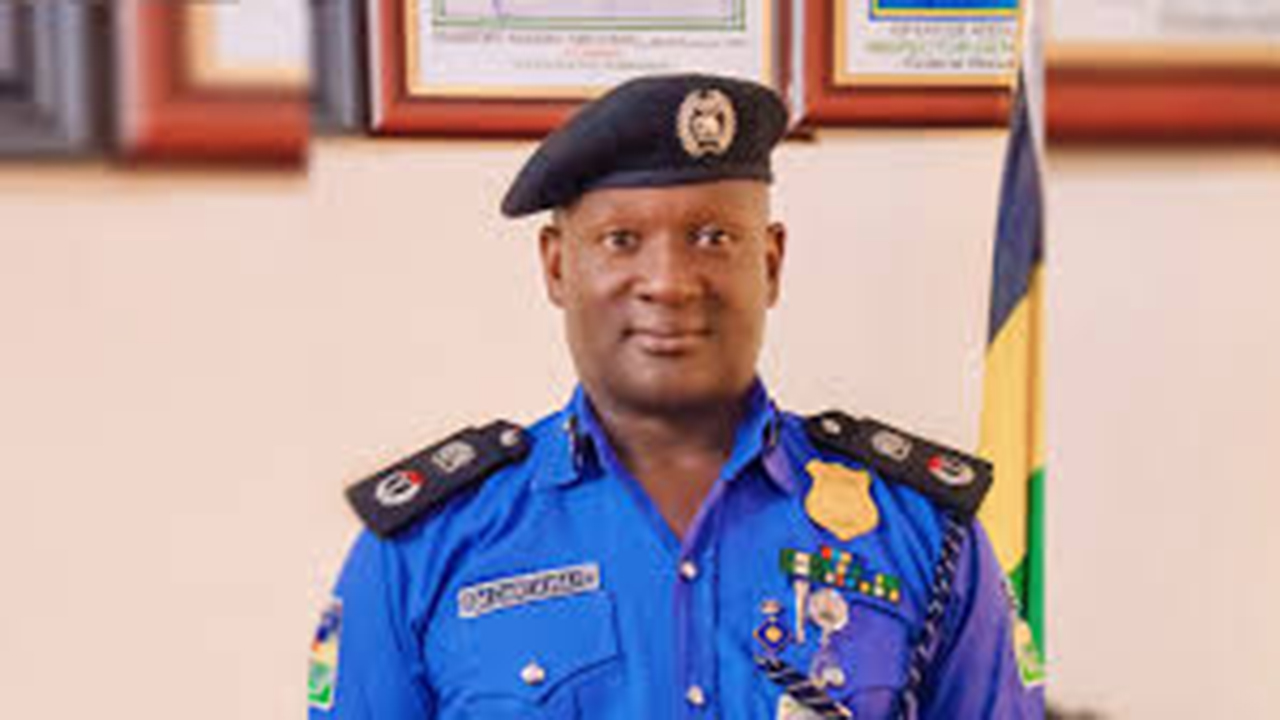
Confirming the development, the FCT Commissioner of Police, Miller G. Dantawaye, said the arrests followed credible intelligence that led operatives to a criminal hideout in Durumi, an Abuja suburb notorious for criminal activity.
According to the police chief, operatives stormed the hideout after sustained surveillance but were met with heavy gunfire from the suspects. The police team responded decisively, overpowering the gang and arresting eight suspects during the initial exchange.
READ ALSO:
- Bandits Kill Six, Burn Police Station in Fresh Niger Attacks
- US Freezes Assets of Eight Nigerians Over Boko Haram, ISIL, Cybercrime Links
- Terror in Lagos Traffic: Cutlass Gang Unleashes Mayhem on Mile 12–Ketu Road
The operation was led by ACP Victor O. Godfrey, commander of the Scorpion Squad, a tactical unit of the FCT Police Command tasked with handling high-risk crime and armed robbery cases.
The command explained that the Scorpion Squad had earlier conducted intelligence-led operations in Apo-Waru and Durumi following multiple complaints from victims of violent robberies in Asokoro, Mabuchi, and Utako.
Further follow-up operations led operatives to a second hideout in Apo-Waru, where another gun duel occurred. Five additional suspects were arrested at the location, bringing the total number of suspects in custody to 13.
Police said the suspects were positively identified using CCTV footage obtained from one of their recent robbery operations, providing critical evidence linking them to multiple crimes across the FCT.
Preliminary investigations revealed that the syndicate was behind several high-profile robberies, including an attack on a hotel in Gwagwalada, where victims were dispossessed of cash, foreign currency, and mobile phones, while a vigilante operative was disarmed.
Another incident linked to the gang was a robbery at a Travel Lodge in Wuse Zone 6, during which a police officer sustained serious injuries, and a vehicle was stolen. The suspects were also implicated in a robbery at a residential apartment in Jahi, affecting residents, including security aides attached to the Executive Governor of Kebbi State.
The 13 suspects were identified as Yahaya Hassan, Umar Shuaibu, Adamu Ibrahim, Abubakar Sani, Abdullazeez Usain, Aliyu Aminu, Aliyu Adam, Ibrahim Usman, Suleiman Yawata, Mohammed Ali, Sani Hamza, and Hassan Abba.
Items recovered from the suspects include a grey Toyota Corolla (2015 model) with registration number ABC 200 GP, one AK-47 rifle, one locally fabricated rifle, one Jericho 941 pistol, 7.62×39mm ammunition, seven rounds of 9mm live ammunition, assorted iPhones, $100 in one-dollar denominations, and assorted charms.
CP Dantawaye said investigations are ongoing to identify other members of the syndicate and trace the source of the weapons. He added that the suspects would be charged to court upon the conclusion of investigations.
The police commissioner reaffirmed the command’s commitment to protecting lives and property in Abuja and urged residents to remain vigilant and report suspicious activities through the command’s emergency lines: 08032003913 and 08061581938.
Police Arrest 13 as Armed Robbers Engage Officers in Fierce Gun Battle in Abuja
metro
Bandits Kill Six, Burn Police Station in Fresh Niger Attacks
Bandits Kill Six, Burn Police Station in Fresh Niger Attacks
At least six people have been killed and a police station razed following coordinated attacks by suspected bandits on rural communities in Niger State, intensifying fears over growing insecurity in the area.
The attacks began late on Friday night and continued into the early hours of Saturday, targeting Tungan-Makeri and Konkoso communities in Borgu Local Government Area. Residents said the attackers arrived in large numbers, shooting indiscriminately, setting houses on fire, and forcing villagers to flee in panic to neighbouring settlements and surrounding bushes.
An eyewitness from Zagatina village, located along the route reportedly used by the attackers, described the operation as highly coordinated, with dozens of motorcycles transporting the gunmen.
“I counted about 41 motorcycles, each carrying two or three people. Some even had women and children with them. When I realised they were approaching, I hid in the bush as they passed behind my house,” the resident said.
By the time the attackers withdrew from Tungan-Makeri, six residents had reportedly lost their lives, several homes were destroyed, and many families displaced. Some villagers were also declared missing, raising fears of possible abductions during the raid.
The assailants were said to have moved on to Konkoso in the early hours of Saturday, where they allegedly set a police station on fire, destroying official property and escalating tension in the area. Residents described the attack as brazen and prolonged, noting the absence of visible security personnel throughout the hours-long operation.
READ ALSO:
- US Freezes Assets of Eight Nigerians Over Boko Haram, ISIL, Cybercrime Links
- Terror in Lagos Traffic: Cutlass Gang Unleashes Mayhem on Mile 12–Ketu Road
- FG Drags El-Rufai to Court Over Alleged NSA Phone Interception
Some villagers later reported sighting an aircraft belonging to the Nigerian Air Force hovering over Tungan-Makeri after the initial assault, suggesting that aerial surveillance may have contributed to the eventual withdrawal of the attackers.
Confirming the incident, the Police Public Relations Officer of the Niger State Police Command, Wasiu Abiodun, said the command received reports that suspected bandits invaded Tungan-Makeri at about 3:00 a.m., entering through the Shafachi axis of Borgu LGA.
He confirmed that six persons were killed, several houses were burnt, and an unspecified number of residents were abducted, adding that the attackers later advanced toward Konkoso before fleeing.
According to him, joint security teams have since been deployed to the affected communities to assess the level of damage, pursue the attackers, and rescue abducted victims.
The latest violence highlights persistent security challenges in Borgu LGA, where armed groups are believed to exploit vast forest routes and porous borders. Residents and community leaders have renewed calls on authorities to strengthen security presence, establish permanent security bases, and improve surveillance in vulnerable communities to prevent further attacks.
Bandits Kill Six, Burn Police Station in Fresh Niger Attacks
metro
US Freezes Assets of Eight Nigerians Over Boko Haram, ISIL, Cybercrime Links

US Freezes Assets of Eight Nigerians Over Boko Haram, ISIL, Cybercrime Links
The United States government has imposed sweeping asset freezes and financial sanctions on eight Nigerians accused of having links to Boko Haram, the Islamic State of Iraq and the Levant (ISIL), and international cybercrime networks, as part of its expanded counter-terrorism and security measures.
The sanctions were contained in a 3,000-page document dated February 10, released by the Office of Foreign Assets Control (OFAC) under the United States Treasury Department. The publication, titled “Specially Designated Nationals and Blocked Persons List,” serves as an official notice of individuals and entities whose assets and financial interests have been blocked under US law.
According to the document, the action forms part of Washington’s broader efforts to disrupt terrorism financing, prevent extremist groups from accessing the global financial system, and combat cyber-enabled crime. OFAC stated that the list is designed to assist the public and financial institutions in complying with various US sanctions programmes.
Among those sanctioned is Salih Yusuf Adamu, also known as Salihu Yusuf, born August 23, 1990. He was identified as having ties to Boko Haram and was reported to hold a Nigerian passport. Yusuf was among six Nigerians convicted in 2022 in the United Arab Emirates for establishing a Boko Haram cell and attempting to transfer $782,000 from Dubai to Nigeria to fund insurgent activities.
READ ALSO:
- Terror in Lagos Traffic: Cutlass Gang Unleashes Mayhem on Mile 12–Ketu Road
- FG Drags El-Rufai to Court Over Alleged NSA Phone Interception
- Mystery in Lekki: Police Probe Death of Two Nollywood Crew Found Lifeless in Parked Car
Another individual listed is Babestan Oluwole Ademulero, born March 4, 1953, who was designated under terrorism-related sanctions. He appeared in the OFAC document under several aliases, including Wole A. Babestan and Olatunde Irewole Shofeso, reflecting the use of multiple identities linked to extremist networks.
The sanctions also include Abu Abdullah ibn Umar Al-Barnawi, also known as Ba Idrisa, reportedly born between 1989 and 1994 in Maiduguri, Borno State. He was flagged under terrorism-related provisions due to alleged involvement with extremist operations in Nigeria’s North-East.
Abu Musab Al-Barnawi, also referred to as Habib Yusuf, was listed as a senior Boko Haram figure, with his year of birth recorded between 1990 and 1995. He has long been associated with the group’s leadership and violent campaigns in the Lake Chad Basin.
Another name appearing twice in the publication is Khaled (or Khalid) Al-Barnawi, born in 1976 in Maiduguri. He was listed under multiple aliases, including Abu Hafsat and Mohammed Usman, and was linked to Boko Haram’s international support and logistics networks.
Ibrahim Ali Alhassan, born January 31, 1981, was also designated. He was reported to hold a Nigerian passport and reside in Abu Dhabi, United Arab Emirates, and was accused of providing support to Boko Haram through cross-border financial and operational channels.
Also sanctioned was Abu Bakr ibn Muhammad ibn Ali Al-Mainuki, also known as Abu-Bilal Al-Minuki, born in 1982 in Mainok, Borno State. He was identified as having ties to ISIL, marking the overlap between local insurgent groups and global jihadist movements.
In addition, Nnamdi Orson Benson, born March 21, 1987, was listed under CYBER2 sanctions for alleged involvement in international cybercrime and financial fraud, underscoring the US focus on digital threats alongside terrorism financing.
The sanctions mean that all property and interests belonging to the designated individuals within US jurisdiction are blocked, while US citizens and businesses are prohibited from engaging in any transactions with them. Foreign entities that knowingly assist the sanctioned persons risk facing secondary sanctions.
The latest designations come amid increased pressure from US lawmakers, who recently recommended visa bans and asset freezes against individuals and groups accused of religious freedom violations and the persecution of Christians in Nigeria. Those earlier recommendations included Rabiu Kwankwaso, the Miyetti Allah Cattle Breeders Association of Nigeria, and Miyetti Allah Kautal, although they were not part of the OFAC sanctions list.
The development also follows the decision by Donald Trump in October 2025 to re-designate Nigeria as a Country of Particular Concern over alleged violations of religious freedom. Nigeria was first placed on the list in 2020 but was later removed by Joe Biden after he assumed office.
Boko Haram was officially designated a foreign terrorist organisation by the United States in 2013. The group has been responsible for thousands of deaths and widespread displacement across Nigeria’s North-East and the Lake Chad Basin since 2009.
US authorities say the latest sanctions reaffirm Washington’s commitment to counter-terrorism, global security, and cybercrime prevention, while sending a strong signal to individuals and networks involved in extremist financing and digital fraud.
US Freezes Assets of Eight Nigerians Over Boko Haram, ISIL, Cybercrime Links

-
 Education1 day ago
Check Your Name: UNILORIN Releases Updated NELFUND Refund List for 2024/2025 Students
-

 News1 day ago
Osogbo Sons and Daughters Mark 5th Anniversary with Awards, Political Undertones
-

 metro2 days ago
Woman Arrested Over Murder of Nigerian E-Hailing Driver in South Africa
-

 News1 day ago
Afenifere Calls for Immediate Take-Off of State Police as Terror Threats Rise in Yorubaland
-

 metro2 days ago
Boko Haram Terrorists Release Video of 176 Abducted Kwara Residents
-

 metro7 hours ago
US Freezes Assets of Eight Nigerians Over Boko Haram, ISIL, Cybercrime Links
-
 metro1 day ago
US Military Boosts Support for Nigeria’s Fight Against Insurgency With Ammunition, Troop
-

 metro1 day ago
Argungu Festival 2026 Highlights Peace, Stability, Economic Growth — Tinubu