Health
NAFDAC takes over Aba market after finding huge fake drugs
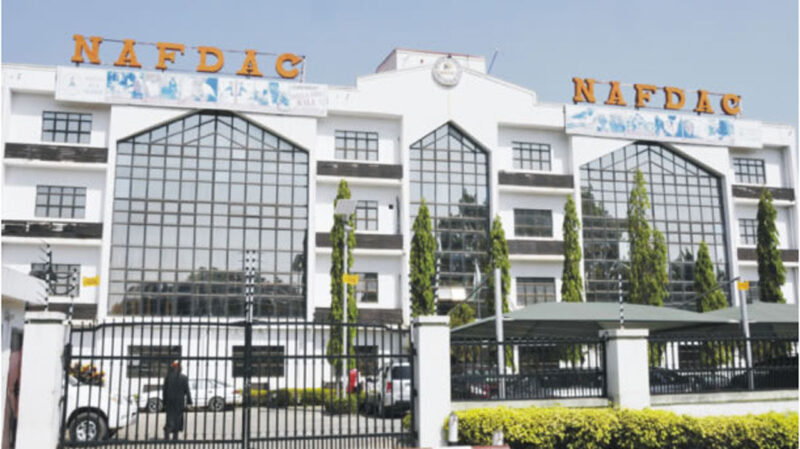
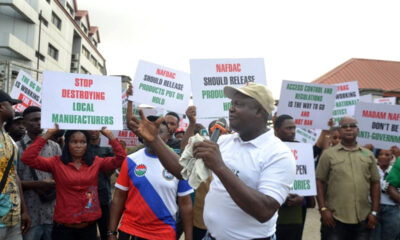
The National Agency for Food and Drug Administration and Control (NAFDAC), on Monday, took over the Ariaria International Market, Aba,for shop to shop search after it’s official discovered ‘mind-boggling” cases of fake and unregistered drugs.
“What we have seen here is mind-boggling,” Omoyeni Babatunde, the NAFDAC Deputy Director in charge of Enforcement and Federal Task Force, South-South/South-East told journalists on Monday at the Ariaria market.
Some of the mind boggling discoveries by the NAFDAC team in one of the shops included a substance suspected to be the dreaded Crystal Methamphetamine (Mkpuru Mmiri) wrapped like cigarette with foils.
The products were hidden in small cartons with Epsom Salt labels and packed behind doors in the shop.
NAFDAC also confiscated huge quantities of unregistered and banned medicines at the Patent Medicine Section of the market.
He said: “Today, people are not in the market, we have taken over and we have been working from shop to shop but no arrest made yet,” he said.
“We have been here at Ariaria since morning and press men have covered practically everything we have done here.
“What we have seen here is mind-boggling.
READ ALSO:
- SeaKing must face trial despite Adeboye’s plea, says RCCG
- Stop fighting, work with Rivers Assembly, Ohanaeze Ndigbo tells Fubara
- Troops neutralise supplier of arms to bandits in Zamfara
“We have seen Analgin Injection, Gentamicin 280mg all of which have long been banned by the agency,” he said.
Babatunde also said that some of the confiscated drugs had no NAFDAC registration number, hence not supposed to be sold in patent medicine shops.
He said the enforcement in the market was a national assignment coordinated by the NAFDAC Zonal Director, Mr Martins Iluyomade.
He said the scope of the assignment at Ariaria was to uncover unregistered products in the market.
Babatunde said that the assignment in Aba area was segmented into three locations and being executed simultaneously.
He also said the screening was the result of intelligence from inter-agency collaboration, involving the Department of State Service, Police, Nigerian Army, and NAFDAC.
He said that any product in the market without NAFDAC number had not passed through NAFDAC’s processes and not qualified to be on sale.
“If you go through NAFDAC’S mandate critically, you will see that the agency is empowered to enter any premises by force, if need be, when we reasonably suspect contravention of NAFDAC statutory regulations.
“We have to screen the entire shops because that is the scope we were given and we are being meticulous about it.
“So, one shop after the other, we are going to carry out the operation to the letter,” he said.
He said that the agency could only attach figures to the confiscated medicines at the end of the enforcement.
NAFDAC takes over Aba market after finding huge fake drugs
(NAN)
![]()
Health
Pharmacists Tackle Fake Drug Menace With New Detection Skills
Pharmacists from the Federal Capital Territory, Niger, and Nasarawa states have intensified efforts to combat the growing menace of counterfeit medicines in Nigeria through a hands-on capacity-building workshop aimed at equipping practitioners with skills to detect and isolate suspected fake drugs before they reach patients. The workshop, titled “Test and Stock for Medicines Against Counterfeiting,” was organised by the West African Postgraduate College of Pharmacists (WAPCP), Abuja Branch, in collaboration with the Bioscientific Research Group of the Department of Clinical Pharmacy and Biopharmacy, University of Uyo.
The initiative comes at a critical time, as the World Health Organization (WHO) estimates that 10.5% of all medicines in low- and middle-income countries are substandard or falsified, with the deaths resulting from the use of these products in malaria and childhood pneumonia alone estimated between 105,000 and 285,000 annually. The problem is particularly acute in Nigeria, where a 2022 report by the National Primary Healthcare Development Agency (NPHDA) suggested that up to 70% of drugs in circulation are substandard or counterfeit. While NAFDAC has contested this figure, stating that between 13% and 15% of medicines are fake, the scale of the problem remains alarming. In a recent operation, NAFDAC seized over 3 billion Naira worth of counterfeit medicines, including 10 million doses of antimalarial drugs that could have endangered over three million lives.
Counterfeit medicines represent a significant threat to public health in Nigeria. Studies have shown that the country faces a severe challenge, with drug counterfeiting accounting for an increasing percentage of the global drug market. According to the Food and Drug Administration (FDA), counterfeit medicines account for more than 10% of the world drug market. Between 2001 and 2005, Nigeria’s drug regulatory agencies reduced the circulation of counterfeit medicines from 40% to 17%, yet the issue continues to remain a major public health and socio-development burden. In 2018, the National Agency for Food and Drug Administration and Control (NAFDAC) destroyed fake foods and drugs worth over $10 million in the country. The market is highly import-dependent, sourcing 70% of its finished products from abroad and relying almost entirely on other countries for active pharmaceutical ingredients for local manufacturing, creating vulnerabilities that counterfeiters exploit.
READ ALSO:
- El-Rufai Remains in Custody as Court Refuses to Vary “Stringent” Bail Terms
- Teachers’ Union Demands Safe Rescue of Victims Before Schools Reopen in Oyo
- Military Free 47 Hostages from ISWAP Enclave in Lake Chad Region
Speaking at the event, Prof. Sunday Awofisayo, Professor of Biopharmaceuticals and Clinical Pharmacy at the University of Uyo and principal researcher of the Bioscientific Research Group, said pharmacists must take a more active role in assuring the quality of medicines dispensed to Nigerians. He noted that pharmacists are recognised as drug experts and should be able to assure patients that medicines contain the active ingredients stated on their labels. According to him, counterfeit, falsified, and substandard medicines can lead to treatment failure, prolonged illness, organ damage, and even cancer when harmful substances are substituted for genuine ingredients. “If the quality is not there from the beginning, no matter how good the consultant or specialist is, treatment outcomes will be compromised,” he said. Awofisayo noted that the workshop was designed to refresh knowledge acquired during professional training and provide practical skills in detecting counterfeit medicines through basic laboratory procedures, including colourimetric testing and thin-layer chromatography (TLC) . Research published in the Journal of Pharmaceutical Policy and Practice has shown that visual inspection alone can identify many deficiencies in dosage units and packaging information. All four falsified medicines detected in a recent Nigerian study were readily identifiable, primarily from serious spelling errors in labelling and from manufacturer names that could not be verified using internet resources.
Key visual deficiencies observed in counterfeit medicines include non-uniformity of dosage units, where containers have multiple different types of tablets with different embossings and thickness; discolouration of tablets, such as brown discolouration in chloroquine tablets that correlated with API content of only 81.9% compared to 100.6% in white tablets; poorly manufactured tablets with ridges, erosion, cracks, and powder formation indicating physical instability; and incomplete filling of blisters with empty compartments or half tablets, indicating insufficient quality assurance.
Also speaking, the Zonal Coordinator of WAPCP, FCT Zone, Dr. Tijani Mufutau, described counterfeit medicines as a major threat to public health, saying pharmacists have a responsibility to verify the authenticity of medicines before they are supplied to patients. He noted that fake medicines contribute to therapeutic failure, organ damage, death, and increased healthcare costs due to prolonged hospital stays and additional treatments. Workshop lead and immediate past Zonal Coordinator of WAPCP Abuja Zone, Dr. Abubakar Danraka, said the training formed part of efforts by pharmacists to complement existing strategies aimed at reducing the circulation of counterfeit medicines. He explained that the programme focused on empowering pharmacists with practical skills that can be deployed immediately without reliance on expensive laboratory equipment. Danraka noted that the high cost of sophisticated quality assessment equipment had limited medicine testing in many health institutions, adding that the initiative sought to bridge that gap. According to him, strengthening NAFDAC and other relevant institutions through increased funding and support would help scale up such interventions across the country.
READ ALSO:
- Galatasaray Reject €125m Bid for Victor Osimhen
- Nigeria, UK Strengthen Defence Ties as Senior British Military Officer Visits Maiduguri
- Kwara Poly Suspends Lecturer for Flogging IJMB Exam Candidates
The Global Pharma Health Fund (GPHF)-Minilab is the most widely used screening device for medicine quality surveillance in low-resource settings. The analysis consists of visual inspection of packaging and dosage units, simplified disintegration testing for solid oral dosage forms, and qualitative and semi-quantitative analysis of active pharmaceutical ingredients using thin-layer chromatography (TLC) . Additional training of local personnel significantly improved the results of both TLC analysis and image evaluation. Photographs of visual deficiencies and TLC analysis results have been compiled as teaching materials for future training courses of pharmacy staff and healthcare workers. A recently developed open-source smartphone application named “TLCyzer” enables photography and image analysis of TLC plates for improved quantitative evaluation of medicine quality screening. However, the application increased sensitivity to 62.5% but led to an unacceptably low specificity of 75.2%, highlighting the need for further development.
A study involving 390 pharmacists across Nigeria, published by the National Institute for Pharmaceutical Research and Development (NIPRD), identified primary challenges in combating fake medicines in the country, including inadequate inspection (90.93% of pharmacists affirmed this as a major challenge), poor cross-border enforcement (90.43%), poor collaboration among regulatory agencies (89.94%), inadequate legislation (88.83%), and online drug commerce (72.68%). While pharmacists demonstrated good knowledge of medicine counterfeiting, gaps were observed in their practices. About one-third (30.7%) indicated their current knowledge and skills were inadequate to detect counterfeit medicines. Age, years of practice, and area of practice significantly influenced detection abilities.
Former National Chairman of the Association of Community Pharmacists of Nigeria, Dr. Albert Alkali, described falsified medicines as one of the biggest challenges facing the country’s healthcare system. He said patients could suffer severe health complications, including kidney, liver, and heart damage, from consuming counterfeit medicines. Alkali urged Nigerians to obtain medicines only from registered pharmacies and seek professional guidance from pharmacists when purchasing drugs.
Participants at the workshop also called for stronger regulation, stricter enforcement of existing laws, and increased local pharmaceutical manufacturing to reduce dependence on imported medicines and improve quality control. This call aligns with recent efforts by NAFDAC to introduce regulatory tools including the NAFDAC Green Book, an online database allowing confirmation of registered medical products, and the Pharmaceutical Products (Traceability) Regulation 2024, mandating unique identifiers for every drug in circulation. Nigeria is the first country in Africa and the second in the world to deploy this level of pharmaceutical traceability.
Also speaking, Pharm. Rahma Issa, Deputy Head of Jummai Babangida Aliyu Maternity and Neonatal Hospital, Minna, said widespread circulation of counterfeit medicines was undermining treatment outcomes and negatively affecting both household and national economies. She advocated increased support for local drug manufacturing and stronger enforcement measures against offenders. Similarly, the Head of Pharmacy at the National Hospital Abuja, Pharmacist Clara Adesola, said pharmacists attending the workshop would transfer the knowledge acquired to colleagues in their respective institutions to widen the impact of the training. She noted that drug source verification, visual inspection, and the use of NAFDAC registration checks remained important measures for reducing the risk of counterfeit medicines entering health facilities.
The fight against counterfeit medicines has received international attention, with the International Pharmaceutical Federation (FIP) publishing a new curriculum guide in partnership with the WHO to support educators in ensuring that pharmacists are better able to prevent substandard or falsified medicines from reaching patients. These materials were developed with the support of the European Commission and in collaboration with five universities in sub-Saharan Africa, a region particularly vulnerable to counterfeit medicines. Additionally, the National Institute for Pharmaceutical Research and Development (NIPRD) has launched a nationwide training aimed at equipping early-career scientists with the skills and knowledge to ensure medicine security, strengthen healthcare systems, and combat the proliferation of fake and substandard drugs in the country. The training, part of the World Bank–funded IMPACT Project, targets approximately 50 young scientists from across Nigerian universities.
Participants agreed that strengthening pharmacists’ capacity to identify suspicious medicines before stocking them would significantly reduce the circulation of counterfeit products and improve patient safety across the country. As training programmes expand and detection technologies improve, pharmacists remain at the forefront of protecting Nigeria’s pharmaceutical supply chain and ensuring that patients receive safe, effective, and genuine medicines.
Pharmacists Tackle Fake Drug Menace With New Detection Skills
![]()
Health
Tinubu Approves ₦37.4bn Upgrade of Six Cancer Treatment Centres Nationwide
President Bola Ahmed Tinubu has approved the establishment and upgrade of six world-class cancer treatment centres across Nigeria’s geopolitical zones in a major step aimed at strengthening the country’s healthcare system, expanding access to specialised oncology services and reducing the growing reliance on medical treatment abroad.
The initiative, valued at approximately ₦37.4 billion, is being implemented by the Federal Ministry of Health and Social Welfare in partnership with the Nigeria Sovereign Investment Authority (NSIA) as part of the administration’s broader healthcare transformation agenda.
The approval was disclosed by the Special Assistant to the President on Social Media, Olusegun Dada, who said the project is designed to improve cancer diagnosis, treatment and long-term patient care across the country while addressing the shortage of advanced oncology facilities.
According to him, the programme builds on the success of earlier healthcare interventions such as the NSIA-LUTH Cancer Centre, which has become one of Nigeria’s leading cancer treatment facilities since its establishment.
The latest intervention seeks to create a nationwide network of modern oncology and nuclear medicine centres equipped with cutting-edge technology capable of delivering comprehensive cancer care closer to patients’ homes.
Under the project, six federal teaching hospitals have been selected to host the upgraded oncology centres.
The approved facilities are:
- University of Benin Teaching Hospital (UBTH), Benin City
- Ahmadu Bello University Teaching Hospital (ABUTH), Zaria
- Federal Teaching Hospital Katsina (FTHK)
- University of Nigeria Teaching Hospital (UNTH), Ituku-Ozalla, Enugu
- Jos University Teaching Hospital (JUTH)
- Lagos University Teaching Hospital (LUTH), Lagos
The centres are being equipped with advanced cancer treatment technologies, including linear accelerators, radiotherapy systems, nuclear medicine equipment, imaging technologies and other specialised diagnostic tools used in the detection and treatment of various forms of cancer.
READ ALSO:
- Dangote: My Goal Is to Industrialise Africa, Not Accumulate Wealth
- JAMB Abolishes Degree Admissions in Colleges of Education, Makes NCE Mandatory
- Kanu Expels Ex-IPOB Leader, Nine Others Over Alleged Misconduct
Health experts say the facilities will significantly improve access to cancer screening, diagnosis, chemotherapy, radiation therapy and other specialised oncology services that are currently limited in many parts of the country.
The project was initially conceived to address longstanding gaps in cancer treatment infrastructure and to reduce the number of Nigerians forced to travel abroad annually for specialised medical care.
According to healthcare stakeholders, Nigeria records more than 120,000 new cancer cases every year, while limited treatment facilities and inadequate access to radiotherapy services have continued to pose major challenges for patients.
The Coordinating Minister of Health and Social Welfare, Professor Muhammad Ali Pate, had previously explained that President Tinubu approved NSIA’s direct involvement in the project to accelerate implementation, improve transparency and ensure efficient project delivery.
Pate noted that the funding package combines previous budgetary allocations with fresh investments aimed at ensuring the successful completion and long-term sustainability of the oncology centres.
Beyond infrastructure development, the programme also includes the training of medical personnel, procurement of specialised equipment and the establishment of operational frameworks to ensure world-class service delivery.
As of mid-2026, three of the six approved oncology centres have already been completed and commissioned.
The completed facilities are located at:
- Federal Teaching Hospital Katsina
- University of Nigeria Teaching Hospital, Enugu
- University of Benin Teaching Hospital, Benin City
The commissioning of the centres represents a significant milestone in the Federal Government’s efforts to improve access to specialised healthcare services.
Among the newly commissioned facilities, the Katsina Oncology Centre has attracted considerable attention due to its installation of TrueBeam radiotherapy technology, regarded as one of the most advanced radiation treatment systems available globally.
Medical experts say the technology allows doctors to deliver highly precise radiation treatment while minimising damage to healthy tissues surrounding cancerous cells, thereby improving treatment outcomes and patient safety.
Officials believe the upgraded oncology centres will help reduce the financial burden associated with overseas medical treatment, improve early detection of cancer and increase survival rates among patients.
The initiative also aligns with the Federal Government’s broader Health Sector Renewal Investment Programme, which seeks to modernise healthcare infrastructure, strengthen tertiary healthcare institutions and expand access to specialised medical services nationwide.
In addition to oncology services, the programme includes investments in diagnostic centres, workforce development, emergency medical services and other critical healthcare infrastructure projects.
Stakeholders have described the project as one of the most significant investments in cancer care infrastructure in Nigeria’s recent history, with the potential to transform oncology treatment and position the country as a regional healthcare destination.
With three centres already operational and the remaining facilities progressing toward completion, the Federal Government says the initiative will improve access to life-saving treatment, reduce medical tourism and strengthen Nigeria’s capacity to manage cancer and other complex diseases within its borders.
Tinubu Approves ₦37.4bn Upgrade of Six Cancer Treatment Centres Nationwide
![]()
Health
VIDEO: Nigerian Doctors in Canada Have Become ‘Medical Agberos’ — Doctor Alleges
A Canada-based Nigerian doctor, Arinze Onwumelu, has stirred intense reactions online after alleging that some Nigerian medical practitioners in Canada have turned into what he describes as “medical agberos,” accusing them of aggressively competing for patients in a manner akin to transport touts at Nigerian motor parks.
The doctor made the claim in a video shared on his Instagram page on Wednesday, where he lamented what he described as unhealthy rivalry among healthcare professionals, particularly within the Nigerian medical community in Edmonton, Alberta.
Drawing a comparison with transport touts commonly found at motor parks in Nigeria, Onwumelu said doctors now “drag” patients from one another in a manner similar to how touts lure passengers into boarding their vehicles. “This Canada where we are, Nigerian doctors have turned to medical agberos,” he said. Explaining his analogy, the doctor referenced the activities of transport touts at major bus terminals, where passengers are persuaded to abandon one vehicle for another with promises of cheaper fares and faster journeys. “Now we have doctors that do that here. They drag patients like there is no tomorrow. It has gotten to the stage that they kill themselves for patients,” he said.
The doctor further expressed concern over what he described as growing competition between older and younger practitioners, questioning why senior doctors would compete with younger colleagues for patients. “I don’t see any reason why a 70-year-old man would be dragging patients with a small boy. I don’t see any reason why a practice owner wouldn’t release a patient for a small boy,” he added. According to him, the situation could have long-term consequences for the medical community if not addressed. “But I have news for you, this city will be scattered in five years,” he warned. Describing the trend as embarrassing for the profession, Onwumelu said the conduct of some practitioners was damaging the image of doctors within the community and could adversely affect the chances of Nigerian doctors who plan to migrate to Canada to practice in the future. “This is disgraceful for our professionals as doctors. We’ve now become medical agberos and we would be the ones to damage this city,” he said.
READ ALSO:
- Dickson Fires Back at Obi, Kwankwaso Supporters: ‘Stop Running Down NDC
- World Cup 2026 Kicks Off as Mexico Renew Rivalry With South Africa
- Ceasefire Near Collapse as US Launches Second Night of Strikes on Iran
His remarks quickly sparked debate on social media, with many users disagreeing with the comparison, while others questioned what exactly he meant by doctors “hustling” for patients. Several commenters argued that building a patient base is a normal part of professional practice and should not be compared to the activities of transport touts. Others, however, expressed concern that unethical competition could damage the reputation of Nigerian professionals abroad. @labalingo wrote: “I trust the system will root them out. Why I like the system abroad is they will give you a very long rope and allow the evidence to build up and then gbosa! You end up in jail.” @ann_omatf countered: “Calling medical professionals ‘agberos’ because they are building patient bases abroad is a stretch. They didn’t come to play.” @rexzeeefied011 questioned: “How’s that so? Are they given target as to how many clients they must treat??” @kelvinEda91 observed: “Anything wey Nigerians touch no worry e no fit be the same again. Especially the desperate ones.” @PlacidChief added: “Nigerians have a value problem and tend to be stupid most times. Greed will be the end of a lot of people.”
The controversy comes amid a growing presence of Nigerian medical professionals in Canada. The Canadian Association of Nigerian Physicians and Dentists (CANPAD) , a not-for-profit association registered in Ontario, Canada in 2001, recognizes and represents the professional and social interests of physicians and dentists of Nigerian descent living in Canada. CANPAD members meet annually across different provinces, and the organization offers scholarships providing financial assistance to students of African descent enrolled in Canadian institutions of higher learning. The association has approximately 2,000 members across the country, reflecting the significant and growing Nigerian medical community in Canada.
Nigerian doctors in Canada have also faced significant challenges, including reports of unconscious bias and systemic discrimination. A Nigerian medical doctor practicing in Calgary recently shared insights on these challenges, arguing that black immigrants start at a significant disadvantage in the Western job market. “As a black person in the West, you already have minus 30 percent. If you’re going for an interview, you already have minus 30 percent just for being black,” the doctor stated, adding that having an African name or a pronounced accent further deducts from one’s initial standing. The doctor described how even after prescribing treatment, a white patient would leave his clinic and go to ask the receptionist if the prescription is okay. “People always question you when you look different. People always question you when you’re black. Is he really a good doctor?” he said. Another professional, Dr. Zoe, likened the experience to a Nigerian proverb: “You as a black guy, you have to work three times harder than the local guys to be where they are.” Before moving to Canada, one doctor struggled to secure interviews despite his qualifications until a supervisor advised him to “remove the Nigerian thing” from his CV. “The moment I did that, I had about seven interviews in one week,” he claimed.
The term “agbero” has gained international recognition. In 2024, the Oxford English Dictionary officially included “agbero” in its lexicon, defining it as “a person who works as a tout at car parks and bus stops, collecting money from passengers and drivers, and ushering passengers onto vehicles.” The word is part of a growing list of Nigerian English terms now recognized by the prestigious dictionary, alongside “japa,” “419,” “eba,” and “suya,” among others.
Onwumelu’s warning raises important questions about professional ethics, cultural integration, and the reputation of Nigerian professionals abroad. As more Nigerian doctors seek opportunities in Canada, the behaviour of a few could potentially impact the perception of the entire community. The incident also highlights the broader tension between building a successful practice in a competitive healthcare system and maintaining the professional decorum expected of medical practitioners in Canada. Whether Onwumelu’s allegations reflect an isolated phenomenon or a growing trend remains to be seen, but his video has undoubtedly opened a necessary conversation within the Nigerian medical diaspora.
"Nigerian doctors in Canada have turned into medical agberos. The same way agberos hustle for passengers in Mazamaza is exactly how some Nigerian doctors in Canada hustle for patients. Soon, they will scatter the country like they have done in several other places."
— Wave Talent Caster 🌟 (@wavetalentcastr) June 10, 2026
VIDEO: Nigerian Doctors in Canada Have Become ‘Medical Agberos’ — Doctor Alleges
![]()
-
metro3 days agoVIDEO: Jubilation as Kidnapped Family Is Freed After Sunday Igboho’s Two-Hour Ultimatum
-
metro3 days agoPolice Deny Sunday Igboho’s Role in Oyo Kidnap Victims Release
-
metro1 day agoJUST IN: One Injured As Bomb Explosion Rocks Lagos Market
-
metro2 days agoFG Orders Immediate Halt of Ibadan-Ife-Ilesa Road Work – Here’s Why
-
metro2 days agoOyo School Kidnapping: Troops Tighten Siege as Abductors Drop Key Demands
-
metro2 days agoNo Evidence of State-Sponsored Christian Persecution in Nigeria — UN Expert
-
Education3 days agoJAMB Abolishes Degree Admissions in Colleges of Education, Makes NCE Mandatory
-
metro22 hours ago‘He Died in My Arms’ — General Rabe’s Wife Contradicts Official Death Account