

Opinion
Pounding yams on stubborn bald heads
Pounding yams on stubborn bald heads
Tunde Odesola
(Published in The PUNCH, on Friday, June 6, 2025)
Jonathan Love and Taylor Steele are Americans. They are also my buddies at work. Jonathan is black; Taylor is white. The three of us could have perished in a ghastly auto accident on the morning of Tuesday, June 3, 2025, with me behind the wheel. “I need a dip, soda and sausage biscuit,” Taylor said with the expectation of a farmer on a rainy day. “I need soda and a sausage biscuit,” Jonathan stated assuredly like a pilot on a fine-weather day. So, I pulled off the highway into a gas station, and the two hopped out like students returning to school after a long holiday.
Drenching sugar, dripping salt and embalming preservatives; oh, how I dislike fast foods! The US, statistics say, devours more sugar than any other nation on God’s spinning earth. Rather than eat fast food, I’ll snack on rat neutraliser – I don’t want to say poison. I mean, I prefer home-made meals, anytime.
While Jonathan and Taylor were gone, I reached for my phone and entered the fray of modern distraction – Facebook, the ‘bolekaja’ of social media. ‘Bolekaja’ is a Yoruba slang for ‘alight, let’s fight’ – a fitting name for a platform whose oxygen is argument.
None of the drama in the ‘Bolekaja’ was interesting, so I migrated to WhatsApp. WhatsApp is the ‘Face Me–I–Slap You’ apartment of social media, where you’re safe in your room, but the moment you step out to mingle, you could be hit by anything.
A banker friend in the UK, Adeola Ojo, had sent me some skits on WhatsApp. I was watching one of the skits when Taylor opened the passenger door and sat beside me in the front while we waited for Jonathan. Taylor is in the habit of peeking at people’s phones, but I don’t mind. Mouth-watering Nigerian foods were on parade in the skit I was watching when Taylor got in the car. Some of the sumptuous meals being scooped into colourful plates came with orisirisi combinations: amala, gbegiri and ewedu swirling like a brown-and-green river; edika ikong cuddling fufu; eba serenading afang; moin moin hugging eko; cocoyam blessing bitterleaf soup; semo in tête-à-tête with oha; and ikokore – the secret of wateryam discovered by the Ijebu, rich and irresistible…while Taylor peeped away at my phone.
Then the wooden spoon scooped three large portions of snow-white pounded yam into a bowl, and Taylor, mouth ajar and mind afar, shouted, “Oh! Ice cream!” Yes, he screamed. If I were on the highway when he said that, only mercy could have sent us back to the land of the living from the gates of heaven.
Thank God we three got back to work in one piece. Thank God none of us took temporary accommodation in the morgue, pending autopsy, en route to burial. Thank God, no one was injured. Thank God! Thank God!
READ ALSO:
Taylor asked me why I was reeling with laughter, I couldn’t explain to him because he would not understand; yam is not an American staple. So, how would he understand pounded yam? I just laughed and laughed for it was the only thing I could do; oro buruku tohun, terin – gloom accommodates laughter. Since I was a kid, I had learnt that when yam transmutes, it becomes pounded yam – isu parada, o d’iyan; but here I am, America is teaching me something different.
When one arrives at work, one must work: ti a ba de ibi ise, a ma n se ni, says a wise saying from my roots. In African culture, labour is sacred, it’s not just a meal ticket. Be you a farmer, hunter, fisherman, weaver, herbalist – no matter the work you do, there’s dignity in your labour.
But there are some jobs I can never, ever do. The topmost of such jobs is the work of Abobaku – the one who is buried with the king. I cannot come and die with any king o. Ah! Lai, lai! The Abobaku concept espoused in yesteryear Yoruba culture leans more on class manipulation and superiority complex than preservation of cosmic balance.
In “Death and the King’s Horseman,” Nobel laureate Wole Soyinka, explores the themes of death, betrayal, cultural identity, duty, colonialism, disruption, metaphysics, etc when Elesin – the Abobaku in the play – refuses to be buried with the king.
Sadly, the royal manipulation of ancient times has transmogrified into political and religious manipulation today, with many political zombies dying for their godfathers and spiritual fathers. This is evident in the way millions of PSP – Poverty-Stricken People – stupidly support some politicians whose actions have worsened poverty in the land. It also accounts for why some religious leaders would sell bulletproof vests to their adherents while the Papas and Mamas go about in bulletproof vehicles.
I’m yet to find a description worse than national shame the manner the Bola Tinubu administration celebrated the mouthed completion of 30 kilometers of the 750km Lagos-Calabar coastal highway. Adults who dance on the streets, celebrating four percent as a pass mark, should be chained to the iroko tree, lest they stray into the market.
Religious manipulation has produced a multitude of fake pastors like David Ibiyeo-Money and Jeremiah Funfeyin, Idabosky, etc as well as their Muslim counterparts, who preach exploitative doctrines to yoke their gullible followers with fear and guilt, making them part with their money easily.
Another job I can never do, even if it pays $10m per month is the job of an ìwèfà . In ancient Yoruba times, an ìwèfà was the young male who catered to the needs of the king’s harem. To forestall cross-pollination and pollution of the blue bloodline, the ìwèfà is castrated. Slaves were mostly picked for this job. The ìwèfà is preserved to preserve the king’s pleasure. He’s the cockless cock that craves the corn in a bottle.
READ ALSO:
- PDP slams Tinubu’s new loan request, warns of economic consequences
- Trump bans citizens of 12 countries from entering U.S.
- FG suspends operations of 60 jets over import duty
Moses saw the Promised Land, but he didn’t enter it with the Israelites. May that not be our portion. I can never take up the job of security official during football matches, backing the field of play while action is ongoing, and watching whether some delirious fan is going to run onto the field. In the UEFA Champions League final played at the Munich Football Arena, Munich, Germany, between PSG and Inter Milan, many stadium security officials backed the pitch and watched the fans to ensure crowd control. To back the field and watch jubilating fans celebrating or mourning the 5-0 worsting of Inter by a merciless PSG side was to suffer a fate similar to that of an ìwèfà.
There are three jobs I covet. I’ve been praying to God to give me the three jobs at the same time. The first is the job of Alhaji Abdullahi Ganduje, the hardworking national chairman of the All Progressives Congress. When I get the job, I’ll be doing absolutely nothing but just busy myself with sewing many starched agbada with pockets large enough to stuff dollars and an elephant.
The second job is that of the Minister of the Federal Capital Territory, Nyesom Wike. In the office, I will be croaking and causing wahala in my state, Osun, trampling on the skulls and limbs of the living and the dead, like a crazed cow in a china shop. So simple.
The third job is by no means easier than the first two. It’s the job of the Governor of Osun State, currently held by Asiwaju Jackson Nurudeen Ademola Adeleke. On the job, I’ll work hard, eat, sleep and dance to every sound like ikoto, the spinning toy, which staggers left and right, struggling hard to stay upright by itself without support. I’ll change my first name to Ajobiewe.
But there’s one job I’m unqualified to take because of my ancestry. It’s the job of the King of Iwo. However, I dare to say I’m not a US ex-convict like the present occupier of the stool, Oba Abdulrasheed Adekanbi. If I were the Oluwo, I wouldn’t have opened my mouth to tell the world that I wish to be called the Alaafin of Iwo because I know the title of the Alaafin was only a nickname that eventually became the main name. The actual title of the ruler of Oyo was Oloyo of Oyo, according to world-renowned Ifa scholar and priest, Chief Ifayemi Elebuibon.
In a telephone interview with me, Elebuibon said, “The name of the ruler of Oyo in ancient times was Olóyo Òrò-mòko (the powerful owner of Oyo Òrò who drinks pap) or Oba Eleyo Ajori Aje Olu Eni Gbara (the king who eats choice dishes cooked with shea butter).”
If I were the Oluwo, I would be content with my title, Oluwo, which means the god or lord of Iwo (Oluwa Iwo), instead of seeking the title, Alaafin, whose literal meaning – owner of a palace – is not as powerful as Oluwo.
Also, I will not rant in a viral video that Iwo was never under Ibadan when Ibadan had a standing army that defended Yoruba land, which included Iwo, against Fulani incursion. If I were the Oluwo, I’d keep my mouth shut and not belch when needless.
Email: tundeodes2003@yahoo.com
Facebook: @Tunde Odesola
X: @Tunde_Odesola
Pounding yams on stubborn bald heads

Opinion
Lesson from Dotun Oladipo’s Brave Daughters, by Bamidele Johnson
Lesson from Dotun Oladipo’s Brave Daughters, by Bamidele Johnson
I hope to grow old. I want to see my kids become real adults, find their own feet, make mistakes, recover from them, and perhaps one day complain that their own children are giving them grey hairs. I want that plainly stated before anything else, as everything that follows might read as a man agreeing to an early exit rather than a man simply being honest about the odds.
I want the decades. I want to become the grandfather who repeats the same stories until nobody bothers correcting him anymore. But wanting a thing and being granted are different things. The last year has made that difference harder to ignore than I would like. I have lost many friends recently to keep thinking that optimism is my natural resting state. Some of these men had better blood pressure than mine, better habits, better everything that is supposed to count. It did not save them.
There is no formula I know that reliably separates the men who make it to 70 from those who do not. Anyone who says he knows one is selling something. So, I do not assume that old age is an already booked destination. Even if I once did, which I doubt, the last three years have cured me of such an illusion. As such, I treat it as a hope rather than an expectation, and I have found that a more honest way to live.
It is exactly why I want something placed on record now, while I am still able to place things on record, rather than leave it for people to guess what my wishes were in the fog of a funeral week. If I do not make old bones, my children are not to be asked to read tributes at my funeral. Not one line, however short, however lovingly written.
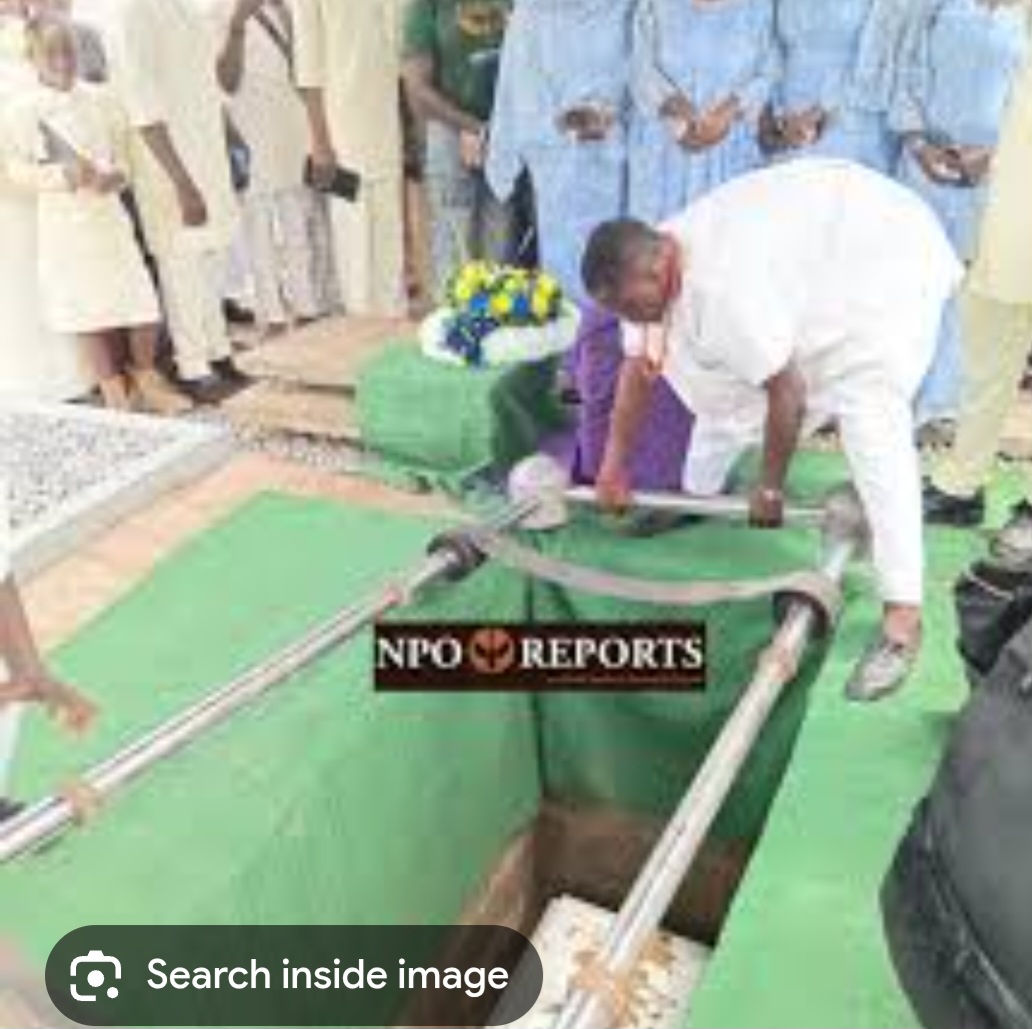
This, for me, was settled today rather than re-opened. At Dotun Oladipo’s funeral service, his three daughters took turns to read their tributes to their dad, and I found myself watching them with awe. There was a kind of strength in them that I do not possess. It is the strength needed to stand in front of a hall brimming with grieving adults and speak about a man they have just lost. Forever. Strength, however, is not the same as ease. I could see plainly what that strength was costing them as they read. Their voices caught. Their composure held and then did not hold and then held again through sheer will.
In front of them, in the pews, men and women considerably older than them came undone in ways the girls themselves were somehow managing to resist. I went mightily close. Some of the sobbing was quiet, the type people try to fold into a handkerchief. Some of it was not quiet at all, the kind that announces itself whether or not you want it.
Those young women honoured their father with a grace that is beyond me. What they did was astonishing. So, what I am attempting is an observation of a custom I have now watched wound people. This was not the first time I had watched this particular ritual extract more than it should from people already running on fumes. I saw an earlier and harder version of it at a friend’s wake back in 2015.
The first son was called forward to read his father’s tribute, and he could not do it. He tried, but the words would not come, and he stood there in front of a crowd of mourners, with his grief simply refusing to organise itself into sentences. The officiating minister, rather than releasing him from the task, urged him to continue. I sat fizzing with sorrow and ire. He could not go on and, eventually, the minister accepted, but not before insisting a while longer than it should have reasonably taken. His younger brother was called up next, presumably on the theory that if one grieving son could not manage it, maybe another one could. He flunked it in the same way. Grief does not distribute itself more conveniently among siblings just because a programme has been printed and needs to be followed.
I have turned that memory over many times since, trying to work out why this part of the rites is treated as mandatory in the first place. I have not found a satisfying answer. Maybe it comes from a belief that a child’s words carry more weight than anyone else’s, which may even be true, but weight is exactly the problem when those carrying it are struggling to hold themselves together with nothing but adrenaline and the fear of dissolving in public.
Maybe it is simply inertia, the reason we still do a hundred things at funerals that nobody can explain the original purpose of. Either way, I have stopped looking for the justification. I no longer think one exists that is good enough to weigh against what I watched happen to that boy in 2015.
So, let this stand as my instruction rather than my preference, the kind of thing I would rather state plainly now than leave for my children to infer later from how uncertain I sound when the subject comes up in passing. If I do not get the old age I am hoping for, my children will not be asked to read a single word over my body. Someone else can speak for me. A friend, a stranger with a steadier voice and a smaller stake in the loss, anyone whose grief will not be quite so total that standing upright becomes almost impossible.
My children, of course, will sit in front and fall apart if that is what the day requires of them, but without the microphone. That, at least, is one small mercy I intend to arrange for them while I am still here to arrange it.
Dotun deserved every bit of the send-off his daughters gave him today, and I suspect he would have been the first to tell them to sit down and let someone else carry the weight for a while. He did not get a say in that, as none of us ever do once we are the ones being spoken of rather than the ones speaking. Rest well, Dotun. You raised three young women whose strength I will not soon forget. That alone says everything worth saying about the man you were.
Opinion
‘Tinubu Will Win Again in 2027’ — Charismatic Bishops’ Secretary
‘Tinubu Will Win Again in 2027’ — Charismatic Bishops’ Secretary
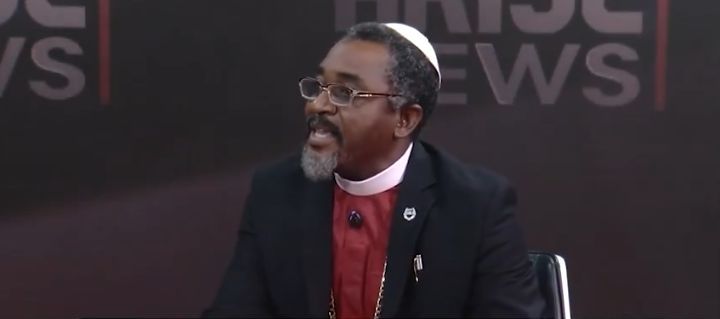
A senior Nigerian cleric, Archbishop Chivir Chianson, has declared that President Bola Tinubu will retain the presidency after the 2027 general election, attributing the prediction to a message he said came from God.
Chianson, who serves as Secretary General of the Charismatic Bishops’ Conference of Nigeria, made the statement while appearing on Arise Television on Saturday.
Rather than basing his prediction on political calculations, the archbishop said his confidence came from what he described as the prophetic role of bishops.
He maintained that the conference had previously spoken about Tinubu’s political future based on what he said was divine revelation and that the President would return for another term.
Chianson also predicted that Tinubu’s performance would improve if he wins the 2027 election.
READ ALSO:
- DSS warns Osun churches, mosques, markets over alleged terrorist attack plot ahead of 2027
- ‘Tinubu Will Win Again in 2027’ — Charismatic Bishops’ Secretary
- Fake miracles, bogus grants: How clerics allegedly fleece Nigerians of millions
Addressing the political opposition, the cleric said the bishops could not be blamed if rival parties failed to unite or organise themselves effectively ahead of the election.
He also sought to clarify the position of the bishops when dealing with government, saying their role in speaking truth to power did not mean they should approach political leaders with hostility or disrespect.
According to him, the Constitution, alongside their religious convictions, should guide how they engage the President and the country.
Chianson said he was sufficiently confident in his prediction to promise that he would return to the Arise TV studio after the 2027 election, when he expects the result to demonstrate that the bishops’ prophecy was correct.
His comments add a religious dimension to the increasingly active political conversation surrounding the 2027 presidential race.
‘Tinubu Will Win Again in 2027’ — Charismatic Bishops’ Secretary
Opinion
Ejimakor: Kanu, IPOB Members Should Not Be Jailed Over Biafra Agitation
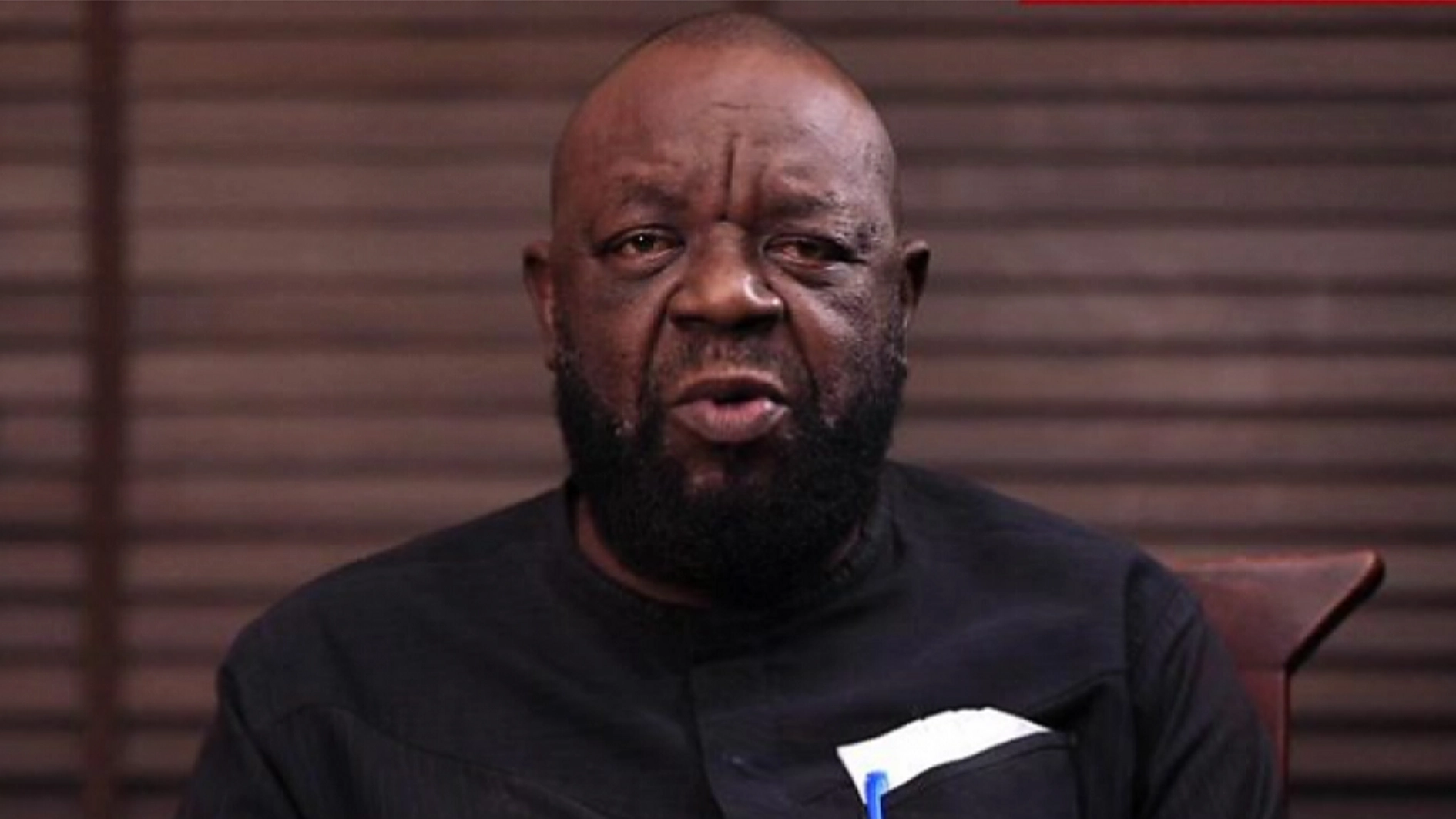
Aloy Ejimakor, Special Counsel to Indigenous People of Biafra (IPOB) leader Nnamdi Kanu, has called for the release of people he described as prisoners of conscience ahead of Nigeria’s 2027 general elections.
Ejimakor made the demand while arguing that the continued imprisonment of Kanu and other alleged IPOB members for their separatist position could further deepen political and social divisions in the country.
In a statement issued on Saturday, the lawyer said the Nigerian government should address the grievances driving calls for Biafra rather than relying on prosecution and imprisonment.
He maintained that advocating for self-determination, regardless of how controversial or forceful the expression may be, should not automatically amount to terrorism or treason.
According to Ejimakor, democratic societies should have room for political opinions that are unpopular or challenging to the existing order.
He warned that punishing people for expressing separatist aspirations could create greater resentment and make efforts at national reconciliation more difficult.
The lawyer also pointed to examples of countries and territories where demands for self-determination had resulted in political processes, including referendums.
Ejimakor argued that Nigeria should similarly consider political engagement and dialogue as a way of addressing the Biafra question.
He further criticised what he described as the criminalisation of political dissent, saying the government should focus on resolving the grievances behind the agitation.
The lawyer consequently urged the Federal Government to consider freeing what he called prisoners of conscience before the 2027 elections, arguing that dialogue and a political settlement would offer a more sustainable path to peace.
-

 metro2 days ago
Woman disguises as Muslim woman in Niqab to steal in Ado-Ekiti market, video sparks outrage
-

 metro3 days ago
Police Arrest Woman Over Fake OPay Shutdown Notice
-

 metro3 days ago
Residents Cry Out Over Poorly Constructed Entrance of Ademola Abiola Street, Demand Urgent Intervention
-

 Politics3 days ago
Remi Tinubu Appeals To South-East Voters, Says She Wants To ‘Enjoy Nigeria’ In Old Age
-

 metro1 day ago
Ondo Herbal Drink Tragedy: Survivor Vows Never to Drink Again as Death Toll Tops 30
-
 Business1 day ago
Dangote: ₦525 Refinery Shares Could Rise to ₦10,000
-

 News2 days ago
AI on the Roads: LASTMA Turns to China to Fix Lagos Traffic
-
 Politics3 days ago
Breaking the Cycle of Collective Guilt: When a Ruling Party Voice Backs Peter Obi