

metro
The concept of patience in Islam

The concept of patience in Islam
IN the name of Allah, Most Gracious, Most Merciful.
The Arabic word for patience is “Sabr,” which comes from a root word meaning to stop, detain or refrain. Having patience means having the ability to stop ourselves from despairing, to refrain from complaining and to control ourselves in times of sadness and worry. Moreover, patience enables man to resist temptations to commit sins and transgress the Laws of Allah SWT.
“O you who believe, be patient and call for patience, and bond together and revere Allah that you may succeed.” (Qur’an 3:200)
When a person understands that everything he has is from Allah SWT and belongs to Him and that Allah SWT has a plan for him, the best plan, this causes him to be patient.
The Qur’an teaches us that on the path to perfection, we need to seek help through patience: “O you who believe, seek help through patience and prayer. Indeed, Allah is with the patient.” (Qur’an 2:153)
Almighty Allah SWT tests people to ascertain who is truthful. Such is Allah’s prevailing tradition among His servants. The true believers put their trust in Allah SWT, seek help through patience, and succeed in the divine test. They are the righteous who shall attain salvation, and Allah will surely admit them to Paradise:
“Do people think that they will be left alone because they say, ‘We believe,’ and will not be tested? We indeed tested those who were before them. And Allah will certainly make (it) known (the truth of) those who are true, and will certainly make (it) known (the falsehood of) those who are liars (although Allah knows all that before putting them to test).” (Qur’an 29:2-3)
READ ALSO:
- Presidency apologises for listing Fasoranti, Madunagu on posthumous honours list
- Security agents drag out US senator from press briefing
- Tinubu missed golden opportunity to restore democracy in Rivers – Seriake Dickson
“We will surely test you until We ascertain those of you who wage jihad (strive hard in Allah’s Way) and those who are steadfast, and We shall appraise your record.” (Qur’an 47:31)
On the other hand, Allah SWT speaks about the reward of the patient: “Indeed, the patient will be paid in full their reward without any reckoning.” (Qur’an 39:10)
“No one will be granted such goodness except those who exercise patience and self-restraint, none but persons of the greatest good fortune.” (Qur’an 41:35)
There is a beautiful story in the Qur’an about the patience of Prophet Yusuf (AS). His brothers betrayed him and threw him into a well, but he was patient, and Allah raised him out of that well. He ended up in the house of one of the most powerful people of Egypt, but then Allah tested him again. The wife of the finance minister tried to tempt him, but he was patient and did not pollute himself with evil and shameful deeds. Then Allah tested him again by having him imprisoned, but he endured for the sake of Allah. In the end, after these very hard tests, Almighty Allah raised him to a lofty station, and he became one of the most powerful people in Egypt. This is the reward of patience. He said to his brothers about the key to his success: “Verily, one who is pious and patient [should know] that Allah never deprives the reward of the righteous.” (Qur’an 12:90)
The Qur’an says that those who have faith are not just patient, but more than that—they enjoin others to patience: “Enjoin one another to patience, and enjoin one another to compassion. They are the People of the Right Hand. (They will be the inhabitants of Paradise and the record of their deeds is in their right hand).” (Qur’an 90:17-18)
“O you who believe, be patient and call for patience, and bond together and revere Allah that you may succeed.” (Qur’an 3:200)
READ ALSO:
- Naked man found hanging from tree in Ogun
- Kaduna mother allegedly beats 11-year-old daughter to death
- How astrologer predicted deadly Air India plane crash
“Indeed man is in loss, except those who have faith and do righteous deeds, and enjoin one another to follow the truth, and enjoin one another to patience.” (Qur’an 103:2-3)
There are three kinds of patience:
Patience in afflictions, patience in obedience and patience to prevent committing sins.
Patience in afflictions
The life of this world was designed by the Creator of the universe as a prelude to a blissful life in the Hereafter. When we face trials, they help us grow and mature into human beings who are able to function effortlessly in this transient world. Almighty Allah says in the Qur’an:
“We will surely test you with a measure of fear and hunger and a loss of wealth, lives, and fruits; and give good news to the patient; those who, when an affliction visits them, say, ‘Indeed we belong to Allah, and to Him do we indeed return.’” (Qur’an 2:155-156)
Whatever condition we find ourselves in, and no matter what we are forced to confront, it is imperative that we open our eyes to the fact that Allah, who is the Most Wise and the Most Just, knows what is good for us. Though we shy away from facing our fears and worries, it may be that we hate a thing that is good for us and desire something that can only lead to ruin and damnation. The Qur’an says: “…and it may be that you dislike a thing that is good for you and that you like a thing that is bad for you. Allah knows, but you do not know.” (Qur’an 2:216)
READ ALSO:
- Israel attacks Iran’s nuclear sites, kills military chiefs, scientists
- Lassa fever kills 142 people, spreads to 18 states
- Saraki blasts NASS members for being ineffective
We as human beings are fragile creatures. Our tears fall, our hearts break, and the pain is sometimes almost unbearable. Even the prophets, whose connection to Allah was unbreakable, felt their hearts constrict in fear or pain. They too turned their faces to Allah and begged for relief. However, their complaints were surrounded with pure patience and pure acceptance of whatever fate Allah had decreed.
When Prophet Yaqub (AS) despaired of ever seeing his sons Yusuf or Baniyaamin, he turned to Allah and beseeched Him for relief. He said:
“I only complain of my grief and sorrow to Allah, and I know from Allah that which you know not.” (Qur’an 12:86)
Prophet Yaqub (AS) knew there was no point in raging against destiny; he knew that Allah loves and protects those who are patient.
As the Qur’an says, Prophet Ayub (AS) also turned to Allah, begging for His mercy. He was impoverished, stricken with disease, and had lost his family, friends, and livelihood, yet he bore all this with patience and forbearance:
“And (remember) Ayub, when he cried to his Lord, ‘Verily, distress has seized me, and You are the Most Merciful of all those who show mercy.’ So We answered his call, and We removed the distress that was on him, and We restored his family to him (that he had lost), and the like thereof along with them, as a mercy from Ourselves and a Reminder for all who worship Us (Allah).” (Qur’an 21:83-84).
This kind of patience means accepting what is beyond our control. It means, in times of stress and anxiety, surrendering to the will of Allah, which causes a relief beyond measure. This does not mean that we sit back and let life pass by. No! It means that we strive to please Allah in all aspects of our life—in our work and play, in our family life, and in our personal endeavors. The Qur’an says: “…to be firm or patient in pain or suffering, and adversity, and throughout all periods of panic. Such are the people of truth, the God-fearing.” (Qur’an 2:177)
However, when things do not go the way we planned or wanted, even when it seems that fears and worries are pushing us under, we accept what Allah has decreed and continue to strive to please Him.
The concept of patience in Islam
Tribune







metro
Retiring Supreme Court Justice Warns Politicians Against Giving Cows, Rams to Judges
Retiring Supreme Court Justice Warns Politicians Against Giving Cows, Rams to Judges
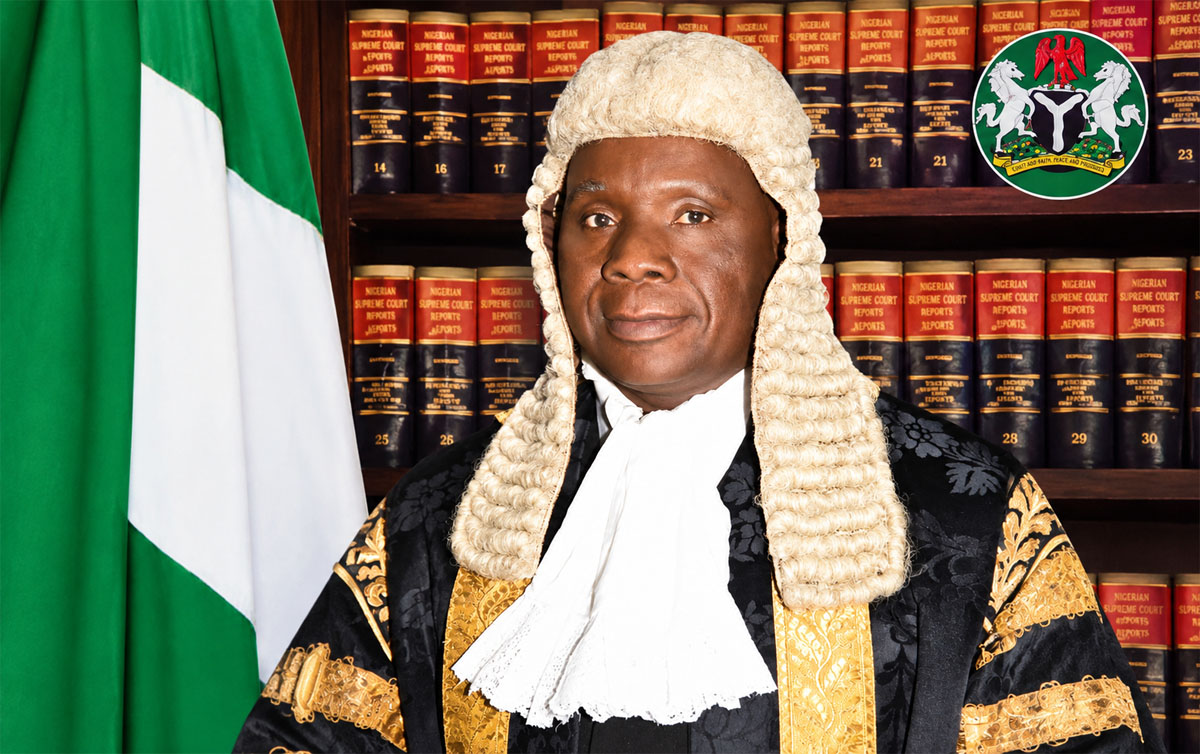
Retiring Supreme Court Justice Ibrahim Musa Saulawa has urged politicians and litigants to stop giving cows, rams and other gifts to judges, warning that such gestures could undermine judicial integrity and independence.
Justice Saulawa made the call during his valedictory court session at the Supreme Court in Abuja following his retirement after attaining the mandatory age of 70.
The retiring justice described some of the gifts presented to judicial officers as “Greek gifts” and questioned why politicians should send cows, rams and other items to Supreme Court justices.
He said he had previously raised the issue with the Chief Justice of Nigeria, Justice Kudirat Kekere-Ekun, and urged the judiciary to take steps to discourage the practice.
Saulawa said judges must maintain honesty, morality, contentment and integrity and avoid accepting anything that could compromise their independence or create an appearance of influence.
He recalled an incident from his time on the Katsina State Magistrate’s Court, when a prominent businessman, Alhaji Ali Bagobiri, offered him a Peugeot 504 car.
According to Saulawa, he rejected the vehicle despite efforts by the businessman and other prominent individuals, including the Emir of Katsina, to persuade him to accept it.
READ ALSO:
- Dangote Draws Battle Lines as Fuel Import Fight Heads Back to Court
- Tinubu Returns After 30 Days in Europe, Says ‘I’m Healthy and Ready to Work’
- NMDPRA Moves Against Fuel Pump Fraud, Threatens Licence Revocation
The businessman later appeared before Saulawa in a case involving the alleged assault of a worker, Ahmad, who was said to have spent about two weeks in an intensive care unit.
Saulawa said the accused persons were convicted and fined N7,000 each, while the victim was awarded N10,000 in damages.
The retired justice said the experience reinforced his position that judges must keep personal benefits and judicial responsibilities separate.
He also recalled his role during the June 12, 1993 presidential election crisis, when he was serving as Chief Registrar of the Court of Appeal.
Saulawa said conflicting court orders had emerged over the election and that he acted on the directive of the then President of the Court of Appeal, Justice Mohammed Mustapha Akanbi, to secure the appellate court’s registry and ensure that judicial processes were properly handled.
He said the judiciary resisted attempts to interfere with the judicial process during the crisis before the election was eventually annulled by the military government headed by General Ibrahim Babangida.
Justice Saulawa’s judicial career began in 1983 when he was appointed a Magistrate Grade II in the Kaduna State Judiciary. He subsequently served as a chief magistrate, Chief Registrar of the Court of Appeal, High Court judge in Katsina and Justice of the Court of Appeal before his elevation to the Supreme Court in November 2020.
Born in Katsina on September 29, 1956, Saulawa studied law at Bayero University, Kano, and was called to the Nigerian Bar in 1982. His retirement brings an end to a more than four-decade legal and judicial career.
At the valedictory session, the Chief Justice of Nigeria, Justice Kudirat Kekere-Ekun, praised Saulawa for his contribution to the judiciary and described his career as one marked by service and principle.
Kekere-Ekun also recalled an earlier occasion when she and Saulawa resisted an attempt to place a personal benefit before their judicial responsibilities, saying the episode underscored the importance of protecting the integrity of judicial office.
Former Chief Justices of Nigeria Mahmud Mohammed and Olukayode Ariwoola, along with other senior judicial officers and members of the legal profession, attended the ceremony.
Saulawa’s retirement leaves behind a judicial career spanning the magistracy, High Court, Court of Appeal and Supreme Court, with his final message focused on the need for judges to protect public confidence in the administration of justice.
Retiring Supreme Court Justice Warns Politicians Against Giving Cows, Rams to Judges
metro
NMDPRA Moves Against Fuel Pump Fraud, Threatens Licence Revocation

NMDPRA Moves Against Fuel Pump Fraud, Threatens Licence Revocation
The Nigerian Midstream and Downstream Petroleum Regulatory Authority (NMDPRA) has intensified its crackdown on fuel pump fraud, directing filling stations nationwide to immediately inspect, calibrate and verify their dispensing equipment following the discovery of cases of under-dispensing.
The regulator said it had identified incidents in which motorists and other consumers received less petrol than the quantity displayed on the pump, describing the practice as a serious breach of consumer trust.
Under its latest directive, operators of retail outlets must check and calibrate their fuel dispensers and totalisers to ensure that the equipment accurately measures the quantity of petroleum products sold.
The NMDPRA warned that stations found to be under-dispensing, operating with improperly calibrated equipment or otherwise compromising dispensing accuracy would be required to take corrective action.
It also warned that persistent or serious violations could lead to the revocation of operating licences.
The crackdown comes as motorists contend with elevated petrol prices across Nigeria. Recent reports put pump prices at around ₦1,350 to ₦1,400 per litre in Lagos, with prices reaching about ₦1,450 in Abuja and higher levels in some other locations.
The combination of higher pump prices and inaccurate dispensing has heightened concerns about the amount of fuel consumers actually receive for their money.
READ ALSO:
- $2.1m Land Suit: Court Orders Wike’s Son to Produce American Passport
- Two Nigerians Jailed 15 Years Over $2.4m US Cyber Fraud
- Osogbo Food Bonanza: Angry Customers Loot Warehouse After Operators Vanish
The problem, however, is not necessarily limited to deliberate manipulation. Faulty or poorly calibrated dispensing equipment can also cause inaccurate measurements, making regular inspection and verification important for both consumers and station operators.
The Petroleum Products Retail Outlets Association of Nigeria (PETROAN) has directed its members to inspect their dispensing meters following the NMDPRA warning.
PETROAN National President Billy Gillis-Harry said the association held an emergency meeting after the regulator raised the issue and subsequently instructed its members to check their equipment nationwide.
He also urged motorists to pay attention to the quantity displayed on the pump while buying fuel and to request receipts for their purchases.
The NMDPRA has also called on major industry associations, including the Major Energy Marketers Association of Nigeria (MEMAN), Depot and Petroleum Products Marketers Association of Nigeria (DAPPMAN), Independent Petroleum Marketers Association of Nigeria (IPMAN) and PETROAN, to ensure that their members comply with the directive.
The latest enforcement drive forms part of the regulator’s wider responsibility to protect consumers and ensure transparency in petroleum product transactions.
The NMDPRA has separately said that petrol pump prices are determined by market forces under the Petroleum Industry Act 2021 and are not fixed by the regulator. It has also said it is working with the Federal Competition and Consumer Protection Commission (FCCPC) to monitor practices including price-gouging, collusion, under-dispensing and compromised product quality.
The regulator has urged consumers and industry stakeholders to report suspected irregularities through its feedback and reporting channels for investigation and possible enforcement.
For motorists, the latest directive means greater attention should be paid to the quantity shown on fuel dispensers, receipts and any noticeable discrepancy between the amount paid and the fuel delivered.
The NMDPRA’s warning also puts filling station operators under increased pressure to ensure that their equipment remains properly calibrated and that consumers receive the full quantity of petrol or other petroleum products for which they have paid.
NMDPRA Moves Against Fuel Pump Fraud, Threatens Licence Revocation
metro
$2.1m Land Suit: Court Orders Wike’s Son to Produce American Passport

Wike’s Son Jordan Faces Fresh Court Twist as Judge Orders American Passport Produced
A Federal Capital Territory High Court sitting in Maitama has ordered Jordan Ezenwo Nyesom-Wike, son of FCT Minister Nyesom Wike, to produce his American passport in court as hearing continued in a $2.1 million Abuja land dispute.
Justice Sylvanus Oriji issued the order on Tuesday following an application by counsel to the claimants, Hamza Dantani, during cross-examination of Jordan in the suit marked CV/008/2026.
The case was filed by Safwan Garba GY and GY Global Oil and Gas Nigeria Limited, who allege that Jordan agreed to facilitate the acquisition of 60 hectares of land in Abuja—30 hectares each in Katampe and Guzape.
According to the claimants, they first met Jordan in London and later met him in Abuja, where they allegedly sought his assistance in securing the properties.
They allege that Jordan demanded $2.1 million as a facilitation fee, with $2 million allegedly intended for his father and $100,000 for himself.
The claimants further allege that the money was handed over on September 26, 2025, in the presence of Adamu Sani, Aliyu Sarki and Sai Wani, while Jordan was accompanied by Onor Sandy.
READ ALSO:
- Trump Denies Offering Iran Sanctions Relief, Release of Frozen Funds
- Nigeria XI vs Guinea-Bissau: Awoniyi, Lookman, Adams Lead Super Eagles Attack
- Federal Workers Back N500 Petrol Demand, Threaten Three-Day Warning Strike
They claim that after receiving the money, Jordan failed to facilitate the land acquisition or refund the funds and subsequently became unreachable.
Jordan has denied the allegations.
During cross-examination, Dantani questioned Jordan about his whereabouts on September 26, 2025. Jordan told the court that he was outside Nigeria on that date and had travelled using his American passport.
Dantani then asked the court to compel him to produce the document. Justice Oriji granted the application and ordered Jordan to bring the passport before the court.
The passport is expected to be relevant to the parties’ competing accounts of Jordan’s whereabouts on the date the claimants allege the $2.1 million was paid.
Earlier in the proceedings, the claimants’ counsel also asked Jordan to write his full name and signature five times each on a plain sheet of paper. The application was granted without objection from the defence.
The wider dispute is linked to a joint venture agreement dated October 17, 2025, involving Jordan and two companies, Apostle Associate Limited and Creekstone General Contractor Ltd.
According to the claimants’ statement of claim, the proposed project involved the construction of 24 units of six-bedroom fully detached duplexes on 1.7 hectares of land at Guzape New Extension and 1.5 hectares at Katampe New Extension.
The claimants were allegedly expected to contribute $4.2 million, valued at about ₦6.3 billion, while Jordan was to provide the land.
The defence has disputed the claimants’ account of their dealings with Jordan, including the allegation that he received the $2.1 million.
The court has not determined the merits of the competing allegations, and the proceedings remain ongoing.
Justice Oriji adjourned the case until Wednesday for continuation of the hearing.
Wike’s Son Jordan Faces Fresh Court Twist as Judge Orders American Passport Produced
-

 International3 days ago
Iran Claims Capture of Second US Underwater Drone in Strait of Hormuz
-

 metro1 day ago
Osogbo Food Bonanza Turns Nightmare as Discount Vendor Vanishes With Customers’ Millions
-

 News3 days ago
Anambra Govt Demands Unreserved Apology From Peter Obi Over Debt Claims
-

 News3 days ago
Fake Agency Scandal: Gbajabiamila Says He Never Betrayed Tinubu’s Trust
-

 metro3 days ago
Woman Busted With Alleged Alcohol Hidden in Water Pack at Ogun Prison
-

 metro3 days ago
Passenger Dies After Jumping From Moving Bus In Lagos
-

 metro2 days ago
24 Hours in Darkness: Iju Ishaga Residents, Businesses Count Losses as Ikeja Electric Fails to Restore Power
-

 Politics3 days ago
2027: NDC State Chairmen Reject Obi-Kwankwaso Movement’s Parallel Structures