Iran holds state funeral for military leaders killed in Israel conflict - Newstrends
Connect with us

International

Iran holds state funeral for military leaders killed in Israel conflict

Published

on

Iran holds state funeral for military leaders killed in Israel conflict

A state funeral has been held in Iran for about 60 people, including military commanders and nuclear scientists, killed during the 12-day conflict with Israel.

Coffins draped in the Iranian flag, bearing portraits of deceased commanders, were flanked by crowds near Tehran’s Enghelab Square.

The conflict ended with a ceasefire earlier this week, after the US became directly involved by bombing key nuclear sites in Iran.

Huge crowds of mourners dressed in black chanted slogans, waved Iranian flags and held portraits of those killed.

Ahead of the event, a media campaign urged people to participate, with authorities providing free bus and metro rides. Government offices were shut for the day.

Among those laid to rest on Saturday was Mohammad Bagheri, the highest-ranking military officer in Iran who was chief of staff of Iran’s armed forces.

Bagheri was to be buried with his wife and daughter, who were killed in an Israeli strike. In total, Iranian authorities said 627 people were killed in Iran. Israeli officials said 28 people were killed in Israel following missile attacks by Iran.

Hossein Salami, commander-in-chief of the Islamic Revolutionary Guards, and nuclear scientists including Mohammad Mehdi Tehranchi – head of Azad University in Tehran – were also among those laid to rest.

READ ALSO:

The funeral was attended by prominent figures including Iranian President Masoud Pezeshkian and Rear Admiral Ali Shamkhani – an advisor to the country’s supreme leader, Ayatollah Ali Khamenei – state television showed. Shamkhani was injured in an Israeli strike earlier this month.

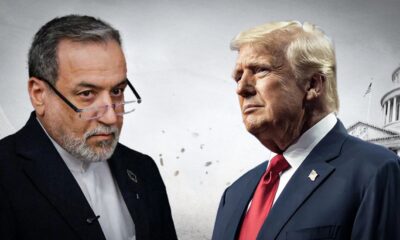
It comes after US President Donald Trump said he would “absolutely” consider bombing Iran again.

Responding to a question from the BBC’s Nomia Iqbal at a White House press briefing on Friday, he said he would “without question” attack the country if intelligence concluded Iran could enrich uranium to concerning levels.

Trump has also repeated his assertions that Iran was “decimated”, writing: “Why would the so-called ‘Supreme Leader’ Ayatollah Ali Khamenei, of the war-torn country of Iran, say so blatantly and foolishly that he won the war with Israel, when he knows his statement is a lie.”

Trump also claimed to have known “exactly where he [Khamenei] was sheltered”, saying he “would not let Israel, or the US Armed Forces… terminate his life”.

“I saved him from a very ugly and ignominious death, and he does not have to say, ‘thank-you, president Trump!'”, Trump posted on his Truth Social platform.

Iran’s foreign minister, Abbas Araghchi, warned Trump against making “disrespectful” comments about Khamenei, who claimed US and Israeli strikes on Iranian nuclear sites had achieved “nothing significant”.

“If President Trump is genuine about wanting a deal, he should put aside the disrespectful and unacceptable tone towards Iran’s Supreme Leader, Grand Ayatollah Khamenei,” Araghchi posted on X.

“The Great and Powerful Iranian People, who showed the world that the Israeli regime had no choice but to run to ‘Daddy’ to avoid being flattened by our Missiles, do not take kindly to Threats and Insults.”

Araghchi has admitted that “excessive and serious” damage was done to Iran’s nuclear sites by the recent bombings.

The head of the International Atomic Energy Agency (IAEA) has said it is still not known how much of Iran’s nuclear capabilities – including highly-enriched uranium and the centrifuges needed to purify the metal – have been destroyed or moved.

The agency’s director general Rafael Grossi also said that stopping Iran from being able to build nuclear weapons would not be achieved through military attacks.

“You are not going to solve this in a definitive way militarily, you are going to have an agreement,” he told the BBC’s US partner CBS News.

On social media, Trump claimed that in recent days he had been “working on the possible removal of sanctions, and other things, which would have given a much better chance to Iran at a full, fast, and complete recovery”.

But he said Khamenei’s comments had deterred him, declaring: “Instead I get hit with a statement of anger, hatred, and disgust, and immediately dropped all work on sanction relief, and more.”

BBC

Iran holds state funeral for military leaders killed in Israel conflict

Loading

International

Ceasefire Near Collapse as US Launches Second Night of Strikes on Iran

Published

on

Ceasefire Near Collapse as US Launches Second Night of Strikes on Iran

Ceasefire Near Collapse as US Launches Second Night of Strikes on Iran

The United States has launched fresh military strikes against Iran for the second consecutive night, following a direct order from President Donald Trump. The operation marks a sharp escalation in the ongoing conflict and signals the near-total collapse of the two-month-old ceasefire between Washington and Tehran.

According to a statement from U.S. Central Command (CENTCOM) , the latest strikes began at 5:15 p.m. ET on Wednesday and targeted multiple locations inside Iran. The military action concluded less than two hours later.

“U.S. Central Command forces began launching additional self-defense strikes today at 5:15 p.m. ET against multiple targets in Iran at the Commander in Chief’s direction,” CENTCOM said in a public statement. “The strikes are in response to Iran’s unwarranted and continued aggression.”

The second wave of US strikes focused on disabling Iranian military infrastructure, including military surveillance facilities, communication systems, air defense sites, radar installations, ground control stations, and drone command-and-control units. Precision munitions, including 49 Tomahawk missiles, were fired by US Air Force, Navy, and Marine Corps assets.

Iranian state media reported explosions in multiple southern cities, including Bandar Abbas, Sirik, Minab, Kangan, and Tehran. Residents in the capital heard air defense sirens, while two water reservoirs in Sirik were reportedly struck, leaving an estimated 20,000 residents without clean drinking water amid scorching summer temperatures.

Hours before the strikes began, U.S. Defense Secretary Pete Hegseth visited CENTCOM headquarters in Tampa, Florida, and delivered a stark warning. “Central Command will be busy tonight because President Trump said we will be hitting Iran hard, and we will be,” Hegseth told reporters.

He added, in remarks that quickly went viral: “As President Trump said, they’ve been tap, tap, tapping. Instead, they’re going to have tap, tap, tap bombs dropping on key facilities in Iran from the United States of America.” Hegseth made clear that the Pentagon is prepared to escalate further unless Iran agrees to a US-backed nuclear and security deal. “If we need to negotiate with bombs, we’ll negotiate with bombs,” he said.

Iran has not remained passive. Following the second night of US strikes, the Islamic Revolutionary Guard Corps (IRGC) launched its own retaliatory attacks against US assets in the region. Key Iranian counterstrikes include 12 ballistic missiles fired at the Muwaffaq Salti Airbase in Jordan, drone and missile attacks on US bases in Bahrain and Kuwait, and a claimed interception of a US F-16 fighter jet over the Persian Gulf, though this remains unconfirmed.

Bahrain’s interior ministry confirmed that air raid sirens sounded in Manama and Hamad Town, with falling shrapnel damaging homes and vehicles. An 11-year-old girl sustained minor injuries. Jordan’s armed forces reported shooting down five Iranian missiles, with no casualties. Kuwait’s army said its air defenses were actively engaging hostile aerial targets.

READ ALSO:

In the most serious escalation yet, Iran’s Khatam al-Anbiya Central Headquarters declared the Strait of Hormuz “fully closed” effective immediately. Iranian military officials warned that “any movement will be targeted,” including oil tankers and commercial vessels. The strait is a critical chokepoint through which approximately 20% of the world’s crude oil passes. However, CENTCOM disputed Iran’s claim, stating that “commercial ships are continuing to transit in and out of the Strait of Hormuz tonight.”

President Trump, speaking to Fox News following the strikes, doubled down on his强硬 stance. “We hit them hard yesterday, and we’re going to hit them hard again today,” Trump said. “The Iranians asked me to stop the bombings. We will stop soon — but we’ll turn them to dust if they don’t agree with us tomorrow.” Trump accused Iranian negotiators of “playing us for suckers” and dragging out peace talks. He reiterated that any final deal must prevent Iran from ever acquiring a nuclear weapon — a goal Iran denies pursuing.

Iranian President Masoud Pezeshkian, speaking just before the latest US strikes, vowed that Tehran would not bend. “Vital infrastructure is the lifeline of the people. Threatening to target them — from transportation networks to electricity and water industries — is not a display of power but a sign of desperation,” Pezeshkian wrote on X. He added: “Iran will stand firm against any pressure or threat.”

The April ceasefire — which had temporarily halted a conflict that began in late February — is now effectively dead. UN Secretary General António Guterres warned that the Middle East is “being pulled deeper into crisis,” adding that “the ceasefire is more like a lesser-fire.”

Global markets are feeling the pressure. Oil prices rose nearly $3 to $94 per barrel following Trump’s escalation threats. The Strait of Hormuz disruptions threaten to choke one-fifth of the world’s oil and natural gas supply.

Despite the military escalation, diplomatic efforts continue. A Qatari delegation arrived in Tehran on Wednesday, and the White House reportedly sent a direct message through Qatari mediators, emphasizing that the strikes were retaliatory and not intended to start a full-scale war. Whether that message will be heard amid the sound of explosions remains uncertain.

Ceasefire Near Collapse as US Launches Second Night of Strikes on Iran

Loading

Continue Reading

International

Iran Shuts Strait of Hormuz, Threatens to Target All Ships After New US Strikes

Published

on

Iran Shuts Strait of Hormuz, Threatens to Target All Ships After New US Strikes
Strait of Hormuz

Iran Shuts Strait of Hormuz, Threatens to Target All Ships After New US Strikes

Iran has announced the complete closure of the Strait of Hormuz, one of the world’s most important maritime oil routes, following a fresh wave of US airstrikes on Iran, escalating tensions between Tehran and Washington and raising fears of a wider regional conflict.

The announcement was made on Thursday by Iran’s Khatam al-Anbiya Central Headquarters, which warned that any vessel attempting to pass through the strategic waterway would be considered a legitimate target.

According to statements carried by Iranian state media and the Tasnim News Agency, Iranian military authorities declared that the Strait of Hormuz had been “completely closed to all types of vessels,” including commercial ships and oil tankers.

“Any vessel traffic through the Strait of Hormuz will be targeted,” the command said, accusing the United States of continuing military aggression against Iran.

Iranian naval officials, quoted by state television IRIB and the Mehr News Agency, also claimed that two vessels attempting to transit the waterway were struck after allegedly violating the closure order.

The development came shortly after the United States launched another round of military operations against Iranian targets, marking the second consecutive night of strikes ordered by US President Donald Trump.

READ ALSO:

In a statement, the US Central Command (CENTCOM) confirmed that American forces had carried out additional military action against multiple targets inside Iran.

“US Central Command forces began launching additional self-defense strikes today at 5:15 p.m. ET against multiple targets in Iran at the Commander in Chief’s direction,” CENTCOM said.

“The strikes are in response to Iran’s unwarranted and continued aggression.”

US officials said the operation targeted military facilities, surveillance systems, communications infrastructure and air defence assets believed to pose threats to American forces and international shipping in the region.

Earlier, US Defence Secretary Pete Hegseth signaled that further military action could follow if Iran failed to agree to terms being pursued by the Trump administration.

The Strait of Hormuz is widely regarded as one of the world’s most critical energy chokepoints, serving as a passage for a significant portion of global crude oil and liquefied natural gas exports.

The closure announcement immediately sent shockwaves through global financial and energy markets, with oil prices surging amid concerns that a prolonged disruption could impact international energy supplies and shipping routes.

However, conflicting accounts have emerged regarding the actual status of maritime traffic through the waterway. While Iranian authorities insist the route is fully closed and under military enforcement, US officials have challenged the claim, maintaining that shipping activity remains possible.

The latest escalation has heightened fears of a broader confrontation in the Middle East, with governments, energy traders and shipping companies closely monitoring developments in the Iran-US conflict and the future of the Strait of Hormuz.

The waterway connects the Persian Gulf to the Gulf of Oman and the Arabian Sea and is considered vital to global trade, making any disruption a matter of international concern.

Iran Shuts Strait of Hormuz, Threatens to Target All Ships After New US Strikes

Loading

Continue Reading

International

US Launches Fresh Strikes on Iran After Apache Helicopter Downing

Published

on

US Launches Fresh Strikes on Iran After Apache Helicopter Downing

US Launches Fresh Strikes on Iran After Apache Helicopter Downing

The United States on Tuesday launched a new wave of military strikes against Iran, describing the operation as a response to the downing of a US Army Apache helicopter off the coast of Oman a day earlier. In a post on social media, US Central Command (CENTCOM) said the strikes began at 5 p.m. EDT (2100 GMT) and were carried out as “self-defense strikes.” According to the command, the attacks were a “proportional response to unjustified Iranian aggression.” A US official told CNN that the latest operation was intended to serve as a warning to Iran and that Washington does not believe the strikes will derail ongoing efforts to negotiate an end to the conflict. Sources familiar with the operation told CNN that the initial strikes targeted Iranian air defense and radar systems around the Strait of Hormuz, a strategic waterway critical to global energy supplies. One of the sources said additional strikes were expected. According to CBS News, two unnamed US officials confirmed that among the targets of the airstrike “were Iranian military radar stations.”

The military action follows the downing of a US Army AH-64 Apache helicopter on Monday, June 8, 2026. According to a source familiar with the incident, the aircraft was struck by an Iranian Shahed drone. However, a US official said it remains unclear whether the drone deliberately targeted the helicopter or whether the strike was accidental. CBS News, citing an anonymous source familiar with the matter, reported that the AH-64 helicopter crashed because it “collided with an Iranian military Shahed-136 suicide drone.” The source did not specify whether the collision was a random incident or had other causes. US President Donald Trump confirmed the incident on Truth Social, stating: “I have just been informed by our Great Military that last night the Iranians shot down one of our highly sophisticated Apache Helicopters while patrolling over the Strait of Hormuz. There were two pilots involved, both are safe and uninjured. Nevertheless, the United States must, of necessity, respond to this attack.” The Apache helicopter has played a significant role in the conflict, particularly in efforts to intercept and destroy Iranian drones. Used by the United States and regional allies including Saudi Arabia and the United Arab Emirates, the aircraft is equipped with a 30-millimeter chain gun and rockets that military analysts regard as a cost-effective tool against drone threats. This marks the first loss of such equipment since the start of the war with Iran.

In a first-of-its-kind operation, the two crew members of the downed Apache were rescued by an uncrewed surface drone (USV) operated by US Naval Forces Central Command. The military noted that the rescue operation involved a US Navy Corsair-class unmanned surface vessel, which entered service in late March 2026. The vessel transported the pilots to another location on the water, where they were picked up by a helicopter. According to CENTCOM, both soldiers were rescued in stable condition.

READ ALSO:

In response to the downing, CENTCOM announced that US fighter jets from the Air Force and Navy struck multiple Iranian military targets near the Strait of Hormuz. According to Axios, citing a US official, the targets included Iranian air defense systemsground control stations, and surveillance radar sites in the south of the country. Explosions were reported across several locations along Iran’s southern coast, including Sirik, Bandar Abbas, Qeshm Island, Jask, and Kouh-e Mobarak. US House Speaker Mike Johnson described the strikes as “proportional and limited” and noted that he was at the White House with President Trump, Vice President JD Vance, Secretary of State Marco Rubio, and Secretary of Defense Pete Hegseth when the decision was made to resume attacks on Iran. “We lament that it became necessary,” Johnson said. The strikes were “completed” after more than three hours of military action, with CENTCOM adding that the US remained ready to defend against “unjustified Iranian aggression.”

Soon after the US strikes, Iran launched broad retaliatory attacks against American targets across the region. The Islamic Revolutionary Guard Corps (IRGC) announced it had launched a missile attack at the Muwaffaq Salti Air Base in Jordan — a facility known to host US F-35 fighter jets and other aircraft — as well as targeting sites in Kuwait and Bahrain. Kuwait’s military said its air defense systems were engaging what it described as “hostile aerial targets,” and both Kuwait and Bahrain activated emergency alerts and reported that air defenses were active in repelling attacks. Jordan’s armed forces said they intercepted and shot down five missiles launched from Iran toward the al-Azraq area in Jordan. The military stated that debris from the interception operation fell on Jordanian territory but caused no injuries or material damage. Officials added that explosives experts were examining debris recovered from the intercepted missiles.

READ ALSO:

Iran’s Foreign Minister Abbas Araghchi issued a stern warning to the United States in the aftermath of the renewed attacks, stating that “no attack will go unanswered.” In a post on X, Araghchi wrote: “Our Powerful Armed Forces will leave no attack or threat unanswered. Leave our region if you want to be safe.” Earlier, Araghchi had warned that foreign military forces near Iran’s territory “are at constant risk on account of their own human errors, plain accidents or potentially being caught in crossfire,” adding that “to reduce risk, best solution is for them to leave. We prefer language of diplomacy but speak other languages too.” Iran’s top negotiator Mohammad Baqer Qalibaf also struck a defiant tone on social media, posting: “We prefer the language of diplomacy, but we speak other languages far more fluently. Break your commitments, and we’ll switch to what we speak best.”

The IRGC stated that US strikes had damaged a telecommunications tower and two water tanks in Iran. Iranian state media reported that two water storage tanks in Sirik’s Bamani district were damaged, disrupting local drinking water supplies. Iran acknowledged strikes around Bandar Abbas and Qeshm Island but provided no further details on military damage. US officials have yet to comment on reports of attacks on US bases in Kuwait, Bahrain, and Jordan, and it remains unclear if there has been any damage or casualties from the Iranian retaliation.

The latest strikes mark another escalation in the conflict between Washington and Tehran, even as diplomatic efforts to secure a ceasefire and broader peace agreement continue. Notably, the exchange of fire came despite ongoing diplomatic efforts. Earlier this week, US Vice President JD Vance disclosed that Washington and Tehran were close to agreeing on a deal to extend their ceasefire, but the potential breakthrough still hung on President Trump’s approval. President Trump has reportedly told aides that an agreement with Iran remains achievable. According to Politico, a senior White House official stated that “nothing changes where the deal stands right now” and that Trump believes an Iran deal is “still close” despite the retaliatory strikes. Trump himself had predicted on Monday that the US would achieve “total victory” over Iran within two weeks, expressing confidence that negotiations would ultimately produce a breakthrough. However, the downing of the Apache and subsequent strikes have further strained a fragile ceasefire that had been in place since April, threatening to unravel diplomatic progress. The conflict, now in its fourth month, began when the US and Israel launched strikes on Iran on February 28, 2026.

US Launches Fresh Strikes on Iran After Apache Helicopter Downing

Loading

Continue Reading

Trending