

International
Israel strikes Syrian military targets near presidential palace in Damascus
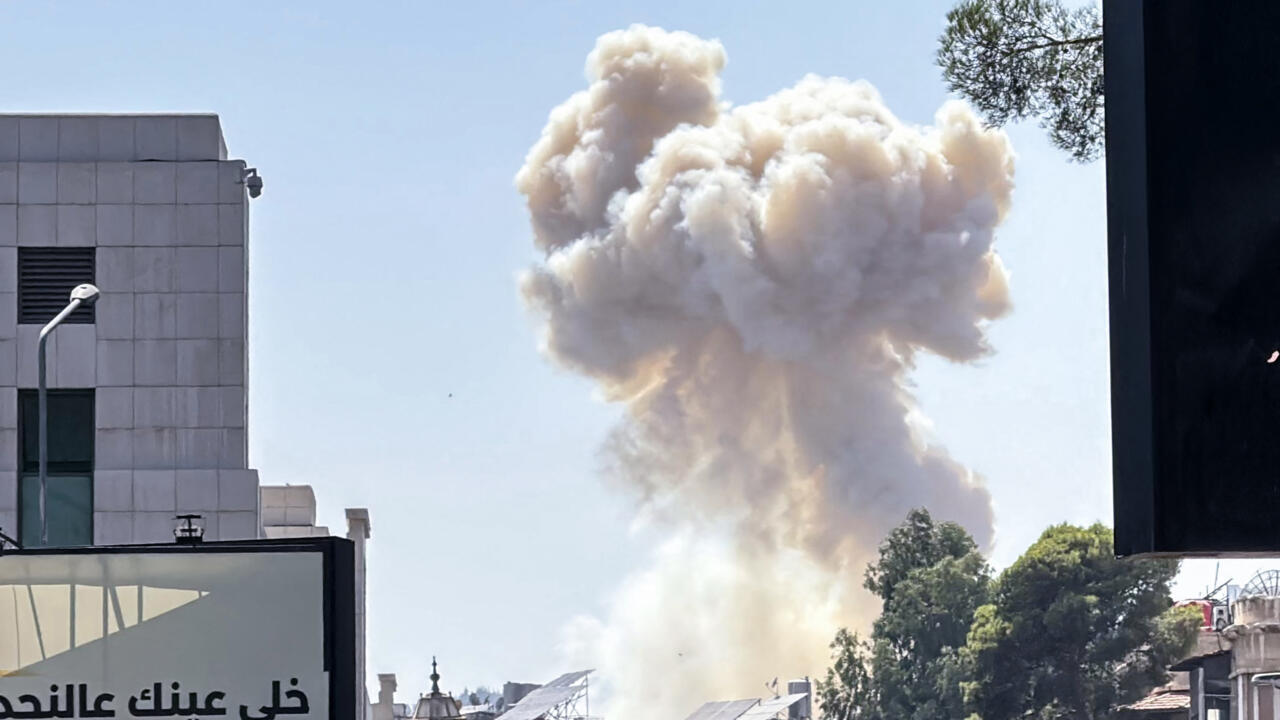
Israel strikes Syrian military targets near presidential palace in Damascus
Tensions in the Middle East escalated on Wednesday as Israel launched a series of powerful airstrikes on military installations in Damascus, Syria’s capital, with one of the strikes reportedly hitting near the presidential palace.
According to the Israeli military, the operation was a targeted response aimed at halting ongoing attacks on the Druze community in Syria’s southern Sweida region, where unrest has intensified in recent weeks.
Israeli Defence Minister, Israel Katz, confirmed the offensive, saying, “The Israeli military will continue to operate vigorously in Sweida to destroy the forces that attacked the Druze until they withdraw completely.”
The strikes reportedly destroyed a section of the defence ministry building, leaving the area strewn with rubble. According to a Syrian medical source, five members of Syria’s security forces were killed in the strikes.
According to Reuters, an Israeli military official said the assault targeted “the entrance to the military headquarters in Damascus and a military objective near the presidential palace,” accusing Syrian forces of being complicit in the attacks on Druze civilians.
The attacks came despite a recent thaw in relations between Israel and the interim Syrian government led by President Ahmed al-Sharaa.
Sharaa’s administration, composed in part of Islamist elements, had sought improved ties with the United States and Israel.
However, Israel branded Syria’s new rulers as “barely disguised jihadists” and insisted it will block any military movements by Syrian forces into the Druze-majority south.
READ ALSO:
- Troops repel Boko Haram attack, eliminate top terrorist commander at Lake Chad
- Keyamo slams Atiku over resignation from PDP timing
- 18 Kwara varsity students escape death in vehicle fire
The United States Secretary of State, Marco Rubio, responded cautiously, calling the situation “complicated,” and added, “It looks like a misunderstanding. I believe progress towards de-escalation will be made within hours.”
Sweida, a predominantly Druze city, has seen a sharp rise in violence this week, as clashes erupt between Druze militias, government security forces, and armed Bedouin tribes.
The Syrian Network for Human Rights reported that 169 people have been killed, while Syrian security sources put the death toll at 300, figures that could not be independently verified by Reuters.
Residents in Sweida described scenes of terror. “We are surrounded and we hear the fighters screaming. We’re so scared,” said one man by phone, adding that families were hiding and trying to keep their children quiet to avoid detection.
A temporary ceasefire was reportedly brokered late Wednesday by Syria’s Interior Ministry and Druze leader Sheikh Yousef Jarbou.
However, another Druze spiritual figure, Sheikh Hikmat al-Hajari, rejected the truce, saying, “Fighting should continue until Sweida is entirely liberated.”
Following calls from within Israel to support the Druze community, scores of Israeli Druze broke through the border fence on Wednesday and joined their Syrian counterparts, a Reuters witness reported.
Prime Minister Benjamin Netanyahu urged restraint, saying, “The Israeli military was working to save the Druze. We call on all Israeli Druze citizens not to cross the border.”
The Israeli military however said it was working to safely return those who crossed.
An Israeli Druze man, Faez Shkeir, expressed helplessness, “My family is in Syria, my wife, my uncles; I don’t like to see them being killed. They kicked them out of their homes, they robbed and burned their houses, but I can’t do anything.”
Reports of looting and extrajudicial killings by Syrian government forces are emerging. A Reuters correspondent in Sweida on Tuesday saw homes being looted and burned.
One resident displayed the body of his brother, shot in the head inside their family home.
In a statement, the Syrian government condemned the lawlessness in Sweida and promised justice.
“Those responsible will be held accountable. The government remains committed to protecting the rights of the people in Sweida.”
President Sharaa, facing mounting pressure from minorities and international observers, has repeatedly promised to protect Syria’s diverse communities. But trust is fading, especially after the massacre of Alawite civilians in March and the failure to contain the current crisis.
U.S. Syria Envoy Tom Barrack, who had previously praised the new Syrian administration and expressed hope for peace between Israel and Syria, condemned the ongoing violence.
“All parties must step back and engage in meaningful dialogue that leads to a lasting ceasefire. Perpetrators need to be held accountable,” he said.
Israel strikes Syrian military targets near presidential palace in Damascus









International
US Judge Blocks Trump From Tying Counterterrorism Grants to Election Rules

US Judge Blocks Trump From Tying Counterterrorism Grants to Election Rules
A US federal judge has blocked the Donald Trump administration from conditioning counterterrorism grants for states and local governments on changes to how elections are administered.
US District Judge Amir H. Ali of the District Court for the District of Columbia issued the ruling on Monday, September 28, 2026, finding that the Federal Emergency Management Agency (FEMA) exceeded the authority granted to it by Congress by attaching the election-related conditions to homeland security funding.
The case followed a lawsuit filed by Nashville and Davidson County, Tennessee; Columbus, Ohio; and several Texas counties, including Harris, El Paso, Dallas and Travis counties.
The local governments challenged conditions FEMA had attached to its 2026 Homeland Security Grant Program, arguing that Congress authorised the programme to help communities prevent, prepare for and respond to terrorism and other security threats, rather than to regulate routine election administration.
The programme provides more than $1 billion in federal funding to state, local and tribal governments. Under the policy challenged in court, FEMA planned to withhold 20 per cent of certain grant awards until recipients complied with specified election-related requirements.
READ ALSO:
- School Attack: 13-Year-Old Student Kills Teacher, Injures Two
- Bauchi Woman Arrested After Co-Wife Dies in Alleged Pestle Attack
- Breaking: Tinubu Ends Extended European Vacation, Departs Paris for Nigeria
Among the requirements were plans to move away from voting systems that use QR codes or barcodes to count ballots and toward equipment that accepts hand-marked paper ballots.
Recipients also had to demonstrate that they conducted a manual audit of at least five per cent of ballots, reconcile the number of voters who participated in federal elections with the number of ballots cast, and use the Department of Homeland Security’s Systematic Alien Verification for Entitlements (SAVE) database to verify citizenship information in voter-registration records.
The conditions also covered citizenship verification for people working at polling places or operating election systems.
The Trump administration defended the requirements as measures intended to strengthen election security against threats including foreign interference and cyberattacks.
However, Judge Ali ruled that the disputed conditions were not sufficiently connected to the purpose of the counterterrorism grants and that Congress had not authorised FEMA to use the programme to impose the election-administration requirements.
In his 24-page ruling, Ali distinguished between measures designed to protect election infrastructure from security threats and requirements governing routine election procedures, such as ballot formats, voter-roll administration and election audits.
The ruling prevents the administration from conditioning the affected Homeland Security Grant Program funding on compliance with the challenged election requirements while the litigation continues.
A separate lawsuit brought by a coalition of states challenging similar conditions remains pending.
The case comes ahead of the November 3, 2026 US midterm elections, adding another legal dispute to the wider debate over the division of authority between the federal government and states in administering US elections.
The latest ruling does not determine whether the individual election-security measures are effective or appropriate as policy. Instead, it addresses whether FEMA had the legal authority to make compliance with those measures a condition for receiving counterterrorism funding.
The broader Homeland Security Grant Program remains in place, while the administration and the plaintiffs may pursue further legal proceedings.
US Judge Blocks Trump From Tying Counterterrorism Grants to Election Rules
International
Five Arrested Near US-Used RAF Fairford in UK Terror Probe
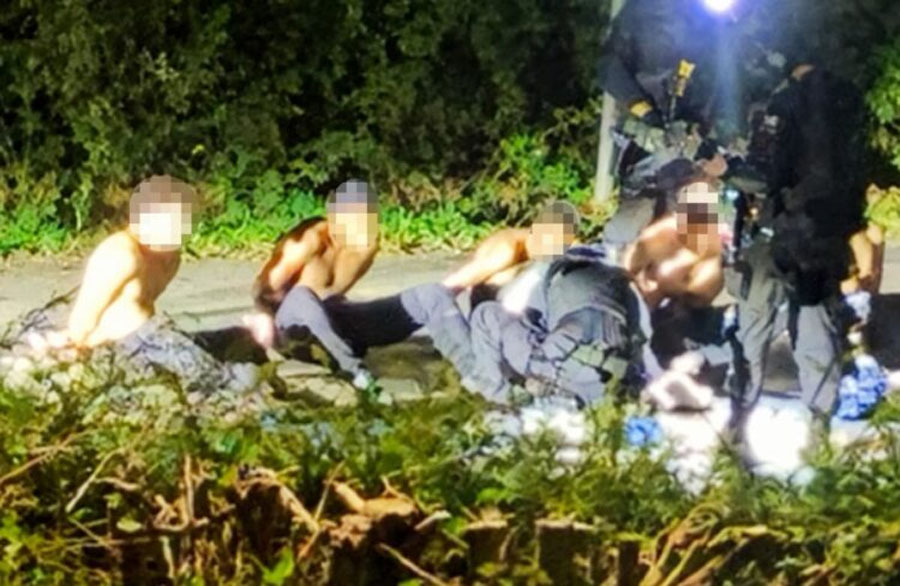
Five Arrested Near US-Used RAF Fairford in UK Terror Probe
British police have arrested five men near RAF Fairford in Gloucestershire over suspected explosives offences, with the suspects subsequently detained on suspicion of preparing a terrorist act.
The arrests followed a report at about 12:45 a.m. on Sunday, September 27, 2026, concerning three suspicious vehicles that appeared to be travelling towards the air base. Armed officers responded and arrested the five men in the nearby Whelford area.
According to Counter Terrorism Policing, the men were initially arrested on suspicion of offences under the Explosives Act before being further arrested on suspicion of preparing a terrorist act contrary to Section 5 of the Terrorism Act. All five remained in custody as investigators continued gathering evidence.
The incident prompted authorities to declare a major incident, with about 85 households evacuated from Whelford as a precaution.
The evacuated residents were taken to a nearby leisure centre while police established a cordon around the vehicles. The Army’s specialist explosive ordnance disposal team was deployed to examine the vehicles and assess any potential threat.
Counter Terrorism Policing said the investigation was still in its early stages and that officers were working with Gloucestershire Police and other agencies to establish the circumstances surrounding the incident.
Police have not publicly confirmed that an attack on RAF Fairford was planned or that the suspects had entered the military installation. Investigators are examining why the vehicles were in the area and what materials, if any, were associated with them.
READ ALSO:
- Kano Upgrades Five PHCs to General Hospitals, Begins Assessment
- Iran Claims Capture of Second US Underwater Drone in Strait of Hormuz
- Kubwa Explosion: Vehicle Crashes Into Gas Outlet, Damages Nine Shops
The investigation is particularly significant because RAF Fairford is a British military air base used by the United States Air Force. The installation hosts US military personnel and has been used by American aircraft during operations connected with the conflict involving Iran.
The US Air Force said its personnel at Fairford remained vigilant but declined to disclose specific force-protection measures for operational security reasons.
The security operation involved armed police, roadblocks and specialist bomb-disposal personnel. A 400-metre cordon was established around the vehicles while the evacuation was carried out.
Investigators are expected to examine the vehicles, materials and other evidence recovered during the operation as they seek to establish whether there was a planned attack and, if so, its intended target and motive.
The arrests have drawn additional attention because of heightened security around US military installations in Britain. RAF Fairford has become strategically important because of its use by US forces during the conflict involving Iran.
However, British authorities have not publicly linked the five suspects to Iran, any other state or a particular extremist organisation. Any claims about their motive or intended target remain subject to investigation.
The US military has said it remains in close coordination with British authorities and continues to take appropriate measures to protect its personnel and facilities.
British officials have said the incident is believed to be contained, although a substantial security presence is expected to remain in the area while investigators complete their work.
Deputy Assistant Commissioner Vicki Evans, the UK Counter Terrorism Policing senior national coordinator, said investigators were still working to establish what happened.
The five men remain in custody and have not been convicted of any offence. The allegations against them will have to be tested through the British legal process as the UK counter-terrorism investigation continues.
Five Arrested Near US-Used RAF Fairford in UK Terror Probe
International
Iran Claims Capture of Second US Underwater Drone in Strait of Hormuz
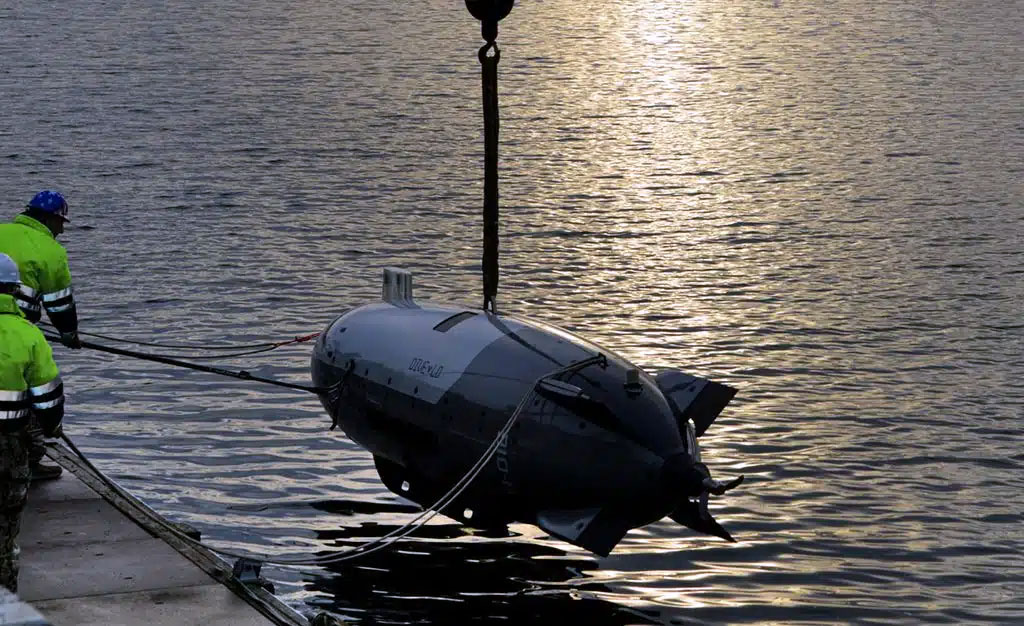
Iran Claims Capture of Second US Underwater Drone in Strait of Hormuz
Iran’s Islamic Revolutionary Guard Corps (IRGC) has claimed that its naval forces captured a second U.S. unmanned underwater vehicle in the strategically important Strait of Hormuz, accusing the vehicle of conducting surveillance activities in the waterway.
The IRGC Navy said on Sunday, September 27, that the Remus 600 autonomous underwater vehicle was intercepted during what it described as a complex operation involving intelligence capabilities and electronic warfare.
According to the Iranian military, the vehicle was operating in the Strait of Hormuz for what it described as espionage purposes when it was captured.
The IRGC said the underwater drone has been handed over to specialists who are working to retrieve and examine information stored on the system. (Arab News)
The claim represents the second reported Iranian capture of a U.S. underwater drone in September, following an earlier incident involving a much larger Dive-LD autonomous underwater vehicle.
On September 8, Iran said its forces had captured the Dive-LD at the entrance to the Strait of Hormuz. The IRGC subsequently released images of the vehicle and described it as an advanced U.S. military unmanned submarine.
The U.S. military acknowledged around that time that one of its underwater drones had malfunctioned while operating in regional waters but did not publicly confirm that Iran had captured it. Reuters footage from the incident showed the vehicle identified by Iran as a Dive-LD. (Reuters Connect)
The latest vehicle, the Remus 600, is substantially smaller than the Dive-LD. It is an autonomous underwater system designed to operate without a crew and can be configured for a range of underwater missions.
Available technical information indicates that the Remus 600 can operate at depths of up to about 600 metres and can remain underwater for extended periods, depending on its configuration and operating conditions.
READ ALSO:
- Kubwa Explosion: Vehicle Crashes Into Gas Outlet, Damages Nine Shops
- Newlywed Arrested After Allegedly Excreting 72 Cocaine Wraps at Enugu Airport
- Bauchi Police Arrest Four Over Alleged Gun-Making, Rape
The system can be equipped for missions including seabed mapping, mine detection and intelligence, surveillance and reconnaissance (ISR). Its modular design also allows different sensors and equipment to be fitted according to mission requirements.
Reports indicate that the vehicle is about 3.25 metres long and can operate autonomously for up to about 70 hours on a single charge, although actual endurance depends on mission configuration and conditions. (Seoul Economic Daily)
Iran’s latest announcement comes amid heightened military tensions surrounding the Strait of Hormuz, a narrow waterway connecting the Persian Gulf with the Gulf of Oman.
The strait is strategically important to global energy markets because of the large volume of oil and gas shipments that traditionally pass through it.
The ongoing conflict in the region has severely disrupted commercial shipping through the waterway. Iran has said it considers the strait closed and has warned against what it describes as dangerous or unauthorised activity.
In its latest statement, the IRGC again declared the Strait of Hormuz closed and said it would respond to what it considers dangerous movements or unauthorised passage. (ایرنا)
The United States has not publicly provided a detailed account of the latest alleged seizure, leaving important questions about the circumstances of the incident unresolved.
In particular, it remains unclear when and where the Remus 600 was deployed, what mission it was conducting, whether it was operating under direct U.S. military control at the time and how Iranian forces allegedly took possession of it.
Iran’s assertion that the vehicle was conducting espionage also remains an Iranian military claim and has not been independently established.
The seizure claim nevertheless highlights the growing importance of autonomous underwater vehicles in modern military and maritime operations.
Such systems can conduct surveillance, map underwater terrain, detect mines and gather information without placing personnel aboard a conventional submarine.
The reported Iranian effort to retrieve data from the Remus 600 could also provide Tehran with an opportunity to examine the vehicle’s sensors, navigation systems and other technologies if the equipment is intact.
The significance of any information Iran could obtain from the system would depend on the condition of the vehicle and the amount of recoverable data and technology.
The latest development comes as Iran-US tensions remain high over the Strait of Hormuz, with Tehran and Washington pursuing opposing positions on access to the waterway.
For now, the capture of the Remus 600 remains a claim by Iran, while the absence of a detailed U.S. account means that several aspects of the incident cannot yet be independently confirmed.
Iran Claims Capture of Second US Underwater Drone in Strait of Hormuz
-
 International2 days ago
Iran Claims Capture of Second US Underwater Drone in Strait of Hormuz
-

 News2 days ago
Fake Agency Scandal: Gbajabiamila Says He Never Betrayed Tinubu’s Trust
-

 metro11 hours ago
Osogbo Food Bonanza Turns Nightmare as Discount Vendor Vanishes With Customers’ Millions
-

 metro2 days ago
Woman Busted With Alleged Alcohol Hidden in Water Pack at Ogun Prison
-

 metro23 hours ago
24 Hours in Darkness: Iju Ishaga Residents, Businesses Count Losses as Ikeja Electric Fails to Restore Power
-

 metro2 days ago
Passenger Dies After Jumping From Moving Bus In Lagos
-

 News2 days ago
Anambra Govt Demands Unreserved Apology From Peter Obi Over Debt Claims
-

 Politics2 days ago
APC Sweeps Enugu LG Election, Wins All 17 Chairmanship, 260 Councillorship Seats