INTERPOL Operation Jackal IV: 58 Arrested in Global Crackdown on West African Crime Networks
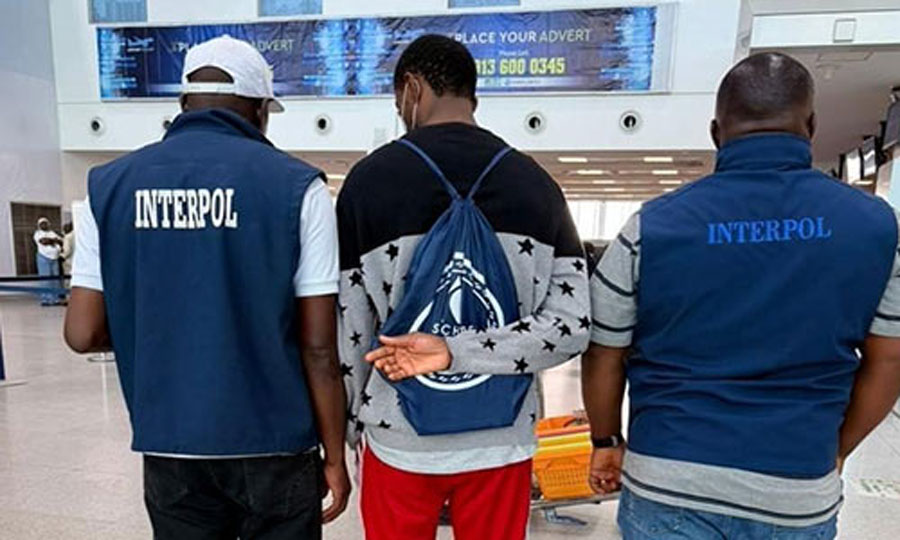
An eight-month international operation targeting West African organised crime groups has resulted in the identification of 263 suspects and 58 arrests across 22 countries, dealing a significant blow to networks responsible for a substantial share of global cyber-enabled financial fraud, including romance scams, investment fraud and sextortion.
A coordinated international police operation has exposed the sprawling reach of West African criminal networks, including the notorious Black Axe syndicate, leading to mass arrests, millions in asset seizures and the dismantling of sophisticated money laundering operations spanning six continents. The operation, codenamed Operation Jackal IV, was conducted between November 2025 and June 2026 and involved law enforcement agencies from 22 countries across six continents. The crackdown focused on disrupting money laundering networks, identifying high-value criminal targets, tracing illicit assets and supporting arrests and prosecutions. Nigeria was among the participating countries, alongside Austria, Argentina, Australia, Canada, Côte d’Ivoire, France, Germany, Indonesia, Ireland, Italy, Japan, Malaysia, the Netherlands, Portugal, South Africa, Spain, Sweden, Switzerland, the United Arab Emirates, the United Kingdom and the United States.
INTERPOL launched the operation in response to the escalating global threat posed by West African criminal networks, which are responsible for a significant proportion of the world’s cyber-enabled financial crimes. These groups typically operate through romance scams, cryptocurrency and investment fraud, business email compromise and other serious offences. Tomonobu Kaya, Director of the INTERPOL Financial Crime and Anti-Corruption Centre, emphasised the importance of international cooperation in tackling these networks, stating that by following illicit financial flows across borders, law enforcement is attacking the very lifeblood of organised crime and making it increasingly difficult for criminal networks to profit from their activities.
READ ALSO:
The Black Axe syndicate, one of the most prominent West African transnational organised crime networks, was a primary target of the operation. These groups have developed sophisticated transnational networks, defrauding victims of millions while channelling profits into lavish lifestyles and other criminal activities, including drug trafficking and sexual exploitation. Operation Jackal IV builds on years of international efforts targeting these networks. The operation originated in Ireland, where the Garda National Economic Crime Bureau first identified the scale of the threat posed by Nigerian-based gangs operating in Europe. What began as a targeted operation against West African gang members in Dublin, Cork and Limerick exposed a vast network after several Black Axe members were arrested by Irish authorities. Gardaí have since identified over 1,000 people with links to Black Axe in Ireland, warning that more than €200 million had been stolen from Irish bank accounts online between 2019 and 2024 by criminals linked to the syndicate.
In Argentina, investigators identified 196 individuals allegedly involved in a major Crime-as-a-Service network suspected of providing website domains and money laundering support to West African organised crime groups. The investigation led to 17 arrests. An INTERPOL Operational Support Team was deployed to assist local authorities, providing analytical support on seized data and identifying criminal networks and suspects. This case highlights a concerning trend: criminal groups increasingly outsource specialised activities such as money laundering through external providers, sometimes operating on the dark web.
In South Africa, authorities raided seven locations in Johannesburg linked to a syndicate running romance and investment scams targeting retirees in English-speaking countries. The criminal network operated an elaborate structure, with members designated as “conversion” or “retention” agents, each tasked with different stages of the scam. The South African operation resulted in 39 arrests, the seizure of $2.67 million, and the blocking of 257 bank accounts.
In Italy, investigators identified an individual linked to a pan-European money laundering network that used shell companies, remittance services and cash withdrawals to disguise the origins of criminal proceeds. One account linked to the network was used to launder €845,000 through 560 transactions involving 20 different financial instruments.
READ ALSO:
Romanian authorities dismantled a criminal group operating a sophisticated investment scam through a call centre. The group touted high returns in stocks or cryptocurrencies, but victims’ money was diverted to electronic wallets controlled by the perpetrators. The scheme was estimated to have stolen and laundered approximately €143 million globally. The Romanian operation resulted in 11 arrests, the seizure of approximately €330,000 in cash and cryptocurrency, the confiscation of six properties, and the seizure of several luxury watches.
Operation Jackal IV uncovered a disturbing increase in sextortion cases involving West African organised crime groups, with victims as young as 14 years old. According to INTERPOL, perpetrators typically contact minors through social media, establish relationships and persuade them to share explicit images or videos. They then threaten to distribute the material to the victims’ friends, relatives or social media contacts unless ransom payments are made. Sextortion cases have resulted in suicides amongst distressed victims. This emerging threat demonstrates the intersection of organised crime and digital exploitation, with criminal networks systematically targeting vulnerable young people across borders.
The operation also raised concerns over the increasing use of Crime-as-a-Service by criminal syndicates. Some groups were observed procuring external providers, often through the dark web, to outsource key activities such as money laundering and other critical operations. This division of labour allows criminal organisations to scale operations more quickly, maintain activity across multiple countries without building all necessary infrastructure in-house, and access specialised technical and financial services on demand. The trend mirrors legitimate business practices, with some groups outsourcing specific functions to specialists while focusing on core criminal activities such as fraud and extortion.
Operation Jackal IV is part of a broader series of international efforts to combat transnational organised crime. Previous operations, including the global Operation First Light 2026 which spanned 97 countries, resulted in 5,811 arrests and $293 million in illicit funds frozen. The current operation demonstrates the effectiveness of cross-border intelligence sharing and coordinated enforcement action. INTERPOL provided analytical support, intelligence sharing and operational assistance across jurisdictions, helping national authorities identify suspects, freeze assets and build cases for prosecution. Many cases from Operation Jackal IV remain under investigation, with INTERPOL warning that preliminary results could lead to further arrests and new operations against criminal networks and their financial structures.
Behind the statistics lie profound human consequences. Victims of romance scams often suffer emotional trauma, while those caught in sextortion schemes face psychological devastation and, in some cases, have taken their own lives. The growing intersection of financial fraud with human trafficking means that behind each scam, there may be trafficked individuals forced to carry out crimes against their will. INTERPOL has warned that some victims of previous mass abductions have reported severe abuses including torture, starvation, sexual violence and amputation. Financial losses related to cybercrime in Africa rose significantly between 2024 and 2025, according to INTERPOL’s data, underscoring the scale of the challenge facing law enforcement agencies worldwide.
The success of Operation Jackal IV sends a clear message to organised crime networks: international law enforcement cooperation is making it increasingly difficult for them to profit from their activities. However, individuals should remain vigilant. INTERPOL advises people to be suspicious of unsolicited online relationships that quickly become romantic or financial, to never send money or share financial information with someone they have not met in person, to verify investment opportunities independently before committing funds, and to report suspicious activity to local authorities. Parents are also encouraged to discuss online safety with their children, including the risks of sharing explicit images.