

International
U.S sanctions Palestinian leadership over statehood push
U.S sanctions Palestinian leadership over statehood push
The Donald Trump administration has announced new sanctions targeting the Palestinian Authority (PA) and the Palestine Liberation Organisation (PLO), citing their participation in a conference that rallied support for a two-state solution.
The international high-level conference for the peaceful settlement of Palestinians and implementation of the two-state solution was held at the United Nations Headquarters in New York on July 28–29, 2025
Co-chaired by France and Saudi Arabia, it had originally been scheduled for mid‑June 2025 but was postponed due to regional developments.
The US dismissed the event as a “publicity stunt” and had previously warned of diplomatic repercussions for what it labelled as “anti-Israel” declarations.
BBC reports that the sanctions include visa bans on Palestinian officials, signaling America’s growing frustration with international backing for Palestinian statehood.
READ ALSO:
- Court sentences Hafsoh Lawal’s killer, Bello, to death
- Navy dismantles 10 illegal refineries, seizes stolen oil
- Crisis rocks ADC as Nafiu Gombe declares self national chairman
France, the UK, and Canada have all committed to recognising an independent Palestinian state later this year if the humanitarian situation in Gaza does not improve.
UK Prime Minister Keir Starmer reiterated this position on Thursday, saying the humanitarian crisis must see material improvement or the UK will proceed with
recognition of Palestine by September. “The situation on the ground in Gaza needs to change. There’s a humanitarian catastrophe,” Starmer told the BBC, while also calling for the release of hostages held by Hamas.
Meanwhile, Trump’s special envoy to the Middle East, Steve Witkoff, met with Israeli Prime Minister Benjamin Netanyahu in Jerusalem on Thursday amid growing humanitarian concerns in Gaza.
Witkoff who arrived in Israel earlier in the day could also visit humanitarian aid sites in Gaza, though this has not been officially confirmed.
His visit comes as the death toll in Gaza continues to rise. According to the Hamas-run health ministry, 111 people were killed in the last 24 hours, including 91 who died while trying to access aid.
The ministry also reported that two people died due to malnutrition, pushing the number of hunger-related deaths since the start of the war to 159.
The overall death toll in Gaza since Israel launched its offensive in October 2023 now stands at 60,249, the ministry claims.
U.S sanctions Palestinian leadership over statehood push









International
Iran rejects US claims that Strait of Hormuz has reopened
Iran rejects US claims that Strait of Hormuz has reopened
Iran has rejected claims by U.S. officials that the Strait of Hormuz has reopened, insisting that the strategic waterway remains closed to normal commercial shipping until its conditions are accepted.
The Persian Gulf Strait Authority (PGSA), the Iranian body responsible for maritime traffic through the waterway, said repeated statements from Washington did not change the situation.
“Claims and repeated posts by U.S. officials that the Strait of Hormuz is no longer blocked do not change the reality,” the authority said in a post on X.
The PGSA maintained that the Strait of Hormuz remains blocked and will not be reopened until Iran’s conditions are accepted.
The latest development followed a claim by U.S. President Donald Trump that the United States had “total control” of the strategic waterway and would maintain that control.
Trump said in a post on Truth Social that the U.S. naval blockade around Iran had created a “wall of steel” and suggested that Tehran lacked the ability to challenge the American military presence.
Iran has rejected the assertion, with its officials continuing to maintain that Tehran controls passage through the waterway.
The dispute comes amid an ongoing confrontation between the United States and Iran, with Washington maintaining a naval blockade of Iranian ports while Tehran has restricted most shipping through the Strait of Hormuz.
READ ALSO:
- Oyinlola Denies Adeleke’s Car Gift Claim: “Osun Govt Gave Me the Car, Not You”
- Tinubu Rejects Blame Game, Vows to Revive Refineries with Profitability Focus
- Scores of Terrorists Killed, 60 Arrested in Nationwide Military Operations
U.S. Defense Secretary Pete Hegseth said Washington could maintain the naval blockade of Iran indefinitely by rotating military vessels in and out of the region. The United States says the blockade is intended to restrict Iranian shipping while allowing non-Iranian vessels to pass.
Iranian officials, however, have said the Strait of Hormuz will not fully reopen unless the United States changes its position and accepts Tehran’s demands.
Iran’s newly appointed Supreme National Security Council secretary, Mohsen Rezaei, said the United States must end the war, address Iran’s frozen assets and support an end to hostilities across the region, including in Lebanon and Gaza.
Rezaei also said other Iranian demands had been communicated to Washington through mediators.
Meanwhile, Iran and Oman are discussing a possible arrangement for shipping through the Strait of Hormuz. However, Iranian Foreign Ministry spokesman Esmaeil Baghaei said any agreement between Tehran and Muscat on a new route would be separate from the question of reopening the strait itself.
That distinction is significant because reports earlier this month suggested that Iran and Oman were close to an arrangement that could facilitate commercial shipping through the waterway. Reuters reported that the proposed deal would not, by itself, lead to the reopening of the strait, as Iran has tied the move to broader issues involving the U.S. blockade and the war.
Despite Washington’s claim of control and Tehran’s insistence that the waterway remains blocked, vessels have continued to move through the Strait of Hormuz in limited numbers.
According to shipping data reported by Reuters, nine commodity vessels transited the strait on Thursday, compared with five the previous day. However, the figure remained below the August average of about 12 vessels a day. Most of the vessels that passed through used routes controlled by Iran.
The current traffic levels remain dramatically below normal.
The disruption has forced energy companies and traders to explore alternative arrangements. Reuters reported that TotalEnergies’ trading arm, Totsa, was offering Iraqi crude for loading at locations outside the Strait of Hormuz as buyers remained reluctant to send vessels to terminals inside the waterway because of security concerns.
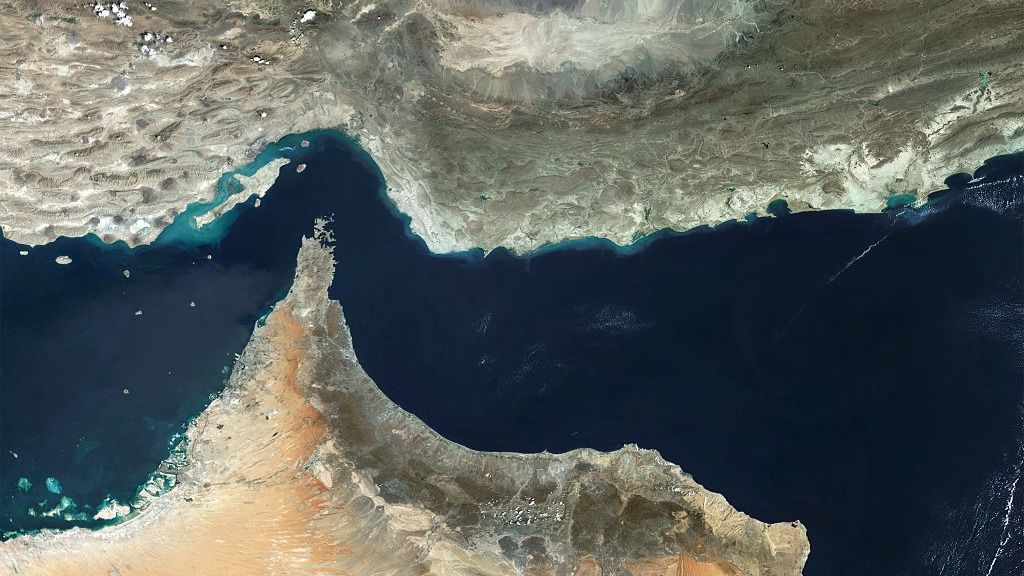
The Strait of Hormuz is one of the world’s most important energy shipping routes, connecting the Persian Gulf with the Gulf of Oman and the Arabian Sea.
Any prolonged disruption threatens the movement of crude oil, petroleum products and liquefied natural gas from major energy producers in the Gulf to international markets.
The continuing restrictions have therefore raised concerns over global oil supplies, shipping costs and energy prices, particularly as the United States and Iran remain unable to reach a lasting agreement.
The crisis has also affected financial markets. Reuters reported that Gulf stock markets were mixed amid concerns over the prolonged disruption, while Brent crude remained elevated as investors assessed the risk of further escalation.
The situation has become increasingly complicated by competing claims over who controls the waterway.
While President Donald Trump maintains that the United States has “total control” of the Strait of Hormuz, Iranian authorities insist that Washington has not taken control of the passage and that vessels must comply with Iranian requirements to transit the area.
For now, the conflicting claims have not translated into a return to normal shipping. Maritime traffic remains restricted, diplomatic efforts involving Iran, Oman and the United States remain unresolved, and Tehran continues to insist that the Strait of Hormuz will not be fully reopened until its conditions are met.
Iran rejects US claims that Strait of Hormuz has reopened
International
Court Throws Out Trump-Era Case Accusing Harvard of Failing Jewish Students

Court Throws Out Trump-Era Case Accusing Harvard of Failing Jewish Students
A US federal judge has dismissed a lawsuit filed by President Donald Trump’s administration that accused Harvard University of failing to protect Jewish and Israeli students from harassment on campus. Boston-based US District Judge Richard Stearns – a Clinton appointee – ruled on Thursday that the government had not presented enough evidence to prove that Harvard was currently violating federal civil rights law. He granted the university’s motion to dismiss for failure to state a claim, dealing a fresh blow to the administration’s broader campaign against elite universities.
The US Department of Justice filed the lawsuit in March 2025, claiming that Harvard’s response to antisemitic incidents following the 7 October 2023 Hamas-led attack on Israel was woefully inadequate. Prosecutors argued that the university had shown “deliberate indifference” to the safety of Jewish and Israeli students, allowing anti-Israel protesters to breach campus rules “with impunity”. The administration sought to withhold federal funding and compel Harvard to overhaul its policies on discrimination, free speech, and diversity initiatives.
In his 30-page ruling, Judge Stearns found that the government’s amended complaint relied heavily on incidents from the 2023–2024 academic year – a period marked by intense campus protests over the Gaza war. By contrast, the complaint cited only three incidents from March 2025, which the judge described as “singly and collectively” too isolated and episodic to support a finding of systemic non-compliance. Crucially, Stearns noted that the government did not formally notify Harvard of its alleged Title VI violations until 30 June 2025. Under the Civil Rights Act of 1964, Title VI prohibits discrimination based on race, colour, or national origin in programmes receiving federal financial assistance. The judge wrote that the amended complaint “is devoid of any factual allegations plausibly establishing that any events that might be construed as evidence of noncompliance occurred after June 30, 2025.” He also emphasised that Congress’s intent with Title VI was “not to penalise a wayward funding recipient but instead to incentivise it to bring itself into compliance” – a point that directly undermined the administration’s push to claw back billions in federal research grants.
READ ALSO:
- Osun Election Tension: Lawyer Urges Davido to Apologise to Okpebholo Over WAEC Result Troll
- Customs Busts International Lion Cub Smuggling Ring, Rescues Two Cubs at Abuja Airport
- Seven Miners Killed in Plateau Mining Pit Collapse, Renewing Urgent Calls for Safety Reform
Harvard had consistently rejected the administration’s allegations, arguing that the lawsuit relied on outdated incidents and ignored the concrete steps the university had already taken to address antisemitism on campus. These included strengthening discrimination reporting systems, expanding educational programmes, and revising student conduct policies. In a statement following the ruling, Harvard called the lawsuit “yet another pretextual and retaliatory action by the administration for refusing to turn over control of Harvard to the federal government.” The university reiterated its commitment to protecting all students – Jewish, Israeli, Palestinian, Muslim, and others – from harassment and discrimination, while defending its academic independence and institutional autonomy.
Thursday’s dismissal is the latest setback in a series of confrontations between the Trump administration and Ivy League institutions. Before filing the lawsuit, the government had already frozen $2.2 billion** in multi-year research grants and **$60 million in contract funding to Harvard in April 2025, demanding that the university eliminate antisemitism and roll back certain diversity, equity, and inclusion (DEI) programmes. In a separate but related case last year, another federal judge ordered the administration to reverse more than $2.6 billion in funding cuts to Harvard, finding that the White House had used antisemitism as a “smokescreen for a targeted, ideologically-motivated assault” on universities. Assistant Attorney General Harmeet Dhillon responded to the dismissal by saying the administration “disagree[s] with the ruling and [is] assessing next steps” – suggesting a possible appeal.
While the dismissal does not minimise the real and ongoing concerns about antisemitism on US college campuses, it sends a clear legal signal: federal courts are reluctant to intervene without clear, current, and concrete evidence of institutional civil rights violations. The ruling also reinforces the principle that universities – even those receiving substantial federal funding – retain broad discretion over campus discipline, speech policies, and educational mission, provided they act reasonably and in good faith. For students, faculty, and advocates on all sides of the debate, the decision underscores the importance of evidence-based reporting, timely government action, and balanced approaches to protecting religious identity, national origin, and political expression within higher education.
Court Throws Out Trump-Era Case Accusing Harvard of Failing Jewish Students
International
Iran Had Detailed Intel on Trump’s Location Before Secret Turkey Escape
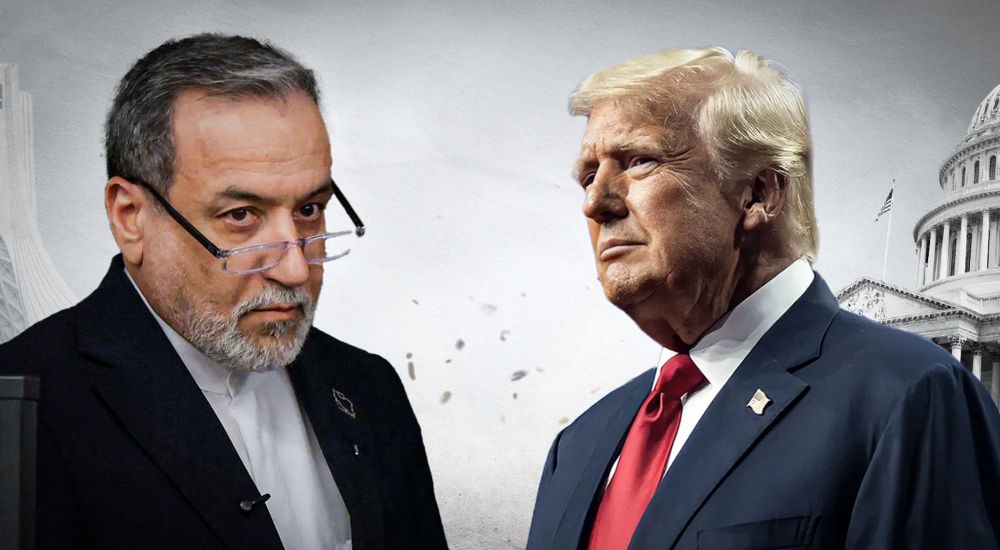
Iran Had Detailed Intel on Trump’s Location Before Secret Turkey Escape
United States President Donald Trump was secretly moved from the aircraft publicly believed to be carrying him out of Turkey after American intelligence agencies detected a credible threat against him, according to reports.
The dramatic security operation reportedly followed intelligence suggesting that Iranian operatives had obtained detailed information about Trump’s whereabouts in Ankara, including the floor of the hotel where he was staying.
The development came amid heightened tensions between Washington and Tehran and concerns over possible Iranian retaliation against Trump following US military action against Iran.
According to reports, the threat was considered serious enough for the United States Secret Service to activate an elaborate deception operation during Trump’s departure from Ankara.
Rather than allowing the President to leave on the aircraft normally identified as Air Force One, security officials reportedly moved him secretly to a smaller Boeing C-32A military aircraft.
READ ALSO:
- INEC reprints Osun ballot papers, result sheets, includes SDP candidate
- FG to Attach 300 NYSC Corps Members to CNG Workshops for Skills Training
- WAFCON: Chawinga sisters fire Malawi into historic final
Trump was said to have been transferred from the presidential aircraft using an airport catering vehicle, while the larger aircraft subsequently departed as a decoy.
The operation was reportedly designed to make it difficult for anyone monitoring the President’s movements to determine which aircraft was actually carrying him.
The C-32A carrying Trump reportedly flew to Britain, while the larger aircraft, carrying members of the travelling press corps and senior officials, followed shortly afterwards.
The secrecy surrounding the operation was so extensive that some people aboard the decoy aircraft were reportedly unaware that Trump was no longer on board.
The Associated Press reported that Secretary of State Marco Rubio was aware of the security operation and remained aboard the decoy aircraft. It was unclear whether Treasury Secretary Scott Bessent had been fully informed of the change in plans.
Reports said the security concern was linked to intelligence indicating a possible missile threat. A person near the NATO summit was also reportedly observed with what appeared to be a shoulder-fired missile.
However, officials reportedly found no evidence of a fully developed attack plan against Trump.
The reported intelligence about Iran’s knowledge of Trump’s location has nevertheless raised serious questions about the extent to which Iranian intelligence was able to monitor the movements of the US President while he was in Turkey.
The precise source of the intelligence remains classified, and there has been no public release of the underlying US intelligence assessment.
Trump has reportedly defended the decision to change his travel arrangements, saying he followed instructions from his security detail.
The incident highlights the increasingly complex security challenges surrounding the movement of the US President, particularly amid escalating tensions with countries regarded by Washington as potential threats.
The use of a decoy presidential aircraft, combined with the secret transfer of Trump to a less conspicuous military jet, represents an unusually elaborate presidential security operation.
While officials have not publicly established that Iran was preparing an attack against Trump, the reported intelligence about his location was considered sufficiently concerning to prompt one of the most extraordinary presidential travel security measures in recent times.
Iran Had Detailed Intel on Trump’s Location Before Secret Turkey Escape
-

 Education3 days ago
Nigerian Young Academy, LASU to Host 16th International Conference on Convergent Research
-
 News3 days ago
Trump smuggled out of Turkey in catering truck over Iran threat
-
 International1 day ago
Iran Had Detailed Intel on Trump’s Location Before Secret Turkey Escape
-
 News2 days ago
Tinubu Vows to Secure Nigeria, Declares Unity Non-Negotiable Amid Worsening Insecurity
-

 metro2 days ago
Nigeria Needs Competent, Ethical Young Leaders, Says HAVEK Leadership Academy
-

 News1 day ago
FG to Attach 300 NYSC Corps Members to CNG Workshops for Skills Training
-

 Auto3 days ago
Omoda, Jaecoo Shake Global Auto Market, Hit One Million Sales in Three Years
-
 metro24 hours ago
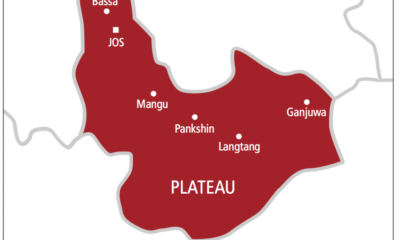
Seven Miners Killed in Plateau Mining Pit Collapse, Renewing Urgent Calls for Safety Reform