

Auto
How Nigeria can become regional auto manufacturing powerhouse, by AAAM CEO

How Nigeria can become regional auto manufacturing powerhouse, by AAAM CEO
Chief Executive Officer of the African Association of Automotive Manufacturers (AAAM), Victoria Backhaus-Jerling, says with the right policies, Nigeria can become a regional manufacturing powerhouse.
This, she noted, would immediately reduce its reliance on used vehicle imports, and enable the country to become a job-creating hub for Africa’s next industrial revolution.
According to her, Nigeria possesses the scale, talent and entrepreneurial spirit to lead the Africa’s automotive transformation.
Backhaus-Jerling stated this in her message delivered to dignitaries and industry stakeholders at the 2025 Nigeria Auto Industry Summit held in Lagos.
She stressed the need for policy certainty and legal backing to translate the nation’s potential into sustainable industrial growth.
The AAAM CEO congratulated the Federal Government of Nigeria and the Nigerian Automotive Journalists Association (NAJA) for convening the summit at a critical time in the country’s industrial journey.
She described Africa as “the world’s last automotive frontier”.
“Nigeria’s journey has already begun. But to realise its full potential, the industry needs legal backing – it needs the right policy to be implemented,” said Backhaus-Jerling in her address.
“The right regulatory framework will provide the foundation for sustainable local manufacturing, job creation and investor confidence.”
The summit, which brought together top government officials including the Director-General of the NADDC, Joseph Oluwemimo Osanipin; and Director-General of the Standards Organisation of Nigeria, Ifeanyi Chukwunonso Okeke, focused on charting a course for Nigeria’s auto industry within the broader vision of the African Continental Free Trade Area (AfCFTA).
Backhaus-Jerling reiterated AAAM’s commitment to working with Nigeria and other African nations to develop value chains that span the continent.
She said each country could play a role in vehicle manufacturing, component production, or raw material processing.
She cited the progress made in countries such as Morocco, Egypt, Ghana, and South Africa as proof that the right mix of political will and private sector collaboration could yield tangible results.
“We believe Nigeria can go even further. Political will and decisive action will be the game changers,” she said.
Industry leaders and policymakers engaged at the summit in deep discussions around policy reform, investment strategies, and the development of an inclusive and sustainable automotive ecosystem.
Backhaus-Jerling left participants with a powerful call to action, saying, “Think boldly about what Nigeria’s automotive industry could look like in 10 years – and what must be done today to unlock that vision.”
The African Association of Automotive Manufacturers (AAAM) is the leading pan-African industry body focused on advancing automotive manufacturing across the continent.










Auto
EXEED to Storm Nigeria’s Premium Auto Market in December, courtesy of Versat

EXEED to Storm Nigeria’s Premium Auto Market in December, courtesy of Versat
Nigeria’s premium automotive market is set for a new entrant as Versat Automobile Limited prepares to introduce EXEED, the premium mobility brand of Chery Automobile, to the country in December 2026.
The arrival of EXEED is expected to further intensify competition in Nigeria’s fast-evolving premium vehicle segment, with the brand bringing together advanced technology, distinctive design and contemporary luxury under its global philosophy, “Born for More.”
According to Versat, EXEED is designed for consumers who seek more than conventional mobility and are driven by a desire for greater possibilities in life, career and personal achievement.
Drawing on Chery Automobile’s extensive research and development capabilities, the brand is positioned at the intersection of sophisticated design, intelligent technology and premium driving experience—qualities Versat believes align with the expectations of Nigeria’s increasingly discerning automotive consumers.
General Manager, Sales, Versat Automobile Limited, Christopher Irumudomon, described the planned entry as a significant development for the company and Nigeria’s premium automotive market.
“The arrival of EXEED represents an exciting new chapter for premium mobility in Nigeria,” Irumudomon said.
“We are looking forward to introducing Nigerians to a brand that challenges convention, embraces exploration, and is truly Born for More.”
Ahead of the December launch, Versat said it would unveil more details about EXEED, including its technology, design philosophy and performance capabilities, as anticipation builds towards the brand’s official Nigerian debut.
EXEED is Chery Automobile’s premium automotive marque, developed around intelligent technology, sophisticated design and an enhanced driving experience. Guided by its “Born for More” philosophy and Spirit of Exploration, the brand seeks to combine advanced automotive technologies with distinctive styling and a forward-looking approach to premium mobility.
The Nigerian launch also represents a new phase in Versat Automobile’s expansion in the local automotive market.
Established in 2024, the company commenced its Nigerian market operations in 2026 with C&C Trucks, focusing on performance, durability, quality, reliability and customer support.
With the introduction of EXEED, Versat is now positioning itself to play a more prominent role in Nigeria’s passenger vehicle market, particularly the growing premium segment.
Auto
CBN Governor, NADDC DG to Lead LCCI Debate on Vehicle Financing as Alternative to Fuel Subsidy
CBN Governor, NADDC DG to Lead LCCI Debate on Vehicle Financing as Alternative to Fuel Subsidy
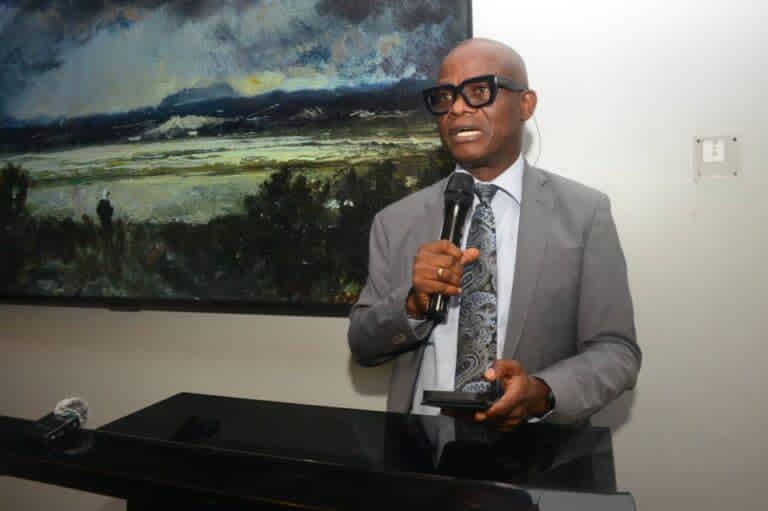
The Governor of the Central Bank of Nigeria (CBN), Olayemi Cardoso, and the Director-General of the National Automotive Design and Development Council (NADDC), Joseph Osanipin, are among key stakeholders expected at a high-level symposium examining whether vehicle financing can provide a sustainable alternative to fuel subsidy as a tool for improving mobility in Nigeria.
Organised by the Auto Sectoral and Allied Group of the Lagos Chamber of Commerce and Industry (LCCI), the one-day symposium is scheduled for September 17, 2026, at the Henry Fajemirokun Hall, LCCI, Victoria Island, Lagos.
Themed “From Subsidy to Credit: Can Vehicle Financing Replace Fuel Subsidy as Nigeria’s Mobility Equalizer?”, the event will bring together stakeholders across the automotive, financial and transport sectors to examine how affordable credit can expand vehicle ownership, support fleet renewal and reduce the burden of rising transportation costs.
The organisers said the removal of fuel subsidy and its impact on transport costs had made it imperative to rethink how mobility could be made more affordable and sustainable.
Rather than relying largely on interventions aimed at keeping fuel prices low, the symposium will examine whether a robust vehicle-financing ecosystem can enable individuals, transport operators and small businesses to acquire vehicles through affordable and sustainable credit arrangements.
Discussions will focus on automotive lending, leasing, fleet renewal and the role of banks, development finance institutions and other financial players in expanding access to vehicle ownership.
The symposium is also expected to interrogate major barriers to automotive financing, including high interest rates, short loan tenures, foreign exchange pressures, high vehicle prices, credit risks and the limited availability of financing products tailored to Nigeria’s automotive market.
Chairman of the LCCI Auto Sectoral and Allied Group and Deputy Managing Director of R.T. Briscoe Nigeria Plc, Dr Femi Eghuaikhide, said the symposium was coming at a critical time when Nigeria needed to rethink how mobility could be made accessible to a wider population.
“The question before us is no longer simply how to make fuel cheaper, but how to make mobility more affordable and sustainable for Nigerians. Vehicle financing has the potential to become a powerful mobility equalizer if we can develop the right credit structures, realistic repayment terms and strong collaboration between government, financial institutions and automotive industry stakeholders.”
Eghuaikhide said the symposium would provide a platform for stakeholders to move beyond identifying the challenges and develop practical financing solutions capable of supporting vehicle ownership, public transportation and the growth of Nigeria’s automotive industry.
Also speaking, Chairman of the Symposium Organising Committee and Chief Operating Officer of Bras Motors Limited, Austin Akpovili, said the event was designed to generate practical and actionable solutions.
“We are bringing the right stakeholders to one table because mobility is not only an automotive issue; it is an economic issue. Our objective is to examine how access to affordable vehicle credit can transform the lives of individuals, transport operators and businesses, while creating a stronger and more sustainable automotive ecosystem for Nigeria.”
Akpovili said participants would also have the opportunity to examine existing financing models and identify innovative approaches to make vehicle acquisition accessible to a broader segment of the population.
The event is expected to attract automobile manufacturers and dealers, commercial banks, development finance institutions, leasing and insurance companies, transport operators, government agencies, policymakers and other stakeholders across the automotive value chain.
Beyond vehicle ownership, experts will examine how affordable financing could accelerate the renewal of Nigeria’s ageing vehicle fleet, improve public transportation and stimulate demand for locally assembled vehicles and locally manufactured automotive components.
The LCCI Auto Sectoral and Allied Group has traditionally used its annual symposium to bring government, business leaders, financial institutions and automotive stakeholders together to address critical issues confronting the industry.
With this year’s theme shifting the conversation “from subsidy to credit,” the symposium is expected to examine whether Nigeria can move from short-term consumption support to a sustainable financing model that promotes asset ownership, productivity and economic empowerment.
The organisers said recommendations from the symposium would be presented as possible policy and industry solutions for making vehicle financing a stronger component of Nigeria’s broader mobility and economic development strategy.
Auto
Dangote deploys technology to curb truck crashes, improve road safety
Dangote deploys technology to curb truck crashes, improve road safety
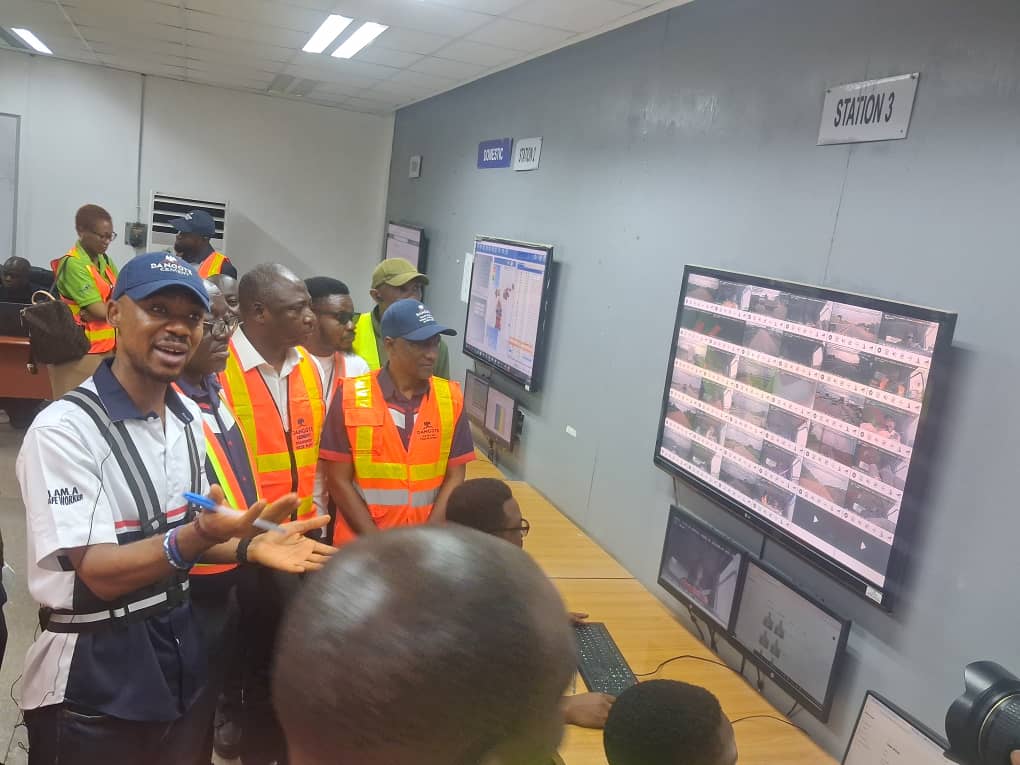
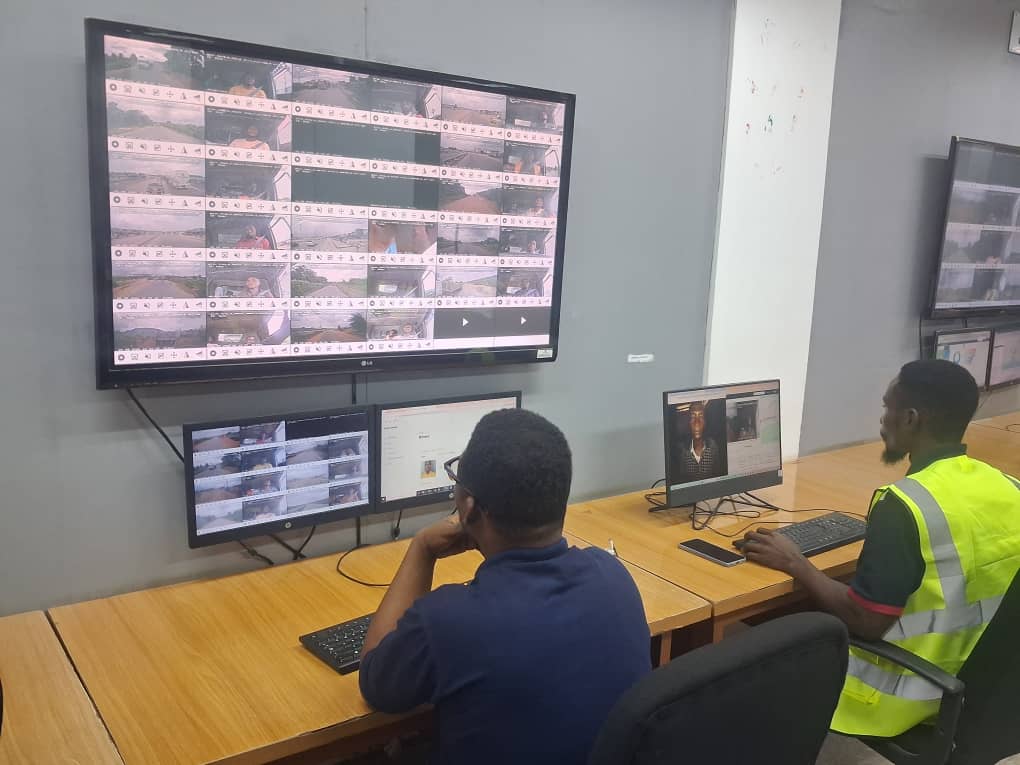
Dangote Cement has stepped up the deployment of advanced safety technology and monitoring devices including cameras across its truck fleet as part of efforts to improve driver behaviour and reduce road crashes involving its vehicles.
The company said the technology, which enables real-time monitoring of its trucks and drivers, was being complemented with intensive driver training, strict safety protocols and incentives for accident-free driving.
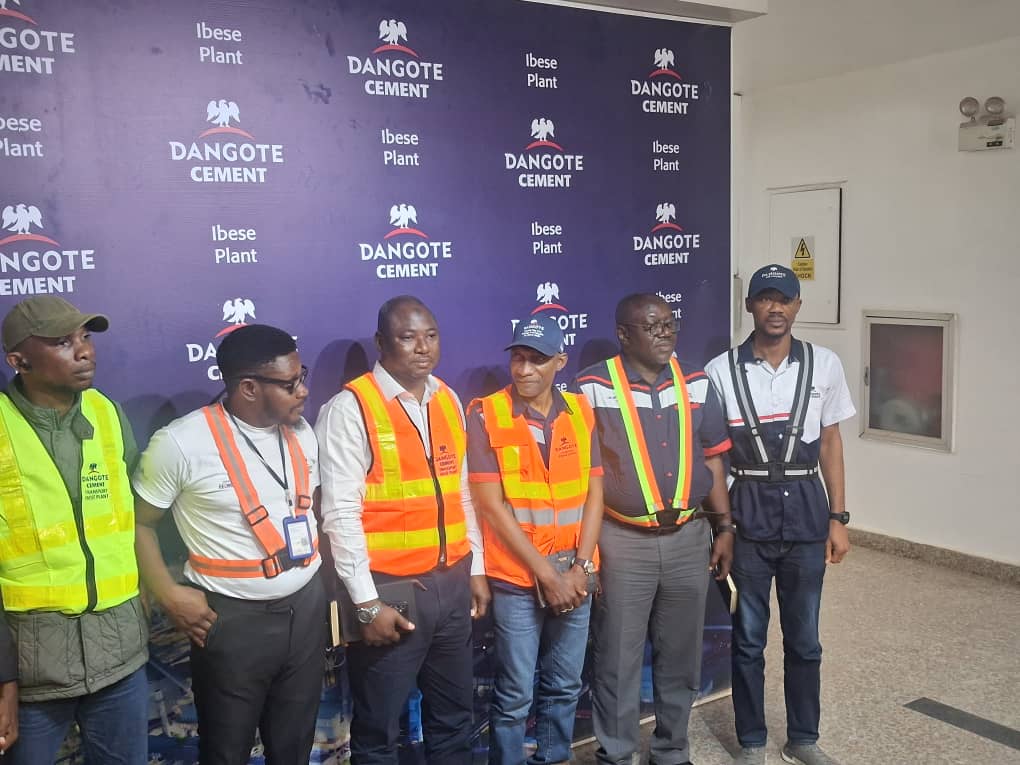
The Head of Operations, Dangote Cement Ibese, Ogun State, David Idiege, disclosed this on Thursday at a press briefing on the company’s road safety measures, explaining that the initiative was designed to give the company greater control over what happens on the road.
With more than 4,000 trucks operating from the Ibese plant, Idiege said the company had invested in the cameras and other state-of-the-art devices capable of monitoring its trucks in real time and helping to detect unsafe driving practices.
“That is why we have cameras in our trucks and state-of-the-art technologies that make us see in real time what is happening in any of our trucks at every material time,” he said.
According to him, the technology is particularly important in addressing practices such as speeding and proxy driving, where authorised drivers hand over trucks to unauthorised persons.
“Proxy driving, cases where our drivers give the truck to some other person to drive for them, and the company has stringent sanctions applied to any driver caught in proxy driving,” he said.
Idiege added that environmental factors, including bad weather, also contributed to some road incidents, making real-time monitoring and driver vigilance critical to the company’s safety strategy.
READ ALSO:
- Atiku’s Fuel Subsidy Plan Unrealistic, Destructive, Says Presidency
- Former MFM Pastor Femi Jimoh Dies After Years of Detention, Legal Dispute
- Former MFM Pastor Femi Jimoh Dies After Years of Detention, Legal Dispute
Beyond technology, he said Dangote Cement was strengthening driver competence by using some of its best-performing drivers as safety ambassadors to train their colleagues.
“We also have a very good rewards system for those who drive diligently without getting involved in accidents. Aside from the rewards and certificates, we also bring those best drivers up to train their colleagues,” he said.
The company’s Head of Human Resources, Muhammed Al-Hassan, said driver development remained a key component of its road safety programme, stressing that only properly trained drivers were permitted to operate its trucks.
He said the company also encouraged safe driving through monthly and annual recognition of drivers who maintained accident-free records.
“For instance, a driver who has been driving without getting involved in accidents is rewarded monthly,” Al-Hassan said.
He added that at the company’s annual safety day, the driver with an outstanding accident-free record would be recognised as the “Safety Person of the Year” and rewarded in line with the organisation’s policies.
While the company maintains disciplinary measures for breaches of safety protocols, Al-Hassan said the broader objective was to ensure that drivers understood and complied with the organisation’s safety standards.
He disclosed that more than 250 drivers had faced sanctions for various safety violations between 2025 and 2026, but stressed that the company’s approach combined enforcement with training, monitoring and incentives.
Idiege also clarified that not every truck bearing the Dangote brand was currently under the company’s direct operational control.
He explained that some trucks previously owned by Dangote had been leased to customers and were now operated by those customers. According to him, trucks no longer managed by the company had been de-branded.
Later, at the Ibese Plant Control Room, the company’s Head of Control, Mr Ifeanyi Eziri, took journalists through the monitoring and tracking processes used to keep tabs on drivers and trucks operating on roads across the country, including the procedures for remotely demobilising vehicles where safety violations are detected.
The company said the combination of smart monitoring devices, driver training, safety ambassadors, real-time surveillance and rewards for responsible driving was aimed at creating a stronger safety culture and reducing truck-related accidents on Nigerian roads.
-

 metro2 days ago
History in Makkah: Nigerian Teen Wins Prestigious Qur’anic Contest, Breaks 46-Year Gender Barrier
-

 News2 days ago
Delta Governor Reveals ₦503,000 Monthly Salary, Says Permanent Secretaries Earn ₦900,000
-

 metro3 days ago
Former MFM Pastor Femi Jimoh Dies After Years of Detention, Legal Dispute
-
 Auto2 days ago
Dangote deploys technology to curb truck crashes, improve road safety
-

 Politics3 days ago
PBAT Door-to-Door Movement Holds Kano Rally, Strengthens APC Ties Ahead of 2027
-

 News2 days ago
Atiku’s Fuel Subsidy Plan Unrealistic, Destructive, Says Presidency
-

 Politics3 days ago
Atiku Vows to Restore Fuel Subsidy If Elected in 2027
-

 Sports2 days ago
Okocha Ignites Fresh GOAT Debate: Nigerian Legend Says Messi Is ‘Art,’ Ronaldo Is ‘Goalscorer Like Haaland’