

Education
NERDC releases approved subject list for revised school curriculum
NERDC releases approved subject list for revised school curriculum
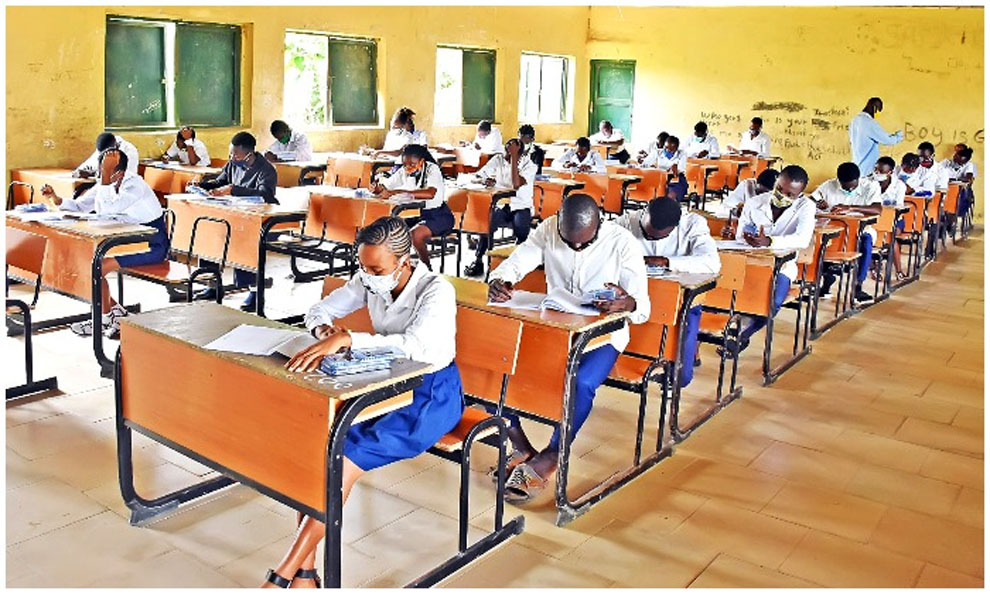
The Nigerian Educational Research and Development Council (NERDC) has released the official subject list for the country’s revised basic and secondary school curriculum.
Earlier, a senior special adviser to the president had shared excerpts from what was believed to be the then-unreleased curriculum document.
The excerpt showed mostly core subjects broken down into specific modules, including artificial intelligence, journalism, fact-checking, cybersecurity, and programming.
However, the NERDC has asked the public to disregard all other versions of the new curriculum circulating online.
In a communique signed by NERDC executive secretary, Salisu Shehu, it said that publishing the officially approved version became necessary to disprove what it described as “unauthentic versions.”
The council said a nationwide sensitisation and teacher capacity building has been scheduled for effective implementation.
It said implementation would commence at the beginning of each three-year education circle (Primary 1, Primary 4, JSS1 and SS1) as the revised curricula are unveiled.
READ ALSO:
- IPMAN calls off strike after agreement with Dangote, NUPENG
- Game changer: Spiro makes electric motobikes more accessible in Nigeria
- PDP To Natasha: Get ready to resume at Senate
See the full NERDC-vetted subject list below:
PRIMARY 1- 3
English Studies
Mathematics
Nigerian Languages (One Nigerian Language)
Basic Science
Physical & Health Education
CRS (For Christian Pupils Only) and IS (For Muslim Pupils Only)
Nigerian History
Social and Citizenship Studies
Cultural & Creative Arts (CCA)
Arabic Language (Optional)
NB: Minimum of 9 and maximum of 10 subjects
PRIMARY 4- 6
English Studies
Mathematics
Nigerian Languages (One Nigerian Language)
Basic Science and Technology
Physical & Health Education
Basic Digital Literacy
CRS (For Christian Pupils Only) and IS (For Muslim Pupils Only)
Nigerian History
Social and Citizenship Studies
Cultural & Creative Arts (CCA)
Pre-vocational studies
French (Optional)
Arabic Language (Optional)
NB: Minimum of 11 and maximum of 12 or 13 subjects
JUNIOR SECONDARY SCHOOL 1-3
English Studies
Mathematics
Nigerian Languages (One Nigerian Language)
Intermediate Science
Physical & Health Education
Digital Technologies
Christian Religious Studies (CRS) (For Christian Pupils Only)
Islamic Studies (IS) (For Muslim Pupils Only)
Nigerian History
Social and Citizenship Studies
Cultural & Creative Arts (CCA)
Trade subjects (Students to choose one trade subject)
- Solar Photovoltaic installation and maintenance
- Fashion design and garment making
- Livestock farming,
- Beauty and cosmetology
- Computer hardware and GSM repairs
- Horticulture and crop production
Business Studies
French (optional)
Arabic Language (Optional)
NB: Minimum of 12 subjects; Maximum of 13 or 14 subjects
SENIOR SECONDARY CURRICULUM OFFERING
Five Core and Compulsory
- English Language
- General Mathematics
- One Trade subject,
- Citizenship and Heritage Studies
- Digital Technologies
Science
- Biology
- Chemistry
- Physics
- Agriculture
- Further Mathematics
- Physical Education
- Health Education
- Foods & Nutrition
- Geography
- Technical Drawing
Humanities
- Nigerian History
- Government
- Christian Religious Studies,
- Islamic Studies
- One Nigerian language
- French
- Arabic
- Visual Arts
- Music
- Literature in English
- Home Management
- Catering craft
- Business
- Accounting
- Commerce
- Marketing
- Economics
One core trade subject (Students to choose one trade subject)
- Solar Photovoltaic installation and maintenance
- Fashion design and garment making
- Livestock farming
- Beauty and cosmetology
- Computer hardware and GSM repairs
- Horticulture and crop production
NERDC releases approved subject list for revised school curriculum




Education
25 Universities, Teaching Hospitals Get Solar Power Under REA Programme

25 Universities, Teaching Hospitals Get Solar Power Under REA Programme
Twenty-five federal tertiary institutions have been connected to solar electricity under the Rural Electrification Agency’s (REA) Energizing Education Programme.
The REA Managing Director, Abba Aliyu, disclosed this during the commissioning of a 3MW captive solar hybrid power project at Yakubu Gowon University, Abuja.
According to Aliyu, the programme covers 22 federal universities and three affiliated teaching hospitals and has deployed more than 100MW of clean energy.
He said the initiative now benefits over 300,000 students and 50,000 academic and administrative staff.
READ ALSO:
- Adunni Ade Reveals Christian Fans Unfollowed Her After Publicly Identifying as Muslim
- Jetour Set to Storm Abuja Show with Rugged Luxury T2
- Fiji Declares National HIV Emergency as Diagnoses Surge Sixteenfold
Aliyu added that the new 3MW facility would power key university facilities, including lecture halls, laboratories, ICT systems, administrative buildings and campus lighting.
Meanwhile, Minister of Power Joseph O. Tegbe said reliable electricity was essential to supporting teaching, research, healthcare and digital services in universities.
He stressed that the long-term performance of the solar projects would be more important than their commissioning.
Vice-Chancellor of Yakubu Gowon University, Prof. Hakeem Babatunde Fawehinmi, also said dependable electricity was critical to the institution’s academic and research activities.
25 Universities, Teaching Hospitals Get Solar Power Under REA Programme
Education
Niger State Urges Local Communities to Protect Newly Completed Public Schools
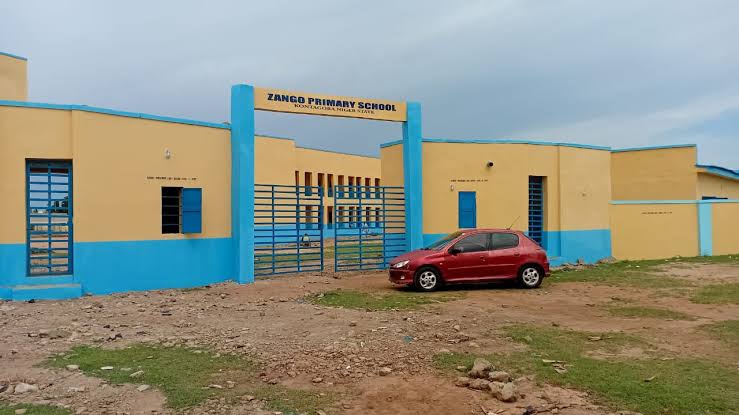
Niger State Urges Local Communities to Protect Newly Completed Public Schools
Basic education officials deliver modern classrooms to help children learn safely, kicking off an ambitious statewide renovation drive.
State education leaders in Niger State are calling on neighborhood residents and parent groups to take good care of newly renovated primary schools.
On Wednesday, the head of the Niger State Universal Basic Education Board, Dr. Ibrahim A. Liman, reminded communities that public classrooms belong to everyone, warning that state funding can only make a lasting difference when local people watch over these shared spaces.
To prepare for handing over the keys, board officials visited Zango Primary School in Kontagora and Richard Lander Primary School in New Bussa. These two locations are the first to finish out of seven model schools currently under construction.
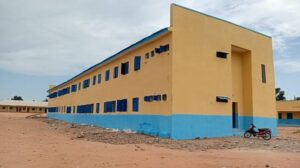
During their visits, team members inspected classrooms to make sure builders followed high safety standards, while encouraging neighbors to keep the grounds secure, tidy, and ready for pupils.
Furthermore, state officials explained that these building projects are part of a larger plan to improve early education across every community. Alongside these new classrooms, the board is starting repair work on about 400 primary schools throughout the state.
In addition to fixing desks and roofs, authorities are upgrading classroom teaching tools and supporting teachers. As a result, children across all backgrounds will have safe, welcoming spaces to learn and grow together.
Niger State Urges Local Communities to Protect Newly Completed Public Schools
Education
LASU, LASUED, LASUSTECH Shut as ASUU Begins Indefinite Strike
LASU, LASUED, LASUSTECH Shut as ASUU Begins Indefinite Strike
Students at three Lagos State-owned universities are facing an indefinite interruption of academic activities after ASUU declared a strike over unresolved demands.
LASU, LASUED and LASUSTECH are affected by the industrial action announced by the union’s Joint Campus Group.
ASUU said it had given the Lagos State Government 14 days from August 31 to address its concerns. According to the union, the deadline expired without a concrete plan or meaningful dialogue.
The union had also issued a final warning on September 10, but said the September 13 deadline passed without talks.
Its main demand is for Lagos State to domesticate and implement the December 2025 Federal Government-ASUU agreement across the three institutions.
ASUU also wants the implementation of welfare provisions, including the Consolidated Academic Tools Allowance for serving and retired academic staff.
The union said the strike would continue until negotiations produce a satisfactory outcome. It also urged students and parents to remain calm.
While the dispute has led to a fresh shutdown in Lagos, another ASUU branch has suspended its strike in Plateau State.
The Plateau State University branch reached an agreement with the state government on issues including the 2025 agreement, outstanding arrears, staff accommodation and other demands. Members are expected to return to academic activities from midnight on September 16.
Meanwhile, ASUU at Taraba State University has issued a fresh 14-day ultimatum to the Taraba State Government. The notice runs from September 14 to September 28 and concerns outstanding provisions of the 2025 Federal Government-ASUU agreement.
LASU, LASUED, LASUSTECH Shut as ASUU Begins Indefinite Strike
-
 Politics3 days ago
2027: Northern Lecturers Back Tinubu, ASUU Disowns Endorsement
-

 Sports2 days ago
‘I Was Never the Chosen One’ — Dembele Responds to Mbappe
-

 International1 day ago
Islamic Council Condemns Attempted Attack on Holy City of Mecca
-

 metro2 days ago
Lagos Power Outage: Ikeja Electric Blames TCN as Businesses, Homes Groan
-
 News1 day ago
Keep Politics Out of My Office — Ogbomoso Grand Chief Imam Warns Politicians, Bloggers
-

 Education2 days ago
JAMB Moves 2027 UTME Time — Here’s What Candidates Need To Know
-
 Politics2 days ago
2027: APC Governors Reject Wike’s Rainbow Coalition, Insist on Party Loyalty
-

 News2 days ago
I Wanted to Disgrace Tinubu — Omokri Reveals What He Discovered at Chicago Varsity