
Aviation
FG cancels airline VAT exemption, reintroduces charges on aircraft, parts

FG cancels airline VAT exemption, reintroduces charges on aircraft, parts
The Federal Government has ended Value Added Tax (VAT) and duty exemptions for airlines and reinstated taxes on commercial aircraft engines, spare parts and flight tickets.
Implementation kicks off January 1, 2026
At a Business Webinar on Thursday jointly organised by Aviation & Allied Business in collaboration with the Federal Inland Revenue Service (FIRS) themed: ‘Nigeria Tax Act (2025) & The Aviation Industry: Aviation Sector Enlightenment Initiative,’ the Assistant Director, Nigeria Revenue Service (formerly FIRS), Nkechi Umegakwe, explained that the new directive draws strength from the Tax Reforms Act, adding that the implementation will be total.
She said unlike what is currently obtainable, it will become mandatory from January next year for airline operators and other aviation companies to pay the Value Added Tax (VAT) in all of their services and operations. Currently, airlines are exempted from the payment of import duties and VAT on the importation of commercial aircraft, commercial aircraft engines, spare parts, and air tickets, a policy implemented. She insisted that all the above are now liable to VAT from January 1, 2026.
Umegakwe emphasised that VAT is now enshrined in Chapter VI, Chapter VIII-PT IV, the Eleventh and Thirteen Schedules of the Nigerian Tax Act and the relevant provisions of Nigeria Tax Administration Act. The VAT (Modification) Order 2024 continues to be in force while the repeal of the VAT Act and The VAT (Modification) Order, 2021 has been revoked.
She said that under the new tax reforms, various taxes are now harmonised to create a unified system in order to eliminate inconsistencies and drive efficiency, while it also simplified the current tax laws. She said: “VAT is a consumption tax on the goods and services to be borne by the end users and not the suppliers. Once the new tax reforms become operational, whatever you bring in as an airline, aircraft, engines, spare parts, and others. You must pay VAT on them. However, if the taxes are in excess, the airlines can ask for a refund, which would be done within 30 days of request. But, with the new tax reforms, airlines will no longer be exempted from payment of VAT.”
READ ALSO:
- How I survived abduction, robbery in Bucharest – Wole Soyinka
- Dangote refinery to start free petrol delivery Sept 15
- Peter Obi holds closed-door meeting with former president Jonathan
On the collection of VAT by an agent earning commission only, Sec 21(5) NTA, she said there is currently no provision, but in the new law, an appointed VAT collection agent who does not handle payments for the main supply but earns a commission must be issued a taxable invoice, furnish the purchaser with a copy, and remit the VAT on the related supply. Intermediaries or facilitators who play a role in the sale of goods and earn commission from the transaction can be appointed as VAT agents.
On electronic platforms and digital goods, she said there is currently no provision for tax, but in the new law, where goods are imported or purchased through an online, electronic, or digital platform operated by a non-resident supplier, the VAT due will be collected by the service of its agent at the point of clearance. Such agents are to remit the VAT at the point of clearance upon provision of.
Nigeria commenced its VAT-free policy for aircraft parts in 2020, but about three months after implementation, the Nigerian Customs Service (NCS) restored the collection of 7.5 per cent VAT and sundry charges, which was protested by the Airline Operators of Nigeria. By the end of 2021, following the intervention of the National Assembly, the VAT-free policy was fully implemented and commended by the AON.
Stakeholders react
Industry stakeholders expressed concern over the new law, with Capt. Samuel Caulcrik saying that the various taxes and levies in the sector are already choking operators and slowing down business growth. He said that payment of 7.5 per cent VAT and service charges by airlines would amount to multiple taxation on the industry and called on the government to rescind its decision.
“This will cut off the number of air travellers coming into the industry. If some passengers had already been cut off due to 5 per cent TSC/CSC and an additional 7.5 per cent from VAT, more people would run away from the industry and deplete performance,” he said.
Another stakeholder, Nkechi Onyenso, Managing Director of Pathfinder Securities, said this would likely have a negative impact on the aviation industry and urged for more stakeholder engagement.
She said: “I just want to talk about the possible effect that it may have on private aviation services companies in Nigeria. It’s already a struggling business as it is now. I’m not speaking for the airlines, but because I work with some of them, I see that they have very low passenger numbers as it is now. I’m just wondering about the impact of the introduction of VAT on airline tickets, which will affect ticket prices. How much further will it impact passenger flow for the airlines?
READ ALSO:
- 2027: Malami alleges Kebbi Governor plans to bring in thugs, mercenaries [PHOTOS]
- Lasaco Assurance secures ‘A(NG)’ rating for third year, signals strong growth, stability
- Ronaldo named best player of all time
“We will recall that there are some standard costs that airlines have to pay, but revenue comes from passengers. If this VAT is introduced, I wonder about its impact on passengers. As it is, the aviation industry is already facing challenges due to the naira’s performance in the foreign market because most purchases are done in dollars and pounds. So I’m just wondering if introducing VAT on airline parts, which are mainly paid for in dollars, will promote the aviation industry or pull it down.
“Tax reform is not a bad idea because change is the only constant in life. But I see room for more stakeholder engagement to understand the issues in the aviation industry and how this new tax administration can affect general operations.”
Nigeria’s first aviation lawyer, Prof. Ismail Mustapha, warned that the New Tax Act contradicts existing legal provisions and could result in double taxation, citing sections 22 and 23 of the Civil Aviation Act 2022.
“By virtue of sections 22 and 23 of the Civil Aviation Act 2022, no taxation can be deducted from the income of the aviation sector. The FIRS position contradicts this provision. If applied, it would amount to double taxation. The Federal Inland Revenue has to reconsider because these provisions conflict with one another. This needs urgent legal clarification,” he said.
Nigeria Contravening ICAO, ECOWAS Treaties
–IATA
The International Air Transport Association (IATA) was represented by its Area Manager for West and Central Africa, Dr. Samson Fatokun.
In his contribution, he criticised the government for inconsistencies and for contravening international treaties.
READ ALSO:
- Fani-Kayode denies interest in NFA chairmanship position
- Lagos seals 13 more bars, lounges for noise pollution
- Court bars David Mark, Aregbesola from ADC leadership positions
He said that President Bola Tinubu, who was Chairman of ECOWAS, signed a treaty in December 2024 with other member nations prohibiting taxes on air passengers and cargo, effective January 1, 2026. He also explained that, as a member of the International Civil Aviation Organisation (ICAO), Nigeria signed a treaty prohibiting VAT in air transportation, reiterating that the aviation industry is cost recovery, not revenue generation. He further said operators are already overburdened with numerous levies and charges, citing the five per cent Ticket Sales Charge/Cargo Sales Charge (TSC/CSC) as one of the levies airlines currently contend with.
Fatokun said the Federal Government must understand the difference between taxes, charges, and fees. He explained that these levies exist because tax authorities may perceive multiple services being consumed, even though most are already levied.
“Whether these are taxes or fees, from the tax office perspective, they are already being levied within the aviation industry. Second, the aviation industry is global. If I’m selling spare parts in Nigeria, all my activities may be limited to Nigeria and governed by Nigerian laws and regulations. But when you operate internationally, treaties regulate the industry globally.
“Nigeria is bound by these regulations. We are a member of ICAO, an organ of the United Nations, and must respect international aviation taxation rules. International transport of passengers cannot be taxed, and Nigeria has signed and approved these regulations. Domestic taxation rules must consider treaties already entered into.
“On December 14, 2024, ECOWAS established the Supplementary Act, stating no taxation should apply to air transport of passengers and goods in ECOWAS countries, effective January 1, 2026. Our president signed this agreement. Domestic legislation cannot contradict it.
“Regarding movable assets like aircraft, international regulations stipulate that such assets should not be taxed while operating between countries. Applying domestic tax laws to these movable assets is extremely difficult.”
FG cancels airline VAT exemption, reintroduces charges on aircraft, parts
SUN









Aviation
Airlines Tighten Power Bank Rules Worldwide After Surge in Flight Fire Incidents
Airlines Tighten Power Bank Rules Worldwide After Surge in Flight Fire Incidents
Travellers relying on portable power banks for phones and gadgets are now facing stricter airline restrictions as aviation authorities move to curb growing safety concerns linked to lithium batteries. The new measures follow a rise in incidents involving overheating, smoke, and fires caused by power banks on aircraft, prompting global regulators to take action.
In March 2026, the International Civil Aviation Organization (ICAO) introduced tighter restrictions on lithium battery-powered power banks. Under the updated rules, passengers can carry only two power banks and are banned from charging them during flights. Travellers are also prohibited from checking power banks into aircraft holds and are instead advised to keep them in the cabin, where any potential issue can be seen and addressed by crew members.
Safety concerns intensified recently after an EasyJet flight bound for the United Kingdom was diverted to Rome when a passenger reported that a power bank was charging inside luggage stored in the aircraft hold. The flight from Hurghada in Egypt to London Luton was nearly three hours into its journey, cruising at 36,000 feet over the Adriatic Sea, when the captain decided to divert “in line with safety regulations.” There was no issue with the power bank itself, but regulations strictly prohibit power banks from being charged in the hold during a flight. The airline provided hotel accommodation and meals where available, and the flight was rescheduled for the following morning. The airline’s rules state that power banks are accepted on aircraft in cabin baggage only but are prohibited from use and must not be used to charge other devices.
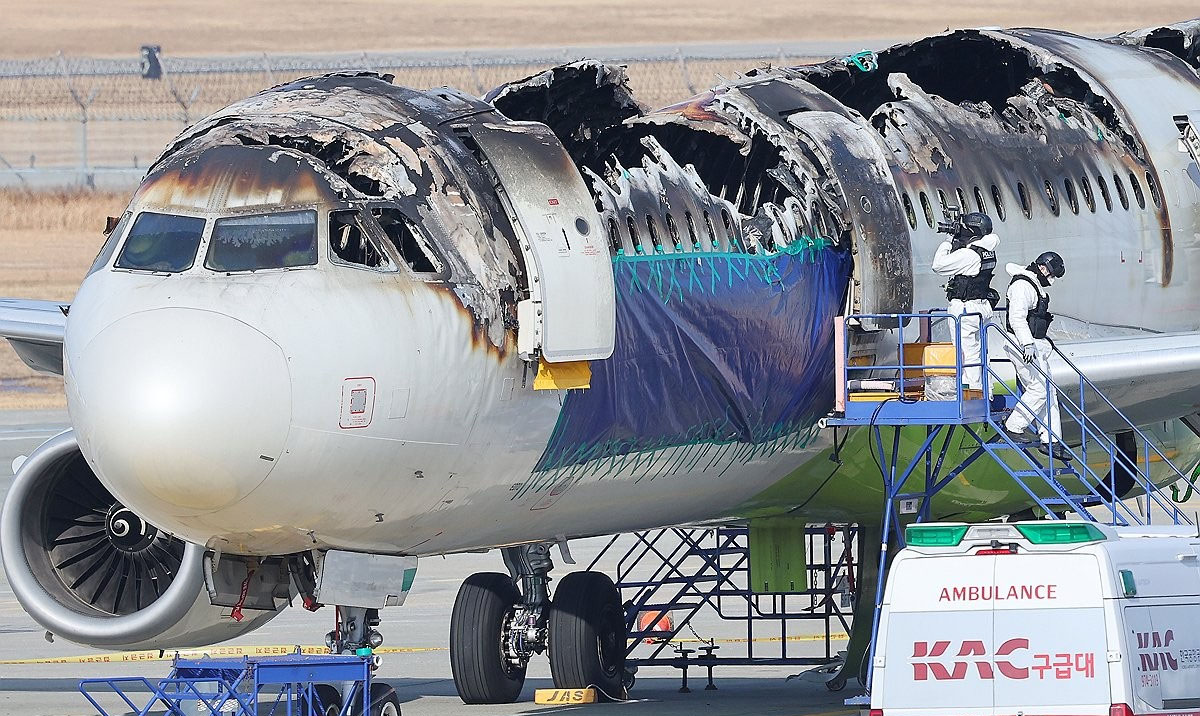
Similar incidents have raised alarm globally. In November 2025, a lithium power bank burst into flames in a passenger’s pocket at Melbourne Airport, leaving the man with burns to his fingers and leg. In January 2025, authorities said a portable power bank was the likely cause of a fire that destroyed a passenger plane in South Korea, leaving three people with minor injuries. In March 2026, a plane departing from Tokyo to New York was evacuated after a portable battery charger caught fire while the plane was taxiing; two seats were burned and the flight was cancelled. In April 2026, an Air Canada flight experienced an overheating power bank that cabin crew placed into a thermal containment bag to prevent fire from spreading.
The Federal Aviation Administration (FAA) has linked 29 in-flight incidents involving smoke, fire, or extreme heat so far this year to power banks on flights connected to the United States. The agency recorded 97 such incidents in 2025, marking a 94 percent increase compared to the previous year. Lithium batteries, including power banks and portable chargers, can act as ignition sources and potentially start onboard fires. Lithium batteries stored in passenger overhead bins or in carry-on baggage may be obscured, difficult to access, or not readily monitored, which can delay detection of thermal runaway and firefighting measures in flight, increasing the risk to safety.
READ ALSO:
- Saudi Crown Prince Hosts Hajj Reception for 1.7M Pilgrims, Muslim Leaders in Mina
- Lagos Sanitation: Wahab’s Unexpected Message to Every Lagos Household
- NAHCON Chairman Orders Refunds for Nigerian Pilgrims Over Substandard Meals
Aviation safety experts explain that lithium batteries pose a danger on aircraft primarily because of their vulnerability to “thermal runaway” – a chain reaction where a damaged, overcharged, or overheated battery undergoes a rapid, uncontrolled rise in temperature, leading to fire, explosion, and the release of toxic fumes. If lithium batteries are damaged, overcharged, or exposed to extreme heat, they can go into thermal runaway, causing serious safety hazards. Traditional firefighting methods using Halon extinguishers can briefly suppress open flames, but they do not halt the thermal runaway process. The primary response involves using large amounts of water to cool the battery and suppress flames.
In Nigeria, the Nigeria Civil Aviation Authority (NCAA) issued directives in January 2026 warning airlines about the growing dangers associated with portable chargers. The regulator barred passengers from checking in power banks, prohibited onboard charging, and limited travellers to carrying only two devices. The NCAA also directed airlines to ensure power banks are not stored in overhead compartments and must remain in visible areas during flights, such as under the passenger’s seat, in seat-back pockets, or in any other location designated by the airline. The directive took effect on March 1, 2026.
Nigerian carriers, including Ibom Air and United Nigeria Airlines, have already begun enforcing the restrictions. Ibom Air announced full compliance with the NCAA safety directive, stating that passengers will no longer be allowed to place power banks in overhead bins or checked-in baggage. The airline explained that lithium-ion batteries, when overheated or damaged, can enter a state known as “thermal runaway,” causing them to ignite fires that are extremely difficult to control, particularly at cruising altitude where emergency response options are limited. Under the rules, power banks rated up to 100 watt-hours (Wh) are allowed without restriction, while those between 100 and 160Wh require prior airline approval. Devices exceeding 160Wh are strictly banned.
Airlines across Asia Pacific have been among the first to implement stricter rules. Singapore Airlines joined major global carriers including Emirates, Air Busan, and Cathay Pacific in imposing new travel safety protocols, limiting passengers to carrying no more than two power banks in carry-on luggage and prohibiting in-flight charging of devices using portable batteries. Hong Kong and Macao airports announced new restrictions citing safety risks linked to lithium battery-powered devices that have caught fire on board. Only flight crew members are excluded from the restrictions, as they may continue using power banks as required for aircraft operations.
Airlines in Japan, South Korea, and Taiwan have also tightened regulations, while China has banned uncertified power banks on domestic flights, with thousands of devices confiscated at Chinese airports. Thai Airways and AirAsia are among other carriers enforcing stricter power bank use aboard aircraft. American Airlines began requiring that flyers keep the devices visible when in use, along with limits on the number of devices they can bring and their watt-hour capacity.
The ICAO’s new specifications represent the most significant global alignment of power bank rules in recent years. The decision reflects emerging expertise around risks presented by passengers’ lithium batteries, with the organization stating the new measures will enhance safety and peace of mind for passengers and airlines alike. The addendum to the Technical Instructions for the Safe Transport of Dangerous Goods by Air has been provided to all ICAO member states for implementation.
Aviation regulators continue to urge passengers to charge devices fully before boarding, use airport lounge and terminal charging facilities, and familiarize themselves with airline-specific power bank policies before flying, as additional restrictions may vary between carriers. Passengers are advised to carry spare batteries, including power banks, in hand luggage instead of checked luggage, ensure devices are below 100Wh, check with the operator for devices between 100 and 160Wh, and avoid using power banks to charge devices onboard the aircraft. Airlines have warned that any operator or passenger found violating these safety regulations could face penalties, and that strict adherence to onboard safety regulations is critical for preventing serious incidents given that lithium battery fires can escalate rapidly.
Airlines Tighten Power Bank Rules Worldwide After Surge in Flight Fire Incidents
Aviation
From N6,000 to N50,000: How Bi-Courtney’s Overnight Airport Parking Fee Sparked Nationwide Fury
From N6,000 to N50,000: How Bi-Courtney’s Overnight Airport Parking Fee Sparked Nationwide Fury
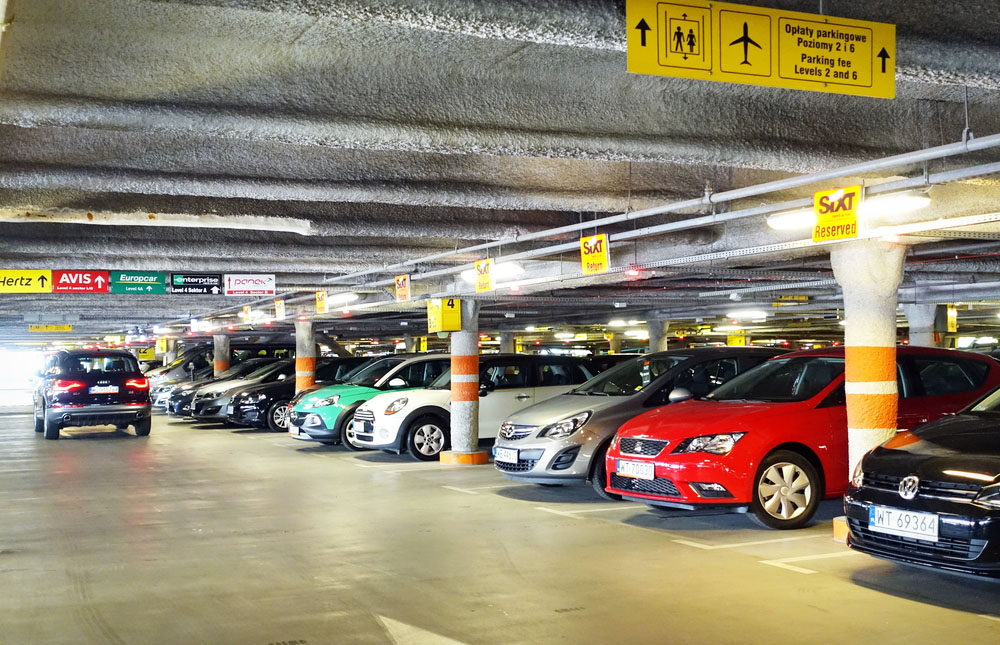
LAGOS— Passengers and visitors to the Murtala Muhammed Airport Terminal 2 (MMA2) have continued to fume over a 150 per cent hike in parking fees, describing the increase as excessive and frustrating. Despite growing complaints and calls for a downward review, the facility operator, Bi-Courtney Aviation Services Limited (BASL) , has insisted there are no plans to reduce the current tariff structure.
In April 2026, Bi-Courtney Aviation Services Limited, the company which manages the terminal, took the tariff to stratospheric heights. Under the revised pricing structure, saloon cars now pay N3,500 for the first 60 minutes and N2,500 for each subsequent hour, while Sports Utility Vehicles (SUVs) pay N4,000 for the first 60 minutes and N2,500 for subsequent hours. For 18-seater buses and above, the flat rate is N20,000, while overnight parking costs N50,000 —a staggering increase from the previous N6,000 rate. Additionally, anyone who loses his or her ticket will pay a penalty fee of N25,000.
The public outcry has been amplified by high-profile complaints. BBNaija star Whitemoney (Hazel Oyeze Onou) recently took to social media to lament a N206,000 parking bill after leaving his car at the Lagos airport for four days, from Friday to Monday. In a viral video, he expressed shock at discovering the new overnight rate and questioned whether the government and the Minister of Aviation, Festus Keyamo, are aware of these charges.
In another incident that sparked outrage, a female traveller alleged she was charged N11,500 for just two hours of parking at MMA2. In a video that went viral on social media, the visibly distressed woman accused operators of exploiting motorists, saying, “From 8 o’clock to 10, they are charging me N11,500. Look at their cash points. They are charging people, stealing from people. For just 30 minutes, they will collect N3,500.”
One of the visitors, Joe Agbo, who had not known about the fee increase in April, told Daily Sun that he drove to the airport this past week to pick up a family member and was shocked at how much he was expected to pay. He said he drove an SUV and stayed for not less than 20 minutes, and was told he had to pay N4,000. “It is outrageous that this is happening and is not sustainable. Where else are we supposed to park? Why should the company managing this airport make parking so difficult for people?” he queried.
READ ALSO:
- US, Nigerian Forces Kill 20 ISWAP Terrorists in Fresh Borno Airstrikes
- Police Confirm Two Gruesome Family Murders Within Hours in Enugu
- Immigration Service Honours Lasaco Assurance MD Over Product Innovation
Agbo further argued that the justification for the hike was insufficient. “From the inquiries I made, I was told that the fees were increased because people were parking overnight. But just because you want to control traffic or maintain decorum does not justify this hike. Already, passengers sometimes pay as much as N200,000 for flight tickets. Many are practically squeezing themselves just to afford a flight ticket. They struggle to afford a flight ticket and also struggle to afford parking. Please, we want a downward review of this fee. It is too high and we cannot afford it. That is a fact,” the airport user said.
Another visitor, Jide Babs, also told the Daily Sun that he had to pick his mother up from the airport but because of a flight delay, he ended up waiting an hour and 10 minutes. When he went to pay the fee, he was told he had to pay N6,500 just for parking and felt it was outrageous. “Many Nigerians are already going through extremely difficult times and it’s not fair that airport managers are still burdening them the most. There are ways to handle the issue of those who park indiscriminately. You can tow their vehicles or impound them. Instead of doing that, the airport managers have chosen to increase the fee by over N150,000. That is not good at all,” he said.
In defence of the new tariffs, Ajoke Yinka-Olawuyi (also identified as Ajoke Olawoyin), Head of Corporate Communications at BASL, has insisted that the hike is not revenue-driven but rather a “demand-management measure” aimed at restoring the car park to its original short-stay purpose. She explained that the facility, which has a limited capacity of approximately 800 vehicles, had been overwhelmed by long-term parking abuse, with some vehicles left for months and even years.
- WHO Declares Ebola Emergency as Nigeria Activates Nationwide Monitoring
- City Boy Movement Empowers 1,000 FCT Women, Backs Tinubu’s 2027 Re-Election
- Oyo School Attacks: Afenifere Urges South-West Govs To Tighten Security
“We have discovered a misuse of the facility. The facility was designed for short stay parking—come, drop off, pick up and leave—not long-term parking,” Yinka-Olawuyi said. She cited extreme cases where vehicles were abandoned for “three weeks, a week, in some instances six months. In fact in some cases one year.” She noted that prior to the tariff review, the terminal’s car park regularly recorded as many as 300 vehicles parked overnight.
READ ALSO:
Regarding the controversial N50,000 overnight fee, she stated that management had considered eliminating overnight parking entirely but found that applying the hourly rate over a 24-hour period would result in charges “significantly higher than 50,000 Naira.” She maintained that the current rate is actually “a more considerate and moderated option.” Crucially, she declared that the tariff would not be reversed, stating: “So will it go down? No, it won’t. Because the moment you take it down, then we’ll go back to where we’re coming from. The problem we’re trying to solve will come back.”
Daily Sun reached out to BASL to know if there are any plans for a downward review of the parking fares, and the Public Relations Officer, Ajoke Olawoyin, said there are no such plans at the moment. She said that adjustments of this nature often generate public reactions, especially initially, and that the parking tariff review was part of a broader operational and infrastructure sustainability initiative aimed at improving traffic efficiency management, parking space turnover, security monitoring, maintenance of the multi-level facility, and overall passenger experience within the terminal environment. The review, she said, also reflected prevailing economic realities and rising operational costs.
“The objective of the review was not revenue-driven. It was designed to address operational concerns, including traffic congestion within the terminal vicinity and the increasing cost of maintaining the facility and related services. Management continues to monitor the impact across these areas. The overall impact of the review is being assessed holistically, including operational efficiency, traffic flow, parking turnover, and customer experience,” she said.
However, critics have slammed the rationale. An editorial in The Guardian described the hike as “punitive and indefensible,” arguing that Bi-Courtney’s approach amounts to “punishing all customers to address the fallout from its poor planning, systemic inefficiencies, and weak regulation.” The newspaper noted that the car park was “shoehorned into a space far less than what a modern airport service facility requires,” and that no motorist is allowed to pick up passengers outside the terminal—everyone is compelled to use the car park, where even a minute’s stay attracts the minimum N3,500 charge.
The editorial has called for the Federal Competition and Consumer Protection Commission (FCCPC) to intervene, arguing that the “obnoxious review” highlights broader implications for consumer protection and regulatory oversight. It also criticised the Nigeria Civil Aviation Authority (NCAA) for failing to effectively implement Part 19 of the Nigeria Civil Aviation Regulations, which deals with consumer protection, tariffs, pricing, and economic oversight.
Meanwhile, the Federal Airports Authority of Nigeria (FAAN) has also implemented its own fee adjustments, raising toll fees for sedans from N300 to N500 and for SUVs from N500 to N1,000 as part of a broader cashless policy initiative that took effect on March 1, 2026. However, analysts have pointed out that FAAN’s price adjustment “almost peters out into insignificance” compared to Bi-Courtney’s increases.
Despite the backlash, Yinka-Olawuyi claimed that the changes have already yielded positive results, reducing congestion and improving accessibility within the terminal. “We don’t have that congestion anymore. People come in and park… you’re able to find a parking spot easily,” she said. She also apologised to occasional travellers who may have been caught off guard by the sudden change, acknowledging that “if you’re not a frequent flyer, you might not know.”
As outrage continues to grow, including calls for government intervention from celebrities like Whitemoney and ordinary travellers alike, the standoff between airport operators and the travelling public shows no sign of resolution, with BASL firm that the N50,000 overnight parking fee is here to stay.
From N6,000 to N50,000: How Bi-Courtney’s Overnight Airport Parking Fee Sparked Nationwide Fury
Aviation
Airlines Threaten Nationwide Shutdown Over Jet A1 Fuel Price Surge
Airlines Threaten Nationwide Shutdown Over Jet A1 Fuel Price Surge
Domestic airlines in Nigeria have warned of a possible nationwide shutdown from Thursday, April 30, 2026, over a deepening aviation fuel crisis, as operators struggle with sharply rising Jet A1 fuel prices and unsustainable operating costs.
The Airline Operators of Nigeria (AON) say the planned action may ground all domestic flights if urgent intervention is not provided by the Federal Government, raising fears of widespread disruption to air travel across the country.
Airline operators say the continuous increase in aviation fuel prices in Nigeria has pushed the industry to breaking point. According to them, Jet A1 prices have surged by more than 300% since February, rising from about ₦900 per litre to between ₦2,700 and ₦3,500 in some locations. They explained that fuel now accounts for the largest share of operating expenses, leaving airlines struggling to sustain flight schedules while maintaining safety standards.
READ ALSO:
- Fernández Sends Chelsea Into FA Cup Final With Win Over Leeds
- Kwara Govt Links Bukola Saraki to 2018 Offa Robbery Case
- ADC Presidential Ticket: Obi, Kwankwaso Rally Northern Leaders Against Atiku
Multiple rounds of negotiations have reportedly been held between airline operators, fuel marketers, and government officials, but no concrete solution has been reached. The Minister of Aviation and Aerospace Development, Festus Keyamo, convened a two-day emergency meeting in Abuja aimed at resolving the crisis. Although the government announced a 30% reduction in aviation-related taxes and charges, operators say the measure does not address the core issue of fuel pricing.
The Airline Operators of Nigeria warned that if no urgent action is taken, carriers may be forced to suspend domestic operations nationwide. Industry leaders say airlines are now operating at a loss, with some flights barely covering fuel costs. They also warned that continued operations under current conditions could compromise long-term sustainability in the aviation sector.
The looming shutdown has sparked concerns among passengers who rely heavily on domestic air travel for business, medical emergencies, and intercity movement. Many travellers have already begun exploring alternative transport options as uncertainty grows over possible flight cancellations in Nigeria.
In a formal submission to the Federal Government, the Airline Operators of Nigeria outlined several emergency measures, including the suspension of aviation taxes, fees, and charges for at least six months, the introduction of a non-taxable fuel surcharge system, the establishment of a pricing review committee for aviation fuel, and credit support arrangements between fuel marketers and airlines. Operators argue that these measures are necessary to stabilise the sector and prevent a total shutdown of domestic aviation.
As the Thursday deadline approaches, uncertainty continues to grow within Nigeria’s aviation industry. Airline officials say the situation remains critical, warning that without immediate intervention, domestic air operations could be grounded nationwide.
Airlines Threaten Nationwide Shutdown Over Jet A1 Fuel Price Surge
-

 metro1 day ago
Lagos Tenancy Reform 2026: What Tenants, Landlords Must Know
-

 metro1 day ago
Tinubu Launches 145 Tricycle Ambulances, Six Boat Ambulances to Save Mothers, Newborns Across Nigeria
-

 Africa1 day ago
Xenophobia: “South African Men Are Jealous of Us Because We Service Their Women Well in Bed” – Ghanaian Man
-

 Business6 hours ago
BREAKING: Dangote Refinery Announces New Petrol, Diesel Prices
-

 metro1 day ago
Tinubu Marks Third Anniversary, Says Nigeria’s Economy Recovering
-

 metro2 days ago
Tinubu Deepfake: Presidency Alleges Coordinated Plot to Divide Nigerians
-

 Politics3 days ago
Lagos APC Crisis Deepens as Tinubu’s Daughter Threatens Protest Over Primaries
-

 Politics3 days ago
‘You’re Not Abandoned,’ Tinubu Assures Abducted Oyo, Borno Schoolchildren