
Politics
INEC to publish newly created polling units next week
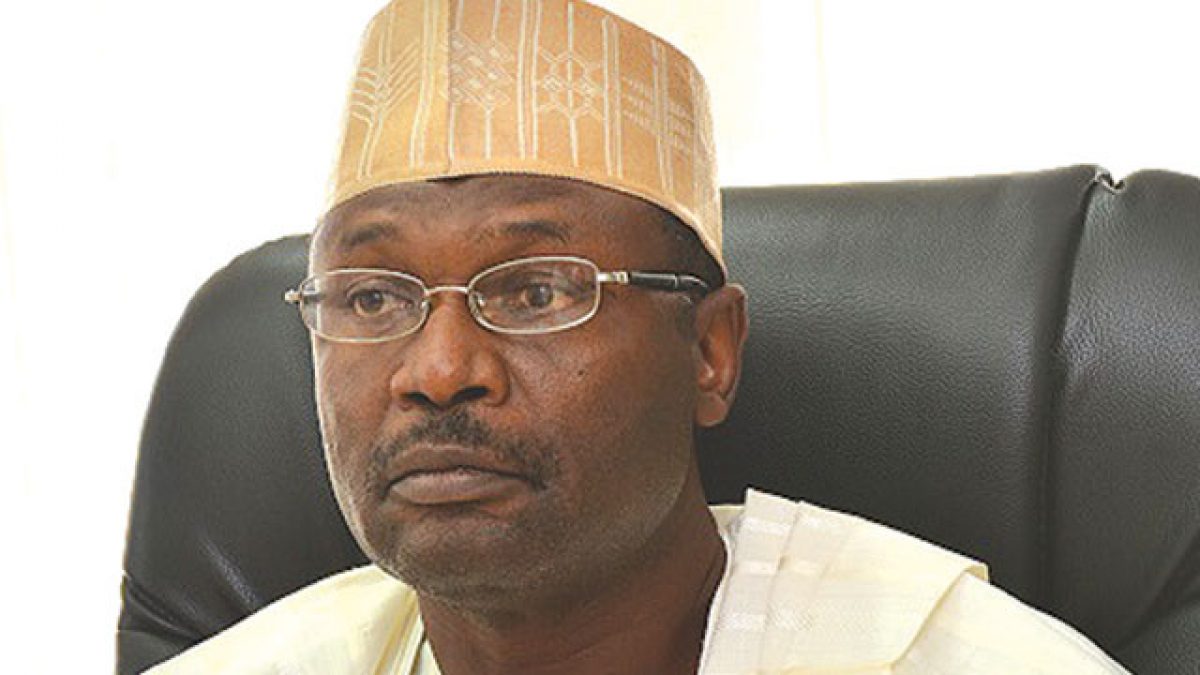
All the newly created polling units will be published next week ahead of the commencement of Continuous Voter Registration, the Independent National Electoral Commission (INEC) has said.
INEC had undertaken the task to expand existing Polling Units across the country to boost Voters’ access to polling centres to reduce apathy during elections.
INEC Chairman, Prof. Mahmood Yakubu, spoke on the new polling units on Monday during the presentation of fire engine to the commission by the Federal Fire Service in Abuja.
According to him, the commission has accomplished the task for the first time in 25 years.
He said, “We earlier assured Nigerians that we shall conclude work on the expansion of voter access to polling units and make the new polling units available to citizens ahead of the CVR exercise.
“I am glad to report that we have accomplished this task for the first time in 25 years. A comprehensive list of the new polling units will be published next week. Similarly, details of the locations of the registration centres and the procedure for the commencement of online registration will also be made available after a series of regular consultative meetings with stakeholders next week.”
Meanwhile on the donation of the fire engine, the INEC Chair commended the Federal Fire Service, adding that 18 incidents out of the 42 attacks on the Commission’s facility resulted from arson.






Politics
Kano Governor Nominates Murtala Sule Garo as New Deputy Governor
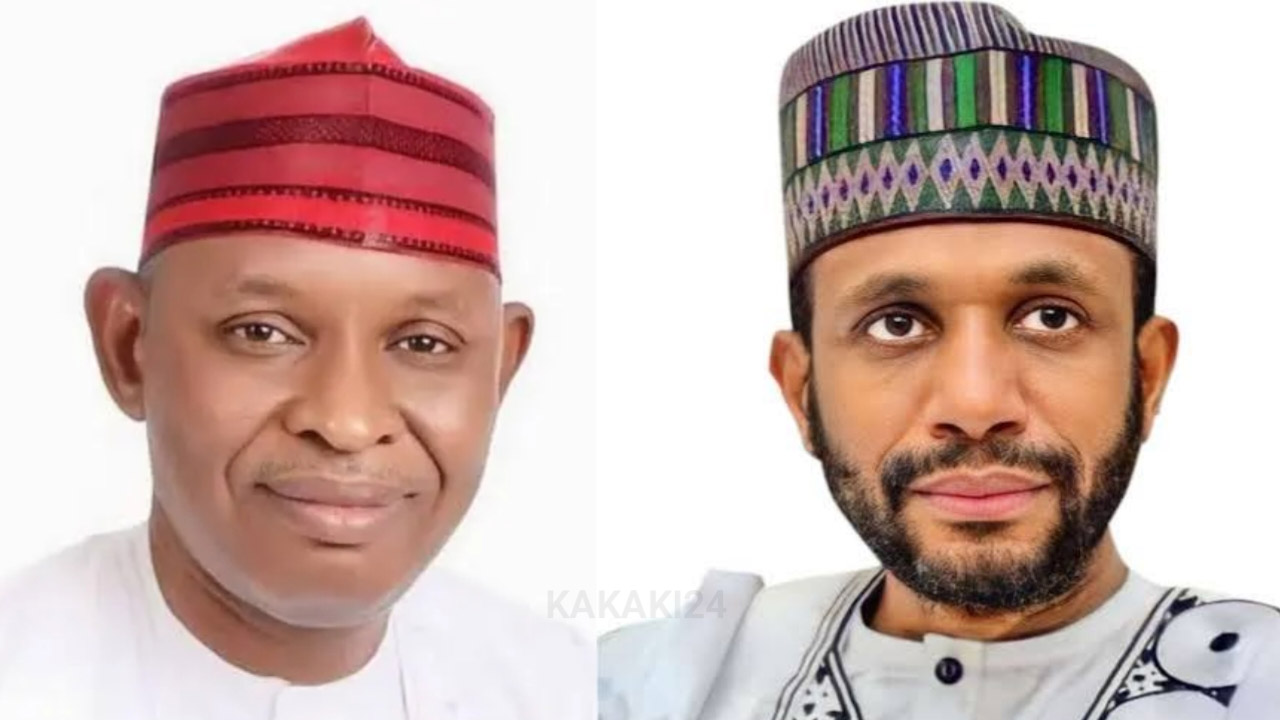
Kano Governor Nominates Murtala Sule Garo as New Deputy Governor
Governor Abba Kabir Yusuf of Kano State has forwarded the name of Murtala Sule Garo to the Kano State House of Assembly for screening and confirmation as the new Deputy Governor of Kano State, following the resignation of his predecessor.
The nomination was confirmed in a statement issued by the Governor’s Chief Press Secretary, Mustapha Muhammad, who said the decision was made in line with Section 191(3) of the 1999 Constitution (as amended), which empowers a governor to appoint a replacement when the office of deputy governor becomes vacant.
The vacancy arose after the resignation of former Deputy Governor Abdussalam Gwarzo on March 27, 2026, creating a constitutional obligation for the governor to nominate a successor for legislative approval.
Governor cites consultations and need for stability
According to the statement, Governor Yusuf said the nomination followed wide consultations with key stakeholders across Kano State. He urged the State Assembly to expedite the screening and confirmation process to ensure continuity in governance and strengthen administrative stability.
READ ALSO:
- Troops Arrest Five Suspects in Ebonyi Over Killing of Police Officer
- Trump Accuses Iran of Ceasefire Breaches as US–Iran Peace Talks Collapse
- Nigeria Records New COVID-19 Case in Cross River
The governor also described the move as part of efforts to reinforce the leadership structure of the state government and improve coordination in the execution of policies and development programmes under his administration.
Profile of Murtala Sule Garo
Murtala Sule Garo, aged 48, is a seasoned politician and administrator with extensive experience in governance and public service in Kano State. Over the years, he has held several strategic positions, including State Organising Secretary of his political party, Special Adviser to the Governor, and Chairman of Kabo Local Government Area.
He also served as Chairman of the Association of Local Governments of Nigeria (ALGON), Kano State chapter, and later as Commissioner for Local Government and Chieftaincy Affairs, where he played a key role in grassroots administration and local governance reforms.
Politically, Garo was also the deputy governorship candidate of the All Progressives Congress (APC) in the 2023 general elections, making him a familiar figure in Kano’s political landscape.
Assembly screening and next steps
The nomination now awaits screening and confirmation by the Kano State House of Assembly, which is expected to assess the nominee’s credentials and suitability in accordance with constitutional provisions.
If confirmed, Garo will officially assume office as Deputy Governor of Kano State, becoming the second-highest executive officer in the state government.
Political significance of the nomination
Analysts say the nomination is a strategic move aimed at strengthening governance and ensuring continuity in leadership following the resignation of the former deputy governor. It is also expected to help stabilize the political structure within the state administration.
Observers note that the deputy governor’s role is crucial in supporting executive decision-making, coordinating government activities, and ensuring smooth governance delivery across ministries and agencies.
For now, attention remains focused on the Kano State House of Assembly as stakeholders await the outcome of the confirmation process.
Kano Governor Nominates Murtala Sule Garo as New Deputy Governor
Politics
Appeal Court Confirms Nenadi Usman as Labour Party Leader, Dismisses Abure’s Suit

Appeal Court Confirms Nenadi Usman as Labour Party Leader, Dismisses Abure’s Suit
The Court of Appeal has affirmed Nenadi Usman as the legitimate leader of the Labour Party, bringing to a close a protracted leadership crisis that has unsettled the party for months.
In a unanimous judgment delivered by a three-member panel, the appellate court dismissed an appeal filed by Julius Abure, describing it as lacking merit. The court upheld an earlier ruling of the Federal High Court, which recognised Usman as the party’s leader.
The case stemmed from Abure’s challenge to a January 2026 judgment of the Federal High Court in Abuja, which had reaffirmed the position earlier taken by the Supreme Court of Nigeria. The apex court had nullified the Labour Party convention that returned Abure as National Chairman, effectively invalidating his claim to the position.
Delivering the lead judgment, Justice Oyejoju Oyewumi held that the matter had already been conclusively determined by the Supreme Court, stressing that there was no legal basis to reopen the issue. The panel unanimously agreed that the appeal lacked substance.
The appellate court also upheld the directive compelling the Independent National Electoral Commission (INEC) to recognise Usman as the party’s leader, ruling that the Federal High Court acted within its constitutional authority in mandating the electoral body to perform its statutory duties.
On the question of party leadership, the court endorsed the caretaker committee headed by Usman, describing it as a necessary and pragmatic measure to address the leadership vacuum within the party at the time.
The judges further criticised Abure for what they termed an abuse of court process, accusing him of forum shopping by pursuing the same matter in different courts despite a clear and binding decision from the Supreme Court. They held that his continued claim to the leadership position was in defiance of an already settled legal position.
Consequently, the court dismissed the appeal in its entirety and imposed a cost of N10 million against Abure, describing the suit as a waste of judicial time.
Reacting to the judgment, Usman hailed the ruling as a victory for democracy and the rule of law, commending the judiciary for its firmness. She expressed appreciation to party members and supporters for their patience during the crisis and called on stakeholders to unite in rebuilding the party ahead of its forthcoming congresses and national convention.
The Labour Party leadership also urged Nigerians to continue supporting the party as it intensifies preparations for the 2027 general elections.
Appeal Court Confirms Nenadi Usman as Labour Party Leader, Dismisses Abure’s Suit
Politics
House of Reps Hit by Massive Defections as PDP Loses Five Members
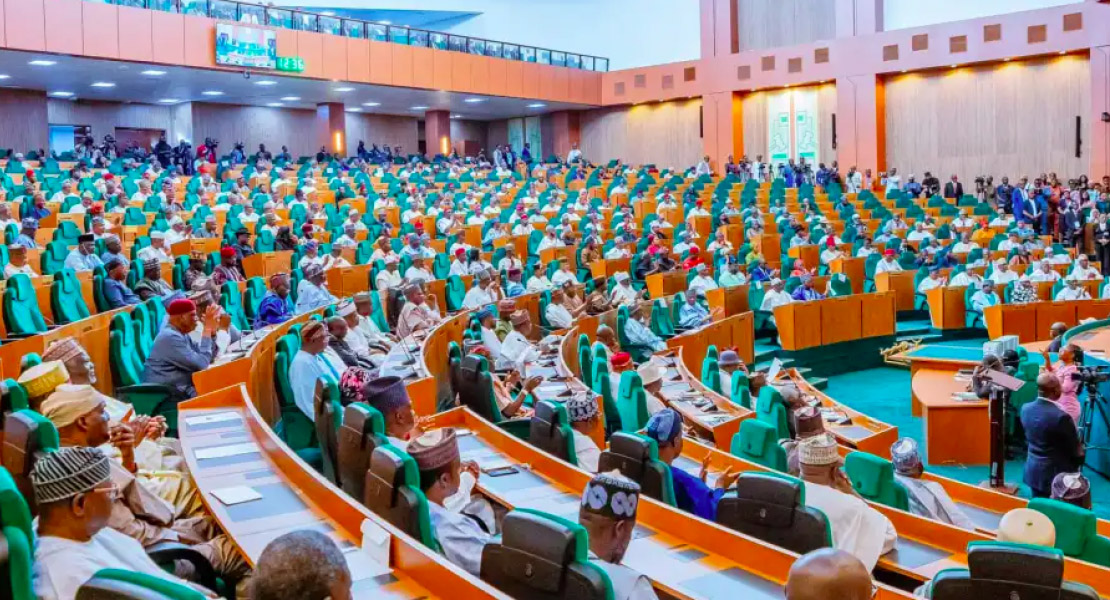
House of Reps Hit by Massive Defections as PDP Loses Five Members
Nigeria’s political landscape witnessed another round of realignments on Tuesday as members of the House of Representatives defected from major political parties, including the Peoples Democratic Party (PDP), All Progressives Congress (APC), and Labour Party (LP), in a move linked to internal party crises and preparations for the 2027 general elections.
During plenary after the Easter break, Deputy Speaker Benjamin Kalu formally read out a series of defection letters, confirming shifts involving lawmakers across multiple constituencies. The development saw the PDP lose five members in a single sitting, while other parties also recorded gains and losses.
Kalu, however, dismissed concerns that the growing trend signals a drift toward a one-party state, arguing that the movements reflect constitutional political freedom.
“This is to show the country that no party is stifled. People are leaving the majority party to the minority parties and the minority parties for the majority party. This is the beauty of democracy,” he said.
READ ALSO:
- Trump Rules Out Ceasefire Extension With Iran
- Blessing CEO Returns to Instagram, Deletes Cancer Claim Posts
- FG Disburses ₦9.9bn Cash Transfer to Vulnerable Households in Ondo
One of the notable defections was from Lagos State, where Thaddeus Attah of Eti-Osa Federal Constituency left the Labour Party for the African Democratic Congress (ADC). In his letter, he cited the ongoing leadership crisis within the LP as a key reason for his decision, saying it had hindered effective representation of his constituents.
The PDP recorded the most significant losses in the latest wave. Abubakar Abdul from Niger State defected to the APC, while Yakubu Noma from Kebbi State joined the ADC. Another lawmaker from Kebbi State, Ibrahim Mohammed, also moved to the APC.
In Osun State, Mudashiru Alani (Ayedire/Iwo/Ola-Oluwa) and Adetunji Olusoji (Odo-Otin/Ifelodun/Boripe) exited the PDP for the Accord Party, further weakening the party’s presence in the lower chamber.
The APC also suffered setbacks, as David Fuoh from Taraba State defected to the PDP, while Bashir Zubair from Kaduna State joined the ADC, highlighting the two-way nature of political defections in Nigeria’s National Assembly.
The latest realignments have been largely attributed to unresolved leadership disputes within major opposition parties, particularly the PDP and LP, as well as strategic repositioning ahead of the 2027 elections.
Since the inauguration of the 10th National Assembly in 2023, the APC has maintained numerical dominance in the House, while opposition parties continue to struggle with internal divisions, prompting frequent defections and coalition discussions.
Political analysts say the growing visibility of smaller parties such as the ADC signals a gradual reshaping of Nigeria’s political space, as lawmakers increasingly explore alternative platforms beyond the traditional APC–PDP rivalry.
The House adjourned plenary to Wednesday in honour of Kano lawmaker Hassan Danjuma, who passed away on April 10, 2026, at the age of 66.
House of Reps Hit by Massive Defections as PDP Loses Five Members

-
 News18 hours ago
BREAKING: Tinubu Allegedly Shakes Up Cabinet, Removes Wale Edun, Ahmed Dangiwa
-

 Education2 days ago
FG Opens PTDF Scholarship 2026: Requirements, Deadline, and Application Steps
-
 News3 days ago
Yayi’s emergence, defining moment for unity, equity, progress — Ogun West Professionals
-
 Education3 days ago
Why UTME Results Were Delayed — JAMB Gives Official Explanation
-

 metro16 hours ago
Grand Chief Imam Visits DSS Director, Seeks Stronger Security Collaboration in Oyo
-
 Politics3 days ago
Shekarau, Gwarzo Dump PDP for APC in Kano Political Shake-Up
-

 Entertainment2 days ago
Peller Faces Backlash Over Claim His ₦100m Savings Are Off-Limits
-

 metro2 days ago
Army Intercepts 314 Rounds of Ammunition, Arrests Terror Couriers in Kogi