

Opinion
Donald Trump’s plan to de-stabilise Nigeria, by Reuben Abati

Donald Trump’s plan to de-stabilise Nigeria, by Reuben Abati
I have chosen the provocative title of this piece deliberately knowing that some of the more patriotic elements among us in Nigeria would scream that it is impossible, because Nigeria is a sovereign nation. Indeed, since the end of World War II, the United States has refrained from portraying itself as a colonizing, conquering, destabilising power, sticking with what became known as the central pillars of the American foreign policy process namely: building global peace, promotion of democracy around the world, humanitarian assistance, liberalism and the projection of the United States as the world’s primary power, that is American exceptionalism. The tragedy of President Trump’s second term in power is that he has upended America’s foreign policy process, projecting himself wrongly as President of the world, and so from Kuwait, to the Middle East, Latin America, South America, and now instructively in Africa, he tries to call the shots. He throws up in the process intimations of unilateralism, egotism, hypocrisy and contradictions that are too loud to be ignored.
His latest gambit in this direction is his declaration, over the weekend that Nigeria is now a Country of Particular Concern (CPC) for its alleged persecution of Christians and its violation of religious freedom. He has asked President Tinubu to” better move fast” otherwise the US will invade Nigeria to protect those he calls “our Cherished Christians”. He has also directed the US Department of War to commence preparations for action in Nigeria. Pete Hegseth, the Trump boot-licker who is Secretary of Defence has responded: “Yes Sir!” The Pentagon has also been put on alert to get ready to go “gun-a-blazing” to Nigeria. He has also threatened to stop US aid for Nigeria. Trump will always be Trump: he is an attention-seeking leader who seeks publicity almost to the same degree that children crave for candies. He says he is a peacemaker of the world, but with regard to Nigeria, he is trying to cause problems. What is his motivation?
There have been a number of conspiracy theories. They include first the argument that by defending Nigerian Christians, he would please the Christian evangelical constituency in the United States, especially now that some of his self-seeking sycophants like Steve Bannon are pursuing a third term agenda for him, we also have Congressman Riley Moore, Tom Cole, and Senator Ted Cruz who see themselves as defenders of the faith, as well as Republican right-wingers who spew divisive rhetoric. They are all wrong about Nigeria. There is no religious genocide in Nigeria. Genocide is such a specific word, properly defined in the Genocide Convention (1948) and the Rome Statute as the deliberate persecution of populations, which under international customary law is a crime against humanity. I am a Nigerian. I live in Lagos. I know that there have been cases of attacks on Catholic priests and Christian communities in Southern Kaduna, the Plateau, Owo, Yelwata, Niger State and parts of the Middle Belt, which we all condemn. But Moslems are also being attacked in the North East. Most of the victims of terrorism and insurgency in the North East, the North West and the North Central are Muslims. The terrorist, the insurgent, the bandit in Nigeria does not ask for religion. He strikes. He kills. In the Middle Belt, the challenge is about land ownership. Further South, it is separatist politics and agitation in the South East. The reality that I see is that Nigeria is a pressure cooker country where we are all facing the challenge of insecurity. Kidnappers do not ask for their victim’s religion. They run an emergent economy in human trafficking. To the extent that Nigeria is under siege, security-wise, it amounts to an oversimplification of the situation to assume that only Christian-Nigerians are in need of help. Terrorism, banditry and insurgency are international, cross-border problems, asymmetrical in character, and so the best that President Trump could have done was to have asked to assist Nigeria through mutually agreed co-operation.
READ ALSO:
- Trump’s accusations rebuffed: Soludo says Christians are killing Christians in South-East
- Alleged Christian killings: Nigeria’s military denies Trump’s claims
- Security breach at Maimalari cantonment: Nine soldiers escape military detention in Maiduguri
This is not the first time he would declare Nigeria a Country of Particular Concern. He did the same during his first term in December 2020. President Biden saved Nigeria the agony of US sanctions on the basis of that classification. Now, Trump is back, and he has gone after Nigeria afresh. Trump by the way does not think much of Africa. He is harassing Nigeria and South Africa. These are two of the most prominent countries in Africa. Those who read conspiracy into Trump’s behaviour may have a point. Nigeria, like South is romancing the China-led alternative economic power alignment, the BRICS. Nigeria, like South Africa is supporting the two-state solution in Israel/Palestine which the US opposes. Nigeria has bluntly refused to serve as a dumping ground, a third country destination, for deportees from America. The Tinubu administration has introduced economic reforms which make the Nigerian economy less dependent on the dollar. Nigeria is a good friend of China.
,
I do not subscribe to the argument that Trump wants to seize Nigerian territory or the country’s economic resources. The US is no longer so dependent on our Brent crude or our gas. Where was everyone when the Dangote Refinery even had to import crude oil from the United States? We have some other mineral resources that we are just beginning to develop. The US can get those from elsewhere. Trump was most recently in Japan where he signed a deal with the first female Prime Minister, Sanae Takaichi, not missing the opportunity to acknowledge her as “a winner”, and he has also met, at a very warm summit, with China’s President Xi Jinping reaching some agreements for at least one year, that would serve the mutual interests of the world’s two largest economies.
It is important to look closely at the sub-text. What do the Americans want? What does Trump want? Is this an attempt at regime change in Nigeria? Ahead of the 2027 general elections, is it that Trump does not want Tinubu in power? The sub-text is often more important than what is spoken. Nigerians are part of the problem. Many of our compatriots out of spite have become very adept at running down, and demarketing their own country. For their own selfish reasons, when they are invited to events by foreign embassies, they talk too much, not knowing that they are being recorded. There are also elements in civil society looking for foreign grants, who specialise in maligning Nigeria and the government of the day. We are a country in need of patriots. This is a moment that calls for patriotism and unity more than ever. If Trump, exercising his powers under Article Two of the US Constitution deploys armed action against any section of Nigeria, the consequences would be tragic. Nigeria will never be the same again. The North vs South rhetoric at the heart of Trump’s belligerence can lead to another civil war. Nigeria as it is, cannot survive a second civil war. No country in living memory has survived a religious war. Nigeria cannot afford a war between Christians and Muslims. The West African region will be destabilized, creating grave humanitarian crisis.
READ ALSO:
- Security breach at Maimalari cantonment: Nine soldiers escape military detention in Maiduguri
- Suspects arrested in Ondo over murder of three farmers in Akure North
- Alleged Christian killings: China warns U.S against interfering in Nigeria’s internal affairs
Nigerians must come together and save their country. It must be clear to the United States, with its capacity for intelligence and all the futuristic devices at its disposal that whatever conflict that may exist in Nigeria is far more nuanced and complex. Both Muslims and Christians and animists have suffered losses. The other day, kidnappers seized human beings along Lokoja road. They did not ask for religious identity. There is no body of evidence to support President Trump’s claim that about 3, 100 Christians have been killed in Nigeria or that this is relatively the highest number in the world. Christians are being persecuted in China, and Gaza and Ukraine. Yet, the United States is supporting Israel and has remained ambivalent towards Russia.
President Tinubu needs to get adults in the room. He does not need a propaganda-spewing crowd of yes-men who are more interested in their own self-promotion. He needs adults, and we have many of them around who can step in and help Nigeria with the benefit of their experience: There is the Nigerian Institute of International Affairs (NIIA) where you have scholars whose main trade is foreign policy formulation and analysis, the Presidential Advisory Council on International Relations which provides solid institutional memory about Nigeria’s relations with the world – that body used to exist, but if it does not at the moment, there are experienced diplomats that can be called upon. They include President Olusegun Obasanjo, Chief Emeka Anyaoku, General TY Danjuma, President Goodluck Jonathan, Professor Bolaji Akinyemi, Ambassador Moses Ihonde, Ambassador Olusegun Akinsanya, Ambassador Dapo Fafowora, Ambassador Hassan Tukur, Ambassador Joe Keshi, Professor Bola Akinterinwa, Ambassador Yahaya Kwande and many other members of the Association of Retired Ambassadors of Nigeria (ARCAN). President Tinubu needs wise counsel. This is not the time for partisan politics. He also needs the support of religious leaders who can speak up and help change the narrative. We have heard Bishop Matthew Hassan Kukah and Pastor Wale Adefarasin defending religious harmony in Nigeria. We need other religious leaders too: Pastor Adeboye, Pastor William Kumuyi, Pastor Tunde Bakare, the Sultan of Sokoto, Sheik Ahmad Gumi, Pastor Chris Okotie, Pastor Sam Aiyedogbon, Pastor Chris Oyakhilome should be mobilised to help douse tension at a time it appears the Devil is knocking on the door. Pastor Kumuyi has denied saying anything on the matter, but let him and the others not sit on the fence. He should say something. The voices of the likes of Prophet Isa El-Buba and Pastor Bosun Emmanuel must also be listened to.
READ ALSO:
- Justice Omotosho warns Kanu may forfeit right to defence
- Advocacy group rejects U.S military intervention, urges governance reforms to tackle insecurity
- Wike dismisses ‘Christian genocide’ claims, says allegation politically motivated
President Bola Ahmd Tinubu needs to appoint Ambassadors to Nigeria’s missions abroad. For almost two years, our missions abroad have been manned by Charge D’affaires without substantive representatives of the President. The Nigerian Government must act swiftly and address this omission.
But more importantly, the message from President Donald Trump should be taken as a wake-up call. Nigeria is not facing a religious war. Every Nigerian life matters – whether Christian, Muslim or animist, apparently Trump pandering to his own evangelical base in the United States does not know this. However, the Nigerian government has an obligation to make this environment safe for all and sundry. We play too much politics with safety in this country and that is why there is no immediate meeting of minds on Trump’s aggression towards Nigeria. A major starting point should be a major overhaul to ensure political stability. Many Nigerians do not have a sense of belonging. They do not think that they belong here. They feel excluded. We need a different structure to ensure that every Nigerian can build the confidence that he or she can one day rise to any level in this land regardless of belief or ethnic identity.
Some analysts once recommended the idea of Rotational Presidency. We have six geopolitical zones. Every zone should be able to produce a President for a single term of whatever number of years is agreed upon. This idea of North vs. South simply means that two major ethnic groups can dominate power to the exclusion of others who end up breeding fifth columnists who sabotage the government of the day. The other point is one of nemesis. Years back, the leaders of the APC went to the United States to de-market the Jonathan administration, and then, they complained about religious persecution in Nigeria. The wheel has now turned full circle, and we are back to the past. The God of Jonathan has caught up with those who once accused him of being the problem with Nigeria. The shoe is now on the other leg. Karma is a bitch. It is a mirror. It actually has no deadline.
Donald Trump’s plan to de-stabilise Nigeria, by Reuben Abati







Opinion
2027: Competence, Not Zoning, Should Decide Nigeria’s Next President — Imasuagbon
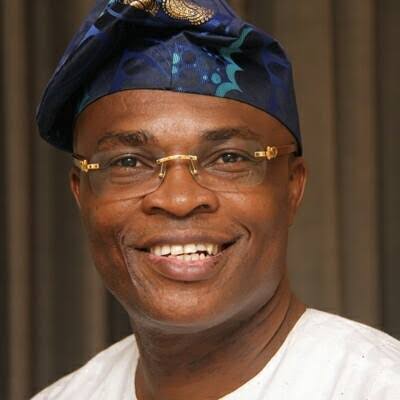
Nigerians should look beyond ethnicity, region and the longstanding debate over rotational presidency when choosing the country’s next leader, according to a chieftain of the African Democratic Congress (ADC), Kenneth Imasuagbon.
The former Edo State governorship aspirant said the priority ahead of the 2027 election should be finding a president with the ability to confront Nigeria’s economic, security and infrastructure challenges.
Speaking to journalists in Benin, Imasuagbon argued that presidential rotation is not a requirement of the Nigerian Constitution and should therefore not outweigh the question of competence.
He said voters should be more concerned about replacing poor schools with better ones, improving healthcare and addressing hardship than debating where the next president comes from.
Imasuagbon specifically appealed to voters in the South to support former Vice President Atiku Abubakar, who is contesting the 2027 presidency on the ADC platform.
According to him, Atiku has demonstrated the experience and determination needed to improve the country, describing the former vice president as someone capable of promoting national unity and fairness.
He also accused the Bola Tinubu administration of worsening economic pressure through policies including the removal of fuel subsidy, while expressing concern about the condition of roads, electricity and other infrastructure.
Imasuagbon argued that the next administration must focus on practical improvements in areas such as power, transportation, employment, security and public services.
The ADC chieftain also dismissed the idea that the ruling All Progressives Congress (APC) would automatically benefit from its incumbency advantage in 2027.
He maintained that the electorate ultimately determines the outcome of an election, arguing that voters could change the political direction of the country if they were determined to do so.
Imasuagbon further criticised what he described as regional and ethnic considerations in the distribution of political appointments and opportunities, insisting that the next president should give Nigerians across different parts of the country a sense of belonging.
His comments come as political parties and their candidates intensify preparations for the 2027 presidential election.
Opinion
Lesson from Dotun Oladipo’s Brave Daughters, by Bamidele Johnson
Lesson from Dotun Oladipo’s Brave Daughters, by Bamidele Johnson
I hope to grow old. I want to see my kids become real adults, find their own feet, make mistakes, recover from them, and perhaps one day complain that their own children are giving them grey hairs. I want that plainly stated before anything else, as everything that follows might read as a man agreeing to an early exit rather than a man simply being honest about the odds.
I want the decades. I want to become the grandfather who repeats the same stories until nobody bothers correcting him anymore. But wanting a thing and being granted are different things. The last year has made that difference harder to ignore than I would like. I have lost many friends recently to keep thinking that optimism is my natural resting state. Some of these men had better blood pressure than mine, better habits, better everything that is supposed to count. It did not save them.
There is no formula I know that reliably separates the men who make it to 70 from those who do not. Anyone who says he knows one is selling something. So, I do not assume that old age is an already booked destination. Even if I once did, which I doubt, the last three years have cured me of such an illusion. As such, I treat it as a hope rather than an expectation, and I have found that a more honest way to live.
It is exactly why I want something placed on record now, while I am still able to place things on record, rather than leave it for people to guess what my wishes were in the fog of a funeral week. If I do not make old bones, my children are not to be asked to read tributes at my funeral. Not one line, however short, however lovingly written.
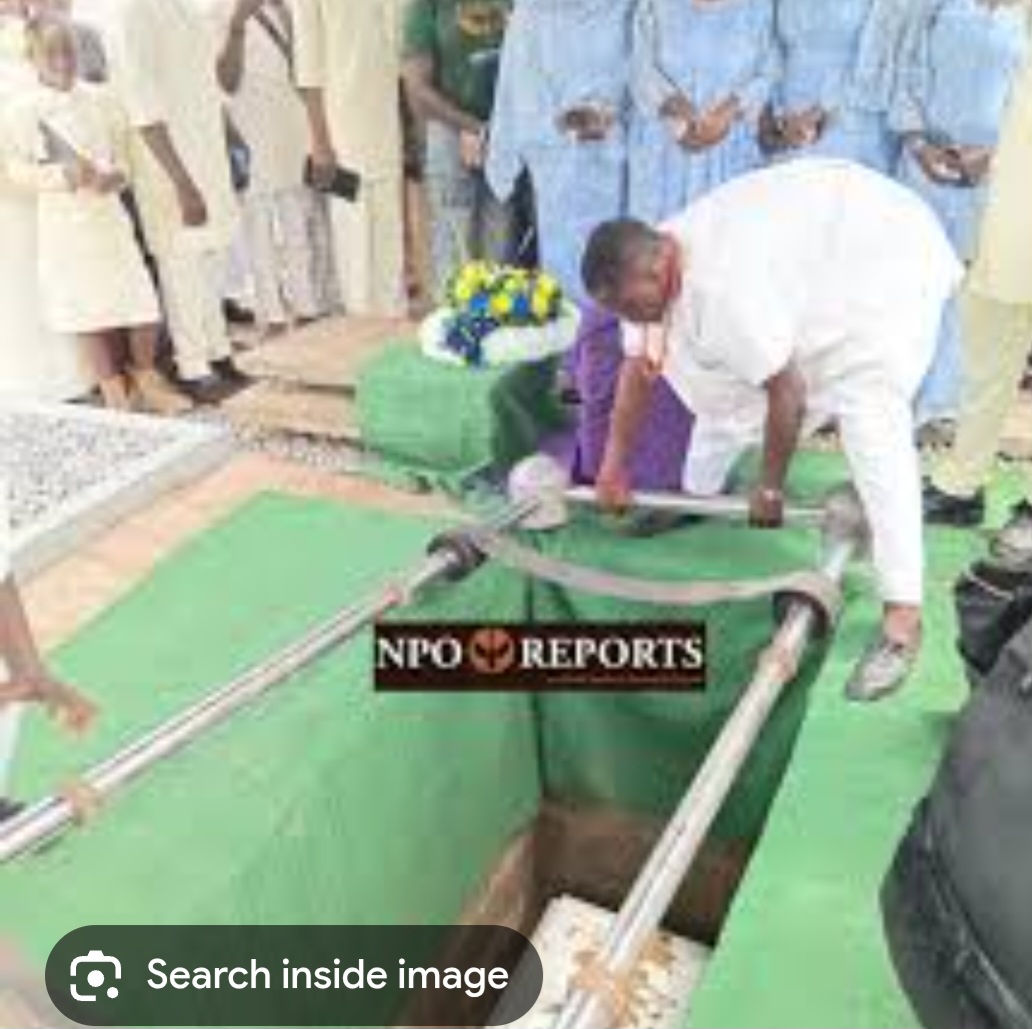
This, for me, was settled today rather than re-opened. At Dotun Oladipo’s funeral service, his three daughters took turns to read their tributes to their dad, and I found myself watching them with awe. There was a kind of strength in them that I do not possess. It is the strength needed to stand in front of a hall brimming with grieving adults and speak about a man they have just lost. Forever. Strength, however, is not the same as ease. I could see plainly what that strength was costing them as they read. Their voices caught. Their composure held and then did not hold and then held again through sheer will.
In front of them, in the pews, men and women considerably older than them came undone in ways the girls themselves were somehow managing to resist. I went mightily close. Some of the sobbing was quiet, the type people try to fold into a handkerchief. Some of it was not quiet at all, the kind that announces itself whether or not you want it.
Those young women honoured their father with a grace that is beyond me. What they did was astonishing. So, what I am attempting is an observation of a custom I have now watched wound people. This was not the first time I had watched this particular ritual extract more than it should from people already running on fumes. I saw an earlier and harder version of it at a friend’s wake back in 2015.
The first son was called forward to read his father’s tribute, and he could not do it. He tried, but the words would not come, and he stood there in front of a crowd of mourners, with his grief simply refusing to organise itself into sentences. The officiating minister, rather than releasing him from the task, urged him to continue. I sat fizzing with sorrow and ire. He could not go on and, eventually, the minister accepted, but not before insisting a while longer than it should have reasonably taken. His younger brother was called up next, presumably on the theory that if one grieving son could not manage it, maybe another one could. He flunked it in the same way. Grief does not distribute itself more conveniently among siblings just because a programme has been printed and needs to be followed.
I have turned that memory over many times since, trying to work out why this part of the rites is treated as mandatory in the first place. I have not found a satisfying answer. Maybe it comes from a belief that a child’s words carry more weight than anyone else’s, which may even be true, but weight is exactly the problem when those carrying it are struggling to hold themselves together with nothing but adrenaline and the fear of dissolving in public.
Maybe it is simply inertia, the reason we still do a hundred things at funerals that nobody can explain the original purpose of. Either way, I have stopped looking for the justification. I no longer think one exists that is good enough to weigh against what I watched happen to that boy in 2015.
So, let this stand as my instruction rather than my preference, the kind of thing I would rather state plainly now than leave for my children to infer later from how uncertain I sound when the subject comes up in passing. If I do not get the old age I am hoping for, my children will not be asked to read a single word over my body. Someone else can speak for me. A friend, a stranger with a steadier voice and a smaller stake in the loss, anyone whose grief will not be quite so total that standing upright becomes almost impossible.
My children, of course, will sit in front and fall apart if that is what the day requires of them, but without the microphone. That, at least, is one small mercy I intend to arrange for them while I am still here to arrange it.
Dotun deserved every bit of the send-off his daughters gave him today, and I suspect he would have been the first to tell them to sit down and let someone else carry the weight for a while. He did not get a say in that, as none of us ever do once we are the ones being spoken of rather than the ones speaking. Rest well, Dotun. You raised three young women whose strength I will not soon forget. That alone says everything worth saying about the man you were.
Opinion
‘Tinubu Will Win Again in 2027’ — Charismatic Bishops’ Secretary
‘Tinubu Will Win Again in 2027’ — Charismatic Bishops’ Secretary
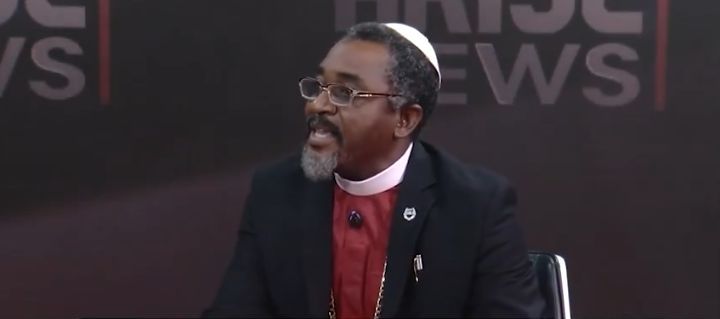
A senior Nigerian cleric, Archbishop Chivir Chianson, has declared that President Bola Tinubu will retain the presidency after the 2027 general election, attributing the prediction to a message he said came from God.
Chianson, who serves as Secretary General of the Charismatic Bishops’ Conference of Nigeria, made the statement while appearing on Arise Television on Saturday.
Rather than basing his prediction on political calculations, the archbishop said his confidence came from what he described as the prophetic role of bishops.
He maintained that the conference had previously spoken about Tinubu’s political future based on what he said was divine revelation and that the President would return for another term.
Chianson also predicted that Tinubu’s performance would improve if he wins the 2027 election.
READ ALSO:
- DSS warns Osun churches, mosques, markets over alleged terrorist attack plot ahead of 2027
- ‘Tinubu Will Win Again in 2027’ — Charismatic Bishops’ Secretary
- Fake miracles, bogus grants: How clerics allegedly fleece Nigerians of millions
Addressing the political opposition, the cleric said the bishops could not be blamed if rival parties failed to unite or organise themselves effectively ahead of the election.
He also sought to clarify the position of the bishops when dealing with government, saying their role in speaking truth to power did not mean they should approach political leaders with hostility or disrespect.
According to him, the Constitution, alongside their religious convictions, should guide how they engage the President and the country.
Chianson said he was sufficiently confident in his prediction to promise that he would return to the Arise TV studio after the 2027 election, when he expects the result to demonstrate that the bishops’ prophecy was correct.
His comments add a religious dimension to the increasingly active political conversation surrounding the 2027 presidential race.
‘Tinubu Will Win Again in 2027’ — Charismatic Bishops’ Secretary
-
 Politics2 days ago
2027: Northern Lecturers Back Tinubu, ASUU Disowns Endorsement
-

 metro3 days ago
Mother ‘sold daughter’s abuse videos for $300’: Nigeria child pornography case shocks nation
-

 News3 days ago
Adeleke Orders Arrests After Associate Ajagungbade Is Reportedly Killed in Ife
-

 metro2 days ago
Police Arrest Mother Over Alleged Brutal Abuse of 7-Year-Old Girl in Anambra
-
 Sports1 day ago
‘I Was Never the Chosen One’ — Dembele Responds to Mbappe
-
 News2 days ago
Nwifuru Dismisses Cubana Chief Priest as ‘Attention-Seeker’
-

 Education1 day ago
JAMB Moves 2027 UTME Time — Here’s What Candidates Need To Know
-
 Politics2 days ago
2027: Sowore Promises ₦500,000 Minimum Wage, Free Education, 24-Hour Electricity