

Opinion
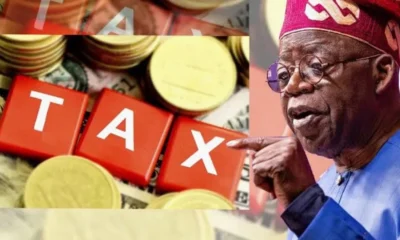
When a Tax Law is an illegality, By Farooq Kperogi

When a Tax Law is an illegality, By Farooq Kperogi
What began as a routine legislative reform of the Nigerian tax system by the Bola Tinubu administration has transmogrified and metastasized into an allegation of unexampled transmutation of a duly passed law to an illegality.
It’s by now well known that a law passed by the National Assembly and assented to by the president may have been materially altered after assent and then presented to the public as binding law. If this allegation is established beyond all shadows of doubt, Nigeria would be confronting the specter of an illegality fraudulently constituted as law.
Interestingly, the discovery wasn’t brought to public notice by secretive, conscientious whistleblowers in the bureaucracy or from eagle-eyed civil society audits. It came from within the legislature itself.
A member of the House of Representatives, Abdulsammad Dasuki, raised a point of privilege after personally comparing the harmonized bill passed by both chambers with the version of the tax laws published in the official gazette. He found that the documents did not match.
His discovery was the product of days of rigorous, studious and painstaking examination of Votes and Proceedings, committee harmonization records and the gazetted text. He realized that he voted for one thing, but the country was being governed by another.
That intervention sparked a chain reaction. Other lawmakers requested certified true copies of the assented bill to verify whether the president had signed the same text that was now in circulation. According to multiple reports, those requests were denied.
The refusal to release certified copies deepened suspicion and transformed what could have been dismissed as a clerical misunderstanding into a full-blown institutional crisis.
When legislators are blocked from seeing the law that they passed and that the president signed, the issue verges on criminal constitutional transgression that must not be swept under the carpet.
While full official disclosure is still pending, several discrepancies have been repeatedly cited by lawmakers, journalists and civil society groups. These include expansions of the discretionary powers of tax authorities beyond what the National Assembly approved, alterations to reporting and oversight obligations, changes in enforcement thresholds, and adjustments that potentially increase executive control over revenue administration.
READ ALSO:
- AFCON 2025: Mali Fight Back to Draw With Hosts Morocco in Rabat
- AFCON 2025: Salah’s Spot Kick Seals Egypt’s Knockout Spot Against South Africa
- 2026 World Cup: FIFA Throws Out Nigeria’s Appeal Against DR Congo
These are not innocent, unintentional clerical slips. They go to the meaning, scope and intent of the law. In short, they change who has power to tax Nigerians, how that power is exercised and to whom it is accountable.
The distinction matters. All legislative systems experience clerical errors. A misplaced word or a misnumbered section does not invalidate a statute. But when alterations confer new powers, remove safeguards, or shift institutional balance, they cross from error into illegality.
A gazette cannot lawfully create what the legislature did not enact or what the president did not assent to. Publication is supposed to merely provide evidence of the existence of the law. It can invent a law that hasn’t been passed.
The official responses so far have been evasive and contradictory. Government representatives initially insisted that there was only one authentic version of the law and that claims of alteration were partisan, ill-natured rumors. But that posture is difficult to reconcile with subsequent developments.
For example, a December 26, 2025, press statement signed by Akin Rotimi, House Spokesman and Chairman of the House Committee on Media and Public Affairs, said the National Assembly has now constituted an ad hoc committee to investigate the sequence of events from harmonization to assent to gazetting.
More tellingly, Rotimi said, the leadership of the legislature has directed that the tax laws be re-gazetted and that certified true copies of the versions duly passed by both chambers be issued.
Re-gazetting is not a neutral act. It is an implicit admission that the existing gazette cannot be confidently treated as an accurate record of legislative intent. If nothing were amiss, there would be nothing to authenticate. The attempt to frame this as a routine administrative clarification rings hollow. Laws are not re-gazetted in the absence of doubt about their authenticity.
Supporters of the government have urged the public to trust the president’s integrity and to avoid speculation. The issue, however, is not whether the president is personally trustworthy but whether the law now being enforced is the law he signed. No amount of rhetorical reassurance can substitute for producing the signed text and allowing a side-by-side comparison with the gazetted version.
There is no precedent in the world that I have found for this kind of illegality. In the United States, the much-cited Deficit Reduction Act controversy of 2006 involved a discrepancy between House and Senate versions due to a clerical transmission error. The president signed the enrolled bill that was presented to him.
Courts upheld it under the enrolled bill doctrine, which treats the signed text as conclusive. Crucially, there was no claim that the law was altered after presidential assent.
READ ALSO:
- Cancer Patient Appeals for Second Wife for Husband, Cites Sexual, Health Challenges
- ACF Awaits Full Details Before Commenting on US–Nigeria Airstrikes in Sokoto
- FG Confirms Debris from US–Nigeria Joint Airstrikes on ISIS in Sokoto Fell in Offa
In the Philippines, in 1964, there was a case where the wrong version of a bill was signed by the president. Legislative leaders later disowned the enrolled copy and treated the signature as invalid. Again, the error occurred before or at assent, not after. Once discovered, it was confronted as a mistake. It wasn’t normalized.
Nigeria’s case, if the allegations are borne out, is more disturbing. Here, the claim is that the president signed the correct bill but that the authoritative law published afterward materially departs from it.
Comparative constitutional practice offers no comfort here. Stable legal systems do not recognize post-assent textual mutation as valid law. Where gazetting errors occur, they are corrected. They do not become the basis for enforcement.
This raises an unavoidable question: why would anyone alter a law after it has been passed and signed? Motives can only be inferred from circumstantial evidence, but the inferences are troubling.
Expanding the powers of tax authorities in a period of fiscal stress creates incentives for bureaucratic overreach. Removing or weakening legislative-oversight provisions reduces accountability. Centralizing discretion in the executive arm simplifies revenue extraction while insulating decision makers from scrutiny. These are not abstract possibilities. They align closely with the specific alterations that have been alleged.
There is an even more unsettling implication. If a major tax reform law can be altered after assent without immediate detection, what confidence can citizens have in the integrity of other statutes? Nigeria has passed hundreds of laws over the years, many of them technical, complex and rarely scrutinized line by line after gazetting. The discovery of this discrepancy raises the chilling possibility that post-assent alterations may not be unprecedented in practice.
That possibility should alarm every Nigerian regardless of political affiliation. Law is the foundation of collective life. If the text of the law is unstable, if it can be surreptitiously modified after constitutional procedures have been completed, then legality itself becomes provisional. Governance slides from rule of law to rule by document manipulation.
The seriousness of this violation cannot be overstated. If officials altered the tax law knowingly, they did not merely breach administrative rules. They subverted the Constitution. Such conduct would amount to forgery, abuse of office and an assault on democratic sovereignty. It would mean that Nigerians are being taxed under provisions that were never lawfully enacted.
This is why a thorough, transparent investigation is not optional. It must establish a clear documentary chain: the harmonized bill passed by both chambers, the exact text transmitted for assent, the document signed by the president and the version published in the gazette. Any divergence must be accounted for, step by step, with named responsibility. Institutional reviews that end in vague recommendations will not suffice.
If culpability is established, punishment must be severe. Anything less would invite repetition. As I always say, there is no greater enabler of habitual relapses into the same crime than the absence of consequences for committing the crimes.
The alteration of law after assent is not a victimless bureaucratic shortcut. It is a constitutional crime with nationwide consequences. Deterrence requires more than quiet corrections. It requires accountability that is visible, proportionate and unmistakable.
This episode can either be buried under procedural language and political loyalty, or it can become a moment of constitutional self-correction. A tax law that is an illegality cannot be the foundation of fiscal reform. The integrity of the lawmaking process is itself a public good. Without it, no reform, however well intentioned, can claim legitimacy.
When a Tax Law is an illegality, By Farooq Kperogi
Kperogi is a renowned columnist and United States-based Professor of Journalism





Opinion
2027: Competence, Not Zoning, Should Decide Nigeria’s Next President — Imasuagbon
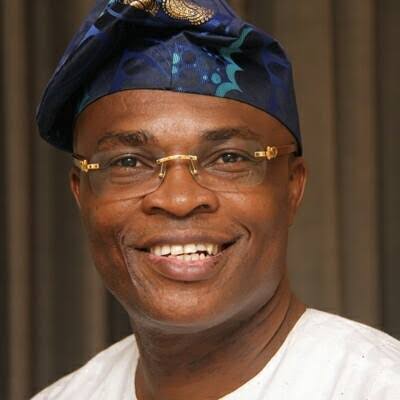
Nigerians should look beyond ethnicity, region and the longstanding debate over rotational presidency when choosing the country’s next leader, according to a chieftain of the African Democratic Congress (ADC), Kenneth Imasuagbon.
The former Edo State governorship aspirant said the priority ahead of the 2027 election should be finding a president with the ability to confront Nigeria’s economic, security and infrastructure challenges.
Speaking to journalists in Benin, Imasuagbon argued that presidential rotation is not a requirement of the Nigerian Constitution and should therefore not outweigh the question of competence.
He said voters should be more concerned about replacing poor schools with better ones, improving healthcare and addressing hardship than debating where the next president comes from.
Imasuagbon specifically appealed to voters in the South to support former Vice President Atiku Abubakar, who is contesting the 2027 presidency on the ADC platform.
According to him, Atiku has demonstrated the experience and determination needed to improve the country, describing the former vice president as someone capable of promoting national unity and fairness.
He also accused the Bola Tinubu administration of worsening economic pressure through policies including the removal of fuel subsidy, while expressing concern about the condition of roads, electricity and other infrastructure.
Imasuagbon argued that the next administration must focus on practical improvements in areas such as power, transportation, employment, security and public services.
The ADC chieftain also dismissed the idea that the ruling All Progressives Congress (APC) would automatically benefit from its incumbency advantage in 2027.
He maintained that the electorate ultimately determines the outcome of an election, arguing that voters could change the political direction of the country if they were determined to do so.
Imasuagbon further criticised what he described as regional and ethnic considerations in the distribution of political appointments and opportunities, insisting that the next president should give Nigerians across different parts of the country a sense of belonging.
His comments come as political parties and their candidates intensify preparations for the 2027 presidential election.
Opinion
Lesson from Dotun Oladipo’s Brave Daughters, by Bamidele Johnson
Lesson from Dotun Oladipo’s Brave Daughters, by Bamidele Johnson
I hope to grow old. I want to see my kids become real adults, find their own feet, make mistakes, recover from them, and perhaps one day complain that their own children are giving them grey hairs. I want that plainly stated before anything else, as everything that follows might read as a man agreeing to an early exit rather than a man simply being honest about the odds.
I want the decades. I want to become the grandfather who repeats the same stories until nobody bothers correcting him anymore. But wanting a thing and being granted are different things. The last year has made that difference harder to ignore than I would like. I have lost many friends recently to keep thinking that optimism is my natural resting state. Some of these men had better blood pressure than mine, better habits, better everything that is supposed to count. It did not save them.
There is no formula I know that reliably separates the men who make it to 70 from those who do not. Anyone who says he knows one is selling something. So, I do not assume that old age is an already booked destination. Even if I once did, which I doubt, the last three years have cured me of such an illusion. As such, I treat it as a hope rather than an expectation, and I have found that a more honest way to live.
It is exactly why I want something placed on record now, while I am still able to place things on record, rather than leave it for people to guess what my wishes were in the fog of a funeral week. If I do not make old bones, my children are not to be asked to read tributes at my funeral. Not one line, however short, however lovingly written.
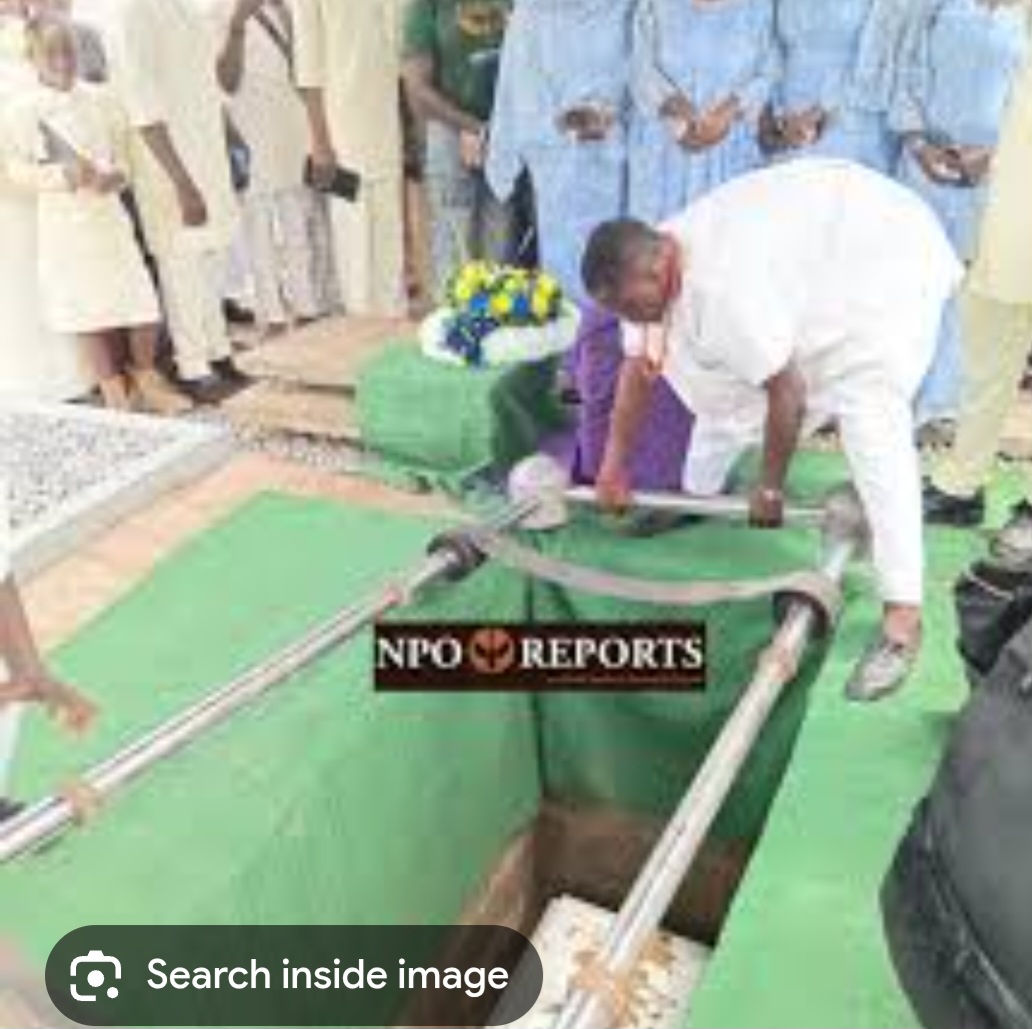
This, for me, was settled today rather than re-opened. At Dotun Oladipo’s funeral service, his three daughters took turns to read their tributes to their dad, and I found myself watching them with awe. There was a kind of strength in them that I do not possess. It is the strength needed to stand in front of a hall brimming with grieving adults and speak about a man they have just lost. Forever. Strength, however, is not the same as ease. I could see plainly what that strength was costing them as they read. Their voices caught. Their composure held and then did not hold and then held again through sheer will.
In front of them, in the pews, men and women considerably older than them came undone in ways the girls themselves were somehow managing to resist. I went mightily close. Some of the sobbing was quiet, the type people try to fold into a handkerchief. Some of it was not quiet at all, the kind that announces itself whether or not you want it.
Those young women honoured their father with a grace that is beyond me. What they did was astonishing. So, what I am attempting is an observation of a custom I have now watched wound people. This was not the first time I had watched this particular ritual extract more than it should from people already running on fumes. I saw an earlier and harder version of it at a friend’s wake back in 2015.
The first son was called forward to read his father’s tribute, and he could not do it. He tried, but the words would not come, and he stood there in front of a crowd of mourners, with his grief simply refusing to organise itself into sentences. The officiating minister, rather than releasing him from the task, urged him to continue. I sat fizzing with sorrow and ire. He could not go on and, eventually, the minister accepted, but not before insisting a while longer than it should have reasonably taken. His younger brother was called up next, presumably on the theory that if one grieving son could not manage it, maybe another one could. He flunked it in the same way. Grief does not distribute itself more conveniently among siblings just because a programme has been printed and needs to be followed.
I have turned that memory over many times since, trying to work out why this part of the rites is treated as mandatory in the first place. I have not found a satisfying answer. Maybe it comes from a belief that a child’s words carry more weight than anyone else’s, which may even be true, but weight is exactly the problem when those carrying it are struggling to hold themselves together with nothing but adrenaline and the fear of dissolving in public.
Maybe it is simply inertia, the reason we still do a hundred things at funerals that nobody can explain the original purpose of. Either way, I have stopped looking for the justification. I no longer think one exists that is good enough to weigh against what I watched happen to that boy in 2015.
So, let this stand as my instruction rather than my preference, the kind of thing I would rather state plainly now than leave for my children to infer later from how uncertain I sound when the subject comes up in passing. If I do not get the old age I am hoping for, my children will not be asked to read a single word over my body. Someone else can speak for me. A friend, a stranger with a steadier voice and a smaller stake in the loss, anyone whose grief will not be quite so total that standing upright becomes almost impossible.
My children, of course, will sit in front and fall apart if that is what the day requires of them, but without the microphone. That, at least, is one small mercy I intend to arrange for them while I am still here to arrange it.
Dotun deserved every bit of the send-off his daughters gave him today, and I suspect he would have been the first to tell them to sit down and let someone else carry the weight for a while. He did not get a say in that, as none of us ever do once we are the ones being spoken of rather than the ones speaking. Rest well, Dotun. You raised three young women whose strength I will not soon forget. That alone says everything worth saying about the man you were.
Opinion
‘Tinubu Will Win Again in 2027’ — Charismatic Bishops’ Secretary
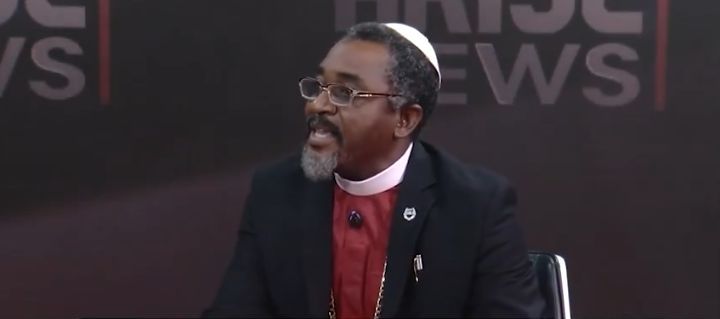
‘Tinubu Will Win Again in 2027’ — Charismatic Bishops’ Secretary
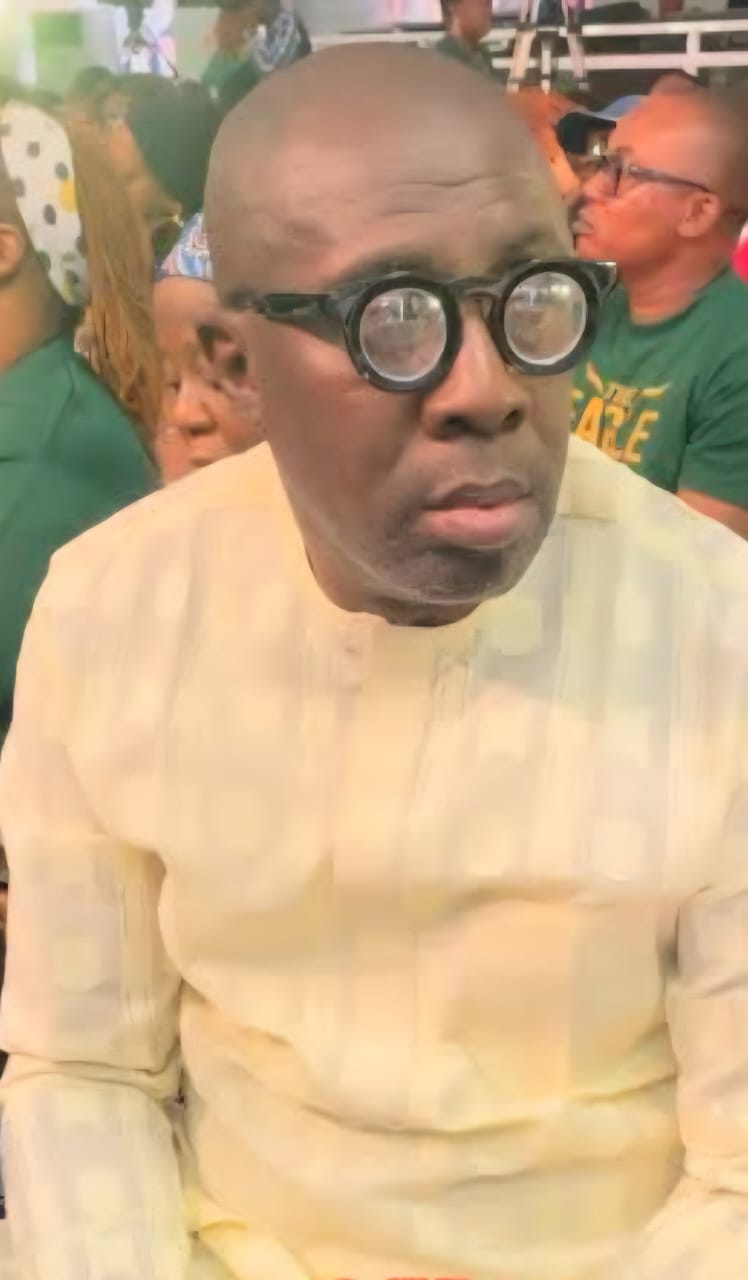
A senior Nigerian cleric, Archbishop Chivir Chianson, has declared that President Bola Tinubu will retain the presidency after the 2027 general election, attributing the prediction to a message he said came from God.
Chianson, who serves as Secretary General of the Charismatic Bishops’ Conference of Nigeria, made the statement while appearing on Arise Television on Saturday.
Rather than basing his prediction on political calculations, the archbishop said his confidence came from what he described as the prophetic role of bishops.
He maintained that the conference had previously spoken about Tinubu’s political future based on what he said was divine revelation and that the President would return for another term.
Chianson also predicted that Tinubu’s performance would improve if he wins the 2027 election.
READ ALSO:
- DSS warns Osun churches, mosques, markets over alleged terrorist attack plot ahead of 2027
- ‘Tinubu Will Win Again in 2027’ — Charismatic Bishops’ Secretary
- Fake miracles, bogus grants: How clerics allegedly fleece Nigerians of millions
Addressing the political opposition, the cleric said the bishops could not be blamed if rival parties failed to unite or organise themselves effectively ahead of the election.
He also sought to clarify the position of the bishops when dealing with government, saying their role in speaking truth to power did not mean they should approach political leaders with hostility or disrespect.
According to him, the Constitution, alongside their religious convictions, should guide how they engage the President and the country.
Chianson said he was sufficiently confident in his prediction to promise that he would return to the Arise TV studio after the 2027 election, when he expects the result to demonstrate that the bishops’ prophecy was correct.
His comments add a religious dimension to the increasingly active political conversation surrounding the 2027 presidential race.
‘Tinubu Will Win Again in 2027’ — Charismatic Bishops’ Secretary
-
 Politics3 days ago
2027: Northern Lecturers Back Tinubu, ASUU Disowns Endorsement
-
 Sports2 days ago
‘I Was Never the Chosen One’ — Dembele Responds to Mbappe
-

 International1 day ago
Islamic Council Condemns Attempted Attack on Holy City of Mecca
-

 metro2 days ago
Lagos Power Outage: Ikeja Electric Blames TCN as Businesses, Homes Groan
-
 News1 day ago
Keep Politics Out of My Office — Ogbomoso Grand Chief Imam Warns Politicians, Bloggers
-

 Education2 days ago
JAMB Moves 2027 UTME Time — Here’s What Candidates Need To Know
-
 Politics2 days ago
2027: APC Governors Reject Wike’s Rainbow Coalition, Insist on Party Loyalty
-

 metro2 days ago
A Son Wouldn’t Have Done Better — Dangote Speaks on Daughters, Succession