

metro
Wike Signals Renewed Political Showdown in Rivers as Tension Mounts Ahead of 2026

Wike Signals Renewed Political Showdown in Rivers as Tension Mounts Ahead of 2026
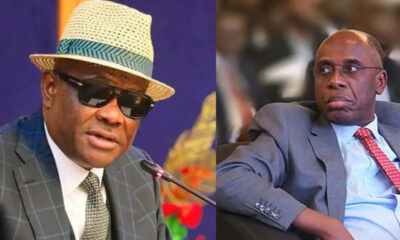
Fresh political tension in Rivers State may be looming following comments by the Minister of the Federal Capital Territory (FCT), Nyesom Wike, suggesting that the long-running rift in the state is far from resolved.
Wike’s remarks have cast doubt on the sustainability of the widely publicised political truce between him and Rivers State Governor Siminalayi Fubara, fuelling speculation about a possible return to open political confrontation as 2026 approaches.
The former Rivers State governor spoke on Saturday during a meeting with political stakeholders from Ahoada East and Ahoada West Local Government Areas, shortly after a thanksgiving service organised by Chibudom Nwuche, Chairman of the South-South Development Forum, in Ochigba community, Ahoada East LGA.
Addressing his supporters, Wike declared that full-scale political activities would resume from January 2026, a statement that immediately triggered reactions across the state’s political landscape.
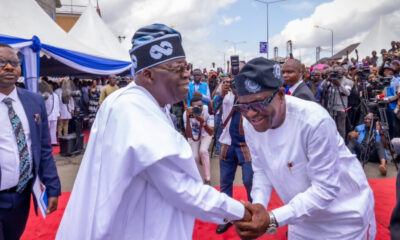
Without naming individuals, the FCT minister criticised some political actors he accused of enjoying the benefits of the 2023 general elections without taking risks when it mattered most. He alleged that many who now openly identify with President Bola Ahmed Tinubu failed to publicly support him during the height of the campaign.
READ ALSO:
- Ollie Watkins Fires Aston Villa Past Chelsea to Sustain Title Charge
- Arsenal Beat Brighton 2–1 to Stay Top as Premier League Title Race Heats Up
- Nigerian Army Kills 438 Boko Haram, ISWAP Terrorists in Seven Months
“In 2023, it was difficult for so many people to come out and say, vote for Asiwaju Bola Ahmed Tinubu,” Wike said.
“But we did it when it was tough… we stood firm, and today that mandate is very strong.”
He questioned the credibility of those now praising the President, asking where they were during the peak of the electioneering period when political tensions were highest in Rivers State. According to Wike, such individuals neither spoke out nor mobilised their supporters in support of Tinubu.
Wike assured his loyalists that their sacrifices would not be forgotten, stressing that political loyalty is tested during difficult moments, not after victory has been secured.
Reaffirming his readiness for renewed political engagement, he told the gathering: “From January next year, we will start politics.”
The minister also spoke at length on political trust and agreements, insisting that he does not believe in deals that cannot be honoured.
“Agreement is agreement,” he said. “Anything you know you cannot do, don’t say it.”
Wike described himself as one of Nigeria’s most criticised politicians, attributing the scrutiny to his refusal to compromise on principles or abandon agreements once reached.
Despite the charged political undertone of his remarks, Wike reassured the people of Ahoada of his continued support, urging them not to be anxious and assuring them that events would unfold at the appropriate time. He also reaffirmed his unwavering loyalty to President Bola Ahmed Tinubu, stating that his political alignment remains unchanged.
The event was attended by several prominent political figures, including Senator Magnus Abe, Senator Philip Aduda, Senator Wilson Ake, Senator Olaka Wogu, ambassador-designate Aaron Chukwuemeka, OCJ Okocha, Ferdinand Anabrabra, and other political associates.
The comments come amid lingering uncertainty over the fragile peace arrangement in Rivers State, which followed months of legislative deadlock, protests and federal intervention. Recent statements from key actors continue to raise questions about the durability of that settlement and the future of political stability in the state.
Wike Signals Renewed Political Showdown in Rivers as Tension Mounts Ahead of 2026









metro
Tension in Kano as Phone Traders Confront Chinese Sellers Over Cheaper Phones
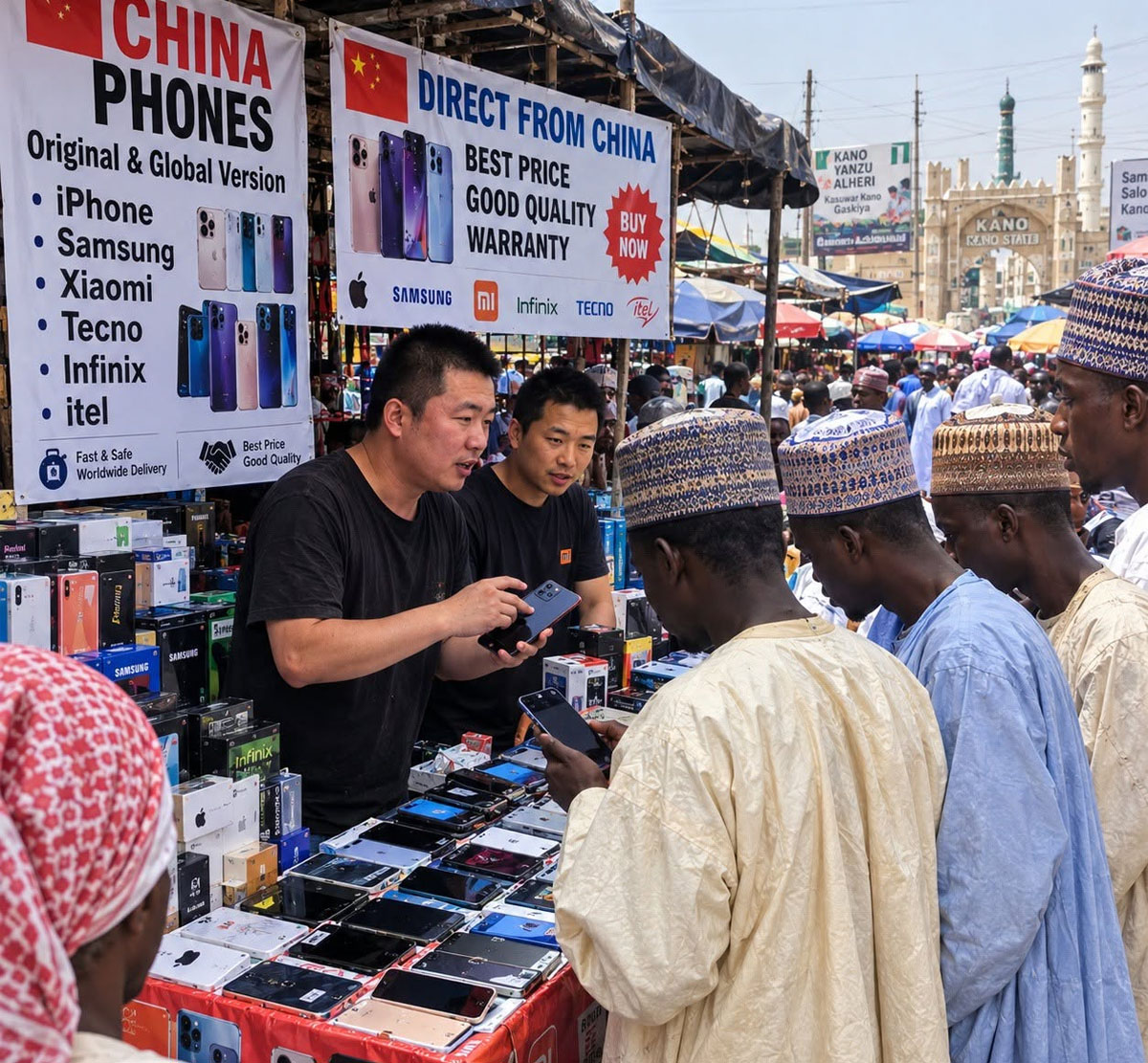
Phone traders in Kano State have confronted Chinese nationals accused of selling mobile phones directly to consumers at lower prices, reigniting concerns over foreign competition and the survival of local retail businesses in Nigeria.
The confrontation, reportedly captured in a video circulating on social media on Saturday, October 10, 2026, saw aggrieved traders challenge a Chinese national over alleged direct sales in a local market.
In the footage, some traders warned the foreign sellers against continuing the disputed business activities, insisting that their presence and pricing practices were undermining local dealers.
The traders alleged that Chinese sellers were bypassing established distribution channels by selling phones directly to consumers rather than supplying Nigerian retailers, who traditionally buy from importers and wholesalers before reselling to the public.
They argued that foreign suppliers with direct access to manufacturers could offer lower prices, making it difficult for local dealers to compete and maintain their businesses.
The traders expressed concern that the alleged practice could reduce their sales, threaten jobs and undermine the livelihoods of people who depend on the mobile phone retail business.
However, the circumstances surrounding the confrontation remain unclear. The identities of those involved, the precise location of the incident and whether any formal complaint was filed have not been independently established. There was also no confirmed information about arrests or police intervention.
The Kano dispute comes amid growing tensions between Nigerian traders and Chinese business operators over the boundaries between wholesale distribution and direct retail sales.
READ ALSO:
- NNPC Petrol Discount: Motorists Must Download App to Save ₦66 Per Litre
- Panama Earthquake: 27 Injured as Powerful 7.7-Magnitude Tremor Damages Hundreds of Buildings
- EFCC Wins ₦132m Money Laundering Case as Court Orders Forfeiture of Lagos Properties
A similar disagreement emerged in September at the Lagos International Trade Fair Complex, where members of the Auto Spare Parts and Machinery Dealers Association of Nigeria (ASPMDA) protested against what they described as direct retail activities by Chinese business operators.
The Lagos traders alleged that some foreign businesses were selling goods directly to consumers, putting local retailers at a disadvantage because of differences in purchasing power, supply chains and access to manufacturers.
The disagreement prompted discussions involving market representatives, the trade fair management board and security officials, who sought to prevent the dispute from escalating.
During efforts to resolve the Lagos disagreement, stakeholders called for clearer rules defining the respective roles of wholesalers and retailers. Representatives of the Chinese business community also indicated that businesses found engaging in prohibited activities should be reported for appropriate action.
The dispute has since highlighted wider concerns about foreign investment, fair competition and the protection of Nigerian small businesses.
Local traders argue that they need a level playing field to compete with businesses that source products directly from manufacturers. They also want authorities to clarify the conditions under which foreign operators can participate in Nigeria’s retail sector.
However, selling products at lower prices does not automatically establish wrongdoing. Determining whether a business has breached the law requires evidence of the relevant activities and the regulations governing its operations.
Consumers, meanwhile, may benefit from lower prices and greater choice when competition increases. The challenge for regulators is to ensure that competition remains lawful and fair while protecting consumers and supporting sustainable local enterprise.
The Kano confrontation has renewed calls for government agencies and market authorities to clarify Nigeria’s foreign trade and retail regulations, investigate credible complaints and provide mechanisms for resolving commercial disputes peacefully.
Authorities will also need to ensure that disagreements over business practices do not lead to intimidation, threats or violence against traders of any nationality.
For now, the central issue remains whether the alleged direct sales in Kano violate applicable regulations or market rules. An official response clarifying the circumstances of the incident would help establish the facts and determine whether further action is necessary.
Tension in Kano as Phone Traders Confront Chinese Sellers Over Cheaper Phones
metro
EFCC Wins ₦132m Money Laundering Case as Court Orders Forfeiture of Lagos Properties

The Economic and Financial Crimes Commission (EFCC) has secured the conviction of Lagos-based businessman Onatayo Pelumi over alleged money laundering involving approximately ₦132 million, with the Federal High Court in Lagos ordering the forfeiture of two properties and ₦8 million to the Federal Government.
Justice Osiagor of the Federal High Court, Lagos, convicted Pelumi on five counts relating to the retention of proceeds of unlawful activities in bank accounts maintained with Guaranty Trust Bank (GTBank) and Zenith Bank.
According to the EFCC, the charges covered various sums allegedly retained in the accounts between January 2023 and June 2026, despite the defendant’s knowledge that the funds were proceeds of unlawful activities.
The commission did not provide further details about the specific unlawful activities from which the money was allegedly derived.
In his judgment, Justice Osiagor sentenced Pelumi to three years’ imprisonment, with an option of a ₦300,000 fine, on the first count.
READ ALSO:
- Hardship: ACF Gives Tinubu Three Months to Deliver Relief, Demands Clear Timelines
- Adamawa Mourns as Fufore Loses Second Council Chairman in 18 Months
- Police Launch Manhunt After Fresh Attacks, Kidnappings Rock Four Nigerian States
For each of the remaining four counts, the court imposed five years’ imprisonment, with an option of a ₦300,000 fine per count.
However, the judge directed that all the prison terms run concurrently, meaning they are served at the same time rather than consecutively.
The court also ordered the forfeiture of two half-plots of land in Lagos and ₦8 million held in Pelumi’s Zenith Bank account to the Federal Government of Nigeria.
The properties covered by the forfeiture order are a half-plot of land at No. 23 Michael Ayorinde Street, Abule-Egba, and another half-plot at No. 1 Yisa Street, Meiran, both in Lagos State.
In addition to the prison sentences and forfeiture orders, Pelumi was directed to undertake seven days of community service.
The conviction followed prosecution by the EFCC’s Lagos Zonal Directorate 1 as part of its efforts to investigate and prosecute financial crimes involving the retention of funds linked to unlawful activities.
The case also highlights the commission’s use of asset-forfeiture proceedings to recover money and property connected to financial crime cases.
The EFCC did not disclose additional details about the source of the funds beyond the allegations contained in the five-count charge.
EFCC Wins ₦132m Money Laundering Case as Court Orders Forfeiture of Lagos Properties
metro
Hardship: ACF Gives Tinubu Three Months to Deliver Relief, Demands Clear Timelines
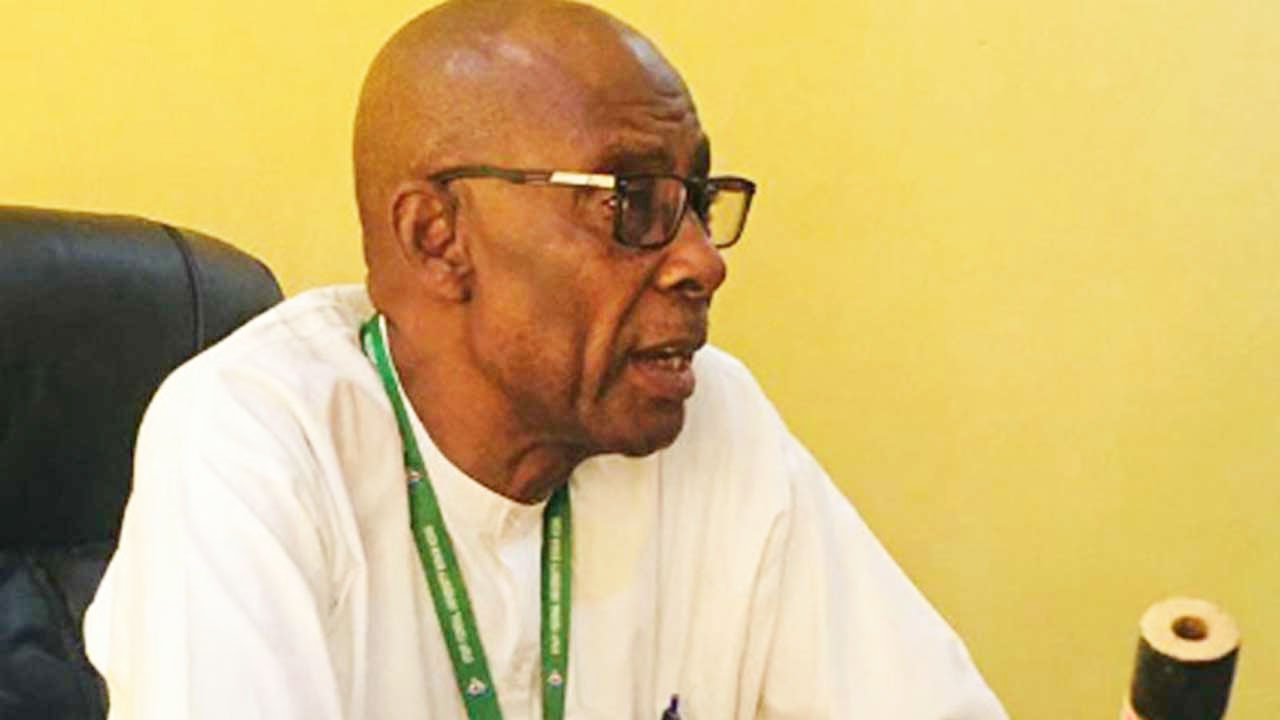
The Arewa Consultative Forum (ACF) has urged President Bola Ahmed Tinubu to introduce measures to ease the economic hardship facing Nigerians within three months, while demanding clear timelines and measurable targets for improving living conditions.
The forum said the Federal Government should move beyond repeated assurances that economic conditions would improve and provide specific commitments showing when Nigerians could begin to experience meaningful relief.
The ACF’s Publicity Secretary, Professor Tukur Mohammed-Baba, made the call during an interview with ARISE News on Thursday, October 8, 2026, according to media reports.
Mohammed-Baba said the administration needed to be more transparent about the effects of its economic reforms and acknowledge areas where the outcomes had fallen short of expectations.
He argued that government policies should be assessed not only by their stated objectives but also by their effects on households, businesses and the wider population.
The ACF spokesman cited the rising cost of living, declining purchasing power, increasing rents, higher transportation expenses and electricity bills as some of the pressures confronting Nigerians. He also identified poor road infrastructure and persistent insecurity as challenges affecting citizens’ welfare.
READ ALSO:
- Adamawa Mourns as Fufore Loses Second Council Chairman in 18 Months
- Police Launch Manhunt After Fresh Attacks, Kidnappings Rock Four Nigerian States
- Cross River Seals 58 Schools in Crackdown on Unapproved Education Centres
According to him, the government should explain how it intends to address these problems and establish clear benchmarks against which its performance can be measured.
Mohammed-Baba called on the Tinubu administration to outline what it expects to achieve within one, two and three years, arguing that measurable targets would enable Nigerians to assess progress rather than rely solely on official assurances.
He also urged the government to acknowledge the difficulties associated with its economic policies and communicate more openly with citizens about the challenges and expected outcomes.
The ACF spokesman maintained that the government should not expect Nigerians to endure prolonged hardship without a clear indication of when relief measures would take effect.
He said three months should be enough for the administration to introduce measures capable of reducing some of the immediate pressures on households, even if broader economic recovery would require more time.
The forum also called for greater accountability from political leaders, arguing that the sacrifices demanded of citizens should be matched by a commitment from public officials to responsible governance and improved service delivery.
Mohammed-Baba’s comments add to the ongoing debate over the impact of the Tinubu administration’s economic reforms, particularly the pressure that higher living costs have placed on households and small businesses.
The government has defended its reforms as necessary to address longstanding economic challenges. However, the ACF’s position underscores the need for clear communication about the expected benefits of the policies and practical measures to cushion their immediate effects.
On the 2027 general elections, Mohammed-Baba said the ACF would assess political parties and candidates based on their commitment to good governance, accountability, anti-corruption, equity and fairness.
He said the forum’s position would be guided by the quality of leadership and the ability of political actors to promote responsible governance rather than automatic support for any particular political party.
The ACF’s central demand is for the Federal Government to establish clear deadlines, measurable objectives and practical steps for reducing hardship, enabling Nigerians to judge progress by tangible improvements in their daily lives.
Hardship: ACF Gives Tinubu Three Months to Deliver Relief, Demands Clear Timelines
-
 metro3 days ago
EFCC Re-Arraigns Two Over Alleged £110,000 Money Laundering, ₦500m Fraud
-
 Africa3 days ago
FBI Raids Ghana Scam Centre, Detains Over 130 in $10m Fraud Probe
-
 metro2 days ago
How Parents Raised Millions to Free 20 Abducted NYSC Members
-
 News3 days ago
World Bank Raises Nigeria Growth Forecast, Demands More Jobs, Poverty Reduction
-

 metro2 days ago
[UPDATED] Lagos Train Crash: 55-Year-Old Motorist Survives as Honda Car Is Wrecked at PWD Crossing
-

 metro3 days ago
Flood Submerges Enugu Road, Strands School Children, Passengers
-
 metro3 days ago
BREAKING: FG Unveils 10 Measures to Cushion Fuel Price, Inflation Pressures
-

 metro3 days ago
Man Allegedly Caught Using Old Tyres to Scam POS Operator