

Railway
Reps summon Amaechi, NPA management over unaccounted N166bn
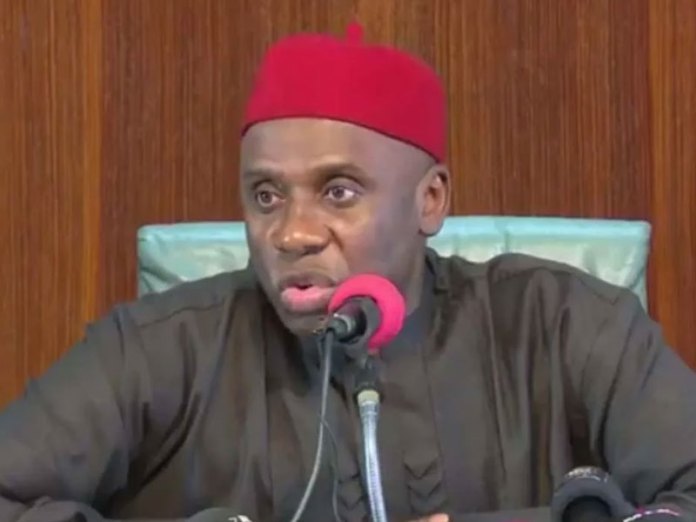
The House of Representatives has summoned the Minister of Transportation, Rotimi Amaechi, and the management of the Nigerian Ports Authority over N166,685,929,000 revenue that accrued to the authority as of December 31, 2016 but was not properly captured in the statement of account of the agency.
They are also to explain the cost of services rendered to the NPA, which amounted to about N103.996 billion, including channels and water ways maintenance (N65.130 billion) and Port and Quays Expenses (N38.412 billion).
They were initially expected to appear on Thursday before the House Committee on Public Account but were said to have pleaded for another date.
They were reportedly given July 8 to appear before the committee.
It was learnt that they are expected to respond to audit queries contained in the comments of the Auditor General of the Federation (AuGF) on the group financial statement of the NPA for 2016.
They are also expected to give a breakdown of the Ports and Quays Services income, stating the income from each of the services, scheduled oil terminal dues, details of pilotage and service boats and the nature of rental services offered and the rates applied to them.
Besides, the AuGF said both parties are expected to answer questions from the lawmakers, giving a breakdown of maintenance, budgetary provisions and evidence of work done on the channels and waterways as “examination of the accounts revealed that the channels and waterways maintenance rose from N44.427 billion in 2015 to N64.130 billion in 2016, an increase of over N20 billion.
The comments suggest that the NPA incurred about N38.412 billion as service charge on the Ports and Quays and demanded that the management of the authority provide details on how the charges were incurred and to explain what they meant by the term “others” for which about N4.7 billion was spent.
The AuGF said further examination of the accounts of the NPA revealed that Intels Integrated Services Limited was overpaid its commission by N2.099 billion.
Amaechi and the NPA management are also to explain what happened to the dividend of N643.006 million received from their joint venture partners as well as interest income of about N97.8 million and N28.7 million, being the interest from bank deposits and interest on loan and receivables.
Other queries against the NPA include administrative expenses of N61 billion, which include professional charges of N638 million, donation and subscription of N1.88 billion, exchange loss of N7.3 billion, defined benefit expenses of N11.4 billion and director’s remuneration of N4.2 million.
The AuGF’s query, signed by Adolphus Aghughu and dated May 24, 2021, also identified what it called understatement of depreciation charges amounting to N6.4 billion.
He stressed that “the provision made against eight classes of property amounted to N4.472 billion as against N10.891 million arrived at during vetting”.
The AuGF added, “If, however, the under-provision of depreciation was attributable to assets which have been fully written down, the nominal values at which such assets were retained in the books should be disclosed.”






Railway
Rail-Port-Industry Link Critical to Cutting Logistics Costs – NRC
Rail-Port-Industry Link Critical to Cutting Logistics Costs – NRC
The Nigerian Railway Corporation has said Nigeria must urgently integrate its rail network with seaports, inland dry ports and industrial centres to cut logistics costs, ease pressure on the highways and make the movement of goods across the country more efficient.
The NRC said a seamless connection between rail lines, ports and major production centres would strengthen the movement of agricultural produce, containers, petroleum products and other bulk cargoes, while reducing the cost and time involved in transporting goods from ports to markets and industries.
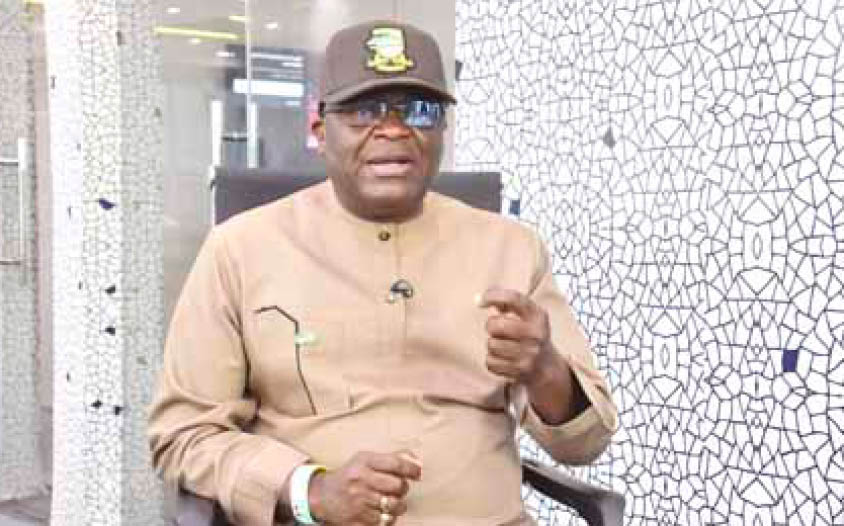
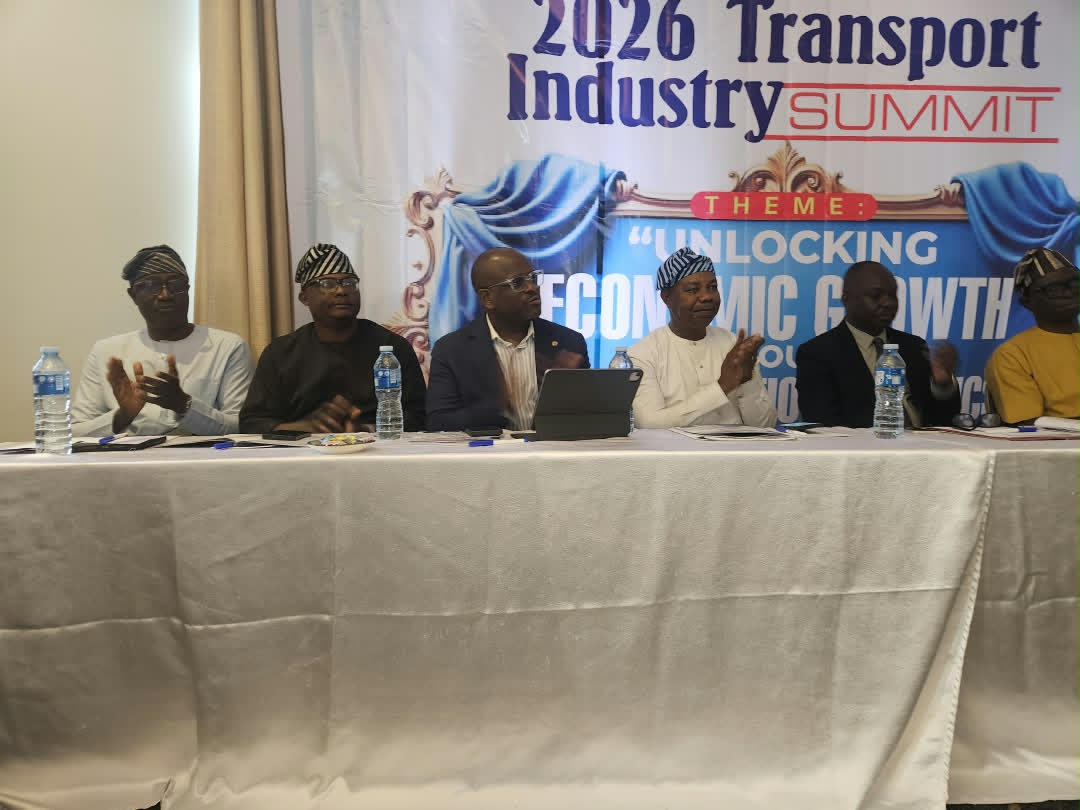
The Managing Director/Chief Executive Officer of the NRC, Dr Kayode Opeifa, stated this on Thursday in Lagos in a speech delivered on his behalf at the Transport Correspondents Association of Nigeria conference, stressing that rail, road, maritime, inland waterways and aviation must work as an integrated transportation system if Nigeria is to unlock the full economic benefits of its logistics sector.
The NRC boss also revealed that the corporation had opened the door wider for private investors to participate in the development of freight terminals, logistics hubs, rolling stock and other critical infrastructure as part of efforts to transform Nigeria’s rail system into a major engine of economic growth.
He said stronger private-sector participation was imperative because government alone could not provide the massive investment required to build an efficient and interconnected transportation system capable of lowering logistics costs and boosting economic activities.
Opeifa said Nigeria could no longer afford to develop its transportation modes in isolation, stressing the need to connect rail with seaports, inland dry ports, industrial centres and major economic corridors.
He said such integration would enable rail to play a greater role in moving bulk cargo across the country, while reducing the pressure currently placed on the highways.
According to him, rail has the capacity to move large volumes of passengers and freight over long distances and should therefore become a critical component of Nigeria’s logistics architecture.
He said, “At the Nigerian Railway Corporation, our focus is therefore not only on passenger transportation but also on strengthening freight operations and creating greater connectivity between rail lines, seaports, inland dry ports, industrial centres and major economic corridors.”
The NRC MD identified agricultural produce, petroleum products, containers and other commodities as some of the major categories of cargo that could benefit from a more efficient rail freight system.
He said an effective multimodal transportation network involving rail, road, maritime, inland waterways and aviation would reduce the cost of doing business, improve access to markets and strengthen Nigeria’s competitiveness.
Opeifa also called for a regulatory framework capable of attracting private capital into the transportation sector, particularly in rolling stock, freight terminals, logistics hubs and related infrastructure.
“The future of Nigeria’s transportation sector must also be driven by stronger partnerships. Government alone cannot provide all the infrastructure and investment required,” he said.
The NRC’s position comes amid growing concerns over the high cost of logistics and the burden placed on Nigerian businesses by inefficient movement of goods from ports to markets and production centres.
Opeifa said transportation infrastructure should be viewed not simply as public assets but as critical economic infrastructure capable of stimulating industrial production, trade and employment.
He, however, warned that vandalism and encroachment remained major threats to railway investments, stressing the need for stronger collaboration among government agencies, security organisations, host communities and passengers to protect railway tracks, bridges, signalling systems and other infrastructure.
He said the protection of rail infrastructure must become a collective responsibility if the country was to derive the full economic benefits of ongoing investments in the sector.
The NRC chief executive also stressed the need to make transportation affordable and accessible, noting that improved mobility would provide Nigerians with greater access to jobs, markets, education and economic opportunities.
Opeifa reaffirmed the NRC’s commitment to the Federal Government’s vision of developing a modern, integrated and efficient transportation system capable of supporting the country’s economic aspirations.
He commended TCAN for providing a platform for policymakers, operators, investors, professionals and the media to deliberate on the challenges and opportunities in Nigeria’s transportation sector.
He said sustained investment, innovation, collaboration and effective policy implementation remained essential to building a logistics system capable of unlocking Nigeria’s economic potential.
Railway
Fire Scare at Abuja Train Station as Electrical Fault Sparks Blaze, NRC Assures Passengers
Fire Scare at Abuja Train Station as Electrical Fault Sparks Blaze, NRC Assures Passengers
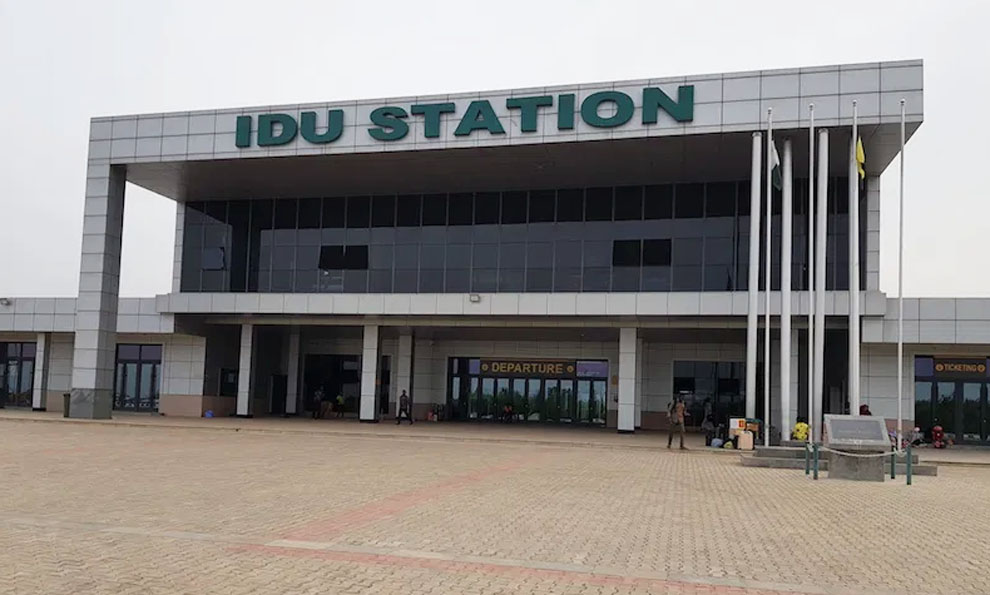
A minor fire caused by an electrical fault broke out at the Idu Train Station in Abuja on Wednesday night, but the incident did not disrupt operations on the Abuja–Kaduna train route, the Nigerian Railway Corporation (NRC) has said.
The fire, which occurred in the station’s low-voltage electrical room, was detected at about 8:30 p.m. and was quickly brought under control by maintenance personnel.
A preliminary inspection showed that some electrical supply cables connected to the station’s control panels were damaged in the incident.
READ ALSO:
- Veteran Nollywood Actress Cries Out for Financial Help Over Cervical Cancer Battle
- MURIC Raises Alarm Over Alleged Religious Imbalance in NDA 78RC Admission
- Agunbiade fires back at Deji Yesufu: Don’t mistake Boko Haram for Islam
However, the NRC said the station’s solar power system was not affected, while power had been temporarily restored to the lifts and escalators.
According to the Corporation’s Chief Public Relations Officer, Callistus Unyimadu, all the lifts and escalators are currently operational except Lift 1.
The NRC stressed that the incident had no impact on Abuja–Kaduna train services, assuring passengers that scheduled operations would continue as normal.
The Corporation said its technical team was conducting a detailed assessment to establish the cause of the electrical fault and permanently restore the affected installations.
It added that appropriate safety measures had been put in place while the assessment and remedial work continued.
Fire Scare at Abuja Train Station as Electrical Fault Sparks Blaze, NRC Assures Passengers
Railway
Nine Oxygen Cylinders Recovered as NRC, NSCDC Thwart Rail Vandalism in Osogbo
Nine Oxygen Cylinders Recovered as NRC, NSCDC Thwart Rail Vandalism in Osogbo
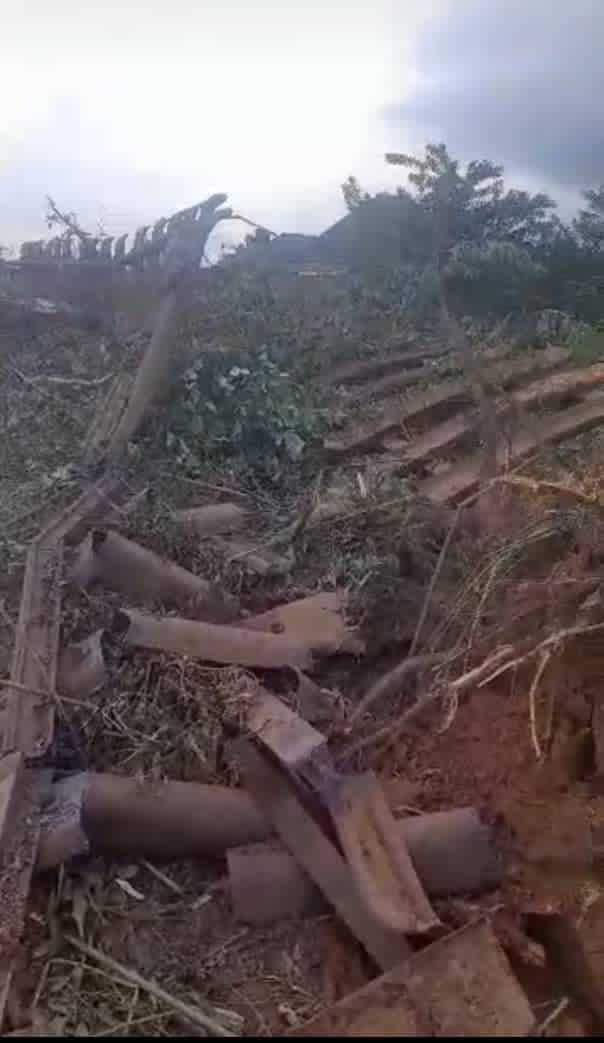
Suspected railway vandals fled for their lives after security operatives swooped on a railway siding serving the Dangote Steel Rolling Mills in Osogbo, Osun State, recovering nine oxygen gas cylinders allegedly deployed for the illegal operation.
The recovery operation, carried out by the Nigerian Railway Corporation (NRC) in collaboration with the Nigeria Security and Civil Defence Corps (NSCDC), followed a report of vandalisation of railway track materials at the siding, currently not in operation.
According to a statement issued by the NRC Chief Public Relations Officer, Callistus Unyimadu, and signed for the management, the Principal Track Officer (PTO), Osogbo, received a report on Friday, August 28, 2026, concerning the ongoing vandalisation of railway track materials at the location.
Following the report, the PTO proceeded to the site with security personnel, including officers of the NSCDC Railway Command. On sighting the operatives, the suspected vandals reportedly fled the scene.
A subsequent search of the area led to the recovery of nine oxygen gas cylinders, which were allegedly being used in the illegal operation.
The recovered railway materials and the surrounding area have since been secured by security personnel, the NRC said.
READ ALSO:
- DSS moves to halt Sowore’s cybercrime trial until after 2027 election
- Kogi Abduction: Kidnappers Demand ₦20m Ransom for Each NYSC Member
- Deadly Ikola clash: Lagos demolishes shanties beneath high-tension lines
Reacting to the development, NRC Managing Director and Chief Executive Officer, Dr Kayode Opeifa, commended the security personnel for their vigilance and timely intervention, describing the operation as another significant success in the sustained efforts to protect railway infrastructure from vandals and economic saboteurs.
Opeifa directed security operatives to intensify surveillance and enforcement at the Dangote Steel Rolling Mills siding and other railway corridors nationwide.
He also urged security formations across the railway network to strengthen collaboration with relevant agencies to prevent the vandalisation and theft of railway assets.
The NRC boss appealed to members of the public, particularly communities located along railway corridors, to promptly report suspicious activities around railway tracks, stations and other railway facilities.
He stressed that railway infrastructure constitutes critical national assets whose protection is essential to the safety of rail operations, sustainability of services and the economic development of the country.
Opeifa further assured that the NRC would continue to provide necessary support to security agencies in the collective effort to stamp out vandalism and other acts capable of undermining railway operations across the country.
The statement said the NRC remains committed to strengthening collaboration with security agencies to safeguard railway infrastructure nationwide.
Nine Oxygen Cylinders Recovered as NRC, NSCDC Thwart Rail Vandalism in Osogbo
-
 metro3 days ago
Police Probe Alleged Self-Kidnapping of Adeleke’s Aide in Osun
-

 metro3 days ago
Lagos Arrests Man Over Viral Video of Toddler Being Flogged
-
 metro3 days ago
Tinubu, Fani-Kayode Face Proposed $36m US Lawsuit Over Alleged Threats
-

 News1 day ago
Anambra Releases ₦473m Salary Arrears Document as Obi’s Debt Claim Sparks Fresh Dispute
-

 Sports3 days ago
Former Super Eagles Captain Troost-Ekong Embraces Islam, Recites Shahadah in Doha
-

 Politics3 days ago
Osun APC Warns Adeleke Govt Over Alleged Victimisation of Local Govt Workers
-

 metro3 days ago
Kwara Police Deny Shooting Motorcyclist at Oyun Bridge, Explain Viral Video
-
 News1 day ago
Keyamo: ₦70,000 Minimum Wage No Longer Enough as Cost of Living Soars