

Business
CAC Deploys AI, Partners Google to Tackle Rising Business Registration Demand

CAC Deploys AI, Partners Google to Tackle Rising Business Registration Demand
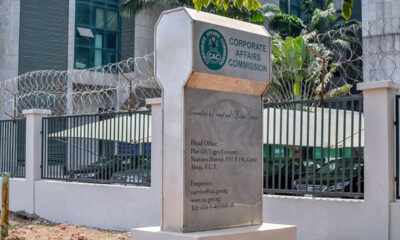
The Corporate Affairs Commission (CAC) has intensified its digital transformation drive with the deployment of Artificial Intelligence (AI) to manage Nigeria’s rapidly growing business registration demands, while also entering a strategic collaboration with global technology giant Google to strengthen its digital infrastructure.
The Registrar-General and Chief Executive Officer of CAC, Hussaini Ishaq Magaji, SAN, disclosed this during the Commission’s 35th anniversary celebration in Abuja, where he traced CAC’s evolution from a paper-based registry to a fully technology-driven corporate registry serving millions of users across Nigeria and the diaspora.
According to Magaji, CAC now processes close to 10,000 business registration applications daily, a sharp increase driven by tax reforms, the monetisation of digital and social media businesses, and government policies aimed at formalising Nigeria’s vast informal sector.
READ ALSO:
- Court of Appeal Affirms Senate’s Power to Suspend Natasha Akpoti
- Ex‑Lawmaker, 200 Others Defect From APC to Labour Party in Abia
- How Death Threats During #EndSARS Made Me Rethink Activism – Omotola
He explained that beyond registrations, CAC’s complaint management system handles an average of 5,000 enquiries daily via emails and call centres, stressing that managing such volumes manually would require an unrealistic expansion of manpower.
“Only AI technology can complement human capacity with the speed, accuracy and efficiency required to sustain this level of service delivery,” the Registrar-General said.
Magaji acknowledged that the transition to an AI-driven registration portal in 2025 came with initial challenges, including temporary service disruptions. However, he commended stakeholders and users for their patience, noting that the reforms were necessary to maintain global service standards and improve Nigeria’s ease of doing business.
As part of efforts to deepen its technology framework, CAC signed a Letter of Collaboration with Google, a partnership expected to enhance portal performance, system reliability, and the adoption of global best practices in digital service delivery.
The Commission also unveiled a redesigned website featuring two new AI-powered tools — an AI Lawyer, which provides instant responses on company laws, regulations and procedures, and an AI Name Generator, designed to simplify and speed up business name reservation.
Magaji recalled that CAC began operations in 1991 from a single office in Garki, Abuja, where entrepreneurs were required to travel long distances for manual registration.
“Today, our services are available 24 hours a day, seven days a week, anywhere in the world. We have moved from paper to portal, from queues to clicks,” he said.
In addition to technological reforms, CAC announced several corporate social responsibility initiatives to mark its 35th anniversary, including free business name registration for 3,500 small businesses, scholarships for outstanding corporate law students, donations to IDP camps, and support for orphanages nationwide.
The Commission also approved a 25 per cent commemorative bonus for staff, alongside special housing and car loan packages, and recommended promotions for pioneering and retiring staff not captured in the current promotion cycle.
Speaking at the event, the Permanent Secretary, Federal Ministry of Industry, Trade and Investment, Ambassador Nura Abba Rimi, praised CAC’s transformation, noting that its shift from manual to digital operations has strengthened transparency, encouraged local and foreign investment, and improved Nigeria’s standing in corporate governance.
He urged the Commission to further embrace emerging technologies such as blockchain to deepen trust, inclusivity and competitiveness in Nigeria’s business environment.
CAC Deploys AI, Partners Google to Tackle Rising Business Registration Demand












Auto
TCAN Honours Dangote Cement Transport for Safety, Logistics Excellence

TCAN Honours Dangote Cement Transport for Safety, Logistics Excellence
Dangote Cement Transport has been recognised for its contributions to the development of Nigeria’s transport industry, winning the “Champion of Transport Industry Development Award” presented by the Transport Correspondents Association of Nigeria (TCAN).
The award, presented at the third Transport Summit organised by TCAN in Lagos, recognised the company’s efforts in improving road transport operations, strengthening safety standards and deploying more efficient logistics solutions to support industrial activities across the country.
Receiving the award on behalf of the company’s management, the Head of Dangote Cement Transport, Mr Murilo Silva, said the recognition was a reflection of the commitment of the company’s transport workforce, drivers, safety professionals, engineers and operational partners.
Silva said Dangote Cement viewed transportation as a critical component of industrialisation and economic development, stressing that the efficient movement of goods was essential to sustaining production, trade and national economic activities.
“We are deeply honoured to receive this award from the Transport Correspondents Association of Nigeria. This recognition reflects Dangote Cement Transport’s unwavering commitment to developing a safe, efficient and sustainable transport system that supports economic growth and national development,” he said.
According to him, the company would continue to invest in technology, safety initiatives and operational improvements as part of efforts to raise standards across its transport operations.
“At Dangote Cement, we recognise that transportation is much more than moving goods from one point to another. It is a vital link in the nation’s economic ecosystem,” Silva said.
He added that the company would continue to deploy innovative solutions, strengthen its safety culture and collaborate with relevant stakeholders to improve road transport operations.
Silva dedicated the award to the thousands of drivers, transport professionals, engineers, safety personnel and logistics workers whose daily efforts support the movement of Dangote Cement products across its extensive distribution network.
“This award belongs to our drivers, our safety professionals and every member of our transport team who work tirelessly every day to ensure that our operations are safe, reliable and efficient,” he said.
The recognition underscores Dangote Cement Transport’s investments in fleet management, driver training, road safety programmes and technology-driven logistics solutions aimed at improving operational efficiency and reducing risks associated with road transportation.
The award was presented against the backdrop of growing calls for stronger collaboration between government and private-sector operators to tackle infrastructure and logistics challenges confronting the country’s transport industry.
The TCAN summit also featured discussions on port modernisation, rail integration and technology deployment, with stakeholders emphasising the need for coordinated action to improve freight movement, reduce logistics costs and accelerate innovation across Nigeria’s transport sector.
Auto
Carloha Opens Wider Access to Chery Q as Smart EV Enters Nigeria’s Mainstream

Carloha Opens Wider Access to Chery Q as Smart EV Enters Nigeria’s Mainstream
Carloha Nigeria is taking the Chery Q to motorists across the country, widening access to an electric vehicle designed to combine affordability, practicality, intelligent technology and zero-emission motoring.
The move by the official franchise holder, assembler and authorised distributor of Chery vehicles in Nigeria is expected to give more Nigerian motorists an opportunity to experience the Chinese automaker’s latest generation of smart electric mobility.
Built around Chery’s global “Quest for Joy” philosophy, the Chery Q blends distinctive styling with intelligent technology, advanced safety features and efficient electric performance, while drawing inspiration from the heritage of the iconic Chery QQ family.
Carloha said the model is targeted at a broad spectrum of motorists, including young professionals, growing families, first-time electric vehicle buyers and urban commuters looking for a cleaner, smarter and more connected driving experience.
The Chery Q also brings a strong design proposition to the compact EV segment. Its award-winning exterior, recognised with both the Red Dot Design Award and iF Design Award, features expressive geometric styling, rounded LED lighting and a contemporary two-tone interior.
Despite its compact dimensions, the vehicle has been engineered to maximise interior space, achieving an 85 per cent space-efficiency ratio.
Measuring 4,195mm in length with a 2,700mm wheelbase, the Chery Q offers substantial passenger room while retaining the manoeuvrability expected of an urban vehicle.
Its practicality is further enhanced by luggage capacity that expands from 375 litres to 1,450 litres, alongside a 70-litre front trunk and 38 smart storage compartments.
According to the company, the combination makes the Chery Q suitable for a wide range of everyday applications, from city commuting and shopping to family outings and weekend journeys.
Beyond its styling and practicality, the electric vehicle has been developed around a rear-engine, rear-wheel-drive architecture, supported by independent suspension and balanced weight distribution to enhance handling and stability.
The model also features Electric Power Steering and a One-Box Brake-by-Wire system designed to provide smoother braking response, improved driving precision and greater control, while supporting regenerative energy recovery.
A key attraction for potential EV buyers is the Chery Q’s claimed driving range. The vehicle offers an estimated 420-kilometre NEDC range, giving users greater flexibility for daily commuting and longer journeys between charging sessions.
Charging downtime is also reduced through its fast-charging capability, with the battery able to move from 30 per cent to 80 per cent in about 16.5 minutes, according to the manufacturer.
With the nationwide rollout, Carloha is positioning the Chery Q as part of the growing transition towards cleaner and smarter mobility in Nigeria, as interest in electric vehicles continues to expand.
The company’s wider strategy of assembling and distributing Chery vehicles locally also places the Q within its broader effort to make the brand’s technology and vehicle range more accessible to Nigerian motorists.
Business
NNPCL Slashes Petrol Pump Price to N1,405 in Abuja, Dangote Refinery Cuts Gantry Rate
NNPCL Slashes Petrol Pump Price to N1,405 in Abuja, Dangote Refinery Cuts Gantry Rate
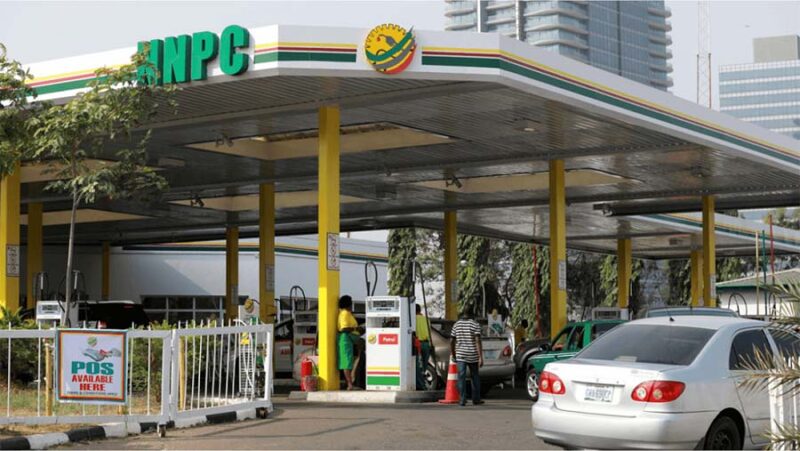
Abuja — The Nigerian National Petroleum Company Limited (NNPCL) has announced a reduction in the pump price of Premium Motor Spirit (PMS), commonly known as petrol, at its retail outlets in the Federal Capital Territory (FCT), Abuja.
A market survey conducted on Sunday revealed that NNPCL filling stations in key areas such as Gwarimpa and Kubwa have adjusted their prices downward to N1,405 per litre, a reduction from the previous rate of N1,430 per litre.
However, the survey indicated a slight variation in pricing across different NNPCL outlets within the capital city. While the Gwarimpa and Kubwa stations are selling at N1,405, other outlets located along the Kubwa Expressway, Air Junction, as well as those in Wuse Zones 4 and 5, are offering the product at a lower rate of N1,395 per litre.
The latest price adjustment by the national oil company follows a significant reduction in the gantry price of petrol by the Dangote Refinery. Reports indicate that the refinery recently slashed its gantry price by N25, bringing the rate down to N1,325 per litre.
The reduction in pump prices is expected to bring slight relief to motorists and commuters in Abuja, who have had to grapple with high transportation costs fueled by elevated fuel prices in recent months.
Industry observers note that the ongoing price adjustments reflect the dynamics of the deregulated downstream sector, where market forces and refinery gate prices influence retail costs. It remains to be seen if other major marketers and independent oil marketers will follow suit with similar price reductions in the coming days.
Motorists in Abuja have welcomed the development, expressing hope that the downward trend in fuel prices will be sustained across the country and ultimately lead to a reduction in the overall cost of living.
NNPCL Slashes Petrol Pump Price to N1,405 in Abuja, Dangote Refinery Cuts Gantry Rate
-

 metro3 days ago
$155m Left Behind, $750m Liabilities: Anambra Govt Opens Fresh Obi Files
-

 News2 days ago
Fake Agency Scandal: Gbajabiamila Says He Never Betrayed Tinubu’s Trust
-

 metro3 days ago
Unexplained Wealth: Obasanjo, Osinbajo, Others for Shittu’s Book Launch
-

 metro2 days ago
Woman Busted With Alleged Alcohol Hidden in Water Pack at Ogun Prison
-
News2 days ago
Anambra Govt Demands Unreserved Apology From Peter Obi Over Debt Claims
-

 International2 days ago
Iran Claims Capture of Second US Underwater Drone in Strait of Hormuz
-

 Politics2 days ago
2027: NDC State Chairmen Reject Obi-Kwankwaso Movement’s Parallel Structures
-

 News3 days ago
MURIC Blasts Nigeria Over UNGA Stance on Palestine, Netanyahu