
metro
Nigeria’s Terror Paradox: If Authorities Know the Criminals, Why Do Attacks Continue?
Nigeria’s Terror Paradox: If Authorities Know the Criminals, Why Do Attacks Continue?
Nigeria’s seemingly endless war against terrorism in Nigeria, banditry in northern Nigeria, and the growing kidnapping crisis in Nigeria continues to raise one troubling question.
It echoes after every mass burial of villagers killed in midnight attacks. It lingers in deserted communities where farms lie abandoned and classrooms stand empty. It trembles in the voices of parents who send their children to school each morning with silent prayers that they will return safely.
The question is simple but deeply unsettling: If the government knows who the terrorists are and where they hide, why do they still roam free?
This question has gained renewed attention following claims by prominent figures, security experts and even serving officers who insist that intelligence about armed groups already exists. According to them, the identities of several criminal networks responsible for bandit attacks in Nigeria are known and their locations mapped. Yet the killings continue.
The gap between what authorities allegedly know and what is actually done has become one of the most disturbing paradoxes in Nigeria’s ongoing security crisis in northern Nigeria.
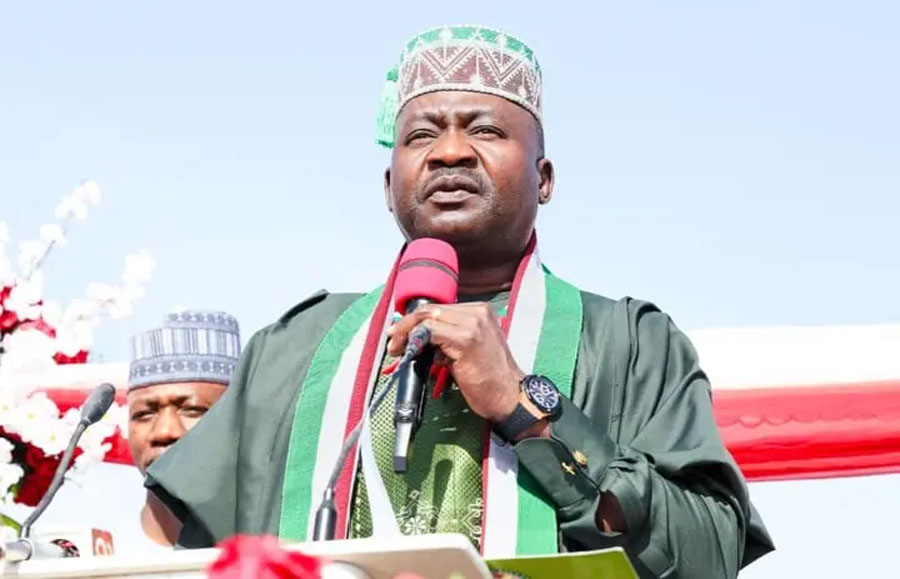
The debate intensified recently when Islamic cleric Ahmad Abubakar Gumi, who has often positioned himself as a mediator between authorities and armed groups, made a striking claim during a television interview. Speaking on DRTV, Gumi said the Nigerian government already knows the identities and locations of terrorists operating across the country.
“The government knows every terrorist by name and by location,” he said.
READ ALSO:
- U.S. KC‑135 Stratotanker Crashes in Iraq, Four Crew Dead
- U.S. Military Hits Nearly 6,000 Targets in Iran Since Conflict Began
- Lagos gears up for major auto show, over 100 global firms storm fair
The cleric also disclosed that some of his controversial visits to forests where bandits operate were conducted under the watch of security agencies. His statement raised an uncomfortable question for many Nigerians: if a cleric can walk into bandit camps with security escorts, why is it so difficult for the state to dismantle those camps entirely? Gumi has long advocated dialogue with armed groups as a strategy for reducing violence in the north-west, a stance that has generated intense debate among security analysts and government officials.
The controversy deepened when Zamfara State Governor Dauda Lawal also suggested that intelligence on bandit leaders exists. In a widely circulated video recorded in September 2025, the governor expressed frustration over persistent attacks in his state.
“I swear to Almighty Allah, wherever a bandit leader is in Zamfara State, I know it. If he moves, I know,” he said.
According to Lawal, modern surveillance tools make it possible to monitor the movements of some criminal groups. However, he explained that operational decisions regarding security deployments largely fall under federal authorities rather than state governments. This has left many governors frustrated as communities continue to face banditry in northern Nigeria.
Adding fuel to the debate, former Kaduna State governor Nasir El-Rufai earlier alleged that authorities once attempted to discourage bandits by secretly paying them to stop attacks — a claim that sparked nationwide controversy.
Across northern Nigeria, several bandit commanders have become widely known to residents living in affected communities. Among the most feared is Bello Turji, a notorious warlord linked to attacks and kidnappings across Zamfara and Sokoto states. His group has been blamed for deadly raids on rural settlements and large-scale abductions. Another feared figure is Dogo Giɗe, whose network has been associated with mass kidnappings and violent raids in several north-western states. Despite repeated military operations targeting such groups, they have continued to launch attacks, raising questions about the effectiveness of Nigeria’s counter-terrorism operations.
Nigeria’s insecurity has evolved beyond a single insurgent movement. Today, the country faces multiple armed threats including Boko Haram insurgency, Islamic State West Africa Province (ISWAP), bandit gangs operating across north-western states, and organized kidnap-for-ransom networks. Over the past decade, tens of thousands of people have been killed while millions have been displaced from their homes. Entire communities have been abandoned as farmers flee their land and schools shut down due to attacks. In some regions, local vigilante groups have emerged to defend communities where security forces remain overstretched.
READ ALSO:
- MURIC Celebrates Abdul-Hameed Over Successful Tenure as Pioneer Rector of Federal Polytechnic Ayede
- IBILE Zakat and Sadaqat Foundation Disburses N25.9m to 161 Indigent Beneficiaries in Lagos
- China Donates $200,000 to Families of Students Killed in Iran School Strike
Security analysts say the crisis is complicated by geography, governance failures and regional instability. According to intelligence and security consultant Yahuza Getzo, Nigeria’s porous borders play a major role in sustaining armed violence. Weapons and fighters move across borders linking Nigeria with Niger, Chad, Cameroon and Benin, creating a vast network of cross-border criminal activity.
“The security challenges we face are influenced by our neighbours and trans-border trade routes,” he said.
Getzo also raised concerns about accountability within Nigeria’s security architecture. “Yes, we may have equipment and gadgets, but the real question is whether we are holding personnel accountable for using them effectively.” Some analysts argue that intelligence alone cannot end the crisis without stronger coordination between security agencies and political authorities.
Another factor fueling violence is the growing criminal economy built around kidnapping in Nigeria. Retired United States Army officer Capt. Bishop Johnson believes ransom payments have transformed kidnapping into a highly profitable enterprise for armed groups.
“If you come into Nigeria and you are able to kidnap people and ransom is paid, your life changes,” he said.
Johnson also pointed to illegal mining as another driver of violence in northern Nigeria. Some regions rich in mineral resources are believed to be controlled by criminal groups that exploit gold deposits while using armed attacks as diversions.
Nigeria has also introduced a controversial deradicalisation programme aimed at rehabilitating former insurgents. Under the federal government’s Operation Safe Corridor, thousands of fighters have surrendered and undergone rehabilitation before being reintegrated into society. Officials say more than 2,600 former insurgents have completed the programme. Supporters believe the initiative weakens insurgent groups by encouraging defections. However, critics worry that the policy could allow dangerous individuals to return to communities without sufficient monitoring. Some serving officers have privately raised concerns that individuals who once fought alongside terrorist groups may still maintain connections with active networks, potentially contributing to intelligence leaks in security operations. Authorities strongly deny that repentant insurgents are integrated into military units.
Security expert Dr Tony Ofoyetan believes Nigeria’s terrorism crisis is rooted in deeper networks operating quietly within communities. He warned about sleeper cells — individuals who live ordinary lives while secretly gathering intelligence for armed groups. They may appear as traders, shop owners or ordinary residents while quietly collecting information about security weaknesses. According to Ofoyetan, terrorist attacks often represent the final stage of a long planning process that involves infiltration and surveillance.
Retired naval officer Rear Admiral Dickson Olisemelor has also questioned the scale of bandit movements across rural areas. In some cases, large groups of armed men travelling on motorcycles have reportedly moved through communities before launching attacks on villages or schools. Such incidents have reinforced public suspicion that the war against banditry in northern Nigeria remains far from being decisively won.
For travellers along northern highways, every journey carries the fear of abduction. For villagers in remote communities, every dawn brings uncertainty about what the next attack might bring. Children walk to school with silent prayers. Farmers work their land with fear in their hearts.
Yet the most haunting question remains unanswered: If Nigeria knows the terrorists and where they hide, why does the violence continue?
Until that question is confronted with transparency and decisive action, millions of Nigerians will continue to live under the shadow of insecurity.
Nigeria’s Terror Paradox: If Authorities Know the Criminals, Why Do Attacks Continue?
Vanguard











metro
Viral Threesome Video: Sisi Alagbo’s Husband Accepts Responsibility, Seeks Forgiveness

Viral Threesome Video: Sisi Alagbo’s Husband Accepts Responsibility, Seeks Forgiveness
The husband of popular Nigerian social media personality Eniola Fagbemi, widely known as Sisi Alagbo, Akeem Adesola has publicly apologised following the circulation of a private video involving himself, his wife and another woman that triggered widespread reactions online.
The video surfaced earlier this week and quickly spread across WhatsApp groups, Telegram channels, gossip blogs and other social media platforms, generating intense public debate and criticism.
In a statement posted on his Facebook page on Thursday, Adesola Akeem accepted responsibility for the incident and expressed remorse over the embarrassment and disappointment caused by the controversy.
“I write with a deep sense of responsibility and sincere remorse to extend my heartfelt apologies to my family, friends, business associates, religious leaders, fans, loved ones, and the entire Nigerian public over the recent incident involving a leaked scandal,” he wrote.
“I acknowledge the disappointment, embarrassment, and concern this situation has caused, and I take full responsibility for my actions.”
Akeem said his behaviour fell below the standards expected by people who had supported and trusted him over the years. He also apologised specifically to his family members, supporters, business associates and religious community.
“To my fans and supporters, I deeply regret letting you down,” he added.
According to him, the incident has become a period of personal reflection, noting that he intends to rebuild trust and make better decisions moving forward.
“I am committed to making better decisions, rebuilding trust, and upholding integrity in both my private and public life going forward,” he stated.
Sisi Alagbo had earlier reacted to the controversy through a statement shared on her verified Facebook account on Wednesday. She apologised to followers and supporters, saying the situation had left her emotionally distressed.
“I own my mistakes, and I apologize with all sincerity for the video circulating online. I am deeply sorry to everyone who felt disappointed in me,” she wrote.
The incident has continued to dominate conversations on Nigerian social media, with reactions ranging from criticism to calls for privacy and restraint in sharing sensitive personal materials online.
Some social media users also raised concerns over the growing trend of leaked private content and cyberbullying, urging the public to avoid further circulation of the video.
Sisi Alagbo became widely known online through her promotion of herbal products and lifestyle content. She gained additional national attention during the 2025 Africa Cup of Nations in Morocco after a viral moment involving Super Eagles striker Victor Osimhen.
The couple has not disclosed whether legal action will be pursued regarding the source of the leaked material.
Viral Threesome Video: Sisi Alagbo’s Husband Accepts Responsibility, Seeks Forgiveness
metro
Lagos faces major power outage after twin failures at Egbin, transmission line

Lagos faces major power outage after twin failures at Egbin, transmission line
Lagos is facing a widespread power outage after a critical double disruption knocked out a major chunk of electricity supply to the nation’s commercial hub.
The Nigerian Independent System Operator (NISO) said a sudden shutdown of the Egbin Power Station and a transmission line failure had significantly weakened power delivery to the state, forcing emergency load-shedding measures.
In a statement issued on Thursday, the system operator disclosed that the Egbin plant suffered a major operational disturbance late on April 28, wiping out its entire output and tightening supply constraints across Lagos.
The incident has also sparked unconfirmed reports of a contractor’s death at the facility, though officials have yet to verify the claim or provide details on what may have occurred.
According to NISO, the disruption happened at about 8:21 p.m., when Egbin’s generation abruptly dropped from approximately 641 megawatts to zero.
The outage was traced to critical equipment failure within the plant, specifically the breakdown of its central compressor and a malfunction in the circulating water pump system. The faults forced an immediate shutdown of all generating units to protect the facility from further damage.
The situation was further worsened by a transmission constraint limiting power flow into Lagos.
“Power supply to the Lagos region is currently further restricted due to the forced outage of the Osogbo–Ikeja West 330kV transmission line,” the operator said, noting that the fault has hampered the evacuation of available electricity into the Lagos load centre.
The combined impact of the generation collapse and transmission failure has created a major supply gap, prompting authorities to ration electricity to stabilise the grid and prevent a broader system failure.
NISO said contingency measures have been activated, including redistributing available power among distribution companies and prioritising critical infrastructure.
Efforts are also underway to ramp up generation from other plants to cushion the impact on consumers.
The agency apologised for the disruption, acknowledging that Lagos and surrounding areas have been hardest hit, and assured residents that stakeholders are working to restore normal supply as quickly as possible.
Located in Ikorodu, Egbin Power Station remains Nigeria’s largest thermal plant on the national grid, with an installed capacity exceeding 1,300MW. Its strategic importance means any outage typically triggers immediate and widespread supply shortages, especially in Lagos, the country’s biggest electricity market.
The Osogbo–Ikeja West 330kV line is equally vital, serving as a key transmission backbone that channels power into Lagos from other parts of the country.
The latest incident once again underscores the vulnerability of Nigeria’s power infrastructure, where isolated failures in generation or transmission can quickly cascade into large-scale outages, highlighting the urgent need for system upgrades and improved maintenance.
metro
Cyberbullying: Police Confirm Arresting Rolex Dee Over Taye Currency’s Petition

Cyberbullying: Police Confirm Arresting Rolex Dee Over Taye Currency’s Petition
The Oyo State Police Command has confirmed that efforts are underway to track and arrest controversial social media personality, Rolex Dee, following a cyberbullying and defamation complaint reportedly filed by popular Fuji musician, Taye Currency.
Police authorities disclosed that the matter is currently under investigation after receiving a formal petition accusing Rolex Dee of using social media platforms to allegedly harass, threaten, and defame the musician.
According to police sources, detectives attached to the command’s cybercrime unit have already commenced digital tracking and intelligence gathering aimed at locating the suspect.
The command said the investigation followed several online videos and livestream sessions allegedly containing defamatory remarks and offensive statements directed at Taye Currency.
A senior police official familiar with the case reportedly confirmed that steps were being taken to ensure the suspect is apprehended and questioned in line with provisions of the Cybercrimes Act.
“We have received a complaint, investigation has commenced, and efforts are ongoing to track and arrest the individual involved,” the source said.
READ ALSO:
- How Nigerian Army Uncovered Alleged Plot to Overthrow Tinubu
- FG Declares Friday Public Holiday for 2026 Workers’ Day Celebration
- Trump Triggers Global Reactions After Calling Strait of Hormuz ‘Strait of Trump’
The development comes after tensions escalated on social media between supporters of the Fuji singer and followers of Rolex Dee, with several viral clips generating heated reactions online.
Taye Currency, whose real name is Alhaji Taye Akande Adebisi, is one of the leading Fuji musicians in the Southwest and has maintained a strong fan base for years.
Sources close to the musician alleged that repeated online attacks against him and members of his family forced him to seek police intervention.
The controversy has further sparked debate over the increasing use of social media for personal attacks, cyberbullying, blackmail, and reputational damage among celebrities and influencers in Nigeria.
Legal experts say the Nigerian Cybercrimes Act empowers law enforcement agencies to investigate online harassment, cyberstalking, threats, and publication of false information capable of causing emotional, psychological, or reputational harm.
Meanwhile, supporters of Rolex Dee have reacted online, with some insisting that the issue should be resolved amicably rather than through criminal prosecution.
Human rights advocates have also urged security agencies to ensure that investigations respect constitutional rights, including freedom of expression, while distinguishing criticism from criminal cyber harassment.
The police command has, however, warned social media users against abusing digital platforms to intimidate, threaten, or spread harmful content against others.
Authorities reiterated that individuals found guilty of cyberbullying, cyberstalking, or online defamation could face prosecution under Nigerian law.
Cyberbullying: Police Confirm Arresting Rolex Dee Over Taye Currency’s Petition

-

 metro14 hours ago
Viral Threesome Video: Sisi Alagbo’s Husband Accepts Responsibility, Seeks Forgiveness
-

 metro2 days ago
“I Can’t Eat or Sleep”: Sisialagbo Cries Out, Begs For Forgiveness Over Leaked Video
-

 metro2 days ago
Police Officer Arrested After Shooting Handcuffed Suspect Dead in Viral Video
-

 Politics3 days ago
BREAKING: APC Chieftain Osifo Enters 2027 Race, Buys ₦100m Form to Challenge Tinubu
-

 metro2 days ago
ASP Nuhu: Viral Delta Police Shooting Raises Questions Over Officer’s Past
-

 Politics2 days ago
BREAKING: Court Bars INEC from Recognising Mark-Led ADC Congresses
-
 Politics2 days ago
“Hamzat Is Scared of Primaries” — Lagos APC Aspirant Rejects Consensus Plan
-
 News16 hours ago
Tinubu Nominates Tegbe as Minister of Power, Seeks Senate Confirmation