Opinion
Tinubu’s Abacha tactics against opposition, By Farooq Kperogi
Published
2 months agoon
By
Trends Admin
Tinubu’s Abacha tactics against opposition, By Farooq Kperogi
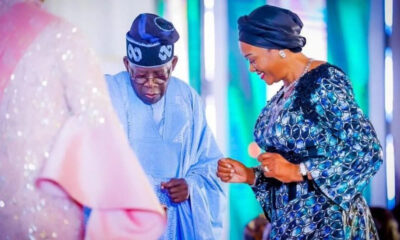
Although structural, political, and economic conditions appear to constrain any credibly concerted impediment to President Bola Ahmed Tinubu’s 2027 reelection chances, at least from my admittedly imperfect reading of the auguries, Tinubu still seems so insecure that he is borrowing a leaf from former Head of State Sani Abacha, his arch enemy, to annihilate the opposition and smooth his path to reelection.
There are at least three reasons why I think the odds are, at least for now, in Tinubu’s favor.
First, the opposition hasn’t coalesced around a single, powerful, unifying candidate, such as the APC did with Muhammadu Buhari in 2015, less than a year before the next presidential election. Meanwhile, Tinubu is already the undisputed candidate of his party and has effectively been in campaign mode, with all the advantages that incumbency confers.
Second, Tinubu’s economic policies have so pauperized a vast swath of the electorate that many voters are even more susceptible to financial inducement in exchange for their votes than at any time in recent memory. In a context where hunger and desperation shape electoral behavior, the moral calculus of voting changes.
Given that Tinubu commands a larger financial war chest than any individual opposition figure and perhaps more than all of them combined, he is better positioned to prevail in a contest defined by voter inducement. It often makes little difference to voters that the source of their hardship is also the source of the money offered to temporarily alleviate it.
READ ALSO:
- Nigerian Woman, Children Die in US Road Accident
- Boko Haram Financiers Known but Not Publicly Named, Says Buratai
- Eid-el-Fitr: NRC to Operate Three Lagos–Ibadan Train Trips on March 23
Third, the institutions of the state that determine electoral outcomes inspire little confidence in their independence. INEC, which showed flashes of autonomy during Professor Attahiru Jega’s tenure, particularly in overseeing the 2015 transition, no longer enjoys the same level of public trust.
The judiciary, which ought to serve as the final arbiter of electoral disputes, is widely perceived as susceptible to political manipulation. Whether this perception is entirely fair is beside the point; what matters is that it is widespread and shapes expectations about electoral outcomes.
Given these seemingly insurmountable advantages, one might expect Tinubu to sit comfortably and await what could amount to an electoral formality. Yet his actions suggest a deep, crippling anxiety about 2027. He appears determined not just to win an election but to eliminate the possibility of a meaningful contest.
He is stealthily but systematically weakening all the political parties that could provide viable platforms for his opponents in 2027.
The Labor Party, which rode the crest of the wave of Peter Obi’s popularity to emerge from near obscurity to national prominence in 2024, has been mired in irresolvably debilitating internal crises. These crises may have internal origins, but their persistence and intensity have effectively neutralized the party as a coherent opposition force.
The Peoples Democratic Party is also deeply fractured. Through the outsized influence of FCT Minister Nyesom Wike, who retains significant leverage within the party despite serving in an APC administration, the PDP has been thrown into a prolonged internal dissension that has eroded its capacity to function as a credible opposition platform.
It would be an exaggeration to say that only APC sympathizers remain in the PDP, but it is accurate to say that its internal divisions have weakened its ability to mount a coordinated challenge.
READ ALSO:
- BBL Death: Joe Akatugba Warns Actresses Against Cosmetic Surgery for Fame
- Dangote Petrol Price Hits ₦1,275/Litre After Fifth Hike in March
- Festival of Fertility: FG Orders Arrest, Promises Justice for Victims
The African Democratic Congress (ADC) had begun to present itself as a refuge for politicians displaced from the PDP, the Labour Party, and even factions within the APC. That possibility now appears imperiled by an emerging leadership crisis.
While David Mark is widely recognized as the party’s national chairman, Nafiu Bala Gombe, a former deputy national chairman, is contesting that leadership in court. Given how the courts have ruled in the past in respect of the PDP and LP, which many people suspect is induced from the Tinubu camp, it won’t come to me as a surprise if Gombe gets judicial imprimatur to displace Mark.
Allegations that Gombe is aligned with Tinubu or with interests sympathetic to him come primarily from partisan sources within the ADC and have not been independently substantiated. Still, given the pattern observable in other opposition parties, such suspicions are not entirely surprising. If the courts eventually validate Gombe’s claim, the ADC could become inhospitable to the very opposition figures who had begun to see it as a viable platform, as a safe political asylum.
The cumulative effect of these developments is that major opposition figures such as Atiku Abubakar, Peter Obi, and Rotimi Amaechi may find themselves without stable or credible party platforms on which to base presidential bids. Even if parties remain on paper, they risk becoming hollow shells, fielding “dummy” candidates who pose no real threat and merely sustain the illusion of competition. That’s banana-republic-level perversion of basic democratic norms.
This trajectory calls to mind the 1998 transition program under Sani Abacha. In that case, the regime licensed and controlled the only legal political parties, suppressed dissent, and orchestrated a process in which all five parties eventually adopted Abacha as their sole presidential candidate. It was a carefully managed political ritual dubiously designed to legitimize continued rule. Abacha didn’t get elected because he died before that could happen.
Nigeria is not under military rule, and the present circumstances are not, by any means, wholly identical. But the logic of narrowing the political field to the point where competition becomes illusory bears an uncomfortable resemblance.
There is no point in pretending to be a democracy if something as basic as the latitude to run for the office of president is strewn with avoidable cataracts and oxbow lakes, to paraphrase Nigeria’s most famous sesquipedalian Patrick Obahiagbon.
The danger for Tinubu is that such a strategy, even if it succeeds electorally, could strip his reelection of the faintest scintilla of credibility and render his administration vulnerable to an enervating crisis of legitimacy, including possible international scrutiny. Electoral victory is one thing; perceived legitimacy is another, and the latter is harder to manufacture.
It is true that incumbents often seek every available advantage. Olusegun Obasanjo’s 2003 reelection was marred by widely reported irregularities. He was so intent on extracting electoral insurance against Muhammadu Buhari in 2003(even though Buhari was actually unelectable at that time) that he got more votes in native Ogun State than there were registered voters. But at least he allowed Buhari to run against him on a prominent political platform.
Goodluck Jonathan also benefited from incumbency advantages. Like Obasanjo, he faced recognizable opposition candidates on functioning party platforms. Even in 2019, when Atiku Abubakar mounted a serious challenge to Muhammadu Buhari, the contest, despite its controversies, retained the basic structure of competitive politics.
Tinubu risks earning a dubious distinction as Nigeria’s only civilian president who appears unwilling to tolerate even the minimum conditions for credible electoral competition. That is a striking departure for a man whose political reputation was built, in part, on opposition to military authoritarianism.
He still has time to recalibrate. The more prudent path is to allow opposition parties to organize freely and to make his case for reelection on the basis of his record. That, more than any tactical maneuvering, is what confers durable political legitimacy.
Tinubu’s Abacha tactics against opposition, By Farooq Kperogi
![]()
You may like
-
Islam Facing Reputational Damage Under Tinubu – Datti Baba-Ahmed
-
Coup Plot Trial: Video Shows Defendants Admit Plan Against Tinubu
-
Reno Omokri: I Remain in PDP Despite Serving in Tinubu-Led APC Govt
-
Rejoinder: Criticism Is Not Campaigning — The Real Gap Is the Opposition
-
How Nigerian Army Uncovered Alleged Plot to Overthrow Tinubu
-
2027 Lagos Race: Tinubu, GAC Endorse Obafemi Hamzat
Opinion
Atiku, Obi, Kwankwaso are Tinubu’s most reliable campaigners, By Farooq Kperogi
Published
5 days agoon
May 2, 2026By
Trends Admin
Atiku, Obi, Kwankwaso are Tinubu’s most reliable campaigners, By Farooq Kperogi
There is really no opposition in Nigeria in the true sense of the word. There are only politicians who have been temporarily kicked out of the inner sanctum of power and influence but who share no fundamental difference with the current temporary occupants of the power structure. Nonetheless, if all the people vegetating on the margins of the power structure came together, they could easily displace those within it in 2027.
Although the coalition of so-called opposition politicians angling to get back to power in 2027 has not articulated a coherent blueprint to show that it will be different from President Bola Tinubu (I strongly believe they are indistinguishable from him), it can effectively instrumentalize the crying incompetence, in-your-face corruption, ethnic bigotry, insufferable arrogance, unabating misery and insouciance that have become the hallmarks of Tinubu’s administration to convince a traumatized nation that it can offer an alternative.
It doesn’t matter if they will replicate or even exacerbate Tinubu’s unrelieved disaster when they get to power. Even the prospect of temporary relief from Tinubu’s unending torment is enough to get most people to give them a chance. But they have shown that they lack the discipline, cohesion and foresight required to wrest power from Tinubu.
Even before they have had a chance to come together, they are splintered. This became clear in the aftermath of the Supreme Court ruling that restored David Mark’s leadership of the ADC. Neither Peter Obi nor Rabiu Kwankwaso said a word about it.
There are credible rumors that Obi and Kwankwaso didn’t react to the Supreme Court judgment because they had already moved on. They are said to be heading to the NDC and no longer care about what happens to the ADC.
In other words, we are back to the 2023 factionalization of the “opposition.” Both Obi and Kwankwaso appear to be allergic to the internal democratic processes of political parties. They want to be canonized as candidates without contest. Since they can’t find that, they are moving away.
READ ALSO:
- Tinubu Orders Crackdown on Plateau Killers, Approves ₦2bn Relief Package
- Tinubu Appoints Bianca Ojukwu as Minister of Foreign Affairs
- Ronaldo Fires Al Nassr to Crucial Win Over Al Ahli
Atiku Abubakar may emerge as the candidate of the ADC, if the ADC survives, that is. He might choose Rotimi Amaechi as his running mate. Should this happen, the opposition will be fatally fractured, as it was in 2023.
Even now, the verbal darts between Atiku’s supporters and Obi’s and Kwankwaso’s supporters are more caustic and more venomous than the exchanges between either camp and Tinubu’s supporters.
In fact, Tinubu is the net beneficiary of their maximalist posturing and internal warfare. Obi and Kwankwaso supporters say they would rather let Tinubu continue for another four years than support Atiku’s aspiration to replace him. Atiku’s supporters, for their part, say they would rather put up with another Tinubu term than support an Obi/Kwankwaso presidency.
Beyond their crude, petulant name-calling, Obi and Atiku supporters advance arguments in support of their positions, both of which benefit Tinubu. Obi’s supporters say since it isn’t the turn of the North to produce a president, Buhari having ruled for eight continuous years before Tinubu took over, if another southerner can’t be presented as the opposition’s candidate, they would rather support Tinubu to complete the South’s turn.
Atiku’s supporters, on the other hand, turn that logic around and say that if Obi is supported to displace Tinubu in 2027, he would “eat into” the North’s turn, which they believe should start in 2031. They don’t believe Obi’s promise to rule for only one term since there is no legally binding or constitutional constraint that would forbid him from reneging on his promise.
There is a precedent for this in Goodluck Jonathan, who was “allowed” to complete Umaru Musa Yar’adua’s term on the understanding that he wouldn’t seek another term in 2011. He not only ran and won in 2011, he ran again in 2015 and almost won.
So, the argument of Atiku’s supporters is that supporting Tinubu to complete his term benefits the North more than supporting Obi because there is certainty, in their reckoning, that power will move to the region without contest after Tinubu’s term. It’s irrelevant if Tinubu’s policies incinerate them before power rotates back to the North.
READ ALSO:
- How Nigerian Army Uncovered Alleged Plot to Overthrow Tinubu
- FG Declares Friday Public Holiday for 2026 Workers’ Day Celebration
- Trump Triggers Global Reactions After Calling Strait of Hormuz ‘Strait of Trump’
It isn’t the logic or admissibility of the arguments of both camps that is the issue here. The point at issue is that in fighting each other, the opposition is fighting for Tinubu. His economic strangulation of the masses of our people takes the back seat. The insecurity that is ravaging the country, which he seems either unable or unwilling to confront and stamp out, is rendered irrelevant.
In other words, Tinubu’s most potent weapon isn’t INEC with its partisan chairman or a compromised judiciary. It is the opposition. Interestingly, the two main groups in the opposition like to accuse each other of “working for Tinubu” to ensure that their candidate doesn’t win. The truth is that they are both assets to Tinubu and are working for him for free. They are both weapons fashioned against each other for the benefit of Tinubu.
And that’s why I consider Tinubu’s excessive, underhanded zealousness in suffocating the ADC and other opposition parties from becoming viable platforms to challenge him a self-sabotaging strategic blunder. He could have a clear win, because of the selfishness and disunity of the opposition, and still be dogged by a crisis of legitimacy because he didn’t allow a fair contest.
On April 23, I wrote a Facebook post about two contradictory impulses of Nigerian politicians. I said Nigerian politicians are some of the most incurably optimistic specimens of humans you can find on earth. That’s why you have opposition politicians who can’t even agree on who their candidate will be in 2027 say with cocksure certitude that they can wrest power from a man who defied all odds to get to power while out of it and has since consolidated power by ensuring that INEC and the judiciary are in his pocket.
But I also pointed out that Nigerian politicians can be some of the most cowardly people while outwardly projecting faux bravery. That is why a politician who has 32 governors, INEC, the judiciary, an unrivalled war chest and a gravely divided opposition is still so fearful of his chances of winning that he doesn’t want the opposition to even have a platform to challenge him.
Tinubu joked on April 14, 2026, that he could send Godswill Akpabio to the opposition to “scatter them.” Days later, on April 20, his chief of staff, Femi Gbajabiamila, publicly urged ADC lawmaker Leke Abejide to remain in the party so that he could “fight them” and “scatter them.” Abejide said yesterday that Gbajabiamila was only joking, just like his boss, Tinubu.
An English proverb says, “Many a true word is spoken in jest.” That is, people often reveal serious truths while pretending to joke.
ADC’s fate is currently hanging in the balance, and if the past is any guide, the David Mark leadership of the party might lose in the federal high court. That would be an avoidably self-inflicted political injury for Tinubu. He doesn’t need to use the instruments of the state to “scatter” the ADC, the NDC, the PRP or any other potential platform opposition politicians might need. The opposition is doing a better job “scattering” itself than he can ever do, even with the instruments of the state.
Tinubu may not need to defeat the opposition because the opposition appears determined to defeat itself. An opposition that lacks the self-denial, strategic patience and moral urgency necessary to galvanize popular resentment and win power doesn’t deserve power.
Until Atiku Abubakar, Peter Obi, Rabiu Kwankwaso and others understand that power is rarely handed to the disunited, the vain and the impatient, they will remain Tinubu’s most reliable unpaid campaigners.
Kperogi is a renowned Nigerian columnist and United States-based Professor of Journalism
Atiku, Obi, Kwankwaso are Tinubu’s most reliable campaigners, By Farooq Kperogi
![]()
Opinion
A coup trial without precedent, By Farooq Kperogi
Published
2 weeks agoon
April 25, 2026By
Trends Admin
A coup trial without precedent, By Farooq Kperogi
I came of age in Nigeria during absolutist, totalitarian military regimes and was shaped by the anti-military rhetoric and activism that surrounded me.
Although democracy hasn’t lived up to its promises, which has fueled what I consider misguided and amnesiac nostalgia for military rule, I would rather we fix our badly deformed civilian system through trial and protest than return to the dark days of brutal military monocracy.
That is why news of an alleged abortive coup plot last year unsettled me, particularly because many of those implicated are northern Muslims. In a country riven by deep primordial fissures, I doubt we can recover from the northern-led overthrow of a civilian government headed by a southerner.
The Defence Headquarters initially denied it. It described reports of a coup attempt as not just “false and misleading,” “entirely false,” and “malicious” but as deliberately fabricated to “cause unnecessary tension and distrust among the populace.”
The Director of Defence Information, Brigadier General Tukur Gusau, said what Sahara Reporters described as a coup was merely “indiscipline and breach of service regulations” by 16 officers who felt stymied by “perceived career stagnation caused by repeated failure in promotion examinations, among other issues.”
But news platforms such as Sahara Reporters, Premium Times, and Daily Trust quoted unnamed sources in the upper echelons of the military and the Tinubu administration who insisted the Defence Headquarters was being economical with the truth and that there had indeed been a real attempt to overthrow the government.
The confidence with which these reports were presented, despite the anonymity of the sources, led me to write my November 1, 2025, column titled “The Coup That Dare Not Speak Its Name,” in which I argued that the government owed the public transparency about what had happened.
READ ALSO:
- Xenophobia Fears Rise in South Africa as Viral Videos Show Attacks on African Migrants
- MTN Credits Nigerians Airtime as NCC Enforces Poor Service Compensation Rule
- US Resumes Executions as Trump Reintroduces Firing Squad Option
I wrote: “Secrecy accelerates suspicion. Nigeria’s citizens have matured politically; they can process national challenges without descending into chaos. Shielding the public from reality infantilizes the electorate and breeds cynicism.”
On January 26 this year, the Defence Headquarters, which had earlier dismissed the reports as “false and misleading,” made a dramatic reversal and acknowledged that there had indeed been a plan to violently overturn the Tinubu government. It also said the implicated officers would face military tribunals.
After multiple peaceful protests by the wives and relatives of the accused, formal charges were eventually filed. Six suspects, including a retired major general and a serving police inspector, were charged with terrorism and treason. In a 13-count charge sheet, the federal government alleged that they “conspired with one another to levy war against the state to overawe the president of the Federal Republic.”
Although respected analysts such as Chidi Odinkalu have questioned the plausibility of the evidence cited in media reports to substantiate the alleged coup, I do not have sufficient information to independently assess the credibility of the claim.
What is not in dispute, however, is that what we are witnessing is uncharted territory. Since Nigeria’s independence, there is no clear record of military officers being tried for an alleged coup attempt under a civilian administration.
The closest parallel is the 2004 episode during the Obasanjo presidency, when the government announced that it had uncovered and foiled a coup plot. The Guardian quoted presidential spokeswoman Remi Oyo as saying that Hamza al-Mustapha, then in prison in Lagos, was suspected of involvement.
From what I recall, that episode produced neither a formal court-martial proceeding nor a full civilian trial. Instead, scores of senior and mid-level officers were detained, questioned and then retired or dismissed. What is unfolding now is therefore without precedent.
READ ALSO:
- After Six Years in Custody, Court Fixes Trial for Patience Jonathan’s Ex-Workers
- Court Orders ₦1bn Damages as Natasha Rejects Verdict, Files Appeal
- Falana Challenges Lagos Govt, Says No Law Backs Sanitation Movement Restriction
This is why the intervention of respected human rights lawyer Femi Falana deserves careful attention. In an April 23 statement, he called for the immediate suspension of the government’s secret court-martial of 36 soldiers accused of plotting a coup. He described the proceedings as unconstitutional, illegal and a violation of due process.
Falana argued that trying the soldiers behind closed doors undermines transparency and the right to a fair hearing, especially in light of the gravity of the charges against them. His central legal contention is that offences such as treason and terrorism fall within the jurisdiction of civilian courts, not military tribunals, even when the accused are soldiers.
He warned that subjecting some suspects to court martial while others implicated in the same alleged plot face civilian prosecution creates a two-track system of justice that affronts the principle of equality before the law.
He urged the Attorney-General to halt the military proceedings, transfer the case to the Federal High Court, and ensure that all suspects are tried openly and uniformly under civilian law.
Falana’s argument raises a deeper question that goes beyond this case. What does it mean to be governed by law in a democracy that still carries the institutional reflexes of military rule? A state that derives its legitimacy from and is bound by the constitution cannot choose opacity when transparency is inconvenient, nor can it apply different standards of justice to people accused of the same crime.
If the government is confident in the strength of its case, in the unimpeachability of its evidence against the accused, it should have no fear of public scrutiny. I know there is legitimate argument to be made about the risk of inspiring copycats if the trial is open, but coups are not crimes of imitation like bank robberies. They require coordination, access to arms, insider networks, and timing. Those conditions are not created by watching a public trial. If they exist, secrecy will not eliminate them.
Second, secrecy is more likely to breed suspicion than prevent instability. When the state hides proceedings, it invites rumors, conspiracy theories, and loss of trust, which can be more destabilizing than any supposed copycat risk.
Third, transparency is a deterrent. A public, evidence-based trial exposes the consequences of plotting against the state and demonstrates that institutions can respond lawfully. That is more likely to discourage would-be conspirators than embolden them.
Fourth, courts already have tools to protect genuinely sensitive information. Specific details can be redacted or heard in camera without turning the entire process into a secret proceeding.
But there is also a broader political risk. In a country with a long and traumatic history of coups, secrecy around allegations of military insurrection heightens suspicion. When the government first denied the existence of a coup and later admitted it, it created a credibility gap that only openness can close. Conducting trials behind closed doors only deepens that gap and invites speculation about what is being concealed.
If the accused are guilty, a transparent trial will expose their culpability and reinforce the legitimacy of the state. If they are not, secrecy will have compounded injustice. Either way, opacity serves no one except those who benefit from weakening public trust in institutions.
If the suspects are found guilty through a fair, transparent and evidence-based process, they should face the full consequences of their actions. I would never defend any attempt to seize power through violence. But guilt must be established beyond all shadows of doubt. It is not enough to allege; the government must prove its case in the open.
Kperogi is a renowned columnist and United States-based Professor of Journalism.
A coup trial without precedent, By Farooq Kperogi
![]()
Opinion
Tinubu’s Yoruba agenda risks deep rupture in Kwara, By Farooq Kperogi
Published
3 weeks agoon
April 18, 2026By
Trends Admin
Tinubu’s Yoruba agenda risks deep rupture in Kwara, By Farooq Kperogi
Intra-state cultural and subregional tensions are building up in Kwara State ahead of the 2027 governorship elections because of credible worries that President Bola Ahmed Tinubu’s all-too-well-known Yoruba nationalist agenda is about to upend the state’s harmony through candidate imposition.
First, some background. Like several states in the country, Kwara is a multi-ethnic and multicultural state. It’s customary to divide it into three distinct geo-cultural zones. There is Kwara Central, which encompasses all of Ilorin and its adjoining areas. It’s linguistically Yoruba but ethnically a mixed bag of people who trace ancestry to Yoruba, Fulani, Kanuri, Baatonu (or Bariba), Hausa, and Nupe ancestors but who are, for all practical purposes, Yoruba. It is a little over 6 percent of the state’s landmass but constitutes 38 percent of the state’s population.
Then there is Kwara South, the most ethnically homogeneous part of the state, which is wholly Yoruba and, in many ways, culturally and linguistically indistinguishable from the Southwest. It is a little over 18 percent of the state’s landmass and 30 percent of its population.
Kwara North is the most ethnically diverse geo-cultural region and is peopled by the Baatonu (or Bariba), Bokobaru, Nupe, and Fulani. It is the non-Yoruba-speaking part of the state that constitutes more than 75 percent of the state’s landmass and 32 percent of its population, although Moro, a small part of Ilorin Emirate, was mysteriously grafted onto Kwara North. Nonetheless, the Nupe, Fulani, Baatonu, and Bokobaru people are culturally closer to the far North than they are to any part of the state.
Since the restoration of civilian rule in 1999, Kwara Central, that is, Ilorin Emirate, has dominated the governorship of the state. By the time of the next governorship election in 2027, Kwara Central would have ruled for 20 out of 28 years.
Kwara South produced the governor for eight years, from 2011 to 2019. Abdulfatah Ahmed, from Ifelodun Local Government, is from Kwara South.
But the entirety of Kwara North has never produced a governor for even a day since 1999, and only for a year and 10 months since 1992.
READ ALSO:
- JAMB Releases First Batch of 2026 UTME Results for 632,788 Candidates
- Offa Robbery: Kwara Files Fresh 20-Count Charge Against Saraki, Ahmed
- US-Based Nigerian Doctor Dies During Free Medical Outreach in Nigeria
Kwara State governor Abdulrahman Abdulrazaq, from all indications, is committed to course correction in 2027 by supporting a rotation of power to Kwara North. A news report I read said he is lending support to Yakubu Danladi Salihu, the Speaker of the Kwara State House of Assembly, who is from Baruten, the second-largest local government in the country, to succeed him. It may not be true, but it has crystallized in public perception.
Senator Sadiq Suleiman Umar, who represents Kwara North in the Senate and who is from Kaiama, is another contender who enjoys widespread support to succeed Abdulrazaq. Both Baruten and Kaiama used to be part of Borgu Local Government before one half of it was ceded to Niger State in the early 1990s.
Yet although consensus, even among prominent players in Ilorin, appears to be coalescing around the idea that the remnant of Borgu in Kwara State, that is, Baruten and Kaiama, should produce the next governor (because the Nupe briefly produced a governor in the aborted Third Republic), it is said that President Tinubu insists that a Yoruba person from Kwara South must be governor.
Widespread whispers indicate that Tinubu’s preference for Abdulrahman’s successor is a certain Bashir Omolaja Bolarinwa, who hails from the same local government as former governor Ahmed and who used to be a local government chairman in Lagos.
A self-described “Yoruba irredentist” who has privileged access to people in Tinubu’s inner circle told me a few days ago that Tinubu wants to use his presidency to advance his sense of a pan-Yoruba agenda and be seen as the reincarnation of Oduduwa.
To that end, he said, Tinubu wants to force the election of “Yoruba” governors in Kwara and Kogi states. Since I didn’t listen in on any conversation where Tinubu said this, I can’t be certain that it’s entirely true, but given what I have described as Tinubu’s studied “Visibilization of Northern Yorubas” in my October 11, 2025, column, it would not surprise me if it were true.
READ ALSO:
- Iran Declares Strait of Hormuz Fully Open
- Troops Arrest Bandit Kingpin’s Deputy, Wife in Gombe
- Power Supply Drops in Lagos as Transmission Faults Trigger Load Shedding
But it would be a grave error of judgment to railroad Yoruba governors in multi-ethnic states, particularly in Kwara State. First, as I have pointed out, a person from Kwara South has been governor for eight years.
Second, Mohammed Lawal, Kwara’s first governor in the Fourth Republic, although from Ilorin, self-identified as Yoruba and performed many symbolic acts to signal that.
In fact, Governor Abdulrazaq, although a cosmopolitan person who seems to transcend ethnic and religious boundaries, is Yoruba. At least that was what one Sheikh Abdulrahim Aduranigba said seven years ago when he contrasted him with the PDP candidate for the governorship election.
“We have adopted Abdulrazaq as our governorship candidate because he is a Yoruba, and we have instructed him to conduct his campaigns in Yoruba language,” THISDAY quoted him as saying. “The PDP candidate is Fulani, and we challenge him to conduct his campaigns in Fulani language.”
In other words, the Yoruba are not a marginal group in Kwara that need saving by a reincarnated Oduduwa. The people who need “saving” are the non-Yoruba-speaking people of the state who have never produced a governor.
Third, the pushback that the imposition of a governor on account of his ethnic identity would invite could plunge the state into crisis. Ilorin people will resist it. People in Kwara North will resist it, and it will cause needless friction with the south of the state.
Interestingly, Tinubu’s second most prominent traditional title after “Asiwaju” is “Jagaban Borgu.” Kwara’s Kaiama and Baruten local governments, which have never produced a governor for the state since its founding in 1967, are one half of Borgu. It would be ironic if the champion of Borgu (that’s what Jagaban Borgu means) champions the political exclusion of the people he is symbolically supposed to lead and protect.
Tinubu himself is president because of a deliberate policy of positive political discrimination called power rotation, and he is anchoring his reelection on the basis that the South must complete its eight years, like the North before it.
As I have repeatedly pointed out, political representation at the highest levels is more symbolism than substance. Although the nature of ethnocratic governance we call democracy ensures that people in positions of power give preferential treatment to their kind and places of origin, for the most part, all politicians are the same. They first take care of themselves, their families, friends, and associates before the crumbs spread to their “people.”
Yet political representation is the symbolic conduit through which people vicariously connect with governments. When people of Ayetoro Gbede demonstrated the other day, telling Nigerians to leave their “son” Joash Amupitan alone, even though his past tweets question his neutrality and therefore his suitability as INEC chairman, I understood where they were coming from. He is the symbolic conduit through which they connect to the government. Ours is an ethnocracy, not a democracy.
That’s why it’s my long-term belief that the surest way to sustain the form of government we practice now is to deepen and constitutionalize representational equity. No ethnic group should dominate leadership because it has profound implications for psychic exclusion and the predilection to violence.
Baruten, Kaiama, Patigi, and Edu local governments, the non-Yoruba-speaking local governments in the state, are some of the least developed and most backward places in Nigeria. The first roads were tarred in Baruten only a little over a decade ago, and they are already death traps. Most towns are not connected to the national grid, and healthcare is among the worst.
A governor from the area will be compelled by ethnocratic pressures to attend to the most egregious infrastructural deficits that previous governments overlooked.
Let me end with a full disclosure: I am from Baruten Local Government of Kwara State and therefore from “Kwara North.” But my concerns are located in my broader concerns about representational justice, about which I have written in regard to other parts of the country.
Kperogi is a renowned columnist and United States-based Professor of Journalism
Tinubu’s Yoruba agenda risks deep rupture in Kwara, By Farooq Kperogi
![]()
Trending
-
Health3 days ago5 Early Signs of Stomach Cancer You Should Not Ignore
-
metro3 days agoUNICROSS Students Protest in Calabar Over Death of 3 Students, Driver
-
Politics3 days ago2027: Rufai Oseni Alleges Plot to Stop Peter Obi From Contesting Election
-
metro2 days agoCultists Storm Lagos Wedding, Kill Bride’s Father, Hypeman
-
metro2 days ago2026 Hajj: First Batch of 315 Oyo State Pilgrims Arrive in Medina
-
metro2 days agoCoup Plot Trial: Video Shows Defendants Admit Plan Against Tinubu
-
Politics2 days agoObi, Kwankwaso’s NDC Move Under Threat as Ardo Heads to Court
-
metro3 days agoReno Omokri: I Remain in PDP Despite Serving in Tinubu-Led APC Govt