

metro
How Hijab-Wearing Woman Allegedly Abducts Suya Seller’s Daughter in Delta

How Hijab-Wearing Woman Allegedly Abducts Suya Seller’s Daughter in Delta
A 33-year-old suya seller, Abubakar Isiaka, has made a passionate appeal to security agencies and members of the public to assist in locating his three-year-old daughter, who was abducted in Delta State.
The child, identified as Sheripha, aged three years and eight months, was reportedly taken on March 7, 2026, during a burial ceremony in Ogwashi-Uku.
According to the distraught father, the incident occurred amidst the gathering when an unidentified woman wearing a hijab allegedly lured the child away. The suspect reportedly took advantage of the busy environment to carry out the act without raising immediate suspicion.
Isiaka explained that all efforts to locate his daughter since the incident have been unsuccessful, leaving the family in deep distress. He noted that the sudden disappearance of the child has thrown the entire household into emotional turmoil.
“We have searched everywhere and asked around, but there has been no trace of her,” he said, pleading for urgent intervention from security operatives.
The case has reportedly been brought to the attention of relevant authorities, while local residents have also been urged to remain vigilant and report any useful information that could lead to the rescue of the child.
Members of the public with credible information have been encouraged to assist law enforcement agencies in ensuring the safe return of the young girl.
How Hijab-Wearing Woman Allegedly Abducts Suya Seller’s Daughter in Delta










metro
Mystery Deepens in Ikoyi Murder as Police Declare Two Men Wanted Over Missing Dubai Returnee
Mystery Deepens in Ikoyi Murder as Police Declare Two Men Wanted Over Missing Dubai Returnee
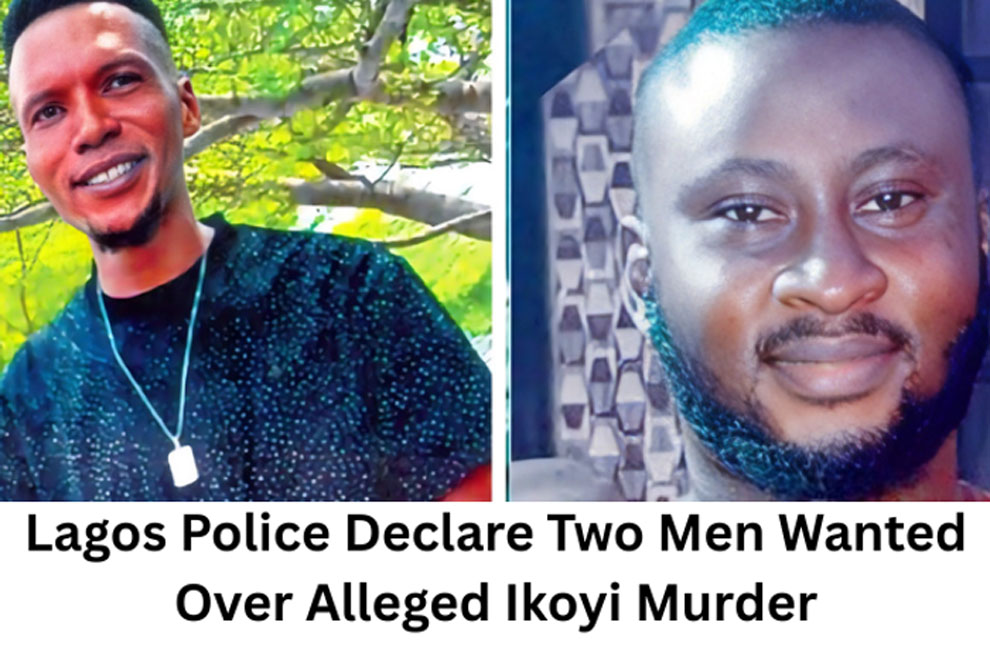
The Lagos State Police Command has intensified its manhunt for two men declared wanted in connection with the alleged murder and mysterious disappearance of a 26‑year‑old woman in the Ikoyi area of Lagos. The suspects, identified as Ajibola Obateru, 33, and Folawiyo Balogun Alagbado, 32, are accused of conspiring with others to attack the victim, kill her, and dispose of her body at an unknown location. Both men reportedly have their last known addresses in Ibadan, Oyo State. The case has drawn significant public attention, not only because of the gruesome nature of the allegations but also because the victim’s body has not been recovered, leaving her family in a state of agonising uncertainty.
The victim has been identified as Chukwunyere Esther Chinaza, an Imo State indigene who reportedly returned to Nigeria from Dubai in June 2026. According to police reports, Chinaza arrived in Lagos on June 18 with a male friend based in South Africa. She was last seen on June 22, 2026, around the Shoreline area of Banana Island, Ikoyi, one of Lagos’s most exclusive residential neighbourhoods. A police bulletin described Chinaza as an Igbo woman with a fair complexion and tall‑to‑average height, with her last known address listed as Horizon Estate, Ikate, Lagos. Her family has been unable to establish whether she is alive or dead, and her body has not been recovered, deepening the mystery surrounding her disappearance. Speaking to SaharaReporters, one of Chinaza’s brothers expressed the family’s distress and frustration with the pace of the investigation, recounting that his sister was lured from Dubai to Lagos on June 18 and went missing from June 21, and that they have not seen her or her body. He further expressed dissatisfaction with the investigation, stating that they are not relying on the police investigation as nothing has been done, with no arrests made regarding the two suspects.
READ ALSO:
- Osun Election Tension: Lawyer Urges Davido to Apologise to Okpebholo Over WAEC Result Troll
- Customs Busts International Lion Cub Smuggling Ring, Rescues Two Cubs at Abuja Airport
- Seven Miners Killed in Plateau Mining Pit Collapse, Renewing Urgent Calls for Safety Reform
The declaration was formalised in separate Special Police Gazette Bulletins issued under the authority of the Inspector‑General of Police. The bulletins, referenced Force Directive C.I.D. No. 48, were disseminated through the Office of the Commissioner of Police, State Criminal Investigation Department (SCID), Panti‑Yaba. According to the police, the suspects allegedly conspired with others to attack Chinaza, killed her, and made away with her body and personal belongings. The police have not publicly disclosed how she was allegedly killed or where her body was taken, leaving many questions unanswered. Another suspect, identified only as Hakeem, is reportedly already in police custody at the SCID, Panti, in connection with the same case. The allegations against the two men remain subject to investigation and have not been established in court, but the police are treating the case with urgency as they work to locate the suspects and piece together the events leading to Chinaza’s disappearance.
The police have provided detailed physical descriptions of the two wanted men to assist members of the public in identifying them. Ajibola Obateru, 33, is described as a Yoruba male, approximately 5.9 feet tall, thinly built, with a fair complexion. He has an oval face, a long nose, a small mouth with thin lips, black eyes, and a pointed chin. The bulletin also notes he has thick black hair, a high head and forehead, and “appears gentle” in his habits and mannerisms. His last known address is Ajoda New Town, Ibadan, Oyo State. Folawiyo Balogun Alagbado, 32, is also a Yoruba male described as being of average height with a dark complexion. He has an oval face, a wide nose, a long and wide mouth with medium lips, and a round chin. His last known address is also listed as Ajoda New Town, Ibadan, Oyo State. These detailed descriptions are intended to help the public identify the suspects and report their whereabouts to the authorities.
The Lagos State Police Command has urged members of the public with any information on the whereabouts of either suspect to report immediately to the nearest police station or contact the Office of the Commissioner of Police, SCID, Musiliu Smith Street, Panti‑Yaba, Lagos. A dedicated contact number, 08038843816, has also been provided for information that could assist in locating the men. The police have advised the public not to confront or attempt to apprehend the suspects themselves but to alert the authorities upon spotting them, as the suspects are considered potentially dangerous. The case has drawn attention to concerns about violent crime in Lagos, particularly in upscale areas like Ikoyi and Banana Island, often perceived as safe havens. For the family of Esther Chinaza, the wait for answers continues as the manhunt for Alagbado and Obateru intensifies, and they remain hopeful that the police will soon bring the perpetrators to justice and provide them with closure.
Mystery Deepens in Ikoyi Murder as Police Declare Two Men Wanted Over Missing Dubai Returnee
metro
Kidnappers Double Ransom for Jowizaza’s Father to N1.5bn, Cut Communication with Family
Kidnappers Double Ransom for Jowizaza’s Father to N1.5bn, Cut Communication with Family
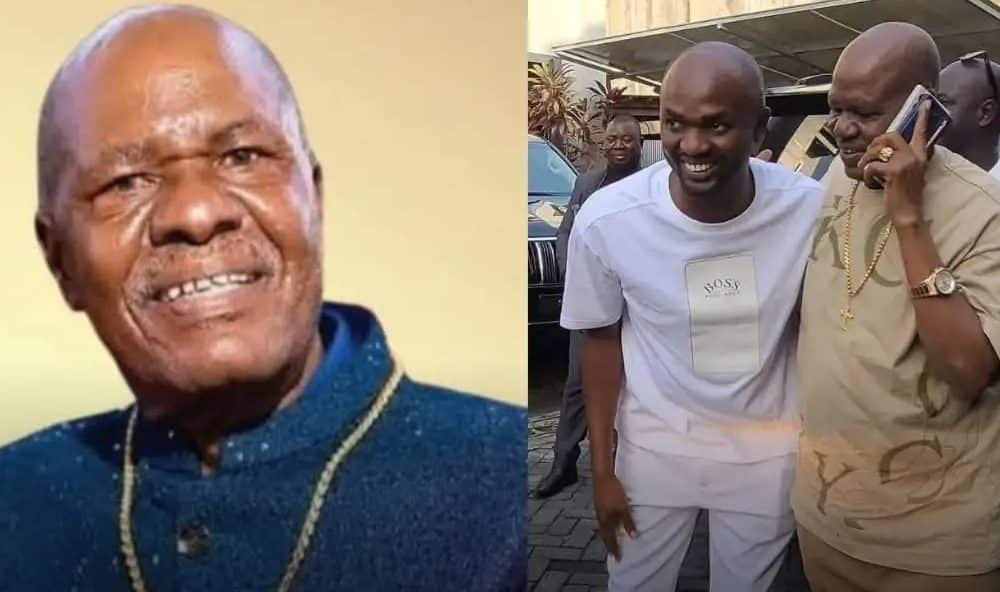
The abductors of Chief Sir Joseph Ezeokafor, Chairman of Jezco Group and father of socialite Jowizaza, have reportedly increased their ransom demand from ₦700 million to ₦1.5 billion, while also cutting off communication with his distraught family. The 74-year-old billionaire businessman was abducted in the early hours of Tuesday, August 5, 2026, from a Catholic prayer ground in Ifite, Awka, Anambra State, where he had gone for his annual spiritual retreat. According to reports, Ezeokafor had deliberately left his security personnel behind—a practice he maintained out of personal conviction that a holy prayer ground should not be surrounded by bodyguards. This decision reportedly made him vulnerable to the kidnappers, who allegedly swooped in while he was in the middle of prayers and took him to an unknown destination. The abduction has since plunged his family into a desperate search for answers, while the community of Ekwulobia has been thrown into mourning over the fate of their most illustrious son.
A source close to the family, who spoke on condition of anonymity, revealed that the abductors initially demanded ₦700 million after establishing contact with the family following the abduction. The family reportedly accepted the initial demand as part of efforts to secure Ezeokafor’s swift release, hoping that compliance would lead to his safe return. However, the kidnappers later escalated their demand to ₦1.5 billion, throwing negotiations into disarray and leaving the family scrambling to respond to the sudden increase. The situation has taken an even more troubling turn as the abductors have reportedly stopped communicating with the family altogether, leaving relatives unable to confirm the businessman’s safety or negotiate terms for his release. “The family has been willing to negotiate and do whatever is necessary to secure his release, but the kidnappers have suddenly stopped communicating,” a source close to the family disclosed, adding that efforts to re-establish contact have so far proved unsuccessful. The development has reportedly left the family in a difficult position, as attempts to restore communication with the abductors have not yielded results, and they remain in the dark about the fate of their patriarch.
READ ALSO:
- Osun Election Tension: Lawyer Urges Davido to Apologise to Okpebholo Over WAEC Result Troll
- Customs Busts International Lion Cub Smuggling Ring, Rescues Two Cubs at Abuja Airport
- Seven Miners Killed in Plateau Mining Pit Collapse, Renewing Urgent Calls for Safety Reform
The abduction has thrown Ezeokafor’s hometown of Ekwulobia in Aguata Local Government Area into deep mourning, with residents expressing shock and grief over the incident. Lawyer Chukwudi Iwuchukwu, who first made the abduction public in a Facebook post, described Ezeokafor as the richest man from the community, noting that his influence and philanthropy had endeared him to many. In a significant show of solidarity, the community reportedly postponed its annual New Yam Festival—a celebration that had never been delayed before—because members felt it would be inappropriate to celebrate while their “illustrious son” remained in captivity. The decision to postpone the festival reflects the deep sense of loss and anxiety that has gripped the community, with residents hoping and praying for the safe return of the businessman who had given so much to the town.
As of Thursday, August 13, 2026, one week after the abduction, neither the Anambra State Government nor the State Police Command has issued an official statement on the incident, leaving the public and the family in a state of uncertainty. The Anambra State Police Command has also not publicly commented on the businessman’s abduction or efforts to secure his release, despite the growing public concern. Ezeokafor’s whereabouts remain unknown as his family continues efforts to secure his release amid the reported ransom escalation and communication breakdown, and the lack of official communication from authorities has only deepened the family’s anxiety and frustration.
Born on April 30, 1952, in Ekwulobia, Chief Sir Joseph Ezeokafor is a self-made billionaire who founded Jezco in 1980, obtaining a full oil service and marketing license by 1988. He later expanded into manufacturing with a lubricant factory, plastic production plant, and fuel dispenser assembly line, building a business empire that has made him one of the most prominent businessmen in the Southeast. The business mogul, who lost both parents at a young age, is also known for his philanthropy, including donating ₦20 million to the Anambra State government during the COVID-19 crisis and distributing food items worth millions to his community. His first son, Joseph Ezeokafor Jr., popularly known as Jowizaza, now serves as Chief Executive Officer of the company, carrying on his father’s legacy. The family has appealed to the public not to spread unverified information about his release, stressing that they remain in the dark as they await any word on the safety and whereabouts of their patriarch, while continuing to pray for his safe return.
Kidnappers Double Ransom for Jowizaza’s Father to N1.5bn, Cut Communication with Family
metro
Customs Busts International Lion Cub Smuggling Ring, Rescues Two Cubs at Abuja Airport
Customs Busts International Lion Cub Smuggling Ring, Rescues Two Cubs at Abuja Airport
The Nigeria Customs Service has intercepted an international wildlife trafficking operation at the Nnamdi Azikiwe International Airport, Abuja, rescuing two live lion cubs and arresting three suspects allegedly linked to the illicit trade. The operation, executed on August 4, 2026, was spearheaded by the Special Wildlife Office of the Customs Intelligence Unit in collaboration with the FCT Customs Intelligence Unit, Customs Police Unit, FCT Command, and conservation partner Focused Conservation. The successful bust marks another significant victory in Nigeria’s ongoing battle against transnational wildlife crime and sends a clear warning to trafficking syndicates operating within the country’s borders.
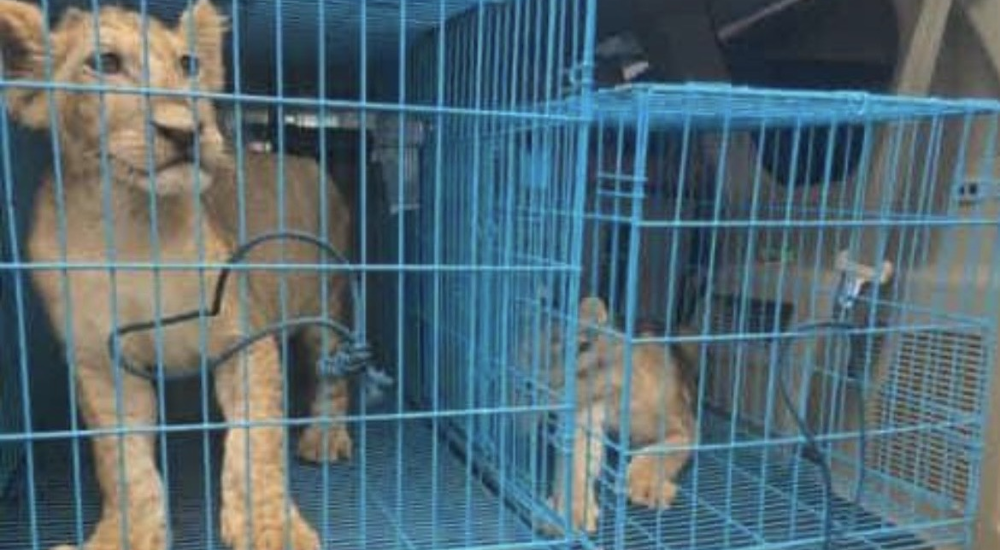
Acting on actionable intelligence, Customs operatives mounted surveillance at the airport’s cargo terminal and identified a black Sport Utility Vehicle suspected to be connected to the illicit movement of the animals. According to an official report released on August 10 by Assistant Comptroller of Customs Anuhu Mani, Officer-in-Charge of the Special Wildlife Office, the suspects were attempting to transport the lion cubs from Kano through Abuja to Congo-Brazzaville as their final destination. The operation took a dramatic turn when a vigilant Customs intelligence operative, conducting a physical inspection of the vehicle, heard unusual animal cries coming from the rear luggage compartment. Upon opening the luggage area, officers discovered the two rare lion cubs concealed inside specially prepared crates, confirming their worst suspicions about the nature of the cargo being transported through the nation’s premier international airport.
READ ALSO:
- Seven Miners Killed in Plateau Mining Pit Collapse, Renewing Urgent Calls for Safety Reform
- State Police Bill: Public Submissions Close Today as Nigeria Nears Historic Policing Reform
- INEC reprints Osun ballot papers, result sheets, includes SDP candidate
The discovery led to the immediate arrest of three suspects: the alleged owner of the animals, the vehicle driver, and a licensed Customs clearing agent. The suspects are currently undergoing interrogation as investigators work to identify other members of the trafficking network and establish the full scope of the cross-border operation. Mani noted that the Customs Service would continue to intensify intelligence gathering and strategic enforcement to ensure the country does not become a transit point for international wildlife trafficking. “This operation sends an unmistakable message that Nigeria will not serve as a transit hub or safe haven for wildlife trafficking syndicates,” Mani stated, underscoring the government’s commitment to protecting endangered species and upholding international conservation agreements.
Mani emphasised the significance of the rescue, noting the declining population of lions in Nigeria and the critical importance of every individual animal in sustaining the species. “With fewer lions remaining in Nigeria’s wild, saving these cubs is not just an enforcement success; it is a critical conservation victory. Our specialised unit will continue to leverage intelligence, profile trade routes, and prosecute those who profit from the illegal trade of our endangered species,” he said. The Customs officer said the attempted export breached both Nigeria’s Endangered Species Act (ESA) and the Convention on International Trade in Endangered Species of Wild Fauna and Flora (CITES), which regulates international trade in endangered wildlife and imposes strict penalties on those found guilty of trafficking protected species.
Following their rescue, the lion cubs were handed over to the Greenfingers Wildlife Conservation Initiative for specialised veterinary care, rehabilitation, and eventual conservation management. This marks a continuation of the partnership between Nigeria Customs and conservation organisations, following similar rescues including a lion cub intercepted at the Seme Border in November 2025 and another rescued in Kano in February 2026 through Operation Lexus. These partnerships have proven essential in ensuring that rescued animals receive the professional care they need to recover from the trauma of trafficking and, where possible, be reintegrated into appropriate conservation settings.
The seizure underscores the expanding role of the Nigeria Customs Service in combating organised environmental crime, particularly illegal wildlife trafficking along Nigeria’s international transport corridors. The Service, under the leadership of Comptroller-General of Customs Adewale Adeniyi, has increasingly deployed intelligence-led enforcement measures to tackle transnational illicit trade and strengthen Nigeria’s role in protecting endangered species. This operation follows other significant wildlife seizures, including the interception of 22 elephant tusks worth over ₦126.3 million in June 2026 and the seizure of pangolin scales, ivory tusks, and other wildlife products in Adamawa/Taraba commands. These enforcement actions demonstrate Nigeria’s growing commitment to combating wildlife crime and protecting biodiversity across the country’s borders, while also signalling to the international community that Nigeria is serious about fulfilling its obligations under global conservation treaties.
Customs Busts International Lion Cub Smuggling Ring, Rescues Two Cubs at Abuja Airport
-
 Education2 days ago
Nigerian Young Academy, LASU to Host 16th International Conference on Convergent Research
-
 News2 days ago
Trump smuggled out of Turkey in catering truck over Iran threat
-

 Politics3 days ago
Keep Religion Out of Nigeria’s ‘Dirty Politics,’ Gumi Tells Jingir
-
 metro3 days ago
Ex-Aiye Confraternity Leader Arrested in Lagos, Confesses to Multiple Killings in Mushin
-
 News3 days ago
South Africa Visa Applications Double From Nigerians Despite Xenophobia Concerns – Envoy
-
 metro3 days ago
‘I Acted Out of Patriotism’ — Army Colonel Ma’aji Breaks Silence, Explains Why He Plotted Coup Against Tinubu
-
 News2 days ago
Tinubu Vows to Secure Nigeria, Declares Unity Non-Negotiable Amid Worsening Insecurity
-
 metro3 days ago
How Enugu Abduction Led to Recovery of 4 AK-47 Rifles, 133 Ammunition – Army