

Politics
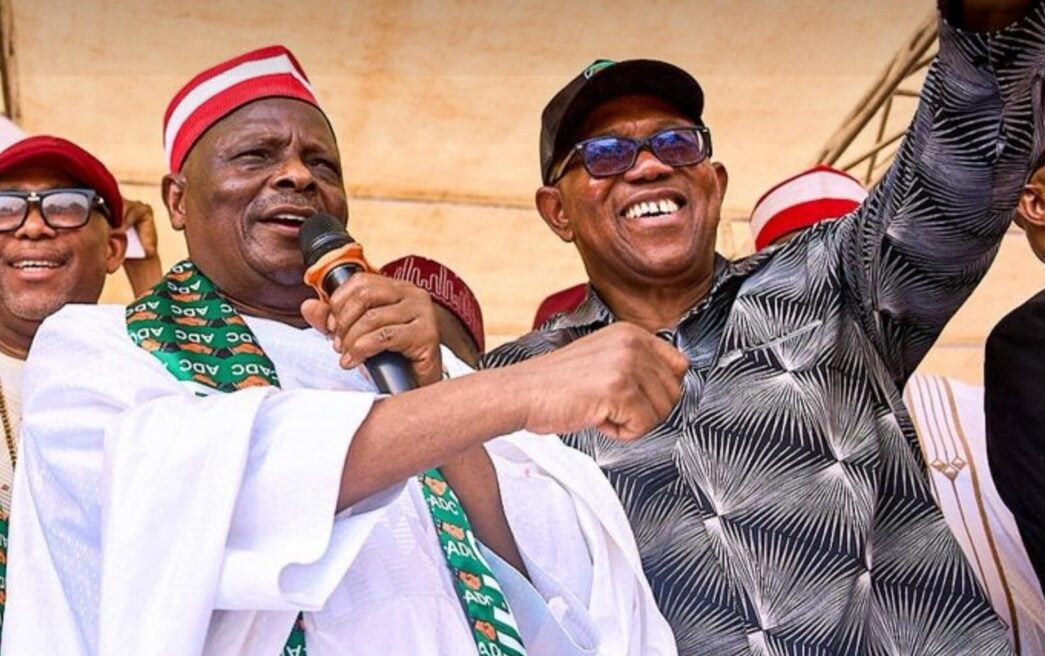
Obi, Kwankwaso’s NDC Move Under Threat as Ardo Heads to Court
Obi, Kwankwaso’s NDC Move Under Threat as Ardo Heads to Court
Fresh political uncertainty is unfolding within Nigeria’s opposition landscape as Peter Obi and Rabiu Musa Kwankwaso confront a new challenge in the Nigeria Democratic Congress (NDC) following a legal threat from Umar Ardo, promoter of the All Democratic Alliance (ADA).
The development comes just days after both political heavyweights formally joined the NDC, a move widely interpreted as a strategic alignment ahead of the 2027 general elections.
Ardo has vowed to challenge the registration of the NDC in court, accusing the Independent National Electoral Commission (INEC) of violating constitutional provisions, the Electoral Act, and its own guidelines. According to him, the NDC failed to meet key requirements, including proper application through INEC’s official portal, submission of a party constitution, manifesto, and executive membership list. He alleged that the party merely submitted a letter of intent and was never formally shortlisted before securing registration, describing the process as irregular and lacking transparency.
READ ALSO:
- FCT: Pastor Kneels, Appeals to Wike Over Jabi Lake Recreation Land
- Reno Omokri: I Remain in PDP Despite Serving in Tinubu-Led APC Govt
- 2027: Rufai Oseni Alleges Plot to Stop Peter Obi From Contesting Election
Ardo contrasted the NDC’s experience with that of ADA, stating that his association fulfilled all registration requirements, paid necessary fees, and received confirmation from INEC on September 10, 2025, that it had qualified for the next stage. Despite this, ADA and 13 other associations were denied registration, prompting legal action that has remained unresolved for months. He further revealed that he invested over N200 million in the process, including setting up offices nationwide, and expressed frustration that while his case has lingered in court for over five months, the NDC reportedly secured judgment within just 32 days.
Reacting, NDC founder and former Bayelsa State governor, Seriake Dickson, dismissed Ardo’s allegations as politically motivated propaganda aimed at undermining the party’s rising influence. Dickson explained that the NDC’s registration process began as far back as 2017 but was stalled due to INEC’s ban on new political parties. He said the party resumed its application after the ban was lifted and was among 171 associations that applied for registration, noting that only two—NDC and the Democratic Leadership Alliance (DLA)—were eventually approved.
Dickson maintained that the NDC was registered following a valid court judgment after it challenged its exclusion from the list of approved parties. According to him, INEC complied with the ruling and did not file an appeal within the stipulated timeframe, effectively closing the door to further legal disputes. He insisted that no individual or group has the legal standing to contest the party’s registration after a court order has been implemented, adding that other parties, including the Nigeria Democratic Party (NDP), have also benefited from court-backed registration without facing similar opposition.
The unfolding dispute carries significant implications for Nigeria’s opposition politics ahead of the 2027 elections. The legal uncertainty surrounding the NDC could disrupt political realignments, create internal instability, delay strategic planning, and potentially affect the ambitions of new entrants like Obi and Kwankwaso as the party navigates an early test of its legitimacy.
Obi, Kwankwaso’s NDC Move Under Threat as Ardo Heads to Court





Politics
2027: Otti Explains Why He Supports Tinubu Despite Remaining in Labour Party
2027: Otti Explains Why He Supports Tinubu Despite Remaining in Labour Party
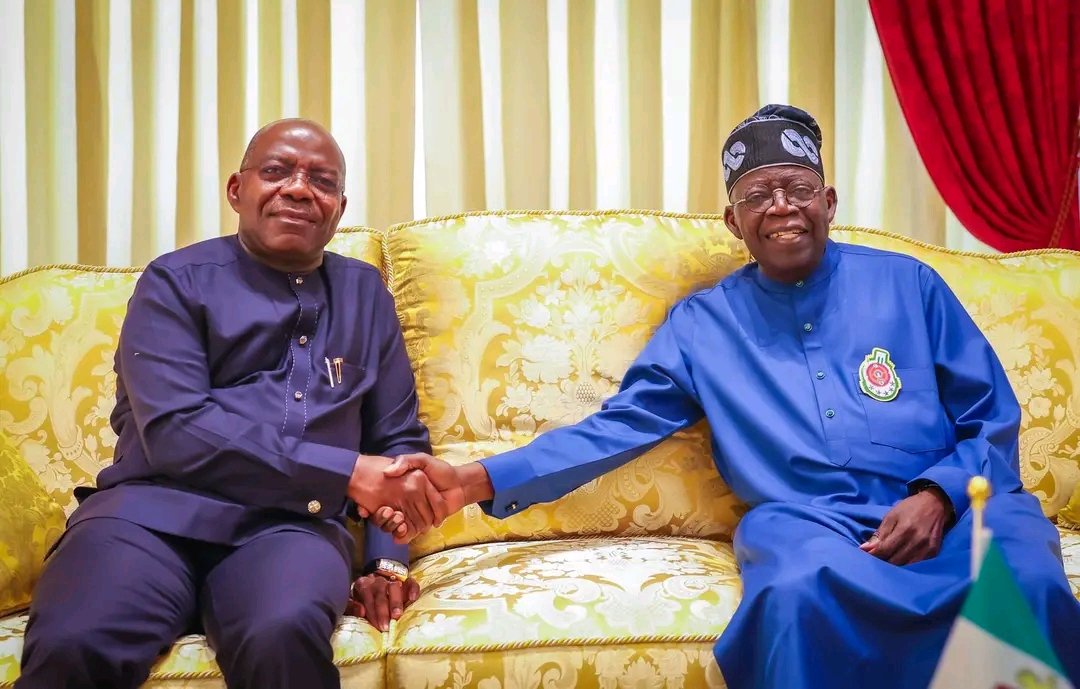
Abia State Governor Alex Otti has clarified his position on President Bola Ahmed Tinubu’s 2027 re-election bid, saying his support for the President is linked to his responsibilities as a governor and member of the National Economic Council (NEC).
Otti made the clarification during a televised interview after questions emerged over his political relationship with Tinubu and his continued membership of the Labour Party (LP).
The governor said he could not reasonably oppose Tinubu while serving as a state governor and participating in the Federal Government’s decision-making process through the NEC.
According to Otti, his position is based on his role in government and should not be interpreted as an abandonment of the Labour Party or its presidential candidate for the 2027 general election.
Otti explained that he supports Tinubu as the President of Nigeria, while maintaining that he has a separate position regarding the presidential candidate he supports in the 2027 election.
When asked whether Tinubu was his preferred presidential candidate, Otti indicated that he has a candidate within the Labour Party, separating that choice from his support for Tinubu in his capacity as President.
The clarification effectively draws a distinction between Otti’s role as a governor working with the Federal Government and his political position ahead of the next presidential election.
Otti was elected Abia State governor in 2023 on the Labour Party platform and has remained associated with the party despite the departure of former Anambra State governor Peter Obi, who was the Labour Party’s presidential candidate in the 2023 election.
READ ALSO:
- EFCC Chairman Raises Alarm Over Alleged Theft of Nigeria’s Public Funds
- Abia Police Arrest 20-Year-Old, Recover Gun, Suspected Cannabis, Three Motorcycles
- Anambra Releases ₦473m Salary Arrears Document as Obi’s Debt Claim Sparks Fresh Dispute
Obi has since left the Labour Party and is now the presidential candidate of the Nigeria Democratic Congress (NDC) for the 2027 election.
Otti previously said he would remain in the Labour Party despite Obi’s departure, explaining that his decision to stay was independent of Obi’s political movement.
The governor’s latest comments come amid growing political realignment ahead of the 2027 presidential election, with Tinubu seeking another term and several opposition parties preparing their candidates.
The issue became particularly prominent after Minister of the Federal Capital Territory Nyesom Wike said Otti was backing Tinubu’s re-election.
At the time, Otti’s Commissioner for Information, Okey Kanu, acknowledged the governor’s cordial relationship with Tinubu but said an explicit confirmation of Otti’s political position would have to come from the governor himself.
Otti has now publicly explained that his support for Tinubu is connected to his responsibilities as governor and NEC member.
He also argued that the President has a constitutional right to seek another term and suggested that disagreements over government policies should be handled through the appropriate government channels rather than public confrontation.
The Abia governor further pointed to areas where he agrees with some policies of the Tinubu administration, including the removal of the petrol subsidy, which he said is consistent with his own economic thinking.
Despite his relationship with the Presidency, Otti has continued to identify with the Labour Party.
The party has also continued to publicly associate itself with the governor. On September 23, Labour Party presidential candidate Dr Sunday Chibuzo Okereke led a solidarity roadshow in Arochukwu, Abia State, where he mobilised support for Otti and other Labour Party candidates ahead of the 2027 elections.
The development is significant because Otti’s position could otherwise have been interpreted as a political break with the Labour Party following Obi’s departure.
However, his latest clarification does not amount to an announcement that he has defected to the All Progressives Congress (APC) or abandoned the Labour Party.
Otti remains a Labour Party governor, while maintaining a working relationship with the Tinubu administration at the federal level.
The governor has also previously ruled out seeking the presidency himself after completing his tenure in Abia, saying he does not intend to pursue another major elective political office after leaving the governorship.
His latest comments therefore place his position ahead of 2027 in two separate contexts: his institutional relationship with Tinubu as President and his stated support for a Labour Party presidential candidate in the forthcoming election.
2027: Otti Explains Why He Supports Tinubu Despite Remaining in Labour Party
Politics
Osun APC Warns Adeleke Govt Over Alleged Victimisation of Local Govt Workers
Osun APC Warns Adeleke Govt Over Alleged Victimisation of LG Workers
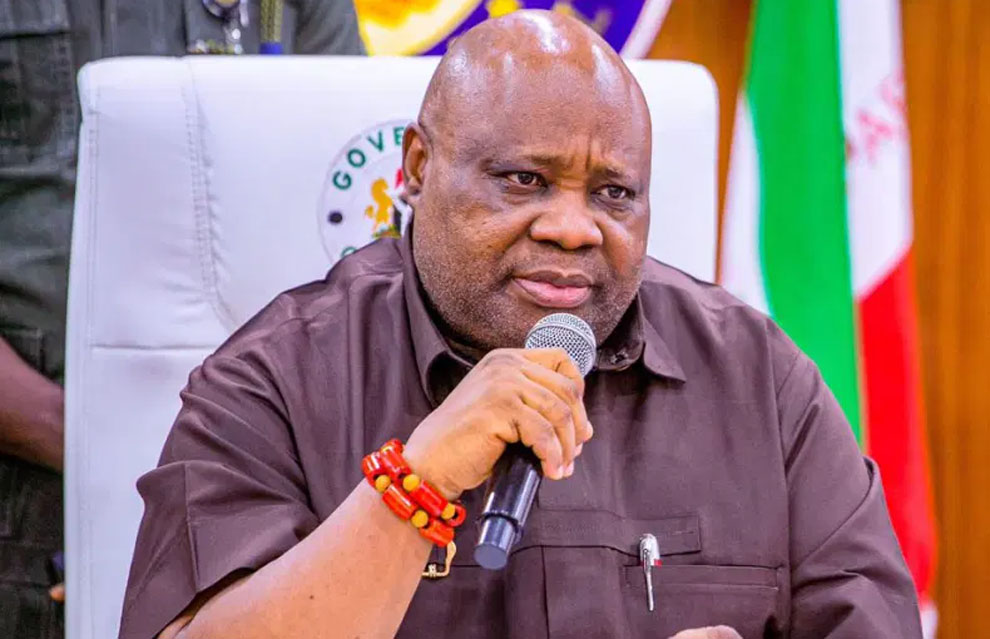
The Osun State chapter of the All Progressives Congress (APC) has issued a fresh warning to the administration of Governor Ademola Adeleke over allegations that some local government workers are being subjected to investigation and disciplinary proceedings because of their perceived political affiliations.
The party alleged that the Osun State Local Government Service Commission had constituted a committee to investigate council employees suspected of supporting the APC during the August 15, 2026 governorship election.
The allegation was contained in a statement signed by the APC Director of Media and Information, Kola Olabisi, who accused the state government of using the ongoing exercise to target workers believed to have supported the party’s candidate, Bola Oyebamiji.
According to the APC, some affected workers have been summoned before an investigative and disciplinary panel at the Local Government Service Commission premises in the state Secretariat, Abere, Osogbo.
The party further alleged that some of the workers were questioned about their political activities and contacts before and during the election.
It also claimed that some workers were asked to submit their mobile phones for scrutiny, with the alleged objective of checking their communications with APC members and supporters.
The APC additionally alleged that some workers’ banking transactions were examined and that some employees had been threatened with suspension, dismissal or other disciplinary measures.
The party described the alleged actions as unacceptable and called on the Adeleke administration to reactivate any salary accounts that had been deactivated and dissolve the committee.
READ ALSO:
- 18 Suspected Bandits Killed as Security Forces Foil Mass Kidnap in Katsina
- Police Arrest Two Arms Dealers, Recover 300 Rounds of Ammunition in Kaduna
- Petrol Depot Prices Fall as Dangote, Marketers Cut Rates, Pump Price Reduction Looms
The opposition party argued that public servants should not be punished for their political choices, noting that elections in Nigeria are conducted through a secret ballot.
However, the Osun State Government has rejected the allegation that the workers are being investigated because of their political affiliations.
Commissioner for Information and Public Enlightenment, Kolapo Alimi, said the workers under investigation were being questioned over alleged double salary payments, rather than their political activities.
According to the commissioner, the investigation followed a petition alleging that some local government employees were receiving salaries from two sources.
Alimi said the government was investigating claims that some workers were allegedly collecting salaries from the state government while also receiving payments from the APC-backed local government officials involved in the prolonged council administration dispute.
He maintained that the exercise was focused on alleged financial infractions and not political affiliation.
The governor’s spokesperson, Olawale Rasheed, also dismissed the APC’s allegation of political victimisation, saying the administration had no policy of targeting local government employees because of their political choices.
The latest dispute comes amid the long-running controversy over the control of Osun’s 30 local government councils, which has pitted the Adeleke administration against APC-backed council officials.
The council dispute has also had implications for local government finances and workers’ salaries. Earlier in the year, the Osun Government said local government workers’ core salaries had continued to be paid despite what it described as the withholding or diversion of local government allocations. (Osun State Official Website)
The competing claims over the latest investigation have therefore added another layer to the broader political and administrative dispute between the APC and the Adeleke administration.
While the APC maintains that the affected workers are being targeted because of their political affiliations, the state government says the investigation concerns alleged financial misconduct, particularly claims of workers receiving salaries from more than one source.
As of the latest reports, there is no independently established evidence showing that the investigation was instituted solely because the affected workers supported the APC. The allegations remain disputed between the opposition party and the state government. (Osun)
Osun APC Warns Adeleke Govt Over Alleged Victimisation of LG Workers
Politics
2027: Tompolo-Backed Group Deploys 44 Vehicles for Tinubu-Shettima Campaign in Borno

2027: Tompolo-Backed Group Deploys 44 Vehicles for Tinubu-Shettima Campaign in Borno
The PBAT Door-to-Door Movement, a political support group backed by Niger Delta businessman and Tantita Security Services Nigeria Limited chief executive, Government Ekpemupolo, popularly known as Tompolo, has commenced grassroots mobilisation in Borno State ahead of the 2027 general elections.
The group, which is campaigning for the re-election of President Bola Ahmed Tinubu and Vice President Kashim Shettima, unveiled 44 campaign vehicles and other mobilisation equipment at an event held at Sir Kashim Ibrahim Square, College of Education, Maiduguri.
The equipment presented during the Borno mobilisation included 44 generators, 44 amplifiers, 44 microphones and 88 speakers, according to reports from the event.
The Borno launch represents another stage in the expansion of the Tinubu 2027 campaign structure being developed by the PBAT Door-to-Door Movement, following its northern launch in Katsina earlier in September.
Tompolo, who is the Grand Patron of the movement, was represented at the Maiduguri event by Kestin Pondi, Managing Director of Tantita Limited.
In his message to the gathering, Tompolo called on residents of Borno to support the Tinubu-Shettima ticket, drawing particular attention to Shettima’s connection to the state.
He urged members and supporters of the movement to take the campaign to communities and engage residents at the grassroots ahead of the 2027 election.
Tompolo also commended the Borno State Government for what he described as development achievements and called on residents to support the APC governorship candidate, Mustapha Gubio, as part of efforts to sustain the current administration’s programmes.
The claims about the performance of the Tinubu administration and the Borno State Government were political assessments made by supporters of the administration and were not independent evaluations.
The mobilisation was formally unveiled with the participation of the Borno State Government. Governor Babagana Zulum was represented by his deputy, Umar Usman Kadafur.
Kadafur said the state was prepared for what he described as significant grassroots support for Tinubu and Shettima in the 2027 election.
READ ALSO:
- MTN, Gates Foundation Launch $25m AI Maternal Health Initiative for 500,000 Nigerian Women
- Niger Mosque Attack: Bago Says 63 Abducted, 14 Freed, Three Killed
- UNGA 81: Trump Threatens to ‘Annihilate’ Iran if No Deal Is Reached
Also present was the APC Deputy National Chairman, North, Ali Bukar Dalori, who urged members of the movement to take the campaign beyond political meetings and into communities across the state.
The APC governorship candidate in Borno, Mustapha Gubio, also expressed support for the Tinubu-Shettima ticket and said the administration had delivered what he described as dividends of democracy.
The Borno mobilisation is part of a broader political organisation by the PBAT Door-to-Door Movement, which was founded and sponsored by Tompolo to mobilise grassroots support for Tinubu’s 2027 re-election bid.
The movement inaugurated its national executives in Abuja in July, with its stated objectives including grassroots mobilisation, voter education, community engagement and communicating the Federal Government’s policies and programmes directly to residents.
At the time of its national inauguration, the movement said it intended to take its activities to wards, local government areas, communities, markets and households across Nigeria.
The group subsequently moved its northern mobilisation campaign to Katsina, where it inaugurated coordinators across the state’s 34 local government areas and presented campaign vehicles to them.
The Katsina deployment involved 34 campaign vehicles, with each of the state’s 34 local government areas assigned a coordinator.
The Borno rollout therefore brings the campaign’s reported vehicle deployment in the two northern states to at least 78 vehicles, based on the publicly reported 34 vehicles in Katsina and 44 unveiled in Borno.
The expansion comes as several political groups and support platforms are beginning to organise ahead of the 2027 Nigerian presidential election.
Other pro-Tinubu mobilisation structures have also been announced, including Arewa for Asiwaju (A4A), a group formed by northern political figures, former governors and lawmakers to support Tinubu’s re-election campaign across the 19 northern states and the Federal Capital Territory.
The development indicates that political parties and affiliated support groups are increasingly establishing grassroots structures ahead of the 2027 election.
For the PBAT Door-to-Door Movement, however, the strategy centres on direct engagement with voters. Its organisers have said the objective is to explain government policies and programmes, promote voter education and mobilise supporters at the ward and community levels.
Tompolo has previously said the movement would rely on local volunteers and place emphasis on engaging ordinary Nigerians, including women and young people, as part of its grassroots outreach.
The group has also framed its campaign around the Renewed Hope agenda of the Tinubu administration, arguing that economic reforms and other government programmes should be allowed to continue.
Those positions represent the movement’s stated political case for supporting Tinubu and are separate from independent assessments of the administration’s performance.
With the Borno launch, the Tinubu-Shettima 2027 campaign mobilisation backed by Tompolo has now established a visible operational presence in at least two northern states, with further grassroots activities expected as political parties and support groups prepare for the 2027 elections.
2027: Tompolo-Backed Group Deploys 44 Vehicles for Tinubu-Shettima Campaign in Borno
-

 metro2 days ago
Lagos Arrests Man Over Viral Video of Toddler Being Flogged
-

 Health3 days ago
MTN, Gates Foundation Launch $25m AI Maternal Health Initiative for 500,000 Nigerian Women
-

 metro2 days ago
Police Probe Alleged Self-Kidnapping of Adeleke’s Aide in Osun
-

 Politics2 days ago
Osun APC Warns Adeleke Govt Over Alleged Victimisation of Local Govt Workers
-

 News15 hours ago
Anambra Releases ₦473m Salary Arrears Document as Obi’s Debt Claim Sparks Fresh Dispute
-

 metro2 days ago
Tinubu, Fani-Kayode Face Proposed $36m US Lawsuit Over Alleged Threats
-

 metro2 days ago
Kwara Police Deny Shooting Motorcyclist at Oyun Bridge, Explain Viral Video
-

 Politics3 days ago
2027: Tompolo-Backed Group Deploys 44 Vehicles for Tinubu-Shettima Campaign in Borno