

News
“I Was Sitting on a Hot Burner” — Tinubu Defends Fuel Subsidy Removal
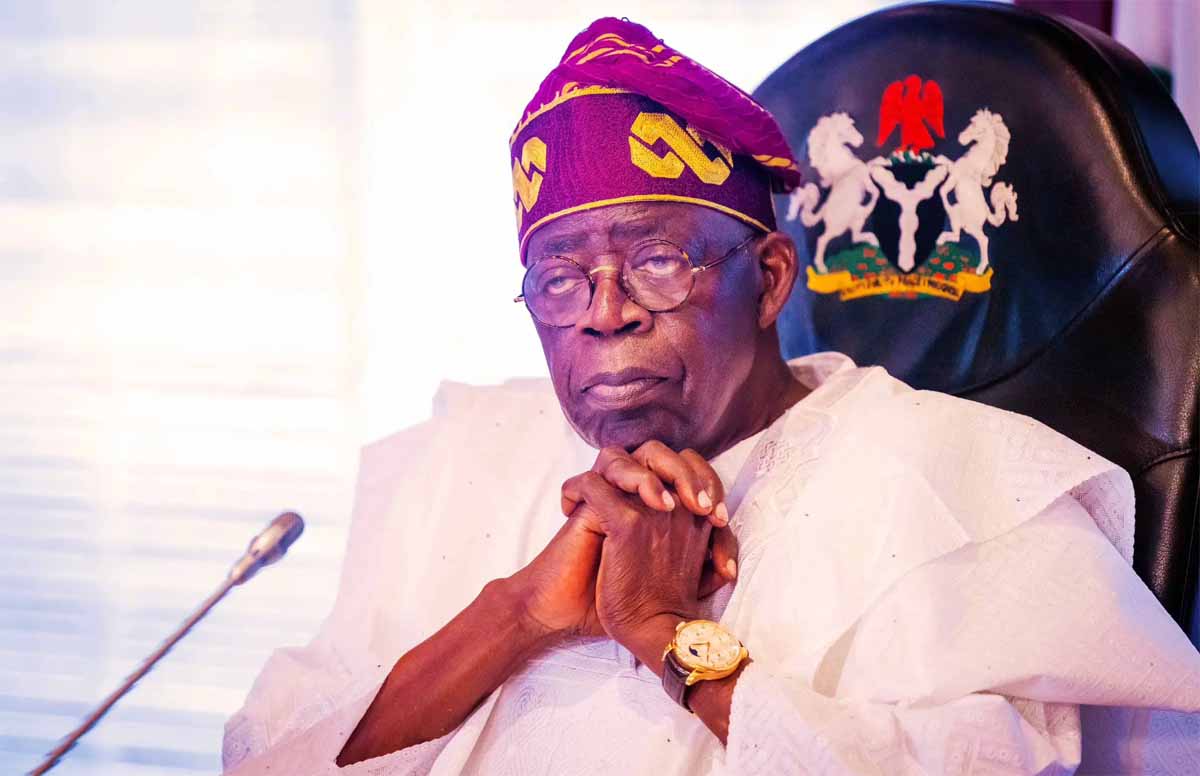
“I Was Sitting on a Hot Burner” — Tinubu Defends Fuel Subsidy Removal
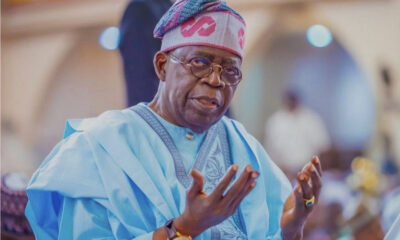
Kigali, Rwanda / Abuja, Nigeria – President Bola Ahmed Tinubu has declared that the first two years of a possible second term in office would be devoted to “more work,” insisting that his administration would continue to pursue difficult but necessary reforms aimed at resetting Nigeria’s economy and securing the future of coming generations. Speaking during an interview session at the just concluded Africa CEO Forum in Kigali, Rwanda, President Tinubu said the philosophy guiding his administration was rooted in decisive leadership and the courage to take difficult decisions in the interest of the people.
The annual forum, founded in 2012 by Jeune Afrique Media and co-hosted by the International Finance Corporation, is Africa’s largest gathering of private sector leaders, investors, and policymakers focused on shaping the continent’s economic future. “Do more work. More challenges are there. The world won’t wait for anybody. You have to continue to reset and rethink, challenge the intellectual curiosity of you as a government,” the President said when asked what he would focus on if re-elected for a second term. “The philosophy I came with in governance, believing that the hallmark of a transformative leader is the ability to take decisions, do what you’ll do, at the time it has to be done, on behalf of the people,” he added.
Tinubu defended the removal of fuel subsidy and the unification of the foreign exchange market, describing both measures as painful but unavoidable decisions needed to rescue the country from economic collapse. According to him, continuing with the old subsidy regime would have amounted to spending the future of unborn generations. “It is a fake life to think you can, in a global economy, continue the subsidy that is wasteful. It’s an encouragement to falsification of papers, smuggling, and that is a very critical situation for the country,” he said. The President recalled that before the reforms, many states were struggling to meet basic obligations, including salary payments. “Of the 36 states, 27 of them were unable to pay the salaries of the workers. Where is the money? You are oil producing, you are earning, you are given fuel, you have no refinery that is functional. It is not possible to continue that trend,” he stated.
READ ALSO:
- Senate Denies Akpabio’s “North Must Vote for Tinubu or Be Expelled” Threat
- Two Security Guards Get Life Imprisonment for Raping 6-Year-Old Girl in Abuja
- Doctors Declare Indefinite Strike Over Alleged EFCC Assault at UUTH
He likened the pains associated with the reforms to childbirth, saying temporary hardship would ultimately produce long-term benefits for Nigerians. “It is difficult, it is painful, but it is just like the human reproduction process. A woman carries a pregnancy, endures the pain of labour, and has a very big smile when she sees a live child,” Tinubu said.
The President also strongly defended taxation as a necessary instrument for development, arguing that citizens who demand modern infrastructure and social services must be prepared to contribute through taxes. “Nobody wants to pay taxes ordinarily. Taxation is not friendly to the wealthy, to the middle class, and to the poor. Every human being expects development, but the question they don’t answer is, how do you pay for it?” he asked. “You want a very good highway, but you don’t want it to go through your land. You want a good hospital and don’t want to pay taxes. How do you care for the vulnerable? How do you protect the future of the children?” he queried. He added that tax-paying was a critical civic responsibility, declaring that “a citizen that pays taxes is a citizen, whether corporate or individual.”
Highlighting what he described as early gains from the reforms, Tinubu said the economy had become more stable and predictable, enabling better planning by businesses and households. “Today there is a very bright light at the end of the corner; the economy is stable, the Naira is stable, predictable, planners can do a reasonable budget, they can plan their lives well,” he said. He disclosed that the government was implementing direct cash transfers to poor households while also supporting education through grants and allowances for indigent students. “For those students ordinarily who would stay out of school because their parents cannot afford school fees, they are now in school. I’m even giving them allowances and upkeeps for their school,” he said.
In a significant development that reinforces the President’s economic narrative, S&P Global Ratings raised Nigeria’s credit rating for the first time since 2012 just before his Kigali address. The agency upgraded the nation’s long-term sovereign rating by one notch to “B” from “B-,” citing higher oil prices and the country’s improved capacity to refine and export crude oil. The global rating agency noted that higher oil production and prices, the large increase in domestic refining and export capacity, and the 2023 decision to liberalise the exchange rate were boosting Nigeria’s economic growth and balance of payments position.
On industrial policy, the President said his administration’s focus was not necessarily on “protection” but on support for businesses capable of creating jobs and stimulating domestic production. Tinubu cited the Dangote Refinery and BUA Group as examples of local enterprises deserving government backing. “What should my government do? Support him, encourage him,” the President said in reference to Dangote Refinery. He explained that his administration approved the sale of crude oil to the refinery in Naira to ease operational difficulties and reduce pressure on foreign exchange. “You don’t have to go through letter of credit and bureaucracy and make foreign exchange difficult for him. Give it to him in Naira,” he said. This policy, known as the Naira-for-crude initiative, allows the Nigerian National Petroleum Company Limited (NNPCL) to supply crude to domestic refineries in Naira rather than dollars, with Dangote Refinery currently receiving between 30-40 per cent of its crude allocation under this framework.
Tinubu also defended the ongoing Lagos-Calabar Coastal Highway project, describing it as part of a broader national integration and economic inclusion agenda. He said the road would connect Nigeria’s eastern corridor to Lagos and unlock tourism and investment opportunities across the coastline. “My philosophy is Nigeria first,” the President declared, explaining that locally produced cement and steel were deliberately prioritised for the project to stimulate domestic industries. The project’s scale is substantial: Section One of the coastal highway is now 98 per cent completed and ready for commissioning, with the Federal Government targeting November 2026 for Section Two to reach the Ogun border. The Federal Executive Council recently approved over N7 trillion for road and bridge projects across all six geopolitical zones, including a N1.86 trillion extension of the Lagos-Calabar Coastal Highway through Akwa Ibom State.
Speaking on national unity, Tinubu said Nigeria’s diversity should be a source of strength rather than division. “All of us together as Nigerians must be patriotic to understand that you have no control where you are born. Your parents could be Igbo, my parents could be Yoruba, you have no control of that. Where you find yourself is your home. This country is ours. We must build it together,” he said.
On regional security and diplomacy, the President stressed the importance of pragmatic partnerships and collaboration with neighbouring countries and global powers. “Security challenges will always be there. Those are things you cannot do alone. You can’t operate the world in isolation,” he said. Tinubu maintained that Nigeria still retained its strategic influence and leadership role in West Africa and on the continent. “In ECOWAS, Nigeria is a big brother; in Africa, we are the fat lady. We must sing the tune, we must sing the right tune for others to pay attention to,” he said. The President also dismissed suggestions that Nigeria had lost diplomatic relevance in recent years, insisting that the country remained central to regional peace and stability efforts. “Nigeria is still there. Collaboration with trainings and support. Yes, challenges will always be there; there are troublemakers all over. But you have to just be focused and be alert. Nigeria is ready,” Tinubu added.
Following his engagements in Kigali, President Tinubu arrived in Lagos on Friday evening after a three-nation visit to France, Kenya, and Rwanda. His official presidential plane, Nigeria Air Force 1, touched down around 7:12 pm at the Presidential Wing of the Murtala Muhammed International Airport, Ikeja. He was received by the Governor of Lagos State, Babajide Sanwo-Olu; Deputy Governor, Femi Hamzat; Chief of Staff to the President, Hon Femi Gbajabiamila; and Speaker of the Lagos State House of Assembly, Hon Mudashiru Obasa, along with other government functionaries.
Beyond his public remarks in Kigali, President Tinubu has been more specific about a second term agenda. At a separate meeting with global investors in Paris earlier this month, he outlined a post-2027 agenda centered on strengthening fiscal discipline, enhancing transparency, and delivering policy consistency. According to a statement by his Adviser on Information and Strategy, Bayo Onanuga, the President told investors from Citibank, Amundi, PGIM, and other major financial institutions that his government remains committed to “deepening reforms, enhancing transparency across the oil value chain, and implementing a multi-pronged security strategy.” This emphasis on “policy consistency” suggests that a second term would not represent a pivot or retreat from the reform agenda but rather its intensification, with more fiscal discipline, greater transparency, and deeper structural changes aimed at making Nigeria a competitive investment destination. With exactly eight months to the January 2027 presidential election, President Tinubu’s language in Kigali left little doubt about his intentions, even as he has not formally declared his candidacy.
“I Was Sitting on a Hot Burner” — Tinubu Defends Fuel Subsidy Removal






News
Breaking: Tinubu Ends Extended European Vacation, Departs Paris for Nigeria
Breaking: Tinubu Ends Extended European Vacation, Departs Paris for Nigeria
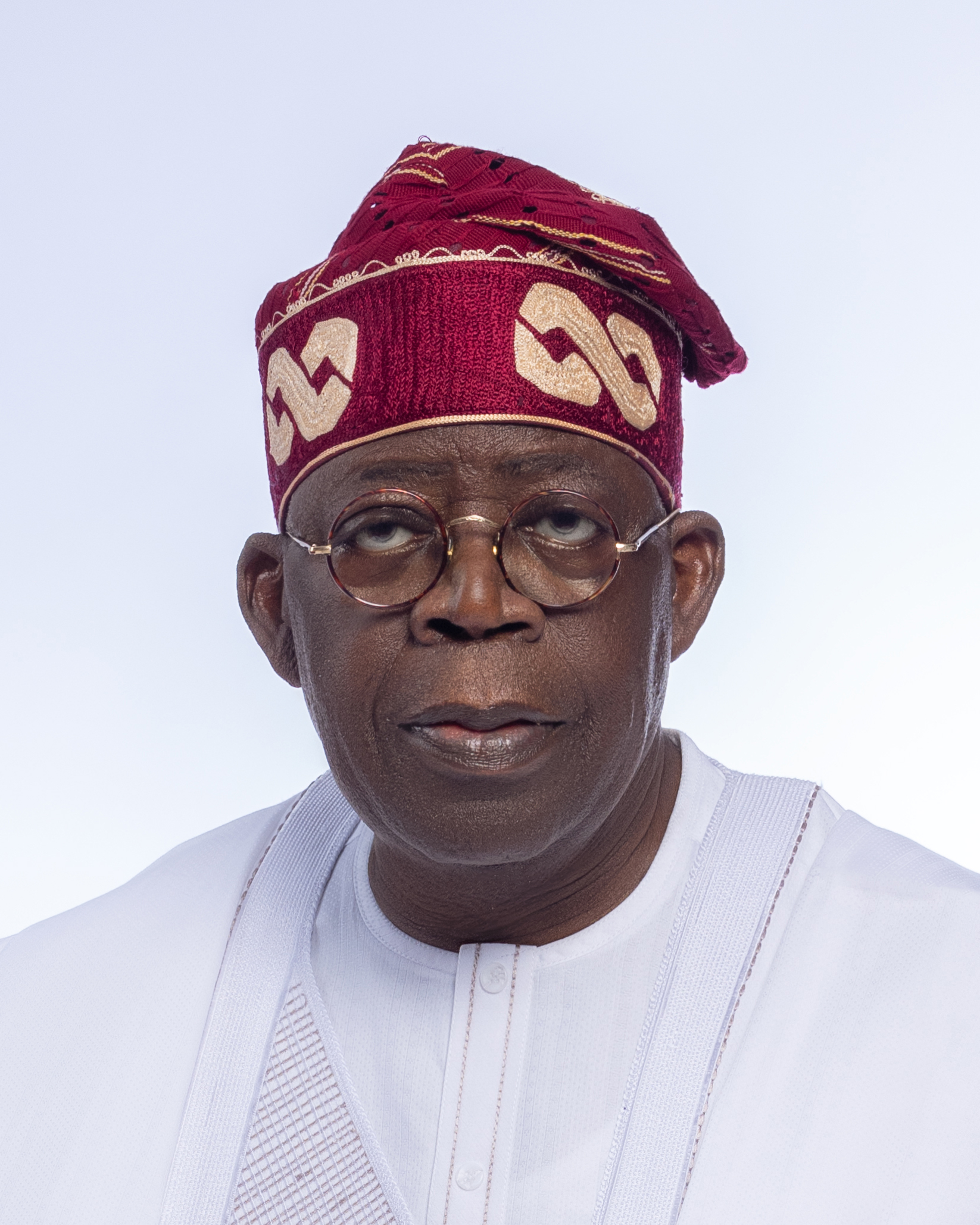
President Bola Ahmed Tinubu has departed Paris, France, for Nigeria, bringing to an end his extended working vacation in Europe, with his aircraft expected to arrive at the Murtala Muhammed International Airport, Lagos, later Tuesday.
The President left Abuja on August 30 for London to begin his working vacation and subsequently moved to Paris, where he held official engagements, including meetings with French President Emmanuel Macron and business leaders.
His stay, initially expected to last about three weeks, was extended by the Presidency, which announced on September 21 that Tinubu would return to Nigeria after a few additional days.
In a statement on Tuesday, Special Adviser to the President on Information and Strategy, Bayo Onanuga, confirmed that Tinubu had departed Paris for Nigeria.
Onanuga said the President’s aircraft was expected to touch down in Lagos later in the day.
According to the presidential spokesman, Tinubu chose to return through Lagos to honour the memory of the late Chief Moshood Kashimawo Olawale Abiola, widely associated with the struggle for the restoration of democratic rule in Nigeria.
The President is also expected to participate in activities surrounding Nigeria’s 66th Independence Anniversary on October 1 before returning to Abuja.
Tinubu’s prolonged absence from the country had generated public debate, particularly after he did not personally attend the 81st United Nations General Assembly in New York, where Vice President Kashim Shettima represented Nigeria.
The Presidency, however, maintained that Tinubu remained engaged with the affairs of government throughout his stay abroad. It said he continued to issue directives and conduct official business remotely while Vice President Shettima and other senior government officials represented him at various engagements.
During his stay in France, Tinubu also held talks with Vincent Bolloré of the Bolloré Group on expanded investments in Nigeria’s creative and digital economy. The State House said the discussions covered areas including film, entertainment, fibre-optic infrastructure and related sectors.
His return comes as the administration continues to focus on its economic reform programme, infrastructure development, energy transition and investment drive.
The President is expected to remain in Lagos for the Independence anniversary activities before returning to Abuja.
News
Agbede Mourns Baba Alado, Says Mushin Has Lost Pillar of Peace
Agbede Mourns Baba Alado, Says Mushin Has Lost Pillar of Peace
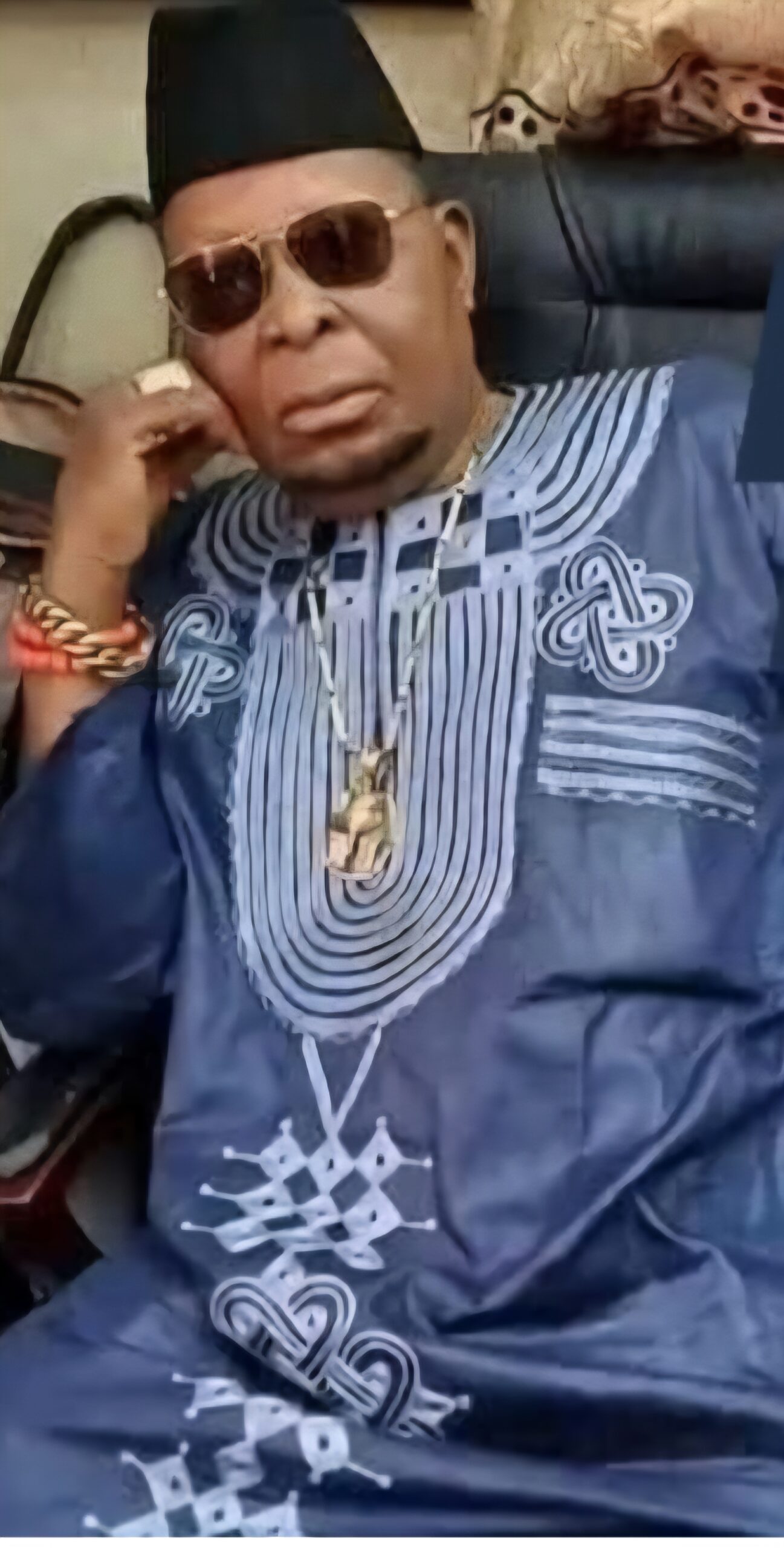
Mushin community in Lagos has lost one of its foremost voices for peace, dialogue and stability with the death of a prominent community leader and grassroots mobiliser, Chief Alhaji Taoreed Faronbi, popularly known as Baba Alado.
Former Chairman of the National Union of Road Transport Workers, Lagos State Council, Alhaji (Chief) Tajudeen Agbede, who is also the Balogun of Agege, described the death of the 83-year-old community leader as a monumental loss to Mushin, Lagos State and the transport union family.
Baba Alado, the Olori Ebi of the Alagbeji Royal Family in Papa Ajao and Babaloja of Aswani International Market, died in the early hours of Saturday, September 26, 2026.
In a condolence message personally signed on Sunday in Lagos, Agbede said the late community leader played a crucial role in maintaining peace and stability in Mushin, particularly during his tenure as chairman of the Lagos State NURTW.
According to him, Baba Alado was more than a community leader, as he served as a trusted bridge-builder whose counsel often helped to prevent disagreements from escalating into crises.
“During my tenure as Lagos NURTW Chairman, Baba Alado was a formidable force for peace and stability, especially in the Mushin axis, which remains strategic to union activities.
“At moments when tension arose, Baba Alado’s timely intervention, fatherly counsel and authoritative voice helped us maintain peace and brotherhood among members. He was not a distant leader.
“He was a constant, regular and respected face at every major union activity and event organised under my chairmanship,” Agbede stated.
The former NURTW boss said Baba Alado’s influence extended beyond the transport sector, noting that he promoted dialogue and understanding among transport workers, market traders, youths and traditional leaders in Mushin.
Agbede described the deceased as a detribalised leader and devout Muslim who devoted his life to the progress of his community and the welfare of those around him.
“He was a good adviser, a detribalised leader and a devout Muslim who touched many lives. His wisdom, calm disposition and steadfast commitment to the progress of Mushin and Lagos State will be long remembered,” he added.
Agbede extended his condolences to the wives and children of the deceased, members of the Alagbeji Royal Family, the Chairman of Mushin Local Government, Hon. Tunbosun Haruna Aruwe, and the people of Mushin.
He also commiserated with the Lagos State Chairman of the NURTW, Alhaji Mustapha Adekunle, popularly known as Sego, as well as members of the transport union family.
Agbede prayed Almighty Allah to forgive Baba Alado’s shortcomings, accept his good deeds and grant him Aljannah Firdaus.
He also prayed for Allah’s comfort and fortitude for the deceased’s family and all those mourning his passage.
News
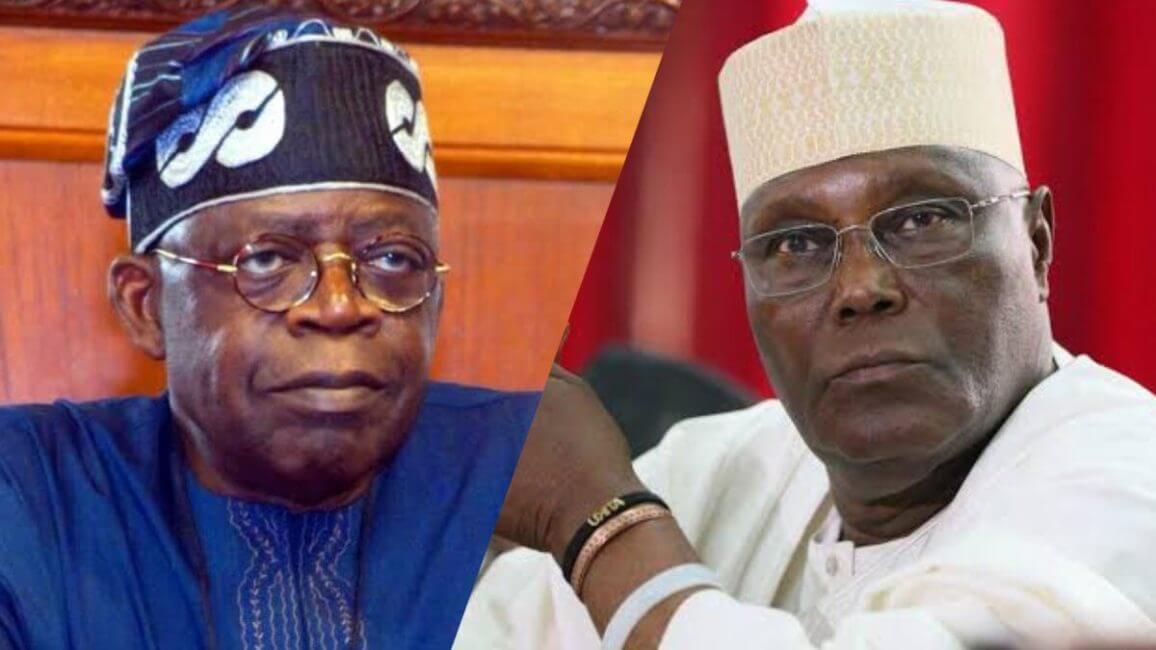
“What Is Tinubu Doing in Paris?” — Atiku’s Aide Challenges Presidency
“What Is Tinubu Doing in Paris?” — Atiku’s Aide Challenges Presidency
By Our Correspondent
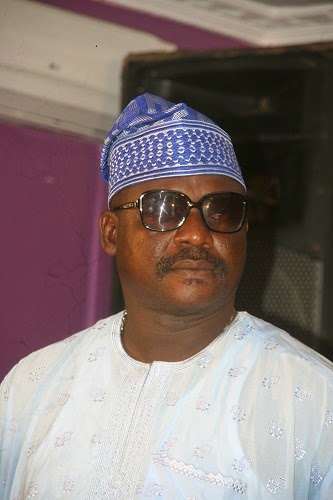
The media aide to former Vice President and African Democratic Congress (ADC) presidential candidate, Atiku Abubakar, Paul Ibe, has challenged the Presidency to publish details of President Bola Ahmed Tinubu’s substantive engagements in Paris and the outcomes of his activities during his prolonged stay in France.
Ibe made the demand on Monday, September 28, 2026, amid renewed questions over Tinubu’s continued absence from Nigeria after the period initially announced for his three-week working vacation.
Tinubu left Nigeria on August 30 for London to begin what the Presidency described as a three-week annual working vacation. He subsequently travelled to Paris, where he held meetings with French President Emmanuel Macron and French businessman Vincent Bolloré.
Ibe said Nigerians deserved sufficient information about the official engagements being undertaken by Tinubu in France, arguing that the Presidency should provide details that would enable the public to assess the purpose and outcome of the President’s extended stay abroad.
According to him, the issue was not whether the President was “hale and hearty”, but why his stay abroad had continued beyond the period initially announced by the Presidency.
“The Presidency should publish Tinubu’s substantive engagements and their outcomes. Nigerians can then judge whether this prolonged absence is justified,” Ibe said, according to a report published on Monday.
The Atiku aide also questioned the reference to the proposed $7 billion Ogun deep-seaport project as part of the explanation for Tinubu’s activities in France.
He noted that the agreement was between the Ogun State Government and DP World, with Tinubu witnessing the signing, and questioned its relevance to the justification for the President’s prolonged stay in France.
The Presidency, however, has maintained that Tinubu’s absence from Nigeria does not mean he has stopped performing his presidential duties.
In a September 21 statement, Special Adviser to the President on Information and Strategy, Bayo Onanuga, said Tinubu had extended his working vacation by a few days and would return to Nigeria at the weekend.
The Presidency said the President had remained in contact with officials at home and continued directing government affairs while abroad. It cited, among other activities, Tinubu’s decision to order an independent panel to investigate the deaths of 37 illegal miners in Minna.
The State House also confirmed that Tinubu met Bolloré in Paris on September 18 over plans to deepen investment in Nigeria’s creative and digital economy.
According to the Presidency, the discussions covered areas including film, entertainment and fibre-optic infrastructure, with the Bolloré Group indicating plans to deepen its operations and investments in Nigeria.
Ibe also questioned Tinubu’s decision to remain in France while the 81st United Nations General Assembly was taking place in New York.
Vice-President Kashim Shettima represented Nigeria at the UN General Assembly, while Tinubu remained in Europe. The Presidency explained that Shettima was representing the President and would deliver Nigeria’s national statement at the global gathering.
Ibe contrasted Tinubu’s continued stay in France with French President Emmanuel Macron’s movements, noting that Macron had hosted Tinubu in Paris before travelling to New York for the UN General Assembly.
“Meanwhile, Emmanuel Macron, who hosted Tinubu at the Élysée Palace, travelled to New York for UNGA and returned while Tinubu remained in France on housekeeping duties,” Ibe said.
Tinubu’s prolonged stay has continued to generate political debate, particularly following reports that his expected return to Nigeria had been postponed.
TheCable reported on September 27 that the President’s return plans had been changed at the last minute, with Tuesday being reported as the likely new return date. The reason for the change was not immediately disclosed.
The development has also triggered debate over Section 145 of the Nigerian Constitution, which deals with the President’s absence from office and the transmission of written declarations concerning vacation or inability to discharge presidential functions.
Atiku and his media aide have previously questioned whether the constitutional procedure was followed during Tinubu’s prolonged absence. The Presidency and other government officials have maintained that Tinubu remains in charge of the country’s affairs.
The latest exchange has therefore centred on two positions: the Presidency’s assertion that Tinubu has continued to conduct official business from abroad, and the opposition’s demand for greater disclosure about the President’s activities and the reasons for his extended stay in France.
“What Is Tinubu Doing in Paris?” — Atiku’s Aide Challenges Presidency
-
 metro3 days ago
$155m Left Behind, $750m Liabilities: Anambra Govt Opens Fresh Obi Files
-
 News2 days ago
Fake Agency Scandal: Gbajabiamila Says He Never Betrayed Tinubu’s Trust
-

 metro2 days ago
Woman Busted With Alleged Alcohol Hidden in Water Pack at Ogun Prison
-
 International2 days ago
Iran Claims Capture of Second US Underwater Drone in Strait of Hormuz
-
News2 days ago
Anambra Govt Demands Unreserved Apology From Peter Obi Over Debt Claims
-

 metro21 hours ago
24 Hours in Darkness: Iju Ishaga Residents, Businesses Count Losses as Ikeja Electric Fails to Restore Power
-
 Politics2 days ago
2027: NDC State Chairmen Reject Obi-Kwankwaso Movement’s Parallel Structures
-
 Politics2 days ago
APC Sweeps Enugu LG Election, Wins All 17 Chairmanship, 260 Councillorship Seats