

metro
Kabiru Sokoto Challenges Life Sentence, Seeks Acquittal
Kabiru Sokoto Challenges Life Sentence, Seeks Acquittal
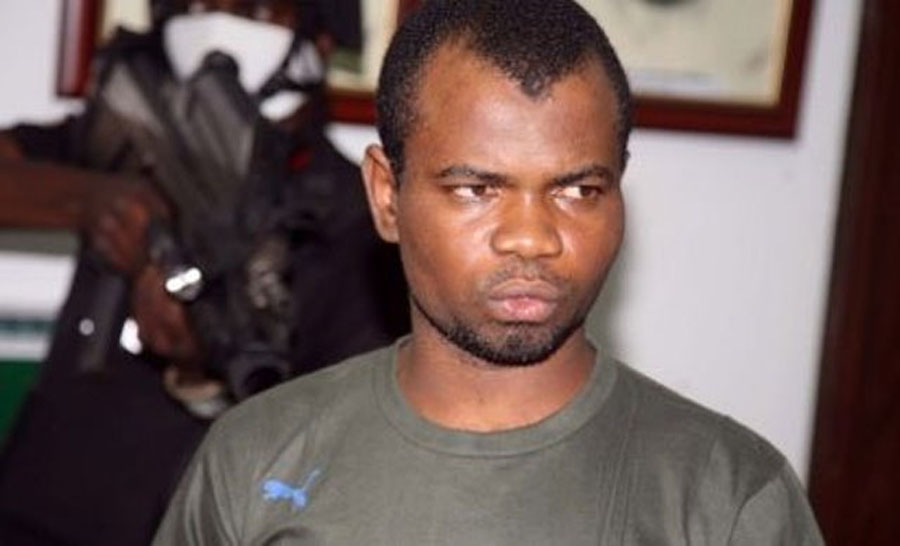
Convicted terrorist Kabiru Umar, popularly known as Kabiru Sokoto, has approached the Court of Appeal in Abuja seeking to overturn his 2013 conviction and life imprisonment over terrorism-related offences, insisting that he was wrongly convicted.
Court documents filed by his legal team, Don Akaegbu & Company, showed that Umar submitted a motion dated May 13, 2026, asking the appellate court to grant him leave to appeal the judgment delivered by Justice A.F.A. Ademola of the Federal High Court, Abuja, on December 20, 2013.
The application, brought pursuant to Sections 6(6)(b) and 36 of the 1999 Constitution, Section 24 of the Court of Appeal Act and Orders 6 Rules 7 and 9 of the Court of Appeal Rules, also sought an extension of time to file his appeal and requested that the already-filed notice of appeal be deemed properly filed and served.
Kabiru Sokoto was convicted on charges linked to alleged facilitation of terrorist acts and failure to disclose information connected to terrorism following investigations into the 2011 Christmas Day bombing of St. Theresa Catholic Church in Madalla, Niger State.
READ ALSO:
- 15-Year-Old APC Aspirant Quits Kaduna Reps Race Over Age Scandal
- Chelsea Close To Confirming Xabi Alonso As New Head Coach
- Terrorists Kill 17 Police Officers During Attack on Army School in Yobe
The deadly attack, claimed by Boko Haram, killed dozens of worshippers and injured many others during Christmas service, triggering nationwide outrage and intensified security operations against insurgents across northern Nigeria.
In the fresh appeal documents, Umar argued that circumstances beyond his control prevented him from challenging the judgment earlier.
According to the filings, he had remained in continuous detention since his conviction and was repeatedly transferred between correctional facilities in different states, making communication with lawyers and family members difficult.
Part of the grounds before the court read, “The Applicant was convicted and sentenced to life imprisonment on 20th December, 2013. The Applicant has been continuously incarcerated since then.
“The Applicant was moved across several custodial centres across different States, making access to counsel extremely difficult. The Applicant’s trial counsel initiated steps toward appeal but died before perfecting same.”
The application further disclosed that another lawyer later retained by Umar’s family also died before making significant progress on the matter.
According to an affidavit deposed to by Umar’s nephew, Lawal Suleiman, the family only discovered in March 2026 that the convict had been transferred to the Maximum Security Custodial Centre in Kirikiri, Lagos.
Suleiman claimed that the repeated relocation of Umar across custodial facilities disrupted family contact and worsened the financial burden on relatives in Sokoto State.
He also alleged that Umar’s health condition had deteriorated significantly during his incarceration.
In challenging the conviction, Umar’s lawyers argued that the Federal High Court allegedly relied on provisions of the Economic and Financial Crimes Commission (EFCC) Establishment Act, 2004, instead of the Terrorism (Prevention) Act, 2011.
According to the defence team, the EFCC Act primarily addresses economic and financial crimes and should not have formed the legal basis for sustaining a terrorism conviction.
The appeal also questioned the admissibility of Umar’s confessional statement, identified during trial as Exhibit KUKS1.
His lawyers alleged that the statement was written by an investigating police officer in a question-and-answer format rather than being voluntarily narrated by the defendant.
The defence further maintained that Umar was not convicted for directly masterminding the 2011 Madalla church bombing but rather for allegedly possessing prior knowledge of the attack and failing to disclose the information to authorities.
“The distinction between direct participation and alleged prior knowledge is significant in law and forms a central issue in the pending appeal,” the legal team stated.
Kabiru Sokoto first gained national attention in January 2012 after escaping from police custody while being escorted to his residence in Abuja for a house search.
The dramatic escape sparked public outrage and led to the dismissal and prosecution of several police officers before he was rearrested weeks later in Taraba State.
During his trial, prosecutors accused him of being a senior Boko Haram operative linked to the Madalla bombing and other terror-related activities.
Despite his life sentence, court filings revealed that Umar obtained a Bachelor of Science degree in Biology from the National Open University of Nigeria while in custody.
He is now asking the Court of Appeal to nullify the Federal High Court judgment, quash his conviction and acquit him of all charges.
The application has already been served on the Attorney-General of the Federation and Minister of Justice, although no date has been fixed for hearing the appeal.
Kabiru Sokoto Challenges Life Sentence, Seeks Acquittal









metro
Flooding: Gangaria Seeks Federal Intervention as Over 2,000 Osogbo Households Are Displaced

Flooding: Gangaria Seeks Federal Intervention as Over 2,000 Osogbo Households Are Displaced
OSOGBO — The lawmaker representing Irepodun/Orolu/Olorunda/Osogbo Federal Constituency, Osun State, Adewale Morufu Adebayo Gangaria, has called for urgent federal intervention to address recurring flooding and storm-related disasters that have devastated communities across his constituency.
Gangaria presented a Motion of Urgent Public Importance before the House of Representatives on Wednesday, October 14, drawing attention to the plight of residents affected by flooding, windstorms and thunderstorms, particularly in Osogbo, the Osun State capital.
According to a statement from his media team, the disasters have affected more than 45 communities, causing extensive damage to residential buildings, markets, schools, hospitals, places of worship, farms, hotels and other critical infrastructure.
The statement reported that more than 800 buildings had been destroyed, while over 2,000 households were displaced, leaving many residents struggling to find shelter following the destruction of their homes and sources of livelihood.
Among the affected communities identified by the lawmaker are Olude, Ita-Olookan, Irepodun Zone 9, Osaara, Owode Ilesha Garage, Ibuaje Town, Aberensise, Surulere, Ajangbooro, Oke Odo, Irewole, Ile Aanu, Orelope, Odofin, Omigade, Aroko, Baruwa, Ibu-Amon and Ijetu Ayepe.
Gangaria expressed concern over the hardship facing residents whose properties and livelihoods had been damaged, stressing the need for a coordinated response to the humanitarian crisis and the environmental factors contributing to the recurring disasters.
As part of the proposed intervention, the lawmaker urged the Federal Ministry of Humanitarian Affairs, Disaster Management and Social Development to provide immediate relief assistance to affected communities.
He also called on the National Emergency Management Agency (NEMA) to urgently distribute relief materials to victims to ease their suffering and support households displaced by the disaster.
The lawmaker further urged the South-West Development Commission to mobilise resources towards the rehabilitation and reconstruction of damaged infrastructure, including residential buildings, schools, hospitals, markets and access roads.
He said addressing the immediate needs of affected residents must go hand in hand with rebuilding essential facilities and restoring normal economic and social activities in the affected communities.
Gangaria also called on the Ecological Fund Office to implement practical measures to tackle the underlying causes of flooding and reduce the likelihood of future occurrences.
As part of efforts to improve water flow and reduce flood risks, he urged the National Inland Waterways Authority (NIWA) to undertake necessary dredging and expansion of the Osun River channel, including the removal of obstructions that could impede water movement.
The lawmaker also called on the relevant federal ministry responsible for mining to address mining activities along riverbanks that may contribute to environmental hazards and expose nearby communities to further risks.
To ensure that the proposed interventions translate into concrete action, Gangaria urged the House to mandate its Committee on Legislative Compliance to monitor the implementation of the resolutions and report back within four weeks for further legislative action.
The proposed measures seek to combine immediate humanitarian assistance with longer-term environmental interventions aimed at protecting lives, restoring damaged infrastructure and reducing the vulnerability of communities to recurring floods.
Flooding and severe storms can disrupt transportation, damage public infrastructure, destroy agricultural produce and undermine the livelihoods of residents, particularly where homes and businesses are affected. The scale of the destruction reported in the constituency has therefore raised concerns about the need for timely relief and sustainable flood-management measures.
The motion represents an effort to bring the concerns of affected constituents before the National Assembly and press relevant federal agencies to respond to their needs.
However, the effectiveness of the proposed intervention will depend on the implementation of any resolutions adopted by the House and the timely mobilisation of resources by the relevant agencies.
For residents of the affected communities, immediate priorities include access to emergency relief, safe shelter, the restoration of essential services and the rehabilitation of damaged properties and infrastructure.
Long-term measures to improve drainage, manage waterways, address environmental degradation and strengthen disaster preparedness will also be important in reducing the risk of similar incidents.
The lawmaker’s intervention has placed the reported flood disaster in Osogbo and neighbouring communities before the House of Representatives, with a call for coordinated action to address both the immediate suffering of victims and the environmental challenges associated with recurring flooding.
Flooding: Gangaria Seeks Federal Intervention as Over 2,000 Osogbo Households Are Displaced
metro
Outrage as Residents Scoop Groundnut Oil From Lagos Tanker Crash Scene

Outrage as Residents Scoop Groundnut Oil From Lagos Tanker Crash Scene
Residents have come under criticism after they were seen scooping spilled groundnut oil from the scene of a tanker accident around Ojota Bridge in Lagos, prompting a warning from the Lagos State Traffic Management Authority (LASTMA) over the potential health risks of consuming or selling the recovered product.
The tanker, reportedly carrying 33,000 litres of groundnut oil, overturned on Wednesday, October 14, 2026, along the Lagos-Ibadan Expressway, near Abiola Garden, Ojota, on the inward lane towards the Old Toll Gate.
A video circulating on social media showed some residents gathering around the accident scene to collect the spilled oil, using containers to scoop it from the road. Police officers and LASTMA personnel were also seen at the location.
LASTMA warned members of the public against consuming or selling groundnut oil recovered from the accident scene, stressing that the spilled product could have been contaminated by dirt, debris, water or other substances on the road. Although the oil was intended for human consumption, its exposure to the accident environment raises concerns about its safety. Residents were therefore advised not to collect, purchase or consume the recovered product.
READ ALSO:
- Shettima Attacks Atiku Over Tinubu Remarks, Questions Subsidy Plan
- 2027: We Know How to Stop Tinubu From Getting Second Term – Momodu
- Borno Woman Jailed Two Years for Sexual Exploitation of 16-Year-Old Girl
The agency’s rescue and recovery team reportedly arrived at the scene with high-capacity tow vehicles to assist in removing the overturned tanker and managing the resulting traffic disruption. Traffic officials worked with other emergency responders, including the police and relevant road safety agencies, to secure the area and facilitate recovery operations.
The crash caused disruption around Ojota Bridge and adjoining sections of the Lagos-Ibadan Expressway as emergency personnel worked to clear the scene and restore normal traffic flow. Motorists were advised to exercise caution and follow the instructions of traffic officers in the area.
No casualties were reported in the incident. Preliminary accounts suggested that brake failure might have caused the tanker to overturn, although the suspected cause had not been confirmed by a final investigation.
The incident has renewed concerns about tanker safety, emergency response and the risks people take when collecting products spilled during road accidents. Beyond the immediate danger of approaching an overturned tanker, recovered food products may be unsafe for consumption if their quality and cleanliness cannot be established.
Authorities continue to urge residents to keep away from accident scenes, allow emergency teams to work and avoid collecting spilled goods that may pose risks to public health.
Outrage as Residents Scoop Groundnut Oil From Lagos Tanker Crash Scene
metro
Borno Woman Jailed Two Years for Sexual Exploitation of 16-Year-Old Girl
Borno Woman Jailed Two Years for Sexual Exploitation of 16-Year-Old Girl
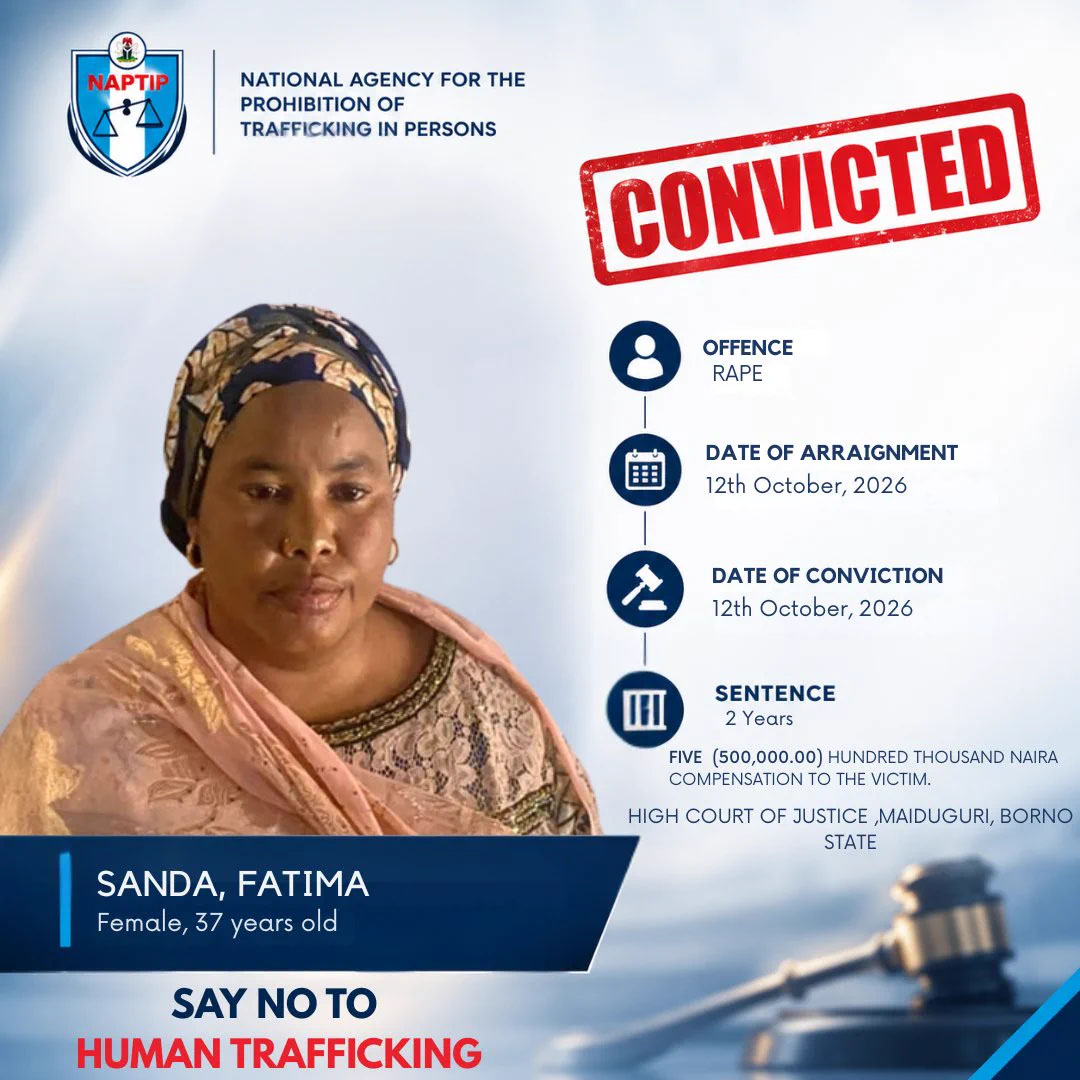
A Borno State High Court sitting in Maiduguri has sentenced a 37-year-old woman, Fatima Sanda, to two years’ imprisonment for procuring a 16-year-old girl for sexual exploitation.
The court also ordered Sanda to pay ₦500,000 in compensation to the victim after convicting her of an offence under Nigeria’s anti-trafficking law.
The conviction was secured by the National Agency for the Prohibition of Trafficking in Persons (NAPTIP) on Monday, October 12, 2026, according to reports published by Punch Metro and other Nigerian media outlets.
In a statement shared on its official Facebook page, NAPTIP said the judgment was delivered at Court 10 of the Borno State High Court in Maiduguri, presided over by Justice Aisha M. Ndume.
The agency said Sanda was convicted of procuring a 16-year-old girl and subjecting her to sexual exploitation by other people.
The offence contravenes Section 16(1) of the Trafficking in Persons (Prohibition) Enforcement and Administration Act, 2015, as amended.
Following the conviction, the court sentenced Sanda to two years in prison and ordered her to pay ₦500,000 in compensation to the victim.
READ ALSO:
- Cosmetics Top Fake Products as NAFDAC Seals 179 Establishments, Arrests 52
- Nigeria Secures UN Human Rights Council Seat With 172 Votes
- Houthi Missile Targeting Riyadh Shot Down as Debris Injures Four, Damages 15 Homes
The publicly available reports did not disclose further details about how the teenager was recruited, the identities of the other people involved or the circumstances surrounding the exploitation.
The judgment comes amid continued efforts by law enforcement agencies to investigate and prosecute cases involving the sexual abuse and exploitation of children.
In a related case in Niger State, a 27-year-old man, Hussaini Suleiman, was sentenced to seven years’ imprisonment for raping an eight-year-old girl at his residence behind the Prison Quarters in Minna.
The Niger State High Court, presided over by Justice Binta Bawa, convicted Suleiman after he pleaded guilty to the offence.
According to NAPTIP, the case was referred to its Niger State Command by the state command of the Nigeria Security and Civil Defence Corps (NSCDC) on April 16, 2026, following a report of the rape of the child.
The agency said Suleiman admitted committing the offence during the investigation and was arraigned before Court 8 of the Niger State High Court on September 10, 2026. He was subsequently sentenced to seven years in prison.
The conviction was reported on September 11, approximately one month before the Borno judgment was announced.
Although the two cases involved different offences and circumstances, both resulted in prison sentences following court proceedings.
The cases also highlight the importance of reporting suspected child sexual abuse, conducting thorough investigations and ensuring that cases are prosecuted before the appropriate courts.
NAPTIP is the federal agency responsible for coordinating Nigeria’s efforts to prevent and combat human trafficking, including the exploitation of vulnerable people. Its work includes investigating trafficking-related offences and prosecuting suspects under applicable legislation.
The Borno judgment combines a custodial sentence with a compensation order for the victim. However, no further information was available in the published reports on whether the compensation had been paid.
Protecting children from sexual abuse and exploitation requires effective law enforcement, access to justice and measures that safeguard victims’ privacy and dignity throughout investigations and court proceedings.
Borno Woman Jailed Two Years for Sexual Exploitation of 16-Year-Old Girl
-

 Politics3 days ago
Obi Positioning for SGF Role Under Atiku’s ADC Ticket – Sowore
-

 metro3 days ago
How Bandits Demand ₦300m Ransom for Abducted Kaduna Couple, Baby in Viral Video
-

 Politics3 days ago
Okonkwo Alleges Return of Subsidy, Accuses NNPC of Plotting Trillions in ‘Lost Profit’
-

 metro2 days ago
Oyo School Kidnappings: How ANSARU Allegedly Used Children to Pressure FG
-

 metro2 days ago
Tragedy in Ibadan as Truck Kills Female Corps Member, Injures Others
-

 metro3 days ago
How Military Air Strike Crushed ISWAP Attack Plot, Killed Over 40 Fighters in Borno
-

 News3 days ago
FG Approves Upward Review of Feeding Allowance for NYSC Members
-
 International2 days ago
French Students Return to Streets as Anger Over School Conditions Grows